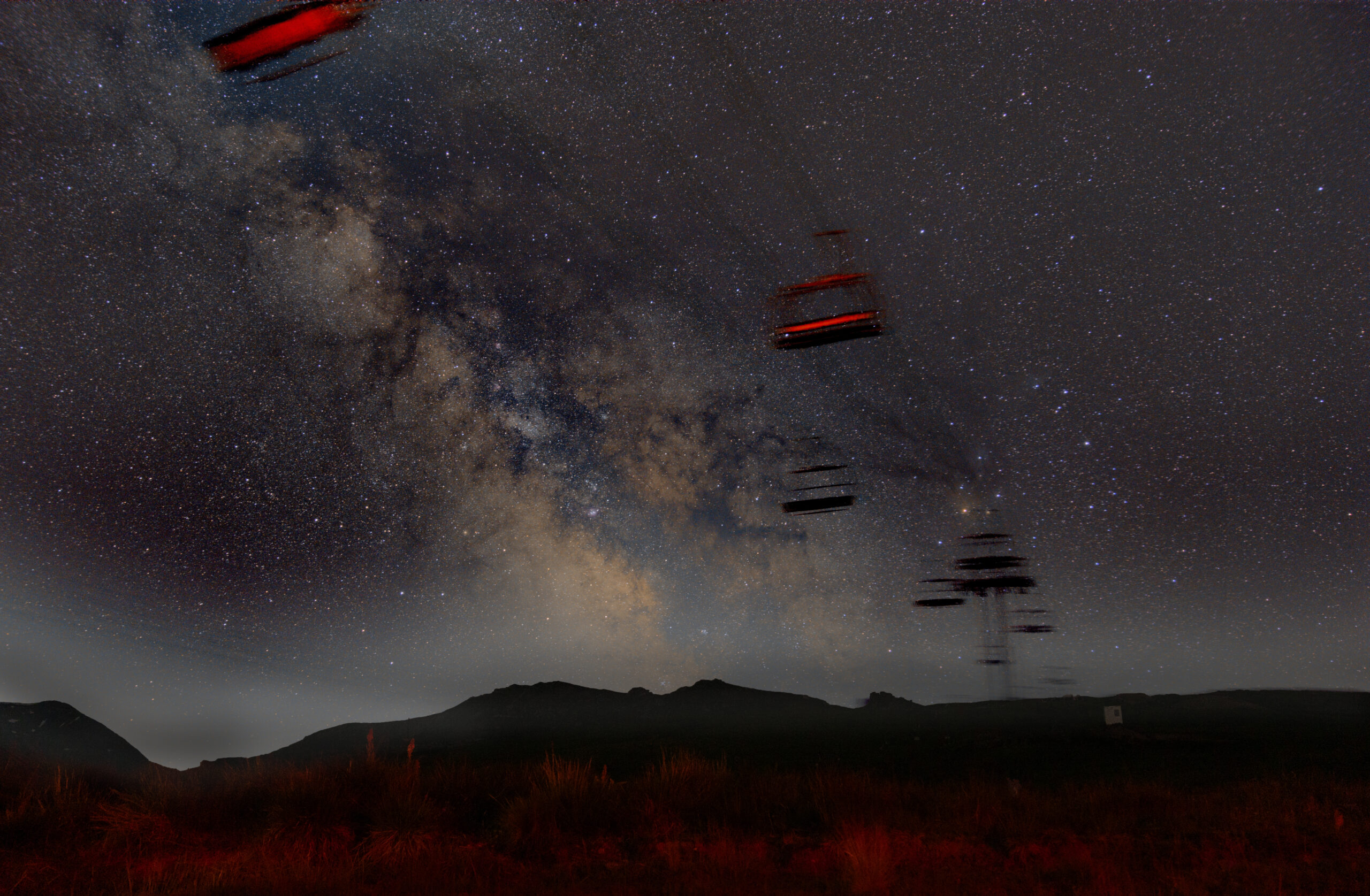
On a clear, moonless night in the mountains of Akita or Iwate, something remarkable happens: the sky fills with more stars than you’ve ever seen in your life. The Milky Way stretches from horizon to horizon in a river of silver light, and shooting stars trace across the darkness with almost clockwork regularity. This is Tohoku’s best-kept secret — one of Japan’s last great dark sky sanctuaries, where the combination of low population density, minimal light pollution, and high mountain elevations creates stargazing conditions that rival the world’s dedicated astronomical observatories.
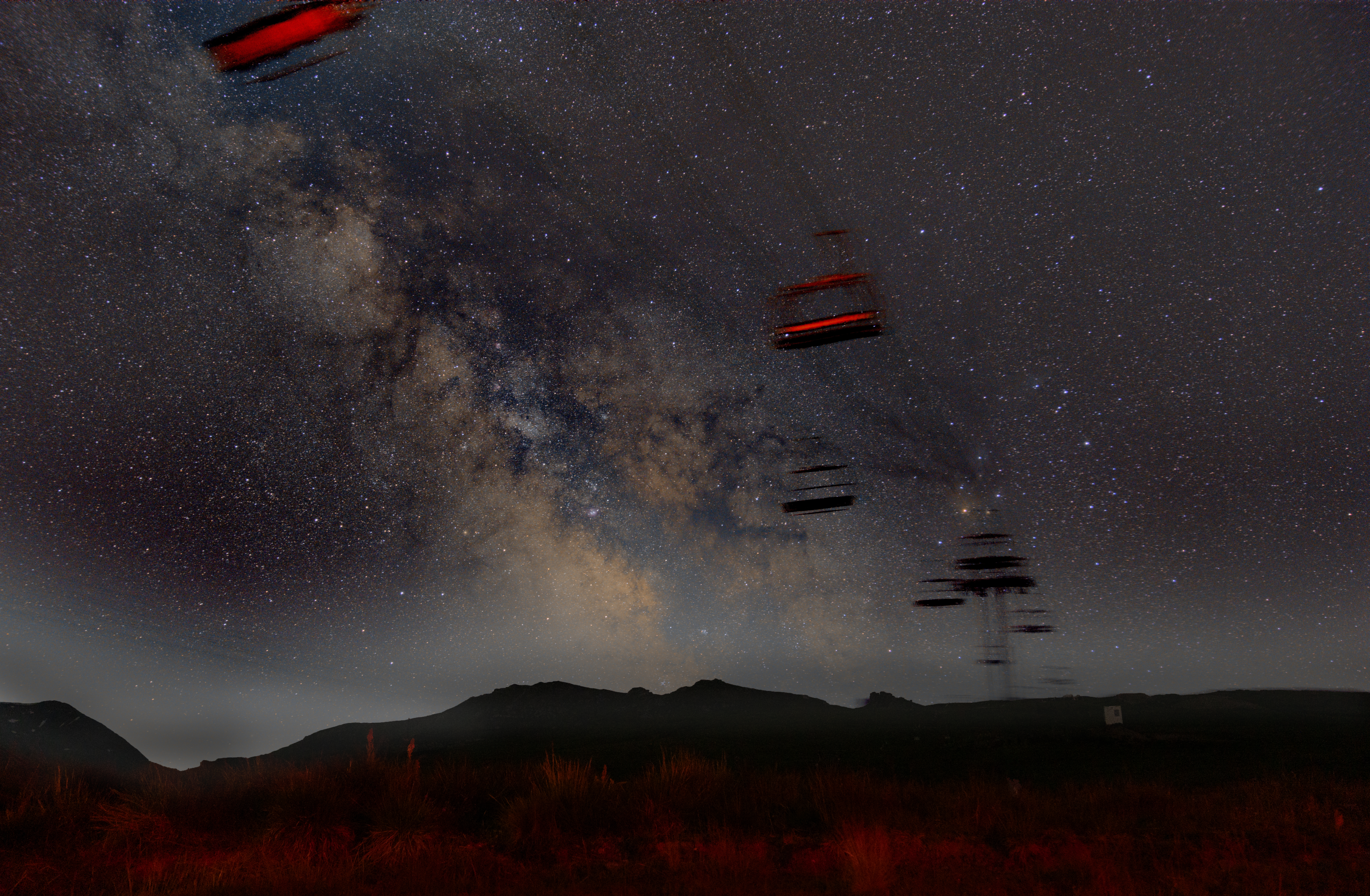
Why Tohoku Is Japan’s Premier Stargazing Destination
Japan is a famously urban country — nearly 92% of its population lives in cities, and the light pollution from the Tokyo-Osaka megalopolis is visible from space. But Tohoku bucks this trend dramatically. The six prefectures of northeastern Japan — Aomori, Akita, Iwate, Miyagi, Yamagata, and Fukushima — contain some of the country’s lowest population densities and largest stretches of uninterrupted wilderness. The Ou Mountains spine down the center of the region, with elevated highlands at 800 to 1,500 meters (2,600–4,900 feet) that lift observers above the valley haze that often plagues lower-altitude sites.
The numbers tell the story: the Bortle Dark-Sky Scale, used by astronomers worldwide, rates sky darkness from 1 (truly pristine) to 9 (inner-city glow). Much of Tohoku’s interior mountain zone registers at Bortle 3 or 4 — dark enough to see the zodiacal light, the gegenschein (an extremely faint glow opposite the Sun), and the full complexity of the Milky Way’s dust lanes and nebulae with the naked eye. Compare this to Tokyo’s Bortle 9 sky, where only a handful of bright stars are visible, and you’ll understand why serious astrophotographers make pilgrimages to these mountains.
For American and Australian visitors, the experience is genuinely transformative. Even if you’ve experienced dark skies in your home country — the Rocky Mountains, the Outback, the Scottish Highlands — Tohoku’s stargazing has its own character: cedar forests silhouetted against starfields, the distant glow of hot springs inn lanterns below, the profound silence broken only by wind in the trees and the occasional call of a mountain bird. Bring a blanket, a thermos of hot tea, and at least two hours. You won’t regret it.
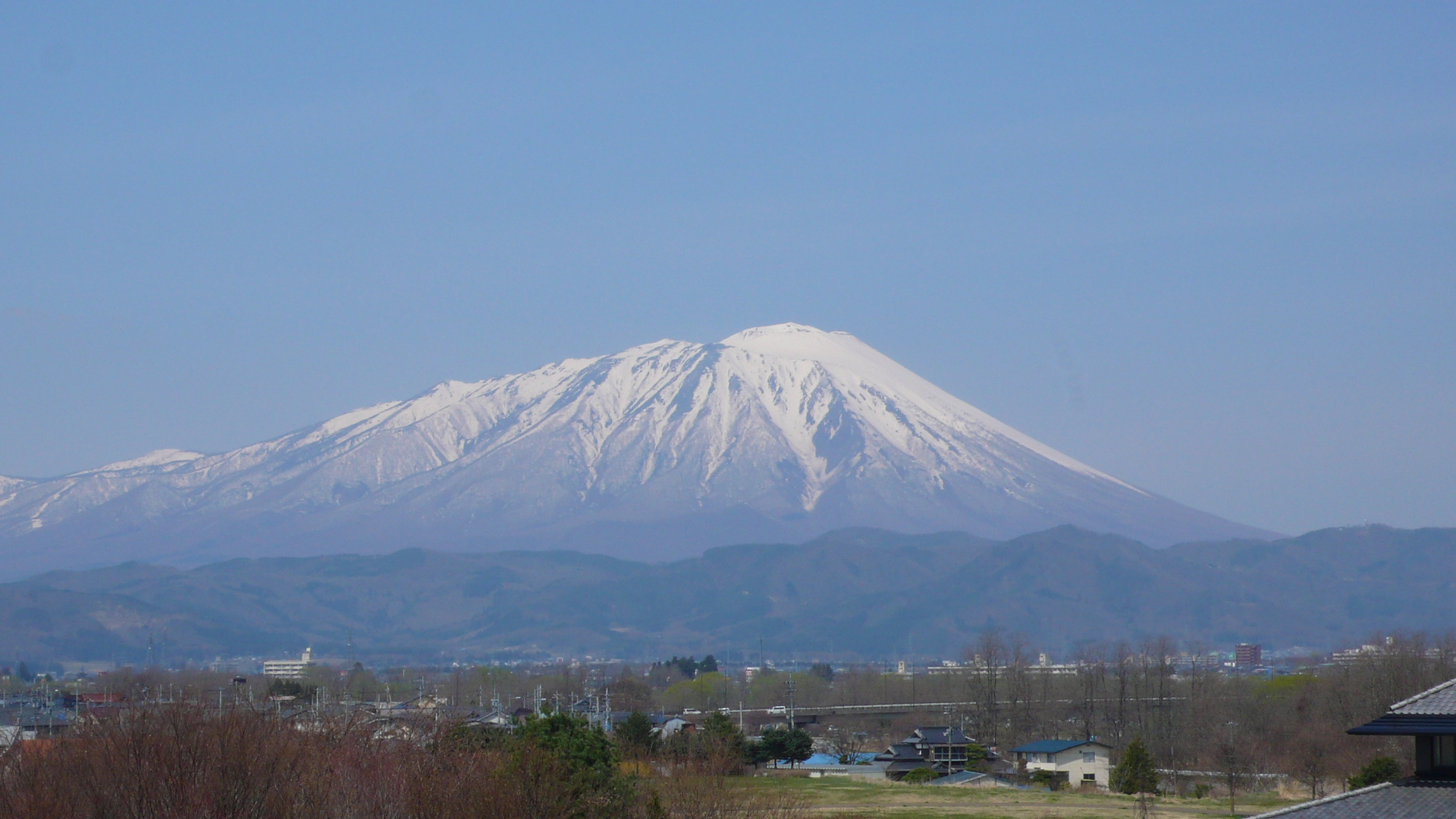
Tohoku’s Best Dark Sky Locations
1. Appi Kogen Highland, Iwate — The Astrophotographer’s Choice
Located at around 1,000 meters (3,300 feet) elevation in central Iwate, the Appi Kogen plateau is justifiably considered one of Tohoku’s premier stargazing destinations. The plateau sits in a natural bowl surrounded by ridges that block most distant light pollution, and the high elevation reduces atmospheric turbulence significantly. On nights without moonlight and with good atmospheric seeing conditions, observers can detect stars down to magnitude 6.5 with the naked eye — roughly three times fainter than the unaided limit at sea level in a typical rural location.
The area around Appi Kogen Ski Resort becomes a stargazing paradise outside the ski season (typically May through October). The resort itself hosts occasional stargazing events where telescopes are set up on the slopes, and the wide open pistes offer excellent 360-degree sky views. Bring a red-light flashlight (white lights destroy night vision — it takes 20 to 30 minutes to fully adapt to the dark, and a single white LED phone screen can undo all that progress), dress for temperatures 8–10°C (15–18°F) colder than the valley below, and arrive at least an hour before the target time to allow your eyes to fully dark-adapt.
The access road to Appi Kogen is well-maintained and scenically beautiful. The drive from Morioka (about 90 minutes by car) takes you through increasingly dramatic mountain terrain, and on clear nights, you’ll start seeing more stars through your windshield as you climb. Several highland lodges and the main Appi resort offer accommodation ranging from dormitory-style ski lodges (around ¥5,000 / $34 per person) to comfortable resort hotels (¥15,000–30,000 / $100–200 per night).
2. Lake Towada and the Hakkoda Mountains, Aomori
The Lake Towada caldera complex in southern Aomori Prefecture creates a natural amphitheater of exceptional darkness. At 320 meters (1,050 feet) above sea level, the lake itself isn’t the highest stargazing point in the area — that honor goes to the Hakkoda Mountains, which rise to 1,585 meters (5,200 feet) just to the north. But the combination of the lake’s reflective surface, the surrounding old-growth beech forests, and the almost complete absence of artificial lighting makes the entire area remarkably dark.
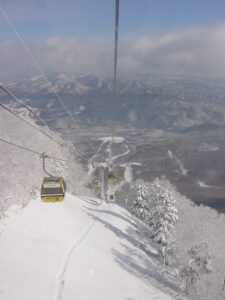
The best stargazing spots around Lake Towada include the Nenokuchi visitor area on the lake’s eastern shore, the Oirase Gorge trailhead parking areas (which provide unobstructed sky views through the canopy), and the Hakkoda Ropeway upper station area, which remains accessible year-round and puts you at significant elevation in just minutes. The ropeway operates until 4:40 PM in most seasons, so you’ll need to time your ascent carefully if you want sunset stars — but in summer, you can hike up and wait for darkness. In winter, the Hakkoda area is famous for its heavy snowfall and can only be safely accessed with proper equipment and local knowledge.
The National Route 103 from Aomori City to Lake Towada passes through some of the darkest road-accessible terrain in northern Japan. On clear nights, even driving this route without stopping, the density of visible stars through your windshield is startling. Plan to stop at one of the several pull-offs along the route for extended viewing. The drive from Aomori City takes about 90 minutes in normal conditions.
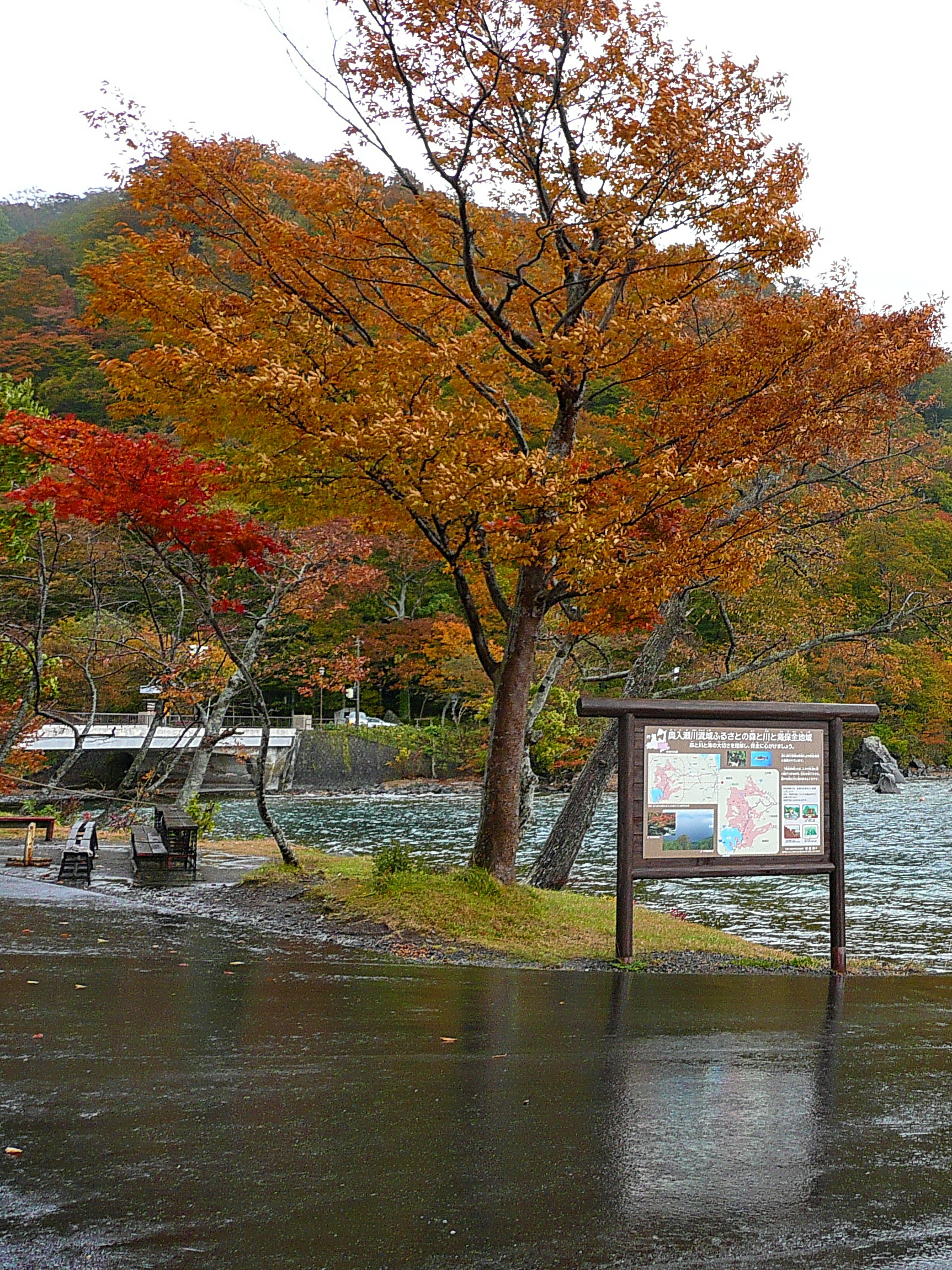
3. Nyuto Onsen Valley, Akita — Stars and Hot Springs
The Nyuto Onsen village cluster in the mountains above Lake Tazawa offers what might be the most unique stargazing experience in all of Japan: the combination of outdoor hot spring bathing (rotenburo) under an unpolluted sky. The seven hot spring inns of the Nyuto area sit at around 600–800 meters (2,000–2,600 feet) elevation, deep in a valley that blocks the distant glow of Akita City and Morioka. On clear nights, the contrast between the steaming sulfurous pools and the crystalline starfield above creates an atmosphere of almost otherworldly beauty.
The most atmospheric spot is the outdoor bath at Tsuru-no-Yu, Nyuto’s oldest and most atmospheric inn, where you can soak in milky white mineral water while watching the stars overhead. The inn’s outdoor baths face a meadow to the north, offering an unobstructed northern sky view — ideal for spotting Ursa Major, Cassiopeia, and, if you’re very lucky and very dark-adapted, the faint smudge of the Andromeda Galaxy. The baths close at 9:00 PM for guests and at 8:30 PM for day visitors, so arrive early if you want maximum darkness.
Note that mixed-gender outdoor bathing is the traditional norm here, though separate facilities are available for those who prefer privacy. Towels and yukata robes are provided if you’re staying overnight. The access road is unpaved for the last few kilometers and closes to private vehicles in winter (a shuttle bus operates from late November to late April). Even if you don’t stay overnight, the area rewards a late-evening visit — though you’ll need your own transport, as bus service ends in the early evening.
4. Zao Highlands, Yamagata — Year-Round Accessibility
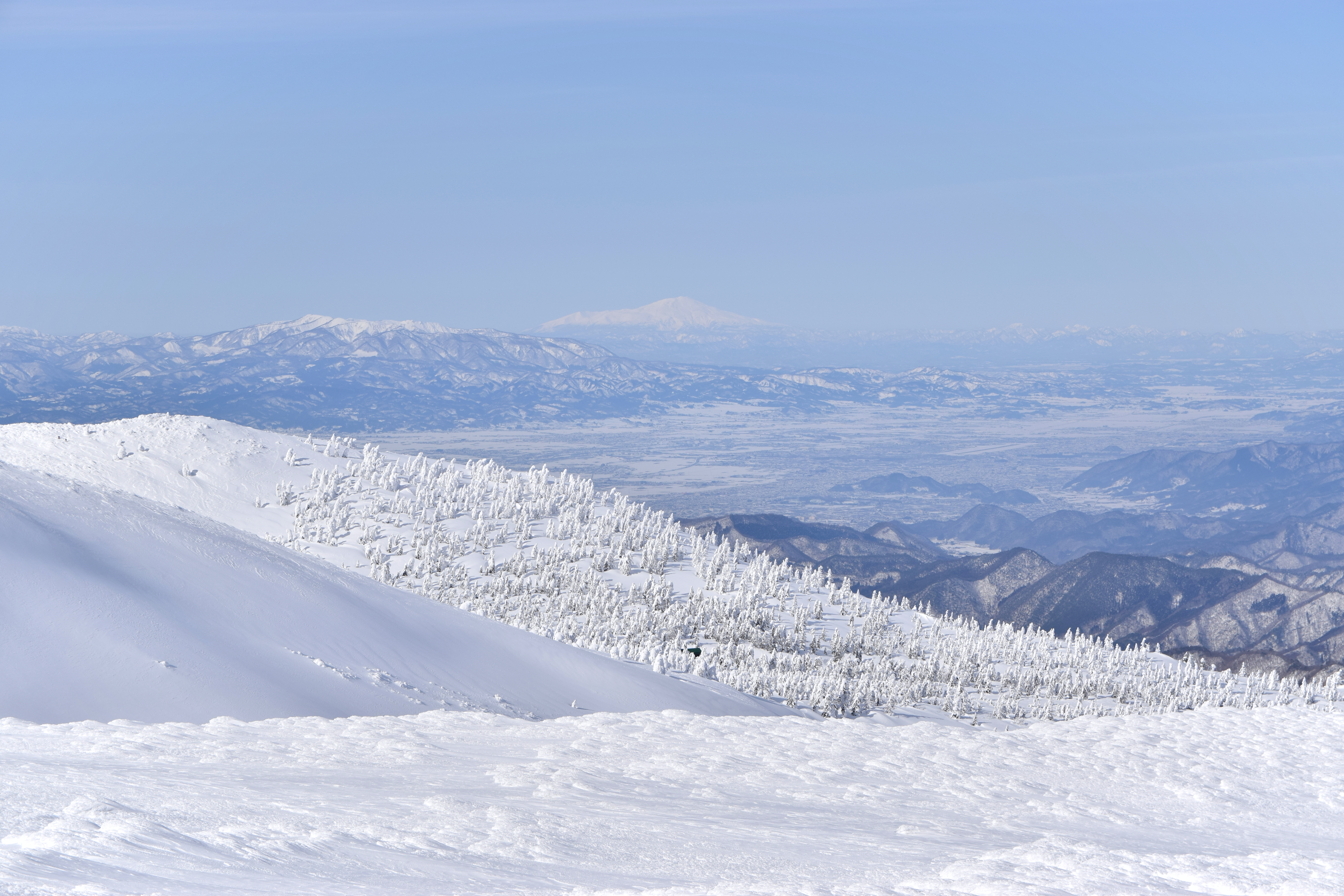
The Zao mountain complex, straddling the border of Yamagata and Miyagi Prefectures, offers some of the most easily accessible dark sky in Tohoku, thanks to the Zao Echo Line — a scenic mountain toll road that climbs to 1,810 meters (5,940 feet) and remains open from late April through early November. At this elevation, above the majority of the atmosphere’s water vapor and particulates, the sky takes on a quality that professional astronomers describe as “excellent seeing” — stars twinkle less, appear as sharp points rather than smears, and the transparency of the atmosphere allows fainter objects to become visible.
The Okama Crater Lake viewpoint area at around 1,650 meters (5,400 feet) is particularly good for stargazing, as it sits above the treeline on both sides, offering nearly unobstructed 360-degree sky views. The crater lake itself, a vivid turquoise-green by day, appears as a dark mirror under the stars. On nights around the new moon (when the moon’s absence allows maximum sky darkness), Zao’s highland elevations can produce sky conditions comparable to mountain observatories in less accessible parts of the world.
For winter stargazers, Zao Onsen resort sits at around 900 meters (2,950 feet) elevation and operates ski lifts until late season. The resort’s elevated position above Yamagata City (which lies in the Mogami River plain below) and its alignment relative to the main population centers makes it a reasonable winter stargazing destination, though you’ll want windproof clothing and heat packs — temperatures regularly drop below -10°C (14°F) on clear winter nights at this elevation.
5. Shirakami-Sanchi World Heritage Zone, Aomori/Akita
The Shirakami-Sanchi — a UNESCO World Heritage Site straddling the Aomori-Akita border — contains the world’s largest remaining tract of virgin beech forest. Its designation as a protected area has kept human habitation and infrastructure minimal, which means that the dark sky above it is extraordinary. The Juniko (Twelve Lakes) area, one of the few visitor access points into the protected zone, sits at low elevation but its position well away from any significant urban center gives it a Bortle rating of roughly 3 to 4 in most directions.
The most practical approach for stargazers is to arrive at the Juniko parking area in the evening, spend an hour or two exploring the night forest sounds and the remarkable absence of artificial light, then stargaze from the lakeside or open areas near the trailheads. The lakes themselves, surrounded by old-growth beech, are particularly atmospheric — the silence is profound, and on still nights the reflections of stars and the Milky Way in the water can make you feel suspended between two skies.
Access to Shirakami-Sanchi is via car or bus from Aomori or Akita (the JR Gono Line along the coast provides rail access to nearby communities like Fukaura, from which local buses run in season). Note that the area has limited accommodation — the few guesthouses and ryokan in the vicinity are small, fill quickly on summer weekends, and may not serve late arrivals. Book well in advance and clarify your planned arrival time with the inn.
Getting to Tohoku’s Dark Sky Zones from Tokyo
- Shinkansen to Morioka: The Tohoku Shinkansen from Tokyo to Morioka takes approximately 2 hours 10 minutes and costs around ¥14,000–17,000 ($95–115) one-way depending on seat type. From Morioka, rent a car to reach the highland stargazing areas. The JR Pass covers Shinkansen travel.
- Shinkansen to Akita: The Komachi Shinkansen (splitting from the Hayabusa at Morioka) reaches Akita in about 3 hours 45 minutes from Tokyo, approximately ¥18,000 ($122). Rental cars at Akita Station provide easy access to Nyuto Onsen and the surrounding highlands.
- Shinkansen to Shinjo then local: For Yamagata’s Zao area, the Yamagata Shinkansen from Tokyo to Yamagata City takes about 2 hours 30 minutes (¥14,000/$95), then another 40–60 minutes by bus or car to reach Zao Onsen and the highland areas.
- Rental car from Tokyo: Not recommended for stargazing trips — the 4+ hour drive (depending on destination) means arriving tired, and local rental prices are often better. Rent at the destination Shinkansen terminus instead.
Note on JR Pass validity: All Shinkansen routes mentioned above are covered by the Japan Rail Pass, making multi-destination stargazing tours excellent value. The 7-day JR Pass (around ¥50,000 / $340) easily covers multiple Tohoku destinations if you also include some of the region’s other sights.
Best Time to Visit for Stargazing
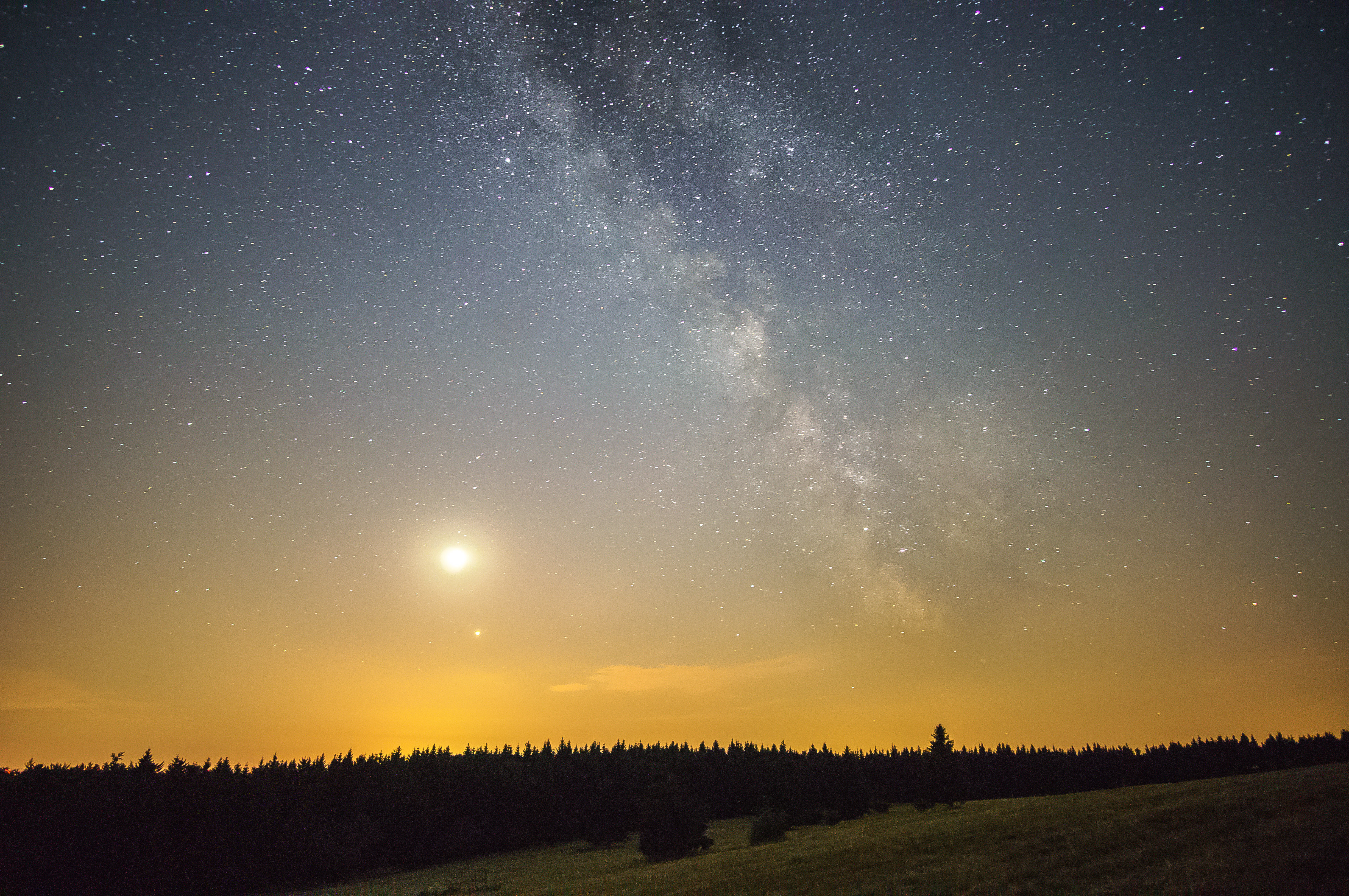
- Spring (April–May): Cold but increasingly clear. The Milky Way’s galactic center rises in the southeast from late April, and the combination of snow-covered mountains and clear spring skies is outstanding. Cherry blossoms in the lower valleys make evening star outings particularly memorable. Average highland temperatures: 0–10°C (32–50°F). Bring serious layering.
- Summer (June–August): The peak season for Milky Way viewing — the galactic core is high in the sky from 10 PM onwards, and the combination of warm nights and spectacular star density makes this the most popular time. July and August see more cloud cover than other seasons, so flexibility in your plans is important. Mosquitoes can be significant at lower elevations; bring repellent. Temperatures are comfortable: 15–25°C (59–77°F) at highland elevations.
- Autumn (September–November): The clearest and most atmospheric season for stargazing. Lower humidity, less cloud cover than summer, and spectacular autumn foliage that combines with the night sky for extraordinary landscape photography. The Milky Way is still visible in September and early October. Highland temperatures: 5–20°C (41–68°F), dropping to near-freezing by November.
- Winter (December–March): Expert territory. Winter skies in Tohoku are among the clearest of the year once storms pass, but temperatures in highland areas can drop to -15°C (5°F) or below, winds can be brutal, and heavy snow can close access roads. The winter Milky Way is less spectacular (the galactic center is below the horizon), but winter stars including Orion, Taurus, and Gemini are brilliant and steady. For experienced cold-weather visitors, winter stargazing at Zao Onsen — followed by a plunge into a hot bath — is an unforgettable experience.
Moon phase matters enormously. Plan your stargazing trip around the new moon if possible — the full moon outshines all but the brightest stars and washes out the Milky Way entirely. Most astronomy apps and websites provide moon phase calendars. Even a quarter moon rising at midnight can significantly degrade the sky quality for the hours before its rise, which can still provide excellent stargazing windows.
Where to Stay: Accommodation Near Dark Sky Areas
Budget (Under ¥8,000 / $55 per night)
Appi Kogen Youth Hostel sits at the edge of the Appi plateau and offers dormitory and private rooms in a friendly, informal atmosphere. Popular with hikers and skiers, it occasionally hosts stargazing sessions in the adjacent meadow during clear autumn nights. Bed rates start around ¥3,500 ($24) per person including breakfast. The highland location ensures dark sky access right from the front door.
Oirase Youth Hostel near the Oirase Gorge in Aomori provides an excellent base for Lake Towada stargazing at rates starting around ¥4,500 ($30) per person. The surrounding beech forest and proximity to the lake make it one of the most atmospheric budget options in the region.
Mid-Range (¥8,000–¥20,000 / $55–$135)
Tsuru-no-Yu Onsen in Nyuto, Akita offers the most atmospheric stargazing-plus-hot-springs experience in Tohoku. Traditional thatched-roof ryokan buildings, outdoor sulfurous pools, and remarkably dark skies combine to create something genuinely unforgettable. Rates including two meals: ¥18,000–24,000 ($122–163) per person. Book well in advance — this is one of the most sought-after rural accommodations in all Japan.
Zao Onsen Ryokan various options: Dozens of onsen ryokan occupy the Zao Onsen resort area at elevations around 900 meters. Mid-range options like Pension Lupopo and Zao Hotel offer rates around ¥12,000–18,000 ($82–122) per person including meals, with convenient access to the highland Zao Echo Line road.
Luxury (¥20,000+ / $135+)
Appi Grand Hotel at Appi Kogen provides resort-level accommodation at the highland plateau itself, with premium spa facilities, multiple restaurants, and the high-elevation location that makes it ideal for stargazing. Rates start around ¥25,000 ($170) per person including meals. The hotel’s outdoor areas and adjacent ski slopes offer excellent unobstructed sky views.
Practical Tips for Stargazing in Tohoku
- Download a star chart app. SkySafari, Stellarium, or even Google Sky Map work excellently for identifying constellations, planets, and interesting objects. Put your phone in red-light mode before going outside to preserve your night vision.
- Allow 20–30 minutes for dark adaptation. Your eyes need this time to fully adjust from artificial lighting to darkness. Use a red-light flashlight (not white light) if you need to navigate in the dark, as red light has minimal impact on night vision.
- Dress much warmer than you think you need to. Even in summer, highland elevations above 1,000 meters (3,300 feet) can drop to 8–12°C (46–54°F) at night, and standing still for extended periods makes you feel colder than the thermometer suggests. Bring wind protection, a hat, and gloves.
- Bring a ground cloth or camp chair. The most comfortable stargazing position is lying on your back, which also reduces neck strain for extended viewing. A foam sleeping pad or folding chair makes all the difference.
- Check weather forecasts specifically for cloud cover. General “weather” forecasts are not sufficient — you need actual cloud cover data. Windy.com and the Japan Meteorological Agency website both provide cloud cover forecasts. Look for nights forecast at less than 20% cloud cover.
- Binoculars are more useful than you might expect. Even modest 7×50 or 10×50 binoculars reveal a stunning view of star clusters, the Milky Way’s star clouds, and the phases of Venus or Jupiter’s moons. They’re also easier to use than a telescope for beginners.
- Astrophotography with a smartphone is genuinely feasible. Modern iPhone and Android flagships with night mode can capture the Milky Way from dark sky locations. Place the phone on a stable surface (or use a mini tripod), enable the longest available exposure setting, and point toward the brightest part of the Milky Way. Results in Tohoku’s dark sky zones are often spectacular.
- Be aware of wildlife. Bears are present in the mountains of Iwate, Akita, and Aomori. In evening and early morning hours, bear bells or making noise as you move is recommended. Most stargazing locations are safe if you stay on established paths and near buildings, but the forests at night are bear habitat.
- Respect the darkness. If you encounter other stargazers or astrophotographers, be extremely mindful of any light sources. Even a briefly unshielded phone screen can ruin another photographer’s 30-minute exposure. Coordinate with others and keep all lights pointed at the ground.
- Consider joining an organized stargazing event. Several of Tohoku’s highland resorts and astronomy clubs host regular stargazing events, particularly in summer, with telescopes, expert guides, and sometimes indoor presentations about what you’re seeing. The Appi Kogen resort hosts “Star Watching” events from July through September.
What You’ll See: A Stargazer’s Guide to Tohoku’s Night Sky
The Milky Way
From Tohoku’s dark sky zones, the Milky Way appears as a dense, cloud-like band spanning the entire sky. In summer, the galactic center — located toward the constellation Sagittarius in the south — appears as a particularly bright, complex region with visible dark dust lanes, pink emission nebulae (like the Lagoon and Trifid Nebulae), and star clusters thick enough to suggest three-dimensional depth. The Milky Way’s appearance in truly dark skies is so different from what most people expect — based on light-polluted experience — that it genuinely surprises many first-time viewers. It’s luminous, complex, and unmistakably present.
Planets
Bright planets are visible from anywhere, but their appearance in dark Tohoku skies is enhanced by the contrast with fainter stars and nebulae around them. Jupiter, with four visible moons through binoculars, and Saturn, with clearly distinguishable rings through even a small telescope, are particular highlights when they’re in the night sky. A planetary visibility calendar (available from the Japan Meteorological Agency or astronomy apps) will tell you which planets are up on any given date.
Meteor Showers
Several major annual meteor showers produce excellent displays from Tohoku’s dark sky locations:
- Perseids (August 11–13): Often 50–100 meteors per hour at peak, coinciding with summer tourism season. One of the best annual shows.
- Orionids (October 20–22): Fast, bright meteors in clear autumn skies. A good complement to autumn foliage season.
- Geminids (December 13–14): The most reliable annual shower, but cold temperatures require proper winter clothing. Up to 120 meteors per hour in ideal conditions.
- Leonids (November 17–18): Variable from year to year, but occasionally spectacular with outburst years producing hundreds of meteors per hour.
Deep Sky Objects
For visitors with binoculars or small telescopes, Tohoku’s dark skies unlock a range of deep sky objects invisible from urban areas. The Andromeda Galaxy (M31), the nearest large galaxy to our own at 2.5 million light years, is visible to the naked eye as a smudge in dark sky locations and resolves into a magnificent tilted disk through binoculars. The Pleiades star cluster shows dozens of stars through binoculars rather than the six or seven visible to the naked eye from cities. The Orion Nebula (M42), visible in winter, appears as a glowing cloud surrounding the middle “star” of Orion’s sword — an actual star-forming region where new stars are being born as you watch.
Sample Two-Night Stargazing Itinerary: Tohoku Highlands
Day 1: Tokyo to Morioka to Appi Kogen
Morning: Take the 7:20 AM Hayabusa Shinkansen from Tokyo to Morioka (arrives approximately 9:30 AM). Collect your rental car from Ekimaeare-nishi Rent-a-Car (book in advance) and head north on National Route 4 toward Appi Kogen.
Afternoon: Arrive at Appi Kogen plateau around 11:30 AM. Explore the highland trails, take a walk through the birch and beech forests, and have lunch at one of the resort restaurants. In the afternoon, check in early at your accommodation and rest in preparation for the late night ahead.
Evening: Dinner at the resort hotel, then gather your cold-weather gear and head to the open highland areas by 9:00 PM. The plateau’s wide open areas provide excellent 360-degree sky views. If skies are clear, you should see the Milky Way within 30 minutes of dark adaptation. Stay until at least midnight — the galactic center will have moved significantly, offering different compositions for photographers.
Day 2: Nyuto Onsen — Stars Over Hot Springs
Morning: Slow start after a late night — breakfast at the resort, then a short hike through the highland forests. Depart for Tazawa-ko by around 10:00 AM.
Afternoon: Check in at Tsuru-no-Yu Onsen by 3:00 PM (early check-in is available and recommended). Explore the historic thatched buildings, try the outdoor baths in afternoon light, and enjoy the multi-course kaiseki dinner served early in the evening (typically 5:30–6:30 PM).
Evening: Return to the outdoor baths after 8:00 PM, when most day visitors have left and the surrounding valley has gone dark. If skies are clear, you’ll have the extraordinary experience of stargazing from a volcanic hot spring pool. The milky white mineral water, the cedar forest sounds, and the Milky Way overhead create a scene that’s genuinely difficult to describe to people who haven’t experienced it.
Day 3: Departure
Morning: Late breakfast at the inn, then drive back to Tazawa-ko Station for the Komachi Shinkansen back to Tokyo. Journey time: approximately 4 hours to Tokyo Station. Arrive in time for dinner.
Related Articles You Might Enjoy
- Best Instagram Spots in Tohoku: 15 Stunning Photo Locations in Northeast Japan
- Tohoku Craft Beer Guide: The Best Microbreweries & Taprooms in Northeast Japan
- Tohoku Travel Budget Guide: How Much Does a Trip to Northeast Japan Really Cost?
- Tohoku Onsen Guide: The Best Hot Springs in Northeast Japan for Foreign Visitors
- Tohoku 7-Day Itinerary: The Perfect First-Timer’s Route Through Northeast Japan
Final Thoughts
The night sky over Tohoku is one of Japan’s most spectacular and least-celebrated natural phenomena. In a country obsessed with cherry blossoms, autumn foliage, and onsen bathing, the experience of lying on your back in a highland meadow and watching the Milky Way arc overhead remains something that most visitors — and many Japanese people — have never had. That’s precisely what makes it so special. When you arrive at Appi Kogen on a clear September evening and realize that the “clouds” you’re seeing aren’t clouds at all but the dense star fields of our galaxy’s central bar, something shifts in your perspective that a few hundred social media posts and famous temples simply can’t produce. Come for the history, stay for the food, but don’t leave Tohoku without spending at least one night under its extraordinary sky.


コメント