Imagine sitting on a tatami mat, chopsticks in one hand, as a server stands over you with a ladle — and the moment you swallow your soba noodles, another portion is slapped into your bowl before you can even draw breath. This is wanko soba, Iwate Prefecture’s most famous and most hilariously enjoyable food experience: a relay race disguised as a meal, a cultural ritual wrapped in friendly competition, and the single most entertaining way to eat noodles anywhere on earth. If you visit Morioka without doing the wanko soba challenge, you’ve missed the city’s beating heart.
What Is Wanko Soba? Japan’s Most Theatrical Eating Experience
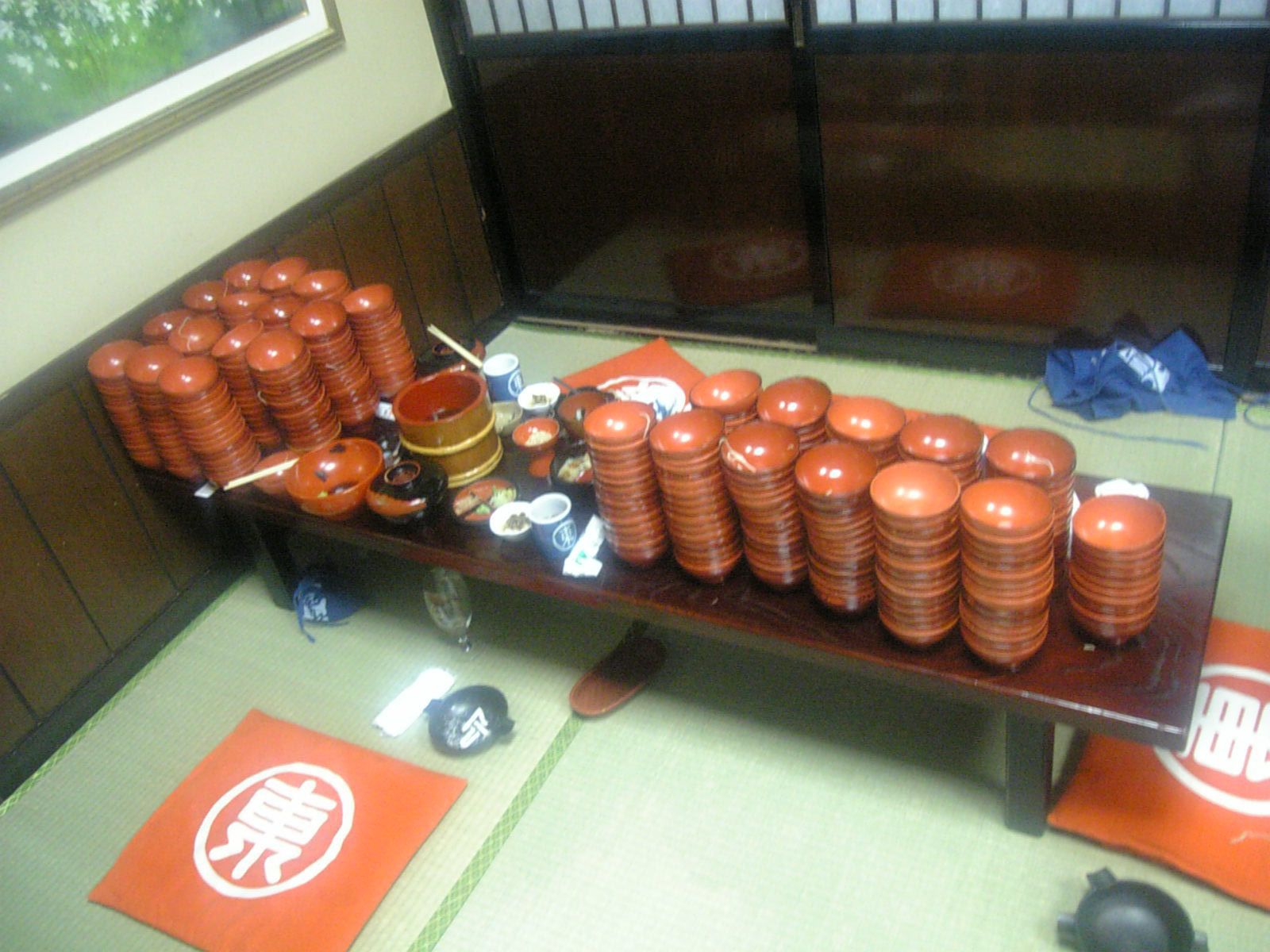
Wanko soba (わんこそば) translates literally as “bowl soba” — wanko being the local Iwate dialect word for a small bowl. But the experience is far more theatrical than the name suggests. You sit at a low table or counter in a traditional soba restaurant. In front of you is a lacquered wooden bowl. The server stands beside you, holding a large pot of freshly cooked buckwheat noodles. The game begins.
Every time you swallow a mouthful of noodles, the server immediately ladles another serving into your bowl — a single serving is perhaps 6–8 noodles, just a bite or two. You keep eating, and they keep serving, one small bowl’s worth at a time. To stop, you must place the lid over your bowl — at which point the server will shout an encouraging phrase and try to sneak in one more portion before you can get the lid down. The challenge is part sporting event, part cultural ceremony, part comedy routine.
Each serving comes with a rotating selection of accompaniments (called yakumi in Japanese): pickled vegetables, sesame, seaweed, grated radish, sweet miso, walnut sauce, and sometimes local mountain vegetables. You alternate between the pure soba dipped in broth and these toppings, and the variety keeps the experience interesting long past the point where you might think you’d grow bored. The dipping broth — a clear, delicate stock — is refilled freely throughout.
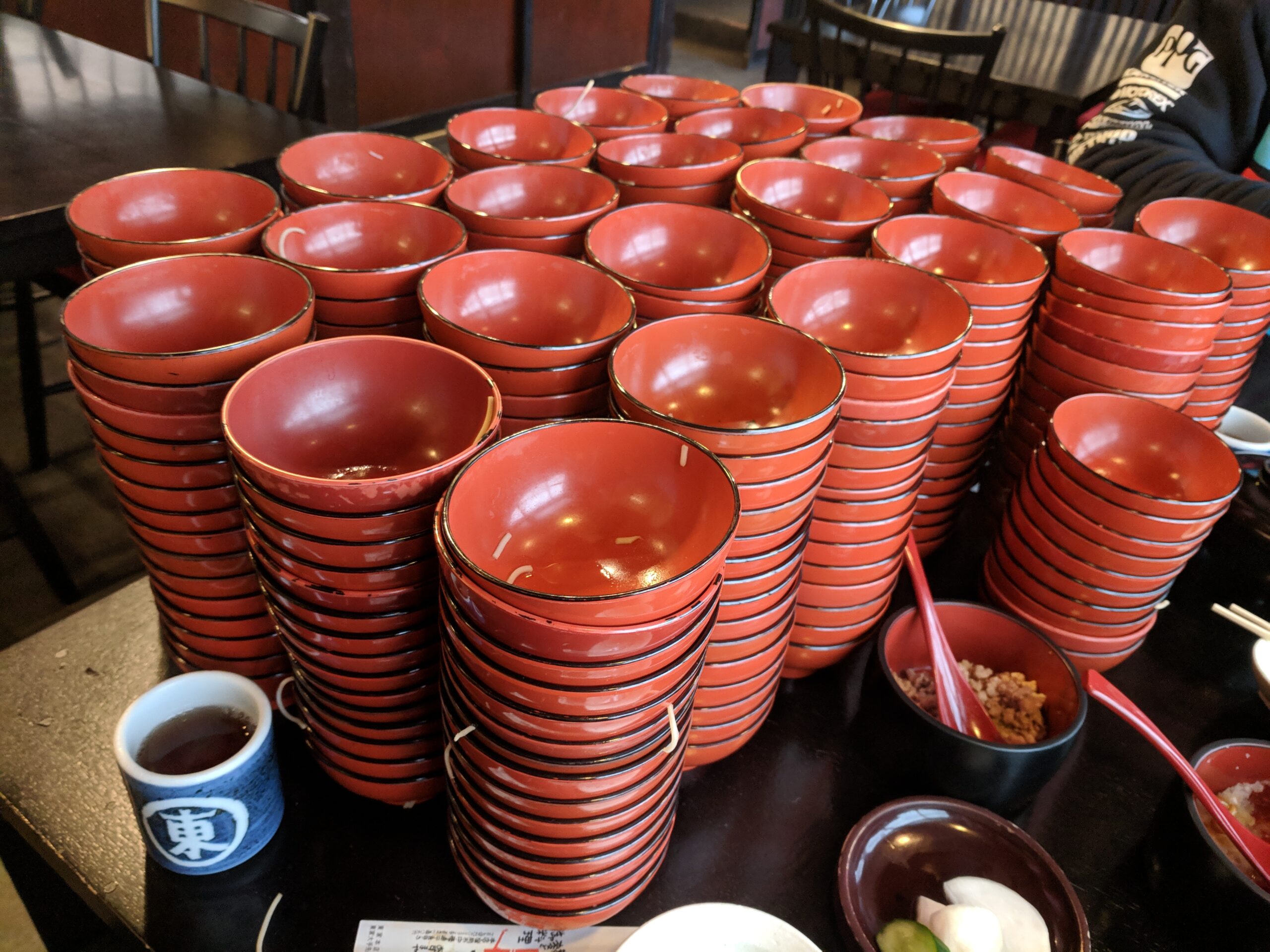
The restaurant keeps count of how many bowls you eat. 30 bowls is considered the equivalent of a standard soba meal. 50 bowls earns you a certificate at some restaurants. 100 bowls is a serious achievement that gets your name on a board. The Guinness World Record for wanko soba consumption, set in 2003, stands at 500 bowls in one sitting by a competitive eating champion. Most visitors eat somewhere between 20 and 60 bowls — the experience ends when you genuinely cannot eat another bite, or when you successfully cover your bowl before the server can intervene.
The History Behind the Bowls
Wanko soba has a history stretching back to the Edo period (1603–1868) in the Hanamaki area, southeast of Morioka. The most popular origin story tells of a feudal lord visiting Hanamaki who was so taken with the local soba that he ate bowl after bowl — with servants continuously refilling to show hospitality. The custom of refilling immediately, without waiting for a request, became the defining characteristic of the experience: the servers’ job is to demonstrate the host’s generosity through relentless, preemptive service.
Over time, the custom evolved into its modern competitive-relay format, and Morioka — as Iwate Prefecture’s largest city and main tourist gateway — became the primary destination for wanko soba. Today, several generations-old restaurants in Morioka have perfected the art of hosting the experience, with trained servers who can maintain a brisk pace while also performing the encouragement, the attempted lid-interceptions, and the running count with perfectly choreographed skill.
The soba itself is made from locally grown Iwate buckwheat, stone-ground in the traditional manner. Iwate’s cold climate, high altitude fields, and short growing season produce buckwheat with particularly strong, nutty flavor. Many wanko soba restaurants still grind their own flour daily and make noodles fresh each morning — the difference in flavor compared to mass-produced dried soba is immediately apparent, with a fragrant, earthy depth that makes each mouthful genuinely satisfying.
Where to Do Wanko Soba in Morioka
Several restaurants in Morioka offer the full wanko soba experience, each with slightly different atmospheres and traditions. Here are the three most celebrated options:
Azumaya (東家)
The name synonymous with wanko soba in Morioka, Azumaya has been serving the experience since 1907 and is widely considered the gold standard. The restaurant occupies a beautiful traditional building near the Nakano-bashi bridge, with tatami rooms where you sit on cushions at low tables in the authentic manner. The servers here are particularly skilled at the theatrical elements — the encouragement, the lid interception attempts, and the running commentary on your progress. Azumaya’s soba is exceptionally good quality, with a satisfying buckwheat nuttiness that holds up beautifully across many bowls. The yakumi selection is extensive and well-chosen. The restaurant counts your bowls carefully and presents you with a certificate if you reach 50. Prices: approximately ¥3,500–4,000 (~$24–28) for the full experience. Lunch and dinner service. Reservations recommended, particularly on weekends. Located about 15 minutes’ walk from Morioka Station: 1-8-3 Nakano-bashi, Morioka.
Shoten (松園)
A slightly more affordable option popular with locals, Shoten offers the full wanko soba experience in a more casual, family-friendly atmosphere. The soba quality is excellent and the servers maintain the proper traditions faithfully. Good choice if Azumaya has a long wait or if you’re traveling with children who might find the more formal atmosphere of Azumaya slightly intimidating. Prices from around ¥2,800 (~$19).
Hanamaki Azumaya (花巻東家)
If you’re willing to make the 45-minute train journey to Hanamaki (the historical birthplace of wanko soba), the original Azumaya branch in Hanamaki offers the experience in a beautifully restored historic building with an even more traditional atmosphere than the Morioka branch. Hanamaki also holds the formal Wanko Soba Championship each February — a genuinely spectacular competitive eating event that draws challengers from across Japan.
Practical Guide: How to Do Wanko Soba Right
A few tips to make the most of your wanko soba experience:
- Arrive hungry: Skip lunch or eat very lightly beforehand. The experience is substantially more enjoyable (and you’ll eat significantly more bowls) if you come with a genuine appetite.
- Wear comfortable, loose clothing: You will eat more than you planned. Do not wear anything with a tight waistband.
- Go early for lunch or on a weekday: Wanko soba restaurants can get extremely busy on weekend lunches, particularly during cherry blossom season (late April) and autumn leaf season (October–November). Arriving right when they open (typically 11am) avoids the worst waits.
- Pace yourself at the start: The temptation is to eat quickly at first, chasing a high bowl count. Experienced wanko soba eaters actually pace themselves deliberately — chewing properly, drinking the broth slowly, alternating between yakumi and plain soba. This leads to more bowls total, better digestion, and a more enjoyable overall experience.
- Use the yakumi strategically: The accompaniments aren’t just side dishes — they reset your palate and make each serving feel fresh. Use the grated radish to cut through any richness, the sesame for a nutty counterpoint, and the walnut sauce as a textural change. Variety is the key to longevity.
- Don’t be competitive with strangers: The experience is not actually a competition unless you make it one. The most memorable visits are those where you focus on the food, engage with your server’s performance, and laugh freely at the lid interception attempts. The bowl count is secondary to the fun.
- Bring friends: Wanko soba is significantly more fun at a table with others. The encouragement, the shared disbelief at how many bowls you’re eating, and the competition between friends elevates the experience enormously.
- Ask about allergy/dietary requirements: The soba itself is gluten-containing (buckwheat is mixed with wheat flour in most Japanese soba). Vegetarian options are usually available for the dipping broth (request shōjin or vegetarian when reserving). No dairy in the traditional preparation.
Morioka’s Three Great Noodles: Beyond Wanko Soba
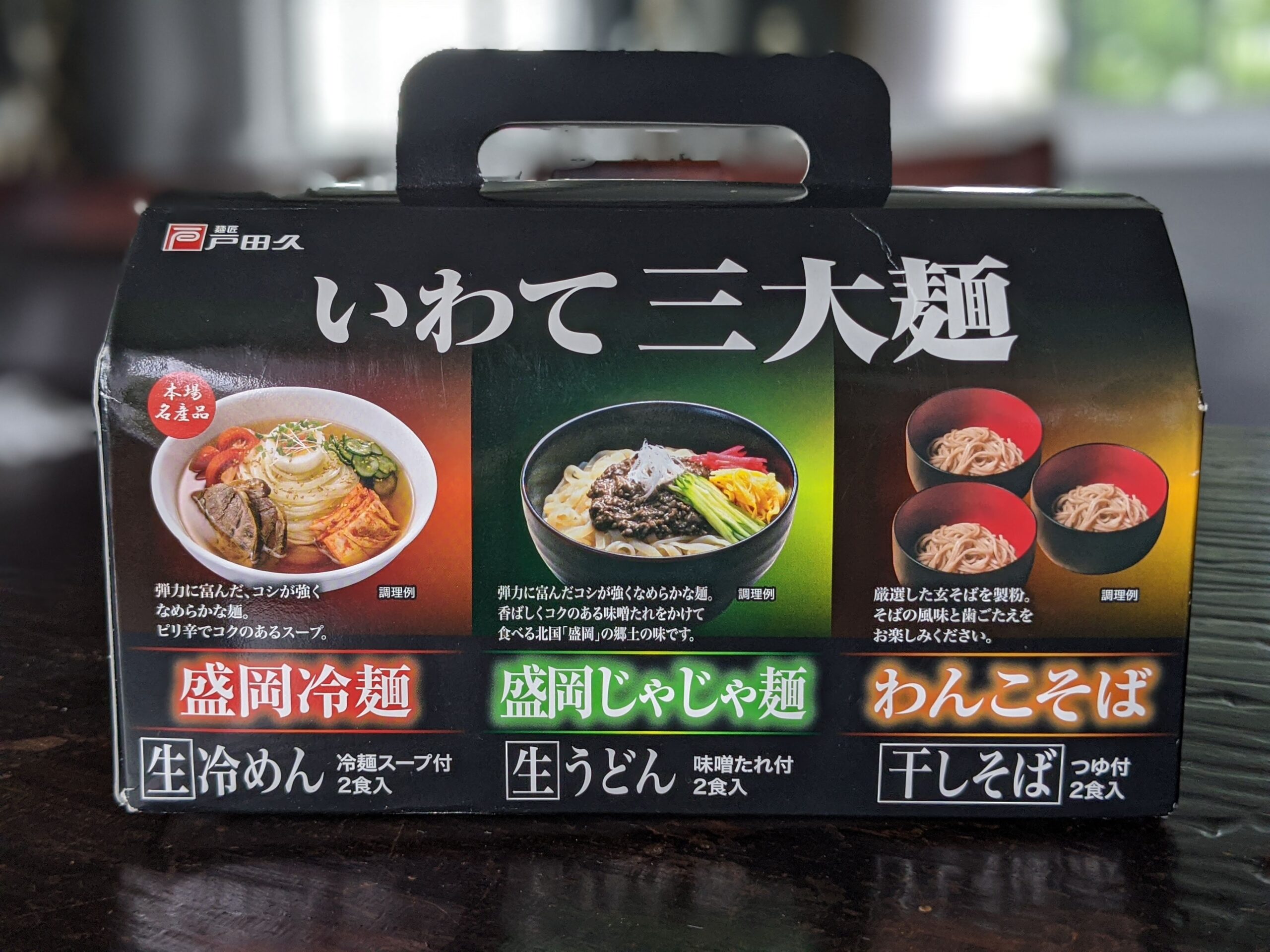
Wanko soba may be the most famous, but Morioka is exceptional among Japanese cities for having not one but three entirely distinct noodle cultures, each worthy of a dedicated meal. Food enthusiasts visiting Morioka often plan a “three noodles day” — starting with wanko soba for lunch and exploring the other two in the afternoon and evening. Trust us: this is one of the most satisfying days you can spend in Japan.
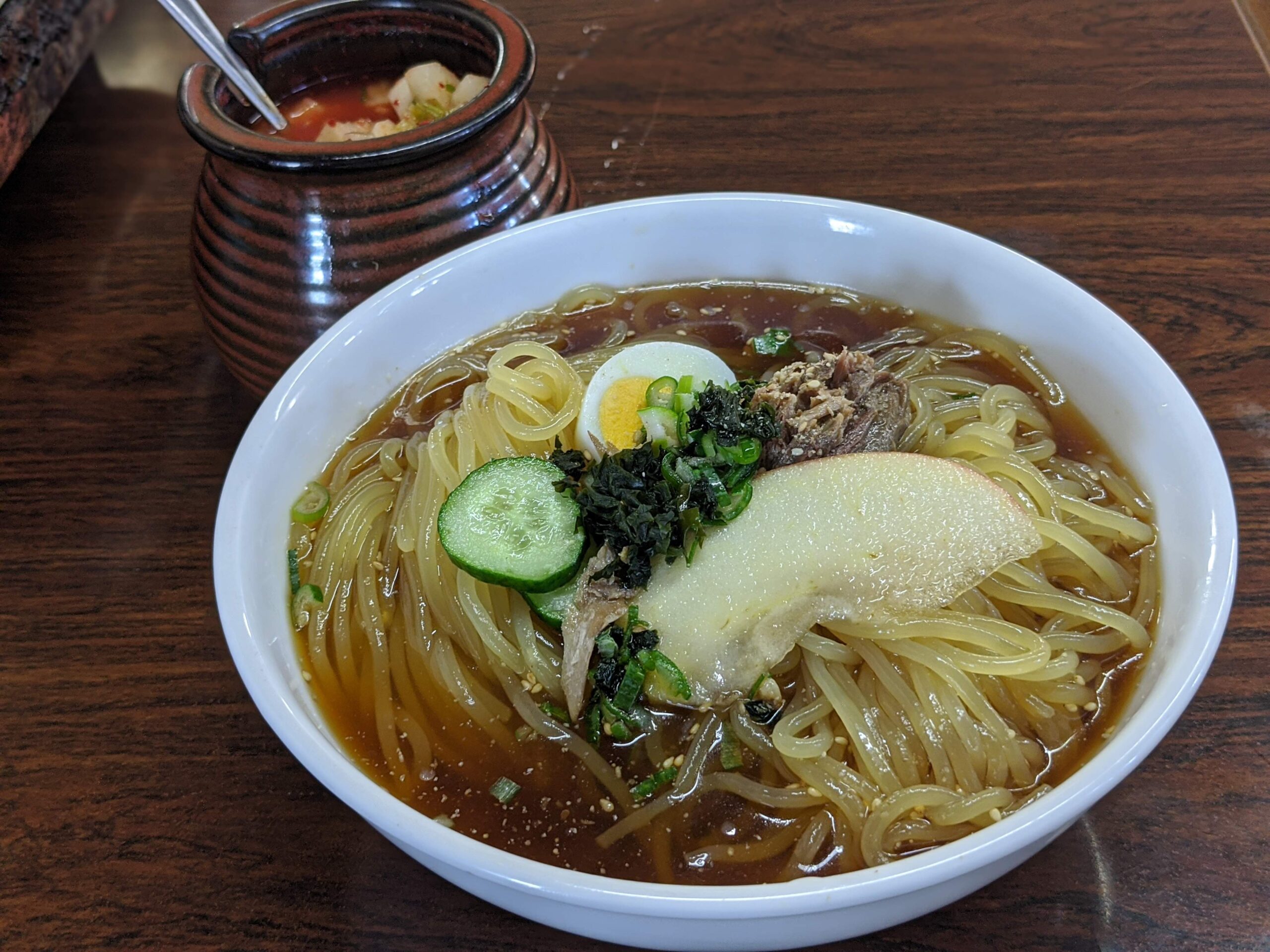
Morioka Reimen (冷麺)
Morioka reimen is Japanese cold noodles with a fascinating origin story. Brought to Morioka after World War II by Korean immigrants who settled in the city, the dish evolved over decades into something uniquely Moriokanese — distinct from Korean naengmyeon and found nowhere else in quite the same form. The noodles are made from a blend of wheat flour and potato starch, producing a translucent, chewy, almost bouncy texture. They’re served in an icy cold beef broth — clear, intensely savory, and very slightly sweet — topped with thin slices of beef, a boiled egg, cucumber, and almost always a watermelon slice. The watermelon seems incongruous until you taste it: the cold, sweet juiciness perfectly complements the savory broth and chewy noodles.
The reimen broth is frequently spiced with Korean-style chili paste — most restaurants let you choose from “none” to “very spicy.” The standard option has a gentle warmth that builds pleasantly. The signature restaurant for reimen is Pyongyang (平壌冷麺食堂), located near Morioka Station, where the Korean-heritage recipes have been maintained for decades. A bowl runs around ¥900–1,300 (~$6–9).
Jajamen (じゃじゃ麺)
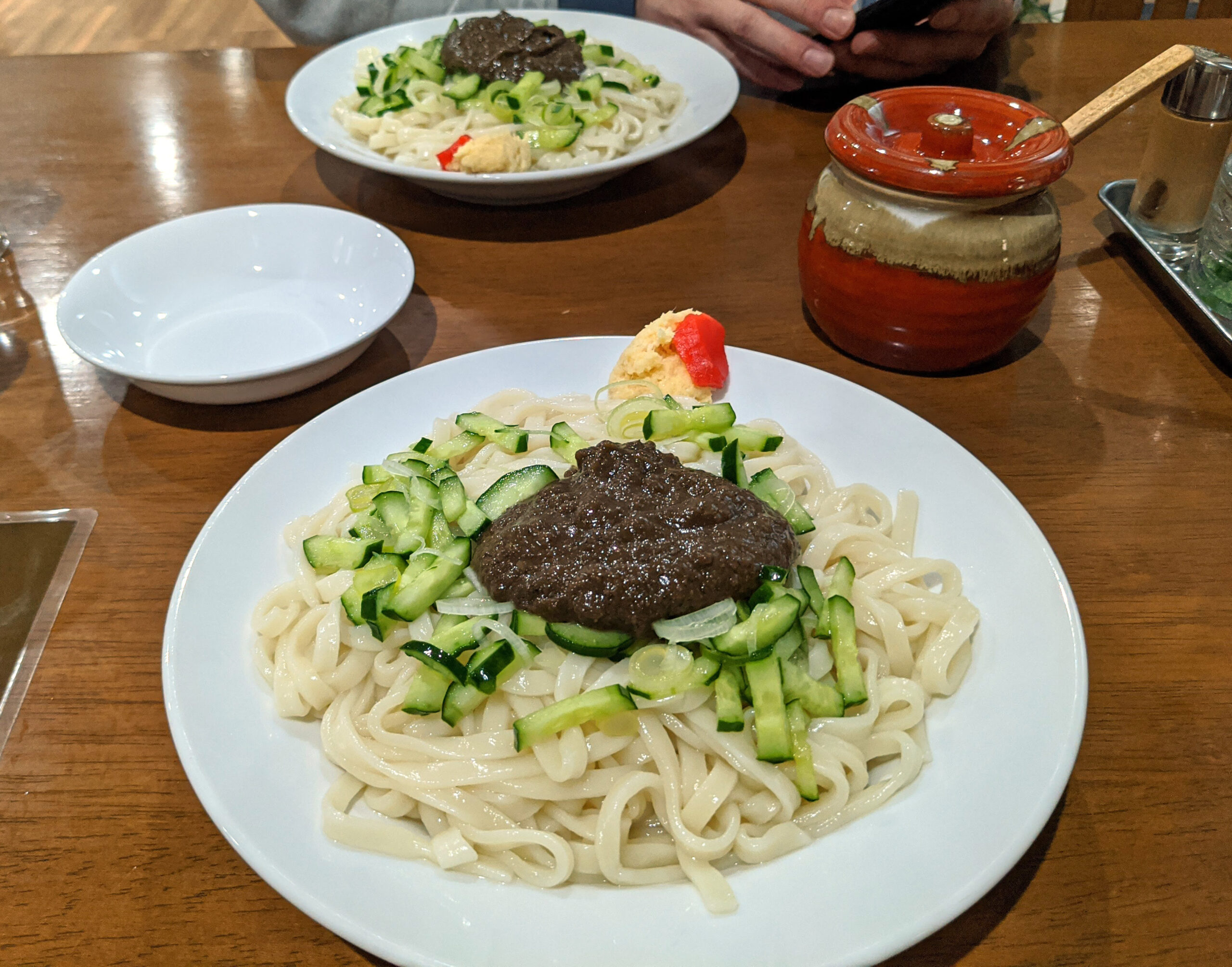
The third of Morioka’s great noodles is perhaps the least well-known outside the city, but arguably the most addictive. Jajamen is a Morioka invention inspired by Chinese zha jiang mian (noodles with fermented bean paste), brought back by soldiers returning from Manchuria after World War II and gradually transformed into something entirely local. The dish consists of wide, flat udon-like noodles topped with a savory miso and meat paste, grated ginger, cucumber, and leek. You mix everything together and eat it in a style somewhere between pasta and noodle soup.
The Morioka twist that makes jajamen unique: when you’ve finished the noodles, you crack a raw egg into the remaining sauce, add a small amount of the restaurant’s hot soba broth, and stir — creating a small, intensely savory egg-and-miso soup called chiitan (ちいたん). This finale soup is considered by regulars to be the best part of the meal. The long-established Shokudo Pairon near the Sakurayama area is the undisputed home of jajamen, open since 1953. A serving costs around ¥750–900 (~$5–6).
Exploring Morioka: Beyond the Noodles
Morioka is a genuinely charming city that rewards exploration beyond its extraordinary food culture. It has the comfortable, walkable scale of a mid-sized Japanese city but the cultural richness of somewhere much larger — a result of its long history as the feudal capital of the Nambu domain, one of Tohoku’s most powerful clans during the Edo period.
Morioka Castle Ruins (岩手公園)
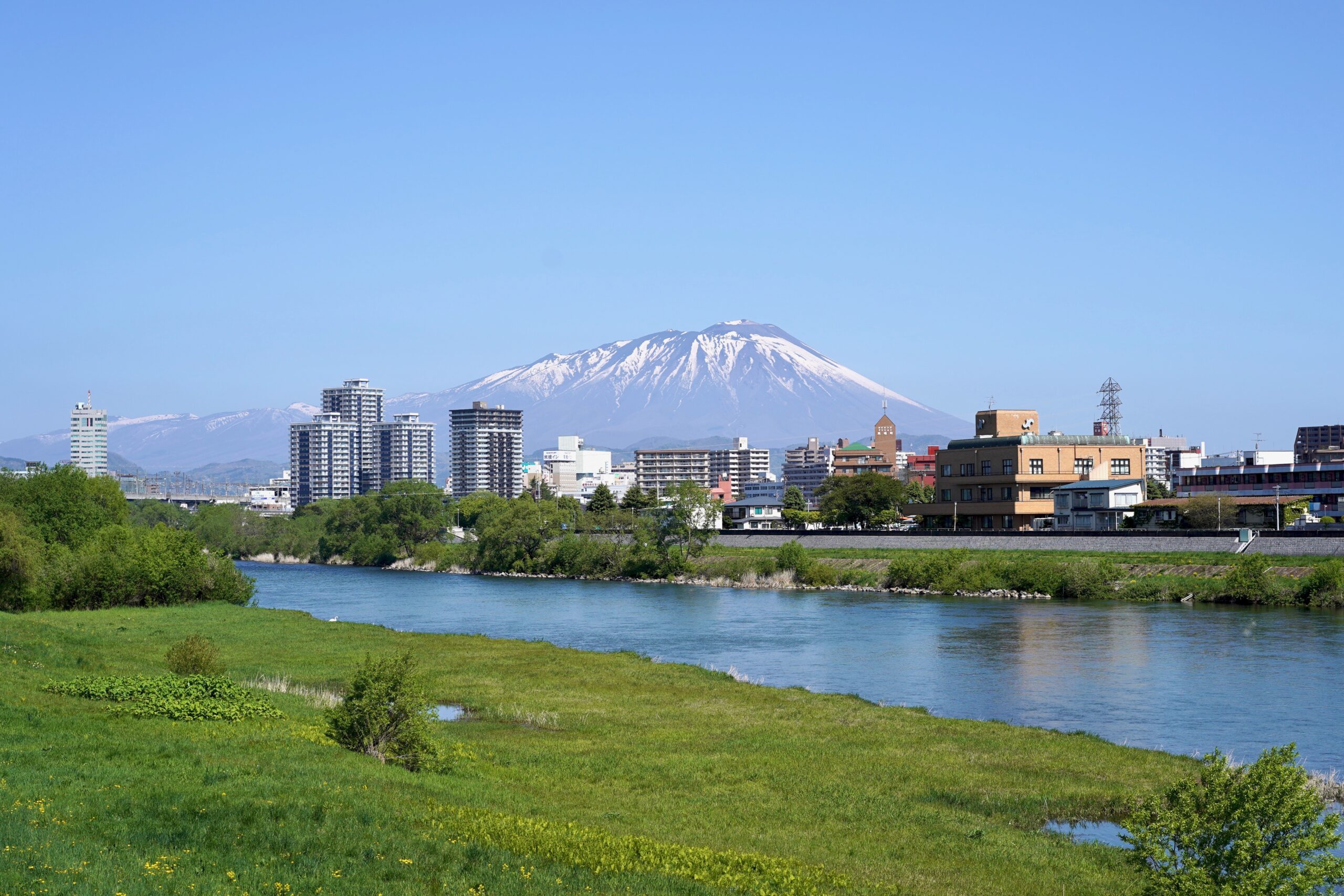
The remains of Morioka Castle sit atop a small hill in the center of the city, now a beautifully landscaped park with magnificent views of Mount Iwate, the Kitakami River, and the city below. The castle itself was dismantled in the Meiji period, but the massive stone walls remain largely intact — the type of granite used, known locally as Gosho granite, was quarried from the mountains around Morioka and gives the walls their distinctive silvery-grey appearance. The park is one of Morioka’s premier cherry blossom viewing spots in late April and early May, when hundreds of trees transform the old castle grounds into a sea of pink. Free to enter; open year-round.
Nakano-bashi Bridge & the Merchant District
The historic merchant district near Nakano-bashi bridge is Morioka’s most atmospheric area for walking — a network of old streets with traditional craft shops, independent cafés, sake breweries, and the riverside walk along the Nakatsu River. The district is particularly beautiful on summer evenings and autumn afternoons, when the light catches the water and the old buildings glow warmly. Keep an eye out for the remarkable cherry tree growing through a granite wall near the Zaimoku-cho area — a 350-year-old tree that has gradually grown its way through a crack in an Edo-period stone wall and whose roots now grip the rock like a giant’s fingers. It’s become one of Morioka’s most photographed landmarks.
Iwate Craft Beer
Morioka has developed a quietly excellent craft beer scene built on the city’s long tradition of quality brewing (Iwate’s water is exceptionally pure, fed by snowmelt from the Ou Mountains). Iwate Kura brewery, based in Ichinoseki south of Morioka but available throughout the city, produces a range of excellent ales including a celebrated yuzu wheat beer and a rich stout. The brewery tap in Morioka’s downtown area is well worth a visit. Several other local breweries have emerged in recent years, and a craft beer bar crawl through the downtown area makes for a very enjoyable evening.
Best Time to Visit Morioka for Wanko Soba
- Spring (Late April – May): Cherry blossom season transforms Morioka Castle park and the Kitakami River banks into extraordinary spectacles. The weather is mild (10–18°C / 50–64°F) and the city is at its most festive. Wanko soba restaurants are busy — book ahead.
- Summer (July–August): Warm and occasionally humid (25–30°C / 77–86°F). The city hosts the Sansa Odori festival in August — one of Tohoku’s great summer festivals, with enormous drum-and-dance processions through the central streets. Ideal weather for cold reimen noodles after a hot wanko soba lunch.
- Autumn (September–November): Perhaps the most beautiful season, with autumn foliage around the castle ruins and along the Kitakami River. Temperatures drop from 18°C (64°F) in September to around 5°C (41°F) in November. The Wanko Soba Championship in February draws enthusiasts; the October Morioka Matsuri is a major local festival.
- Winter (December–February): Cold and snowy (temperatures -5 to 5°C / 23–41°F), but Morioka in winter has its own severe, striking beauty. Wanko soba is particularly satisfying as a warming winter meal. The Wanko Soba Championship is held each February in Hanamaki — a spectacular event worth timing your trip around if competitive eating entertains you.
Getting to Morioka
- Shinkansen from Tokyo: The Tohoku Shinkansen runs directly from Tokyo Station to Morioka in approximately 2 hours 10 minutes on the fastest Hayabusa service (¥14,650 / ~$101 one way). JR Pass valid. This is by far the most convenient option and puts Morioka well within reach as a day trip from Tokyo, though an overnight stay is strongly recommended to do the city justice.
- Shinkansen from Sendai: Just 35 minutes from Sendai on the Tohoku Shinkansen (¥6,140 / ~$42). Perfect for a day trip from Sendai, or as part of a Sendai-Morioka-Akita loop.
- From Akita: The Akita Shinkansen runs between Akita and Morioka (via Tazawako) in about 1 hour 15 minutes (¥5,550 / ~$38). JR Pass valid. A beautiful route through mountain and lakeside scenery.
- Highway Bus: Direct buses from Tokyo’s Shinjuku and Ikebukuro to Morioka operate daily (around 7–8 hours, ¥3,600–6,000 / ~$25–41). Economical but time-consuming; best for the overnight service.
The JR Pass covers all shinkansen options. Morioka Station is very well served, and the city center is easily navigable on foot or by bus from the station.
Where to Stay in Morioka
Budget (Under ¥8,000 / $55 per night)
Morioka Station Hotel is a reliable, clean business hotel steps from the shinkansen exit, ideal for travelers arriving late or departing early. Compact rooms but well maintained. Guest House Ihatov offers a friendly backpacker atmosphere with dormitory and private rooms; communal kitchen and helpful English-speaking staff. Both from around ¥4,000–6,000 (~$28–41) per night.
Mid-Range (¥8,000–¥20,000 / $55–$135)
Dormy Inn Morioka is a popular chain hotel near the station with an excellent natural hot spring bath — a genuine rarity for a city hotel at this price point. The breakfast buffet features local Iwate produce. Hotel Mets Morioka (JR Hotels) is directly inside the station building, perfectly positioned for rail travelers. Both from around ¥9,000–14,000 (~$62–97) per night.
Luxury (¥20,000+ / $135+)
Hanamaki Onsen Resort (45 minutes from Morioka by train) offers the area’s most luxurious ryokan experiences, with elaborate kaiseki meals featuring Iwate ingredients, large private hot spring baths, and immaculate traditional service. This is the area’s closest equivalent to a high-end mountain onsen resort. Rates from ¥25,000–40,000 (~$173–276) per person including dinner and breakfast. For city-center luxury, ANA Crowne Plaza Morioka offers the highest standard in town at around ¥20,000+ (~$138+) per night.
A Day in Morioka: The Perfect Noodle Itinerary
Morning
9:00am: Arrive in Morioka by shinkansen. Walk directly from the station to the Morioka Castle Ruins Park (15 minutes on foot). Spend an hour exploring the massive stone walls, the riverside views, and in season, the cherry blossoms or autumn foliage. The early morning light on the walls and the views toward Mount Iwate are worth the early start.
10:30am: Walk to the Nakano-bashi area and the historic merchant district. Find the famous cherry tree growing through the stone wall. Browse the craft shops — particularly the Nanbu Tekki (南部鉄器) iron casting shops, where you can watch artisans at work and buy authentic cast iron tetsubin (teakettles) and cups to take home. These are among the finest traditional craft objects in all of Japan.
Lunch (The Main Event)
11:30am–1:00pm: Arrive at Azumaya for wanko soba. Budget 1.5 to 2 hours for the experience — you’ll want time to settle in, pace yourself, interact with your servers, and then sit in satisfied amazement staring at your tower of empty lacquer bowls. This is the highlight of the day. Do not rush it.
Afternoon
2:00pm: Walk to the Nakatsu River for a gentle post-lunch stroll along the riverside path. The combination of the old stone embankments, the willows trailing into the water, and the backdrop of Mount Iwate is one of Morioka’s signature views. Coffee and cake at one of the riverside cafés — you’ve earned it.
3:30pm: Visit a local sake or craft beer brewery. Nanbu Bijin (南部美人), a celebrated Iwate sake brewery, has a shop in the city where you can taste several varieties and buy bottles to take home. The sake is exceptional — particularly the junmai daiginjō, which has won international awards.
Evening
6:00pm: Dinner at a reimen restaurant for the second of Morioka’s great noodles — try Pyongyang for the most authentic version, or any of the several reimen specialists near the station. The contrast between the warm, hearty wanko soba of lunch and the ice-cold, electric reimen of dinner is itself a kind of Morioka experience.
8:00pm: Optional late evening walk through the nighttime merchant district. In spring, lit-up cherry blossoms reflect in the river. In autumn, the maple trees glow under streetlamps. In any season, Morioka at night is quieter and more intimate than the major tourist cities — the kind of place where you can walk without crowds and feel, genuinely, like you’re inside Japan rather than observing it from outside.
Practical Tips for Wanko Soba & Morioka
- Reservation strongly recommended: Azumaya in particular fills up fast on weekends and during peak tourist seasons. Call ahead or ask your hotel to book. Some restaurants accept online reservations through their websites or via tourist platforms.
- Price transparency: The wanko soba experience at established restaurants is typically all-inclusive — you pay one price (around ¥3,000–4,000 / ~$21–28) and eat as many bowls as you can. There is no extra charge per bowl. Confirm when reserving if this is the case at your chosen restaurant.
- Children are welcome: Most wanko soba restaurants have children’s pricing and smaller lacquer bowls for younger diners. The theatrical elements make it very entertaining for kids, who often surprise their parents with how many bowls they manage.
- English menus available: Azumaya and the other main wanko soba restaurants in Morioka cater regularly to foreign visitors and have English-language menus and explanations. Staff are generally experienced at guiding international guests through the experience.
- The bowl count is yours to keep: At the end of the meal, many restaurants present you with a card recording how many bowls you ate. Some offer certificates for reaching milestone counts (30, 50, 100 bowls). These make excellent souvenirs.
- Nanbu Tekki shopping: If you’re buying iron tetsubin or cups from the craft shops near Nakano-bashi, confirm they can be shipped internationally — the shop staff are accustomed to international customers and can advise on packing, customs, and shipping options.
- IC Cards: Morioka’s buses accept Suica and other IC cards. The city center is compact enough to walk most places, but buses are useful for the station area and outer districts.
- Day trip possibility: Morioka can be visited as a very long day trip from Tokyo by shinkansen (2 hours 10 minutes each way). However, an overnight stay allows you to try all three noodle types and see the city’s evening atmosphere — strongly recommended.
Related Articles You Might Enjoy
- Nanbu Tekki: The Complete Guide to Morioka’s Traditional Iron Casting Experience
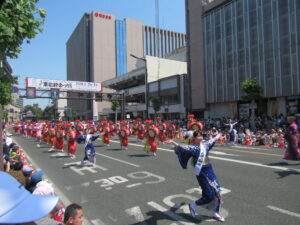
- Morioka Sansa Odori Festival: Japan’s Largest Taiko Drum Festival — Complete Guide for Foreigners
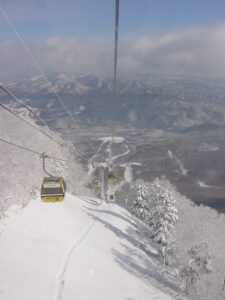
- Appi Kogen, Iwate: Japan’s Premier Powder Ski Resort — Complete Guide for Foreign Visitors
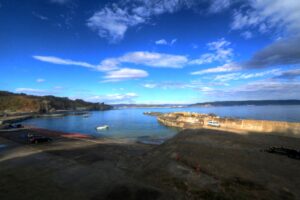
- Kuji, Iwate: Japan’s Northernmost Ama Divers & Hidden Amber Museum
- Tohoku’s Pacific Coast Road Trip: The Ultimate Sanriku Rias Coast Drive
Final Thoughts
The wanko soba experience in Morioka is one of those Japan moments that photographs can’t fully capture but that stays with you forever. It’s genuinely funny, genuinely delicious, and completely unlike any eating experience elsewhere in the world. When you’re sitting on the tatami mat with your stack of lacquer bowls growing beside you, your server’s encouraging shouts ringing in your ears, and your table companions groaning happily as another serving lands in your bowl — you’ll understand exactly why people come to Morioka specifically for this, and you’ll understand why they come back.
Combined with Morioka reimen, jajamen, the castle ruins, the historic merchant streets, and the ever-present grandeur of Mount Iwate rising above it all, Morioka offers one of Tohoku’s most complete and satisfying city experiences. Add it to your itinerary. Arrive hungry. And when you finally put the lid on your bowl and the server’s face falls in comic disappointment — you’ll know you’ve done Japan properly.
Got questions about planning your Tohoku trip, or spotted something we missed? We’d love to hear from you — drop us a message here.

コメント