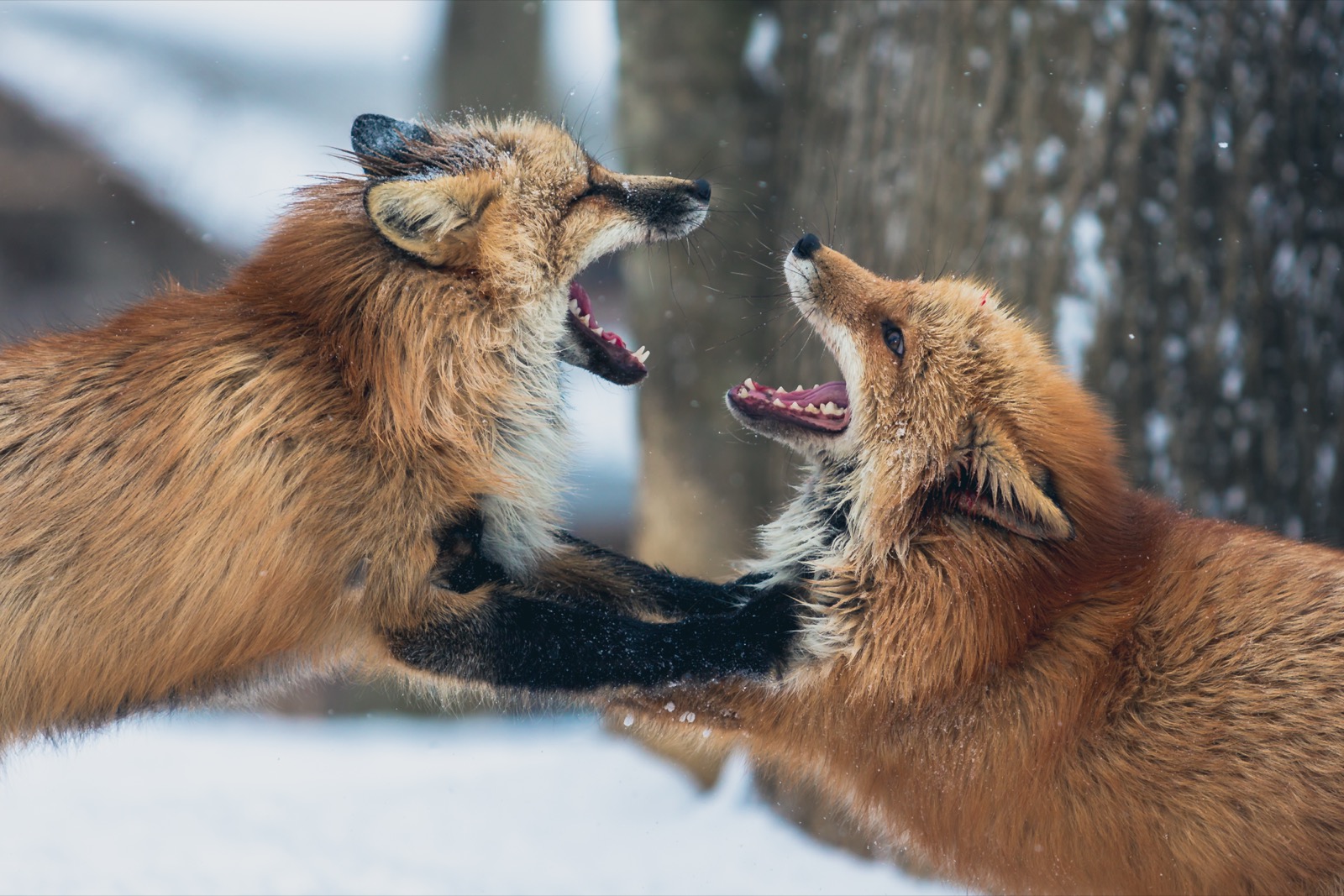
Picture this: you’re standing in an open, snow-dusted field in the mountains of Miyagi Prefecture, and more than a hundred foxes — russet red, silvery gray, and even a few with jet-black “cross” markings — are trotting past you, curling up for naps in the sun, and occasionally locking eyes with you from just a few feet away. No cages, no glass, no enclosures in sight. This is Zao Fox Village (蔵王きつね村), one of the most unusual and unforgettable wildlife encounters in all of Japan, and it’s tucked away in the hills above Shiroishi, less than two hours from Sendai. If you love animals, photography, or just want to see something that looks like it belongs in a Studio Ghibli film, this place needs to be on your Tohoku itinerary.
Why Zao Fox Village Should Be on Every Japan Itinerary
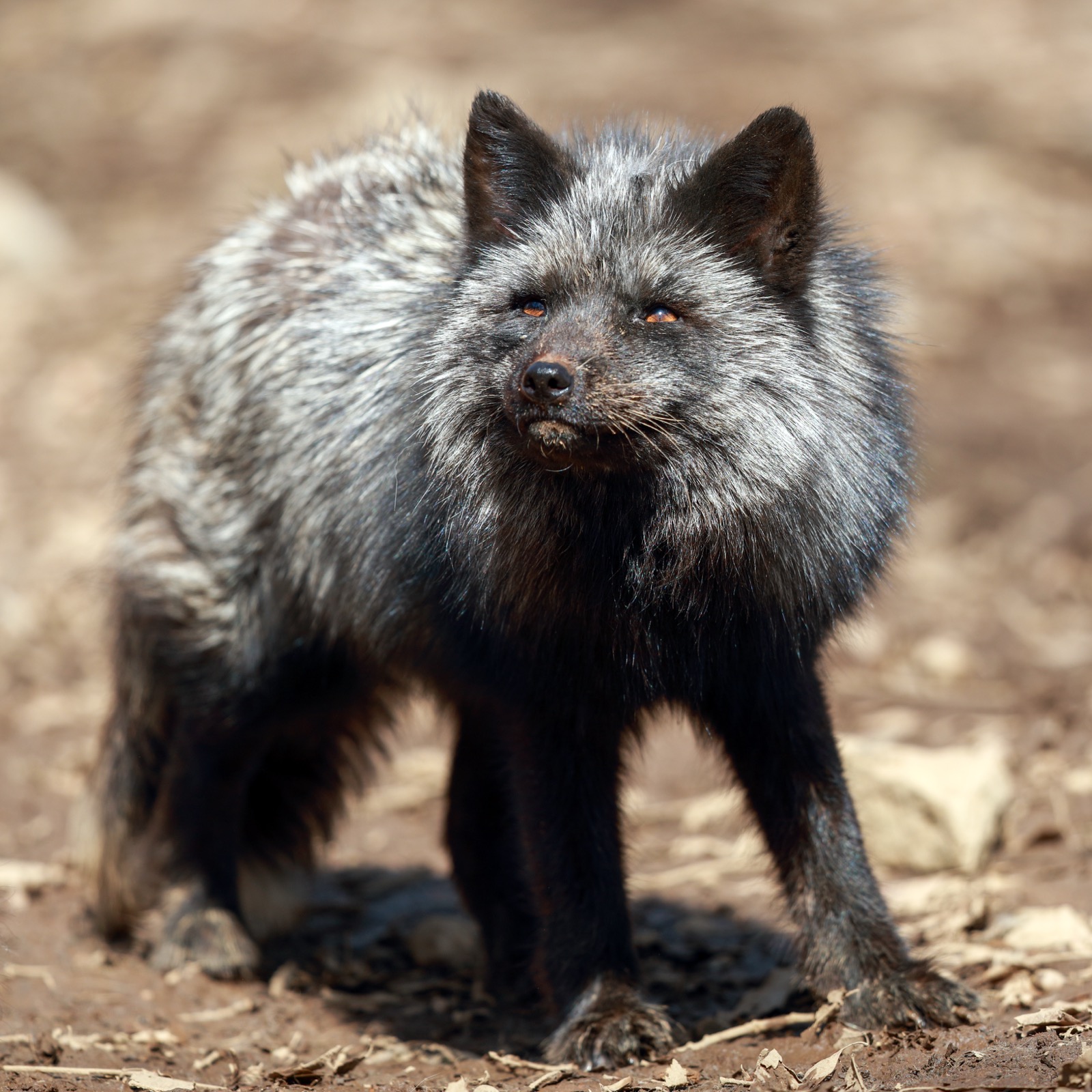
Japan has no shortage of quirky animal attractions — the rabbit island of Okunoshima, the cat island of Tashirojima (also in Tohoku, and well worth combining with this trip), the deer of Nara. But Zao Fox Village stands apart because of sheer scale and authenticity. Around 100 to 120 foxes representing six different breeds — including native Japanese red foxes, silver foxes, platinum foxes, Arctic marble foxes, and cross foxes — live semi-wild across roughly 30,000 square meters (about 7.4 acres) of hillside forest and open pasture. Unlike a zoo, most of the park lets the foxes roam freely while you walk among them on marked paths, which creates an intimacy you simply can’t get anywhere else.
For American and Australian visitors in particular, this kind of unstructured, up-close animal encounter is rare and slightly thrilling. There’s a current of gentle unpredictability running through the whole visit — a fox might trot right past your ankles, another might be curled up asleep on the exact spot you wanted to photograph, and a particularly bold one might try to get a little too close to your camera bag. Staff are on hand throughout to make sure both foxes and visitors stay safe, but the overall feeling is one of genuine wildlife immersion rather than a staged photo-op.
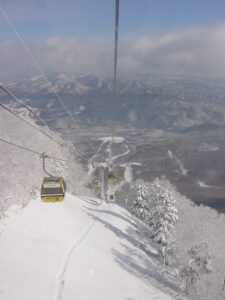
It’s also a fantastic complement to a Zao-area trip. Many travelers already come to this part of Miyagi and Yamagata for the famous Zao Onsen ski resort and its otherworldly “snow monster” (juhyo) ice-covered trees in winter. Zao Fox Village — despite the name — is actually located on the Miyagi side, closer to Shiroishi, so it pairs beautifully with a day exploring Shiroishi Castle, or as a scenic stop on a road trip between Sendai and Yamagata.
Getting There from Tokyo
Zao Fox Village sits in the mountains above Shiroishi City, roughly 30 minutes by car from Shiroishi-Zao Station on the Tohoku Shinkansen line. Here’s how to plan the journey from Tokyo:
By Shinkansen (recommended): Take the Tohoku Shinkansen from Tokyo Station to Shiroishi-Zao Station. Most services require a transfer at Fukushima or Sendai onto a local Yamabiko or Nasuno train, since not every Hayabusa stops at this smaller station — the full journey takes about 2 hours and costs around ¥11,000–12,500 (roughly $73–83 USD) one-way, and is fully covered by the Japan Rail Pass or the JR East South Hokkaido Pass. From Shiroishi-Zao Station, you’ll need a taxi (about ¥4,000–5,000 / $27–33, 20-25 minutes) or a rental car to reach the village itself, as there’s no direct public bus.
By car (most flexible): If you’re already road-tripping through Tohoku, driving is by far the easiest option. From Sendai, it’s about 45 minutes via the Tohoku Expressway to the Shiroishi Zao IC, followed by a scenic 15-minute mountain drive. From Tokyo, it’s roughly 4 hours (280 km / 175 miles) via the Tohoku Expressway. Parking at the village is free and plentiful.
By highway bus: Budget travelers can take an overnight or daytime highway bus from Tokyo’s Shinjuku or Tokyo Station to Sendai (about 5-6 hours, ¥3,000–6,000 / $20–40), then rent a car or take a taxi from Sendai the rest of the way. This is the cheapest option but adds significant travel time.
Pro tip: because public transit doesn’t reach the village directly, this is one of the best arguments in Tohoku for renting a car for at least part of your trip, or booking a taxi round-trip from Shiroishi-Zao Station (many drivers will wait for you and take you back for a flat fee — ask your hotel concierge to help arrange this in advance).
Inside the Village: Meeting Six Breeds of Free-Roaming Foxes
Once you pass through the entrance gate (adult admission is ¥1,500 / about $10 USD, with discounts for children), you’ll walk into an open hillside area where the majority of the foxes live. This isn’t a manicured, sterile enclosure — it’s a real forest floor with dirt paths, wooden fences, and dens the foxes have dug themselves. The breeds you’ll encounter include the native Hokkaido red fox (kitakitsune), the classic red fox, the silver fox with its striking black-and-silver coat, the platinum fox, the Arctic marble fox with pale, marbled fur, and the cross fox, which has a distinctive dark stripe pattern across its shoulders resembling a cross.
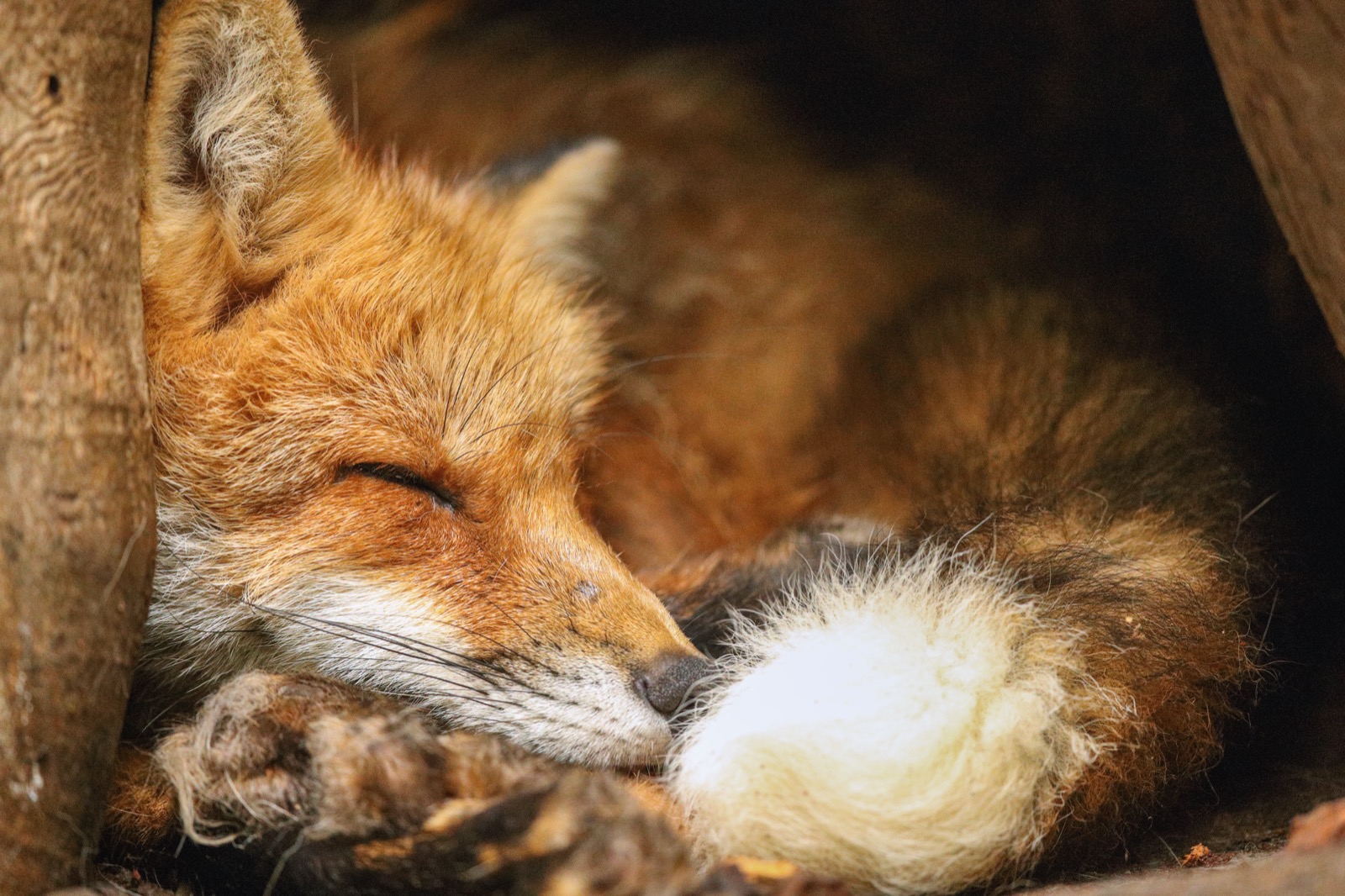
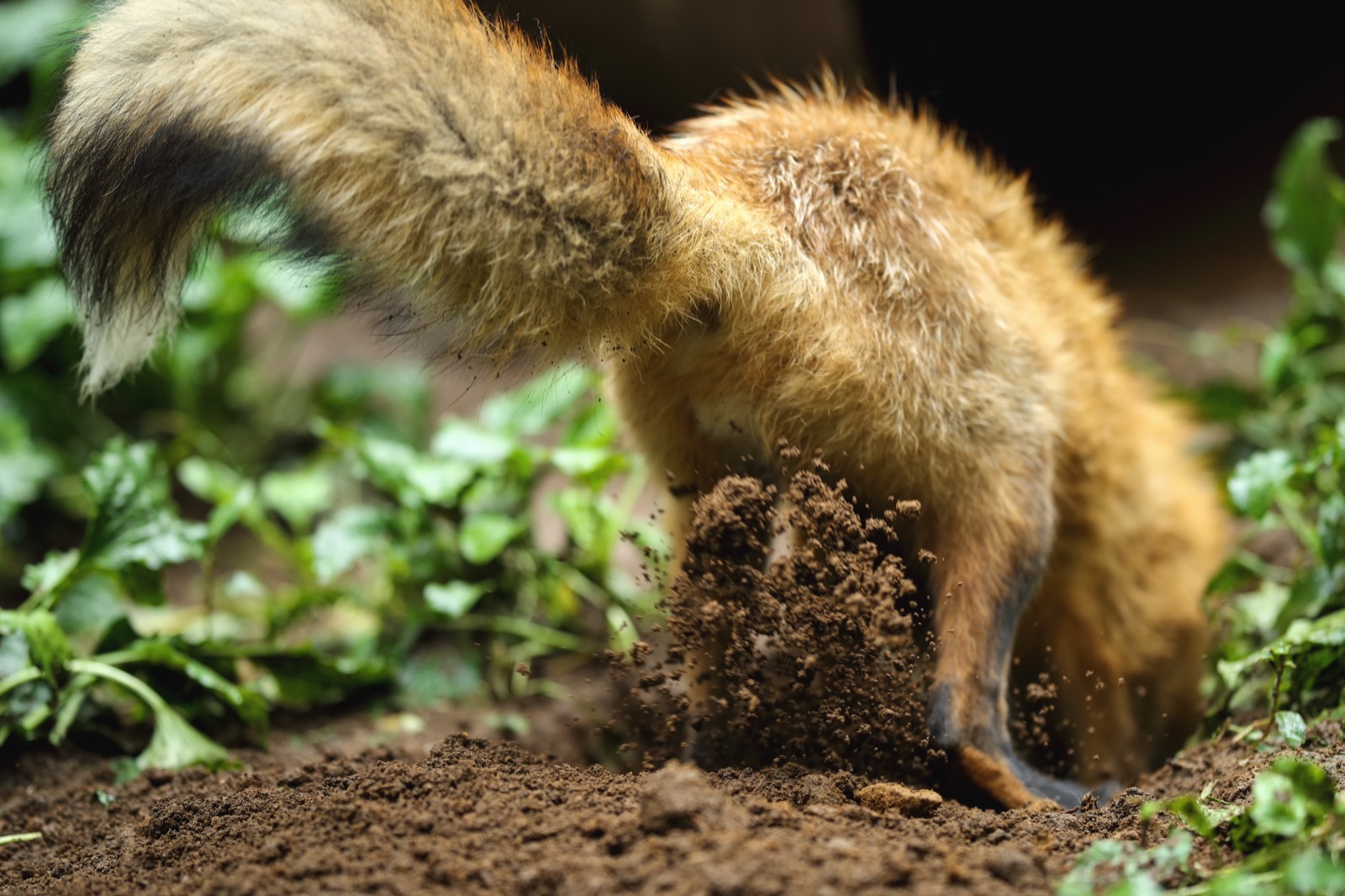
Because the foxes roam freely, no two visits are ever quite the same. Spring brings adorable kits (fox pups) that were born in March and April, which is easily the most popular — and most quickly booked-out — time to visit. Staff sometimes rope off active denning areas to give mother foxes privacy, so if you’re specifically hoping to see babies, plan your trip for May or June when kits are old enough to be more visible without restrictions. Throughout the rest of the year, you’ll mostly see adult foxes dozing in sunny patches, play-fighting with each other, or investigating visitors with obvious curiosity.
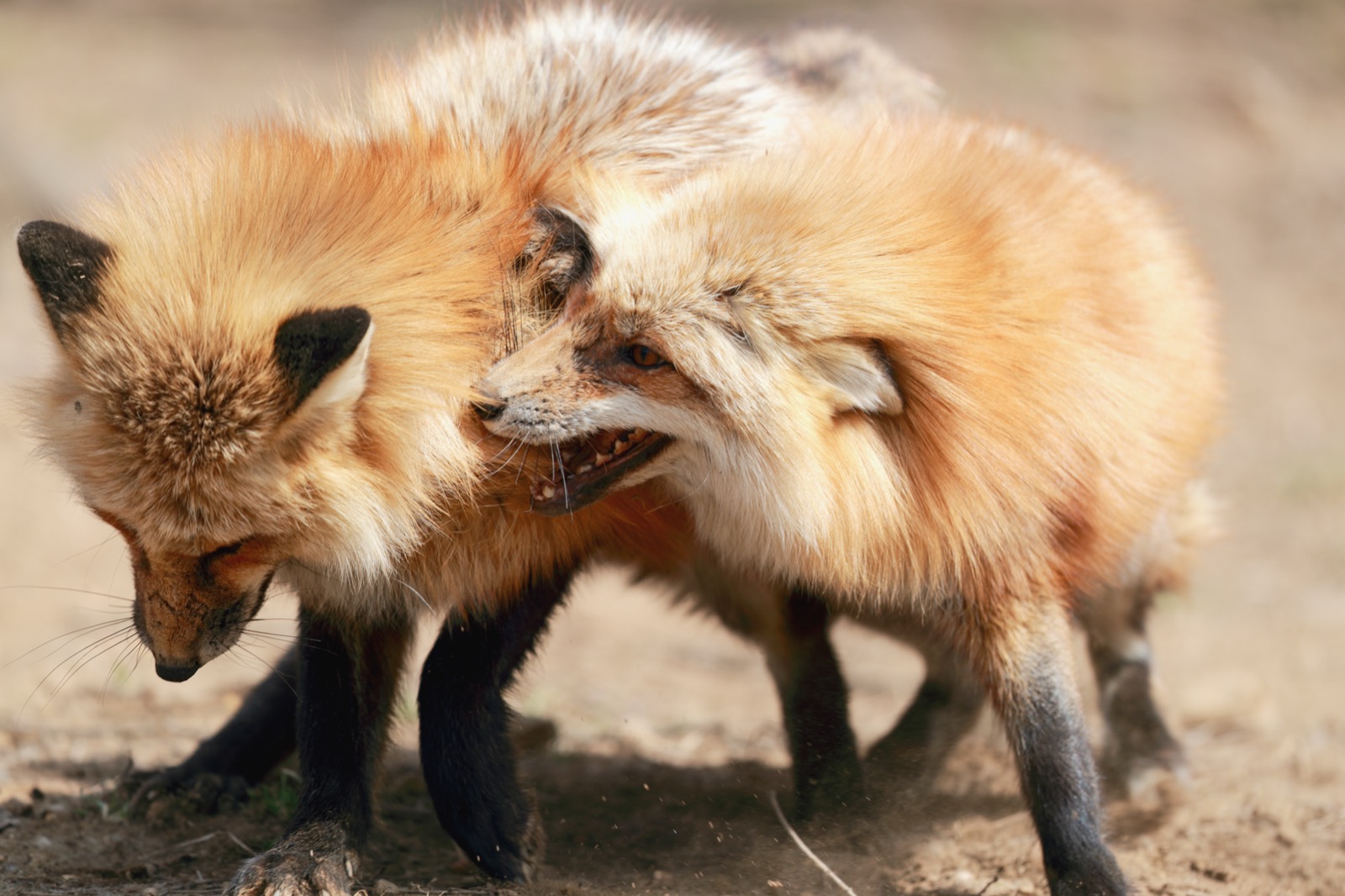
There’s also a fenced “hold a fox” area near the entrance where, for an additional fee (around ¥500 / $3.50), staff will let you sit and hold a calmer, trained fox for a few minutes under close supervision — a nice option if you want a guaranteed close encounter for photos rather than relying on the free-roaming foxes cooperating. Small pens near the entrance also house a few rabbits and other small animals, which makes this a good stop even if you’re traveling with younger kids who might find the open-roaming section slightly intimidating.
Feeding, Photographing & Staying Safe Around the Foxes
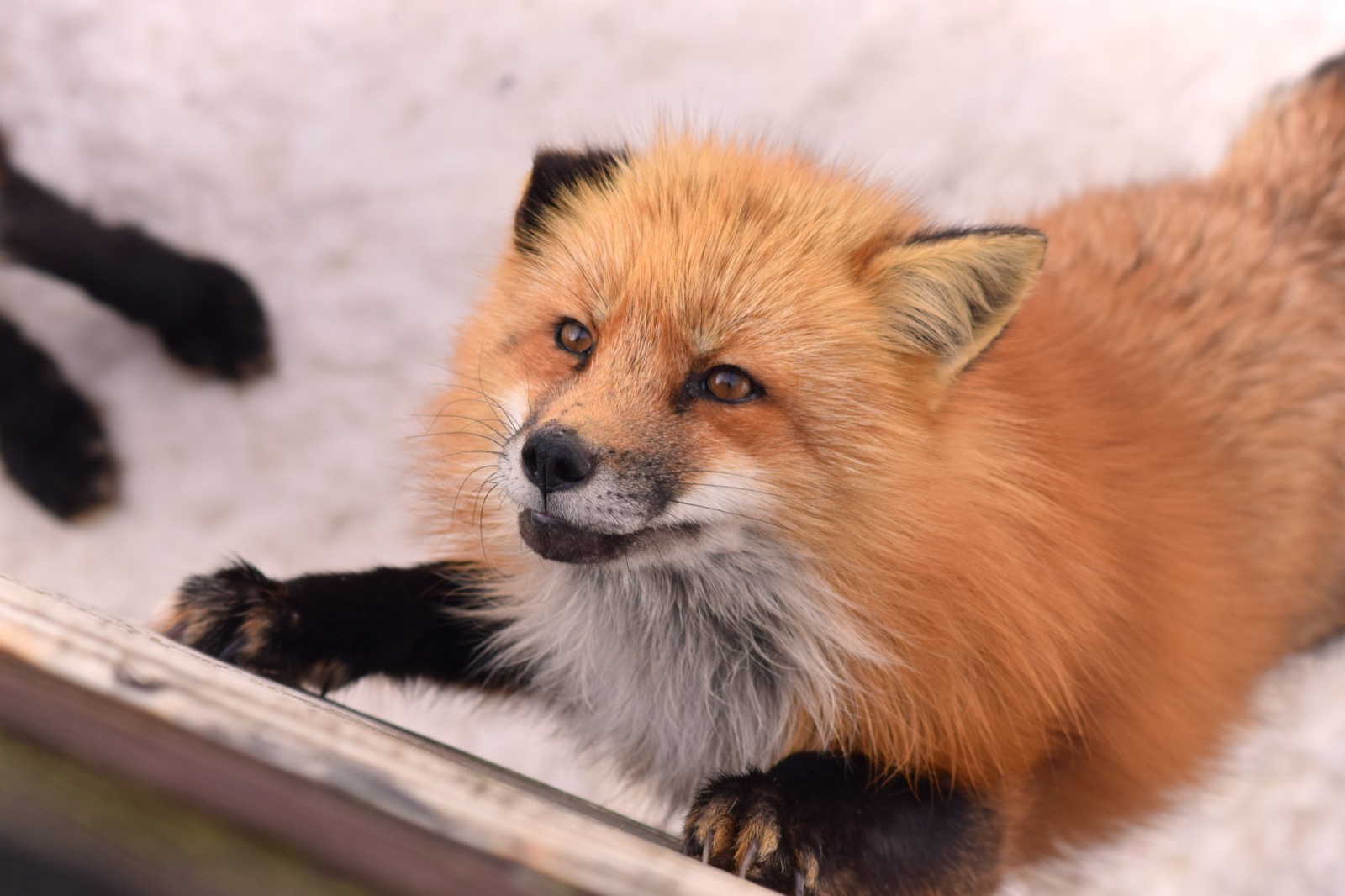
You can purchase small bags of fox food (usually pieces of meat or specially formulated pellets) at the entrance for about ¥100–200 ($0.70–1.35). Feeding is only allowed from designated wooden platforms scattered around the park — you’re not permitted to hand-feed foxes directly at ground level, both for your safety and theirs. Climb up onto a platform, and it won’t take long before a fox notices and trots over expectantly. It’s a genuinely delightful moment, and one of the best photo opportunities in the park.
A few important safety notes that the park takes seriously, and that you should too: these are wild-natured animals, not pets, and they can and occasionally do nip if startled, cornered, or if visitors reach out to touch them uninvited. Staff strongly discourage petting free-roaming foxes — admire them with your eyes and your camera lens, not your hands, unless you’re in the designated holding area with staff supervision. Closed-toe shoes are required (flip-flops and sandals aren’t allowed for entry), and you’ll be asked to keep bags zipped and cameras secured, since foxes have been known to investigate anything that looks interesting, dangling straps included.
For photography, bring a zoom lens if you have one — a 70-200mm equivalent lets you get frame-filling shots without needing to crowd the animals, though plenty of great shots are also possible with just a smartphone given how close the foxes often wander on their own. Overcast days actually produce the most flattering, evenly-lit photos of the foxes’ fur; bright midday sun can create harsh shadows and blown-out highlights on the paler breeds like the platinum and marble foxes.
Beyond the Foxes: A Small Shrine & Shiroishi’s Castle Town
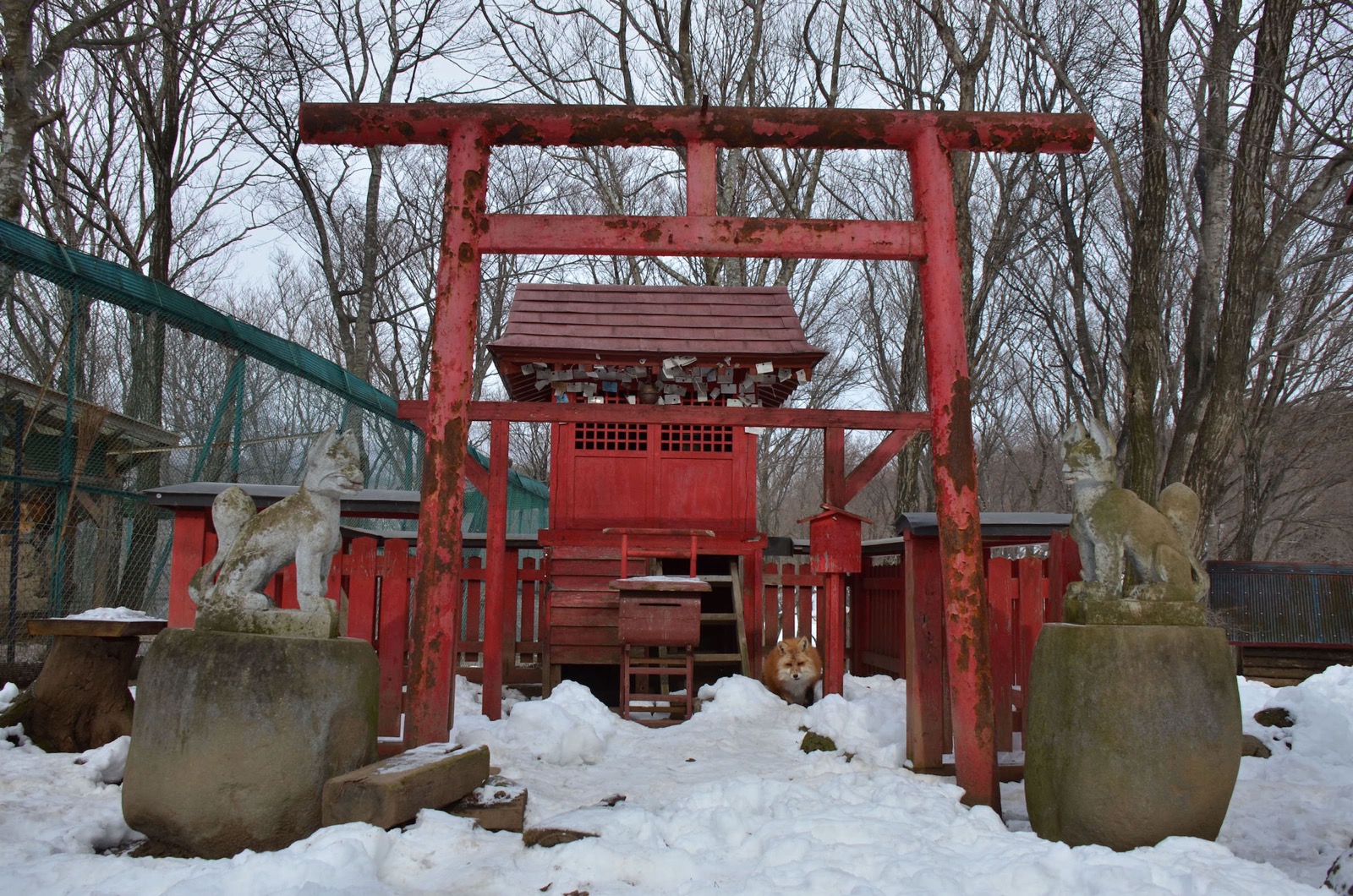
Tucked into a quiet corner of the park is a small shrine dedicated to Inari, the Shinto deity long associated with foxes as sacred messengers. It’s a nice, contemplative spot to pause, and it underscores something worth knowing before you visit: foxes hold deep cultural significance in Japan, appearing throughout folklore as shape-shifting tricksters (kitsune) capable of both mischief and profound wisdom. Seeing this reverence made tangible — a literal shrine inside a fox sanctuary — adds a layer of cultural context that elevates the visit beyond a simple animal encounter.
Once you’ve had your fill of foxes, don’t rush straight back to Sendai — Shiroishi itself is an underrated, charming castle town well worth an hour or two. Shiroishi Castle (Shiroishi-jo) is a beautifully reconstructed wooden castle keep, rebuilt in the 1990s using traditional joinery techniques without a single nail, and it offers sweeping views over the town and surrounding mountains from its top floor. The surrounding streets have a handful of excellent soba noodle shops — Shiroishi is famous for its unique “temoto” style of thin, hand-pulled somen-like noodles called Shiroishi Umen, said to have been created over 400 years ago as an easily digestible food for a sick merchant. It’s a great, low-key way to round out your day trip.
Best Time to Visit
Spring (March–May): Fox kits are born in March, making April and May a magical (if occasionally restricted-access) time to visit. Cherry blossoms bloom around Shiroishi Castle in mid-to-late April, adding another reason to combine the two stops. Daytime temperatures range from 50-68°F (10-20°C) — bring a light jacket.
Summer (June–August): Warm and often humid, with temperatures reaching 77-86°F (25-30°C). The foxes tend to be less active in the midday heat, seeking shade, so an early morning visit is ideal. This is also when kits from spring are fully grown into playful juveniles.
Autumn (September–November): Arguably the best season overall — comfortable temperatures (55-73°F / 13-23°C), thick winter coats starting to grow in on the foxes by late October and November, and spectacular fall foliage throughout the surrounding Zao mountains, especially if you continue on to Zao Okama Crater Lake or Zao Onsen.
Winter (December–February): This is when the foxes are at their most photogenic, with full, fluffy winter coats and a snowy backdrop that makes for genuinely stunning photos. Temperatures drop to 23-37°F (-5 to 3°C), and the park sometimes reduces hours or closes on the heaviest snow days, so call ahead or check their website before making the trip. Combine this with a visit to nearby Zao Onsen’s famous snow monsters for an unforgettable winter Tohoku day.
Where to Eat
Shiroishi Umen Noodles at Yuzuki
Located near Shiroishi Castle, this cozy restaurant specializes in the town’s signature umen noodles, served either hot in a savory dashi broth or cold with a dipping sauce in summer. A set meal runs about ¥900–1,300 ($6-9 USD). It’s the perfect light lunch before or after your fox village visit.
Sendai Gyutan on the Way Back
If you’re routing back through Sendai, don’t miss the chance to try Sendai’s famous grilled beef tongue (gyutan) — a local specialty since the postwar era. Restaurants like Gyutan-dori near Sendai Station serve thick-cut, charcoal-grilled tongue with barley rice and oxtail soup for around ¥1,800-2,500 ($12-17 USD), and it makes a memorable dinner to end your day.
Roadside Michi-no-Eki Stops
If you’re driving, keep an eye out for “michi-no-eki” (roadside stations) along Route 4 and the mountain roads near Zao — these local rest stops sell fresh regional produce, Miyagi rice balls, and hot snacks like grilled mochi and croquettes for just a few hundred yen each, and they’re a great way to sample local flavor without a sit-down meal.
Where to Stay
Budget
Shiroishi and nearby Zao Onsen offer budget business hotels and guesthouses from around ¥5,000-8,000 ($33-53) per night. Toyoko Inn Shiroishi Ekimae is a reliable, no-frills option right by Shiroishi-Zao Station, ideal if you’re relying on train and taxi transport.
Mid-Range
Consider staying in Sendai itself (about 45 minutes away) for more dining and shopping options, with comfortable mid-range hotels like Hotel Metropolitan Sendai or Richmond Hotel Sendai running ¥10,000-15,000 ($67-100) per night, making Sendai a convenient base for exploring both the fox village and central Miyagi attractions.
Luxury
For a splurge, book a night at one of the traditional ryokan (Japanese inns) in Zao Onsen itself, such as Zao Onsen Daini Choseikan, where you can soak in the region’s famously acidic, milky-white sulfur hot spring waters after a day with the foxes. Expect to pay ¥20,000-35,000 ($133-233) per person per night, typically including a multi-course kaiseki dinner and breakfast.
Practical Tips for Visiting Zao Fox Village
- Wear closed-toe shoes — sandals and flip-flops are not permitted for entry, as the ground can be uneven and foxes may approach your feet.
- Visit on a weekday morning if possible to avoid the biggest crowds, which tend to build on weekends and Japanese national holidays.
- Bring cash — admission, fox food, and the holding experience are typically cash-only, and there’s no ATM on site.
- Don’t bring your own food or snacks for the foxes; only park-sold food is allowed, both for the animals’ health and your safety.
- Keep loose items like scarves, dangling camera straps, and hats secured — foxes are curious and may try to grab or nibble anything that catches their eye.
- Allow 1.5–2 hours for a relaxed visit, more if you want to linger for photos or visit during a quiet period.
- Check the official park hours before visiting, as they can vary seasonally (roughly 9:00 AM–5:00 PM in summer, shorter in winter) and the park occasionally closes for weather or animal welfare reasons.
- The park is not stroller-friendly in many areas due to uneven dirt paths — consider a baby carrier if traveling with an infant.
- Bug spray is a good idea in summer, since the forested grounds attract mosquitoes.
- Combine your visit with Shiroishi Castle and Umen noodles to make the most of the half-day trip from Sendai.
Sample Itinerary
Half-Day Trip from Sendai
Rent a car or arrange a taxi from Sendai in the morning. Arrive at Zao Fox Village by 10:00 AM to beat the crowds and enjoy cooler temperatures, spending about 1.5-2 hours with the foxes. Head into Shiroishi for lunch at a local umen restaurant around 12:30 PM, followed by a visit to Shiroishi Castle in the early afternoon. Return to Sendai by late afternoon, with time for dinner at a gyutan restaurant near Sendai Station.
Full-Day Zao Loop
For a fuller day, start early at Zao Fox Village (9:00-11:00 AM), then drive up into the mountains toward Zao Onsen for lunch and a soak in one of the public foot baths or day-use onsen facilities. In warmer months, ride the Zao Ropeway for panoramic views or hike toward Zao Okama Crater Lake, the striking emerald-green volcanic crater lake; in winter, this is where you’d see the famous ice-covered “snow monster” trees. Head back down to Shiroishi or Sendai by early evening.
Multi-Day Miyagi & Yamagata Combination
If you have 2-3 days, pair Zao Fox Village with an overnight stay in Zao Onsen for the full hot spring experience, then continue into Yamagata Prefecture to explore Yamadera’s dramatic mountain temple stairway or Ginzan Onsen’s picture-perfect hot spring village, before looping back through Sendai to continue your Tohoku journey.
Final Thoughts
Zao Fox Village isn’t polished or overly commercial, and that’s exactly its charm — it feels like stumbling onto a genuine slice of wild Japan that just happens to let you walk right through the middle of it. Whether you’re an animal lover chasing the perfect photo, a family looking for something different from temples and shrines, or simply someone who wants a story to tell when you get home, this offbeat corner of Miyagi delivers an experience you won’t find anywhere else in the country. Combine it with Shiroishi’s castle town charm and the natural beauty of the greater Zao region, and you’ve got one of Tohoku’s most rewarding half-day adventures.
Got questions about planning your Tohoku trip, or spotted something we missed? We’d love to hear from you — drop us a message here.

コメント