Picture this: you’re behind the wheel of a rental car, windows down, the Pacific Ocean stretching endlessly to your right. Dramatic 200-meter (650-foot) sea cliffs plunge into jade-green waters below, fishing boats dot hidden coves, and the road ahead curves toward a coastline so rugged and beautiful that it genuinely stops your breath. Welcome to the Sanriku Rias Coast — Tohoku’s greatest road trip, and one of Japan’s most spectacular and undervisited drives.
This 400-mile (640 km) stretch of Pacific coastline runs from the tip of Aomori Prefecture in the north all the way down to Fukushima in the south, passing through some of the most jaw-dropping scenery in all of Japan. Yet while Tokyo and Kyoto overflow with selfie-stick-wielding crowds, you can drive the Sanriku Coast for entire days without seeing another foreign tourist. This is authentic Japan at its most raw, resilient, and extraordinary.
Why the Sanriku Coast Should Be on Every Japan Itinerary
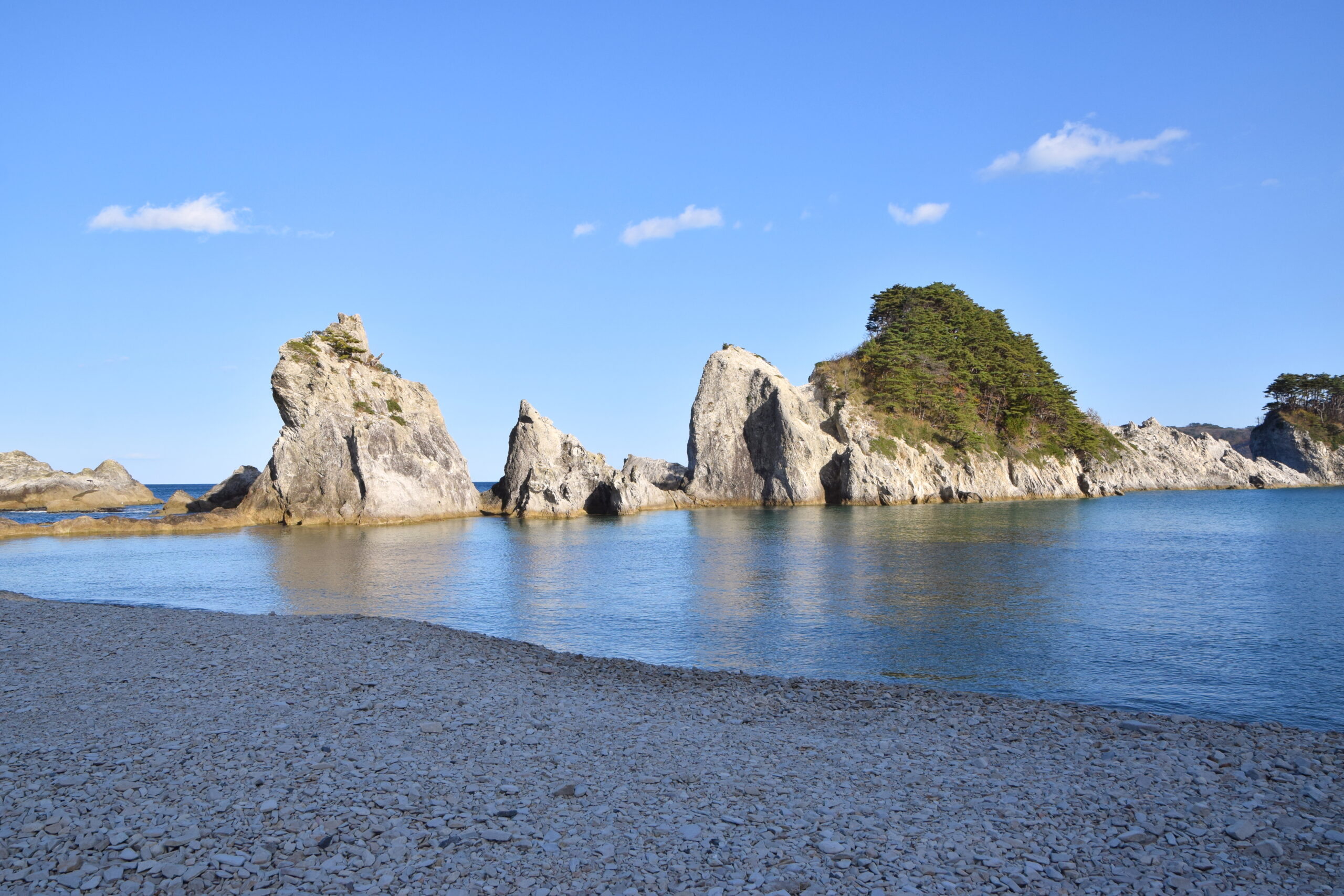
The word “rias” comes from the Spanish word for inlet — and it perfectly describes this coastline’s defining feature: a dramatic, deeply indented shoreline where ancient mountain ridges meet the Pacific Ocean. Over thousands of years, the sea has carved these ridges into a succession of headlands, hidden bays, and submerged valleys, creating one of the world’s most complex and beautiful coastlines.
What makes Sanriku truly special isn’t just the scenery — though that alone would justify the drive. It’s the combination of wild natural beauty, world-class seafood, deeply moving history (the 2011 tsunami left an indelible mark on these communities), and a warmth from local people that you rarely find in tourist-heavy destinations. Come here with an open heart and you’ll leave with an experience that stays with you forever.
The region is also home to Japan’s greatest concentration of seafood riches. The “Sanriku seafood triangle” — where the warm Kuroshio Current meets the cold Oyashio Current offshore — creates a nutrient-rich upwelling that produces some of the world’s finest oysters, sea urchin (uni), abalone, and wakame seaweed. Every fishing port along this coast has a morning market where you can eat the freshest seafood of your life for the price of a fast-food meal.
Think of it this way: driving the Sanriku Coast is a bit like driving the Big Sur Highway in California, the Great Ocean Road in Australia, and the Ring of Kerry in Ireland — all rolled into one, with exceptional Japanese hospitality and food at every stop. Except it’s still relatively unknown, which means you can enjoy it without fighting crowds.
Planning Your Sanriku Road Trip: The Essentials
How Long Do You Need?
The full Sanriku Coast drive from Hachinohe (in southern Aomori) to Kesennuma (northern Miyagi) covers approximately 250 miles (400 km) of coastal road. Allow at least 4-5 days for a comfortable drive with sightseeing stops, or 6-7 days if you want to fully savor each area. If time is tight, a 3-day focused loop covering the highlights of the Iwate coast — Miyako, Jodogahama, and Kamaishi — still delivers an extraordinary experience.
Getting There
- From Tokyo by Shinkansen: Take the Tohoku Shinkansen to Hachinohe (about 3 hours, ¥16,000/$110) or Morioka (about 2.5 hours, ¥14,000/$95), then rent a car. JR Pass holders can ride the shinkansen free, making this an excellent value.
- From Sendai: Many travelers start from Sendai and drive north — it’s about 3.5 hours to Kesennuma by expressway, or considerably longer if you take the coastal roads (which you should).
- Flying: Hanamaki Airport in Iwate Prefecture receives flights from Tokyo (Haneda) and Osaka. Rent a car at the airport and you’re on the coast in under 90 minutes.
Renting a Car
A rental car is essentially mandatory for experiencing the Sanriku Coast properly — public transportation is limited and infrequent in many coastal areas. You can rent through Toyota Rent a Car, Nippon Rent-A-Car, or Times Car Rental at major shinkansen stations including Hachinohe, Morioka, and Sendai. Expect to pay ¥5,000-8,000 ($35-55) per day for a compact car, with additional fees for non-return (dropping the car at a different location).
Note: All road signs include English romanization, and major routes are on Google Maps. An ETC card (electronic toll transponder) in your rental car makes tollway access much easier and often cheaper. Ask about this when picking up your car.
When to Visit
- Spring (April-May): Cherry blossoms meet coastal scenery — magical combination. Weather is mild (55-65°F / 13-18°C). Arguably the most beautiful time.
- Summer (July-August): Peak season with warm temperatures (70-80°F / 21-27°C), perfect for swimming at Jodogahama. Can be humid. Book accommodation early.
- Autumn (September-November): Fall foliage descends to the coast from mid-October. Seafood is at its peak — especially oysters. Our favorite time to visit.
- Winter (December-March): Cold (around 32-40°F / 0-4°C) and sometimes snowy, but crowds thin to almost nothing. Winter seafood (cod, crab, oysters) is exceptional.
Day 1: The Northern Gateway — Tanesashi Coast, Aomori
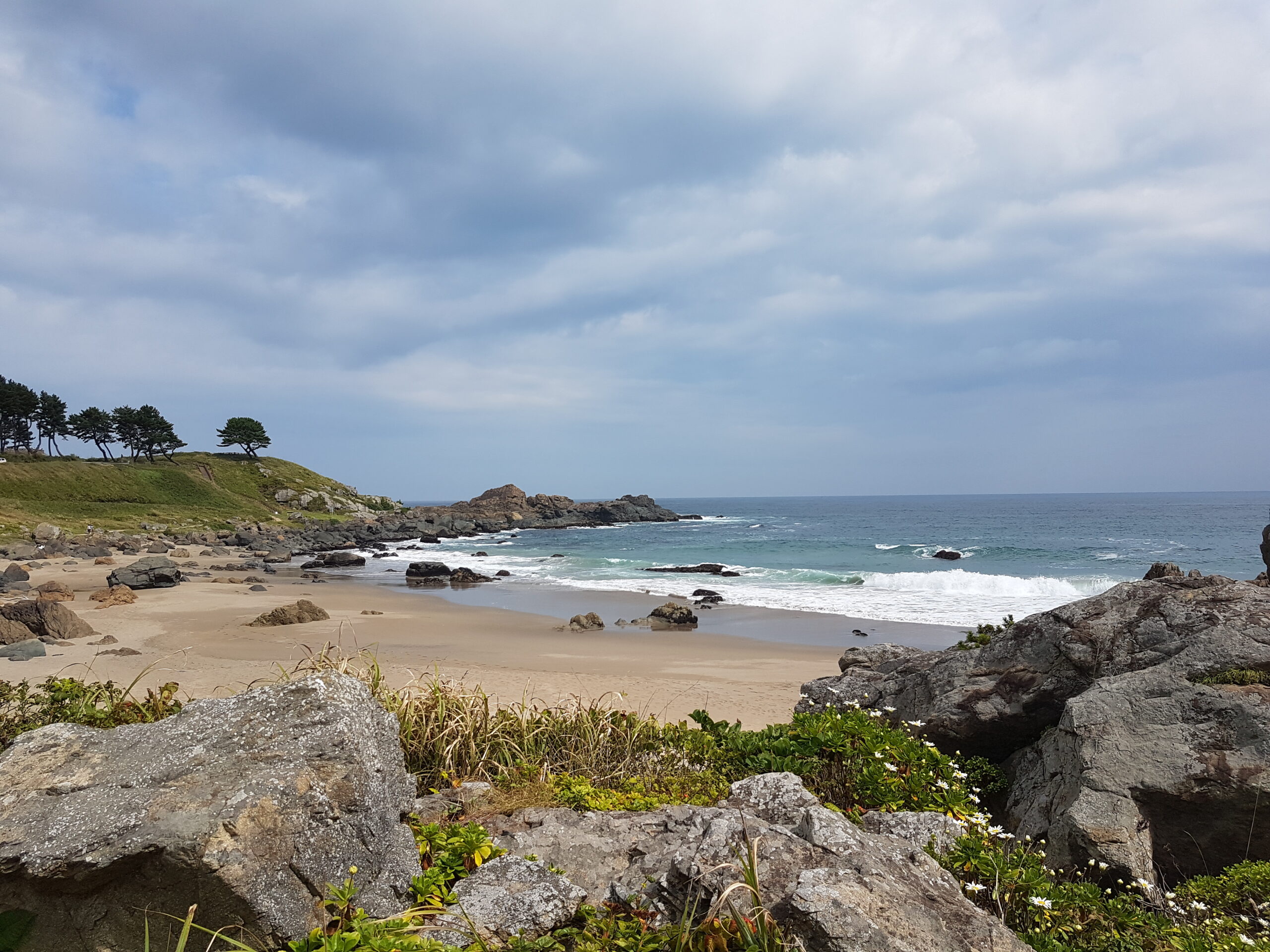
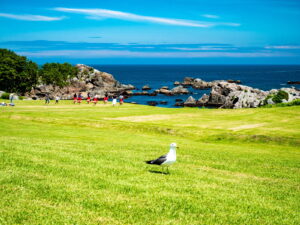
Start your Sanriku road trip at Tanesashi Kaigan (種差海岸), a strikingly unusual coastal park near Hachinohe in southern Aomori. Unlike most of the rugged Sanriku coast, Tanesashi features an extraordinary combination of natural turf lawns rolling directly to the sea, black sand beaches, and rocky outcrops — creating a landscape that looks more like the Scottish Highlands than Japan.
The stretch of coastline has been designated a national park, and the well-maintained seaside trail (about 4 miles / 6.5 km) connects several distinct landscape zones. In spring, the coastal meadows blaze with wildflowers. In summer, families picnic on the grass while kids splash in the shallow tidal pools. Year-round, the birdwatching here is outstanding — more than 150 species have been recorded, including rare shorebirds and seabirds attracted by the offshore upwelling.
After exploring Tanesashi, head into Hachinohe city for dinner. The Hachinohe Morning Market (the second-largest morning market in Japan, though confusingly open until early afternoon) doesn’t operate in the evenings, but the city has excellent seafood restaurants. Try Sakamotoya near the station for outstanding senbei jiru (cracker soup) — a unique local dish where rice crackers are simmered in a hearty chicken and vegetable broth until they become thick and chewy. It sounds strange, sounds even stranger when you order it, and tastes absolutely magnificent.
Day 2: The Cliffs of Kitayamazaki & the Beach at Jodogahama
Today is arguably the most visually spectacular day of the entire trip. Drive south from Hachinohe into Iwate Prefecture and you’ll notice the coastline becoming increasingly dramatic — the smooth farmland of Aomori gives way to sheer rock faces, hidden coves, and ever-more-imposing sea cliffs.
Kitayamazaki — Japan’s Most Dramatic Sea Cliffs
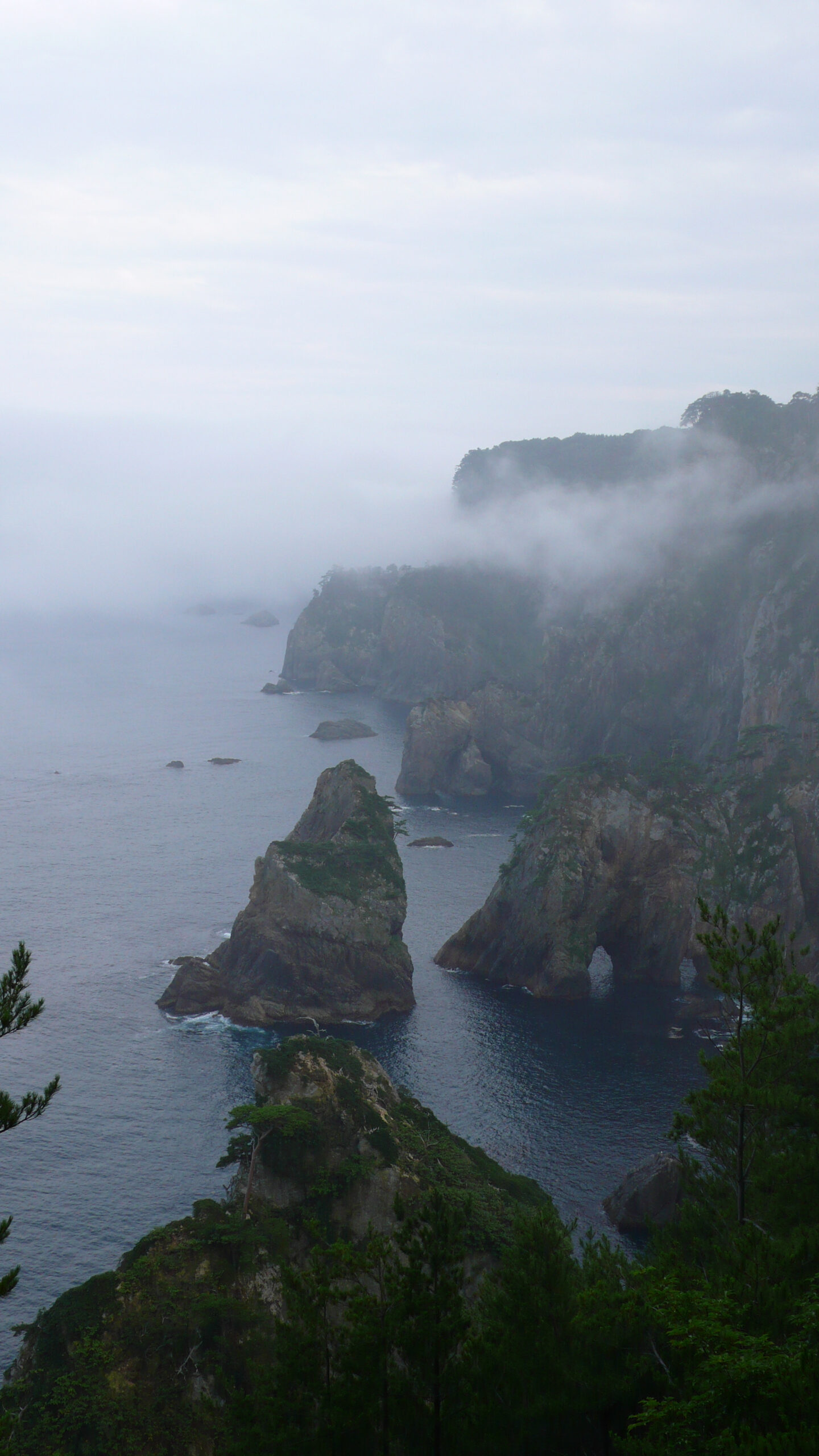
The undisputed highlight of northern Iwate is Kitayamazaki (北山崎), a series of sea cliffs near the town of Tanohata that plunge nearly 200 meters (650 feet) directly into the Pacific Ocean. The name means “North Mountain Cape,” and standing at the viewing platforms here, you’ll understand why this stretch of coast has been designated one of Japan’s 100 Scenic Spots.
The scale is genuinely staggering. Imagine standing atop a cliff that’s taller than the Eiffel Tower, looking down at fishing boats that look like toys bobbing in the emerald water far below. To your left and right, the cliff line stretches for miles in both directions, punctuated by sea stacks, sea caves carved by centuries of Pacific waves, and the occasional waterfall cascading directly into the ocean. In spring and summer, the clifftops are carpeted in wildflowers, while sea birds — including cormorants, gulls, and black-tailed gulls — wheel overhead.
There are four main viewing platforms at Kitayamazaki, connected by walking trails. The main platform (第一展望台 / Daiichi Tenbodai) is easiest to reach and offers the widest panoramic view. The lower observation decks require a more challenging descent (and an even more challenging return climb), but reward you with incredible close-up views of the cliff face and the sea below. Budget at least 1.5 to 2 hours here — you’ll keep finding new viewpoints and new perspectives.
Access: Drive to the Kitayamazaki Visitor Center parking lot. Entry to the cliffs themselves is free. The visitor center (open 8:30am-5:30pm, closed Dec-Feb) has good English information about the local ecosystem. Guided boat tours offering views of the cliffs from below run from May to October (roughly ¥1,500/$10 per person) — highly recommended if you want a truly unforgettable perspective.
Miyako City & Jodogahama Beach
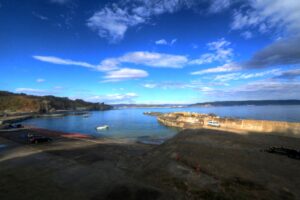
From Kitayamazaki, continue south along the coast to Miyako, the commercial hub of coastal Iwate, and then to Jodogahama Beach (浄土ヶ浜). If Kitayamazaki is dramatic and imposing, Jodogahama is ethereal and dreamlike — a cove framed by white rhyolite rock formations that jut from the water like giant teeth, with crystal-clear turquoise water lapping at the white pebble shore.
The name “Jodogahama” means “Pure Land Beach” — a reference to the Buddhist concept of paradise — and 18th-century Buddhist monks who first described this place apparently felt they had stumbled upon heaven on Earth. When you see it for the first time, gleaming white against sapphire blue, you’ll understand why.
In summer (July-August), you can rent sea kayaks and paddle between the rock formations, exploring sea caves and small sea stacks that can’t be reached on foot. Glass-bottom boat tours operate year-round from the visitor center, giving you a view of the remarkable underwater world beneath the clear waters.
The beach itself is not ideal for swimming (the currents and rocky bottom make it unsuitable for casual swimmers), but it’s perfect for exploring on foot. Walk along the pebble shore, clamber over the rocks at low tide, and just absorb the extraordinary beauty of this place. Arrive early morning for the best light and fewest crowds.
Practical info: Jodogahama is about 15 minutes from central Miyako by car. Parking costs ¥500 ($3.50). A visitor center with cafeteria, gift shop, and excellent clean restrooms sits at the entrance. Open year-round; boat tours operate March-November.
For dinner in Miyako, head to the Miyako Fish Market area near the port. Several small restaurants serve the catch of the day — don’t miss sea urchin rice bowls (uni don, ¥2,500-4,000 / $17-27). Miyako’s sea urchin, fed by the nutrient-rich Sanriku waters, is considered among the best in Japan.
Day 3: Cave Worlds & Valley Depths — Ryusendo Cave
Drive inland from Miyako for about 45 minutes (or take the coastal road north before heading inland) to reach one of the most remarkable natural sights in Tohoku: Ryusendo Cave (龍泉洞).
Ryusendo is one of Japan’s three great limestone caves (along with Akiyoshido in Yamaguchi and Ryugado in Kochi), but what sets it apart from virtually every other cave system in the world is the extraordinary clarity of its underground lakes. Lit from below by LED lighting, the water in Ryusendo’s caverns appears in shades of blue so vivid and luminous they look digitally enhanced — but they’re completely natural. Scientists have measured the water’s transparency at over 40 meters (130 feet), making it among the clearest cave water on Earth.
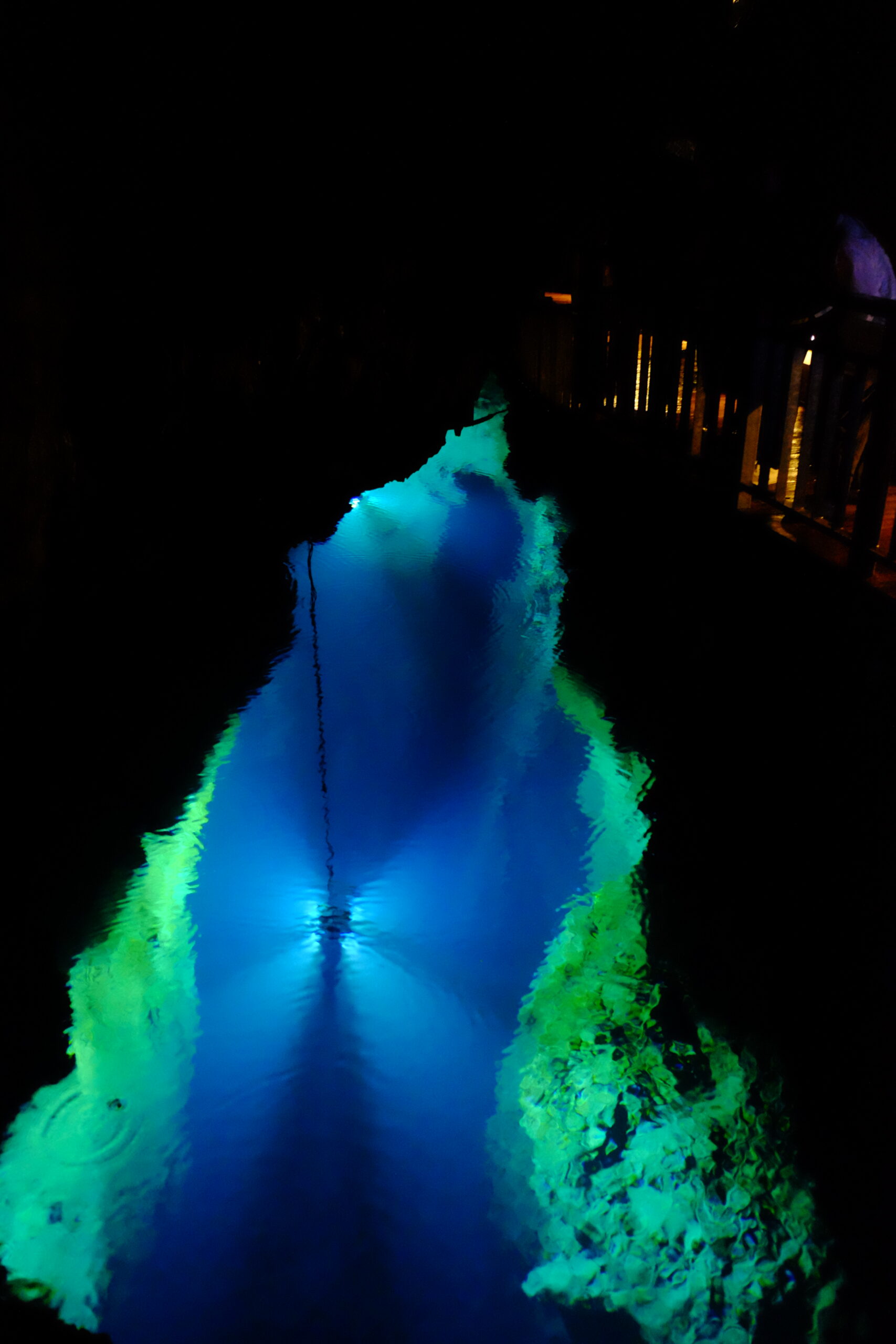
The cave extends for over 3.5 miles (5 km), though only about a third is open to visitors. The accessible section includes several spectacular chambers, the most impressive being a vast underground lake (called “the third underground lake”) where you stand on a platform looking down into glowing blue water that seems bottomless. The experience is genuinely otherworldly — the combination of the cave’s cathedral-like acoustics, the constant drip of water, and that impossible blue makes for something you won’t soon forget.
Inside the cave, temperatures remain a constant 47°F (8.5°C) year-round regardless of the season outside. Bring a light jacket. The round trip walk inside the cave takes about 40-60 minutes at a leisurely pace. There’s also a small attached museum (¥700/$5) about the cave’s geology and the bat colonies that inhabit its deeper reaches.
Getting there: Ryusendo is in Iwaizumi Town, about 27 miles (43 km) east of Morioka and 28 miles (45 km) west of Miyako. By car: from Miyako, take Route 340 southwest for about 40 minutes. Entry: ¥1,100 ($7.50) for adults, ¥550 ($3.75) for children. Open daily 8:30am-5pm (until 6pm in summer).
Geibikei Gorge — A River Journey Through Stone
If you have time on Day 3, detour south to the extraordinary Geibikei Gorge (猊鼻渓) near Ichinoseki — one of the most peaceful and atmospheric experiences in all of Tohoku. Here, flat-bottomed boats poled by boatmen transport visitors along a winding river canyon between towering limestone walls that rise up to 50 meters (165 feet) on either side.
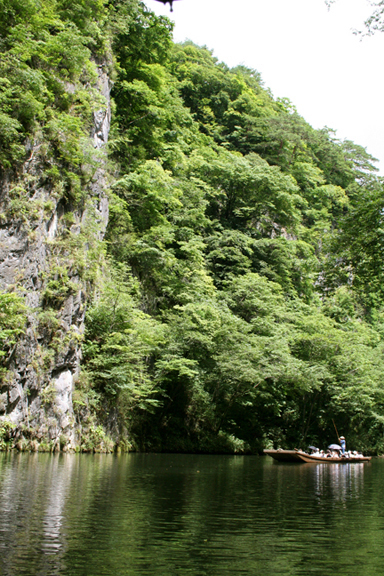
The boat trip (about 90 minutes round trip) proceeds in near-silence except for the sound of the boatman’s pole, the trickle of water from cliff-face springs, and the occasional burst of song from the boatman — traditional folk songs that echo magnificently off the stone walls. At the far end of the journey, passengers disembark at a rock face where fortune-seeking visitors throw clay rings toward a small hole in the stone. Succeed and you’re promised good luck; fail gracefully and try again.
Geibikei is particularly beautiful in autumn when the gorge turns golden and red, and in winter when snow caps the cliff tops (the boats still run, though with fewer passengers). Spring brings cherry blossoms hanging over the water in several spots along the route.
Getting there: Geibikei is 10 minutes by car from Ichinoseki Station. Boat trips run daily from 8:30am to 4pm (approximately); more frequently on weekends. Adults ¥1,800 ($12), children ¥900 ($6). Free parking.
Day 4: Resilience & the Sea — Kamaishi & Rikuzentakata
Day 4 takes you to places that will move you deeply: the fishing and rugby city of Kamaishi, and the poignant memorial landscape of Rikuzentakata — both among the communities most devastated by the 2011 Great East Japan Earthquake and Tsunami, and both now standing as powerful examples of human resilience.
Kamaishi — Steel Town, Oyster Port, Rugby City
Kamaishi (釜石) is a working fishing and former steel-manufacturing city that sits in a deep natural harbor along the Sanriku coast. For Western visitors, it’s perhaps best known in recent years as one of the host cities for the 2019 Rugby World Cup — a choice that carried profound symbolic weight given the city’s devastation in 2011. The Rugby World Cup monument near the stadium is worth a brief stop.
But what draws food-minded travelers is something older and simpler: Kamaishi oysters. The cold, nutrient-rich waters of Kamaishi Bay produce oysters of remarkable quality — large, creamy, and briny in a way that reminds you exactly why oysters are considered the finest expression of their local sea. Several oyster huts along the waterfront serve oysters grilled over charcoal (¥300-500 / $2-3.50 per oyster) with simple condiments — ponzu sauce, lemon, perhaps a dab of mayonnaise. Eating five or six of these while looking out over the bay is one of the simple pleasures of the Sanriku road trip that you’ll remember for years.
Rikuzentakata — The Miracle Pine & Japan’s Most Moving Memorial
About 40 minutes south of Kamaishi, the town of Rikuzentakata (陸前高田) holds what is perhaps the most powerful and moving sight on the entire Sanriku coast: the Miracle Pine Tree and the surrounding memorial landscape.
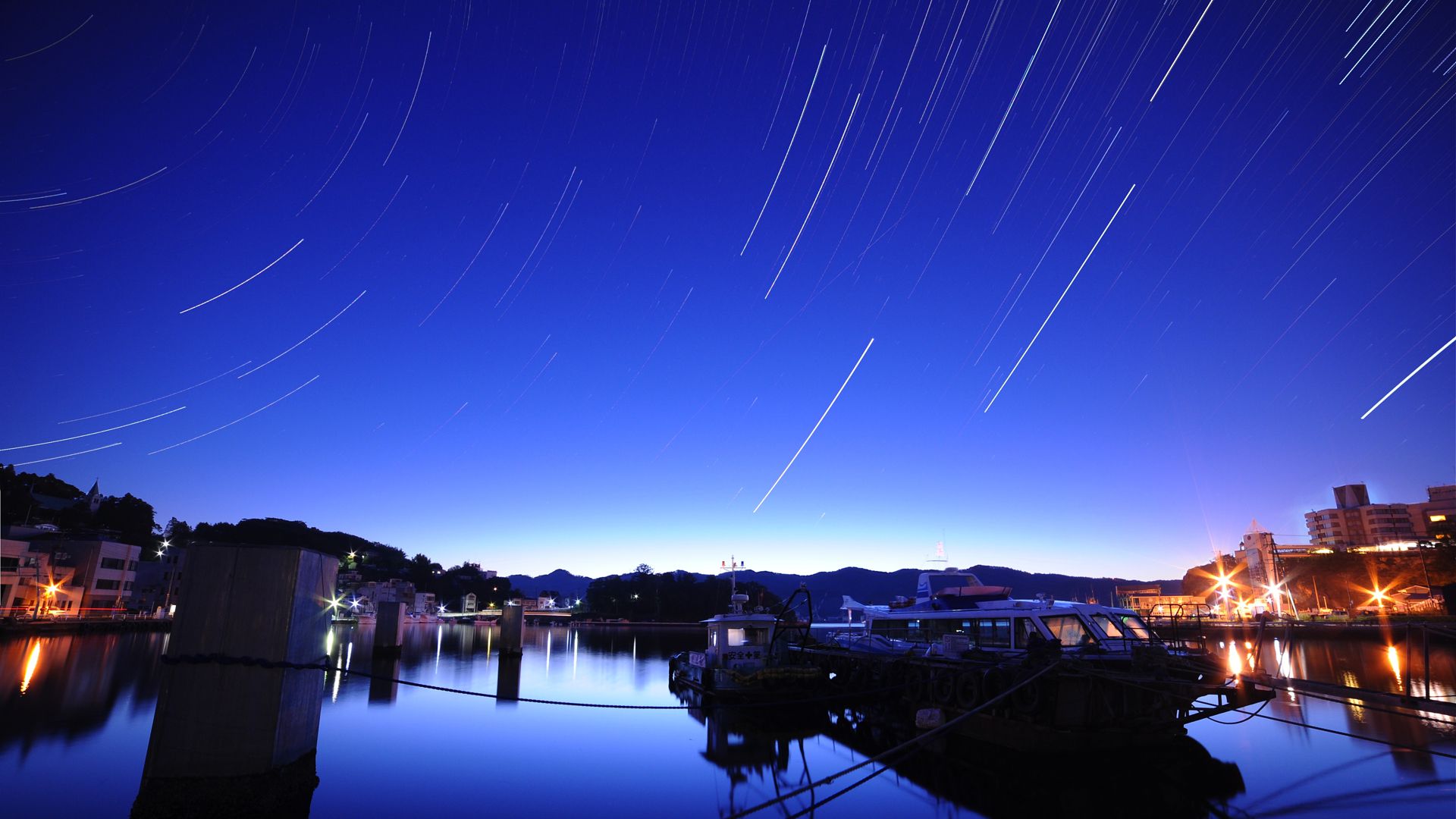
Before the 2011 tsunami, Rikuzentakata’s coast was lined with a famous pine grove of roughly 70,000 trees. When the massive tsunami struck on March 11, 2011, it swept virtually everything away. In the aftermath, rescuers and residents searching the devastation found a single pine tree standing — a tree they named the “Miracle Pine” or “Ichihon Matsu” (One Pine Tree). Though the tree eventually died (sea water had damaged its roots beyond recovery), it was preserved and now stands as a metal-reinforced monument at the center of a carefully designed memorial park.
Standing before the Miracle Pine — even knowing it’s no longer a living tree — is a genuinely affecting experience. The surrounding landscape has been redeveloped into the Takata-Matsubara Memorial Park, which opened in 2022 and includes a museum documenting the tsunami disaster, recovery photographs, and thoughtful exhibition spaces. The contrast between the park’s quiet natural beauty and what happened here makes for a profound visit. Many travelers find this the most emotionally significant stop on the entire Sanriku drive.
Practical info: The Miracle Pine is free to visit and accessible at any time. The Takata-Matsubara Tsunami Memorial Museum (陸前高田津波伝承館) is open Tuesday-Sunday, 9am-5pm; entry ¥500 ($3.50) for adults. Allow 1.5-2 hours for museum plus the surrounding park.
Day 5: Seafood Paradise — Kesennuma & the Southern Coast
Your final day on the Sanriku coast takes you to its most famous fishing port — Kesennuma — and then, if you’re driving through to Sendai, through the stunning Minami-Sanriku coastline and into the outskirts of Matsushima Bay.
Kesennuma — Japan’s Seafood Capital
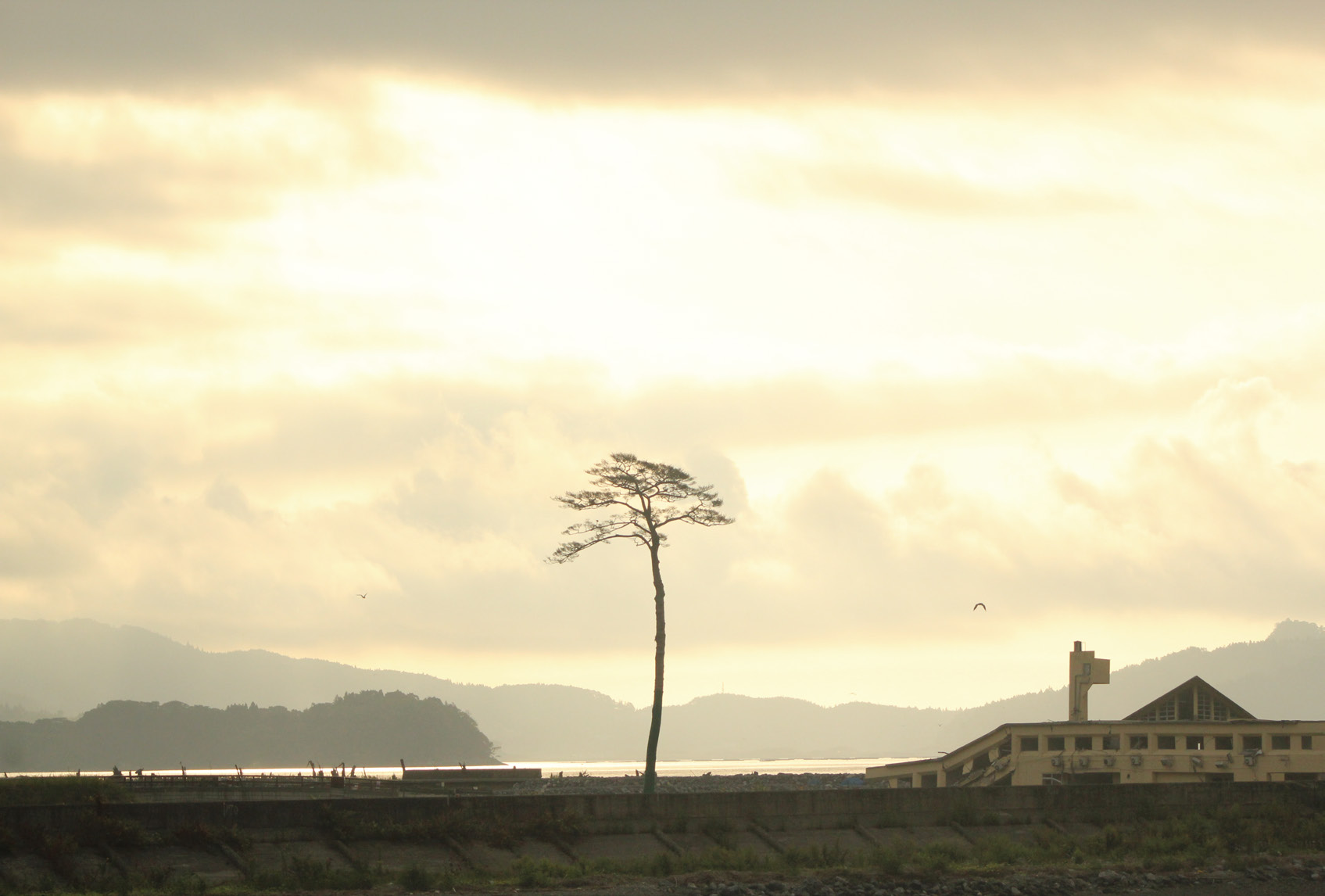
Kesennuma (気仙沼) is arguably the single most important fishing port in all of Tohoku, and one of the most significant in all of Japan. The city’s port processes extraordinary quantities of fresh fish and shellfish from the Sanriku waters, and its morning market (Kesennuma Morning Fish Market, open from around 6am) is one of the best food experiences in northeast Japan.
The city is particularly famous for shark fin (dried fuka, ふか) — Kesennuma processes the vast majority of Japan’s shark fin supply, a centuries-old tradition tied to the deep-sea fishing culture of the port. Whatever your feelings about shark fin, the sight of racks of drying fins in the early morning light, and the sheer industrial scale of the fishing operations here, is unforgettable. Several restaurants serve “fuka” in traditional preparations (shark fin ramen, shark fin steamed with vegetables) that are worth trying simply for the cultural insight.
But the city’s greatest food gift to visitors is much more accessible: fresh seafood of every description at prices that seem impossibly cheap compared to the rest of Japan. Oysters from Kesennuma Bay (particularly from the nearby Karakuwa Peninsula) are outstanding. Pacific saury (sanma, さんま) is the city’s signature fish — best eaten grilled whole, with salt and lemon, beside the harbor. Bluefin tuna is processed here in massive quantities, and several restaurants serve tuna dishes from parts of the fish — collar, cheek, throat — that rarely appear elsewhere.
For dinner, try Hamakaze restaurant near the harbor for outstanding local fish prepared in traditional Japanese style (expect to pay ¥2,000-4,000 / $14-27 per person for a full meal). Alternatively, the Kesennuma Marche food court in the rebuilt city center offers a range of local specialties in a modern setting.
Where to Eat Along the Sanriku Coast: A Regional Food Guide
The Sanriku coast is one of Japan’s premier food destinations — the combination of exceptional local seafood, a fishing culture that stretches back centuries, and the innovative use of regional ingredients creates a dining scene that’s genuinely world-class despite being almost completely unknown outside Japan.
Sanriku Oysters (三陸カキ)
Arguably the greatest oysters in Japan, Sanriku oysters are harvested from the cold, nutrient-rich waters between Hachinohe and Kesennuma. The cold temperatures mean they grow slowly, developing a complexity and depth of flavor that sets them apart from oysters raised in warmer waters. Try them raw on the half-shell (生牡蠣), grilled over charcoal (炭火焼き牡蠣), or in a rich oyster rice pot (カキご飯). Price: ¥200-500 ($1.50-3.50) per oyster depending on size and preparation.
Sea Urchin (ウニ) at Miyako
Miyako’s sea urchin — harvested from the rocky coastal beds of the Sanriku — is some of the sweetest and most complex in Japan. A proper uni-don (sea urchin rice bowl) at one of the harbor-side restaurants in Miyako will run ¥2,500-4,500 ($17-30) and will likely be the finest sea urchin you’ve ever tasted. The peak season for uni is July-August for the highest sweetness, though it’s available year-round.
Jajamen Noodles in Morioka
If you pass through Morioka (a natural stopping point on any Sanriku road trip), try jajamen (じゃじゃ麺) — one of Morioka’s three famous noodles. Flat udon noodles served with a savory miso-sesame-meat sauce, then finished with raw egg and a splash of broth (a tradition called “chitantan”). It’s humble, hearty, and completely addictive. Most famous spot: Pairon (白龍) restaurant in central Morioka, around ¥700-900 ($5-6) per bowl.
Sanriku Seafood Ramen
Several ramen shops along the Sanriku coast have developed styles built entirely around local seafood broths — using crab, oyster, or salt cod as the base for their soups. The resulting bowls are lighter than pork-based ramen but extraordinarily flavorful, with a clean oceanic depth that perfectly complements the coast setting. Look for “seafood ramen” (海鮮ラーメン) on menus throughout the region.
Where to Stay Along the Sanriku Coast
Accommodation options range from simple business hotels in coastal cities to charming family-run minshuku (民宿 / Japanese-style guesthouses) in smaller fishing villages. Given the region’s relatively limited hotel infrastructure, booking ahead is strongly recommended — especially in summer and during the popular October-November autumn foliage season.
Budget (Under ¥8,000 / $55 per night)
Miyako Youth Hostel (宮古ユースホステル) — A friendly, well-located hostel near Miyako center with basic Western and Japanese-style rooms. Great bulletin boards with local information and staff who genuinely love helping travelers plan their coast exploration. Around ¥3,500-4,500 ($24-30) per person including breakfast.
Minshuku Katsu near Kamaishi — A classic fishing-village guesthouse where you eat with the family, breakfast and dinner included (dinner invariably features the freshest local seafood). Around ¥6,000-7,500 ($41-51) per person with two meals.
Mid-Range (¥8,000–¥20,000 / $55–$135)
Hotel Resol Trinity Miyako — A modern business hotel in central Miyako with comfortable Western-style rooms, an on-site restaurant serving Sanriku seafood, and an excellent location for exploring Jodogahama and the surrounding coast. Around ¥9,000-14,000 ($62-95) per night.
Kesennuma BIC HOTEL — A stylishly renovated hotel in Kesennuma’s rebuilt city center, with outstanding views of the port from upper-floor rooms. The on-site restaurant serves excellent local seafood. Around ¥10,000-16,000 ($68-108) per night.
Luxury (¥20,000+ / $135+)
Hakodate Marine Hotel — Sanriku Resorts style accommodations — Several high-end ryokan operate in the Sanriku region, particularly around Hachinohe and southern Miyagi. These typically feature multi-course kaiseki dinners showcasing local seafood, private onsen baths, and the full traditional Japanese hospitality experience. Expect to pay ¥30,000-60,000 ($200-410) per person including dinner and breakfast.
Practical Tips for the Sanriku Road Trip
- Fuel up frequently. Gas stations can be sparse in remote coastal areas. Never let your tank drop below half-full, especially on routes between Miyako and Kamaishi where you may drive 30+ miles between stations.
- Download offline maps. Cell service is good in cities but can be patchy in some coastal valleys and tunnels. Download offline Google Maps or Japan’s own Navitime app before you set out.
- The coastal roads are narrow. Many sections of coastal road are single-lane with passing places. Drive slowly, be courteous to locals, and pull over if you want to stop and take photos.
- Morning markets start early. If you want to experience the fish markets at their liveliest, aim to arrive by 7am. By 9am, the best produce is often sold out.
- Carry cash. Many small fishing villages and roadside restaurants are cash-only. Keep at least ¥10,000-15,000 ($70-100) in cash on you.
- Respect the 2011 memorial sites. Be quiet, respectful, and don’t eat or drink at memorial areas. Photography is generally allowed but treat these places with the reverence they deserve.
- Allow time for spontaneity. Some of the best experiences on the Sanriku coast come from stopping at a roadside stall, following a sign for a viewpoint, or accepting an invitation from a local fisherman to see his catch. Don’t overschedule.
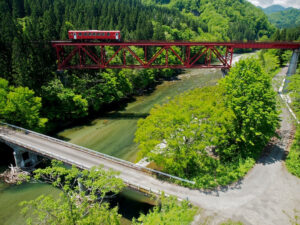
- The Sanriku Railway Rias Line runs the length of the coast. If you tire of driving, you can leave your car at a station and take the scenic train for a section — the views from the windows are spectacular and it’s a great way to see the landscape differently.
- Sunsets are spectacular. Plan your driving to have downtime near the coast around sunset — especially at Jodogahama and Kitayamazaki, the evening light on the sea cliffs and water is extraordinary.
- Book accommodation in Miyako and Kesennuma well in advance. These are the most popular overnight stops and quality options book up quickly in summer and autumn.
Sample 5-Day Sanriku Road Trip Itinerary
Day 1: Arrival & Tanesashi Coast
Morning: Take the shinkansen from Tokyo to Hachinohe, pick up rental car. Drive to Tanesashi Coast (25 minutes from Hachinohe Station). Explore the coastal meadows and tidal pools on the Tanesashi walking trail (2-3 hours).
Afternoon: Visit Kabushima Island (a short detour from Hachinohe) to see the thousands of black-tailed gulls that nest on its shrine-topped rocky outcrop — spectacular in spring and summer.
Evening: Return to Hachinohe. Dinner featuring senbei jiru (cracker soup) at a local restaurant. Stay in Hachinohe (budget ¥8,000-15,000 / $55-100).
Day 2: Kitayamazaki & Miyako
Morning: Drive south from Hachinohe along the coastal road to Kitayamazaki (2 hours). Spend 2 hours exploring the sea cliff viewpoints. Optional boat tour of the cliffs from below (runs May-October).
Afternoon: Continue south to Miyako (45 minutes). Visit Jodogahama Beach — arrive by 2pm for the best afternoon light. Kayak rental or glass-bottom boat tour (optional).
Evening: Seafood dinner in Miyako — sea urchin rice bowl or fresh sashimi at the harbor-side restaurants. Stay in Miyako (¥9,000-14,000 / $62-95).
Day 3: Ryusendo Cave & Geibikei Gorge
Morning: Early start — drive to Ryusendo Cave (40 minutes from Miyako). Explore the cave and its extraordinary underground lakes (allow 1.5 hours).
Afternoon: Drive to Geibikei Gorge (about 80 minutes south of Ryusendo). Take the 90-minute flat-bottomed boat trip through the limestone canyon. Return north to overnight in Miyako or continue south to Kamaishi.
Evening: If continuing to Kamaishi, dinner featuring grilled oysters at the waterfront. Stay in Kamaishi or Ofunato area (¥8,000-12,000 / $55-82).
Day 4: Kamaishi, Rikuzentakata & the Tsunami Memorial
Morning: Kamaishi city — visit the waterfront oyster huts for a seafood breakfast. Brief stop at the Rugby World Cup 2019 monument.
Mid-morning: Drive south to Rikuzentakata (40 minutes). Visit the Takata-Matsubara Tsunami Memorial Museum and the Miracle Pine Tree — allow 2 hours minimum.
Afternoon: Continue south to Kesennuma (40 minutes). Explore the rebuilt city center and the Kesennuma Marche food hall.
Evening: Fresh seafood dinner in Kesennuma — try the local specialty preparations of Pacific saury or bluefin tuna. Stay in Kesennuma (¥10,000-16,000 / $68-108).
Day 5: Kesennuma Morning Market & Return
Early morning (6-7am): Kesennuma morning fish market — incredible atmosphere as the day’s catch is processed and sold. Perfect photo opportunities.
Morning: Drive south through Minami-Sanriku to the outskirts of Matsushima Bay (about 90 minutes). Optional stop at Matsushima for the famous island views (published in our full Matsushima guide).
Afternoon: Return rental car in Sendai or Morioka. Shinkansen back to Tokyo or onward to next destination.
Related Articles You Might Enjoy
- Sanriku Coast: Tohoku’s Dramatic Pacific Coastline, Seafood & Stories of Resilience
- Appi Kogen, Iwate: Japan’s Premier Powder Ski Resort — Complete Guide for Foreign Visitors
- Kuji, Iwate: Japan’s Northernmost Ama Divers & Hidden Amber Museum
- Genbikei Gorge, Iwate: Japan’s Flying Dango Gorge & Ichinoseki’s Hidden Natural Wonder
- Mount Iwate: Complete Hiking Guide to Tohoku’s Sacred Volcano & the Nanbu Fuji
Final Thoughts
The Sanriku Coast road trip is the kind of journey that changes you slightly. You come for the scenery — and the scenery delivers beyond any expectation. But what you take home is something harder to articulate: the memory of a fisherman pressing a bag of still-live crabs into your hands because you admired them, the silence of Geibikei Gorge broken only by the echo of a folk song, the strange blue light of Ryusendo Cave seeming to come from somewhere beyond the physical world.
And Rikuzentakata. Standing before the Miracle Pine Tree, surrounded by the rebuilt park and the quiet sea beyond, you understand something important about these coastal communities: their relationship with the ocean is ancient and complex, made of reverence and risk in equal measure. The sea gives this coast its extraordinary seafood, its dramatic beauty, its soul. And sometimes, as in 2011, it takes terribly. The communities of the Sanriku coast have rebuilt, and they have done so with a grace and determination that is genuinely humbling.
Come for the cliffs. Come for the oysters. Come for Jodogahama’s impossible beauty. But stay for the people — they are the Sanriku’s greatest treasure of all.
Got questions about planning your Tohoku trip, or spotted something we missed? We’d love to hear from you — drop us a message here.


コメント