Deep beneath the rolling green hills of Fukushima Prefecture, a world of extraordinary silence and impossible beauty has been growing for 80 million years. Abukuma Cave (阿武隈洞, Abukuma-dō) is one of Japan’s finest limestone caverns — a place where stalactites drip from cathedral ceilings, rare mineral formations defy gravity in every direction, and an entire ecosystem of ancient geology waits to astonish you. Most visitors to Tohoku have never heard of it. That is exactly what makes it so special.
Why Abukuma Cave Should Be on Every Tohoku Itinerary
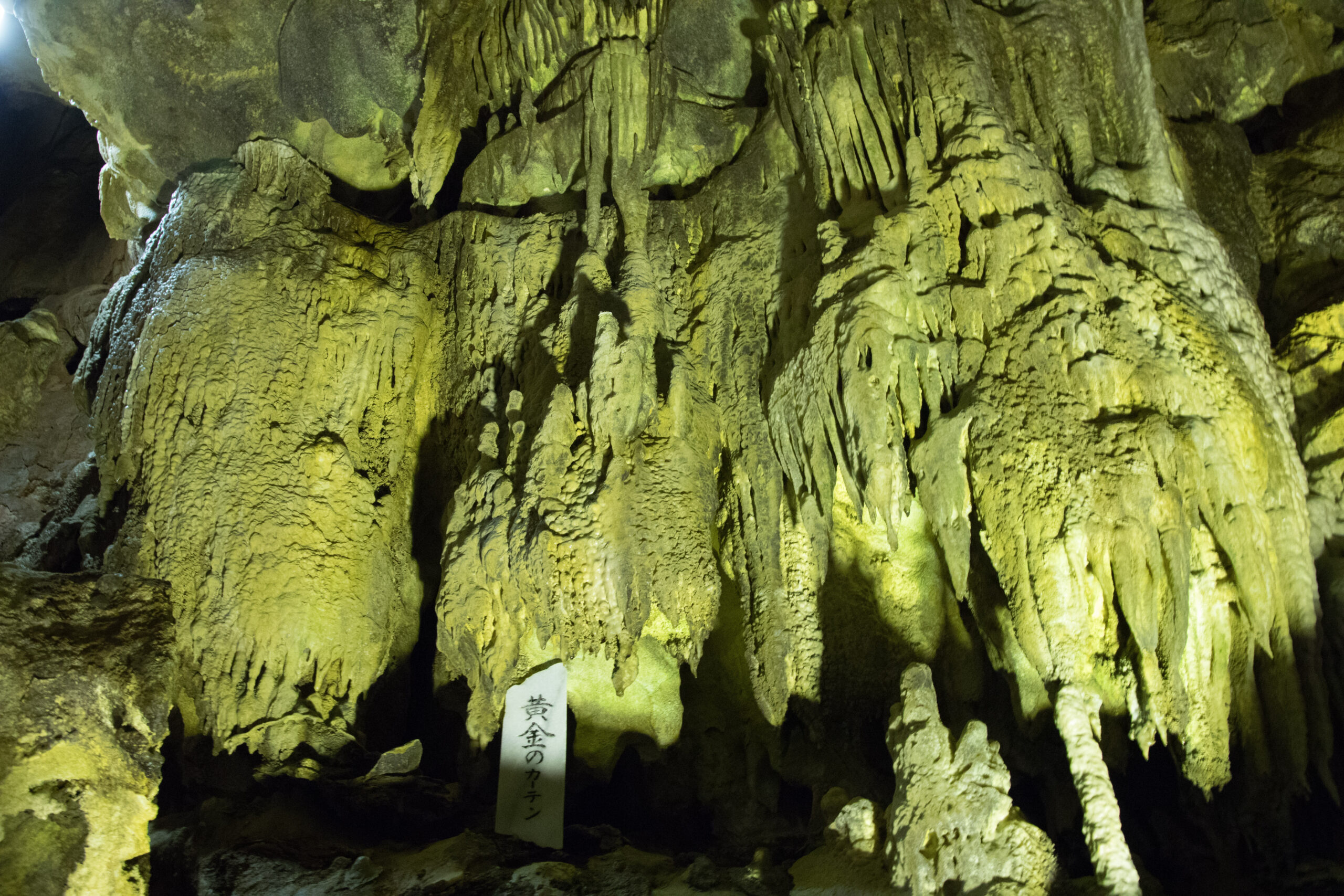
Japan has several famous show caves, but Abukuma Cave holds a special distinction: it is home to some of the rarest and most diverse cave mineral formations in the country. Most caves you visit feel similar — stalactites hang down, stalagmites push up, and the lighting is dramatic. Abukuma Cave does all of that, but it also contains helictites — twisted mineral formations that defy gravity by growing sideways, upward, and in spiraling curves that seem to have no regard for any known physics. Scientists are still debating exactly how helictites form. Walking past them feels like entering a dream.
Beyond the geological rarity, Abukuma Cave earns its place on any Tohoku itinerary for practical reasons. The cave maintains a constant temperature of around 15°C (59°F) year-round, making it a genuinely refreshing escape from summer heat or a pleasant warming stop in winter. The main tourist path winds 600 meters (0.4 miles) through the cave’s most spectacular chambers and requires no special equipment — just comfortable shoes. For those who want more, an additional 120-meter “adventure course” involves stooping, crawling, and squeezing through passages that few visitors attempt. It is, in a word, extraordinary.
For American and Australian travelers, Abukuma Cave has no easy comparison. It is larger and more geologically varied than most tourist caves in the United States, with a quality of mineral formations that rivals the best show caves in New Zealand or South Africa. The difference is that you can visit it as part of a Tohoku road trip with almost no crowds, no timed entry requirements (on most days), and a price tag that seems impossibly modest for what you get.
The Geology and History of Abukuma Cave
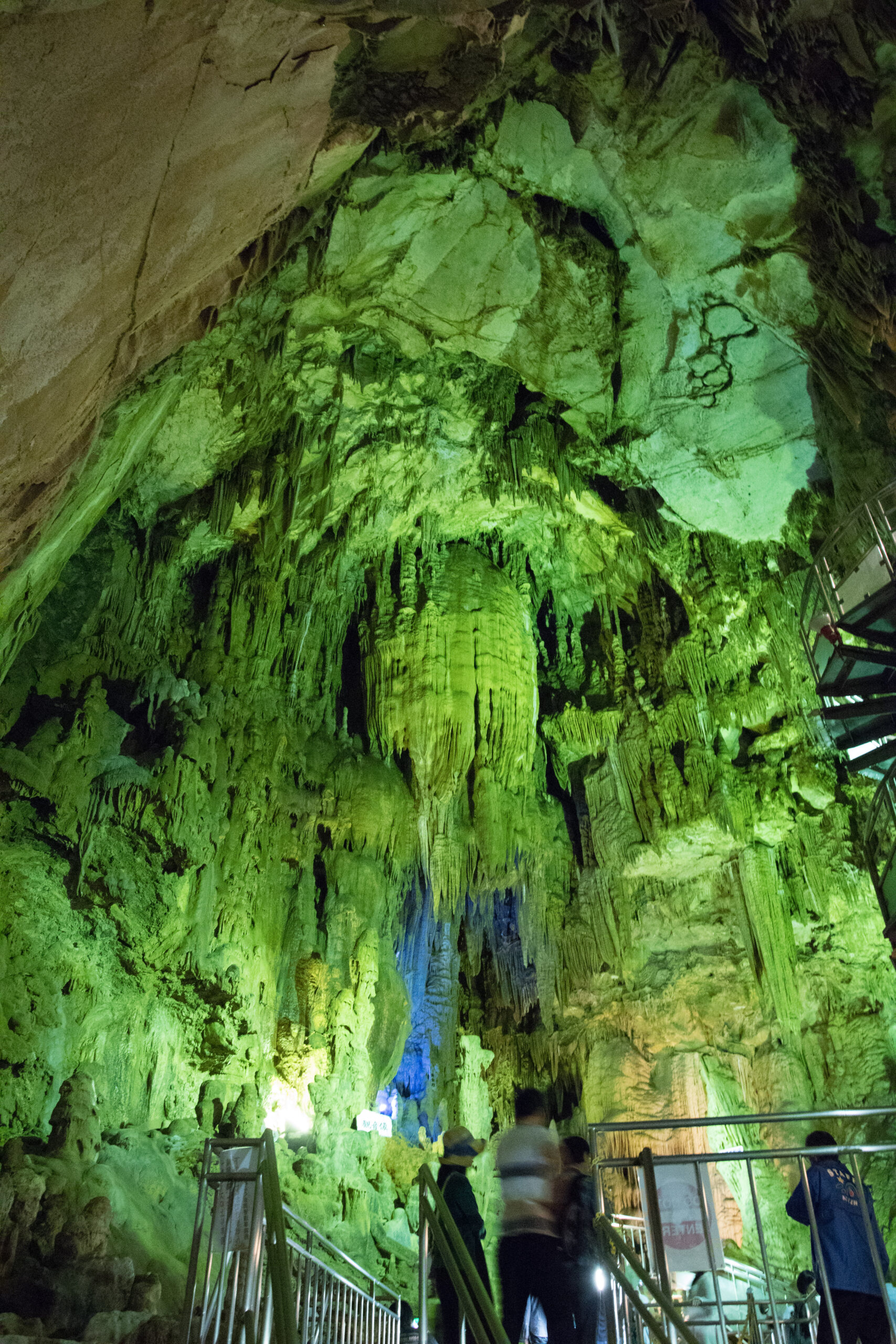
The limestone rock that forms Abukuma Cave began forming approximately 80 million years ago, when what is now the Abukuma Highlands of Fukushima Prefecture lay beneath a shallow tropical sea. Billions of tiny marine organisms — corals, mollusks, plankton — died and their calcium-rich shells accumulated on the seafloor over millions of years, compressing into thick beds of limestone. When tectonic forces eventually thrust this ancient seabed above sea level, rainwater began the slow process of dissolving and reshaping the stone, carving passages and chambers over tens of millions of years.
The cave as we know it today was discovered remarkably recently. The main passage was found by local residents in 1969, and the cave was opened to the public in 1973. Since then, explorers have mapped approximately 3.3 kilometers (2 miles) of passages, of which about 600 meters (0.4 miles) are accessible to tourists in the standard course. The cave’s relatively recent discovery (compared to famous caves in Europe that have been visited for centuries) means the formations are in exceptional condition — no centuries of smoky torches or careless visitors have damaged the delicate mineral structures.
The cave takes its name from the Abukuma River, the longest river in the Tohoku region, which flows through Fukushima Prefecture before emptying into the Pacific Ocean near Iwanuma in Miyagi Prefecture. The Abukuma Highlands — the mountainous plateau of eastern Fukushima — give the entire region its name and character.
What You Will See Inside: The Formations of Abukuma Cave
The standard 600-meter tourist route takes between 40 minutes and one hour to walk at a leisurely pace, and every meter offers something new. Here is what to look for in the main sections.
The Entrance Hall and First Chambers
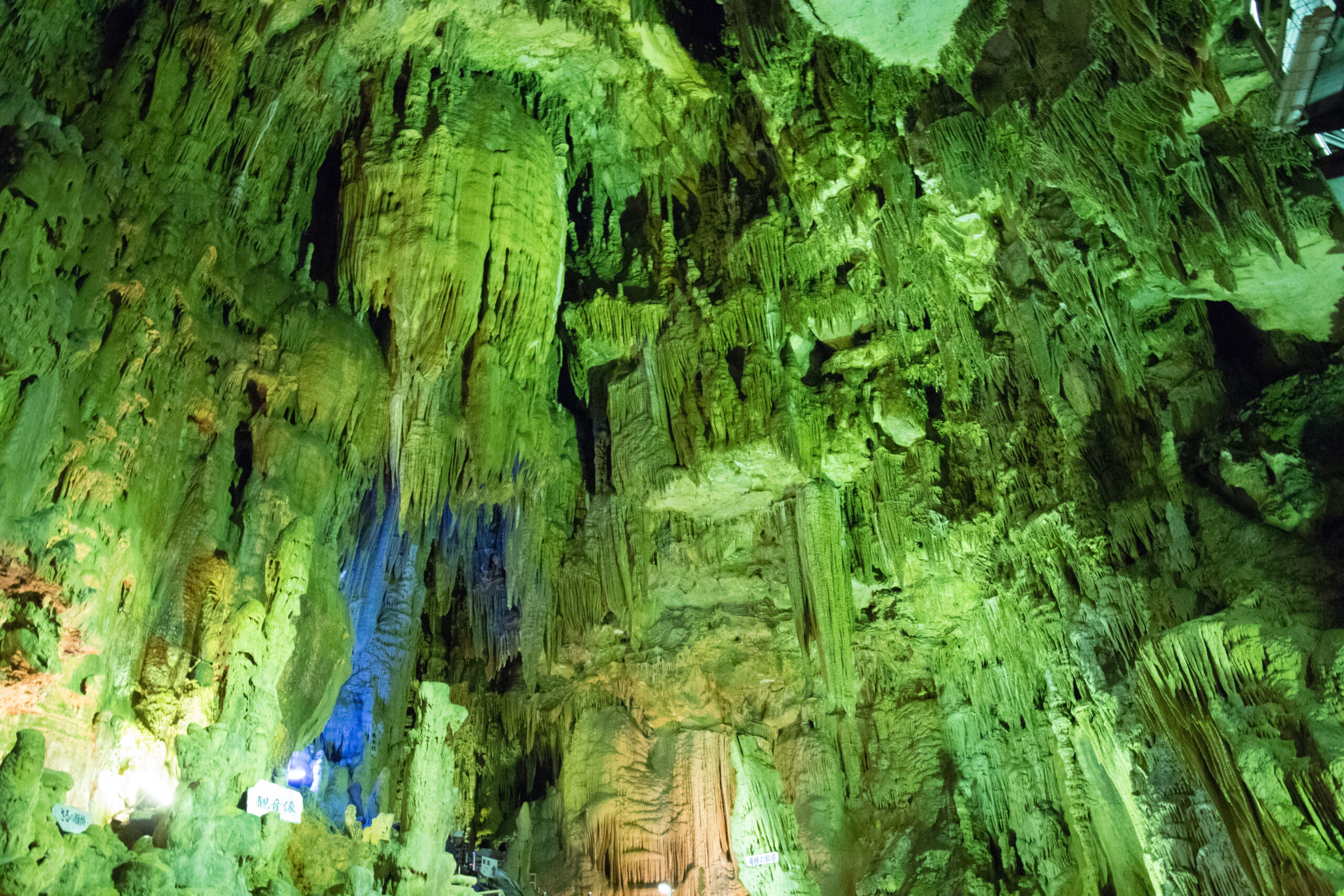
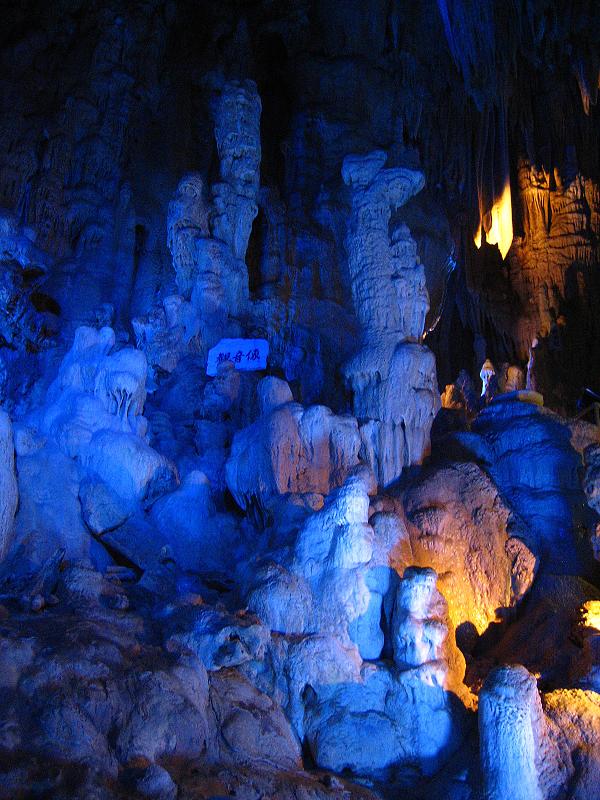
As you descend from the surface and enter the cave proper, the immediate impression is one of scale. The entrance chambers are large — several meters high, wide enough to feel spacious rather than claustrophobic. The lighting has been designed to highlight the formations dramatically: warm yellows pick out the hanging stalactites, cooler blues illuminate the underground pools, and subtle violet lights bring out the fluorescent minerals in certain rock formations. Even if you have visited other tourist caves before, the quality of the presentation here is impressive.
The Grand Cascade (大滝)
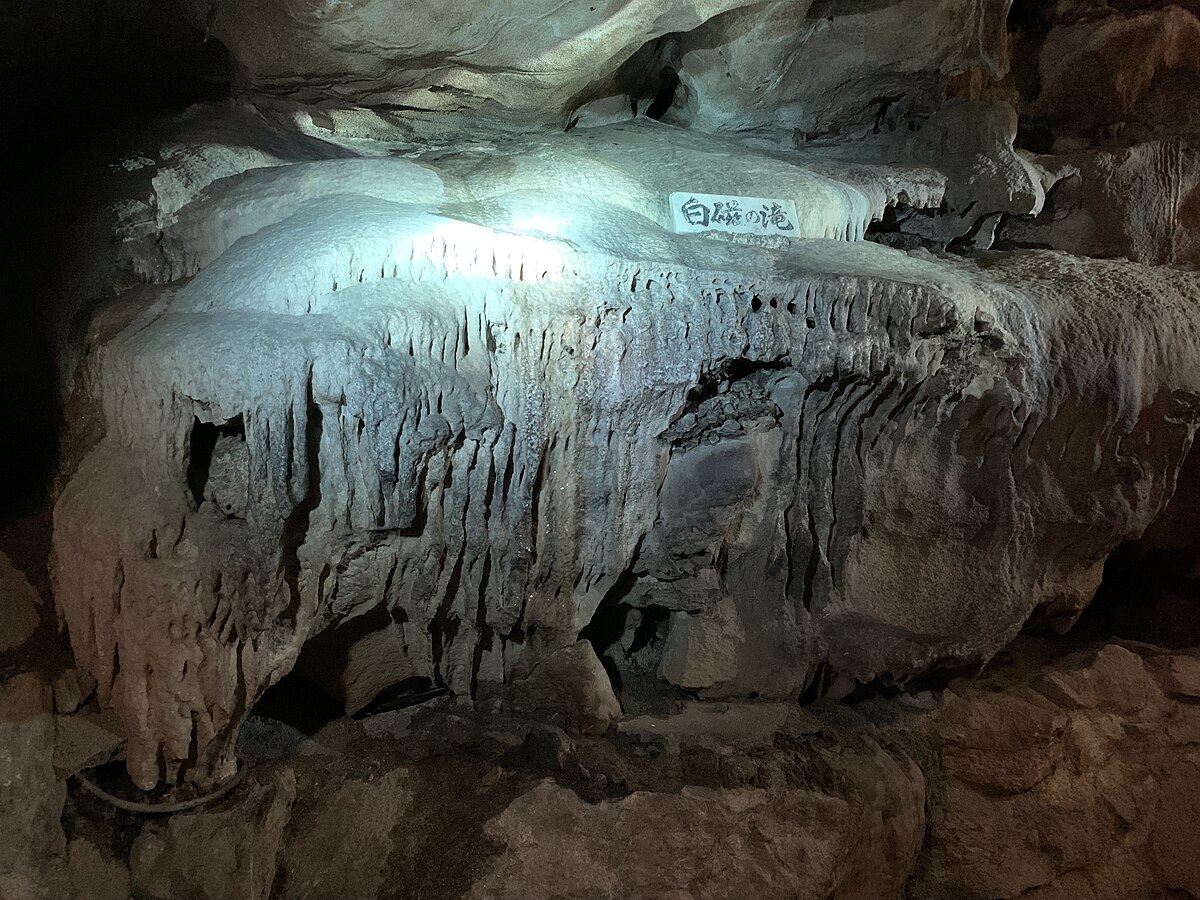
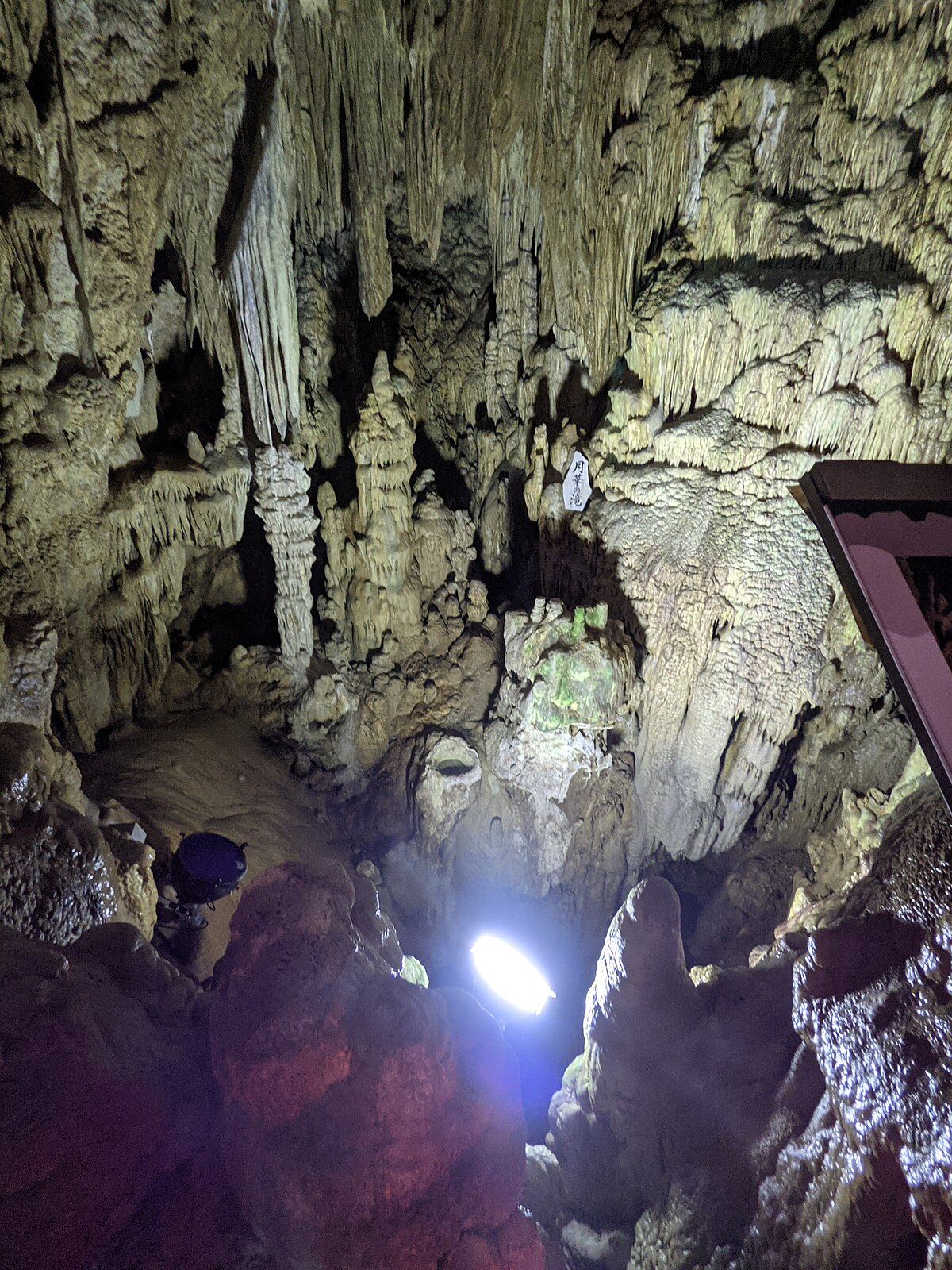
The most dramatic single formation in Abukuma Cave is the Grand Cascade — a vast curtain of flowstone (mineral deposit that forms when calcium-rich water sheets over a rock face) that resembles a frozen waterfall. The formation is approximately 11 meters (36 feet) tall and covers a broad sweep of cave wall in glistening white mineral deposits. It is genuinely spectacular, and the viewing platform in front of it is set at exactly the right distance to appreciate its scale. Budget extra time here — it is one of the most photographed sights in all of Tohoku’s underground.
The Helictite Zone
This is the scientific heart of Abukuma Cave, and it is unlike anything most visitors will have seen before. Helictites are speleothems (cave mineral formations) that grow against the direction of gravity, twisting and curling in shapes that defy simple categorization. Some look like twisted screws of white crystal. Others branch like coral, or coil like tiny ram’s horns, or reach horizontally outward from the cave wall like accusing fingers. The mechanism by which they form is still debated among cave scientists — they may involve capillary forces, impurities in the mineral water, or air currents that deflect growth. Whatever their origin, they are extraordinary to behold.
The Silver Frost and Crystal Palace Sections
Several chambers in Abukuma Cave are nicknamed for the visual effect of their formations. The “Silver Frost” section features delicate needle-like crystals of aragonite and calcite that catch the light in thousands of tiny sparkles, creating the impression of a cavern coated in frozen dew. The “Crystal Palace” section lives up to its theatrical name — a high-domed chamber where column formations (stalactites and stalagmites that have grown together) create a space with genuine architectural drama. These are among the most frequently photographed sections of the cave.
The Underground Pool
Near the middle section of the tourist path, you cross a bridge over a deep underground pool. The water is extraordinarily clear — filtered through hundreds of meters of limestone, it is essentially distilled water — and in the right light, you can see the cave bottom reflected in the surface with mirror-like precision. Fish sometimes make their way into these underground systems, though the conditions are too nutrient-poor to sustain large populations. The sound of dripping water is omnipresent in this section, and many visitors find it meditative.
The Adventure Course (冒険コース)
For those willing to get their knees dirty, the optional Adventure Course branches off from the main path and leads through 120 meters of passages that have not been prepared for standard tourist use. You will stoop, crawl through tight squeezes, and navigate by the light of your own torch (or smartphone light) in some sections. The formations here are rawer and more varied than in the main course, and the sense of genuine exploration is exciting. The adventure course costs an additional ¥500 ($3.40) on top of standard admission and is recommended for physically able adults and older teenagers. Not suitable for young children, the elderly, or anyone with mobility issues.
Getting to Abukuma Cave
Abukuma Cave is located in Motomiya City (本宮市), Fukushima Prefecture. It requires a two-step journey from most major access points — shinkansen (or express train) to Fukushima or Motomiya area, then a local connection by bus or taxi.
- From Tokyo by shinkansen + local train: Take the Tohoku Shinkansen to Fukushima Station (approximately 1 hour 30 minutes, around ¥9,000–¥11,000 / $62–$75 one way; JR Pass valid). Then take the Tohoku Main Line local train south to Motomiya Station (about 15 minutes, ¥240 / $1.65). From Motomiya Station, take a taxi to the cave (approximately 20 minutes, ¥2,500–¥3,000 / $17–$20 one way). Some days, a community bus serves the cave route — check with Motomiya tourist information for current schedules. Total travel time from Tokyo: approximately 2.5–3 hours.
- From Sendai by local train: Take the Tohoku Main Line rapid train south from Sendai to Motomiya Station (about 1 hour, ¥1,170 / $8). Then taxi to the cave. Total from Sendai: approximately 1.5–2 hours. This makes Abukuma Cave an excellent day trip from Sendai or any of the Sendai-area onsen towns.
- From Fukushima City by rental car: The cave is approximately 35 kilometers (22 miles) southeast of Fukushima City. The drive takes about 45 minutes via National Route 349. Parking at the cave is free and plentiful — this is the most convenient option if you are on a self-drive Tohoku trip.
- By rental car from Sendai: About 1 hour 20 minutes (approximately 85 kilometers / 53 miles) via the Tohoku Expressway and National Route 349. An excellent option for combining with other Fukushima destinations.
The JR Pass covers the shinkansen to Fukushima and the Tohoku Main Line to Motomiya, making these portions essentially free for pass holders. The taxi from Motomiya Station is not covered, so carry enough cash.
Practical Information: Visiting Abukuma Cave
Opening Hours and Admission
Abukuma Cave is open year-round. Standard hours are 8:30 am to 5:00 pm (last entry 4:30 pm), extended to 8:30 am to 5:30 pm during peak summer season (July–August). The cave is occasionally closed for maintenance — check the official website before visiting. Admission for the standard 600-meter tourist course is approximately ¥1,200 ($8) for adults and ¥800 ($5.50) for children (ages 3–12). The optional adventure course costs an additional ¥500 ($3.40) per person, bringing the total to ¥1,700 ($11.70) for adults who do both courses. No advance booking is required for most days; during Golden Week (late April–early May) and summer weekends, the cave can get busy, and a brief queue at the entrance is possible.
What to Wear and Bring
The cave temperature is a constant 15°C (59°F) year-round — comfortable in summer, but cool enough to feel chilly in winter when you are coming in from freezing outdoor temperatures. A light jacket or cardigan is always a good idea, even if you visit in August. Wear closed-toe shoes with good grip — the cave path is wet in places, and some sections involve steps. The adventure course requires old clothes you don’t mind getting dirty or muddy. Photography is encouraged throughout the cave; a phone flashlight or a small torch is helpful in the darker sections.
How Long to Allow
Allow approximately 1.5 to 2 hours for a comfortable visit including both the standard course and some photography time. Add another 30–45 minutes if you do the adventure course. The gift shop, café, and outdoor viewing area at the cave entrance add time at either end of your visit.
Best Time to Visit Abukuma Cave
- Spring (March–May): Cherry blossom season makes the surrounding Abukuma Highlands beautiful, and the Hanamiyama flower garden in Fukushima City (about 30 minutes by car) is one of Japan’s most spectacular spring displays. The cave itself is at its most crowd-free in late March and early May. Golden Week is busy — try to arrive when it opens.
- Summer (June–August): The cave’s 15°C (59°F) interior temperature is a genuine relief during Tohoku’s humid summer. Entrance queues can build on summer weekends, but weekday mornings are usually uncrowded. The Obon holiday period (mid-August) sees higher visitor numbers.
- Autumn (September–November): The best season for combining a cave visit with the spectacular autumn foliage of the Abukuma Highlands. Driving through the hills in October with red maples and golden ginkgos is extraordinary. The cave itself is at its most comfortable temperature — you won’t need the jacket indoors.
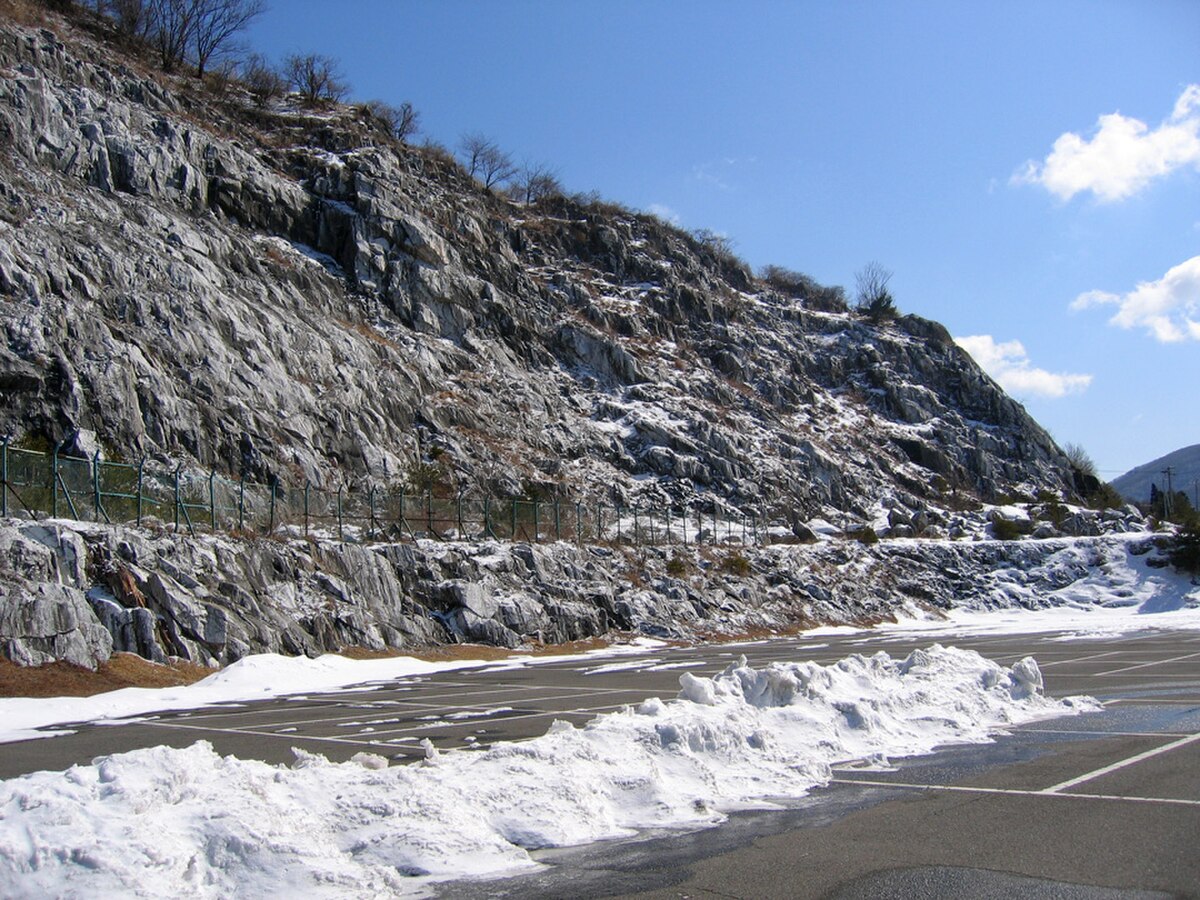
- Winter (December–February): The cave is genuinely warming in winter — the 15°C interior feels pleasant when outdoor temperatures drop below freezing. Winter is the least crowded season, and the lack of crowds allows for more leisurely photography. The drive to the cave can be affected by snow — check road conditions if driving. Nearby onsen towns offer a perfect complement to a winter cave visit.
Where to Eat Near Abukuma Cave
The immediate cave area has a small café and restaurant at the visitor facilities — largely focused on set lunch menus and light snacks. For more substantial dining, the nearby towns offer Fukushima’s remarkable food culture.
Cave Entrance Restaurant
The on-site restaurant at Abukuma Cave serves basic set lunches and light snacks at reasonable prices. Expect ramen, curry rice, and simple teishoku (set meal) plates for ¥800–¥1,200 ($5.50–$8). The food is functional rather than memorable, but the location is convenient if you are visiting on a tight schedule.
Motomiya City Dining
Motomiya City is a small agricultural town that punches above its weight for fresh vegetable and local produce. The Abukuma Highlands are known for their cool-climate vegetables — particularly tomatoes, strawberries, and potatoes — and local restaurants make good use of them. Look for teishoku lunch sets at family restaurants near Motomiya Station for ¥1,000–¥1,500 ($7–$10).
Nihonmatsu City Dining (15 minutes by car)
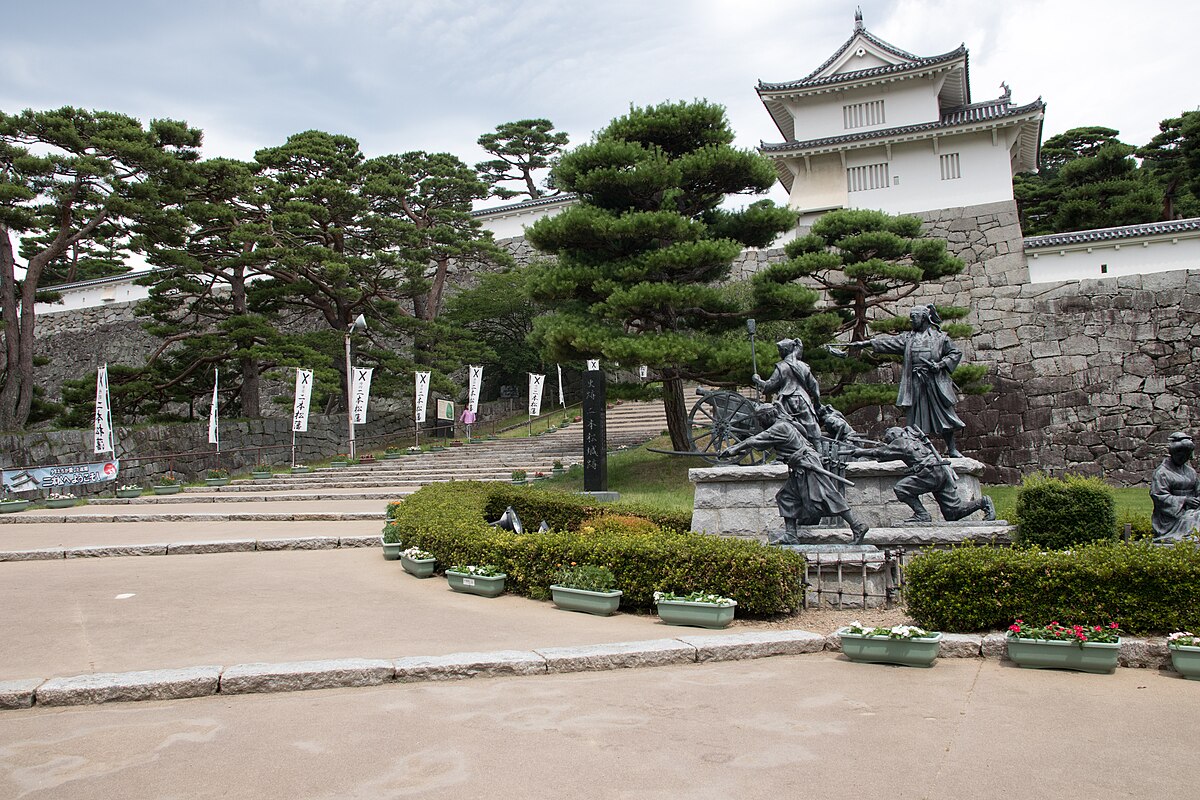
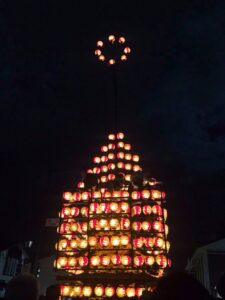
Nihonmatsu City, just north of Motomiya, offers more dining variety. The city is famous for Nihonmatsu Chrysanthemum Dolls (a traditional autumn festival featuring elaborate chrysanthemum-covered figures) and has several good restaurants in its historic center. The Nihonmatsu Castle ruins are also here — an excellent combined visit with the cave. Look for local izakaya (Japanese pub-restaurants) for evening meals, with sets running ¥2,000–¥4,000 ($14–$27) including drinks.
Fukushima City (35 minutes by car)
Fukushima City has the widest range of dining options if you are staying the night. The city’s specialty is Tori no motsu-ni (chicken giblet stew) — a warming, intensely savory hot pot dish that is practically unknown outside Fukushima but deeply beloved locally. Major ramen chains and family restaurants cluster around Fukushima Station, but for the best experience, head to the dining street behind the station for local ramen shops and izakaya. Budget ¥1,500–¥3,000 ($10–$20) for a full dinner.
Combining Abukuma Cave with Other Fukushima Highlights
Abukuma Cave works best as part of a broader Fukushima day trip or overnight itinerary. Here are the best nearby attractions to combine.
Nihonmatsu Castle (霞ヶ城公園, 15 min by car)
One of Tohoku’s most evocative castle ruins, Nihonmatsu Castle (also called Kasumigajo, “Castle of Mist”) sits on a wooded hill above Nihonmatsu City with sweeping views of the surrounding mountains. The stone walls are largely intact, and the grounds contain a particularly beautiful tea house and gardens. Cherry blossoms in April transform the ruins into a pink paradise — it is one of Fukushima’s top cherry blossom viewing spots. The castle grounds are free to enter; the small museum on-site costs ¥330 ($2.25). Walking the walls takes about 45 minutes.
Hanamiyama Park (花見山公園, 40 min by car from cave)
One of Japan’s most beloved spring destinations, Hanamiyama Park in Fukushima City is a hillside farm that opens to the public each spring when it erupts in simultaneous waves of cherry blossoms, forsythia, magnolia, plum, and peach blossoms. The photographer Nobuyoshi Araki called it “a flower paradise,” and the photos you take here are the ones friends back home won’t believe. Free admission from late March through late April (exact dates vary by year). Open daily during the bloom period from 8:00 am to 5:00 pm. Located about 40 minutes by car from Abukuma Cave.
Ura-Bandai Highlands (2 hours by car)
If you have a rental car and more time, the Ura-Bandai Highlands — a volcanic highland district of more than 300 lakes, ponds, and marshes created by the 1888 eruption of Mount Bandai — make a spectacular extension. The famous Goshikinuma Ponds change color with the seasons and mineral content, appearing blue, green, red, or orange depending on the light. The area is about 2 hours’ drive from Abukuma Cave. See our complete Ura-Bandai guide for details.
Where to Stay Near Abukuma Cave
Budget (Under ¥8,000 / $55 per night)
Motomiya City has a limited selection of budget accommodation, mostly business hotels near the train station. Motomiya Station Business Hotel offers functional rooms from ¥5,500 ($37) with easy access to the station for day trips. Fukushima City (35 minutes by car or local train) has more options including the reliable Toyoko Inn Fukushima-ekimae chain from ¥6,000 ($41) per room.
Mid-Range (¥8,000–¥20,000 / $55–$135)
Hotel Route Inn Fukushima and Comfort Hotel Fukushima near Fukushima Station offer comfortable Western-style rooms for ¥9,000–¥14,000 ($62–$96) per night, with parking available for self-drive visitors. For a more local experience, Tsuchiyu Onsen — a small mountain hot spring town about 30 minutes from Fukushima City by car — has traditional Japanese guesthouses (minshuku) with meals for ¥12,000–¥18,000 ($82–$124) per person including dinner and breakfast. The sulfurous hot spring waters here are legendary among Japanese onsen enthusiasts.
Luxury (¥20,000+ / $135+)
For a truly indulgent base, Hotel Ikaho or other large onsen ryokan in the Higashiyama Onsen area near Aizuwakamatsu (about 1.5 hours from Abukuma Cave) offer full kaiseki dining, private outdoor baths, and the full traditional Japanese inn experience for ¥30,000–¥55,000 ($205–$375) per person including two meals. Fukushima City’s Hotel Metropolitan Fukushima offers comfortable business-class luxury from ¥18,000–¥25,000 ($124–$171) per night without meals.
Practical Tips for Visiting Abukuma Cave
- Arrive early: The cave opens at 8:30 am, and the first hour or two is the quietest time of day. Arriving right at opening means you may have sections of the cave entirely to yourself — a magical experience in a place this beautiful.
- Bring a jacket even in summer: The cave is 15°C (59°F) year-round. If you visit on a hot August day (35°C / 95°F outside), the temperature difference is 20 degrees. The jacket you didn’t bring will be the thing you regret most.
- Photography tips: The cave is quite dark in sections. Your phone camera will do surprisingly well in the areas with colored lighting (the formations reflect light beautifully), but a camera with manual control and low-light capability will produce much better results. A small tripod or image stabilization helps. The Silver Frost section and the underwater pool reflections are particularly rewarding subjects.
- Children: The standard course is suitable for children aged 4 and up if they are comfortable with low-lit enclosed spaces. The path is well-maintained and guardrailed throughout. The adventure course is not appropriate for young children. Some children find the cave exciting; others find it frightening — the decision is yours.
- Mobility considerations: The standard tourist path has moderate gradients and some steps but is navigable for most visitors. Wheelchairs are not able to complete the full course due to narrow passages and steps in certain sections. Contact the cave in advance if you have specific mobility requirements.
- Getting back from the cave: If you came by taxi from Motomiya Station, ask the driver to return at an agreed time or keep their contact number. There is no taxi rank at the cave itself, and the bus service is limited. Alternatively, arrange a rental car from Fukushima City for full flexibility.
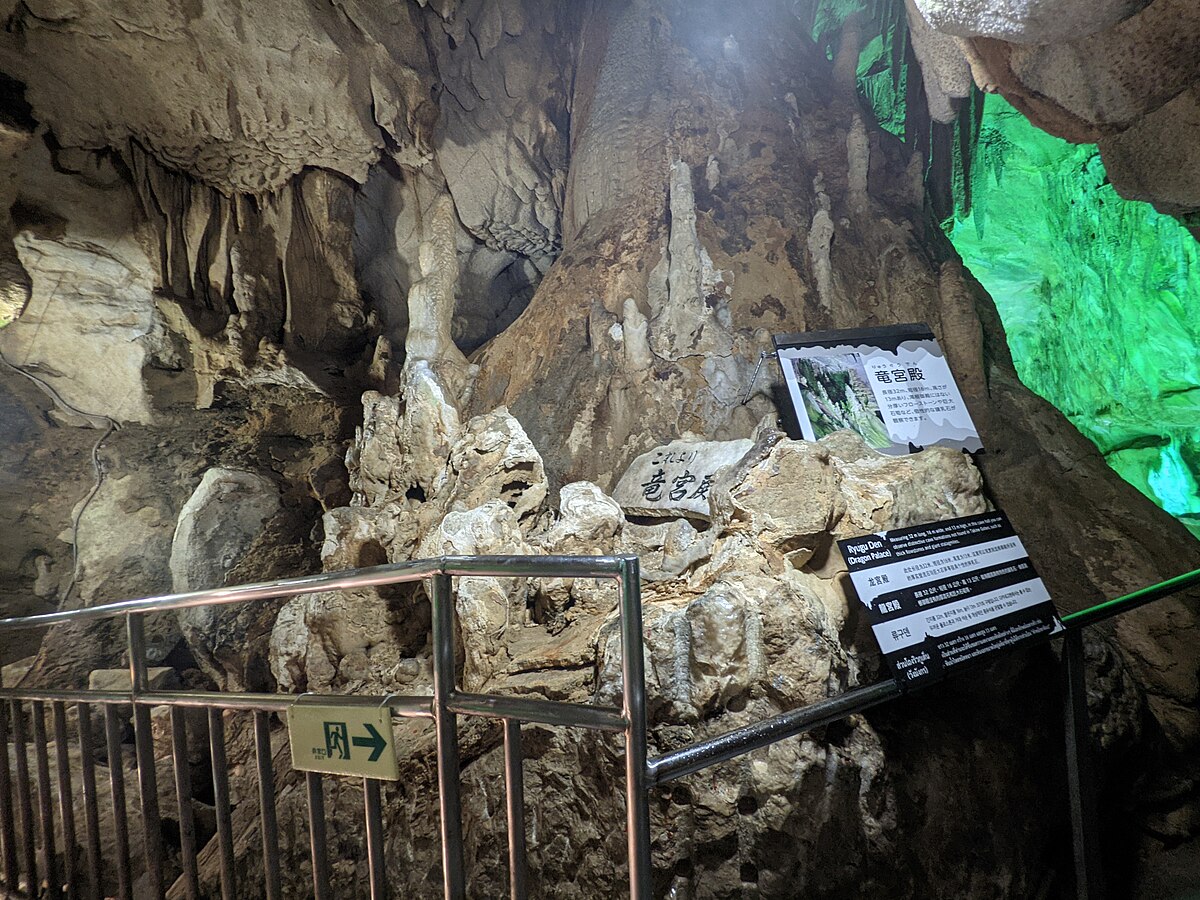
- Language: The cave has Japanese signage throughout, with some English translation in the main areas. The formations are labelled in Japanese with furigana; a translation app on your smartphone can help decode the poetic names that have been given to major formations.
- Combining with a night in Fukushima: Fukushima City is genuinely undervisited by foreign tourists and rewards a night’s stay. The city’s food scene is excellent, the morning market is lively, and the surrounding countryside — especially the Tsuchiyu hot spring valley — is beautiful. Spend the afternoon at Abukuma Cave, drive to Fukushima for dinner and a night in a ryokan, and explore Nihonmatsu Castle the next morning before catching a train north or south.
Sample Day Trip Itinerary: Abukuma Cave from Sendai
Morning
Depart Sendai by the 7:50 am Tohoku Main Line rapid train to Motomiya Station (arriving approximately 9:10 am). Alternatively, take the Shinkansen to Fukushima and then the local train south (more expensive but faster). From Motomiya Station, take a taxi to Abukuma Cave (20 minutes, ¥2,500 / $17 one way — negotiate a return pickup at the same time). Arrive at the cave by 9:30 am.
Midday
Complete the standard 600-meter cave course (40–60 minutes) and the adventure course if desired (add 30–45 minutes). Stop at the cave café for a light lunch or snack (budget ¥800–¥1,200 / $5–$8). If you pre-arranged a taxi, he should be arriving around 12:30 pm.
Afternoon
Return to Motomiya Station and take the local train north to Nihonmatsu (10 minutes, ¥200 / $1.40). Walk from Nihonmatsu Station to Nihonmatsu Castle ruins (about 15 minutes on foot or a 5-minute taxi). Spend 45–60 minutes at the castle grounds, enjoying the views and exploring the well-preserved stone walls. Optional: continue north by train to Fukushima City for a late afternoon walk through the city center and dinner.
Evening
Return to Sendai from Fukushima Station by Shinkansen (35 minutes, ¥2,860 / $19 without pass, covered by JR Pass) or from Nihonmatsu Station by local train. The last rapid train from Fukushima to Sendai on the Tohoku Main Line runs around 9:30 pm. Total day trip cost from Sendai (transport only): approximately ¥4,000–¥6,000 ($27–$41), depending on route and taxi usage.
Abukuma Cave and Fukushima’s Recovery Story
You may be reading this and wondering about Fukushima — specifically the 2011 nuclear accident at Fukushima Daiichi, which followed the catastrophic Tohoku earthquake and tsunami of March 11, 2011. It is a question worth addressing directly.
Abukuma Cave is located approximately 55 kilometers (34 miles) southwest of Fukushima Daiichi Nuclear Power Plant. It was not in the evacuation zone at any point during or after the 2011 accident, and radiation monitoring at the cave and throughout Motomiya City has consistently shown levels well within normal background radiation ranges. The cave has been open continuously since shortly after the 2011 disaster, and there are no safety concerns about visiting.
More broadly, Fukushima Prefecture has undergone an extraordinary transformation in the 15 years since 2011. The inland areas of Fukushima — including Motomiya, Nihonmatsu, Fukushima City, Aizuwakamatsu, and the Ura-Bandai Highlands — were largely unaffected by the nuclear accident, and have recovered fully. Fukushima’s agricultural products, including its famous peaches, pears, and wine grapes, have been tested to exhaustion and consistently show no contamination. The story of Fukushima today is one of resilience, innovation, and quiet pride — not the disaster narrative that still dominates some foreign perceptions. Coming to visit is, in a small way, an act of solidarity with a region that deserves more recognition for its extraordinary beauty and culture.
Related Articles You Might Enjoy
- Mount Adatara & Dake Onsen, Fukushima: Japan’s Sacred Volcano & Secret Healing Hot Spring
- Tadami Line, Fukushima: Japan’s Most Scenic Hidden Railway Journey
- Fukushima City Guide: Japan’s Most Misunderstood Destination & Why You Need to Visit
- Miharu Takizakura: Japan’s Most Spectacular 1,000-Year-Old Cherry Tree — Complete Guide
- Lake Inawashiro, Fukushima: Complete Guide to Japan’s Mirror of Heaven
Final Thoughts
Abukuma Cave is one of those destinations that surprise you with their quality. You expect a pleasant cave and you get a genuinely spectacular geological experience that takes your breath away. You expect to be the only foreign tourist and you probably will be, which makes the whole thing feel like a discovery rather than a sightseeing checklist item.
Fukushima Prefecture has too many extraordinary places that too few international travelers visit. The Ura-Bandai Highlands, the Goshikinuma Ponds, Nihonmatsu Castle, Hanamiyama Park, the Aizu region’s samurai culture, Kitakata’s ramen and sake breweries — all of them are world-class, all of them are uncrowded by international standards, and all of them are accessible. Abukuma Cave is the perfect starting point for discovering this underrated region.
Have questions about visiting Abukuma Cave or exploring Fukushima Prefecture? We love hearing from travelers who are planning their Tohoku adventures — get in touch here.


コメント