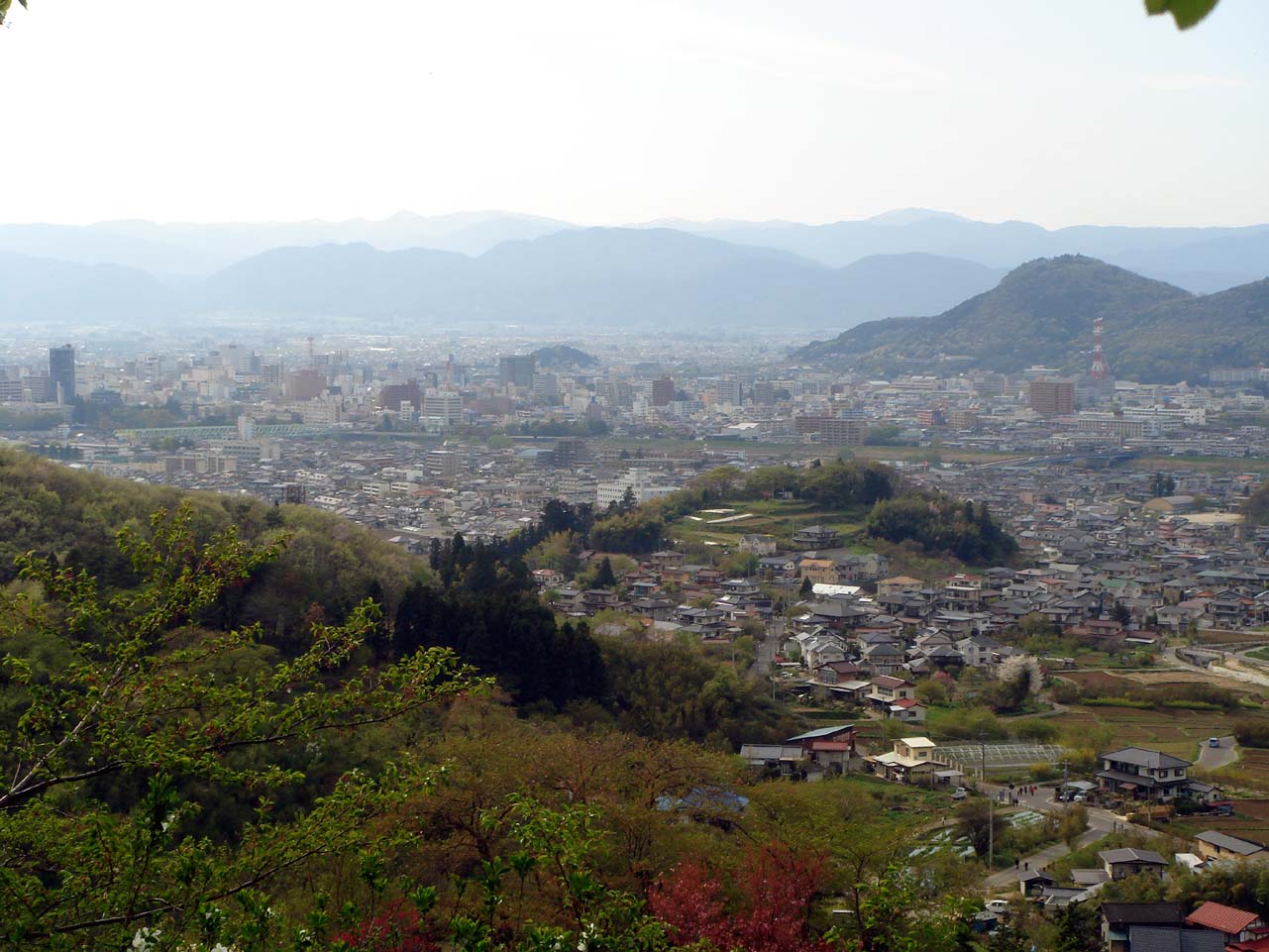
Let’s be honest: Fukushima is the most unfairly judged travel destination in all of Japan. Mention the name to most Westerners and you’ll see a flicker of worry — visions of disaster zones and lingering radiation. But here’s the truth that thousands of Japanese tourists and a growing wave of international visitors already know: Fukushima City, the provincial capital of Fukushima Prefecture, is one of the most beautiful, most welcoming, and most delicious cities in all of Tohoku. It has world-class cherry blossom and flower festivals, one of Japan’s most active volcanic landscapes you can walk into, an extraordinary fruit farming culture, and some of the finest sake breweries in the country. It’s time to give Fukushima the reputation it actually deserves.
Why Fukushima City Is Not What You Think
First, let’s address the elephant in the room. The 2011 Fukushima Daiichi nuclear disaster occurred at a power plant located on the Pacific coast, roughly 60 kilometres (37 miles) east of Fukushima City. The city itself, and the surrounding farmland, was not in the affected exclusion zone. According to Japan’s Nuclear Regulation Authority, radiation levels in Fukushima City are comparable to those in major cities like Tokyo and Osaka — and in many cases, lower than cities in countries like the United States and much of Europe due to natural background radiation variations.
The Japanese government, international scientific bodies including the World Health Organization, and independent researchers have consistently confirmed that Fukushima City and the agricultural lands of western Fukushima Prefecture are safe for residents, visitors, and food production. Fukushima-grown peaches, pears, rice, and apples are rigorously tested — more thoroughly tested than any other produce in Japan — and meet the strictest safety standards. When you eat a Fukushima peach (and you absolutely should), you’re eating one of the most carefully verified fruits in the world.
In fact, the real story of modern Fukushima is one of remarkable resilience, renewal, and pride. The people of Fukushima have turned a period of hardship into a powerful narrative of recovery, and visiting this prefecture is a way to participate in that story. Your tourism dollars genuinely matter here. And beyond the politics and history, Fukushima City itself is simply a wonderful place to spend a day or two — especially if you come in spring or summer.
Getting to Fukushima City from Tokyo
Fukushima City is exceptionally easy to reach from Tokyo, making it a perfect day trip or an overnight stop on a longer Tohoku journey. The city sits directly on the Tohoku Shinkansen line, one of Japan’s most frequently operated bullet train services.
- Shinkansen (Yamabiko or Nasuno service): Tokyo Station to Fukushima Station takes approximately 1 hour 30 minutes. Trains run roughly every 30 minutes throughout the day. Fares are approximately ¥8,500–¥9,500 ($58–$65 USD) for a reserved seat.
- JR Pass: The Tohoku Shinkansen is fully covered by the Japan Rail Pass. If you’re on a Tohoku trip with a JR Pass, Fukushima is a zero-cost addition to your itinerary.
- By car from Tokyo: Approximately 3 hours via the Tohoku Expressway (about 270 km / 168 miles). Parking is widely available in Fukushima City.
- From Sendai: Just 20 minutes by Shinkansen (¥2,500–¥3,000 / ~$17–$20 USD). Fukushima is an easy day trip from Sendai for those based in Miyagi Prefecture.
From Fukushima Station, the main attractions are easily accessed by local bus (routes run to Hanamiyama Park seasonally) or by taxi. A day’s taxi circuit around the main sights costs approximately ¥5,000–¥8,000 ($34–$54 USD) — very reasonable given the distances involved.
Hanamiyama Park: Japan’s Flower Mountain
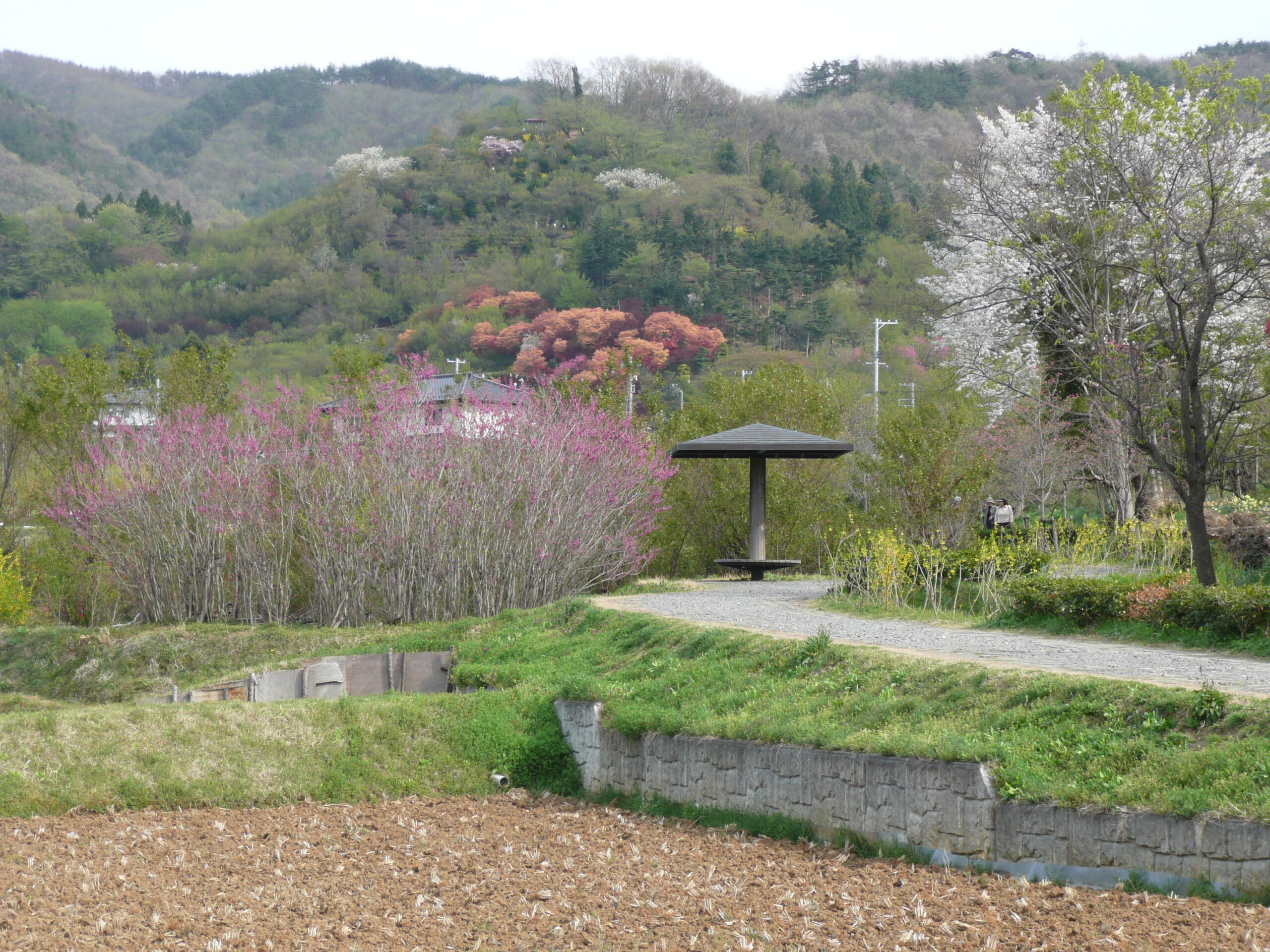
If you visit Fukushima City for only one reason, make it Hanamiyama Park (花見山公園). The name translates as “Flower Viewing Mountain,” and it could not be more aptly named. For a few glorious weeks in late March and early April, this privately owned hillside — generously opened to the public every spring by the farming family that has cultivated it for generations — transforms into one of the most breathtaking flower spectacles in all of Japan.
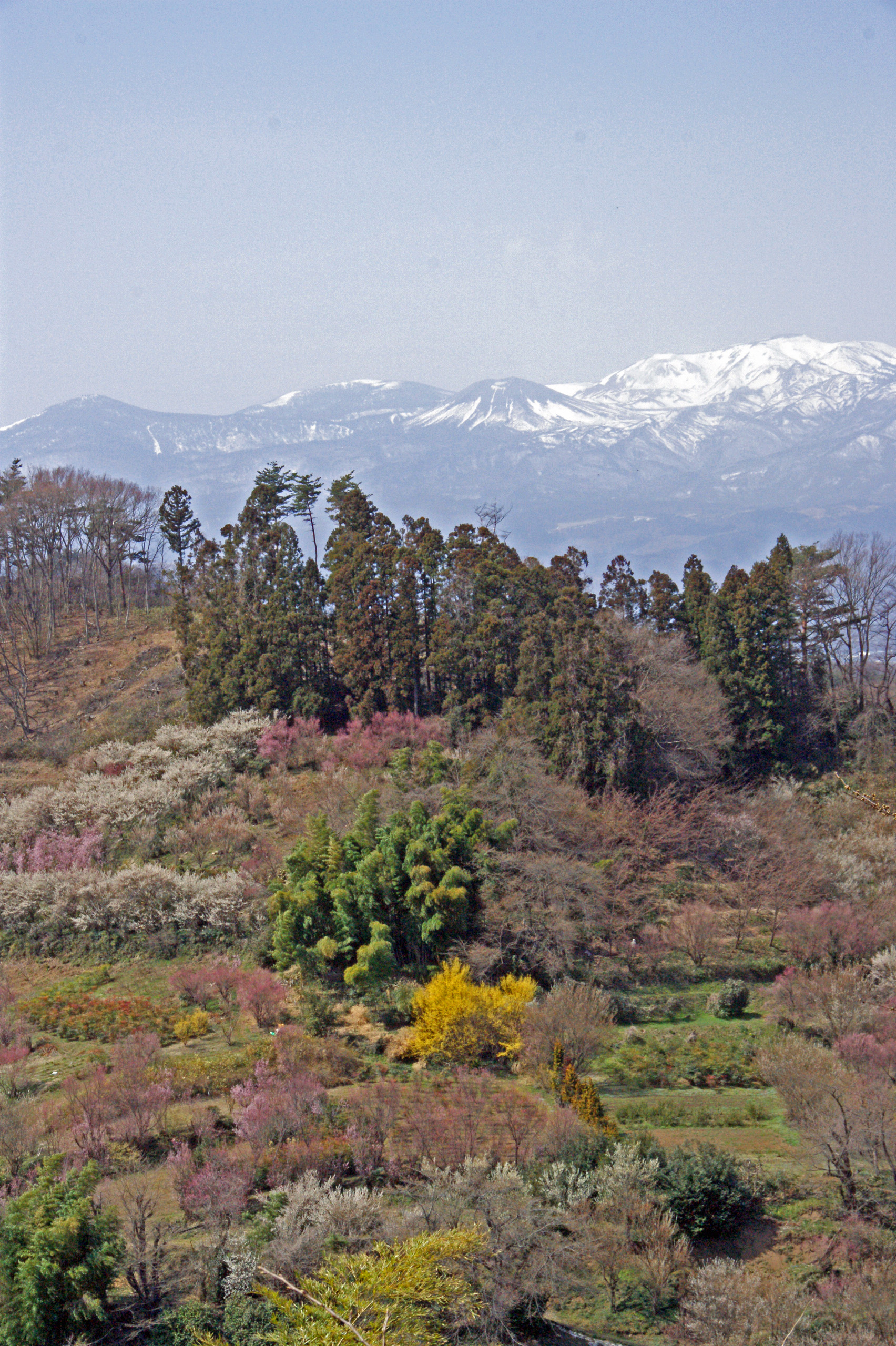
Unlike the manicured cherry blossom parks of Tokyo or the famous rows of trees in Hirosaki, Hanamiyama is an organic explosion of colour. Dozens of flowering species bloom simultaneously: pale pink weeping cherry trees, deep magenta plum blossoms, white pear flowers, vivid forsythia, and clouds of Japanese quince all burst open at the same time. The hillside terraces frame the flowers against the snowy peak of Azuma-Kofuji volcano in the distance, creating a composition that seems almost impossibly beautiful.
The famous nature photographer Hanzaburo Shiraishi once described Hanamiyama as “a paradise on earth,” and that description has stuck. Japanese visitors travel from across the country to see it. If you arrive during peak bloom — typically the last week of March to the second week of April, depending on the year’s weather — you’ll witness something that no amount of photography can fully capture: the smell of thousands of blooming flowers carried on cool spring air, the hum of bees, and the particular quality of Tohoku light falling on a mountain of colour.
Hanamiyama is free to enter and open to the public daily during the spring flower season (typically mid-March to mid-April). It’s located about 4 km (2.5 miles) from Fukushima Station, and a shuttle bus operates during peak season.
Azuma-Kofuji: The Snow Rabbit Volcano
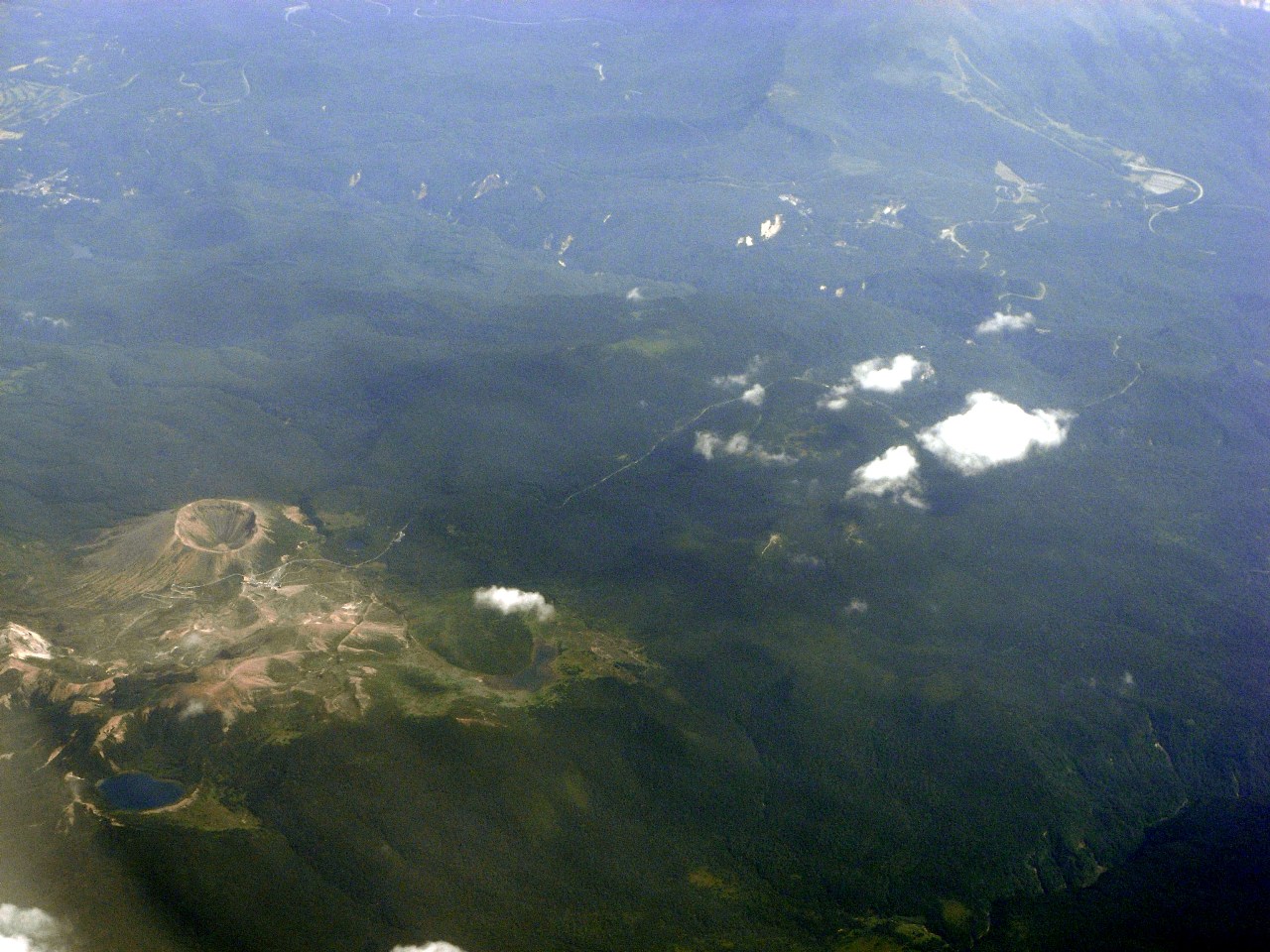
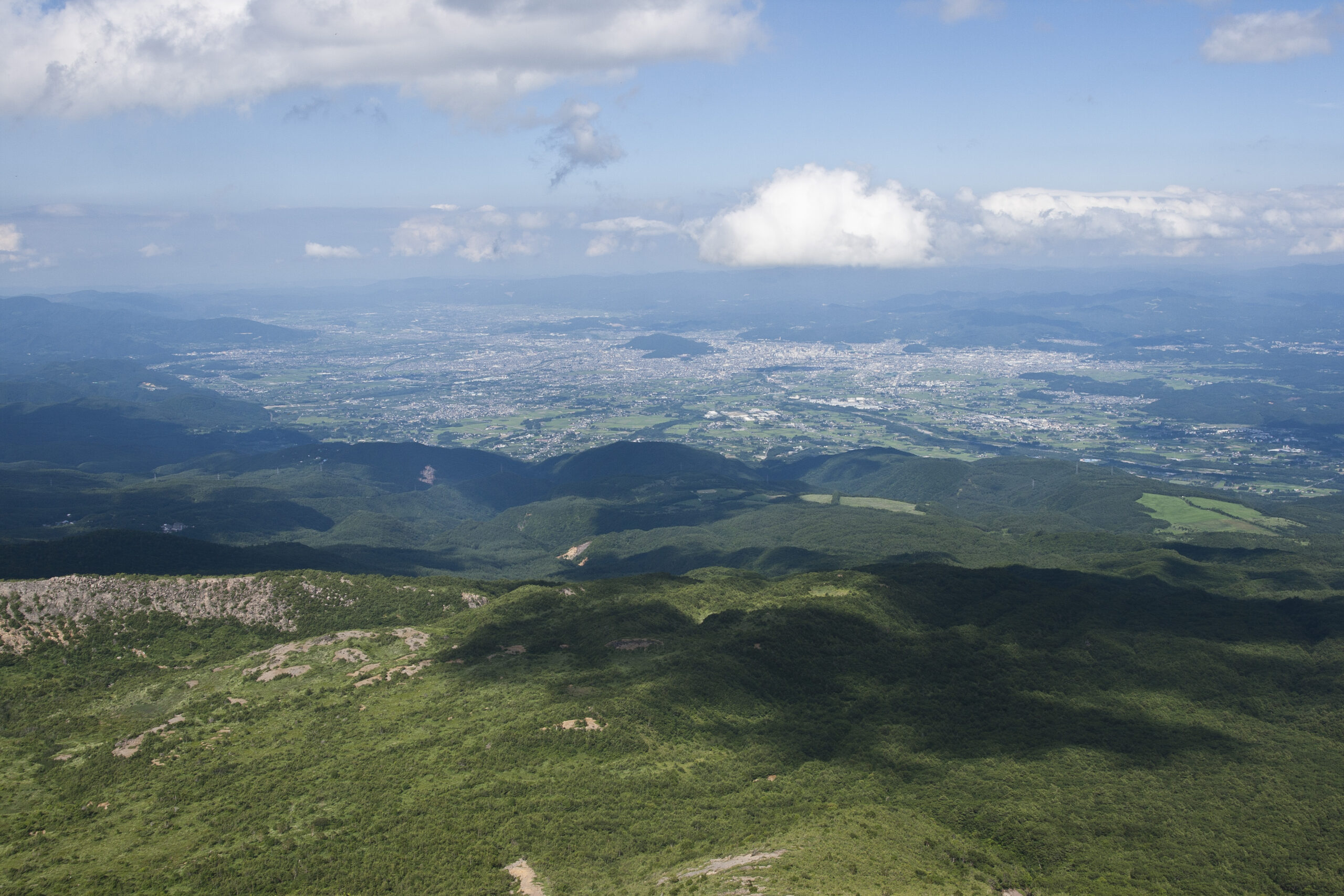
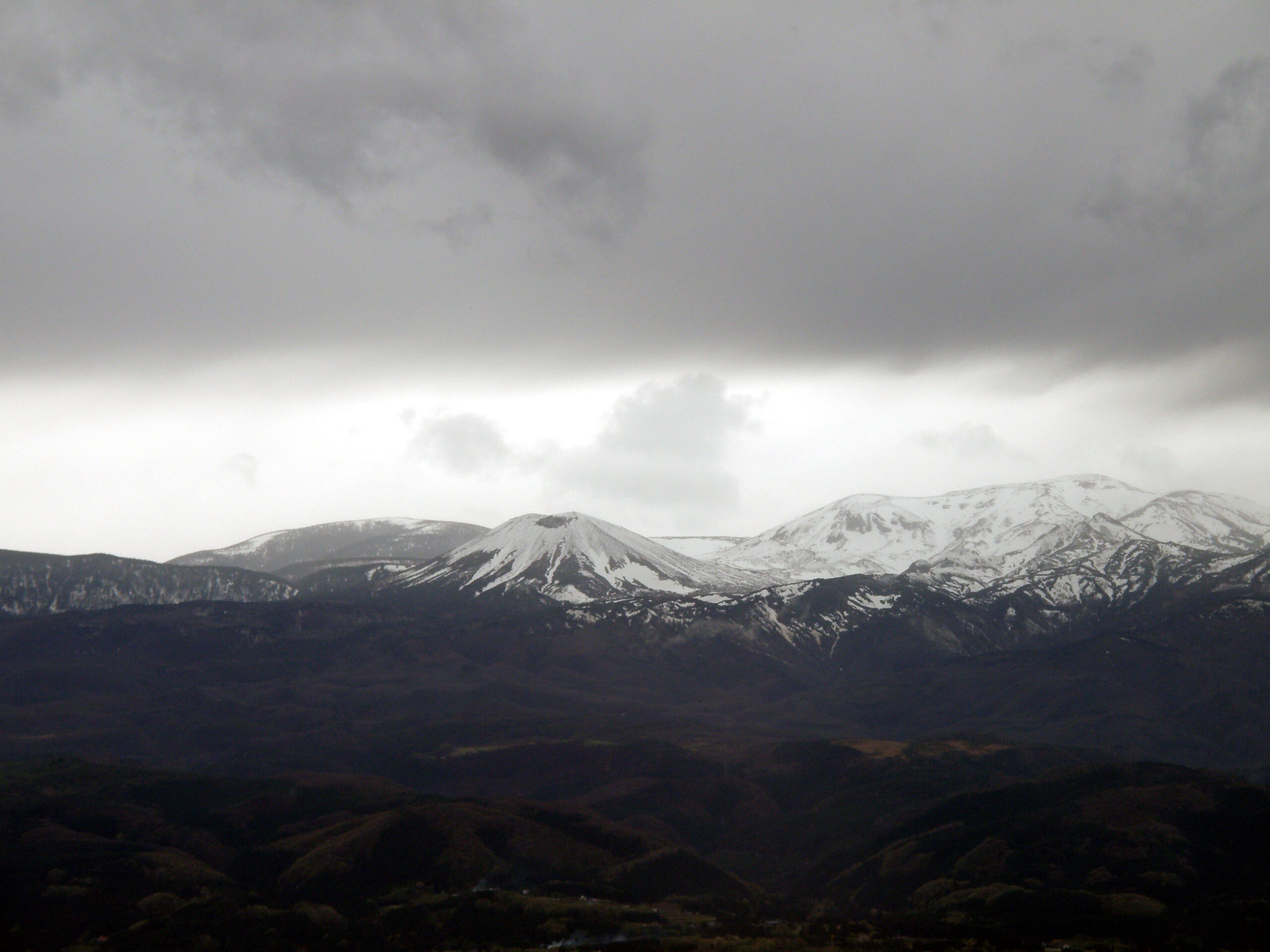
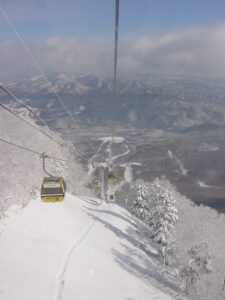
One of Fukushima City’s most iconic images is not something most visitors expect to find near a prefectural capital: an active volcano crater that you can walk around the rim of, with a view across an entire mountain range. Azuma-Kofuji (吾妻小富士) — “Little Fuji of Azuma” — is a perfectly conical cinder cone volcano that rises to 1,707 metres (5,600 feet) above sea level in the Adatara mountains west of Fukushima City.
The volcano gets its nickname from the distinctive “snow rabbit” (雪うさぎ, yuki usagi) that appears on its slopes each April and May. As the winter snow begins to melt, a specific pattern of snow and exposed dark rock on the south-facing crater wall creates the unmistakable silhouette of a white rabbit. You can see this phenomenon clearly from Fukushima City itself on clear spring days — look to the west and you’ll spot it on the mountain horizon. Locals watch for the appearance of the snow rabbit as a signal that spring planting season has arrived.
In summer and early autumn, a toll road called the Azuma-Bandai Skyline (磐梯吾妻スカイライン) allows vehicles to drive up to within easy hiking distance of the summit. A short 20-minute walk takes you to the rim of the crater — one of the most dramatic views in Tohoku. Looking down into the sulphurous crater and then out across the Fukushima basin below on a clear day is a genuinely awe-inspiring experience. The surrounding highlands, part of Bandai-Asahi National Park, are carpeted with dwarf bamboo, mountain wildflowers, and in autumn, spectacular red and orange foliage.
Note: The Azuma-Bandai Skyline is open seasonally, typically late April through November, depending on snow conditions. Admission for a vehicle is approximately ¥570 ($4 USD) per car. The toll road closes during volcanic activity alerts, so check current conditions before heading up.
Fukushima’s Extraordinary Fruit Culture
Ask any Japanese person to name Japan’s best fruit-growing prefecture and there’s a very good chance they’ll say Fukushima. This prefecture is famous across Japan for the quality of its agricultural produce, and the centrepiece of that reputation is fruit — specifically, the peaches that ripen in the warm, sunny valleys west of Fukushima City each summer.
Fukushima Peaches (福島の桃) are legendary in Japan. The combination of the region’s warm summer days, cool nights, abundant snowmelt water from the mountains, and fertile volcanic soil creates conditions for peaches of extraordinary sweetness and size. Fukushima peaches are sold in high-end department stores across Japan for prices that make Western visitors blink — a single premium peach can retail for ¥500–¥1,500 ($3–$10 USD). But here in Fukushima, you can buy them for a fraction of that price at roadside stalls and farm markets during the season (typically August and September).
Beyond peaches, Fukushima grows exceptional Japanese pears (nashi), grapes, apples, and cherries. The fruit picking experience is deeply embedded in the local tourism culture. Dozens of farms around Fukushima City welcome visitors to pick fruit directly from the trees during the relevant seasons — it’s a wonderful way to spend a morning, especially with children. Strawberry picking runs from January to May, cherry picking in June and July, peach and pear picking in August and September, and grape and apple picking through October.
The fruit culture extends into Fukushima’s food scene in delightful ways. Local restaurants incorporate seasonal fruits into desserts, parfaits, and even savoury dishes. The Fukushima Peach Parfait Trail — a loose network of cafés and dessert shops each creating their own signature peach creation — is a genuine summer pilgrimage for Japanese food lovers.
Best Time to Visit Fukushima City
- Spring (late March–April): This is absolutely the peak season for Hanamiyama Park. Book accommodation well in advance — the town fills up during the flower season. Azuma-Kofuji’s snow rabbit appears in April and May. Temperatures range from 5–18°C (41–64°F).
- Summer (June–August): Fruit picking season. Hot and somewhat humid (28–35°C / 82–95°F), but the fruit farms are at their best. The Azuma-Bandai Skyline is fully open and the mountain wildflowers are in bloom. Good time to visit the mountain for cooler temperatures and clear views.
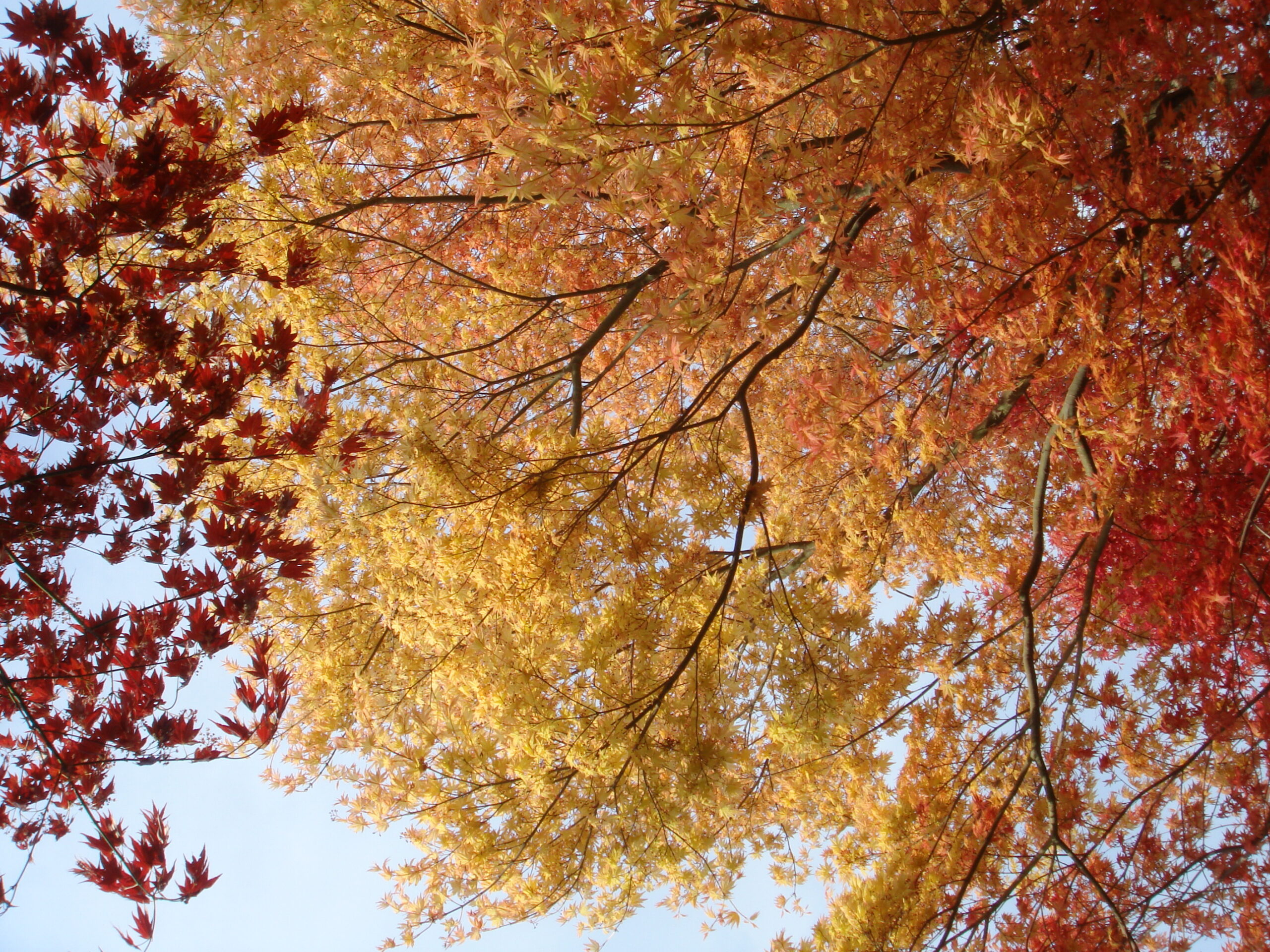
- Autumn (September–November): Hanamiyama turns spectacular again with autumn foliage — the maples and zelkova trees create a second season of colour. Apple and grape harvests continue. Temperatures drop to comfortable hiking range of 10–22°C (50–72°F).
- Winter (December–February): Cold, with some snow (temperatures around -2–8°C / 28–46°F). Quiet season, fewer tourists. Some indoor attractions and sake breweries are worth visiting. Ice sculpture and winter festivals in nearby cities add interest.
Where to Eat: Fukushima City Food Guide
Fukushima City has a surprisingly rich and varied food scene. Beyond the fruit culture, the city produces some excellent regional dishes and is home to a cluster of top-quality sake breweries that welcome visitors.
Fukushima Peach Parfaits & Fruit Desserts
During summer and autumn, cafés across Fukushima City compete to create the most spectacular fruit-laden parfaits. Look for places advertising “桃パフェ” (momo pafe — peach parfait). Expect to pay ¥800–¥1,500 ($5–$10 USD) for a generous creation featuring fresh local peaches, local ice cream, and seasonal accompaniments. The tourist information office near Fukushima Station can provide a current map of participating cafés.
Enban Gyoza (円盤餃子)
Fukushima City’s signature local dish is enban gyoza — “flying saucer dumplings.” Unlike the standard Japanese gyoza that are cooked in a line, Fukushima’s gyoza are arranged in a large circle on the pan, creating a spectacular ring of crispy, pan-fried dumplings (up to 30 in one serving). The skin is thin, the filling is packed with pork and vegetables, and the crispy bottom crust is the star. The standard serving at a gyoza restaurant is around ¥700–¥1,200 ($5–$8 USD) and is meant to be shared. Look for restaurants around the station area that display the distinctive circular presentation — they’re not hard to find.
Fukushima Sake Breweries
Fukushima Prefecture has won more gold medals at Japan’s National Sake Competition than any other prefecture in recent years — a fact that surprises many visitors but deeply pleases those who discover it. The city and surrounding towns are home to dozens of quality sake breweries, several of which offer tours and tastings. The Watanabe Sake Brewery and Senbon-yari Brewery are among those that welcome visitors during specific seasons. A sake flight at a local brewery typically costs ¥500–¥1,000 ($3–$7 USD) and gives you access to varieties that are rarely exported.
Kitakata Ramen (日帰り圏内)
While not strictly Fukushima City food, the famous Kitakata Ramen style — thick, flat, wavy noodles in a rich shoyu broth — is accessible as a day trip (about 30 minutes by train to Kitakata City). Fukushima locals often combine a morning at Hanamiyama with an afternoon ramen visit to Kitakata. Many restaurants in Fukushima City also serve Kitakata-style ramen on their menus.
Where to Stay in Fukushima City
Budget (Under ¥7,000 / $48 per night)
Business hotels cluster around Fukushima Station and offer clean, comfortable rooms at very reasonable prices. Dormy Inn Fukushima is a reliable chain option with an on-site hot spring bath (unusual for a business hotel in a city centre) for around ¥5,500–¥7,000 ($37–$48) per person. APA Hotel Fukushima Ekimae provides no-frills but functional rooms from around ¥4,500–¥6,000 ($31–$41).
Mid-Range (¥8,000–¥18,000 / $55–$124)
Hotel Resol Fukushima offers a comfortable mid-range option with good amenities close to the station, typically from ¥8,000–¥12,000 ($55–$82) per person. For an authentic Japanese experience, several small ryokan (Japanese inns) operate in the more suburban areas of Fukushima City, where a traditional room with dinner and breakfast is available from approximately ¥12,000–¥18,000 ($82–$124).
Luxury (¥20,000+ / $138+)
For a luxury experience, consider staying at one of the hot spring resorts in Iizaka Onsen (飯坂温泉), just 15 minutes from Fukushima Station by local train. This long-established hot spring resort town has several traditional ryokan with multi-course kaiseki dinners and beautiful private hot spring baths. Prices typically run ¥20,000–¥40,000 ($138–$276) per person per night including dinner and breakfast, but the experience is exceptional.
Iizaka Onsen: Fukushima City’s Hot Spring Town
Most visitors to Fukushima City don’t know that they’re just 15 minutes away from one of Tohoku’s oldest and most atmospheric hot spring resort towns. Iizaka Onsen (飯坂温泉) has been drawing bathers for over 1,200 years — references to the springs appear in historical texts dating to the 8th century. The spring water is a very hot alkaline chloride type (typically 56–80°C / 133–176°F), requiring dilution before it reaches the bathing tubs, and is said to be excellent for fatigue recovery, skin conditions, and general wellness.
The town centre has a distinctly old-fashioned, nostalgic charm that contrasts pleasantly with modern Fukushima City. Traditional wooden ryokan line the narrow streets around the spring source, and public bathhouses (共同浴場, kyodoyokujo) can be used by visitors for just a few hundred yen. The most famous public bath is Hatori no Yu (波来湯), which has a history stretching back centuries and offers a simple, authentic Japanese hot spring experience without the pretension or price of a ryokan.
Access: Take the Iizaka Railway from Fukushima Station (about 25 minutes, ¥310 / $2 USD one way). The charming small train runs along a suburban route and is itself a pleasant experience.
Practical Tips for Visiting Fukushima City
- Best base for Tohoku travel: Fukushima City’s Shinkansen connections make it an excellent overnight base for day trips to Aizuwakamatsu, Bandai-Azuma, Kitakata, Sendai (20 min), and even Tokyo (90 min). You can see a lot of Tohoku without moving hotels.
- Hanamiyama timing: Peak bloom varies by 1–2 weeks depending on the year. Check the Fukushima Tourism Association website closer to your trip for real-time bloom updates. The park can be crowded on weekends at peak bloom — try a weekday visit for a calmer experience.
- Fruit picking bookings: Popular fruit farms book up quickly, especially for peach season. Contact farms or book through the Fukushima Tourism Association website in advance.
- Azuma-Bandai Skyline access: Check the road’s opening status before driving up — it’s closed in winter (typically November–April), and may close temporarily during increased volcanic activity alerts. The Fukushima Prefectural Government website posts current status.
- Sake shopping: Bring home some Fukushima sake. The prefecture’s gold-medal bottles make excellent gifts. Most sake shops near the station carry a range of local labels, and the staff can advise on what’s winning medals that year.
- Local transport: Fukushima City is not compact — a car or taxi is helpful for getting between attractions efficiently. Day rental cars are available at the station from approximately ¥5,000–¥8,000 ($34–$55 USD) for a small vehicle.
- Currency: Most establishments in Fukushima City accept credit cards, though some smaller rural fruit stands and bathhouses are cash-only. Bring some yen.
- Language: Fukushima City sees fewer international tourists than Tokyo or Kyoto, so English signage is less common outside the station area. A translation app is helpful.
Sample 2-Day Fukushima City Itinerary
Day 1 — The Flower Mountain & Hot Springs
Morning (8:00–11:00): Arrive by Shinkansen from Tokyo. Drop your bags at the hotel and take the seasonal shuttle bus (April only) or a taxi directly to Hanamiyama Park. Spend 2–3 hours exploring the flower terraces at a leisurely pace. The light is softest in the morning. Bring a picnic or buy local snacks from the vendors near the park entrance.
Afternoon (12:00–17:00): Return to the city centre and try enban gyoza at one of the local restaurants near the station. After lunch, take the local Iizaka Railway to Iizaka Onsen for a mid-afternoon exploration of the historic hot spring town. Visit Hatori no Yu public bathhouse for a ¥350 ($2.40) soak.
Evening (18:00–21:00): Dinner at a local sake izakaya — try Fukushima sake alongside seasonal grilled vegetables and fresh fish. Return to your Fukushima City hotel for the night.
Day 2 — Volcano Views & Fruit Farm
Morning (7:30–12:00): Drive or take a taxi to the Azuma-Bandai Skyline toll road. Take the road to the top and walk the 20-minute circuit around the Azuma-Kofuji crater rim. The views across the Fukushima basin on a clear morning are exceptional. Return down the mountain and stop at the Tsuchiyu Onsen area for a quick hot spring foot bath.
Afternoon (12:00–16:00): In summer (August–September), drive out to one of the peach farms east of Fukushima City for a fruit picking experience. Buy peaches to eat on the spot — there is nothing better. In spring or autumn, explore the botanical gardens or countryside around the city.
Late Afternoon (16:00–17:30): Return to Fukushima Station and pick up sake, peach jams, and local sweets as souvenirs. Take the Shinkansen back to Tokyo, Sendai, or continue further north into Tohoku.
Related Articles You Might Enjoy
- Mount Adatara & Dake Onsen, Fukushima: Japan’s Sacred Volcano & Secret Healing Hot Spring
- Tadami Line, Fukushima: Japan’s Most Scenic Hidden Railway Journey
- Abukuma Cave, Fukushima: Japan’s Most Spectacular Underground Wonder
- Lake Inawashiro, Fukushima: Complete Guide to Japan’s Mirror of Heaven
- Ura-Bandai Highlands, Fukushima: Japan’s Most Magical Volcanic Lake District
Final Thoughts
Fukushima City deserves far better than the reputation it has inherited through no fault of its own. Come and see the reality for yourself: a vibrant, proud Japanese city with world-class flower festivals, a dramatic volcanic landscape you can walk into, fruit so good it makes you reconsider everything you thought you knew about peaches, and a sake culture that’s quietly beating all comers on the national stage. The people of Fukushima are warm, the welcome is genuine, and the city has a resilience and energy that you’ll find genuinely moving. Don’t let unfounded fears keep you away from one of Tohoku’s finest destinations.
Got questions about planning your Tohoku trip, or spotted something we missed? We’d love to hear from you — drop us a message here.


コメント