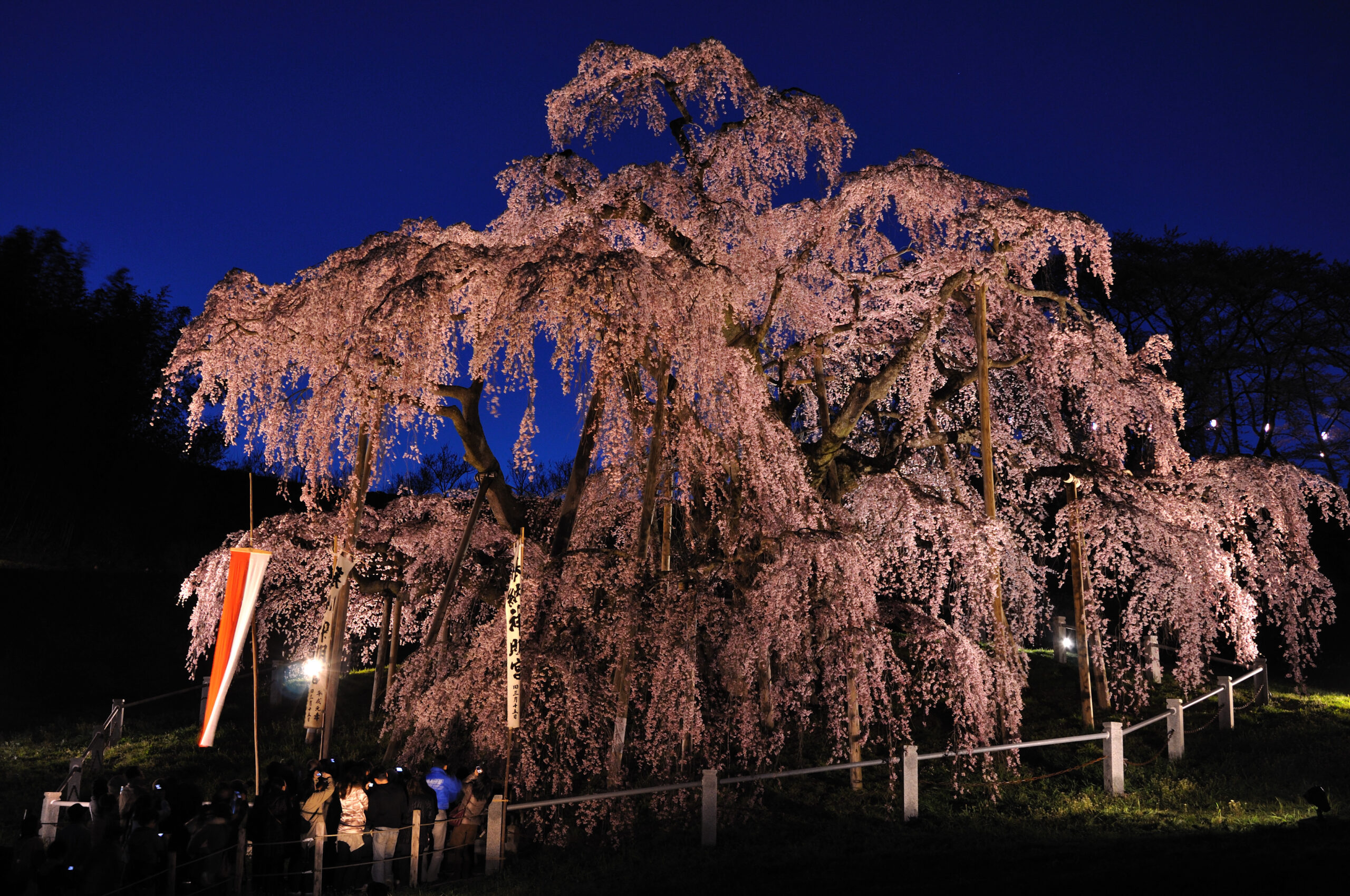
There are cherry trees, and then there is Miharu Takizakura. Standing over 1,000 years old in the quiet hills of Fukushima Prefecture, this breathtaking weeping cherry tree cascades like a pink waterfall across the spring sky — and it just might be the single most extraordinary sight in all of Japan. If you’re planning a trip to Tohoku and you only have time for one bucket-list cherry blossom experience, make it this one.
Why Miharu Takizakura Should Be on Every Japan Itinerary
Japan is famous for its cherry blossoms, but most tourists experience them the same way: picnicking under rows of Somei-Yoshino trees in a city park. There’s nothing wrong with that — it’s genuinely lovely — but Miharu Takizakura is something else entirely. This is a living monument, a single tree that has watched a thousand years of Japanese history unfold beneath its branches.
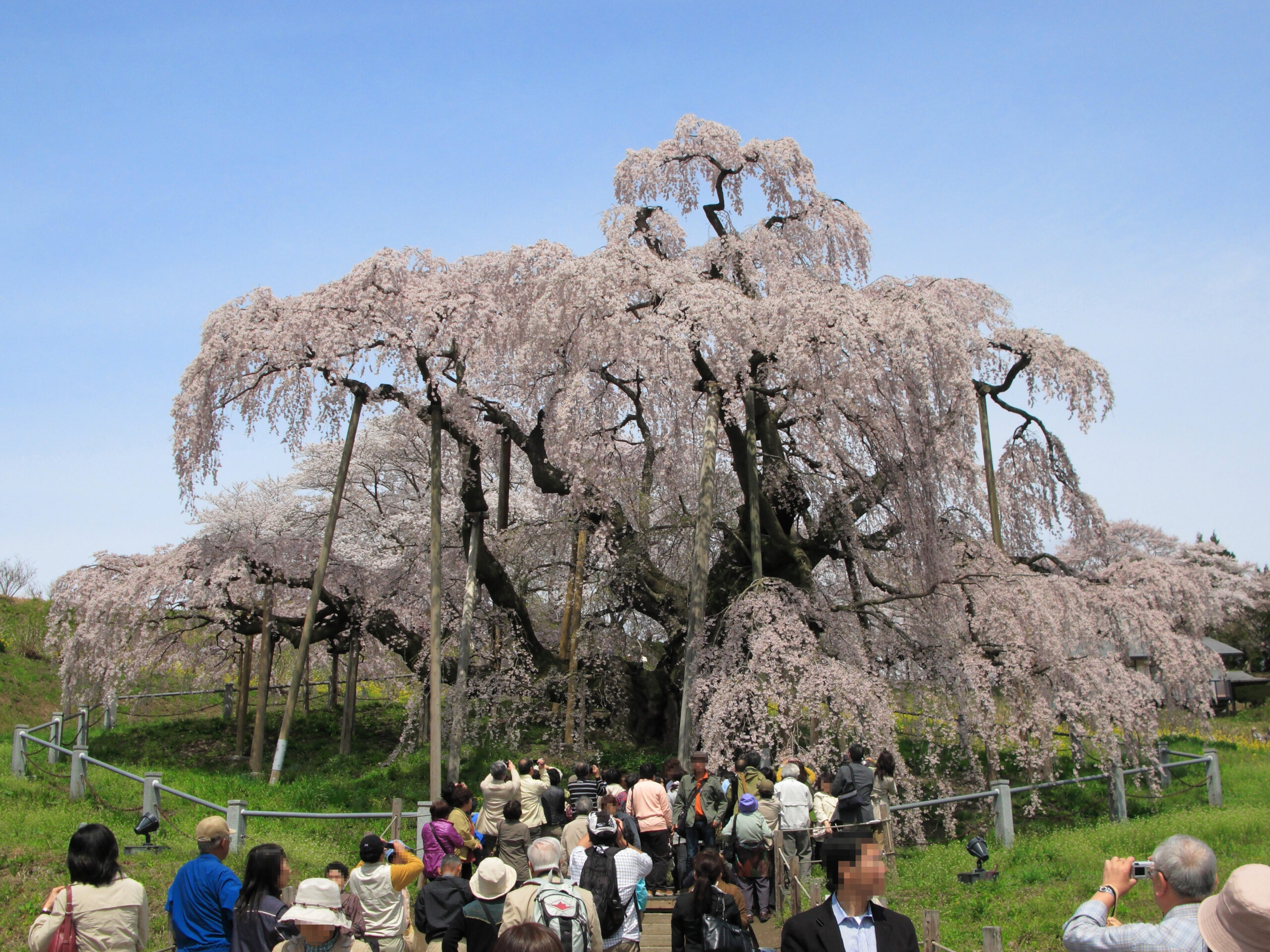
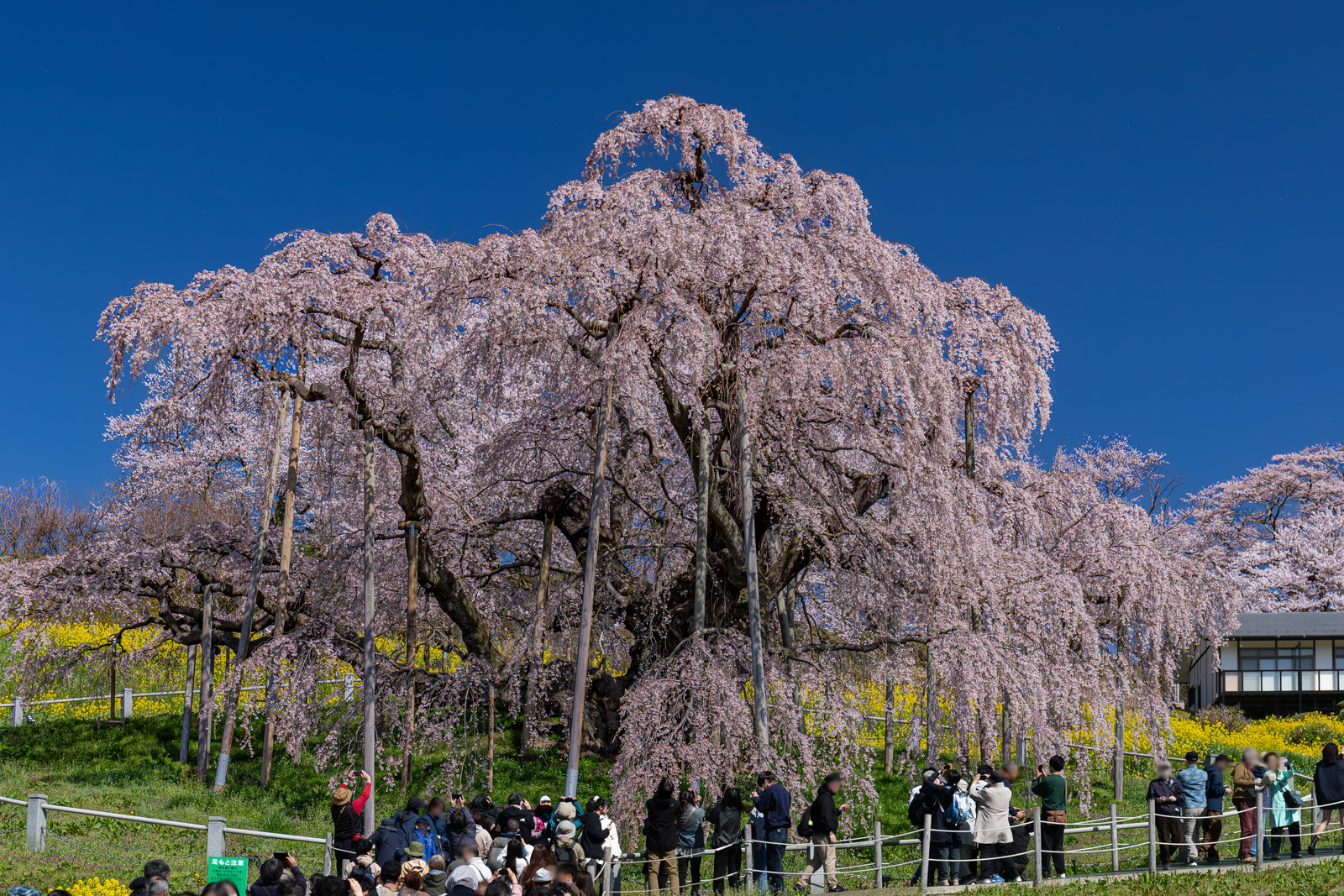
The tree is a beni-shidare zakura (weeping cherry, 紅枝垂れ桜), a variety known for its dramatically drooping branches that spill outward in all directions. At Miharu, the effect is almost supernatural: the branches extend up to 25 meters (82 feet) from side to side and nearly 22 meters (72 feet) front to back, creating an enormous canopy of pale pink blossoms that genuinely resembles a waterfall frozen in time. This is exactly why locals named it Takizakura — “waterfall cherry tree.”
Designated as one of Japan’s National Natural Monuments, Miharu Takizakura is counted among the country’s “Three Great Cherry Trees” (日本三大桜) alongside Yamataka Jindai Zakura in Yamanashi and Usuzumi-zakura in Gifu. Of the three, most visitors agree that Miharu Takizakura offers the most dramatic visual spectacle — partly because of its massive scale, and partly because of the way it stands alone on a gentle hillside, with no competing trees to distract from its grandeur. When you finally round the corner and see it in full bloom against the Fukushima countryside, you’ll understand why people travel from across Japan and around the world to stand beneath its branches.
Getting There: How to Reach Miharu from Tokyo and Sendai
Miharu is located in Tamura District, Fukushima Prefecture, about 230 kilometers (143 miles) north of Tokyo. It’s not the most obvious destination from a transport perspective — Miharu is a small rural town — but it’s absolutely reachable on a day trip from either Tokyo or Sendai, especially during cherry blossom season when extra services sometimes run.
- From Tokyo (Shinkansen + local train): Take the Tohoku Shinkansen to Koriyama Station (approx. 1 hour 20 minutes, around ¥8,000–¥9,500 / ~$55–$65 one way). From Koriyama, board the Ban-etsu East Line (磐越東線) local train toward Miharu Station (about 20–25 minutes, ¥240 / ~$1.60). From Miharu Station, the tree is about 1.5 km — walkable in 20 minutes or reachable by taxi (under ¥1,000 / ~$7). Total journey: approximately 2 hours.
- From Sendai (Shinkansen + local train): Take the Tohoku Shinkansen south to Koriyama (about 25 minutes, ¥3,020 / ~$20). Then follow the same Koriyama to Miharu Station route above. Total journey: approximately 1 hour.
- By car from Tokyo: Via the Tohoku Expressway to Miharu-Tanagura IC, approximately 3 hours. Driving is particularly useful during blossom season if you want to visit multiple rural cherry trees in the area.
- By car from Sendai: About 1 hour 20 minutes via National Route 4 or the expressway. A very manageable half-day trip.
JR Pass note: The Tohoku Shinkansen and the Ban-etsu East Line local train are both covered by the JR Pass, making this a low-cost addition to any Japan Rail Pass itinerary.
Seasonal traffic warning: During peak bloom, traffic around the tree can be severe. Local authorities often set up a paid car park (typically ¥500–¥1,000 / ~$3.50–$7) and shuttle buses from further parking areas. Arriving early (before 7:30 AM) or taking the train eliminates this headache entirely.
The Tree Itself: What to Expect Up Close
Your first glimpse of Miharu Takizakura is likely to stop you in your tracks. Even photographs — and there are thousands of stunning ones — don’t fully prepare you for the sheer physical scale of the tree. Standing at the base, you’ll crane your neck upward at a trunk roughly 3 meters (10 feet) in circumference, twisted and gnarled with a millennium of growth, before your eyes follow the branches as they arc outward and then cascade downward in a curtain of soft pink blooms.
The blossoms themselves are a deeper, richer pink than the pale Somei-Yoshino you’ll see in city parks — the beni-shidare variety leans toward a warm rose-pink that photographs beautifully in both bright daylight and the warm glow of the evening illuminations. At peak bloom, the density of flowers is extraordinary: the canopy is so full that it creates a kind of glowing pink pavilion, and standing beneath it feels genuinely otherworldly.
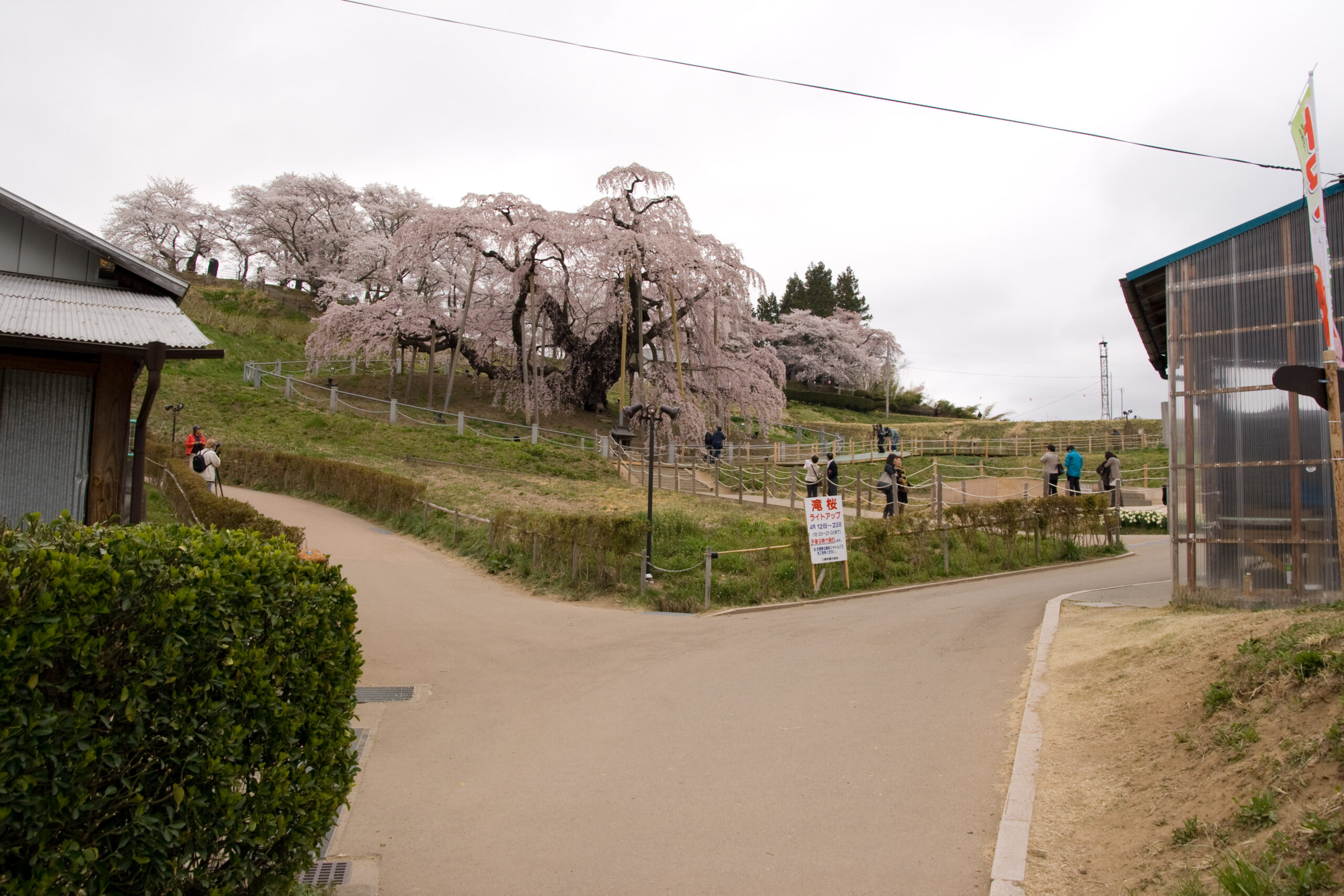
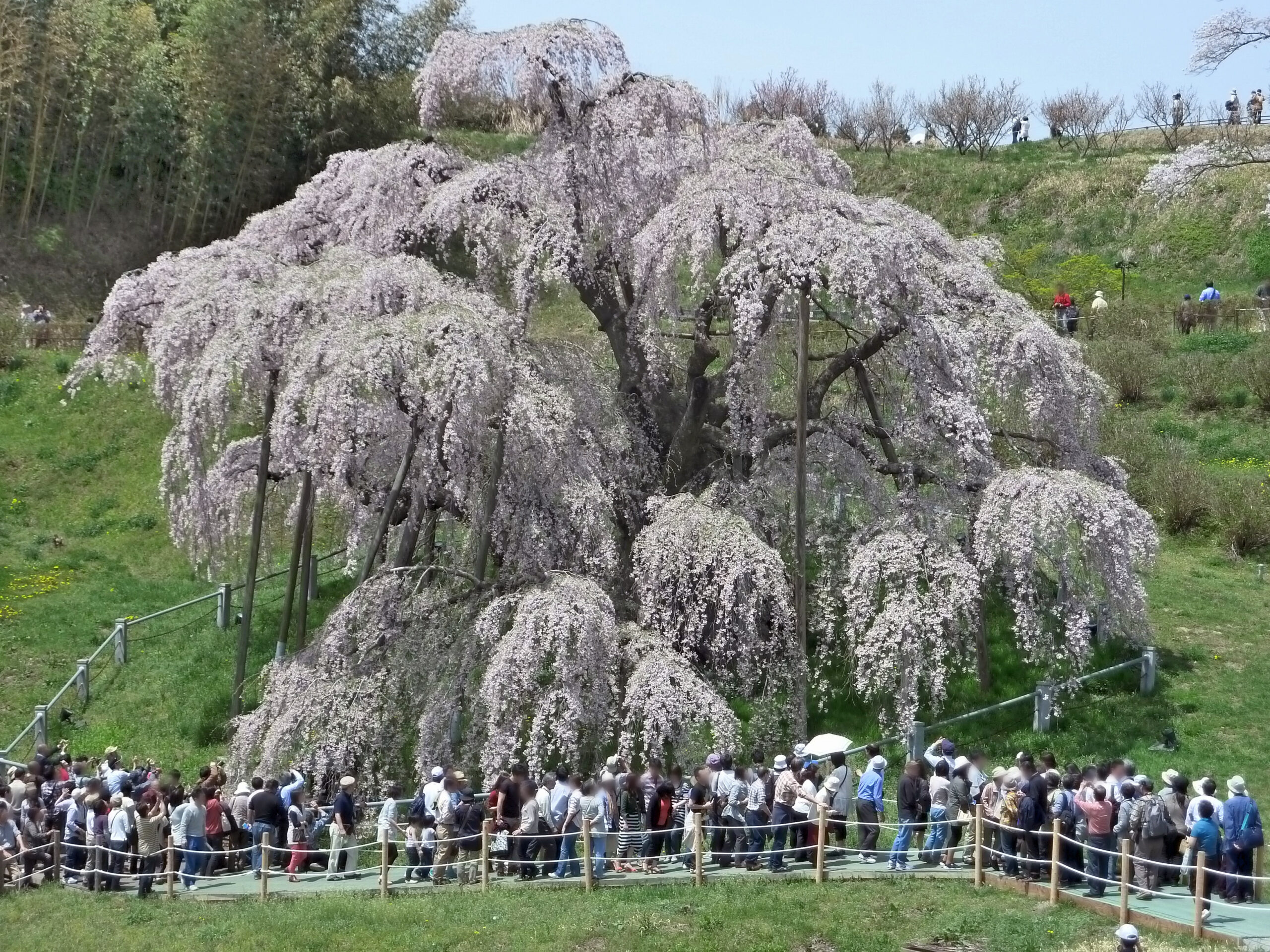
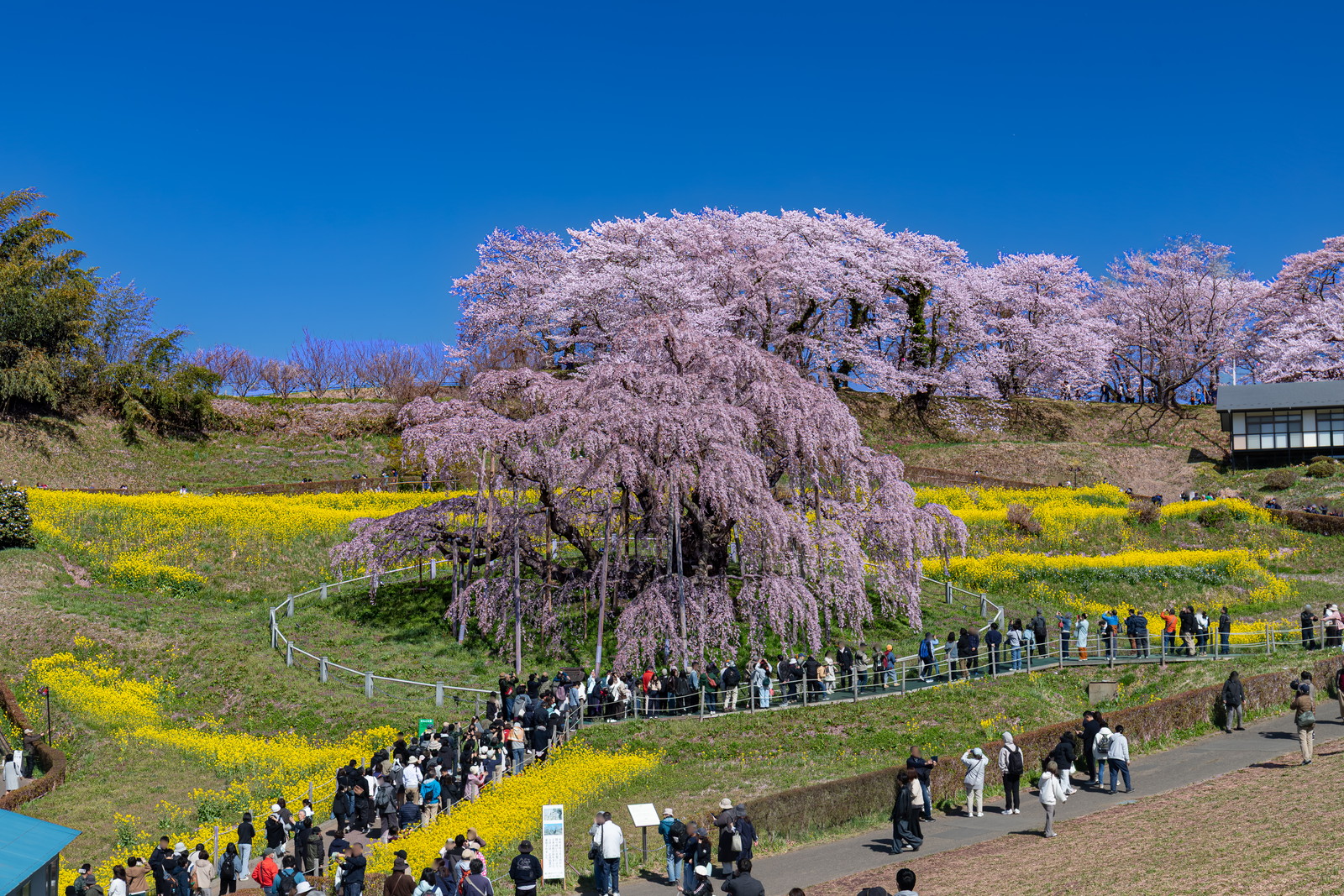
Walk around the tree — there’s a viewing path that circuits the entire circumference — and you’ll see that it looks completely different from every angle. From the front, the cascading effect is most pronounced. From the side, you appreciate the sheer horizontal spread of the branches. From behind, you get a quieter, more intimate view of the trunk and the way the oldest main branches have been supported with wooden poles over the decades to prevent them from splitting under their own weight. These support poles, which have been used for over a century, are now almost part of the tree’s character — a visible reminder of the human care that has kept this ancient organism alive.
One thing you’ll notice is that the Miharu Takizakura stands alone on its hillside. There are no other large trees competing with it, no fences blocking the view, and no architectural structures directly behind it. The Japanese have been thoughtful about preserving the tree’s sightlines, and the result is that no matter where you stand, you’re seeing Miharu Takizakura against open sky or farmland — clean, uncluttered, magnificent.
Best Time to Visit Miharu Takizakura
Timing your visit is everything. Miharu Takizakura typically blooms in mid to late April — later than the Somei-Yoshino in Tokyo, which usually peaks in late March to early April. At Miharu’s elevation and latitude, the blossoms generally appear around April 10–25, though this varies by year depending on the winter temperatures.
- Peak bloom window: Usually April 10–20. The tree is at its absolute best for about 5–10 days.
- Best time of day: Early morning (before 8:00 AM) for soft light and thin crowds. Late afternoon/golden hour for warm, glowing tones. Evening (from around 6:30 PM) for the illuminations.
- Checking the forecast: Japanese cherry blossom forecasting services like Weathernews and the Japan Meteorological Corporation publish detailed bloom predictions. Local tourism boards also publish real-time updates during the season.
- Outside cherry blossom season: The tree is open year-round, though there is nothing to see during most of the year apart from the ancient bare trunk and branches.
A word about weekends during peak bloom: they are extremely crowded. Lines to get the best viewing spots can be long, and the car park situation can be chaotic. If you possibly can, visit on a weekday, or arrive at or before sunrise on a weekend.
Evening Illuminations: A Completely Different Experience
If you’re torn about whether to make the effort for a night visit, the answer is: absolutely do it. The evening illuminations at Miharu Takizakura run from dusk until about 9:00 PM during peak bloom, and they transform the tree entirely. Under focused upward lighting, the blossoms seem to glow from within — the pink deepens, the surrounding darkness makes the tree feel even larger, and the whole experience takes on a dreamlike, almost theatrical quality.
The illuminations are widely considered by photographers to be among the most spectacular floral photography opportunities in Japan. If you have even a basic camera or a modern smartphone, arriving just before sunset and staying through the first hour of darkness will reward you with images you’ll show people for the rest of your life.
The walk from the car park to the tree after dark is well-lit and well-organized by volunteers. Arriving around 5:30–6:00 PM (during late April) lets you catch the golden hour, the blue hour, and the full illuminated display in a single visit. Warm layers are essential — April evenings in Fukushima can be cold, especially in rural areas.
The Town of Miharu: Exploring Beyond the Cherry Tree
The tree is the main event, but Miharu itself is a quietly charming historic post town (宿場町) with enough to fill a half-day. The name “Miharu” (三春) means “three springs” — a reference to the way plum, peach, and cherry blossoms all bloom simultaneously here in spring, a rarity that locals have celebrated for centuries.
Miharu Takizakura Neighborhood
A short walk from the main tree, you’ll find clusters of smaller weeping cherry trees, a small shrine, and wonderful views across the Fukushima countryside. The immediate hillside around the Takizakura is landscaped with complementary spring flowers — forsythia, daffodils, and other early bloomers that create a colorful carpet beneath the cherry’s pink canopy. This area rewards slow exploration; the subsidiary trees are beautiful in their own right and far less crowded than the main attraction.
Miharu Town Center
Miharu has a well-preserved old town area with traditional buildings, a handful of craft shops selling local specialties, and the interesting Miharu History and Folk Museum (三春歴史民俗資料館), which covers the town’s feudal history and the famous Miharu hariko papier-mache crafts tradition. The Miharu hariko dolls — colorful, expressive paper-mache figures — are a recognized local craft and make excellent, lightweight souvenirs.
Where to Eat Near Miharu Takizakura
Miharu is a small town, and dining options are limited but genuine. Don’t expect the restaurant density of a city — instead, embrace the opportunity to eat the way rural Japanese people eat.
Sakuraya (Local Restaurant Near the Tree)
The go-to lunch spot near the Takizakura during blossom season. This modest restaurant serves hearty set meals (teishoku, 定食) featuring local Fukushima rice, miso soup with mountain vegetables (sansai), and grilled fish or pork. The food is unfussy and delicious, portions are generous, and the owners are used to foreign visitors. Expect to pay around ¥800–¥1,200 ($5.50–$8.50) for a full set meal.
Miharu Michi no Eki (三春道の駅)
The local highway rest stop/roadside station is a great place to stock up on regional produce and prepared foods. The bento boxes here use local ingredients — Fukushima rice is genuinely excellent, often cited as some of Japan’s finest — and you can find local apple juice, pickles, seasonal sweets, and soft-serve ice cream. This is also a good spot to buy Miharu hariko souvenirs. Open daily during cherry season.
Convenience Stores and Practical Food
For early-morning visitors arriving before dawn, your best bet is to pick up food from a convenience store in Koriyama before boarding the local train. There are limited food options near the tree in the early morning hours, and even the main restaurant options don’t open until 9:00–10:00 AM.
Where to Stay Near Miharu
For most visitors, Miharu Takizakura is a day trip from either Tokyo, Sendai, or the nearby city of Koriyama. However, staying overnight in the area lets you experience the magical early-morning light before the crowds arrive — and it gives you time to explore more of Fukushima’s incredible offerings.
Budget (Under ¥8,000 / $55 per night)
Koriyama has the widest selection of affordable accommodation, with business hotels from major chains like Toyoko Inn and Super Hotel, typically running ¥5,000–¥7,500 ($35–$52) for a comfortable single or double room. Booking in advance is essential during cherry blossom season, as hotels fill quickly across the region.
Mid-Range (¥8,000–¥20,000 / $55–$135)
Hotel Listel Inawashiro (about 40 minutes from Miharu by car) sits on the shores of beautiful Lake Inawashiro and offers comfortable Western and Japanese rooms, an onsen, and stunning lake views. Rates start around ¥12,000–¥15,000 ($83–$105) per person including dinner and breakfast in the ryokan-style pricing model.
In Koriyama itself, Hotel Monterey Koriyama and Richmond Hotel Koriyama offer clean, comfortable mid-range rooms with easy train access to Miharu.
Luxury (¥20,000+ / $135+)
For a special experience, consider the renowned Tsuchiyu Onsen area, about 30 minutes by car from Miharu. Tsuchiyu’s ryokan offer full kaiseki dinner experiences, private onsen baths, and the kind of deep quiet that only rural Japan can provide. Properties like Tamura-ya and Yumoto-Tsuchiyu offer unforgettable overnight packages from around ¥25,000–¥40,000 ($170–$275) per person including two meals.
Combining Miharu Takizakura with Other Fukushima Destinations
Miharu is perfectly positioned for combining with other remarkable Fukushima destinations.
- Aizuwakamatsu (1 hour by car): The historic castle town of the samurai Aizu domain. Tsurugajo Castle, the Buke Yashiki samurai estate, and the poignant Byakkotai memorial make this one of Fukushima’s richest cultural destinations.
- Hanamiyama Park, Fukushima City (45 minutes by car): A breathtaking hillside park where weeping cherries, forsythia, magnolias, and hundreds of other flowering trees bloom simultaneously. Often called “Japan’s most colorful hill.”
- Ouchi-juku (1 hour 30 minutes by car): Japan’s most perfectly preserved thatched-roof post town, where the entire main street looks exactly as it did in the Edo period.
- Lake Inawashiro (50 minutes by car): One of Japan’s largest lakes, birthplace of Dr. Noguchi Hideyo, and surrounded by volcanoes and resort facilities.
Practical Tips for Visiting Miharu Takizakura
- Arrive before 7:30 AM on weekends. Crowds peak between 10:00 AM and 3:00 PM. Early arrival gives you near-empty viewing and the best soft morning light.
- Check the bloom status before going. The viewing season is short — about 2 weeks from first bloom to full leaf. Search for real-time updates from local tourism sources.
- Dress in layers. April in Fukushima can fluctuate between 5°C (41°F) in the early morning and 18°C (64°F) in the afternoon. If staying for the evening illuminations, temperatures can drop near freezing after sunset.
- The admission fee is typically ¥300 (about $2). During cherry blossom season, a small fee is charged for entry to the viewing area. This goes toward tree maintenance.
- Tripods are generally allowed — unlike some Japanese cherry blossom spots that prohibit them. The evening illuminations in particular reward a stable shot.
- Cash is recommended. Miharu is a rural area; smaller local establishments and the roadside station may be cash-only. Withdraw from an ATM at Koriyama Station before heading to Miharu.
- Taxi from Miharu Station is easy and cheap. Taxis wait at the station during blossom season. The 10-minute ride costs about ¥700–¥900 ($5–$6.50).
- The smaller cherry trees in town are also worth seeing. Miharu is dotted with other weeping cherry and regular cherry trees — a walk through town during bloom reveals dozens of beautiful specimens with almost no crowds.
- Fukushima produce is outstanding and safe. Fukushima fruits, vegetables, and rice have been rigorously tested and consistently meet or exceed Japan’s stringent safety standards. Don’t miss the local peaches (available from July), apples, and local rice-based sweets.
- The road to the tree is narrow — if driving, follow the official car park signage and don’t attempt to park on the approach road, as local volunteers will turn you back.
Sample 1-Day Itinerary: Miharu Takizakura from Tokyo
Day 1 (Day Trip)
5:30 AM: Catch the first Tohoku Shinkansen from Tokyo to Koriyama. The earliest services depart around 5:40–6:00 AM from Tokyo Station and arrive at Koriyama by 7:00–7:20 AM.
7:30 AM: Arrive Koriyama, grab a convenience store breakfast, and board the Ban-etsu East Line for Miharu (about 25 minutes).
8:00 AM: Arrive Miharu Station. Take a taxi (10 minutes) to the Takizakura. You’re among the first visitors — the morning light is soft, the crowds are thin, and the tree is all yours.
8:00–10:00 AM: Spend two unhurried hours with the tree. Walk the full viewing circuit, find your favorite angles, watch the light change as the sun rises.
10:00 AM: Walk to the Miharu Michi no Eki (roadside station) for coffee, local produce, and souvenirs.
11:00 AM: Wander through the town’s old streets, visit a small shrine, look for other cherry trees. Have a set lunch at a local restaurant.
1:00 PM: Return to Koriyama Station by train.
1:30–4:00 PM: Option A: Spend the afternoon in Koriyama. Option B: Take a bus or taxi to Tsuchiyu Onsen for an afternoon soak before returning.
5:00 PM: Return to Miharu for the evening illuminations (approximately 6:30–9:00 PM).
9:30 PM: Take the train back to Koriyama and Shinkansen to Tokyo, arriving around 11:00 PM.
Related Articles You Might Enjoy
- Abukuma Cave, Fukushima: Japan’s Most Spectacular Underground Wonder
- Mount Adatara & Dake Onsen, Fukushima: Japan’s Sacred Volcano & Secret Healing Hot Spring
- Tadami Line, Fukushima: Japan’s Most Scenic Hidden Railway Journey
- Fukushima City Guide: Japan’s Most Misunderstood Destination & Why You Need to Visit
- Lake Inawashiro, Fukushima: Complete Guide to Japan’s Mirror of Heaven
Final Thoughts
Miharu Takizakura is one of those rare travel experiences that exceeds the hype. Japan has no shortage of spectacular cherry blossom viewing spots, but this ancient, solitary tree standing on its hillside in rural Fukushima is genuinely unlike anything else. It’s not just beautiful — it’s humbling. A thousand years of seasons have shaped those twisted branches, and for one extraordinary fortnight each April, they explode into bloom as they have every spring for a millennium.
Getting here requires a little planning — the Ban-etsu East Line runs infrequently, and the bloom window is short. But that’s precisely what makes it special. Miharu Takizakura rewards the effort, and travelers who make the journey invariably say it was one of the highlights of their entire Japan trip. If you’re going to be in Japan in mid-April, don’t miss it.
Got questions about planning your Tohoku trip, or spotted something we missed? We’d love to hear from you — drop us a message here.


コメント