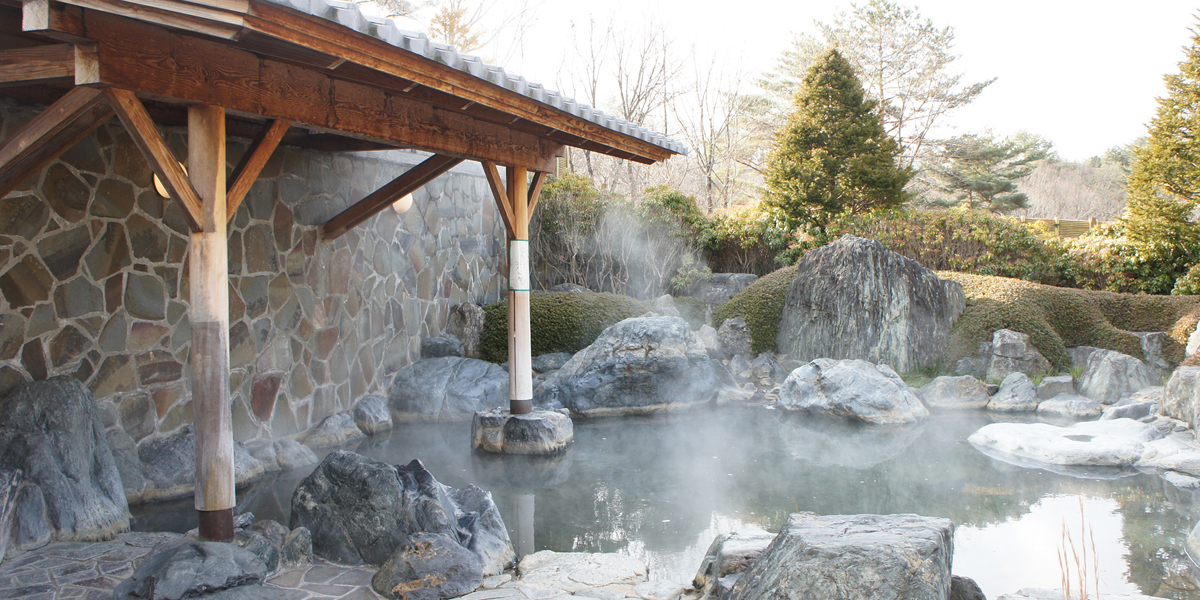
There is a particular kind of magic that happens when you sink into steaming outdoor hot spring water while snowflakes drift silently around you. In Tohoku, Japan’s rugged northeastern region, this experience reaches its absolute peak during winter — when frozen forests, dramatic snowscapes, and centuries-old ryokan culture combine to create something genuinely unforgettable.
This guide covers Tohoku’s best winter onsen towns, what to expect inside a traditional ryokan, how to read the different water types, and everything a first-time Western visitor needs to know to feel confident and at home.
Why Tohoku Is Japan’s Ultimate Winter Onsen Destination
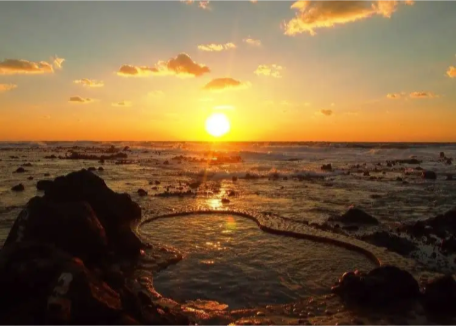
Japan has hundreds of hot spring resorts, but Tohoku’s combination of geography and climate makes it uniquely spectacular in winter. The region’s volcanic backbone produces some of Japan’s most mineral-rich waters — sulphurous whites, milky blues, iron-tinged reds — while heavy snowfall from the Sea of Japan creates dramatic frozen landscapes just outside the bath’s edge.
Unlike the heavily-touristed onsens of Hakone or Beppu, Tohoku’s hot spring towns remain far less visited by international travelers. You’re more likely to experience something close to what onsen culture genuinely looks like — local families on weekend trips, elderly couples who’ve been coming for decades, and the unhurried, restorative pace that made hot spring bathing central to Japanese life in the first place.
The Best Tohoku Onsen Towns for Winter Visitors
Ginzan Onsen (Yamagata) — The Snow Village
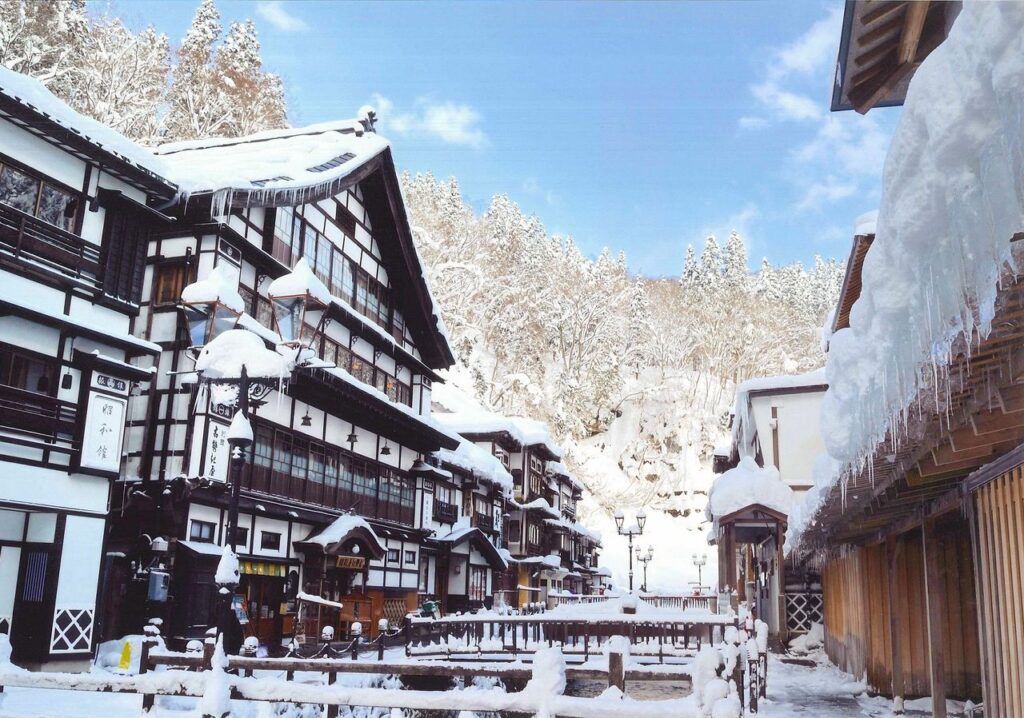
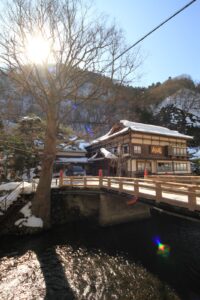
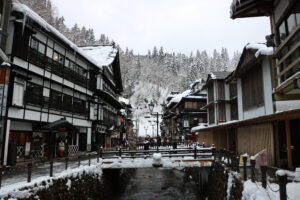
Ginzan Onsen is the ryokan experience most foreign visitors imagine when they picture traditional Japan. A narrow river gorge lined with multi-story wooden inns, gas lanterns casting warm light across snow-covered bridges, and the sound of water rushing underneath ice — in winter, this place looks like it was designed as a film set (and in fact served as inspiration for Hayao Miyazaki’s Spirited Away).
- Water type: Sodium chloride (saltwater spring), colourless and clear
- Snow season: Late December through early March
- Access: Yamagata Shinkansen to Oishida → bus (40 min) or taxi
Nyuto Onsen (Akita) — Deep Forest Bathing
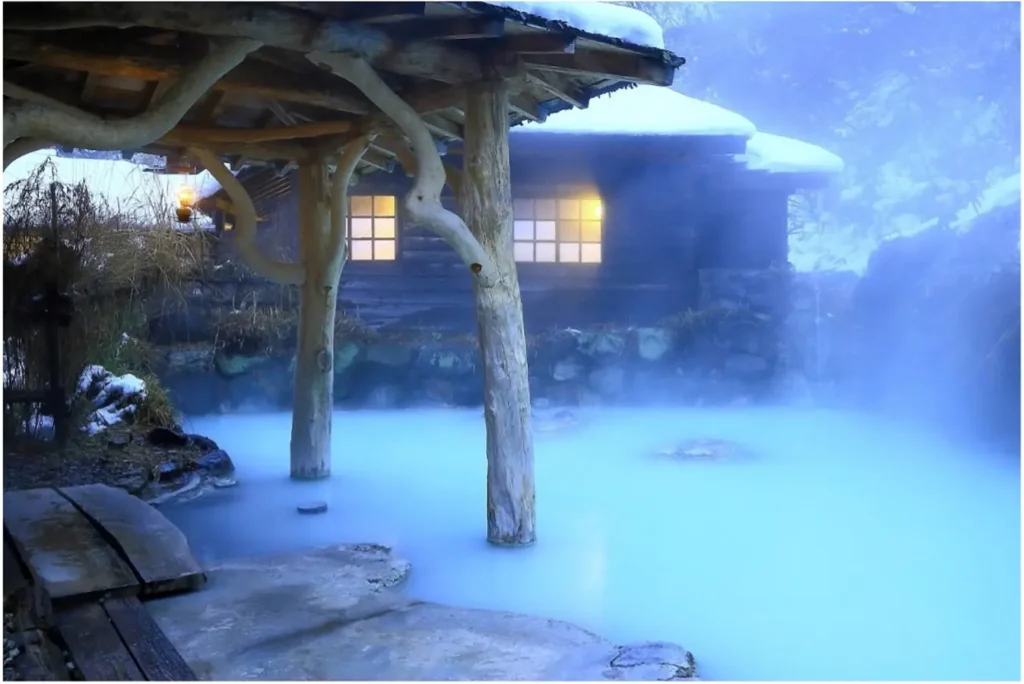
Located in the mountains above Tazawako in Akita Prefecture, Nyuto is a cluster of seven separate hot spring facilities connected by a free shuttle bus — each with different water composition and atmosphere. The most famous is Tsuru-no-Yu, dating to the 17th century, featuring a large mixed outdoor bath surrounded by birch forest and fed by a milky white sulphurous spring. In deep winter, the bath steams heavily in the cold air and the forest is buried in snow. It’s one of the most otherworldly experiences in Japanese travel.
Zao Onsen (Yamagata) — Ski Resort Hot Springs
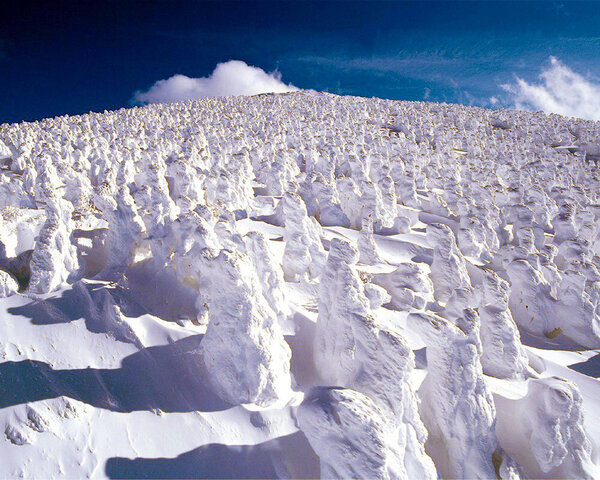
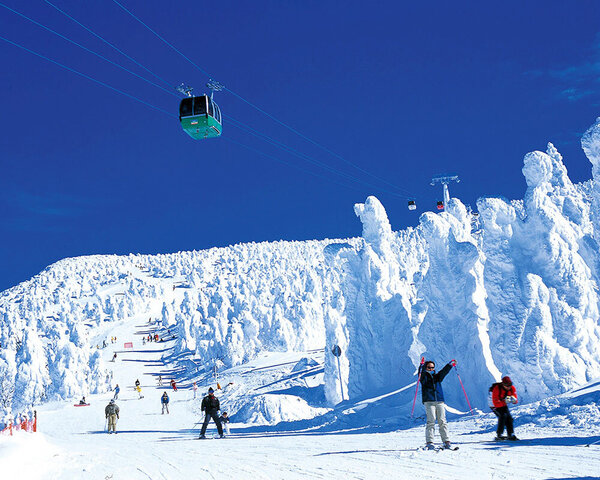
Zao Onsen sits at 880 metres elevation in the mountains above Yamagata City, combining Japan’s most dramatic ski resort with one of the country’s strongest onsen waters. The spring is highly acidic, turning a striking milky white-yellow colour that leaves skin remarkably smooth. The town’s signature experience is skiing or snowshoeing through fields of juhyo — the “snow monsters” of Zao — then warming up in one of the town’s public baths (¥500 at the communal bathhouses).
Naruko Onsen (Miyagi) — The Kokeshi Village
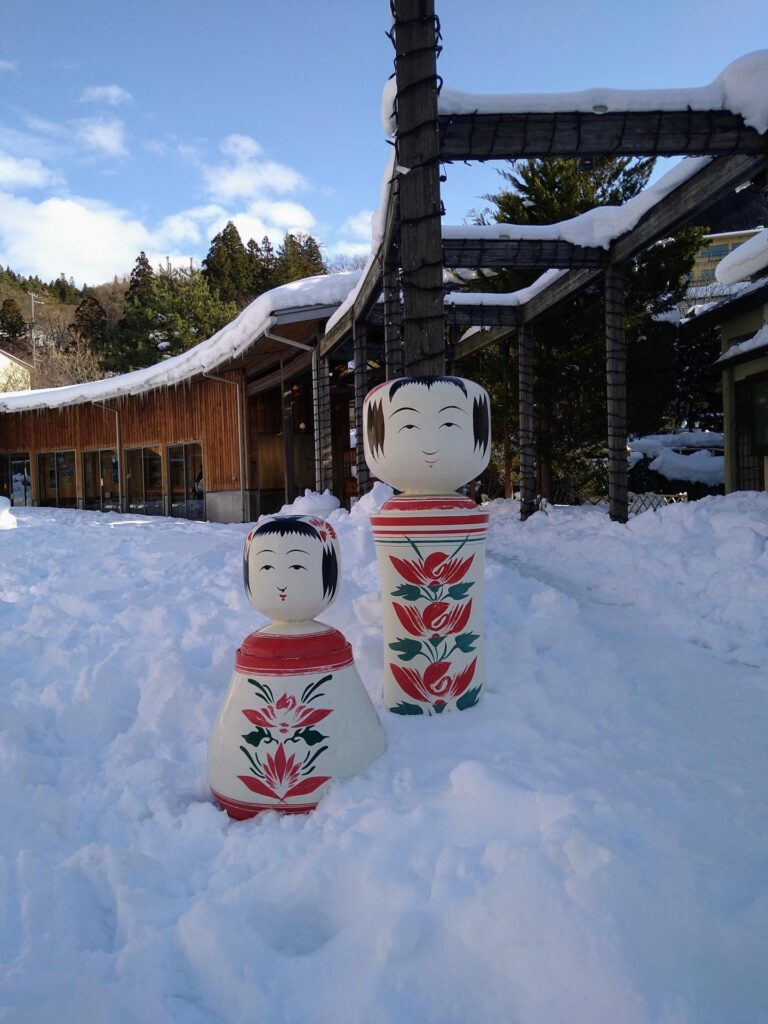
Naruko is Tohoku’s most architecturally cohesive hot spring town and Japan’s most famous production centre for kokeshi dolls. The springs here produce five different water types within a small area — ranging from sodium bicarbonate (smooth on skin) to sulphur springs to alkaline waters. In winter the surrounding valley is snow-covered and the town is quiet — arguably more atmospheric than during the busy autumn foliage season.
Understanding Ryokan Culture: What to Expect
For most Western visitors, staying in a ryokan is genuinely different from any hotel experience. Knowing what to expect removes the anxiety and allows you to simply enjoy it.
Check-In and the Tatami Room
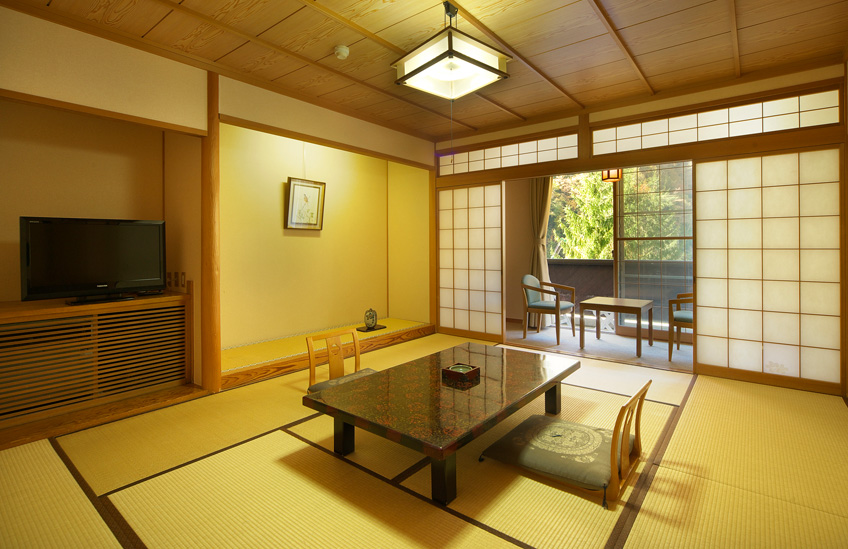
Ryokan check-in typically runs from 3–6 PM. You’ll be shown to a tatami-floored room with a low table, zabuton cushions, and a futon that staff will lay out in the evening. You’ll be given a yukata (casual cotton robe) to wear for everything — dinner, bathing, wandering the corridors.
The Baths: Etiquette for First-Timers
Most ryokans have both indoor baths (uchiburo) and outdoor baths (rotenburo). The outdoor bath in winter is the experience to prioritize. Bathing rules are consistent across Japan: shower thoroughly before entering, no swimwear, no towels in the water, and no phones or cameras in the bathing areas. Time spent in outdoor baths should be shorter in cold conditions — 10–15 minutes, then back inside to warm slowly.
Kaiseki Dinner: The Highlight of the Stay
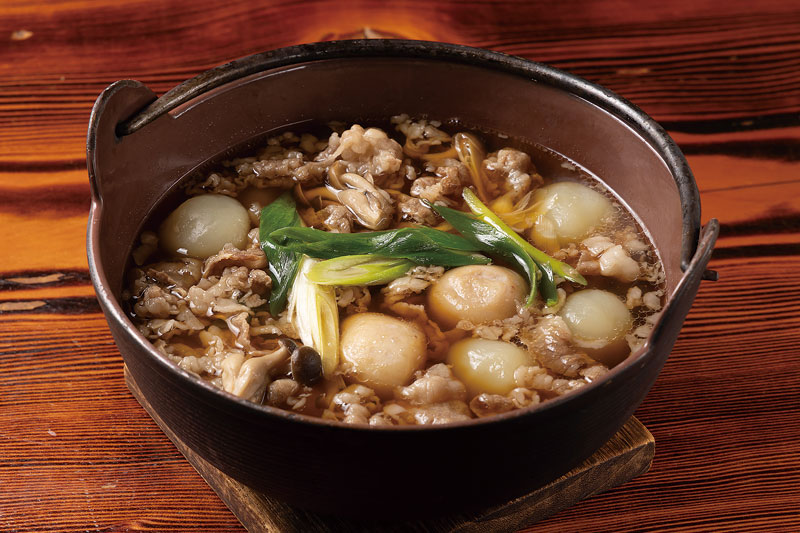
Most ryokans offer dinner and breakfast as part of their room rate (nishokutsuki). Dinner is typically kaiseki — a multi-course meal of seasonal Tohoku ingredients. In winter expect: kani (crab) from the Sea of Japan coast, sanriku oysters and sea urchin from the Pacific coast, venison and wild mushrooms from the mountains, and preserved vegetables. Sake from local breweries almost always features.
Onsen Water Types: A Practical Guide
- Simple thermal springs (単純温泉): Mildly alkaline, gentle on skin — the “beginner” onsen.
- Sodium chloride springs (食塩泉): Saltwater springs that retain warmth in the body. Excellent in cold weather.
- Sulphur springs (硫黄泉): Strong egg smell, milky white colour. Famous for skin benefits. Zao and Tsuru-no-Yu are both sulphur springs.
- Bicarbonate springs (重曹泉): Called “beauty water” — leaves skin very smooth. Naruko has excellent examples.
- Acidic springs (酸性泉): Zao is Japan’s most acidic. Effective for skin conditions but can be irritating. Avoid if you have cuts or sensitive skin.
Winter Activities Beyond the Bath
Skiing, Snowshoeing, and Juhyo Viewing
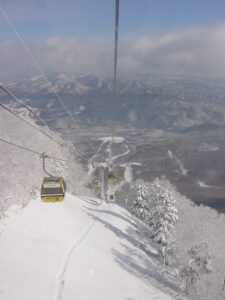
Tohoku’s ski resorts receive some of Japan’s most consistent snowfall and remain largely undiscovered by international ski tourism. Zao Ski Resort combines skiing with juhyo snow monster scenery. Guided snowshoe tours through the juhyo zone operate from Zao Onsen throughout winter (2–3 hours, no prior experience needed). The ropeway from Zao Onsen also reaches a mid-mountain viewing platform for those who prefer not to hike.
Planning Your Trip: Practical Information
Best Months
- December: Snow begins in mountain areas. Juhyo formation starts late December. Quieter and cooler.
- January: Peak juhyo season. Heaviest snowfall. Most dramatic outdoor onsen conditions. Coldest temperatures (-10°C possible at altitude).
- February: Peak juhyo continues. Better weather clarity. Excellent time to visit.
- March: Juhyo melts from mid-March. Skiing continues at higher elevations. Prices drop and ryokans are quieter.
Getting There
The Tohoku Shinkansen connects Tokyo to Sendai in 90 minutes and Morioka in 2 hours 10 minutes, with branch lines reaching Yamagata (for Ginzan and Zao) and Akita (for Nyuto). From shinkansen stations, onsen towns are 30–90 minutes by local train or bus. Rental car is an excellent option — book one with studded winter tyres (スタッドレス), which Tohoku rental companies provide automatically in winter.
Budget Guide
- Budget ryokan (with meals): ¥10,000–¥15,000 per person per night
- Mid-range ryokan (with meals): ¥18,000–¥30,000 per person per night
- High-end ryokan (with meals): ¥35,000–¥80,000+ per person per night
- Day-use onsen: ¥500–¥2,000 at public bathhouses
Quick Tips for First-Time Onsen Visitors
- Hydration: Onsen bathing is dehydrating. Drink water before and after.
- Timing: Pre-dinner (5–7 PM), post-dinner (9–10 PM), and early morning (6–7 AM) baths are all worth trying.
- Cold-hot cycling: Briefly stepping outside between baths is a common Japanese practice — try it at least once.
- The futon: Sleeping on tatami is genuinely comfortable. Don’t request a bed unless you have a medical need.
- Tattoos: Policy varies by ryokan. Email ahead if this is a concern — most will respond honestly.
- Checkout: Most ryokans check out at 10–11 AM. Allow time for a final morning bath.
Conclusion
What makes Tohoku’s winter onsen experience genuinely special is the combination of sensory pleasure with something more cultural: the texture of Japanese inn hospitality, the quality of the food, the pace of a place built around rest and warmth, and landscapes that in midwinter are among the most dramatic in East Asia. Tohoku’s hot spring towns aren’t tourist attractions in the conventional sense — they’re working places still doing what they’ve done for centuries. That authenticity is the best reason to visit.
Related Guides
- Zao Snow Monsters: Complete Winter Guide
- Ginzan Onsen Winter Travel Guide
- Tohoku Ski Resort Guide for Foreigners
Related Articles You Might Enjoy
- Ginzan Onsen: Japan’s Most Enchanting Hot Spring Village in Yamagata
- Kaminoyama Onsen, Yamagata: Japan’s Most Complete Hidden Hot Spring Town — Complete Guide
- Tohoku Ski Resort Guide: Zao Snow Monsters, Appi Kogen & the Best Slopes in Northeast Japan
- Gassan Ski Resort, Yamagata: Skiing Into Summer on Japan’s Sacred Mountain
- Sakata & the Mogami River, Yamagata: Japan’s Most Underrated Merchant City & a Legendary River Cruise


コメント