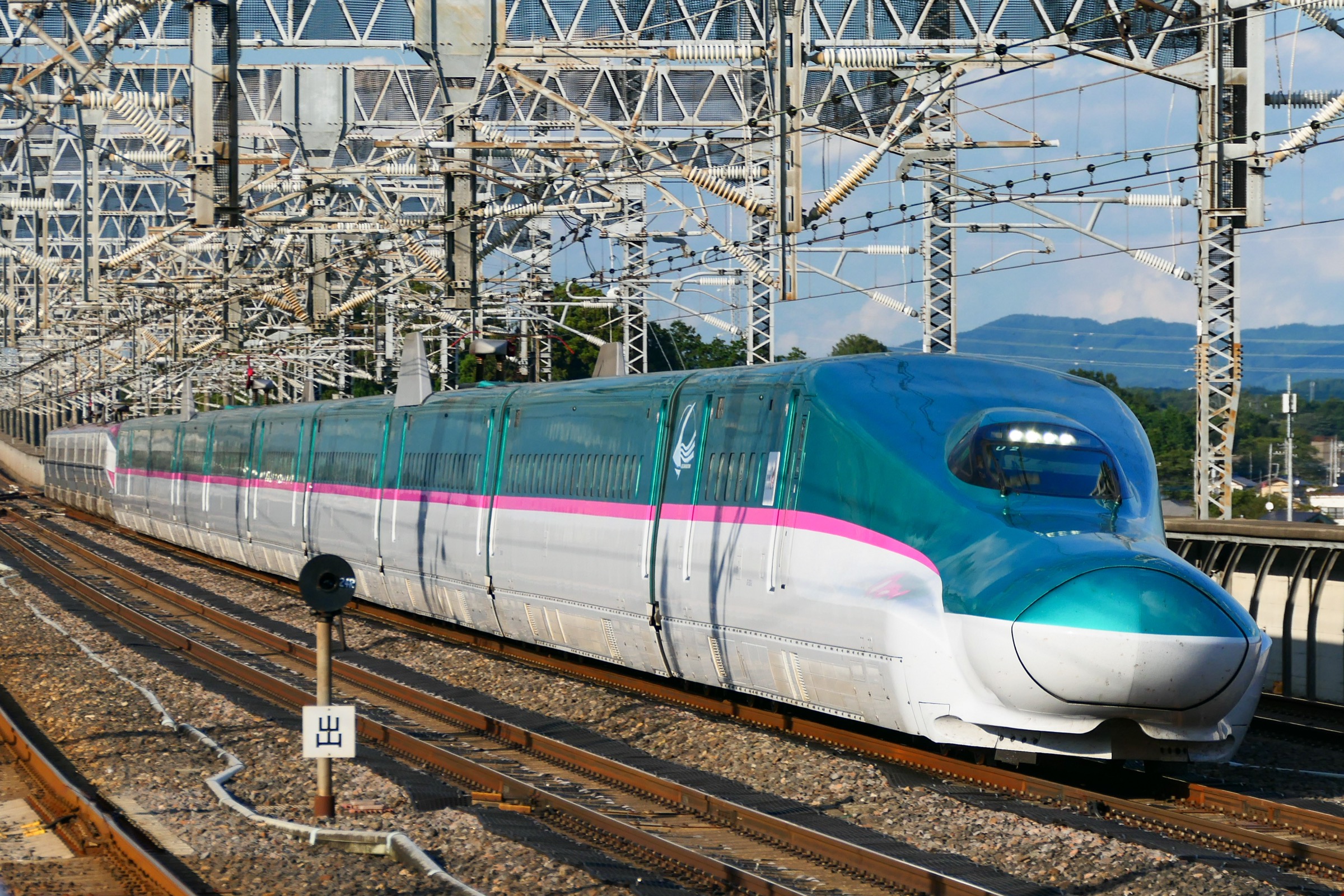
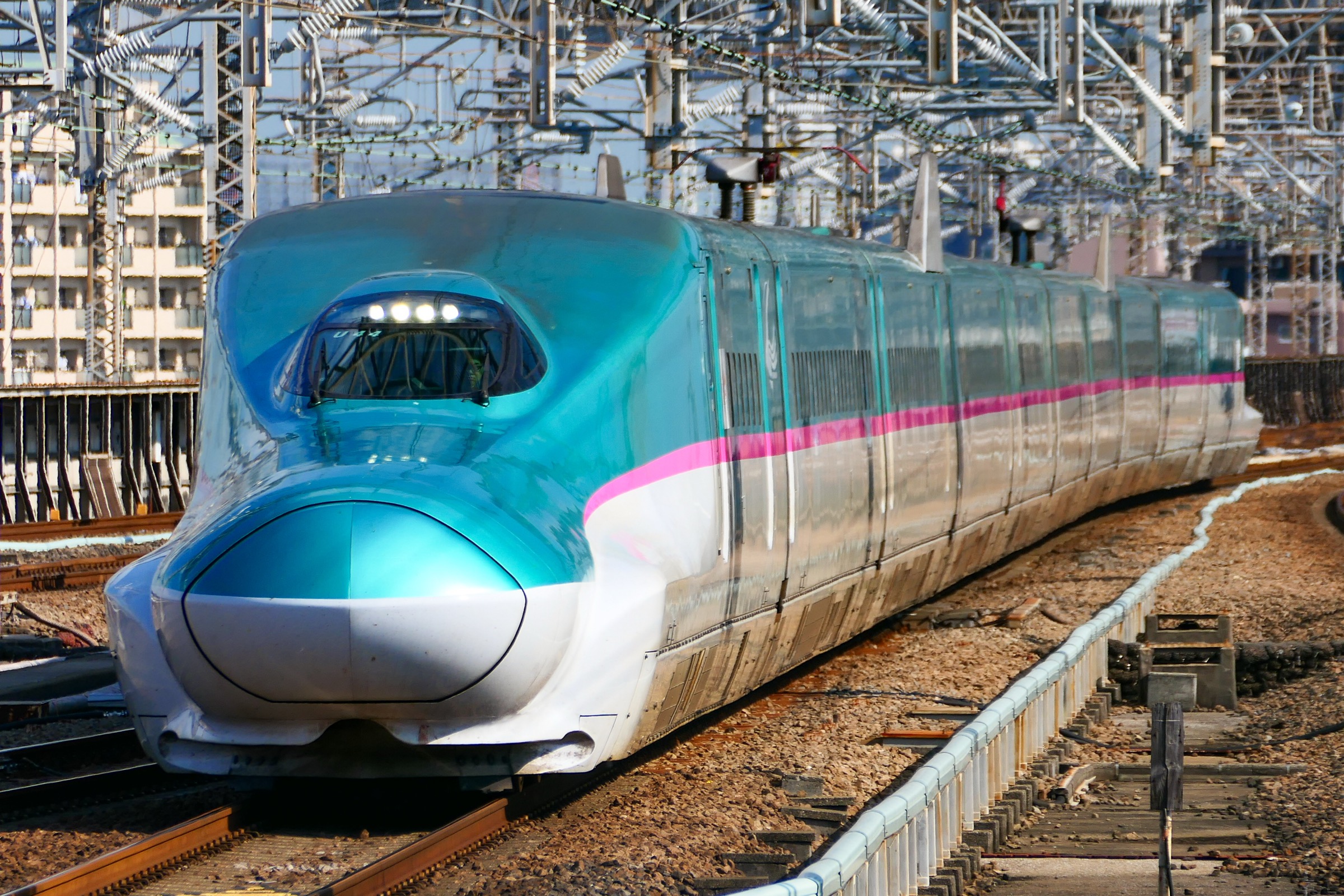
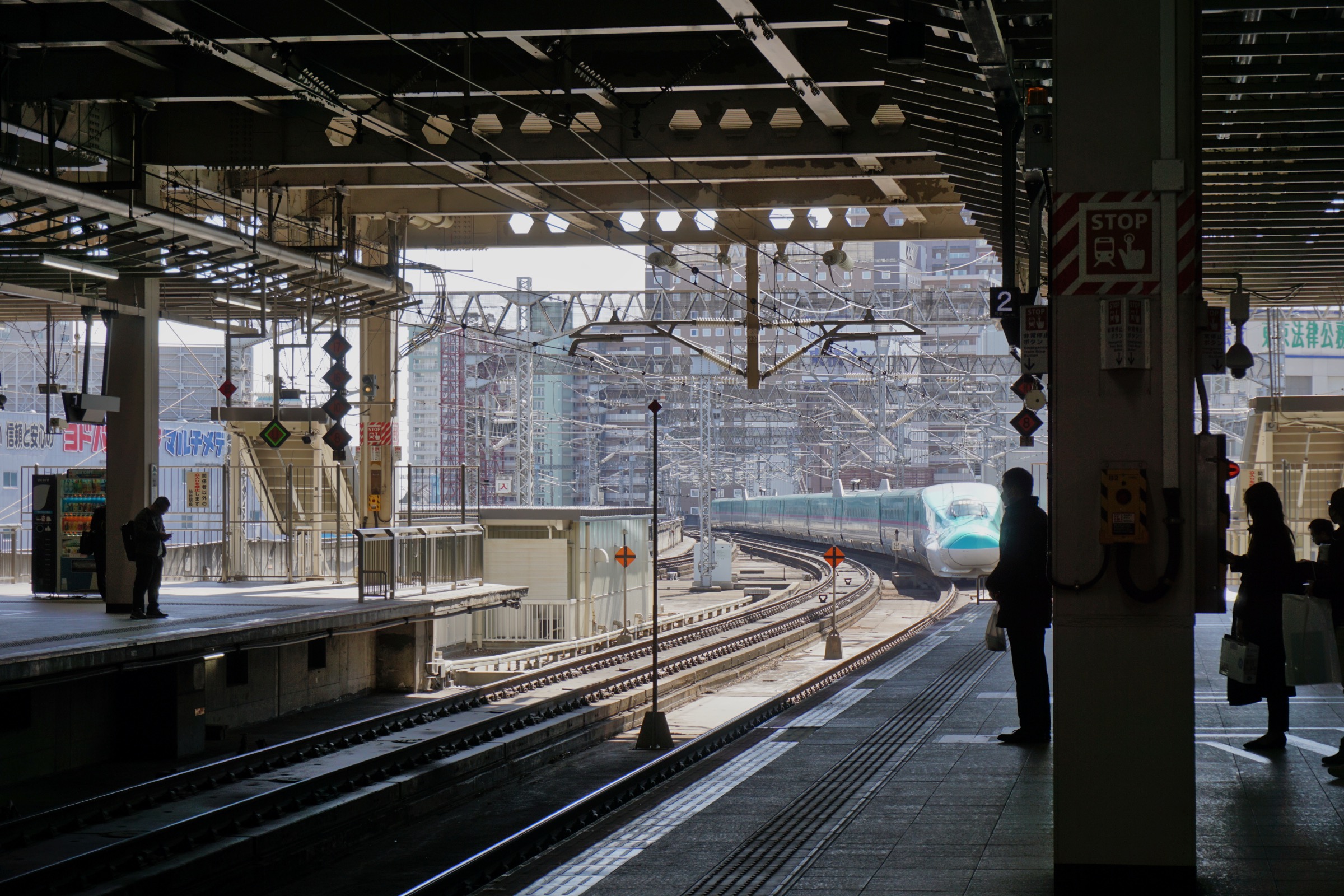
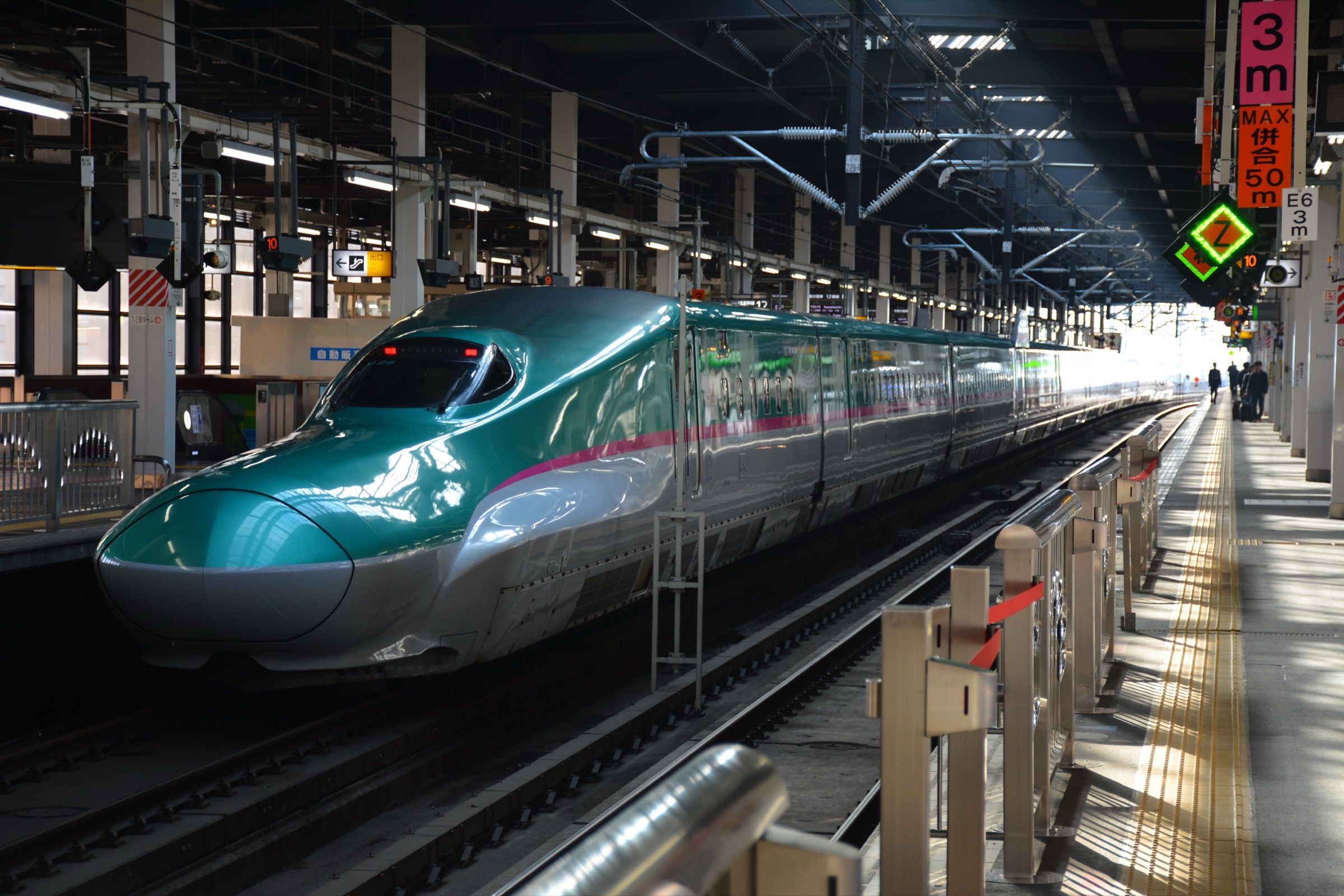
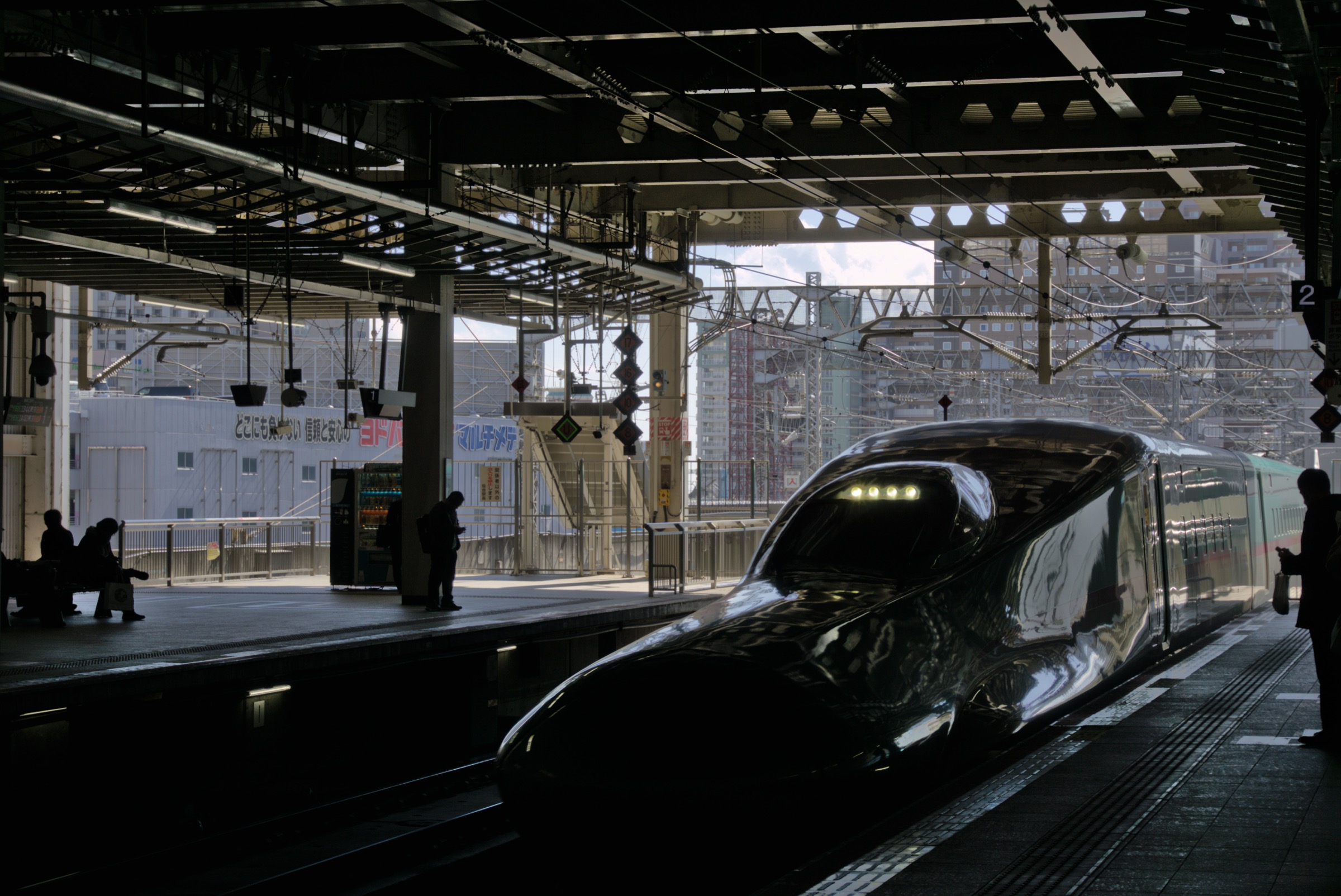
The moment a Hayabusa bullet train glides silently into the platform — its emerald-green nose sleek and aerodynamic, the air barely stirring as it arrives at precisely the scheduled second — you understand why so many travelers say riding the Shinkansen is one of Japan’s great travel experiences. For foreign visitors exploring Tohoku, the Shinkansen isn’t just transport: it’s the key that unlocks the entire region, whisking you from Tokyo to Sendai in 90 minutes and onward to the far north of Honshu in under 3 hours. This complete guide tells you everything you need to know to ride the Tohoku Shinkansen with confidence.
Which Shinkansen Lines Serve Tohoku?
Tohoku is served by a network of Shinkansen lines radiating north from Tokyo Station. Understanding which train goes where is the first step to planning your journey.
Tohoku Shinkansen (Main Line)
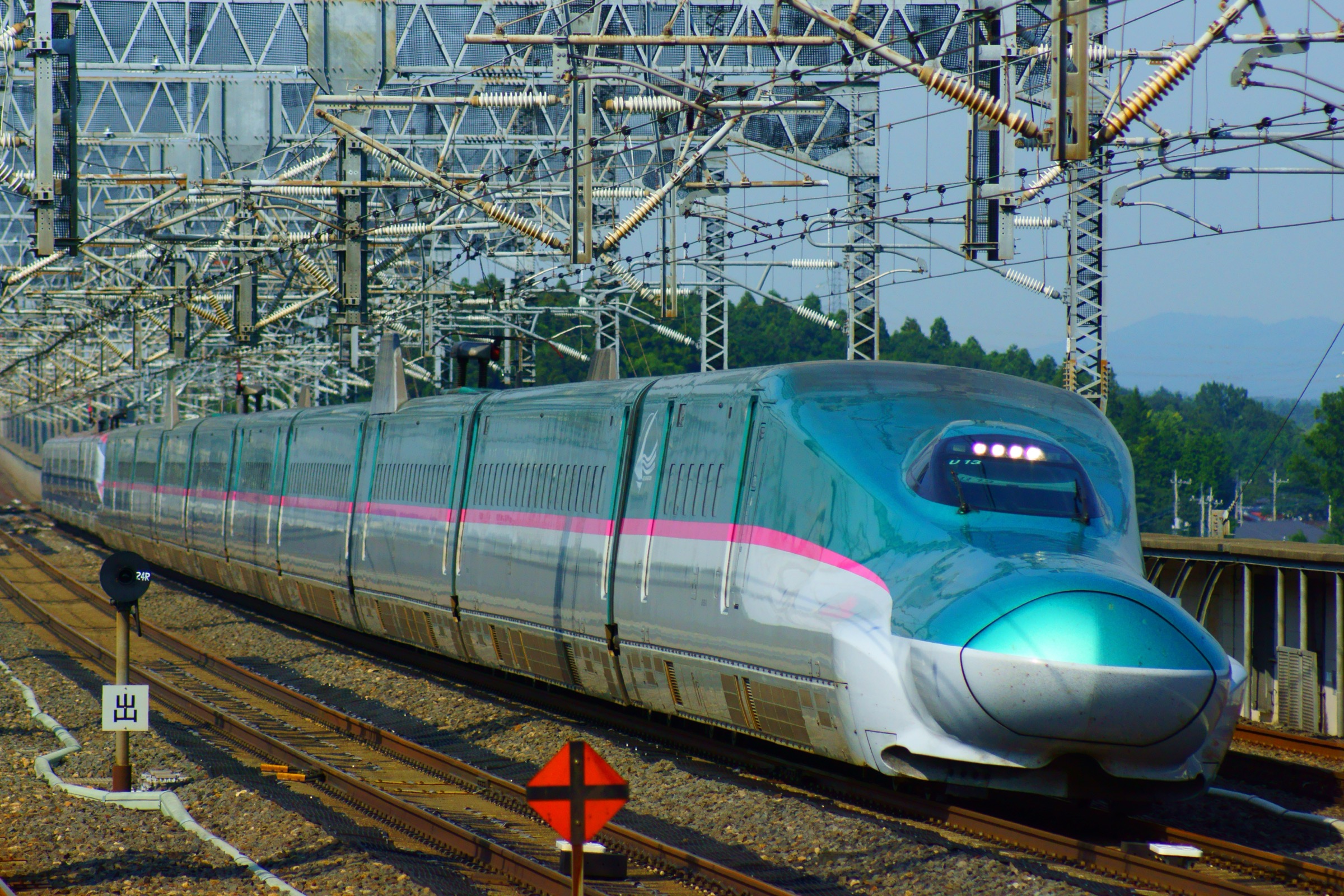
The backbone of the network runs from Tokyo through Saitama, then north to Sendai, Morioka, and eventually Shin-Aomori. This line is the artery connecting all of Tohoku’s major cities. The fastest service, the Hayabusa, runs directly from Tokyo to Shin-Aomori with stops only at Sendai and Morioka (and sometimes Shin-Hakodate-Hokuto in Hokkaido). The Yamabiko service makes more stops and is the best option for reaching intermediate stations like Fukushima, Koriyama, and Ichinoseki. The Nasuno service runs only between Tokyo and Nasuno-Shiobara, covering the southernmost stretch.
Akita Shinkansen (E6 Komachi)
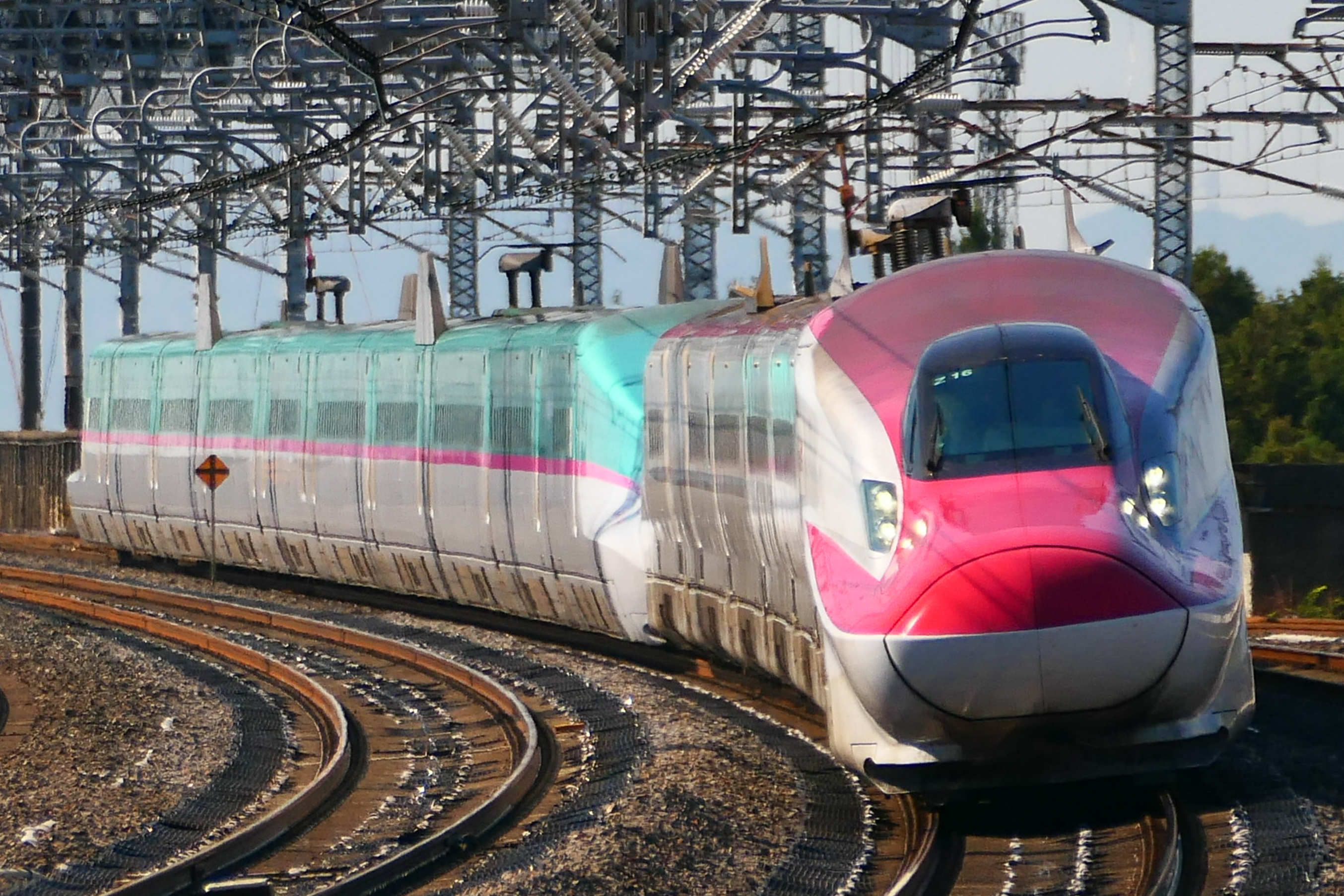
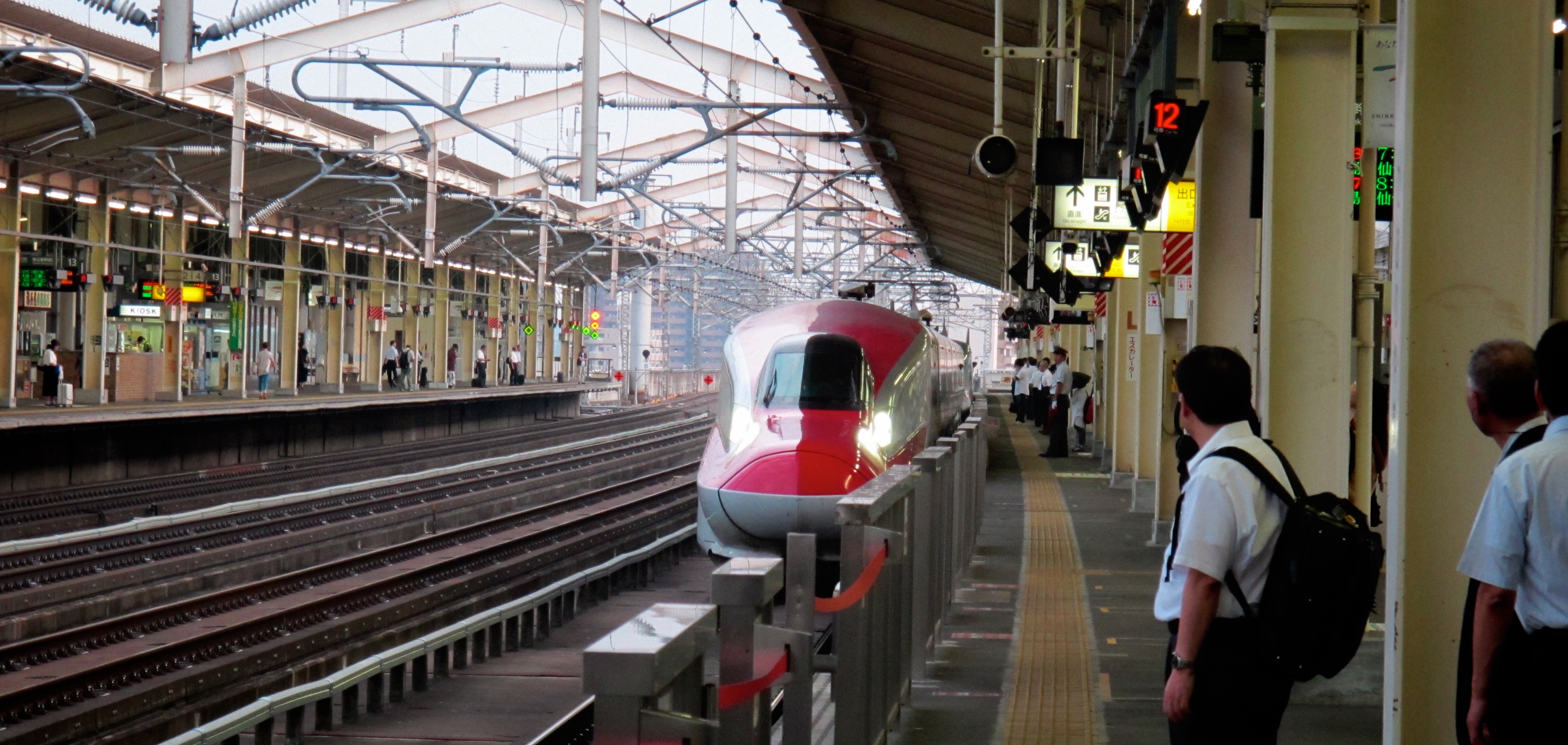
The distinctive red-and-silver Komachi trains travel from Tokyo to Akita via the Tohoku Shinkansen main line to Morioka, then branch west onto dedicated tracks through the mountains to Akita. Here’s the exciting part: between Tokyo and Morioka, the Hayabusa and Komachi trains run coupled together as a single 17-car formation, then split at Morioka — the green Hayabusa continuing north to Aomori while the red Komachi peels off west toward Akita. Watching this choreographed split is one of the Shinkansen’s great spectacles.
Yamagata Shinkansen (E3 Tsubasa)
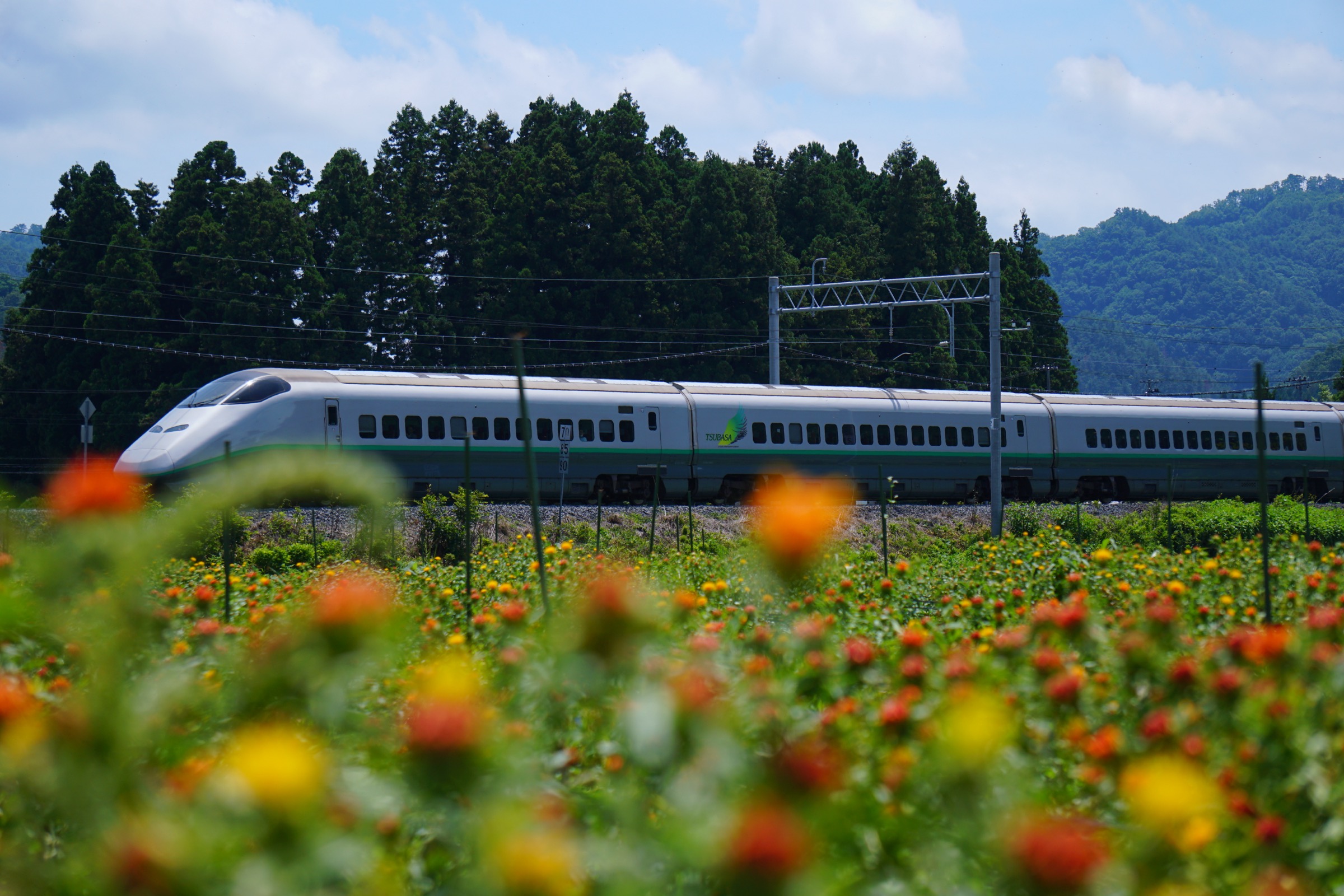
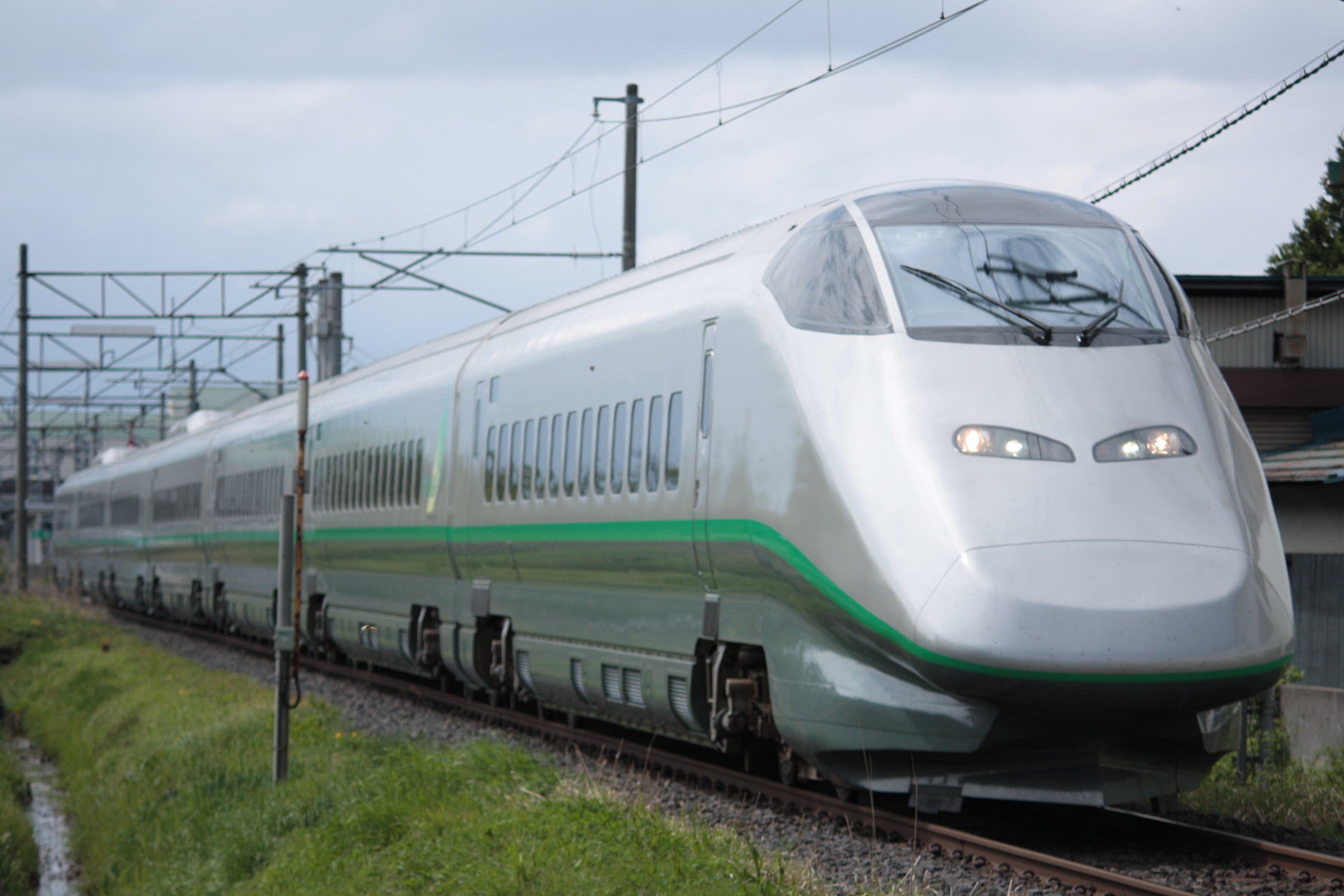
The Tsubasa service runs from Tokyo to Yamagata and Shinjo via a different split from the main line at Fukushima. Like the Komachi, it couples with the Yamabiko between Tokyo and the split point. The Yamagata Shinkansen uses the same tracks as conventional trains between Fukushima and Yamagata — meaning it operates at lower speed through that section — but still dramatically faster than any alternative.
Joetsu and Hokuriku Shinkansen
For completeness: these lines depart Tokyo in a different direction (northwest toward Niigata and Kanazawa) and don’t serve Tohoku directly, though some travelers combine Niigata with a Tohoku trip using the Banetsu West Line.
Key Journey Times and Costs from Tokyo
Here are the essential reference numbers for planning your Tohoku Shinkansen journey. All times shown are for the fastest available service (Hayabusa or Komachi where applicable).
- Tokyo → Sendai: approx. 1 hour 30 minutes | Unreserved ¥10,890 / Reserved ¥11,410 (about $74–$78)
- Tokyo → Morioka: approx. 2 hours 10 minutes | Unreserved ¥14,140 / Reserved ¥14,650 (about $97–$100)
- Tokyo → Akita (via Komachi): approx. 3 hours 45 minutes | Reserved seat ¥17,520 (about $120)
- Tokyo → Shin-Aomori: approx. 2 hours 59 minutes | Reserved seat ¥17,150 (about $117)
- Tokyo → Yamagata (via Tsubasa): approx. 2 hours 27 minutes | Reserved seat ¥11,680 (about $80)
- Sendai → Morioka: approx. 40 minutes | Reserved ¥5,810 (about $40)
- Sendai → Shin-Aomori: approx. 1 hour 39 minutes | Reserved ¥9,430 (about $65)
Prices shown are for standard class (ordinary car). First-class Green Car seats cost approximately 30–40% more. Children aged 6–11 pay half the adult fare; children under 6 travel free (without a seat).
The JR Pass: Is It Worth It for a Tohoku Trip?
The Japan Rail Pass (JR Pass) is a flat-rate pass sold exclusively to foreign tourists visiting Japan, giving unlimited travel on most JR trains — including Shinkansen — for 7, 14, or 21 consecutive days. Whether it makes financial sense depends entirely on your itinerary.
The JR Pass covers: All Shinkansen services on the Tohoku, Akita, and Yamagata lines (except the Nozomi and Mizuho on the Tokaido/Sanyo lines, which are irrelevant for Tohoku travelers). It also covers local JR trains, the JR Gono Line, Senseki-Tohoku Line, and most other JR services in the region.
Current JR Pass prices (2025–2026 rates, approximate):
- 7-day ordinary: ¥50,000 / about $340
- 14-day ordinary: ¥80,000 / about $545
- 21-day ordinary: ¥100,000 / about $680
The math for a Tohoku focus trip: If you’re spending most of your time in Tohoku, a 7-day JR Pass breaks even at about ¥50,000 worth of train travel. Tokyo → Sendai → Morioka → Shin-Aomori → Akita (returning to Tokyo) already costs approximately ¥48,000–¥55,000 in individual tickets, so the pass pays for itself on that route alone — before counting any local JR services you use in between.
The math for a broader Japan trip: If you’re combining Tohoku with Osaka and Hiroshima via the Tokaido Shinkansen, the 14-day pass becomes very attractive. A single Tokyo–Hiroshima return on the Tokaido costs roughly ¥38,000 — almost covering the entire pass cost before you add any Tohoku travel.
One important caveat: the JR Pass requires advance reservation for reserved seats (free with the pass but still requires booking at the Green Window or JR ticket machines). The Hayabusa to Shin-Aomori is especially popular and can sell out reserved seats during peak seasons (Golden Week, Obon, autumn foliage weekends). Book your reserved seats as soon as your dates are confirmed.
Seat Classes: Ordinary, Green Car, and Gran Class
The Tohoku Shinkansen offers three classes of travel, each with a distinct experience:
Ordinary Car (Standard Class)
What most travelers use. Seats are arranged 2+3 across the aisle, with generous legroom that comfortably accommodates most Western adults. Reclining seats with adjustable headrests, fold-down tray tables, and power outlets under the windows (on newer trains). Perfectly comfortable for journeys up to 3 hours. There are both reserved (shitei-seki) and unreserved (jiyuu-seki) cars. Reserved is strongly recommended; unreserved cars can become crowded during peak times.
Green Car (First Class)
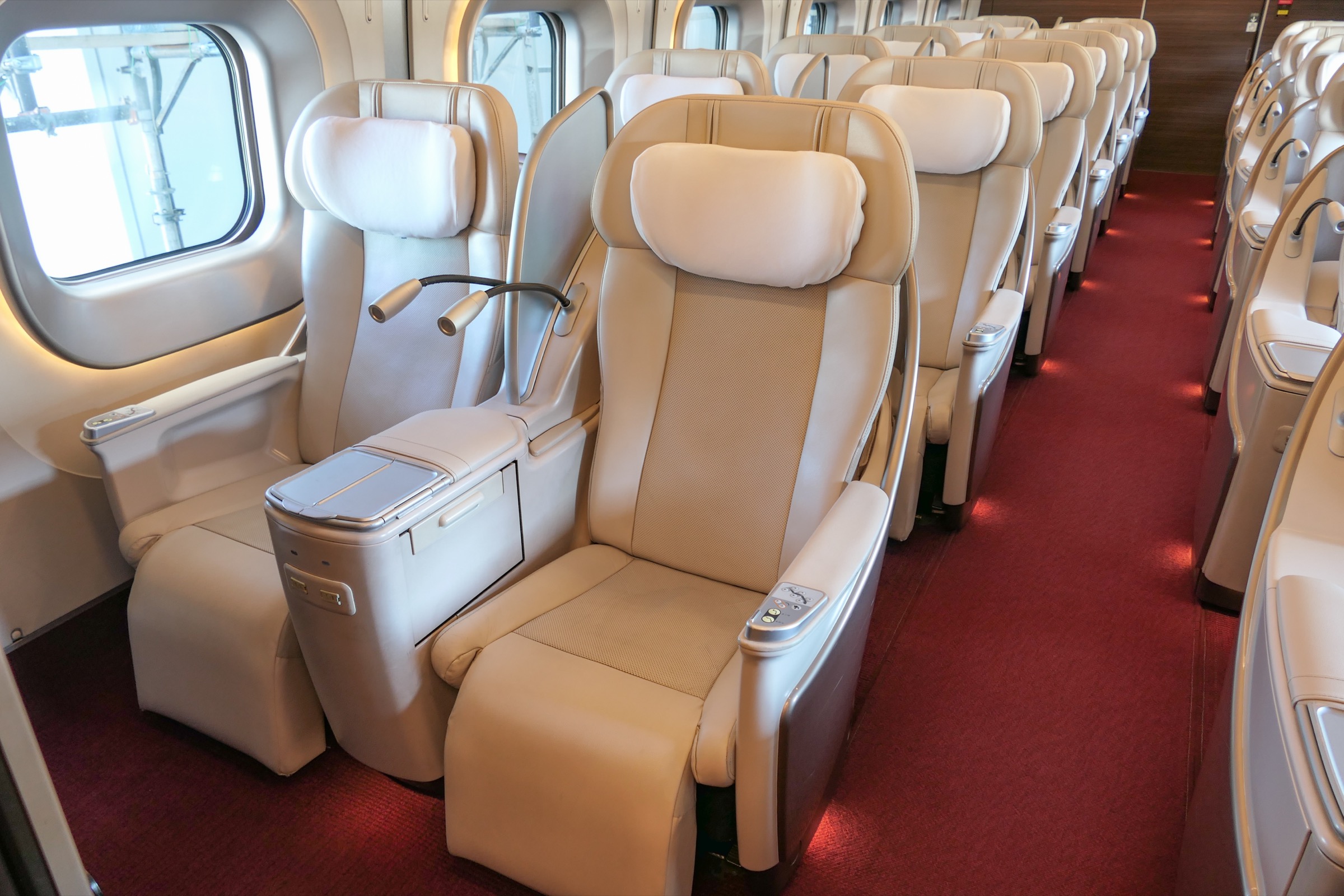
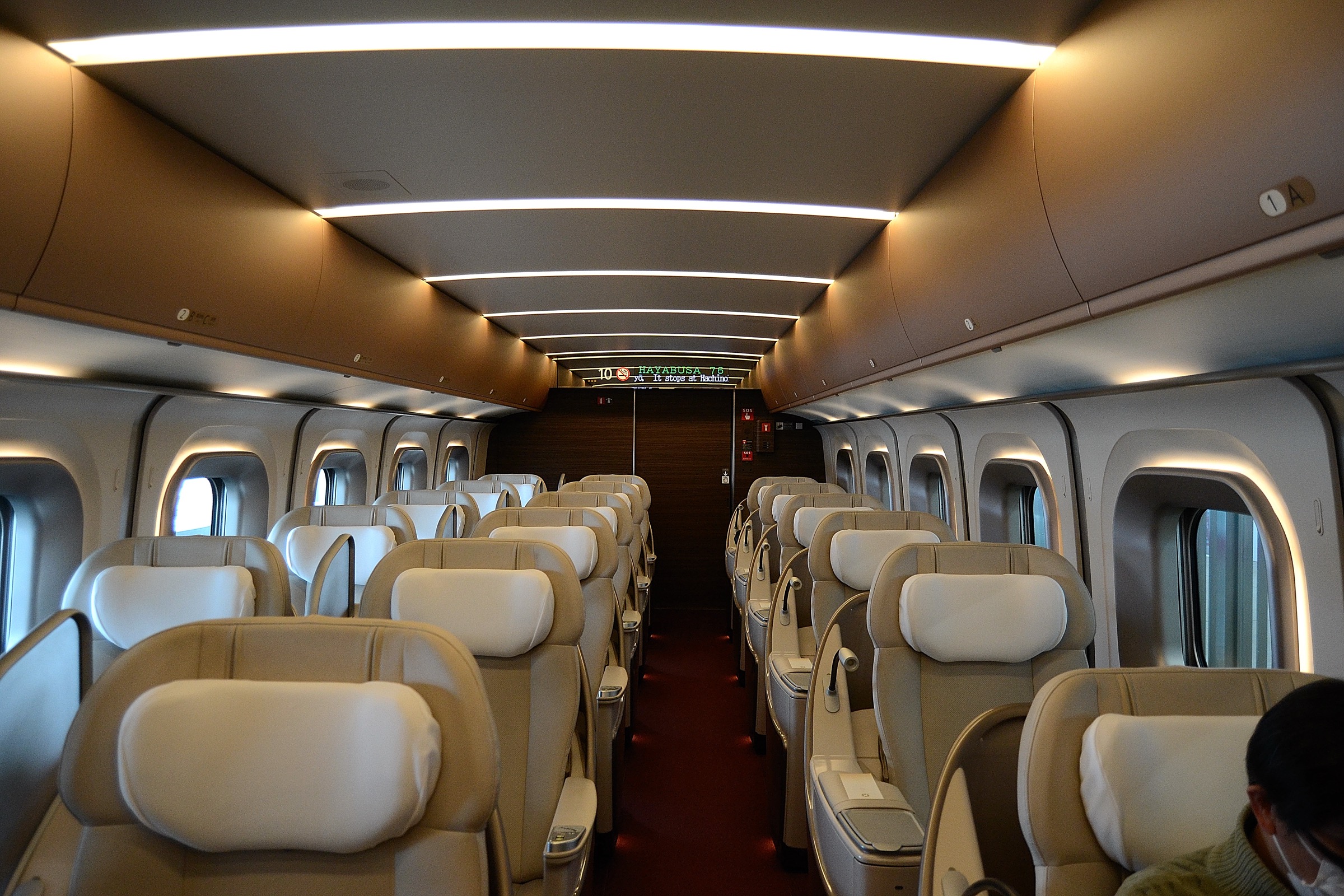
Japan’s equivalent of business class. Seats are wider (2+2 configuration), with more reclining, better lumbar support, and dedicated foot rests. Quieter cars, more attentive service on some services. The upgrade is worth it for overnight travelers or anyone who values the extra space on longer journeys. Premium of approximately ¥3,000–¥5,000 / $20–$34 over ordinary seat prices (also free with the JR Pass, just reserve at the Green Window).
Gran Class (Super First Class)
Only available on certain Hayabusa services, Gran Class is Japan’s ultra-premium rail experience — leather seats that recline almost flat, a dedicated attendant, and a multi-course meal service on longer journeys. Think domestic business-class aviation, applied to a train. Prices are significant (approximately ¥26,000–¥32,000 / $177–$218 from Tokyo to Shin-Aomori), and Gran Class is not covered by the JR Pass — you’ll pay the full supplement even with a pass. For special occasions or travelers who want the absolute best, it’s remarkable. For most visitors, ordinary class or Green Car is the better value.
Key Tohoku Shinkansen Stations: What to Know
Each major Tohoku Shinkansen station serves as a gateway to different regional experiences. Here’s a quick orientation to the main stops:
Sendai Station (Miyagi)
The largest city in Tohoku and the most common first stop. Sendai Station is a major hub with excellent shinkansen connections in multiple directions. The station itself is enormous — a multi-floor complex with excellent food halls in the basement (try gyutan/beef tongue, the city’s signature dish), extensive shopping, and coin lockers for day-trippers. Sendai is an excellent base for day trips to Matsushima (one of Japan’s “three views”), Yamadera Temple, and Zao.
Fukushima Station (Fukushima)
The split point for the Tsubasa service to Yamagata. Fukushima is the gateway to the prefecture’s famous peach orchards, the historic Tsurugajo Castle in Aizuwakamatsu, and the stunning Bandai-Azuma Skyline volcanic landscape. Often bypassed by through-travelers, Fukushima deserves far more attention than it gets.
Morioka Station (Iwate)
The split point for the Komachi service to Akita, and a wonderful small city in its own right. Morioka is famous for its three noodle dishes — wanko soba (challenge-style soba), reimen (cold chewy noodles), and jajamen (meat-sauce noodles) — and for the spectacular sight of Iwate-san volcano visible from the city on clear days. The city center is walkable from the station and has a charming old-town atmosphere.
Shin-Aomori Station (Aomori)
The northern terminus on Honshu. Shin-Aomori is a connection point rather than a destination in itself — the city of Aomori is one stop away on local trains, and the Gono Line to Juniko/Shirakami-Sanchi departs from Aomori Station. Shin-Aomori is also the starting point for the Hokkaido Shinkansen through the Seikan Tunnel to Hokkaido — the world’s longest undersea railway tunnel.
Akita Station (Akita)
The Komachi’s final stop. Akita is the gateway to Lake Tazawa (Japan’s deepest lake), Nyuto Onsen hot springs village, and the spectacular Oga Peninsula with its Namahage demon festival traditions. The city itself has excellent local cuisine centered on hinai jidori chicken, kiritanpo rice-stick hot pot, and local sake.
How to Buy Shinkansen Tickets
Buying Shinkansen tickets is straightforward once you know the options:
JR Ticket Machines (Green Machines)
Found at every major JR station, these machines have English interfaces and accept credit cards. You can purchase unreserved tickets, reserved tickets, and use them to collect pre-booked tickets. For JR Pass holders, use the Green Window (みどりの窓口) — a staffed counter at major stations — to make reserved seat bookings.
Ekinet Online Booking
JR East’s online booking system allows advance reservations up to one month before departure. English-language booking is available for foreign credit cards. Buying online sometimes offers a small discount (the “Early Bird” rate), and tickets can be collected at any JR East ticket machine using your booking number. Highly recommended for peak travel periods.
SmartEX and Overseas Pre-Booking
For the Tokaido Shinkansen (Tokyo–Osaka), the SmartEX app is popular, but for Tohoku travelers the Ekinet system or in-person purchase is usually the most practical option. JR Pass holders simply need their physical pass and a reservation booking.
At the Station
You can always buy tickets at the station on the day. For less popular routes and off-peak travel, this is fine. For the Hayabusa to Shin-Aomori during Golden Week (late April/early May) or the autumn foliage season (October), book in advance — reserved seats fill quickly.
Luggage, Oversized Bags, and Practical Logistics
One practical challenge for foreign visitors: large suitcases on the Shinkansen. Since 2020, JR East has introduced new rules for oversized luggage (items where the sum of length + width + height exceeds 160 cm / 63 inches).
The oversized luggage rule: Bags over 160 cm must be stored in designated storage spaces at the front or rear of each car. These spaces must be reserved in advance when you book your reserved seat (there’s no additional charge). If you have oversized luggage and haven’t reserved a storage space, you can face a surcharge. When booking reserved seats online or at the Green Window, explicitly mention that you have oversized luggage.
Practical tip for large suitcases: Consider using Japan’s excellent takuhaibin (luggage forwarding service). Services like Yamato Transport (Kuroneko) allow you to ship your suitcase between hotels for approximately ¥1,500–¥2,500 / $10–$17 per bag, with next-day delivery within the region. This is especially useful when moving between cities — you check out of your Sendai hotel in the morning, ship your big bags to your Morioka hotel, and travel light on the Shinkansen. It transforms the travel experience.
Best Time to Travel: Shinkansen Crowds and Peak Periods
- Golden Week (late April – early May): One of Japan’s busiest travel periods. Shinkansen reserved seats sell out weeks in advance. If traveling during Golden Week, book 1 month ahead (the opening date for Shinkansen reservations) and have backup plans.
- Obon (mid-August, typically August 13–16): Another peak travel period when millions of Japanese travel for the traditional ancestor commemoration holiday. Reserve early.
- Autumn Foliage Season (October): Especially busy on Tohoku services as travelers head north to see the spectacular fall colors. October weekends can be particularly crowded.
- Winter (December–February): Generally off-peak and easier to find reservations at short notice. The Hayabusa to Shin-Aomori sees some winter increase from ski travelers heading to Aomori, but nothing like the summer peaks.
- Spring Cherry Blossom Season (late March – April): Busy but less extreme than Golden Week, and the gradual northward progression of cherry blossoms means different destinations peak at different times. Plan around specific blossom forecasts for your destinations.
The Shinkansen Experience: What to Expect
If this is your first time on a Japanese Shinkansen, here’s what to expect that might surprise you.
Punctuality that borders on the uncanny. The average delay on the Tokaido/Sanyo Shinkansen network over recent years has been measured in seconds per train. If the board says your train departs at 10:24, it departs at 10:24. Not 10:25. Arrive at the platform 3–5 minutes early, find the numbered platform marking for your car, and stand at the yellow line. The train door will stop exactly in front of you.
Silence norms. Japanese Shinkansen culture is notably quiet. Phone calls are frowned upon (step to the vestibule between cars if you must take one). Conversations are typically kept low. Eating is accepted — and indeed, the ekiben (station lunch box) tradition of buying bento boxes to eat on the train is a beloved part of the Japanese rail experience — but the car remains serene. You’ll hear the gentle whoosh of passing air, the subtle sway as the train takes curves, and perhaps the distant sound of the onboard trolley service.
Seat numbers and car numbers matter. Your reserved seat ticket shows both your car number and seat number. Platform markings show exactly where each car will stop. Match these before the train arrives — boarding into the wrong car means a walk through a moving train to find your seat.
The window seat question. Japanese train windows are larger than typical European or American equivalents, offering genuinely spectacular views. Mount Fuji is visible from the Tokaido Shinkansen on clear days; on the Tohoku line, the volcanic peak of Iwate-san becomes visible approaching Morioka, and the coastal mountains of Tohoku unfold throughout the journey. Aim for the E window seat (left side traveling north from Tokyo) for mountain views.
Sample Tohoku Shinkansen Itinerary: 7 Days from Tokyo
Here’s how to use the Shinkansen as the backbone of a comprehensive Tohoku tour:
Day 1 — Tokyo → Sendai (90 min by Hayabusa): Arrive mid-morning. Explore Sendai’s downtown, visit Sendai Castle ruins, and have a gyutan dinner. Night in Sendai.
Day 2 — Sendai day trips: Morning train to Matsushima (30 min by local train) to see the pine-clad islands of the bay. Return to Sendai for afternoon. Optional evening trip to Akiu Onsen (30 min by bus) for hot springs.
Day 3 — Sendai → Morioka (40 min by Hayabusa): Arrive mid-morning. Explore Morioka’s old town, try all three noodle dishes (wanko soba at lunch, jajamen for a snack, reimen for dinner). Stroll along the Nakatsu River. Night in Morioka.
Day 4 — Morioka → Shin-Aomori (60 min by Hayabusa) → Aomori: Morning Hayabusa north. Explore Aomori City, visit the Aomori Museum of Art and the stunning Sannai Maruyama Jomon Period archaeological site. Night in Aomori.
Day 5 — Aomori area / Hirosaki day trip: Local train to Hirosaki (45 min). Visit Hirosaki Castle, explore the impressive Western-style Meiji-era buildings in the historic district, and sample apple pie in its many variations. Return to Aomori for the night.
Day 6 — Shin-Aomori → Morioka → Akita (Komachi, 2 hours 15 min total): Take the Hayabusa back south to Morioka, transfer to the Komachi west toward Akita. Afternoon in Akita — explore the city, visit Akita Castle ruins, and have kiritanpo hot pot for dinner. Night in Akita.
Day 7 — Akita → Tokyo (Komachi, 3 hours 45 min): Morning or mid-day Komachi straight back to Tokyo. Or extend your trip with an optional night near Lake Tazawa or Nyuto Onsen before the final journey south.
Practical Tips for Riding the Tohoku Shinkansen
- Book reserved seats, always. Even with a JR Pass, always make reserved seat bookings for Shinkansen travel. Unreserved cars are available, but during busy periods they can be standing room only.
- Carry your ticket/pass at all times. You’ll pass through automated ticket gates at both origin and destination stations. Keep your ticket or pass accessible, not buried in a bag.
- Buy your ekiben before boarding. Station bento boxes are a highlight of Japanese rail travel. The best selections are in the main station buildings, not on the platform. Allow 10–15 minutes before your departure to browse.
- Charge your devices. Most seats on E5 and E6 series trains have power outlets (at window seats, under the window; aisle seats may not have direct access). Green Car seats all have individual outlets.
- Keep noise low. Put your phone on silent. If you need to take a call, step into the vestibule between cars. This is the polite standard in Japan and will be appreciated by fellow passengers.
- Stow large bags in the overhead rack or luggage space. Do not leave large bags in the aisle. Use the overhead rack for carry-on-sized items and the designated luggage space (front/rear of car) for larger bags.
- Arrive 5 minutes early for the platform. Japanese trains depart exactly on schedule. If you’re still rushing through the station at 10:23 for a 10:24 departure, you may miss it.
- Download the Navitime or HyperDia app. These Japanese rail route-planning apps work excellently for Shinkansen travel, showing exact schedules, platform numbers, and transfer times.
Related Articles You Might Enjoy
- Appi Kogen, Iwate: Japan’s Premier Powder Ski Resort — Complete Guide for Foreign Visitors
- Essential Japanese Phrases for Traveling in Tohoku: A Practical Guide for Foreign Visitors
- Tohoku Onsen Guide: The Best Hot Springs in Northeast Japan for Foreign Visitors
- Kinkasan Island, Miyagi: Japan’s Sacred Deer Island — Complete Guide for Foreign Visitors
- Tashirojima: Japan’s Famous Cat Island — Complete Guide for Foreign Visitors
Final Thoughts
The Tohoku Shinkansen is more than efficient transportation — it’s the thread that weaves together all of northeastern Japan’s remarkable destinations. In under three hours from Tokyo, you can be standing on the platform at Shin-Aomori, ready to explore Japan’s last great wild frontier. In 90 minutes, Sendai’s vibrant food scene and the tranquil beauty of Matsushima await. The Komachi brings Akita’s volcanic landscapes and legendary hot springs within reach; the Tsubasa delivers you to Yamagata’s mountains and sake breweries.
Take the time to appreciate the ride itself. Watch Tohoku’s landscape unfold outside the window — rice paddies giving way to forested mountains, glimpses of the Pacific coast, the volcanic cones of Iwate-san and Chokaisan rising above the northern horizon. Buy an ekiben at the station, settle into your reserved seat, and let Japan’s extraordinary rail network do what it does better than anywhere else on Earth: get you there in comfort, on time, with scenery to remember. Tohoku is waiting — and the Shinkansen is the perfect way to arrive.
Affiliate Disclosure: This post contains Amazon affiliate links. If you purchase through these links, I may earn a small commission at no extra cost to you. This helps keep our Tohoku travel guides free and up to date — thank you for your support!
Essential Travel Gear for Your Japan Rail Adventure
Riding the Shinkansen is one of travel’s great pleasures — but being well-prepared makes the experience even better. Here are the travel accessories we recommend before your Japan rail journey.
🎒 Travel Wallet & Document Organizer
Keep your JR Pass, IC card, passport, and cash in one place. A slim travel wallet is essential for hopping between trains and gates without fumbling. → Browse travel wallets on Amazon Japan
🔌 Power Adapter for Japan
Japan uses Type A plugs (the same as the US) at 100V — slightly different from Australia’s 230V standard. Australian visitors will need a voltage-compatible adapter or transformer for high-wattage devices. → Browse Japan power adapters on Amazon Japan
🧳 Packing Cubes (Game-Changer for Multi-City Travel)
Tohoku involves moving between multiple cities — from Sendai to Akita to Aomori. Packing cubes let you find everything instantly without unpacking your whole bag at each hotel. → Browse packing cubes on Amazon Japan
⚖️ Digital Luggage Scale
After a week of souvenir shopping in Tohoku (sake, lacquerware, kokeshi dolls…), your bag will be heavier than when you arrived. A pocket-sized digital scale saves you from nasty airport surprises. → Browse luggage scales on Amazon Japan
🔒 TSA-Approved Luggage Lock
Japan is extremely safe, but locking your bag during Shinkansen overhead storage and overnight trains gives peace of mind. → Browse TSA locks on Amazon Japan
💡 Portable Power Bank
A full day of navigating with Google Maps, translation apps, and photography drains your battery fast. A 10,000–20,000mAh power bank keeps you connected between charges. → Browse power banks on Amazon Japan



コメント