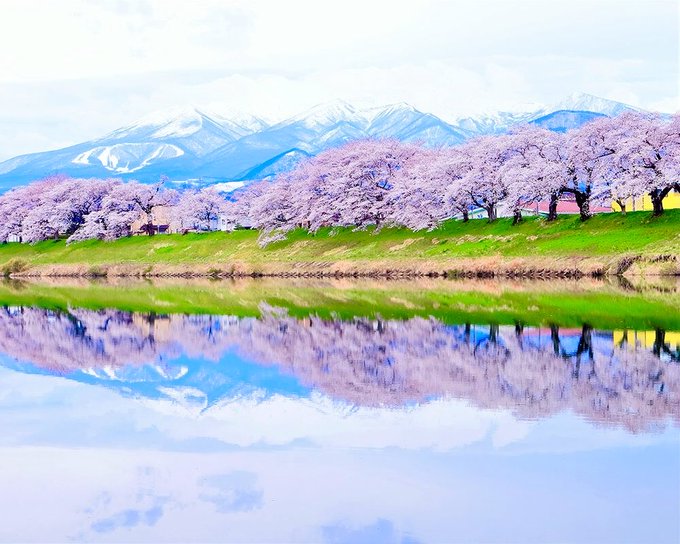
Hitome Senbonzakura: Ogawara’s Breathtaking Cherry Blossom Spectacle in Miyagi
Every spring, I find myself making the same pilgrimage from Sendai. Thirty minutes on the Tohoku Line, a gentle fifteen-minute stroll from the station, and then — it hits you. A river road lined with nearly 1,200 cherry trees in full bloom, their pale pink canopies stretching eight kilometres into the distance, while the snow-capped peaks of the Zao Mountains loom majestically behind them. This is Hitome Senbonzakura (一目千本桜), and honestly, it never gets old.
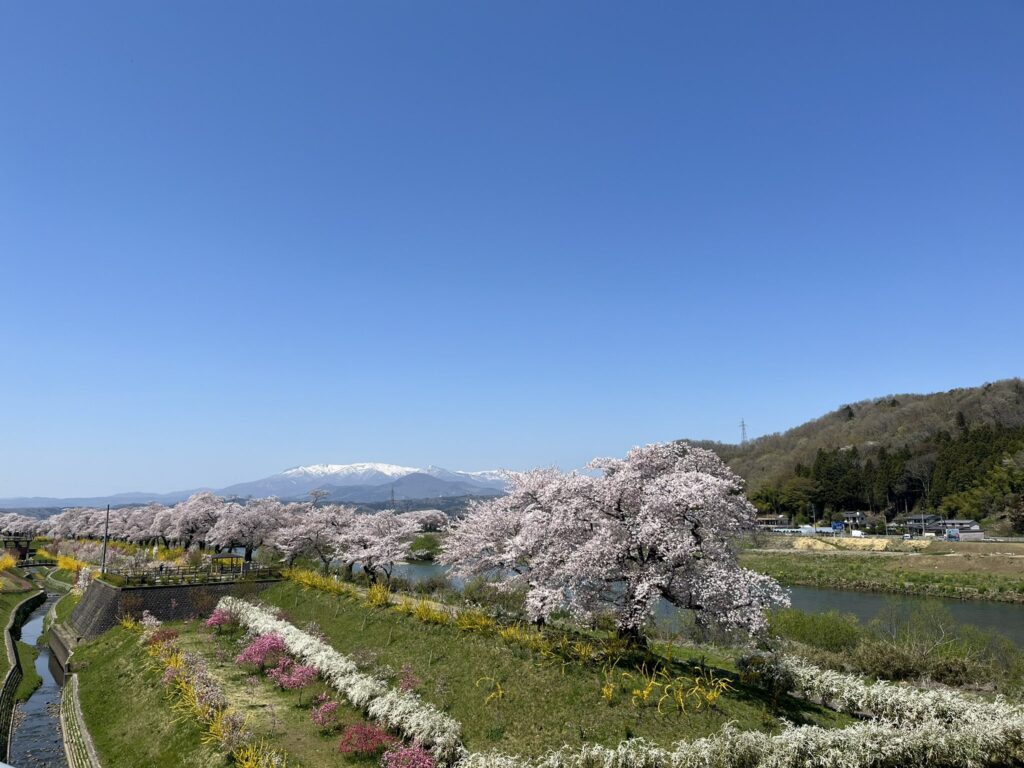
If you’re travelling through Tohoku in late April and you only add one cherry blossom spot to your itinerary, make it this one. As a Sendai local, I’ve visited dozens of hanami (flower-viewing) sites across the region, and Hitome Senbonzakura consistently leaves me speechless — not just for the sheer scale of the blossoms, but for that extraordinary backdrop that you simply won’t find anywhere else in Japan.
What Does “Hitome Senbonzakura” Actually Mean?
The name translates beautifully into English: One-Glance Thousand Cherry Trees. The idea is that in a single sweep of the eye, you take in a thousand blossoming trees at once. It’s poetic, but it’s also genuinely accurate. Standing on the banks of the Shiroishi River in Ogawara Town, the rows of Somei Yoshino cherry trees stretch so far in both directions that the blossoms seem to dissolve into a soft pink horizon. The name doesn’t oversell it — if anything, a thousand trees feels like an understatement.
The Star of the Show: Cherry Blossoms Meets Snow-Capped Zao
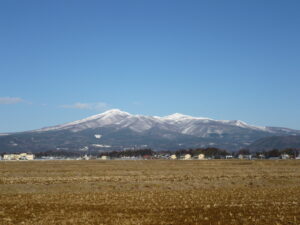
Here’s the thing that makes Hitome Senbonzakura genuinely unique among Japan’s most celebrated cherry blossom destinations. At this time of year — late April — the Zao Mountains along the Miyagi-Yamagata border are still blanketed in snow. And because Ogawara sits in a wide open plain with unobstructed sightlines, those white peaks rise up dramatically behind the cherry trees like a painted backdrop.
Pink blossoms in the foreground. Deep blue sky overhead. Snow-white mountains behind. It’s a composition that feels almost too perfect to be real, and yet there it is, every single April, completely free of charge. I’ve shown photos from this spot to friends abroad and they’ve refused to believe I didn’t add a filter. I hadn’t.
When to Visit: Timing Your Trip to Ogawara
The Somei Yoshino variety at Hitome Senbonzakura typically reaches full bloom between late April, roughly April 20th to 30th. This is slightly later than cherry blossom season in Tokyo and Kyoto, which is actually great news for travellers — it means you can catch the tail end of sakura season further south, then hop on the Shinkansen to Sendai and extend your flower-viewing adventure up here in Tohoku.
Bloom timing shifts slightly year to year depending on winter temperatures and spring warmth, so I always recommend checking the Japan Meteorological Corporation’s sakura forecast, or following Ogawara Town’s official announcements, as you get closer to your travel dates. When the blossoms are at their peak, the riverbank glows — there’s really no other word for it.
Getting There from Sendai: Easier Than You Think
One of the many reasons I love recommending this spot to visitors staying in Sendai is how ridiculously easy it is to reach. No car rental required, no complicated bus routes — just the regular Tohoku Line from Sendai Station.
- Train: Take the JR Tohoku Line from Sendai Station towards Shiroishi. Ride for approximately 30 minutes and alight at Ogawara Station.
- Walk: From Ogawara Station, it’s a pleasant flat walk of around 15 minutes to reach the Shiroishi Riverbank. Simply follow the crowds during blossom season — you won’t get lost.
- By Car: If you’re driving, there are parking areas near the riverside, though these fill up quickly on weekends during peak bloom. Arriving early in the morning is strongly recommended.
- IC Card: Suica and ICOCA cards are accepted on the Tohoku Line, making the journey seamless.
The whole day trip from Sendai — including travel, blossom-viewing, a picnic lunch, and photography — fits comfortably into half a day. That leaves your afternoon free for exploring nearby attractions, which I’ll get to shortly.
Admission and Practicalities
Here’s some excellent news: entry is completely free. There’s no ticket booth, no admission gate, no reservation system. The Shiroishi Riverbank is a public space, and the cherry trees are there for everyone to enjoy. During the blossom festival period, food stalls and vendors typically set up along the path, so you can pick up yakitori, taiyaki, or a warm cup of amazake while you stroll. It has a wonderfully relaxed, community atmosphere that feels a world away from the more commercialised hanami spots in major cities.
Do bring cash for the food stalls, as not all vendors accept cards. Comfortable walking shoes are a must — you’ll want to walk the full eight kilometres if your legs allow it, because each bend in the river reveals a slightly different angle on the mountains behind.
Photography Tips: How to Capture the Magic
As someone who has photographed this spot more times than I can count, let me share what actually works here.
Shoot at Golden Hour
The absolute best light at Hitome Senbonzakura is during the late afternoon golden hour, roughly one to two hours before sunset. The warm amber light catches the pink petals and gives them an almost luminous quality, while the Zao peaks turn a gorgeous rosy hue. Position yourself on the riverbank facing southwest toward the mountains and let the tree line lead your eye into the frame.
Use the River as a Mirror
On calm, wind-free days, the Shiroishi River reflects the cherry trees perfectly. Get low to the water’s edge and shoot along the surface for a symmetrical composition that doubles the impact. Early mornings tend to be calmer and less windy, making them ideal for reflection shots.
Include the Mountains
Don’t get so focused on the trees that you forget the mountains. The snow-capped Zao range is what elevates this spot from “beautiful cherry blossoms” to “completely unforgettable.” Use a slightly wider angle and position the tree line in the lower third of your frame, letting the mountains dominate the sky above.
Crowds: Busy, But Manageable
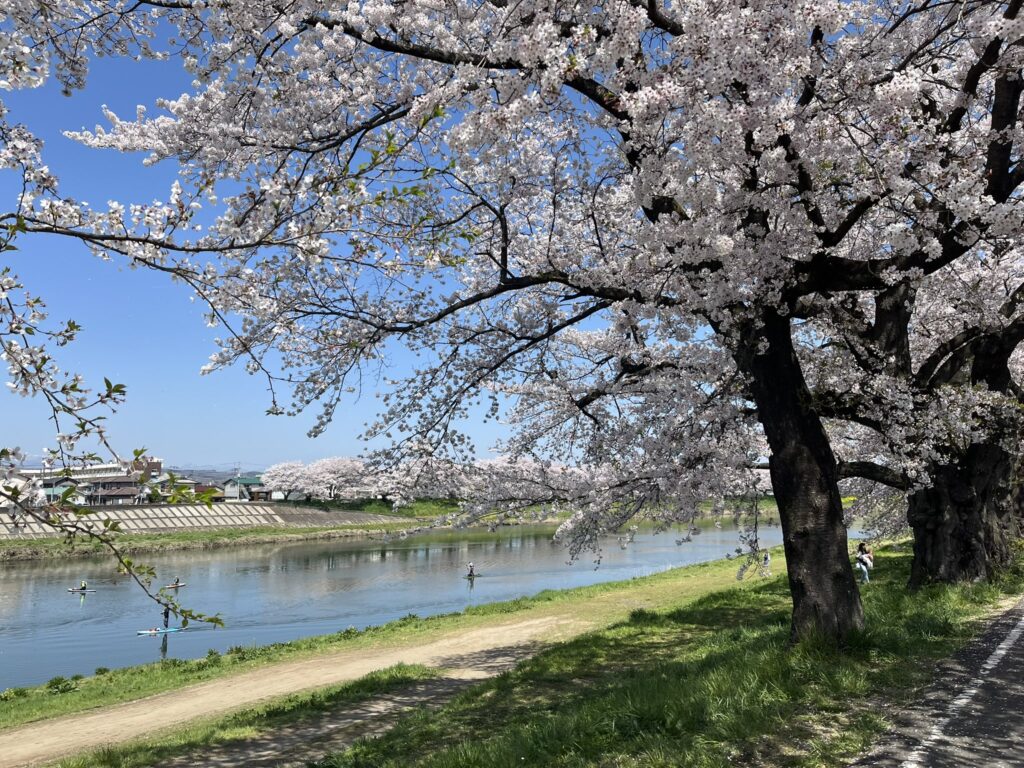
I want to be honest with you: Hitome Senbonzakura is popular. During peak bloom on weekends, the riverbank does fill with visitors, and the access roads can get congested with cars. However — and this is important — it doesn’t have the overwhelming, shoulder-to-shoulder intensity of somewhere like Hirosaki Park in Aomori during peak season. The eight-kilometre stretch of river means the crowds naturally spread out, and it’s almost always possible to find a quieter section to sit, relax, and take in the view without being jostled.
Visiting on a weekday, or arriving early in the morning, makes a noticeable difference. I’ve strolled the full length of the riverbank on a Tuesday morning in near-solitude, with just the sound of the river and the distant call of birds for company. That’s when it really feels like your own private discovery.
What to Do Nearby: Make a Full Day of It
Shiroishi Castle (白石城)
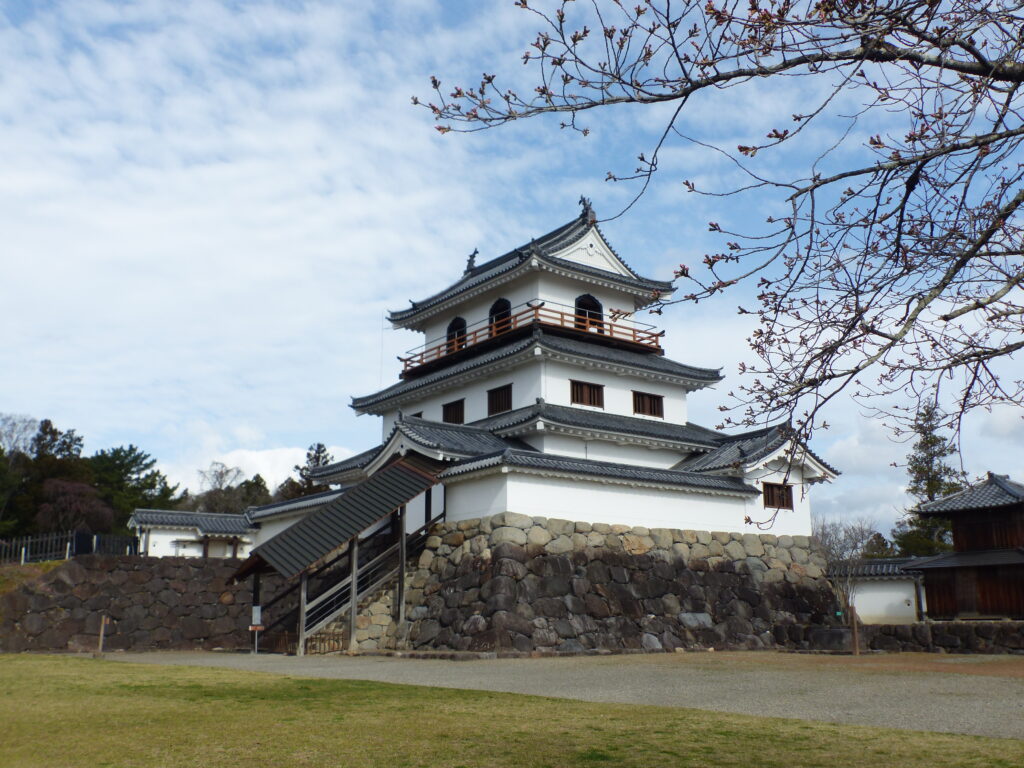
Just a short distance from the blossom viewing area, Shiroishi Castle is one of Miyagi’s most charming and underrated historic sites. The reconstructed wooden keep dates back to the feudal era and offers panoramic views from its upper floors. It’s a compact, manageable castle — not as grand as Matsumoto or Himeji, but full of character and history, and rarely crowded. Pair it with the sakura and you’ve got a genuinely memorable Tohoku day out.
Shiroishi Udon (白石温麺)
You cannot visit this area without trying Shiroishi Udon, locally known as umen (温麺). These thin, oil-free noodles have been made in Shiroishi for over 400 years and are considered a regional treasure. They’re light, delicate, and deeply satisfying — particularly on a cool spring day after hours of walking along the riverbank. Several restaurants in Shiroishi Town serve them in traditional hot broth, and a bowl costs just a few hundred yen. This is real, unglamourised Tohoku food culture, and I love it.
Final Thoughts from a Sendai Local
Hitome Senbonzakura is one of those places I find myself quietly protective of — the kind of spot you want to share with the right people, travellers who will genuinely appreciate it rather than simply tick it off a list. It doesn’t have the international fame of Yoshino in Nara or the Instagram saturation of certain Tokyo parks, and that’s precisely part of its appeal. It feels real. It feels like Tohoku.
If you’re visiting Japan in late April and you want to see cherry blossoms the way people in this region have enjoyed them for generations — quietly, beautifully, with snow-capped mountains watching over you — make the thirty-minute train ride from Sendai and come see this for yourself. I promise you won’t regret it.
—
More Tohoku Travel Guides
- Hirosaki Castle: Japan’s Most Breathtaking Cherry Blossom Festival
- Zao Fox Village: Wildlife Sanctuary Near Shiroishi
- Matsushima Bay: Pine Islands & Temples in Miyagi
Related Articles You Might Enjoy
- Zao Fox Village Miyagi Japan Travel Guide for Foreigners: Meet 100+ Wild Foxes in a Snowy Wonderland
- Sendai Daikannon: Inside Japan’s Giant 100-Meter Kannon Statue (A Local’s Guide)
- Matsushima Bay, Miyagi: The Ultimate Japan Travel Guide for Foreign Visitors
- Tohoku 7-Day Itinerary: The Perfect First-Timer’s Route Through Northeast Japan


コメント