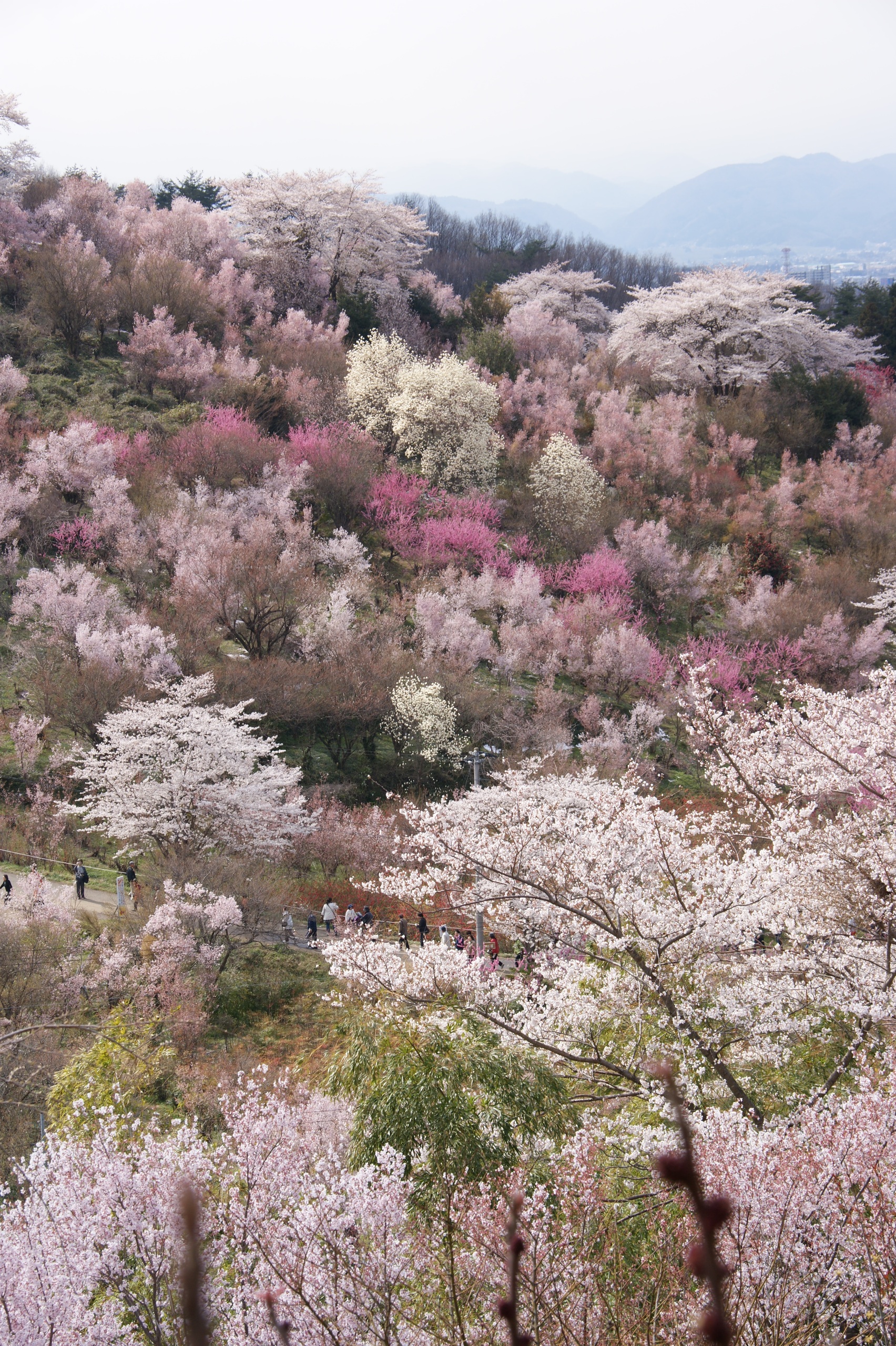
Every spring, a quiet hillside on the outskirts of Fukushima City transforms into what many Japanese travel writers have called “the most beautiful countryside scene in all of Japan” — a breathtaking cascade of cherry blossoms, plum trees, forsythia, and magnolias tumbling down terraced slopes, with the snowcapped peaks of Mt. Adatara glowing in the distance. This is Hanamiyama Park, one of the best-kept secrets in all of Tohoku, and it’s waiting for you.
Why Hanamiyama Should Be on Every Japan Itinerary
If you’ve been to Japan in spring, you’ve probably seen cherry blossoms — elegant, beautiful, perfectly transient. But Hanamiyama offers something entirely different: a place where at least a dozen different flowering trees and shrubs bloom simultaneously in a kaleidoscope of pink, white, yellow, violet, and crimson. Imagine not just cherry blossoms, but weeping cherries, plum trees, forsythia, peach trees, wisteria, magnolias, and daffodils all competing for your attention at the same moment.
What makes Hanamiyama especially remarkable is that it’s private farmland. The Watanabe family — along with other local farmers — have been voluntarily opening their land to the public since the 1940s, planting more and more flowering trees each year as a gift to visitors. There’s no admission fee, no ticket booth, and no crowds of tourists being herded along a designated route. You simply walk through someone’s cherished hillside garden, which happens to be one of the most spectacular spring landscapes in northeastern Japan.
Despite being adored by Japanese tourists and frequently featured in domestic travel magazines, Hanamiyama remains almost unknown to international visitors. While Hirosaki and Sendai’s Hitome Senbonzakura draw massive foreign crowds, you could easily spend an entire morning at Hanamiyama and encounter only a handful of non-Japanese visitors. The signage is in Japanese, the shuttle buses aren’t marketed internationally, and no major English-language travel guide has given it the attention it deserves — until now.
For any traveler passing through Tohoku in late March or early April, Hanamiyama is not just worth a detour; it’s worth planning your entire itinerary around.
Getting There from Tokyo
Hanamiyama is accessed via Fukushima City, which sits on the Tohoku Shinkansen line between Tokyo and Sendai.
- Shinkansen from Tokyo: Take the Tohoku or Yamagata Shinkansen from Tokyo Station to Fukushima Station. The Yamabiko (semi-express) takes about 1 hour 40 minutes; the faster Hayabusa takes about 1 hour 25 minutes. Expect to pay ¥10,000–¥13,000 ($68–$88) one way, or use a JR Pass.
- Shinkansen from Sendai: Just 17 minutes on the Shinkansen. An easy half-day or full-day trip from Sendai.
- From Fukushima Station to Hanamiyama: During peak bloom season (late March–mid April), a free shuttle bus runs from the East Exit (Higashi-guchi) of Fukushima Station approximately every 15–30 minutes. Outside this season, take a taxi (about 15–20 minutes, ¥1,500–¥2,000 / $10–$14) or rent a bicycle from the station.
Note: The JR Pass is valid for all Shinkansen travel to Fukushima. If you’re traveling from Tokyo and plan to continue north to Sendai or Morioka, Fukushima is a natural stop along the way — the Shinkansen stops here without requiring a transfer.
The Flowers of Hanamiyama: What Blooms When
Hanamiyama’s magic lies in its layered blooming schedule. Unlike single-species cherry blossom sites, here the flowering season extends across several weeks, with different plants taking the spotlight at different times.
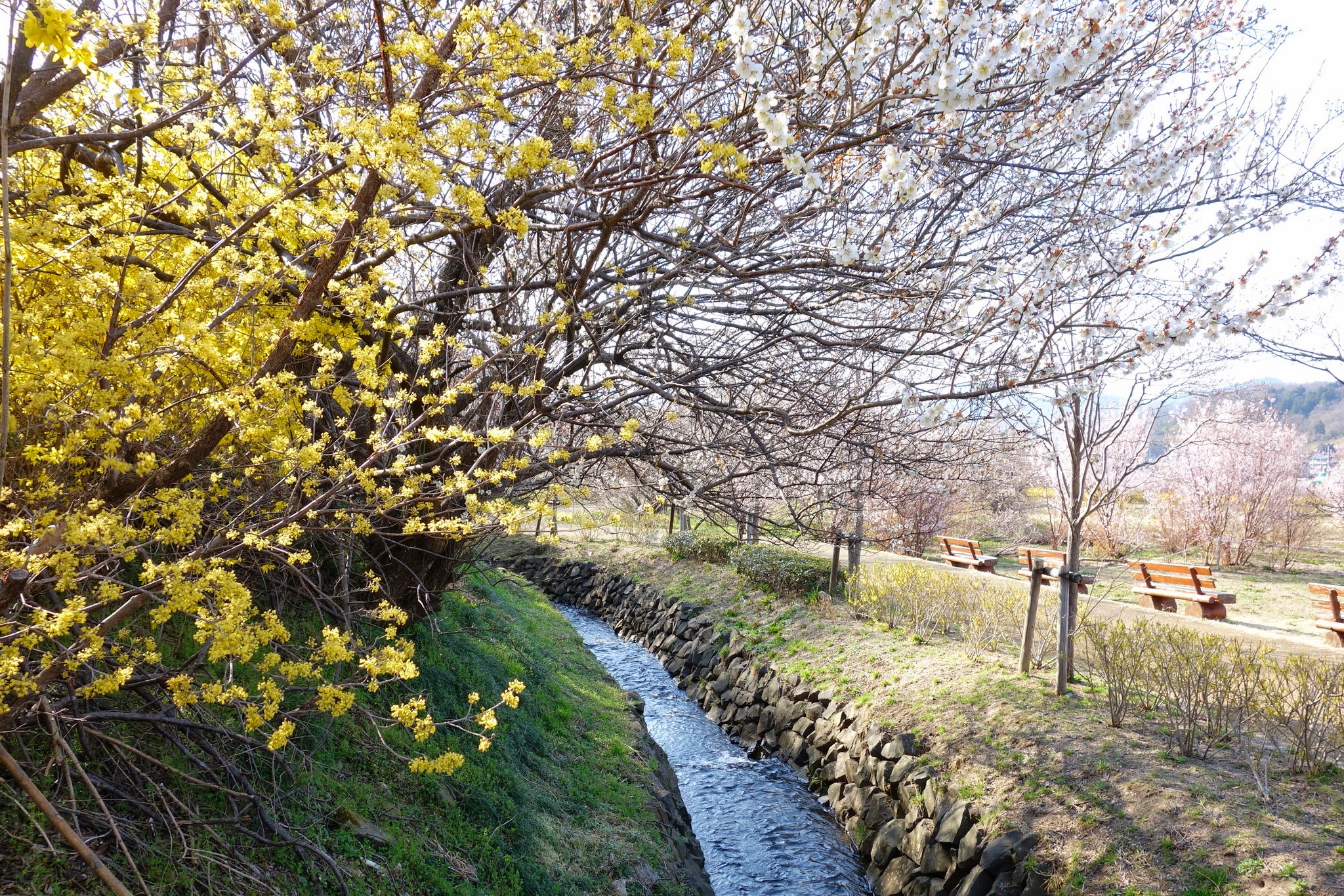
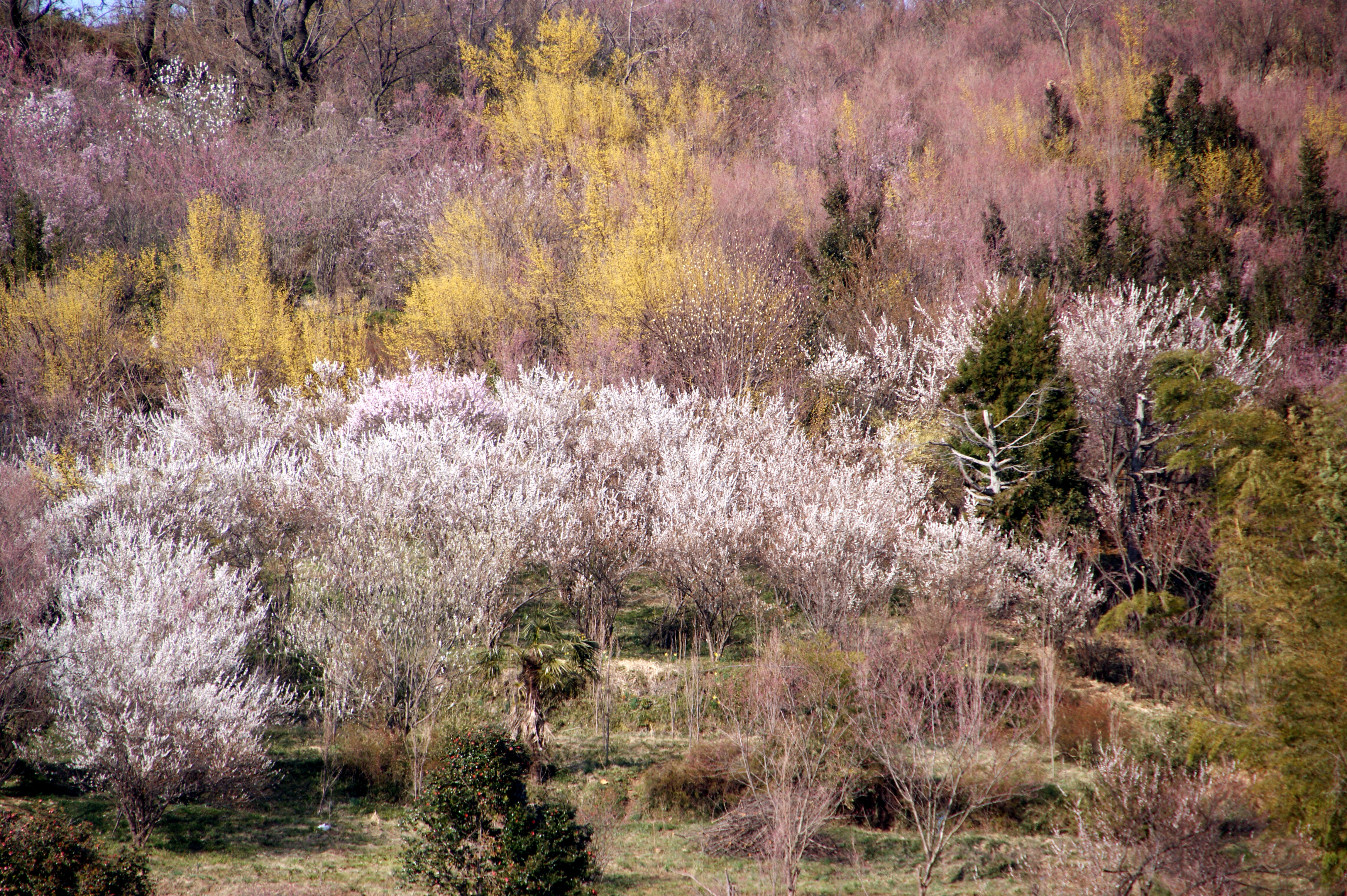
Late March: The season opens with the first plum trees (ume) bursting into white and pink bloom, often alongside patches of winter daphne and early-season forsythia. The hillside has a delicate, tentative beauty at this stage — a few bold splashes of color against still-bare branches.
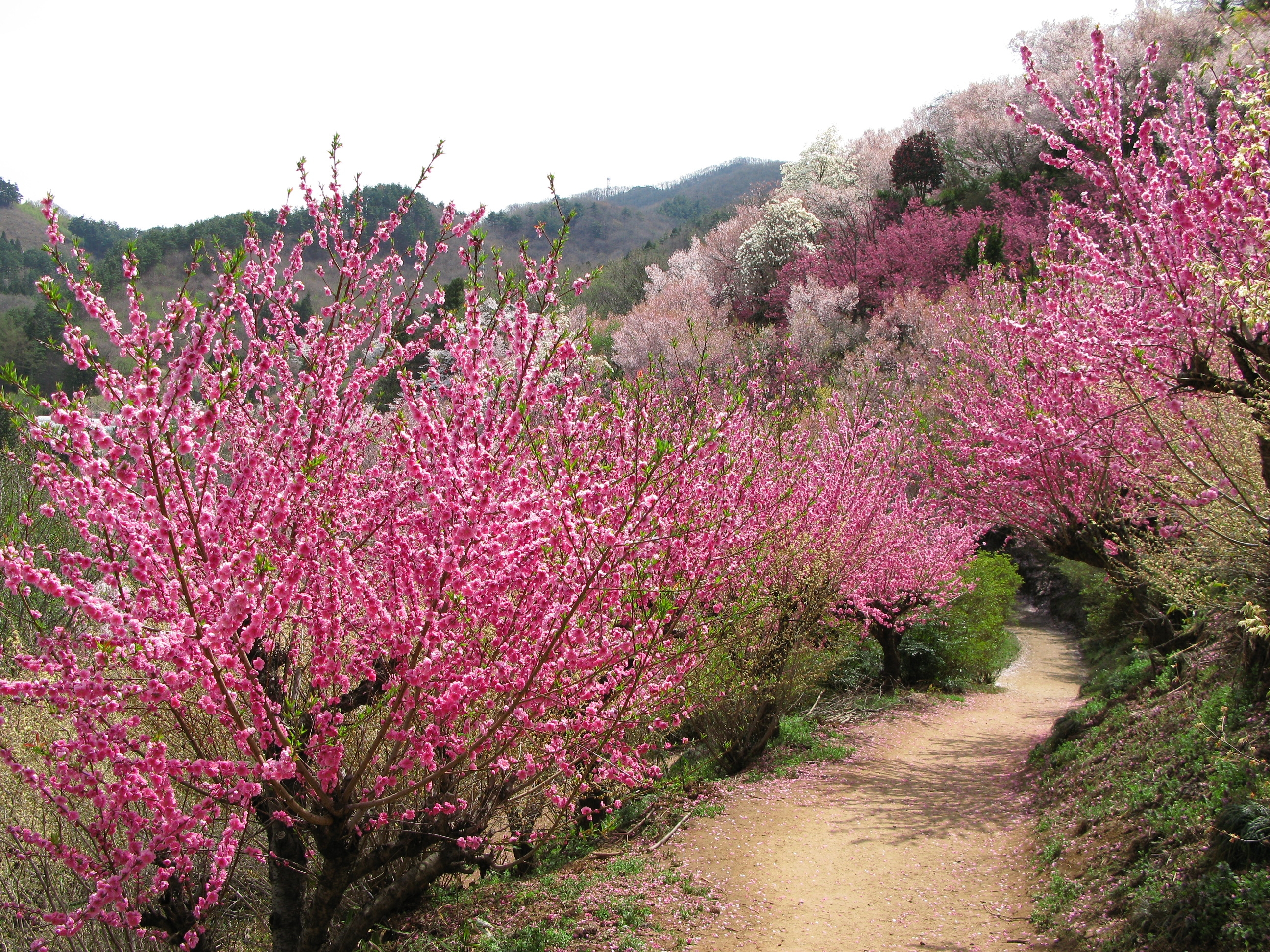
Early April: This is peak season, when Hanamiyama earns its reputation. Weeping cherry trees (shidare-zakura) cascade in pale pink curtains down the terraced slopes. Forsythia blazes in electric yellow. Plum blossoms still hang on, overlapping with the cherries in a visual combination rarely seen elsewhere. Magnolias open their dinner-plate flowers. Peach trees add a deeper pink, and daffodils carpet the lower sections in white and yellow.
Mid to Late April: As the cherry blossoms fall like pink snow, wisteria and azaleas take their place, extending the floral spectacle into late spring. The mood becomes softer, more settled — less of a grand finale and more of a gentle coda.
The exact timing varies by year, depending on when winter ends. In an average year, peak bloom falls around April 5–15, but a warm year can push it to late March, and a cold year might delay it to mid-April. For current bloom status, check the “Hanamiyama Bloomcam” webcam or Fukushima City’s official tourism website before your visit.
Walking the Hanamiyama Trail
The main walking circuit is approximately 3 kilometers (1.9 miles) and takes between 60 and 90 minutes at a leisurely pace, though most people spend considerably longer — this is not a place where you rush. The path climbs about 60–70 meters (200 feet) from the base to the summit, passing through private orchards and flower gardens that the local farming families have transformed into an open-air botanical wonderland.
The route is unpaved and can be muddy after rain, so sturdy shoes or boots are strongly recommended. The terrain is hilly but manageable for most fitness levels — there’s nothing here that would count as serious hiking. Elderly visitors and those with mobility concerns should note that the upper sections involve some steeper inclines, and some slopes are on uneven ground.
Along the way, you’ll pass through several distinct zones. The lower section features the most spectacular weeping cherry groves — enormous old trees whose branches cascade almost to the ground, creating natural tunnels of pink blossom. The middle section winds through terraced orchards where peach, plum, and forsythia grow in traditional farming configurations. The upper section opens up to panoramic views and dense magnolia and cherry groves.
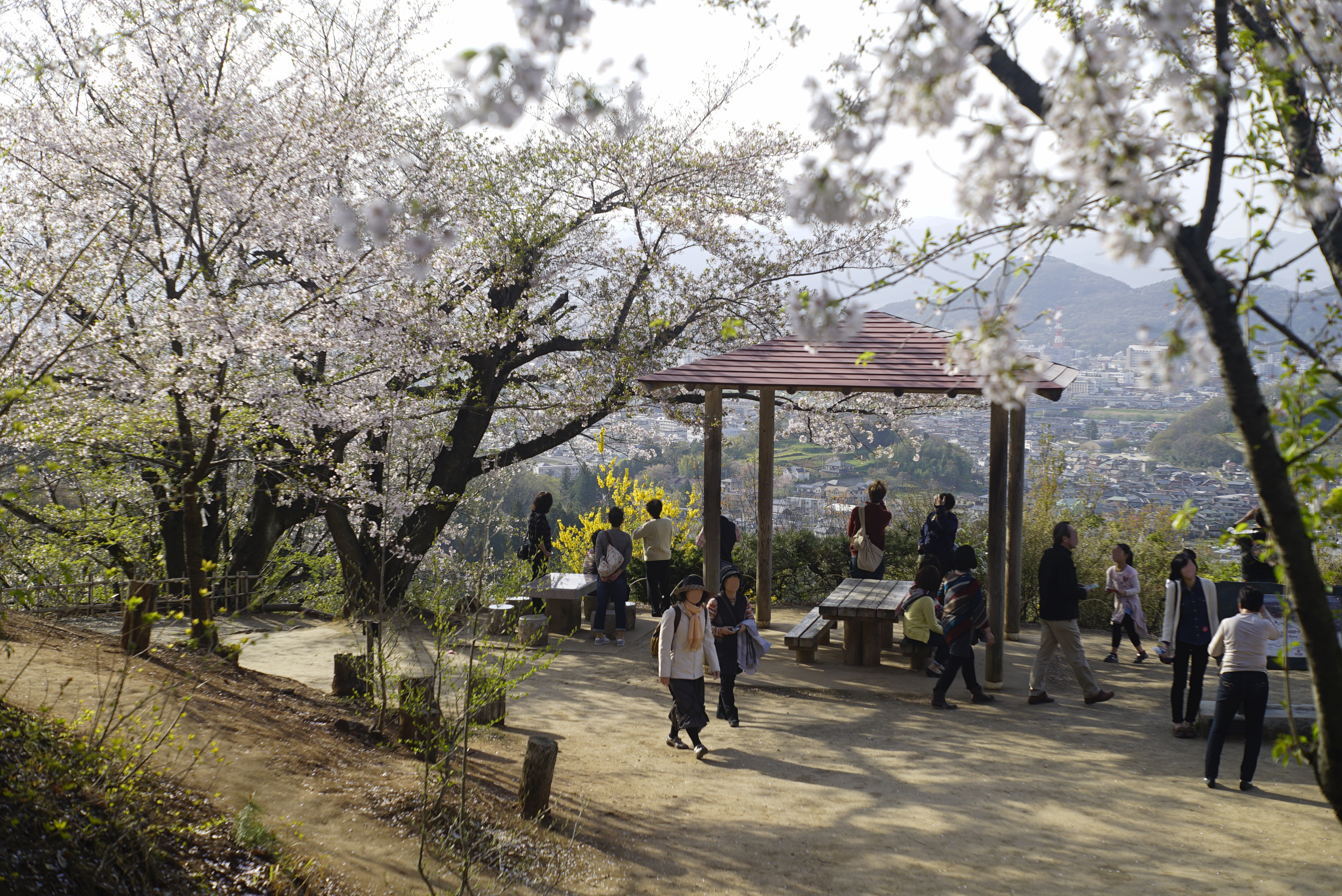
The summit provides the payoff: on a clear day, you can see across the entire Fukushima Basin, with Mt. Adatara (1,700m / 5,577ft) to the northwest and the Abukuma Mountains rolling away to the east. The contrast between the flower-covered hillside below and the snowcapped mountains in the distance is one of those views that genuinely makes you stop, put down your camera, and just stand there for a while.
The Views: Fukushima Basin and Beyond
One of Hanamiyama’s most underrated qualities is its location at the edge of the Fukushima Basin. From the upper observation area, the entire basin spreads out below you — a patchwork of early-spring farmland, small towns, and distant mountains that looks exactly like a traditional Japanese woodblock print, except it’s real.
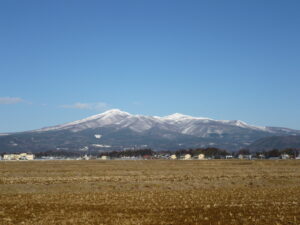
To the northwest, the Azuma Volcanic Group dominates the skyline. The dome of Ko-Azuma (Little Azuma) and the distinctive cratered summit of Higashi-Azuma are often dusted with snow well into April. On exceptionally clear days, you can sometimes glimpse the top of Mt. Bandai (1,819m / 5,965ft), one of Tohoku’s most beloved volcanic peaks, to the south.
For photographers, the view from the summit with the flowering terraces in the foreground and mountains in the background is one of those rare landscape compositions that practically frames itself. Arrive early — ideally just after sunrise — for the best light and fewest people. The golden hour before 8am at Hanamiyama in early April is something quite extraordinary.
Photography Tips for Hanamiyama
Hanamiyama is one of the most photogenic spots in all of Japan, but getting the best shots requires a little planning.
Best time of day: Early morning (6–8am) gives you soft golden light, minimal crowds, and morning mist rolling through the valleys. Late afternoon (4–5pm) on clear days provides warm backlighting that makes the flower petals glow. Midday tends to be harsh and crowded, though overcast days can actually produce beautiful diffused light for close-up flower shots.
Best weather: Clear days show off the mountain backdrop, but light overcast brings out the colors in flowers without harsh shadows. Rain is actually beautiful here — raindrops on cherry petals create a jewel-like effect, and the misty atmosphere turns the hillside into something from a dream. Avoid heavy rain.
Best shots: The weeping cherry tunnels in the lower section are unmissable. The view from the summit looking down the terraced hillside with mountains behind. Close-ups of overlapping plum and cherry blossoms on a single branch (this overlap is extremely rare and only happens here). The traditional farm buildings framed by cherry trees.
Equipment: A zoom lens (70–200mm) is useful for compressing the flower-covered hillside against the mountain backdrop. A wide angle (24mm) captures the full scale of the weeping cherry groves. A macro lens or close-up filter lets you document the remarkable diversity of blossoms up close.
Autumn at Hanamiyama
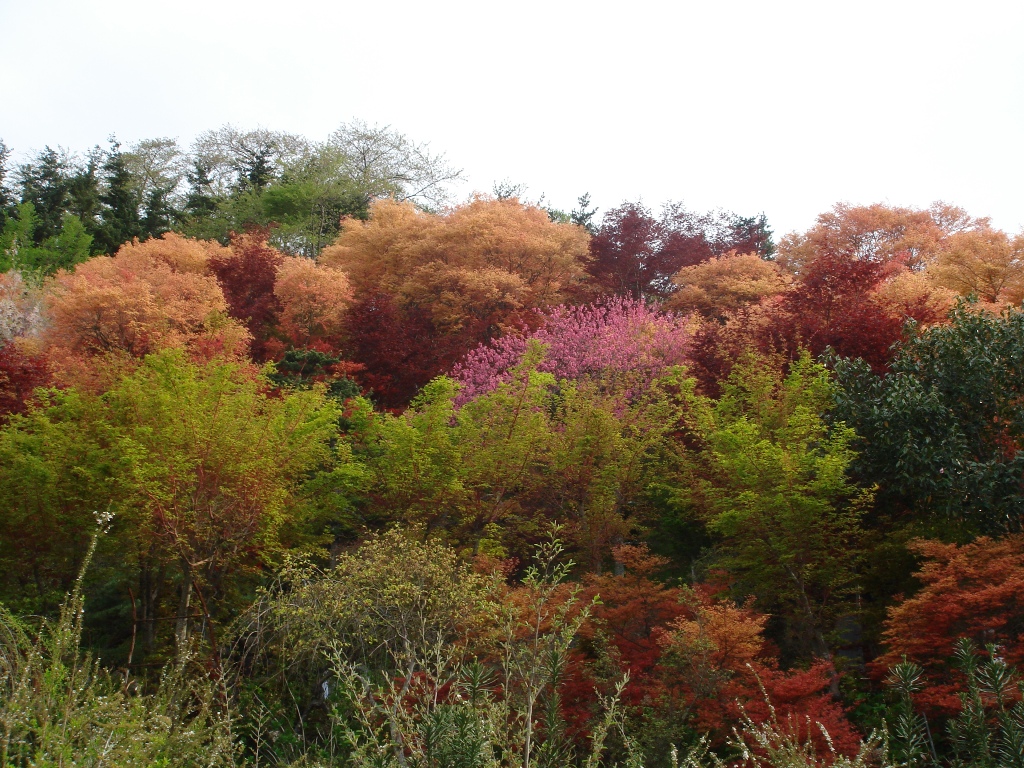
While spring is Hanamiyama’s moment of glory, the park is genuinely beautiful in autumn too. The same flowering trees that dazzle in April transform into a multi-colored tapestry of red, orange, and gold from mid-October through early November. The weeping cherry trees, in particular, produce spectacular autumn foliage — their drooping branches cascade in red and orange instead of pink, creating a completely different visual experience from the spring visit.
Autumn visits are quieter and more contemplative than the crowded spring season, and there’s something deeply satisfying about seeing the same landscape in two completely different modes. If you can visit twice — once in spring, once in autumn — you’ll understand why the local farming families consider this land so precious they’ve maintained it and shared it with strangers for nearly a century.
Beyond Hanamiyama: Exploring Fukushima City
Fukushima City is a pleasant mid-sized city that rarely gets the attention it deserves from foreign visitors passing through on the Shinkansen. The city sits in a basin surrounded by mountains on three sides, giving it a sheltered, cozy character that’s quite different from the larger Tohoku cities.
Iizaka Onsen: Just 20 minutes north of Fukushima Station by Fukushima Kotsu railway, Iizaka Onsen is one of Tohoku’s oldest hot spring towns, with records going back over 1,300 years. The famous writer Matsuo Basho visited in 1689 during his journey described in “The Narrow Road to the Deep North.” A soak in the mineral-rich sodium chloride springs here is a perfect way to end a day at Hanamiyama. Several ryokan offer day-use bathing (日帰り入浴, higaeri nyuyoku) for around ¥500–¥1,000 ($3–$7).
Shiramizu Amidado: One of Japan’s most unexpected UNESCO World Heritage sites — a small, exquisite Heian-period Buddhist hall from 1160 CE hidden in an industrial district of Iwaki City, about 90 minutes from Fukushima Station. The hall is one of only three remaining Pure Land gardens of the Heian period, alongside Hiraizumi’s Motsuji and Kyoto’s Byodoin. Entirely off the tourist trail, it offers a genuinely intimate encounter with 12th-century Japanese art and architecture.
Fukushima Prefectural Museum of Art: A surprisingly impressive collection in an undervisited museum near Fukushima Station, focusing on local artists and rotating exhibitions of Japanese modern art. Free admission for permanent collection.
Best Time to Visit
- Spring (Late March–May): This is the reason you come. Peak bloom usually falls in the first two weeks of April. Late March can catch early plum and forsythia. By late April, the flowers have faded but the mountain views remain spectacular and crowds drop significantly.
- Summer (June–August): Hanamiyama is pleasant but not particularly notable in summer — lush green, good mountain views, but no flowers. The surrounding countryside is beautiful for cycling.
- Autumn (September–November): Mid-October to early November brings spectacular foliage, especially on the older cherry and maple trees. Crowd levels are low.
- Winter (December–February): Snow-covered and quiet. The hill is not maintained for winter visitors and access can be difficult. Iizaka Onsen, however, is at its best in winter.
Where to Eat: Fukushima City Food Guide
Fukushima City takes its food seriously, drawing on the prefecture’s exceptional agricultural resources — it’s Japan’s third-largest peach producer, one of the top apple prefectures, and has strong traditions in miso, sake, and soba.
Specialty: Fukushima Miso Ramen
Fukushima City has a growing ramen reputation, particularly for miso-based broths that incorporate the city’s excellent local miso. Unlike the more famous Kitakata Ramen to the west (flat, wide noodles in clear chicken-soy broth), Fukushima City miso ramen features thick curly noodles in a rich, earthy miso broth. Look for ramen shops in the Nakamachi shopping area near the station. Expect to pay ¥800–¥1,100 ($5–$8) per bowl.
Shingorou (しんごろう)
A Fukushima specialty that almost no visitors know about: a grilled rice cake coated in walnut or sesame miso. The rice is slightly mashed, formed into an oval shape around a bamboo skewer, coated in rich miso paste mixed with ground walnuts, and then grilled over charcoal. The result is smoky, sweet, savory, and deeply satisfying. You’ll sometimes find shingorou sold at festivals and farmers’ markets in the area during spring.
Kozuyu (こづゆ)
The formal soup of Aizuwakamatsu (90 minutes away by local train), kozuyu is a clear soup made with dried scallops and a medley of mountain vegetables — dried tofu, wood ear mushrooms, carrot, and konnyaku. It’s the kind of dish that sounds simple but requires extraordinary skill to balance. If you’re staying overnight in Fukushima Prefecture and dining at a traditional ryokan, kozuyu will likely appear at dinner. It’s subtle, warming, and deeply traditional.
Fukushima Fruit
Outside of spring blossom season, Fukushima’s biggest draw is its fruit. The prefecture’s warm basin climate and rich volcanic soil produce peaches of extraordinary quality (July–August), Nijisseiki pears (September), and apples (October–November). Roadside stalls appear throughout the season, selling fruit fresh, as preserves, and as gelato. During Hanamiyama’s spring season, look for fruit-based sweets and preserves from local producers.
Recommended Restaurants Near Fukushima Station
Within 10–15 minutes’ walk of Fukushima Station, you’ll find a good range of options for every budget. The underground shopping mall at the station (S-PAL Fukushima) has several casual restaurants. For a more authentic experience, walk north along the main Ekimae Dori for about 500m to reach the Nakamachi and Honcho areas, where family-run izakaya and restaurants serve local specialties. Budget ¥700–¥1,200 ($5–$8) for lunch, ¥2,000–¥4,000 ($14–$27) for dinner.
Where to Stay in Fukushima City
Budget (Under ¥7,000 / $48 per night)
Fukushima Station has several business hotels within walking distance. APA Hotel Fukushima-Eki Minami and Toyoko Inn Fukushima-eki Higashi-guchi No.2 are reliable, clean, and conveniently located. During peak spring season (late March to mid-April), book well in advance — these fill up weeks ahead.
Mid-Range (¥7,000–¥20,000 / $48–$135)
For a step up in comfort, Iizaka Onsen (20 minutes away) offers several mid-range ryokan where overnight guests receive access to natural hot spring baths and traditional kaiseki dinner. This is the recommended option for anyone who wants to fully experience Tohoku hospitality. Iizaka Onsen Tsurugane and Yorozu Saito Onsen are well-reviewed options. Prices including dinner and breakfast typically run ¥12,000–¥20,000 ($82–$135) per person.
Luxury (¥20,000+ / $135+)
For a premium Tohoku ryokan experience in the area, consider staying in Higashiyama Onsen near Aizuwakamatsu (90 minutes away), which has several acclaimed ryokan with sophisticated kaiseki cuisine and beautiful natural spring baths. This is worth the detour for travelers who want to experience the best of Fukushima Prefecture’s hot spring culture.
Practical Tips for Visiting Hanamiyama Park
- There’s no admission fee, but a donation box is usually present near the trailhead. ¥100–¥200 per person is appreciated to support the farmers who maintain the land.
- Bring cash. There are no ATMs at Hanamiyama, and the few food stalls are cash-only. The nearest ATMs are at Fukushima Station (7-Eleven and Japan Post).
- Wear hiking boots or sturdy shoes. The paths are unpaved and can be slippery in wet conditions. Avoid heels or flat-soled shoes.
- The shuttle bus is seasonal. During peak bloom (roughly late March to mid-April), a free shuttle bus runs from Fukushima Station East Exit approximately every 15–30 minutes. Outside this period, take a taxi (about ¥1,500–¥2,000 one way, approximately $10–$14).
- Arrive early. Weekends during peak bloom see significant crowds — thousands of visitors can arrive in the morning hours. Arriving before 8am on weekdays provides a dramatically different experience: quiet, atmospheric, and ideal for photography.
- Check the bloom forecast. Fukushima City’s tourism website posts regular bloom updates during spring. The timing varies by up to two weeks between early and late years.
- There’s limited food on-site. A few simple stalls sell grilled corn, sweet potato, and simple snacks during peak season. Bring your own water and snacks, particularly if visiting early morning.
- Toilet facilities exist at the base of the trail and at the summit area. These are maintained but basic.
- Photography is welcomed, but please stay on the designated paths. Some areas are still active agricultural land, and straying off-path can damage crops and private property.
- Dogs are welcome on leashes, and you’ll often see local families bringing their pets for the spring walk.
Sample 1-Day Hanamiyama Itinerary
From Tokyo (Day Trip)
6:00–7:00am: Depart Tokyo Station on the first Shinkansen of the day to Fukushima. Take the Hayabusa or Yamabiko service. Journey time: approximately 1 hour 25 minutes.
7:30–8:00am: Arrive Fukushima Station. Take a taxi to Hanamiyama (15–20 minutes). Arrive before the bulk of the morning crowd.
8:00–10:30am: Walk the full Hanamiyama circuit at a leisurely pace. Photograph the weeping cherry tunnels, the panoramic summit view, and the multi-species flower sections. Allow yourself to linger.
10:30–11:00am: Return by shuttle bus (during peak season) or taxi to Fukushima Station. Pick up a bento lunch at the station’s S-PAL shopping floor.
11:00am–11:30am: Take the Fukushima Kotsu train to Iizaka Onsen (about 20 minutes).
11:30am–2:30pm: Stroll the Iizaka Onsen town. Have lunch at one of the restaurants near the main street. Soak in the hot springs at one of the public baths (day-use onsen, ¥400–¥600 / $3–$4). The baths here have been soothing travelers since the 8th century — the mineral-rich sodium chloride spring water is excellent for the skin.
3:00pm: Return to Fukushima Station by train. Board Shinkansen back toward Tokyo or continue north to Sendai.
4:30–5:00pm: Arrive Sendai (or Tokyo, if returning).
From Sendai (Half-Day Trip)
The Sendai–Fukushima Shinkansen segment takes just 17 minutes, making Hanamiyama an easy half-day excursion. Depart Sendai on the 7:15am Shinkansen, arrive Fukushima 7:32am, walk Hanamiyama by 8am, return to Sendai by 1pm. Ideal for travelers based in Sendai during cherry blossom season.
Final Thoughts: Japan’s Most Beautiful Hill of Flowers
There are places in Japan where the natural world exceeds what you’ve seen in photographs — where the colors are richer, the light is more golden, and the silence is more complete than anything you imagined. Hanamiyama is one of those places.
What makes it truly special isn’t just the flowers. It’s the fact that this beauty exists because of the generosity of ordinary farming families who decided, generations ago, that the most valuable thing they could do with their land was share it. No theme park, no corporate sponsorship, no ticket prices. Just a hillside in Fukushima, in bloom for a few weeks each spring, freely given to anyone who wants to come and look.
In a world of overhyped tourist attractions and Instagram hotspots engineered for the perfect shot, Hanamiyama feels startlingly, beautifully genuine. Plan your visit carefully, arrive early, and let the hill do what it’s been doing for decades: stop you in your tracks and make you quietly grateful.
Cherry blossom season in Tohoku runs approximately from late March in Fukushima to late April in Aomori — making a Hanamiyama visit an ideal starting point for a northward Tohoku spring journey. From Fukushima, the Shinkansen north passes through Sendai, Ichinoseki, Morioka, and Hachinohe, each with its own springtime flowering traditions. Begin here, and let the season lead you north.
Related Articles You Might Enjoy
- Mount Adatara & Dake Onsen, Fukushima: Japan’s Sacred Volcano & Secret Healing Hot Spring
- Tadami Line, Fukushima: Japan’s Most Scenic Hidden Railway Journey
- Fukushima City Guide: Japan’s Most Misunderstood Destination & Why You Need to Visit
- Abukuma Cave, Fukushima: Japan’s Most Spectacular Underground Wonder
- Lake Inawashiro, Fukushima: Complete Guide to Japan’s Mirror of Heaven


コメント