Imagine standing before a mausoleum so exquisitely ornate — carved dragons curling around every pillar, gold leaf glinting through the ancient cedar forest — that you have to remind yourself you’re looking at a tomb. Zuihoden is the final resting place of Date Masamune, the legendary “One-Eyed Dragon” who built Sendai from a muddy estuary into a thriving castle city over 400 years ago. Few sights in all of Tohoku are quite as theatrical, as deeply Japanese, or as utterly unexpected as this.
Why Zuihoden Should Be on Every Sendai Itinerary
Most foreign tourists who visit Sendai know the city for its Tanabata Festival, its grilled beef tongue (gyutan), and its role as Tohoku’s biggest metropolis. What they often miss — and what Japanese visitors consider unmissable — is Zuihoden, the mausoleum complex tucked into the forested hills of Kyogamine, just 20 minutes from Sendai Station.
The complex comprises three separate mausoleums for the first three lords of the Date clan: Zuihoden for Date Masamune (died 1636), Kansenden for his son Date Tadamune (died 1658), and Zennoden for his grandson Date Mitsumune (died 1645). Together they represent the pinnacle of Momoyama-period architectural decoration — the same lavishly ornamental style that produced Nikko’s famous Toshogu shrine. If you’ve been to Nikko and found it breathtaking, Zuihoden offers a remarkably similar experience at a fraction of the visitor numbers and crowds.
The approach through cedar forest, the elaborate gates, the gold-laden carvings of phoenixes and dragons, and the quiet reverential atmosphere make Zuihoden feel genuinely sacred — a place where history breathes. Add in the small but excellent on-site museum displaying artifacts excavated from the tombs, including items that actually belonged to Date Masamune himself, and you have one of the most rewarding half-days you can spend in the Tohoku region.
Who Was Date Masamune? Japan’s One-Eyed Dragon
To understand why Zuihoden feels so powerful, you need to understand the extraordinary man it commemorates. Date Masamune (1567–1636) was one of the most formidable warlords of Japan’s turbulent Sengoku (Warring States) period — and arguably the most romantic figure in all of Tohoku’s history.
Born the eldest son of the Date clan in 1567, Masamune contracted smallpox as a small child. The disease left him blind in his right eye. Rather than let this define him as weak, young Masamune reportedly had the eye removed entirely — possibly with his own hand, according to legend — refusing to allow any physical limitation to diminish his authority. He became known as Dokuganryū: the One-Eyed Dragon of the North.
By the time he was 20 years old, Masamune had unified most of the Tohoku region under his control, absorbing dozens of rival clans through a combination of brilliant military strategy, ruthless ambition, and personal charisma. At his peak, he controlled a domain that stretched across much of northeastern Japan. He came agonizingly close to dominating all of Japan — his rise was only checked by the intervention of the supreme warlord Toyotomi Hideyoshi, who ordered him to halt his conquests.
Even under the later Tokugawa shogunate — which viewed powerful regional lords with deep suspicion — Masamune remained an iconic and respected figure. He founded Sendai city in 1601, establishing it as his castle town and transforming the area with sophisticated urban planning, agricultural development, and cultural patronage. The city’s name, the castle, the grid layout of streets, the river engineering projects — all stem from his vision.
Masamune died in 1636 at the age of 70. He was buried with full ceremony on Kyogamine Hill overlooking his beloved city. His mausoleum, Zuihoden, was completed just one year later in 1637 — a final act of devotion from the clan he had built into one of Japan’s greatest powers.
The Mausoleum Complex: What to Expect
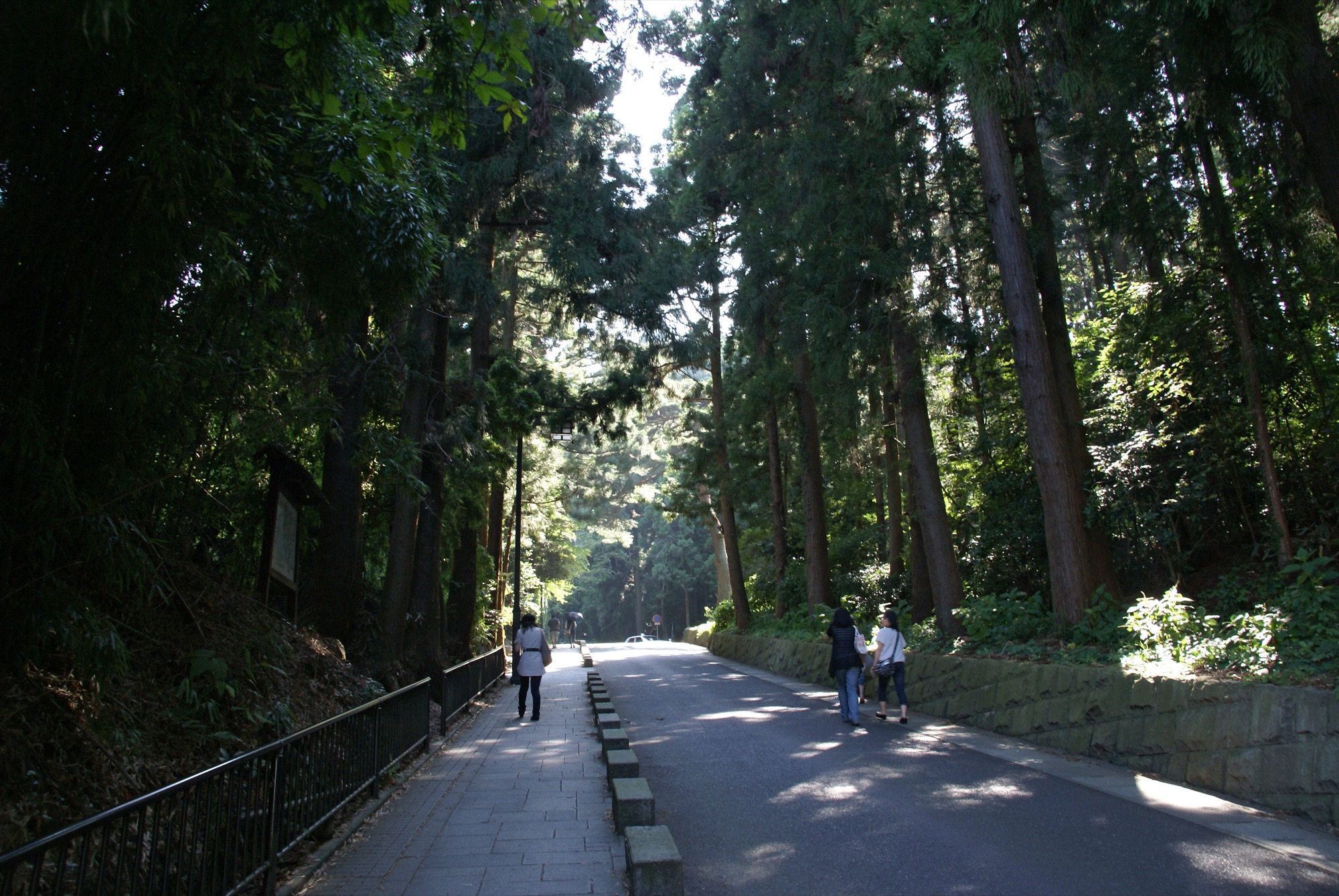
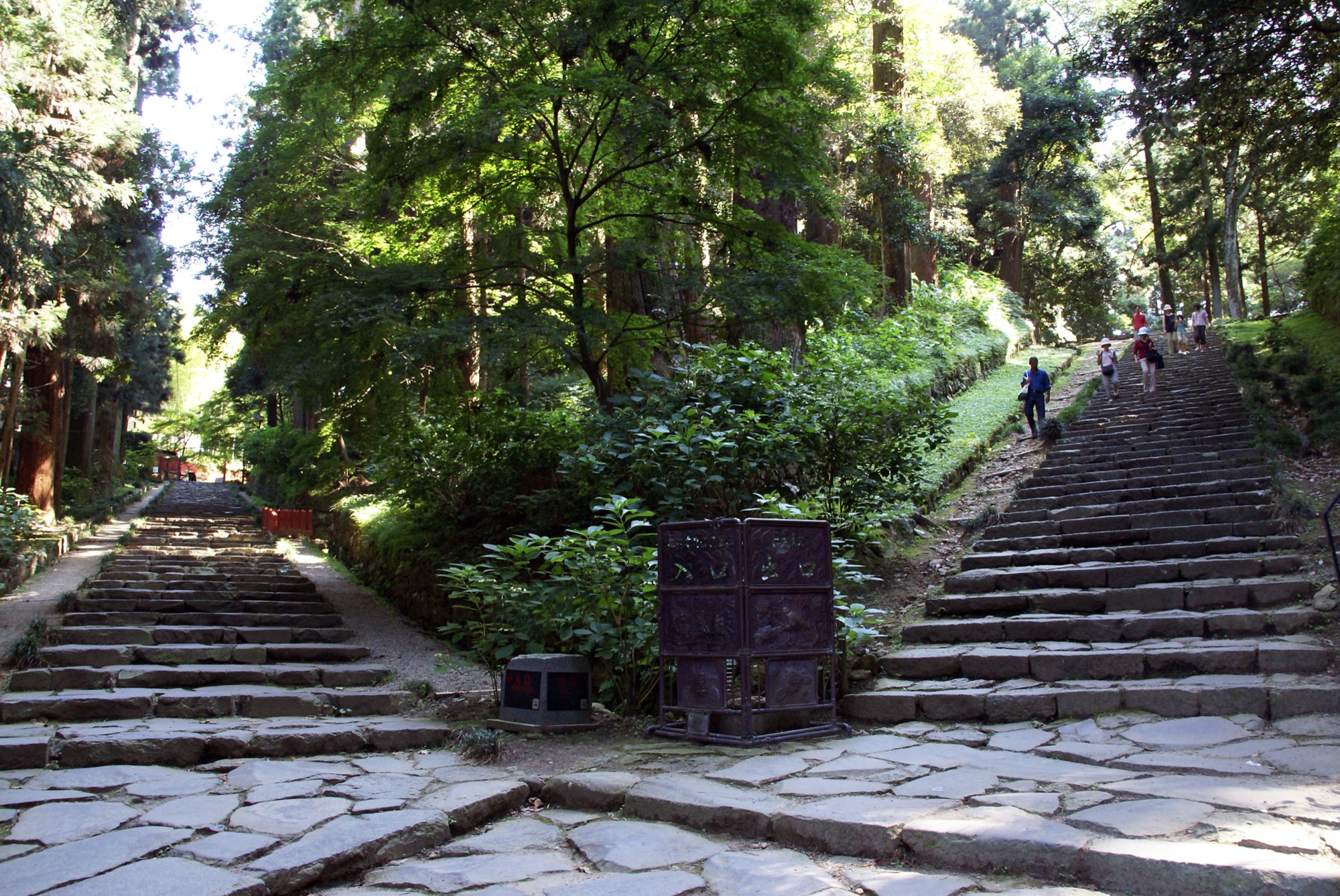
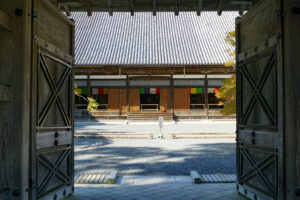
Zuihoden sits within a forested enclosure on Kyogamine Hill, reached via a gentle stone stairway lined with massive cedar trees and stone lanterns. The atmosphere immediately shifts as you ascend — the city noise fades, the light turns green and dappled, and you find yourself slipping into a genuinely contemplative mood.
Zuihoden (Date Masamune’s Mausoleum)
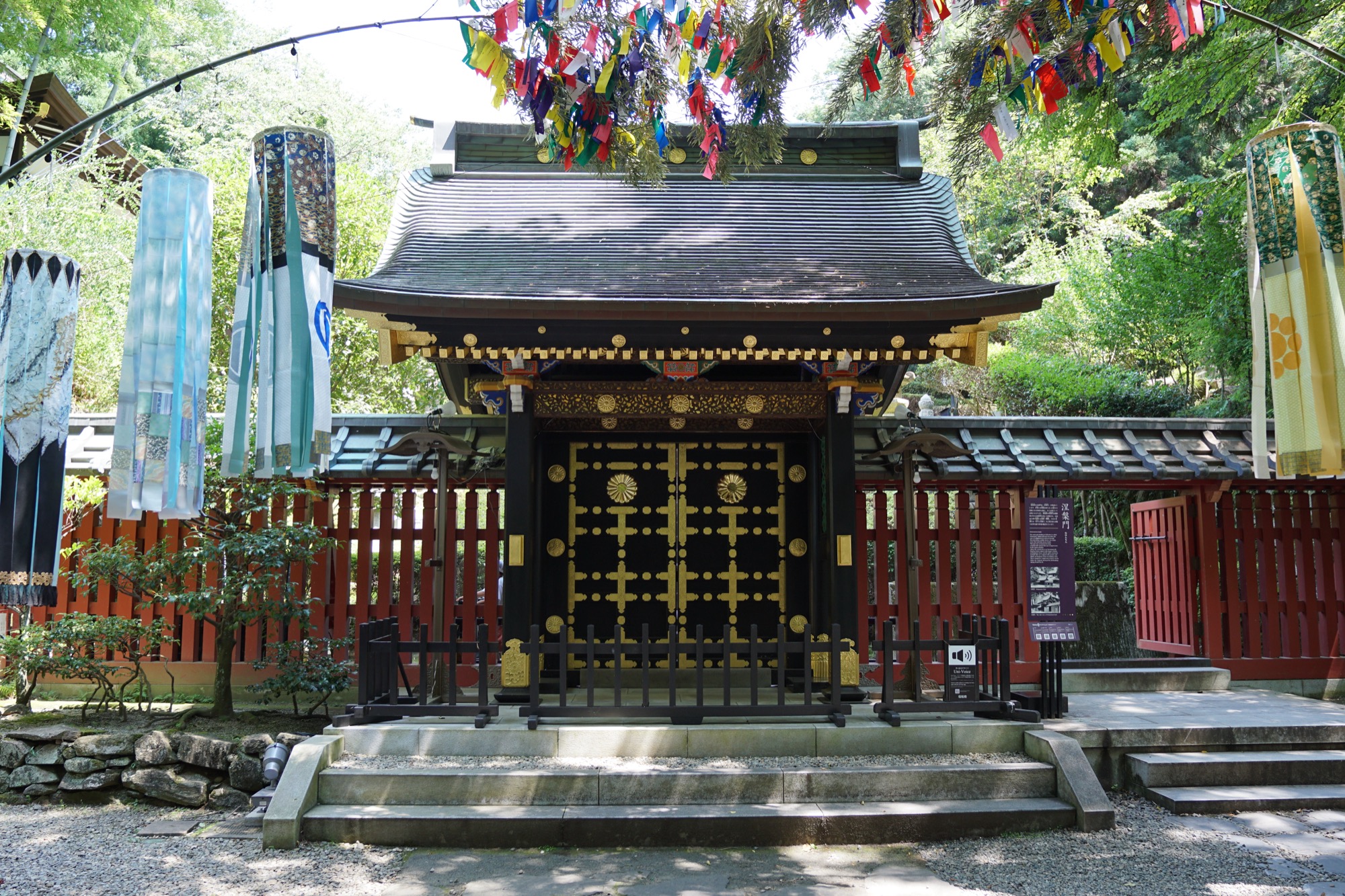
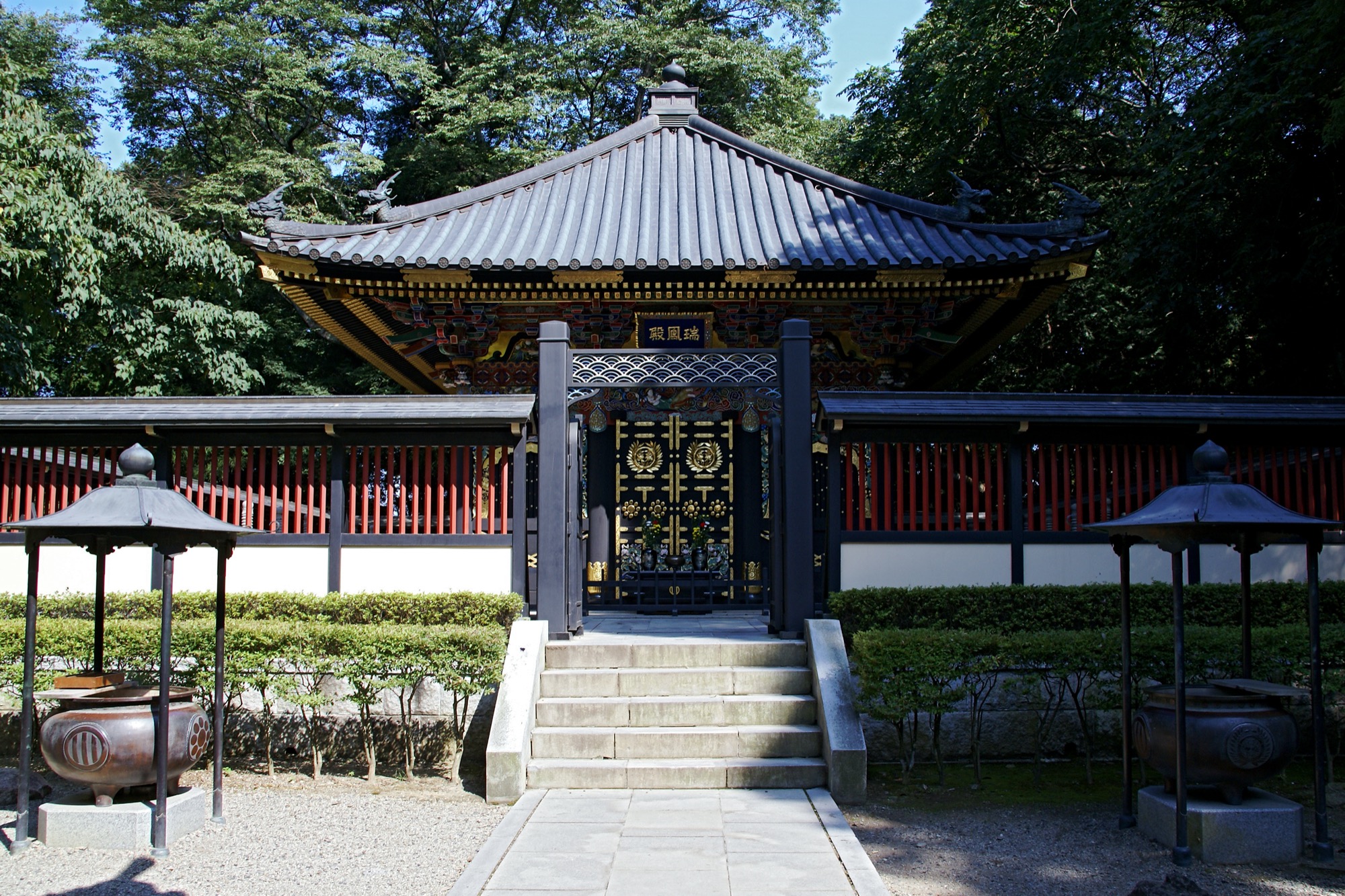
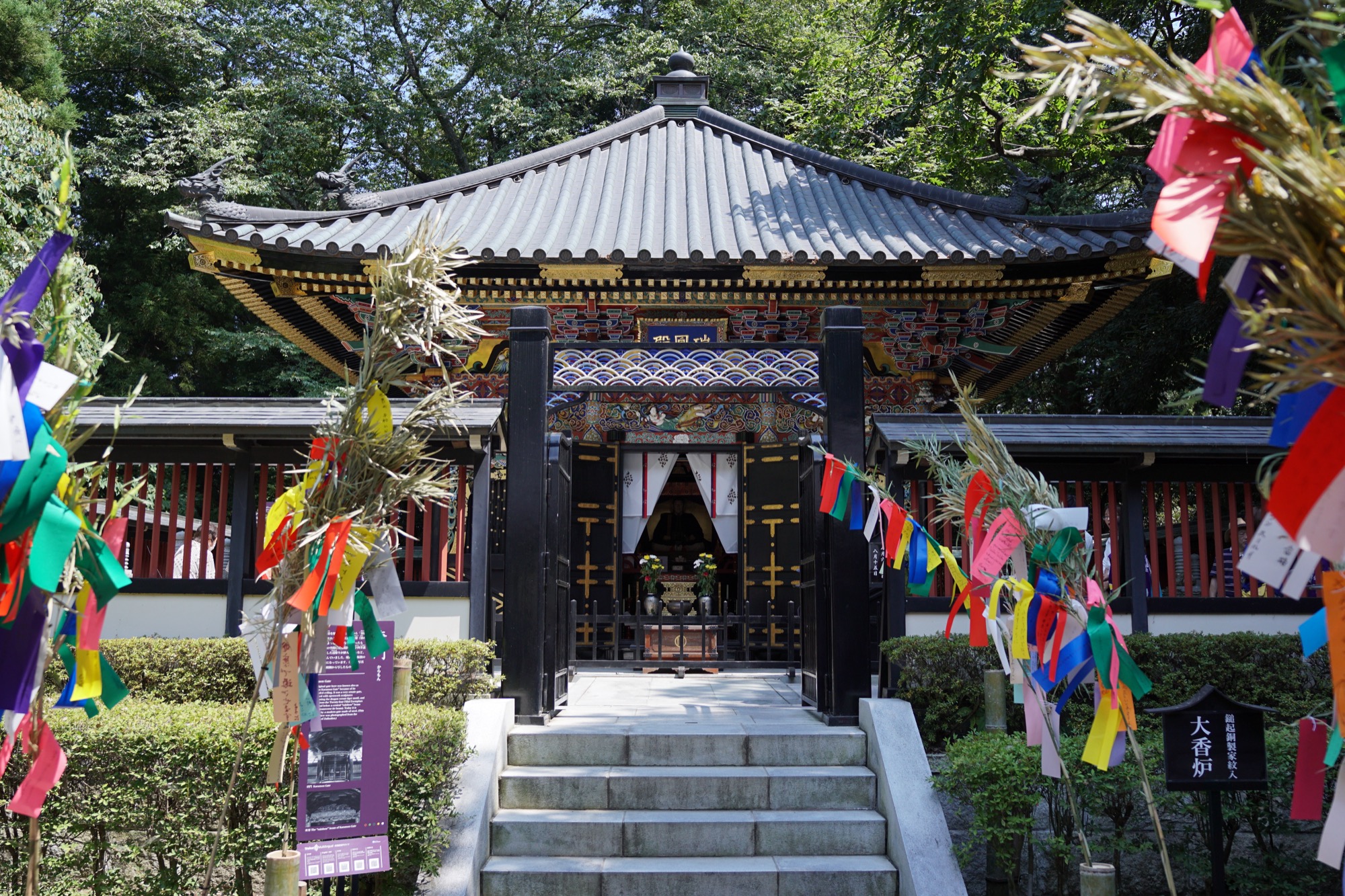
The main mausoleum building is immediately arresting. Rebuilt in 1979 from original plans and historical photographs — the original 1637 structure, a designated National Treasure, was tragically destroyed in the 1945 Allied bombing of Sendai — Zuihoden is an extraordinary example of gongen-zukuri architecture, a style that blends Shinto and Buddhist design elements into a unified whole.
Every surface seems to compete for your attention. Carved phoenixes spread their wings above the main entrance. Multicolored dragons coil around pillars. Geometric fretwork patterns in lacquered red, black, and gold shimmer in the forest light. The roof curves upward at its corners in the characteristic Japanese fashion, creating a sense of upward movement that suggests the soul’s departure to heavenly realms.
Particularly striking is the overall color scheme: the deep crimson of the walls set against the near-black of the surrounding cedar trunks creates a visual drama that photographs simply cannot capture. You need to stand before it to feel the full impact — the scale, the density of ornament, the smell of cedar resin mixed with incense.
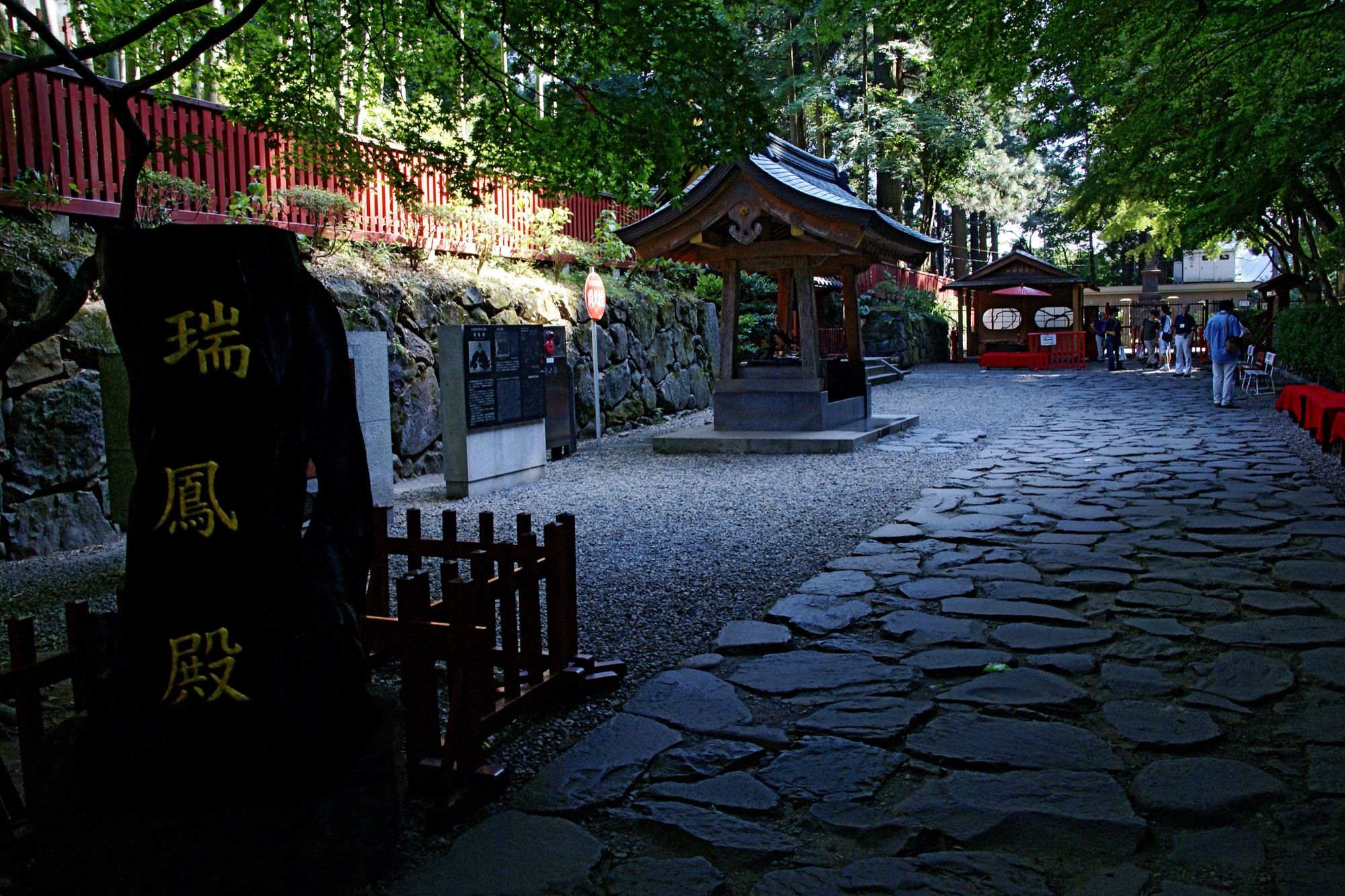
The name “Zuihoden” (瑞鳳殿) translates roughly as “Hall of the Auspicious Phoenix” — appropriate for a man whose clan crests included references to birds of power and prestige. A small corridor connects the front hall to the inner sanctum where Masamune’s remains are interred.
Kansenden (Date Tadamune’s Mausoleum)
A short walk through the same cedar forest brings you to Kansenden, the mausoleum of Date Tadamune (1599–1658), Masamune’s son and the second lord of the Sendai domain. Kansenden was completed in 1660, two years after Tadamune’s death, and follows the same architectural style as Zuihoden, though with subtle differences in its color scheme and decorative details.
Like Zuihoden, the original Kansenden was destroyed in 1945 and rebuilt — in this case in 1985. The reconstruction is slightly less elaborate than Zuihoden’s, reflecting the historical fact that Tadamune, while a capable administrator who grew Sendai into a prosperous castle town, never quite achieved his father’s legendary status.
Zennoden (Date Mitsumune’s Mausoleum)
The third mausoleum in the complex commemorates Date Mitsumune (1627–1645), the third lord of the Sendai domain, who died tragically young at just 19 years old. Zennoden is the smallest of the three buildings and was rebuilt in 1985 alongside Kansenden. Despite its modest size, it displays the same dedication to ornamental richness that characterizes the entire complex.
The Sanreibyo Museum
Don’t skip the small on-site museum (Sanreibyo Shiryokan — the Three Mausolea Museum). It displays artifacts and human remains excavated from the three tombs when Zuihoden was rebuilt in the 1970s–80s. The excavations revealed not only the skeletal remains of the three lords but also remarkable personal effects: items of clothing, swords, writing implements, and small devotional objects.
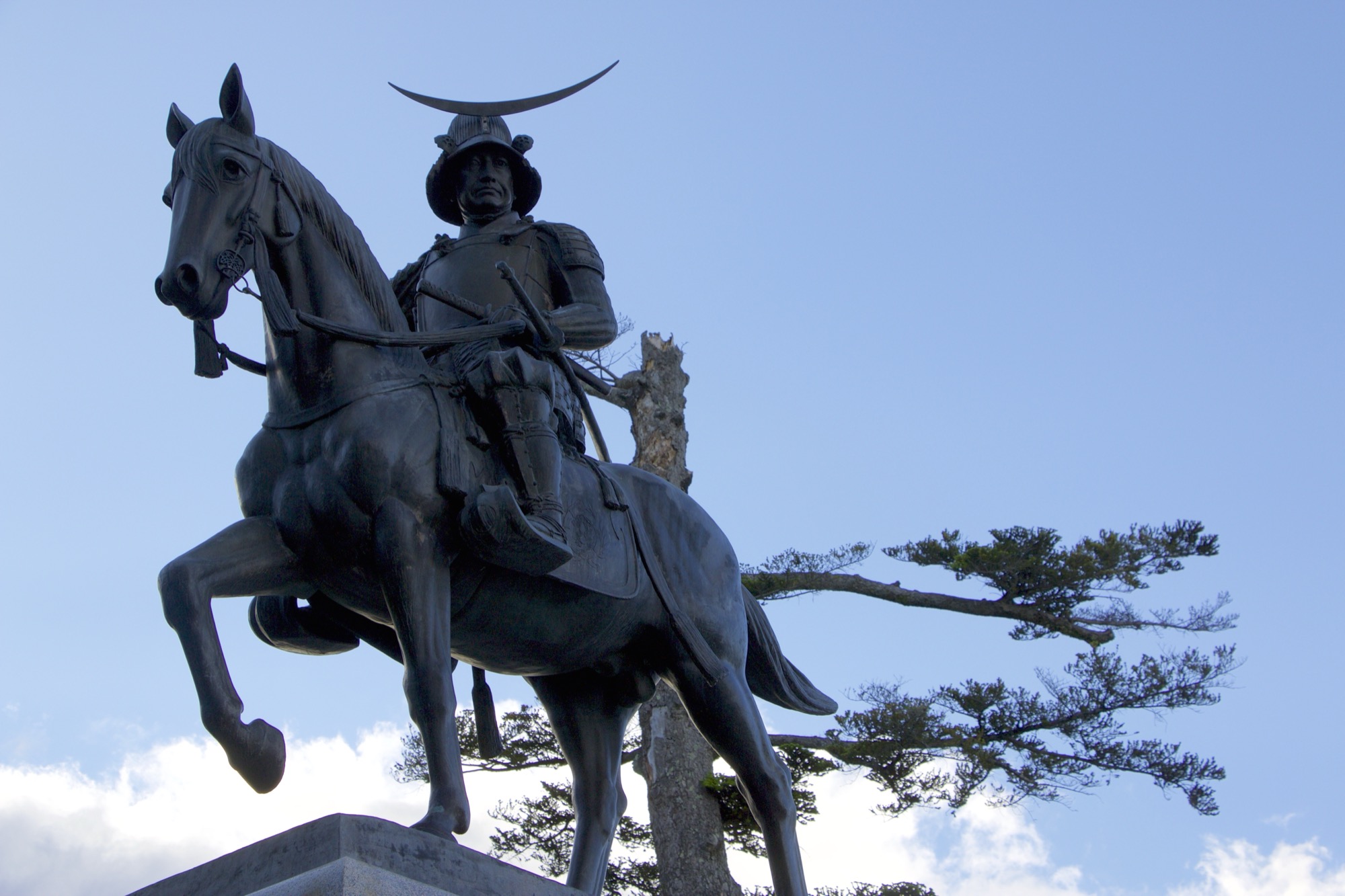
The most extraordinary piece is the reconstruction of Date Masamune’s face based on analysis of his skull — giving visitors the eerie sensation of looking at the actual physical features of a man who died nearly 400 years ago. His skull showed clear evidence of the right eye socket being damaged, consistent with the historical accounts of his lost eye. There are also replicas of the iconic crescent moon helmet that became Masamune’s trademark — the mikazuki kabuto — immediately recognizable from countless movies, manga, and games featuring this legendary figure.
Getting to Zuihoden from Sendai
Zuihoden sits approximately 3 kilometers west of Sendai Station, on a forested hill above the Hirose River. There are several ways to get there:
- Loople Sendai Tourist Bus (recommended): The easiest option for tourists. The Loople Sendai is a hop-on, hop-off tourist bus that stops at major attractions including Zuihoden (stop #2 or #3). A one-day pass costs ¥630 ($4.20) and covers unlimited rides on the loop. Buses run roughly every 20 minutes from Sendai Station (West Exit, Stop 9). Journey time to Zuihoden: about 20 minutes.
- Regular City Bus: Miyagi Kotsu buses serve the Kyogamine stop on several routes from Sendai Station’s West Exit. Fare approximately ¥230 ($1.55) one-way. Get off at “Otamayashita” (御霊屋下) stop and walk up the hill.
- Taxi: Approximately 15 minutes from Sendai Station, fare around ¥1,000–¥1,500 ($7–$10) depending on traffic. Easy to find at the station’s taxi rank.
- Walking: Energetic walkers can do the 3km on foot in about 35–40 minutes. The route follows the Hirose River before climbing Kyogamine Hill — a pleasant walk in good weather, especially in autumn.
- By car: Ample parking available on site (fee approximately ¥300/$2). Navigation address: 瑞鳳殿 (Zuihoden), Sendai, Miyagi.
Note on the JR Pass: The Loople Sendai bus is NOT covered by the JR Pass. However, the low cost of a day pass makes it excellent value regardless.
Opening Hours, Admission, and Practical Information
Zuihoden is open year-round with slightly different hours depending on the season:
- February 1 – November 30: 9:00 AM – 4:30 PM (last entry 4:00 PM)
- December 1 – January 31: 9:00 AM – 4:00 PM (last entry 3:30 PM)
- Closed: December 31 only
Admission fees:
- Adults: ¥550 (~$3.70)
- High school students: ¥400 (~$2.70)
- Elementary and middle school students: ¥200 (~$1.35)
- Under 6: Free
Admission covers entry to all three mausoleums and the Sanreibyo Museum. This is remarkable value — a full historical complex for less than a coffee at a Tokyo café. Plan to spend 60–90 minutes here, more if you’re a history enthusiast who wants to read all the museum displays carefully.
English information is available at the ticket office, and the museum has basic English signage. The site has clean restrooms near the entrance, a small souvenir shop, and a rest area. The paths between buildings are stone-paved and manageable for most visitors, though the hill approach involves stairs — those with mobility limitations should note there is a gentle ramped path available as an alternative.
Best Time to Visit Zuihoden
Zuihoden rewards visitors in every season, but each time of year offers something different:
- Spring (March–May): The cedar forest doesn’t produce cherry blossoms, but several cherry trees near the base of Kyogamine Hill bloom in April. The new year’s growth of moss on the stone lanterns turns brilliant green in April. Crowds are moderate — busier around Golden Week (late April to early May).
- Summer (June–August): The forest canopy provides shade and relative coolness even in Sendai’s humid summer months. Early mornings offer the most peaceful experience. The vivid red of the mausoleum buildings against the deep green of summer cedars is one of the most striking color contrasts you’ll find anywhere in Japan.
- Autumn (September–November): The very best time to visit. Kyogamine Hill’s maple and ginkgo trees turn brilliant red and gold in late October through mid-November. The combination of autumn foliage and the ornate crimson mausoleum buildings creates scenes of extraordinary beauty. November weekends can be busy with Japanese visitors — arrive before 9:30 AM for the quietest experience.
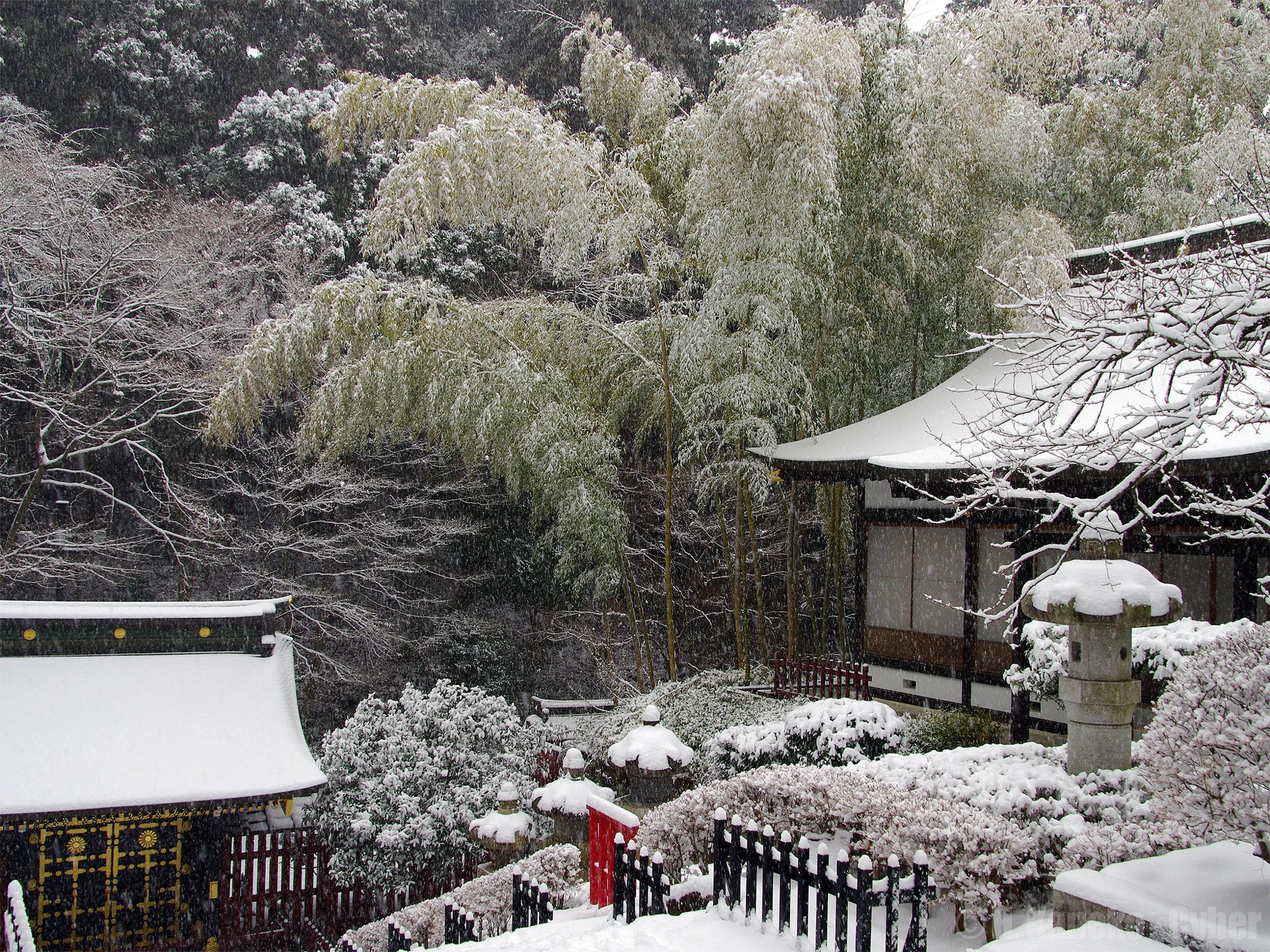
- Winter (December–February): Snow transforms Zuihoden into something otherworldly. The white of fresh snow against the deep red of the lacquered buildings, the gold-leaf carvings, and the dark cedar trunks is simply stunning. Visitor numbers drop significantly, and you may have the entire complex almost to yourself. Dress warmly — the hill catches wind, and the stone steps can be icy.
Combining Zuihoden with Nearby Attractions
Zuihoden is ideally combined with other sights in the Kyogamine area to create a half-day or full-day cultural itinerary:
Sendai City Museum (Sendai-shi Hakubutsukan)
A 5-minute walk downhill from Zuihoden, the Sendai City Museum houses an outstanding collection of Date clan artifacts, historical maps, armor, and art spanning the city’s history from the Edo period to modern times. Key highlights include original Date clan armor, calligraphy, ceramics, and paintings. The building itself is modern and well-designed. Admission: ¥460 for adults (~$3.10). Allow 60–90 minutes. The museum shares a large parking area with Zuihoden and is easily combined as a two-attraction visit.
Aoba Castle Ruins and Date Masamune Statue
A 15-minute drive or 40-minute walk from Zuihoden, Aoba Castle (Sendai Castle) sits on a hill overlooking the city. The castle itself is long gone — demolished in the Meiji period and further destroyed in WWII — but the stone foundations and the famous equestrian statue of Date Masamune make this a pilgrimage site for fans of the One-Eyed Dragon. The view over Sendai and the Pacific coast on a clear day is spectacular. Free admission to the grounds; the small on-site museum charges ¥700 ($4.70). The Loople Sendai bus runs directly here from Zuihoden.
Rinno-ji Temple
A serene Buddhist temple complex adjacent to the Kyogamine area, Rinno-ji is famous in Sendai for its beautiful garden and the extraordinarily ancient cedar trees on its grounds. Much quieter than the main Zuihoden attraction, it’s a lovely place for quiet contemplation. Free admission to the garden during daylight hours.
Hirose River Walk
The gentle path along the Hirose River between Zuihoden and central Sendai is pleasant for walking — particularly in cherry blossom season (early April) when the river banks turn pink. The walk from the city center to the base of Kyogamine Hill takes about 30–35 minutes and offers a different perspective on Sendai’s layout.
Where to Eat Near Zuihoden
The immediate area around Zuihoden is a quiet residential and cultural zone without many dining options. For a full meal, either eat before heading out from central Sendai or return to town afterward.
Back in Sendai City Centre
Gyutan (Grilled Beef Tongue): Sendai’s most famous food, served as thick-cut grilled slices with barley rice and oxtail soup. The thick-cut style was invented here in 1948 and has become a nationwide sensation. Top choices include Rikyu, Tasuke, and Kisuke in the Ichibancho shopping arcade area. Expect to pay ¥1,500–¥2,500 ($10–$17) per person for a full set. Lines can be 30–60 minutes at peak times — arrive before 11:30 AM or after 2:00 PM.
Zunda Mochi: The bright green edamame sweet that defines Sendai’s confectionery scene. Zunda Ann (ずんだ庵) near Sendai Station serves everything from traditional mochi to zunda smoothies and parfaits. A small box of mochi to take home makes an excellent souvenir: ¥600–¥1,200 ($4–$8).
Seafood at Sendai Morning Market (Asaichi): Open from 7:00 AM near Sendai Station, the morning market sells fresh Sanriku coast seafood, pickles, local produce, and prepared foods. The oysters and sea urchin (uni) from the Sanriku coast are some of the finest in Japan. Budget ¥2,000–¥4,000 ($13–$27) for a generous seafood breakfast bowl.
Where to Stay in Sendai
Zuihoden is easily visited as a half-day trip from central Sendai. For the best base, stay near Sendai Station for maximum transport convenience:
Budget (Under ¥8,000 / $55 per night)
Khaosan Sendai Hostel — A well-run, sociable hostel about 10 minutes’ walk from Sendai Station with clean dorms and private rooms. Excellent common areas and a friendly English-speaking staff. Dorms from ¥2,800 ($19), private rooms from ¥6,500 ($44). Osaka Inn Sendai — Another reliable budget option with pod-style private spaces close to the station from ¥4,500 ($30).
Mid-Range (¥8,000–¥20,000 / $55–$135)
Hotel Monterey Sendai — A charming European-themed hotel with comfortable rooms, a convenient central location, and excellent breakfast included. Ask for a high-floor room for city views. From ¥12,000 ($80). Dormy Inn Sendai Annex — A business-hotel chain that punches above its weight: large rooms, natural hot spring baths on the top floor, and a free late-night ramen service. From ¥10,000 ($67).
Luxury (¥20,000+ / $135+)
Westin Sendai — The top luxury address in Sendai, with spacious rooms offering city and mountain views, an excellent all-day dining restaurant, and impeccable service. From ¥28,000 ($190). Well-positioned for both Zuihoden and Sendai’s dining and shopping areas.
Practical Tips for Visiting Zuihoden
- Arrive early. The first hour after opening (9:00–10:00 AM) is typically the quietest. Autumn weekends can bring significant crowds of Japanese tourists — the earlier you arrive, the more peaceful your experience.
- Wear comfortable shoes. The approach to the mausoleum involves stone steps. While not particularly strenuous, the steps can be slippery when wet or icy. Avoid flip-flops or smooth-soled shoes on rainy or winter days.
- Photography is encouraged. Unlike many Japanese temples, photography of the Zuihoden buildings’ exteriors is fully permitted and encouraged. Photography inside the Sanreibyo Museum is restricted — check signage at the entrance.
- Allow 90 minutes minimum. Between the walk through the forest, the three mausoleums, and the museum, rushing through in less than 90 minutes will leave you feeling you missed the best parts. If you’re a history enthusiast, allow 2 hours.
- Combine with Sendai City Museum. The museum is just 5 minutes’ walk away and ticket prices are similarly modest. Together, they constitute one of the best value half-days of cultural sightseeing in all of Tohoku.
- Bring a light jacket. Even in summer, the forested hillside is noticeably cooler than the city below. In winter, the wind on Kyogamine Hill can be cold — dress accordingly.
- The souvenir shop is excellent. Particularly good for Date Masamune-themed items: reproductions of the crescent moon helmet, sake cups featuring clan crests, and silk bookmarks. Prices are reasonable (¥300–¥3,000, $2–$20).
- No food or drink inside the complex. Bring water but leave snacks for outside the grounds. Vending machines are available near the entrance area.
- English audio guides may be available. Check with the ticket office on arrival — availability and pricing varies seasonally. Even without a guide, the English information boards provide solid context.
- The Loople Bus is the best transport option. Its day pass lets you easily combine Zuihoden with Aoba Castle, Sendai City Museum, and central Sendai all in one day for ¥630 ($4.20) total transport cost.
Sample 1-Day Sendai Itinerary Including Zuihoden
A Perfect Sendai Cultural Day
8:30 AM — Breakfast at your hotel or grab a quick bite at Sendai Station’s basement food floor (great zunda mochi pastries and coffee from local bakeries).
9:00 AM — Board the Loople Sendai tourist bus from Sendai Station West Exit, Stop 9. Take it to Zuihoden (Stop 3, approximately 20 minutes). Arrive right as the gates open.
9:00–10:30 AM — Explore Zuihoden, Kansenden, Zennoden, and the Sanreibyo Museum. Take your time with the museum — the excavated artifacts and facial reconstruction of Date Masamune are genuinely fascinating.
10:45 AM — Walk 5 minutes downhill to Sendai City Museum. Spend 60–75 minutes exploring the Date clan history, armor, and cultural exhibits.
12:15 PM — Reboard the Loople bus toward Aoba Castle (Stop 5). Visit the castle ruins and the iconic Date Masamune equestrian statue. The view over Sendai from here is excellent.
1:15 PM — Return to Sendai Station area for a gyutan lunch. Head to the Gyutan restaurant area near Sendai Station’s underground. Arrive before 1:30 PM to beat the lunch rush. Budget ¥2,000 ($13) for a generous grilled beef tongue set.
3:00–5:00 PM — Free time in Sendai’s covered shopping arcades (Ichibancho and Clicquot streets) for browsing local crafts, buying zunda mochi to take home, and exploring the city’s contemporary side.
6:30 PM — Dinner at a local izakaya (Japanese pub-restaurant). Order Sendai miso-marinated dishes, local sake from Miyagi’s excellent breweries, and sashimi from the Sanriku coast. Budget ¥3,000–¥5,000 ($20–$33) per person with drinks.
Zuihoden vs. Nikko: How Do They Compare?
International visitors often wonder whether Zuihoden is worth visiting if they’ve already seen the far more famous Toshogu shrine complex at Nikko. The honest answer: absolutely yes, for completely different reasons.
Nikko is grander in scale and world-renowned, but it’s also exceptionally crowded, expensive, and takes the better part of a full day to do properly from Tokyo. Zuihoden is smaller, quieter, and deeply personal — you’re visiting one man’s tomb, not a monument to the entire Tokugawa dynasty.
At Zuihoden, there’s a profound intimacy to the experience. You are standing above the actual remains of Date Masamune. The artifacts in the museum were items he owned, touched, used. The architectural style is essentially identical to Nikko’s Toshogu — Zuihoden was designed by artisans working in the same tradition, just two years before Toshogu’s famous Yomeimon gate was completed — but the atmosphere is contemplative rather than overwhelming.
Think of Nikko as the spectacular main course and Zuihoden as the quietly perfect dessert: smaller, more personal, and ultimately more memorable for many visitors.
The Story of Zuihoden’s Destruction and Rebirth
There’s a poignant modern layer to Zuihoden’s story that amplifies its emotional impact for visitors who know it. The original 1637 mausoleum — a designated National Treasure — was completely destroyed in July 1945 during the Allied bombing campaign that devastated Sendai’s city center.
The fire swept across Kyogamine Hill on July 10, 1945, just weeks before Japan’s surrender. In a single night, more than 300 years of irreplaceable architectural history was reduced to ash. Only the stone foundations, the stone lanterns, and scattered stone elements survived.
For decades, the site stood empty — a clearing in the cedar forest, foundations without a building. Then, in 1974, a remarkable decision was made: to excavate the tombs before reconstruction, giving archaeologists the opportunity to scientifically document what lay beneath. The excavations were meticulous and yielded extraordinary finds — the remains of all three lords, along with grave goods including personal ornaments, weapons, lacquerware, and clothing fragments. Most strikingly, the skulls allowed forensic scientists to reconstruct the faces of historical figures who had previously existed only in painted portraits.
Reconstruction of Zuihoden was completed in 1979, Kansenden in 1985, and Zennoden also in 1985. Craftsmen working from the original architectural plans and historical photographs — and guided by the surviving stone elements — created faithful reproductions using traditional techniques wherever possible. The result is not a sterile museum replica but a living, functioning place of memory that feels, against all odds, authentically historic.
The story of destruction and painstaking rebirth adds a layer to Zuihoden that resonates deeply in post-war Japan — and particularly in Sendai, a city that also suffered enormously in the 2011 Tohoku earthquake and tsunami. There’s something about this place, sitting on its forested hill above a city that has been destroyed and rebuilt more than once, that speaks to human resilience and the imperative to preserve what matters most.
Related Articles You Might Enjoy
- Sendai Daikannon: Inside Japan’s Giant 100-Meter Kannon Statue (A Local’s Guide)
- Miyagikyo Distillery: The Complete Guide to Nikka’s Whisky Sanctuary Near Sendai
- Zuiganji Temple & Entsuin Mausoleum, Matsushima: The Hidden Soul of Japan’s Most Scenic Bay
- Sendai Gyutan: The Complete Guide to Japan’s Most Iconic Beef Tongue Experience
- Akiu Onsen: Sendai’s Most Beloved Mountain Hot Spring Escape — Complete Guide
Final Thoughts
Zuihoden is one of those rare travel experiences that quietly exceeds its reputation. Visitors who stumble across it as an afterthought often leave describing it as the highlight of their Sendai stop — or even their entire Tohoku journey. The combination of extraordinary architecture, poignant history, forest atmosphere, and surprising intimacy creates something genuinely special.
If you’re spending any time in Sendai — even just passing through on the Shinkansen — carving out a morning for Zuihoden is one of the best investments of time you can make. The One-Eyed Dragon of the North waited nearly 400 years for you to visit. He’s worth 90 minutes of your day.
Got questions about planning your Tohoku trip, or spotted something we missed? We’d love to hear from you — drop us a message here.



コメント