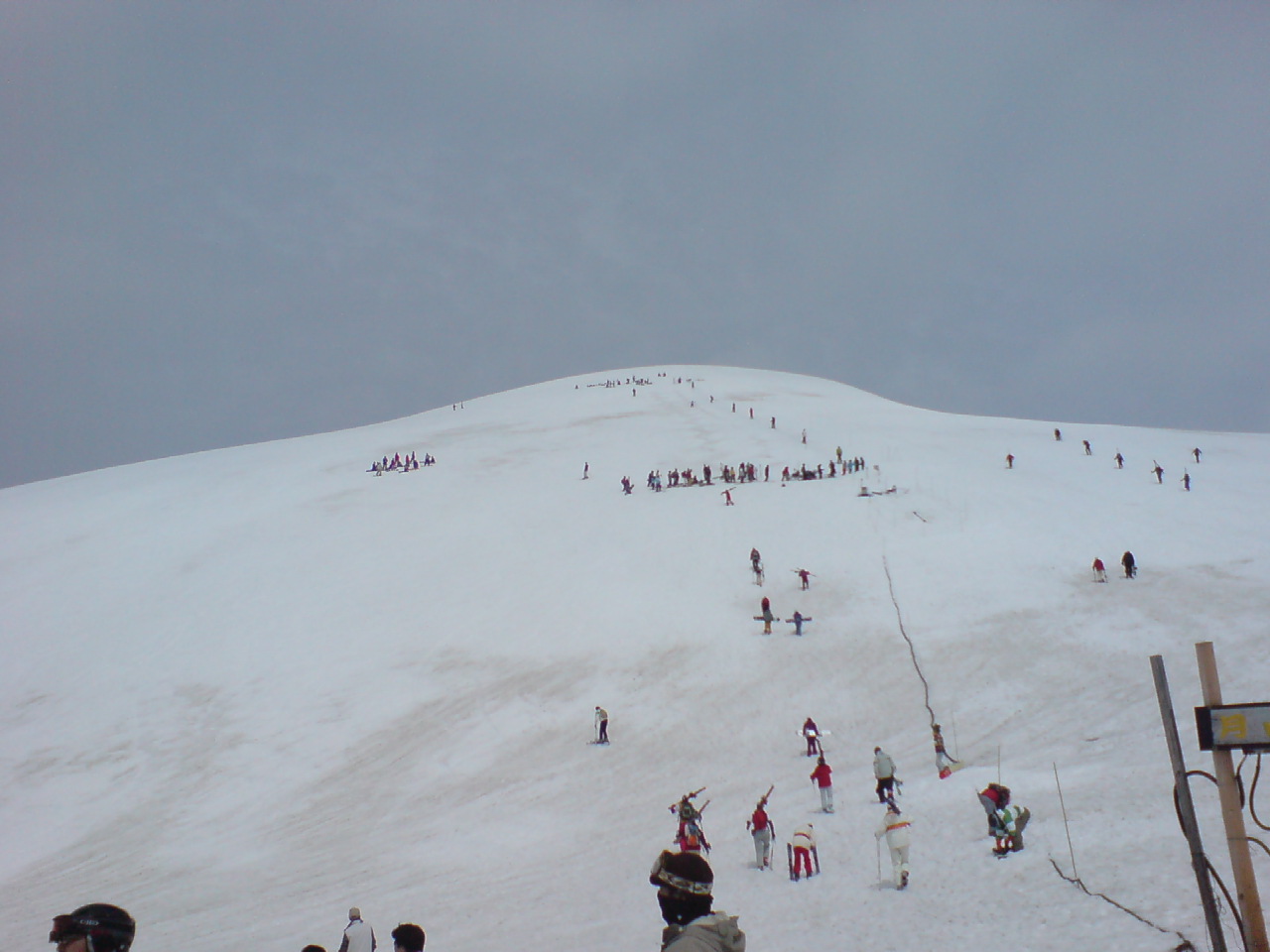
Somewhere in the mountains of Yamagata Prefecture, skiers are gliding down freshly carved powder turns as wildflowers bloom on the ridgelines above them — and it’s the middle of July. This isn’t a hallucination, and it’s not a ski-dome. This is Gassan Ski Resort (月山スキー場), the only ski area in Japan — and one of very few in the entire world — that offers natural snow skiing deep into the summer months. If you’ve ever wondered what it feels like to ski in a T-shirt while watching summer clouds drift over sacred mountain peaks, Gassan is where that dream becomes real.
Why Gassan Is Unlike Any Ski Resort on Earth
Most ski resorts around the world operate from December through March, relying on artificial snowmaking to prop up dwindling natural snow conditions into April. Gassan operates from precisely the opposite philosophy. The resort doesn’t open until late April or early May — because that’s when the snow is finally safe, stable, and consolidated enough to ski properly.
Located in the highlands of Nishikawa Town at elevations between 1,300 and 1,800 meters (4,265–5,905 feet), Gassan accumulates up to 10 meters (33 feet) of snow over a typical winter, much of it fed by moist air masses sweeping in from the Sea of Japan. By April, the mountain holds an enormous reservoir of compacted spring snow — a natural snowpack so deep that it persists through the long days of May, June, and even July before finally surrendering to the summer sun. The resort’s season officially runs from late April through late July, though early seasons can stretch even further.
What this means in practice is a skiing experience completely unlike what you’ll find anywhere else in Japan. The runs are wide-open natural bowls carved into the volcanic landscape, with no artificial contouring, no snowmaking infrastructure, and no groomed corduroy corridors. The terrain is expansive and somewhat wild — brilliant for intermediate to advanced skiers who want long, carving runs on dense spring snow. Beginners can find gentle pitches, but this mountain rewards those with some experience.
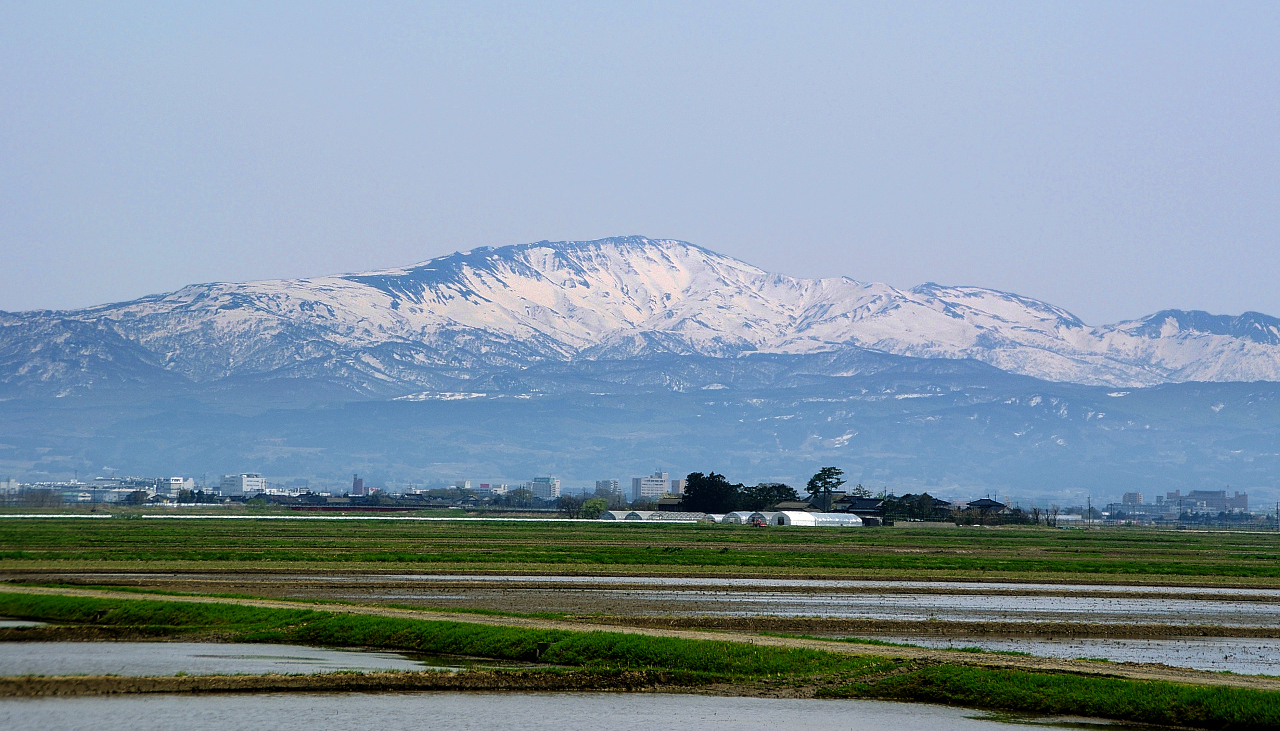
Then there’s the setting. Gassan is one of the Dewa Sanzan (出羽三山) — the Three Sacred Mountains of Yamagata — alongside Haguro-san and Yudono-san. These mountains have been objects of religious veneration in Shinto and Shugendo (mountain asceticism) practice for over 1,400 years. The mountain is not merely a leisure destination but a living sacred site. Pilgrims in white garments climb the slopes alongside skiers in bright technical gear, and at the summit shrine of Gassan Jinja, priests conduct ancient ceremonies that have continued without interruption for centuries. The juxtaposition — recreational sport on a sacred mountain — is uniquely Japanese, and uniquely extraordinary.
Understanding the Dewa Sanzan: Sacred Context
To fully appreciate Gassan, it helps to understand what the mountain means to the people of Yamagata. The Dewa Sanzan — Gassan, Haguro-san, and Yudono-san — form a trilogy of sacred peaks that pilgrims have been visiting since at least the 6th century AD. Together, they represent the cycle of death, present life, and rebirth in a spiritual cosmology deeply rooted in Shinto nature worship and the esoteric Buddhism of the Shugendo sect.
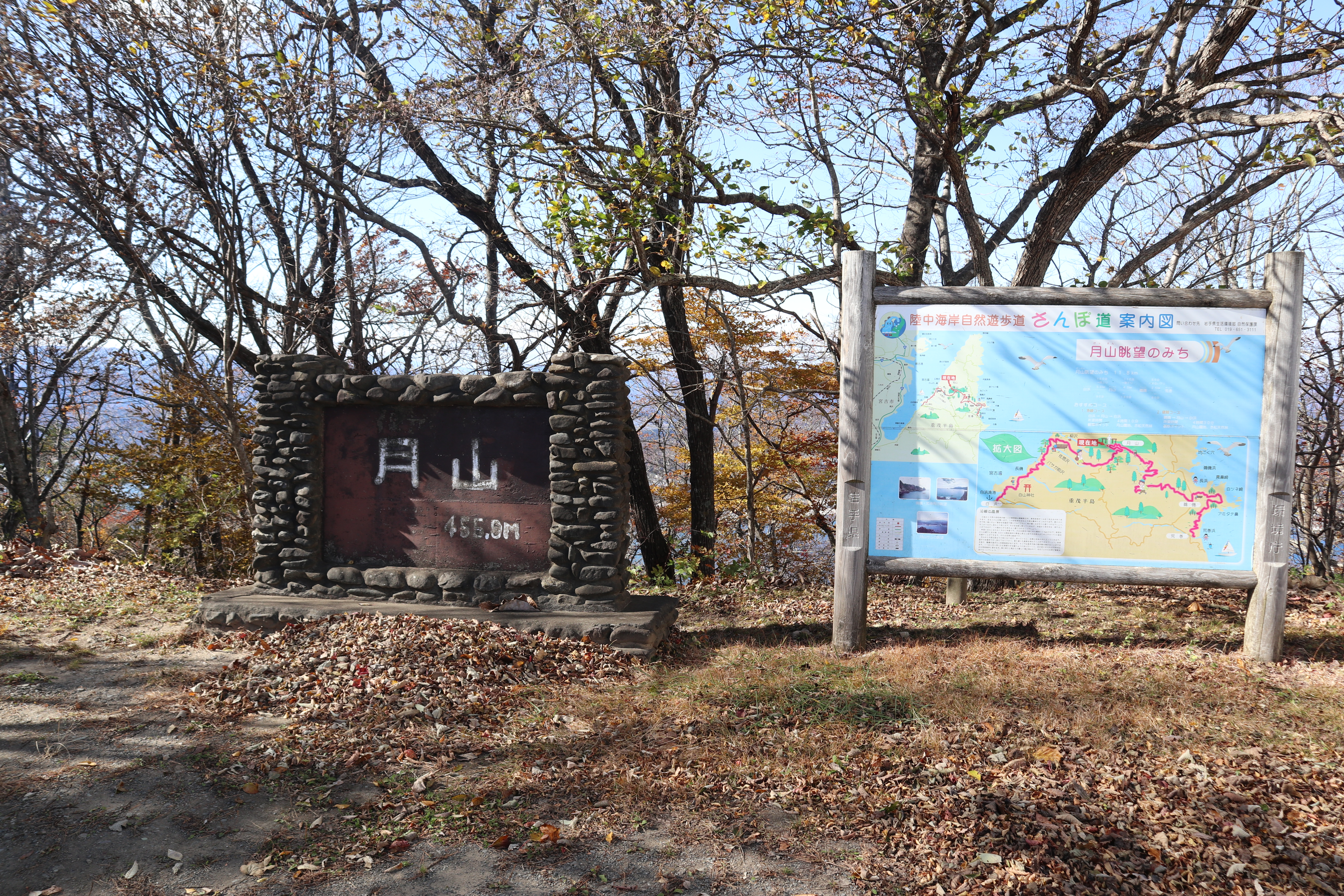
Gassan (月山, “Moon Mountain”) specifically represents the realm of the dead and the ancestral world — a liminal space between earthly existence and what lies beyond. In ancient pilgrim traditions, ascending Gassan was believed to bring the climber symbolically close to the spirits of their ancestors. This explains the long tradition of white-clad pilgrims (白装束, shiro shōzoku) making the journey to the summit shrine, particularly in late spring and summer when the route becomes accessible after snowmelt.
For non-religious visitors, this context adds a layer of meaning to the mountain experience that most ski destinations simply don’t have. When you look out from the ski slopes and see pilgrims ascending along the ridge, or when you rest at the summit café and hear the faint sound of shrine ceremonies, you’re witnessing something genuinely rare: a mountain that has been continuously held sacred for over a thousand years, still functioning as both a place of worship and a place of play.
Getting to Gassan Ski Resort
Gassan is genuinely remote — one of the features that makes it so special and keeps the crowds manageable. There is no direct train service to the ski area, so a car is essentially required.
- From Tsuruoka City (鶴岡市): Tsuruoka is the most convenient gateway city, about 1 hour (50 km / 31 miles) from the ski area via National Route 112. The Route 112 corridor is spectacular — winding through dense cedar forests and following the Mogami River upstream into the Dewa highland plateau. Tsuruoka is accessible from Tokyo by Shinkansen to Tsuruoka (via Niigata or Sendai on the Joetsu/Tōhoku lines + transfer, about 3.5–4 hours total).
- From Yamagata City (山形市): About 1.5–2 hours by car (90 km / 56 miles) via National Route 112. A scenic mountain drive through the Nishi-Yamagata highlands.
- From Sendai: About 2.5–3 hours by car via the Tohoku Expressway and Route 287/112. Consider combining with Yamadera temple (about 45 minutes from Yamagata City) for a two-day Yamagata loop.
- Rental car: Essential for most visitors. Reserve from Toyota, Nippon Rent-A-Car, or Times Car Rental at Tsuruoka, Yamagata, or Sendai stations. Budget ¥5,000–8,000 (~$33–53) per day for a compact car.
- Public transport option: The Shōnai Kōtsu bus company runs infrequent seasonal shuttle buses to the Gassan ski area from Tsuruoka Station in the spring/early summer ski season. Check their website (Japanese only; use Google Translate) for current schedules as service changes annually. Bus journey: about 80–90 minutes from Tsuruoka Station.
Note that National Route 112 — the main access road — is closed by snow from November through late April. The exact opening date for vehicles varies by year and depends on snowfall. In most years, the road opens to vehicles in late April or early May, coinciding with the ski season start. Check the Yamagata Prefectural Police website for road status updates before traveling.
The Ski Experience at Gassan
Gassan’s ski area is unlike any of Japan’s major resorts. There are no heated gondolas, no base-area shopping malls, no crowds of weekend warriors. What you get instead is a large, wind-swept volcanic bowl of natural snow, a handful of surface lifts (J-bar and rope tow style), a basic but functional lodge at the base, and one of the most authentic backcountry-style resort experiences in all of Asia.
Terrain and Conditions
The primary skiable area sits at around 1,300–1,700 meters (4,265–5,577 feet). In late April and May, the snowpack here is typically 3–4 meters (10–13 feet) deep — pure, consolidated spring snow that rewards clean, carving technique. As the season progresses into June and July, the snow gradually softens earlier in the day, creating classic spring “corn snow” conditions in the afternoons — crusty in the morning, sweet and smooth after 10 AM, increasingly slushy by early afternoon.
The terrain is primarily intermediate to advanced: long, wide-open runs with moderate pitch and excellent runout. There are some steeper sections toward the upper bowl that challenge experienced skiers, while the lower areas near the lifts offer more forgiving terrain for those still building confidence on spring snow. Expert skiers and ski mountaineers sometimes skin up to higher elevations — above the lift-served area — for access to uncrowded upper bowls and ridgeline terrain with spectacular views across the Sea of Japan on clear days.
Equipment and Rentals
Gassan has a small but functional rental shop at the base area offering skis, boots, and poles. Rental rates are reasonable at around ¥3,000–5,000 (~$20–33) per day for a complete set. Snowboard equipment is also available. However, gear selection is limited compared to major resorts, so if you’re particular about equipment specifications, bring your own — the narrow road makes ski transport manageable in a regular car (most ski bags will fit in the back of a compact SUV).
Note that the spring snow conditions mean that regular ski wax is often less effective — bring or buy colder-temperature wax for the morning groomed sessions, and transition to warmer wax as the day progresses. This is the kind of detail that regular spring skiers appreciate; if it sounds complicated, just rent from the base lodge and let the local staff advise.
Hiking and Pilgrimage Routes at Gassan
Non-skiers have excellent reasons to visit Gassan in late spring and summer. The hiking routes to the summit are outstanding, combining dramatic volcanic scenery with alpine wildflower meadows and genuine spiritual atmosphere.
The Bajo Route (馬場口コース)
Starting from the Bajo-guchi trailhead near the ski area base, this is the most popular hiking route to Gassan’s summit shrine. The trail climbs steadily through snowfields (crampons or microspikes recommended in early May), past the eighth station rest stop (Midagahara plateau, famous for Mizubasho white skunk cabbage blooms in June), and up to the summit Gassan Jinja at 1,984 meters (6,509 feet). Round trip: 5–6 hours, difficulty: moderate to challenging. The views from the summit on a clear day encompass the Sea of Japan, the Shōnai Plain, and the distant peaks of the Ōu Mountains.
The Midagahara Wetland Walk
For a less strenuous outing, the Midagahara (弥陀ヶ原) wetland plateau at around 1,400 meters (4,593 feet) offers a wooden boardwalk through an extraordinary alpine wetland ecosystem. In late June and July, the meadows are carpeted with Hiba (Japanese white skunk cabbage), Kusayuki butterfly orchids, and dozens of other endemic alpine plant species. The walk is flat and accessible, taking about 1–1.5 hours for the boardwalk circuit. This is one of Yamagata’s best-kept botanical secrets.
Best Time to Visit Gassan
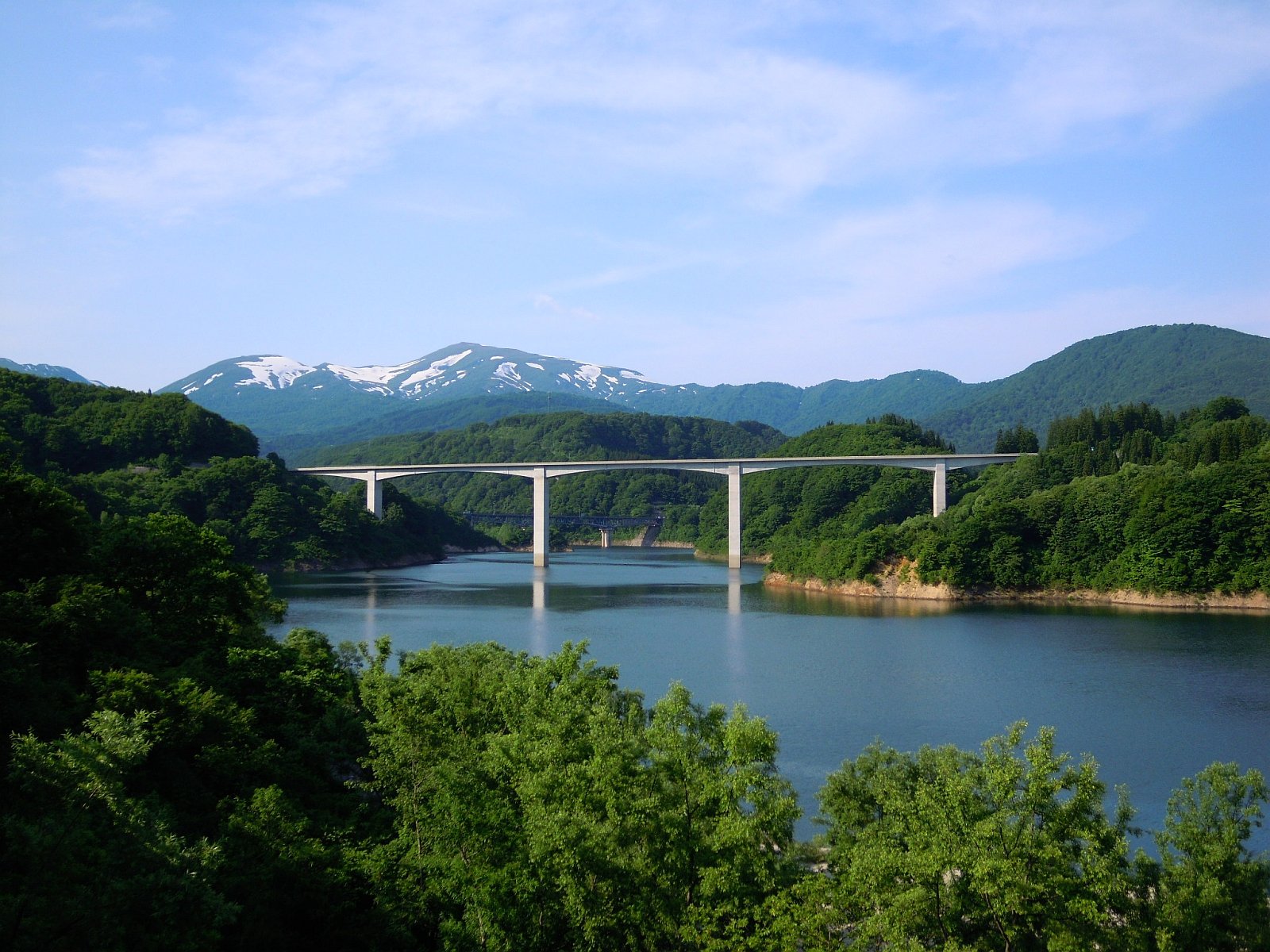
- Late April to mid-May: Peak ski conditions — deep, cold spring snow, fewer visitors than later in the season. The drive up Route 112 through fresh green forests with snow still on the roadsides is magical. Temperatures at the ski area: 28–50°F (-2 to 10°C). Bring full winter ski gear.
- Late May to mid-June: Classic spring ski conditions. Corn snow in the afternoons, excellent visibility, wildflowers beginning to emerge on the lower slopes. A ski jacket is sufficient; some days are warm enough for a base layer and gloves only. This is the sweet spot for most visitors: good skiing, accessible roads, and the beginning of the hiking season.
- Late June to July: Final ski season weeks. Snow coverage narrows to the main bowl, but skiing is still excellent. Hiking conditions are at their peak — the Midagahara wetland is in full bloom, summit pilgrimage traffic increases. A surreal experience: skiing in the morning, hiking in the afternoon among summer flowers.
- August to October: The ski area is closed, but the mountain remains a superb hiking and pilgrimage destination. The Bajo hiking route opens to hikers (no ski equipment needed by August). Autumn color arrives in late September and October, painting the alpine zone in gold and red.
The Dewa Sanzan Day Trip: Pairing Gassan with Haguro-san
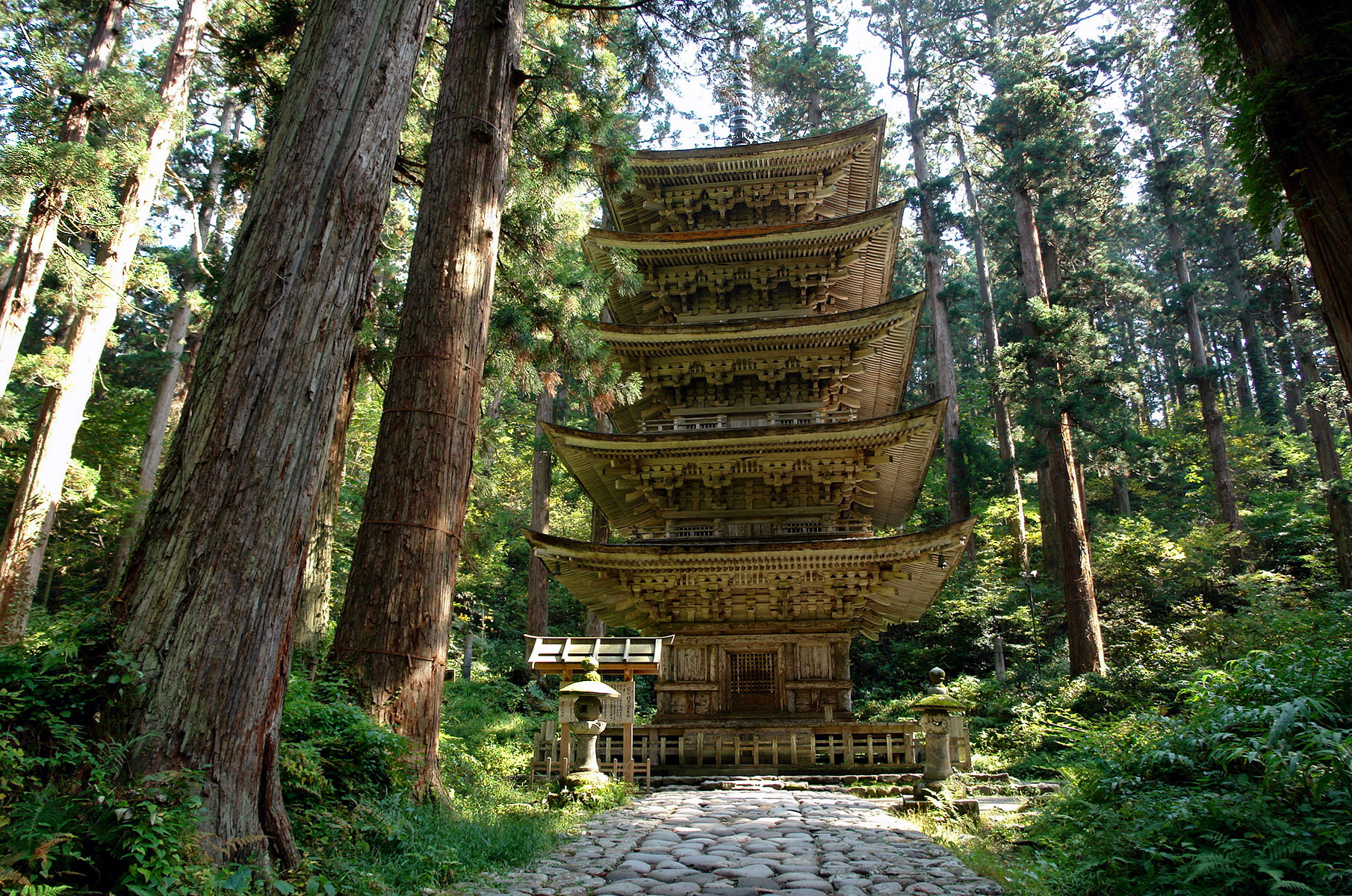
For a truly immersive Dewa Sanzan experience, combine your Gassan visit with a stop at Haguro-san (羽黒山) — the most accessible and most visited of the three sacred mountains. Unlike Gassan’s high alpine terrain, Haguro-san is a forested hill easily climbed via a remarkable 2,446-step stone staircase lined with ancient cedar trees, some of which are over 400 years old and up to 15 meters (49 feet) in circumference. The walk takes about 1–1.5 hours from the base to the summit shrine.
Halfway up the Haguro-san staircase, you’ll encounter the Gojūnotō — a five-storey wooden pagoda dating to around 937 AD, standing 29 meters (95 feet) tall amid the cedar forest. It’s one of the most beautiful wooden structures in all of Tōhoku, and its National Treasure status is well-deserved. The contrast between the ancient pagoda and the towering silent cedars creates an atmosphere of profound peace — very different from the wind-swept openness of the Gassan ski area, but equally unforgettable.
Yamagata’s Wider Winter Sports Scene
Gassan is the crown jewel, but Yamagata Prefecture is one of Japan’s richest ski prefectures. While you’re in the region, it’s worth knowing about the broader ski landscape:
Zao Onsen Ski Resort (蔵王温泉スキー場)
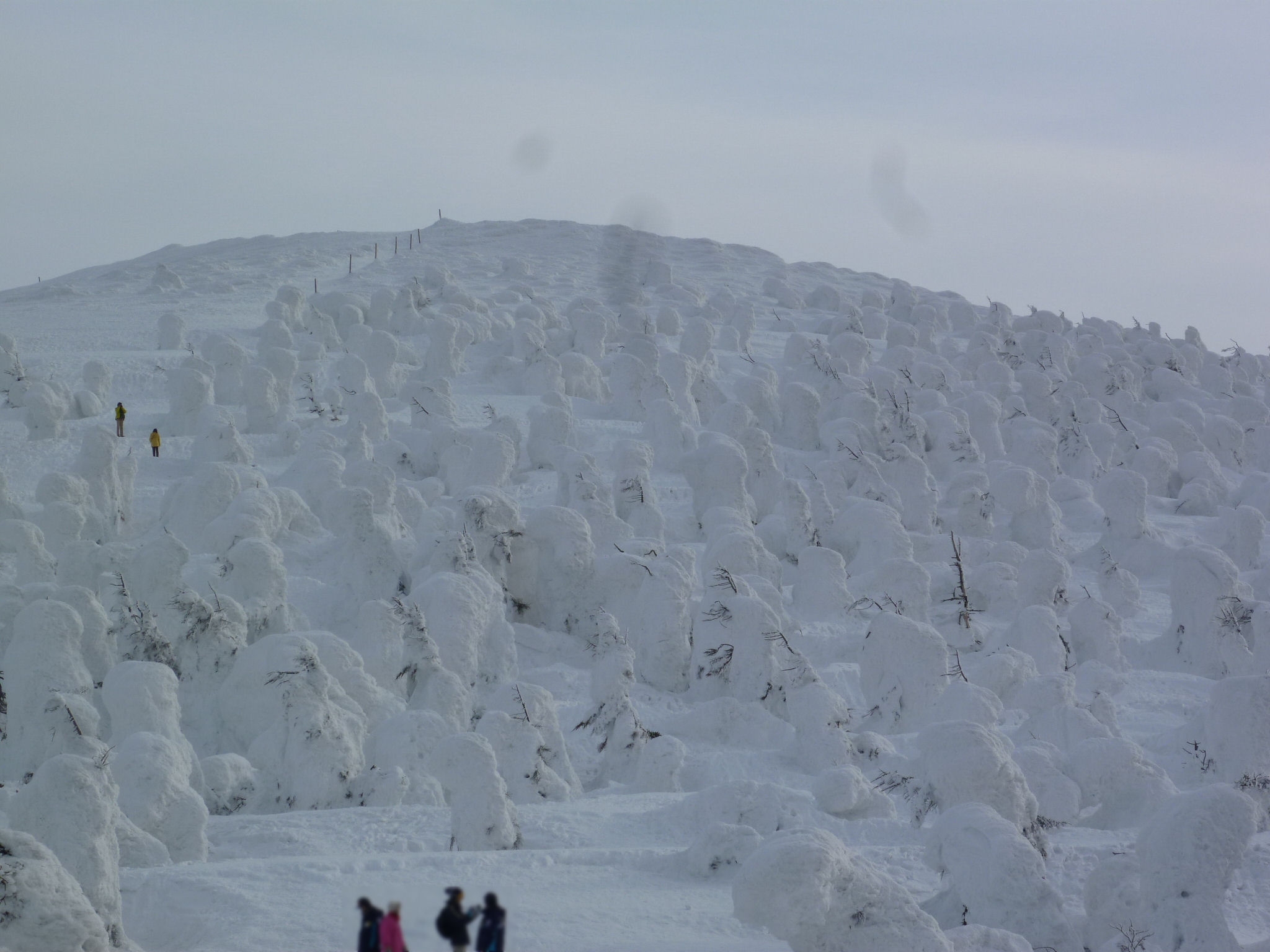
Japan’s most famous ski resort for its surreal “Snow Monsters” (樹氷, juhyō) — snow-and-ice-encrusted fir trees that give the mountain a science-fiction landscape. The season runs from mid-December to early April. The combination of skiing and the famous Zao Onsen hot spring village makes this a complete winter destination. About 1.5 hours from Tsuruoka by car, 45 minutes from Yamagata City.
Shōnai Hiraizumi Ski Resort (庄内平泉温泉スキー場)
A smaller family resort near Tsuruoka, popular with locals for its affordable lift tickets and onsen facilities. Less scenically dramatic than Gassan or Zao, but useful for a quick ski day if you’re based in Tsuruoka.
Where to Eat Near Gassan
The Gassan Base Lodge Restaurant
The base lodge at the ski area has a simple cafeteria serving hearty mountain food: noodle soups (ramen, soba), curry rice, and hot beverages. Prices are modest at ¥800–1,500 (~$5–10) per dish. Don’t expect gourmet, but after a morning on the slopes, a steaming bowl of miso ramen is exactly what you need. The lodge also sells skiers’ bento boxes that many locals bring from Tsuruoka — a good option if you prefer specific dietary choices.
Tsuruoka’s Food Scene: UNESCO City of Gastronomy
Tsuruoka holds the rare distinction of being Japan’s only UNESCO Creative City of Gastronomy, recognized for its extraordinary depth of traditional food culture, including over 50 indigenous vegetable varieties grown nowhere else in Japan. After your ski/hike day, return to Tsuruoka for dinner at one of these highlights:
Kiya (喜屋): A revered Tsuruoka restaurant specializing in “shojin ryori” (Buddhist temple cuisine) using seasonal local vegetables and mountain plants. A full set meal runs ¥3,500–5,000 (~$23–33). Reserve in advance; popular with both Japanese and international food tourists.
Tamagawa Gyozan (玉川御山): Tsuruoka’s best noodle destination, serving hand-cut Shōnai-style inaniwa-adjacent noodles in a rich fish broth. Local office workers crowd in for lunch. Budget ¥900–1,200 (~$6–8).
Kamo Aquarium Café: Near the Kamo Aquarium (the world’s most famous jellyfish aquarium, just 20 minutes from Tsuruoka), the café offers freshly caught Shōnai seafood rice bowls. Shōnai-caught flounder (hirame) and snow crab (matsubagani) are the regional highlights from October through March.
Where to Stay Near Gassan
Budget (Under ¥8,000 / $55)
Tsuruoka Youth Hostel is a clean, well-run hostel in central Tsuruoka, about 45 minutes from the ski area by car. Dormitory beds from ¥3,200 (~$21), private rooms from ¥5,500 (~$37). Friendly staff can advise on road conditions and ski area opening status. Some mountain lodges (山小屋, yamagoya) at the Gassan base also offer basic bunkhouse accommodation during ski season — ask the ski area’s website (limited English) or call via the tourism office in Nishikawa Town.
Mid-Range (¥8,000–¥20,000 / $55–$135)
Tsuruoka Shōnai Hotel Suiden Terrasse is an award-winning hotel built among rice paddies on the Shōnai Plain, about 1 hour from Gassan. Its striking architecture — a long elevated walkway crossing the fields to reach the main building — has won international design awards, and the onsen facilities are superb. Rates from ¥12,000 (~$80) per person with breakfast. An outstanding base for exploring both the ski area and Tsuruoka’s food and cultural scene.
Luxury (¥20,000+ / $135+)
Shōnai Hotel Suiden Terrasse’s higher-tier rooms (some with private outdoor baths overlooking the rice fields) start at ¥25,000 (~$165) per person with two meals. Alternatively, the Tamashima Ryokan near the Haguro-san trailhead offers a traditional pilgrimage inn (shukubō, 宿坊) experience with vegetarian Buddhist temple cuisine — a remarkable and deeply authentic way to spend a night near the sacred mountains. Rates from ¥18,000 (~$120) per person with dinner and breakfast.
Practical Tips for Visiting Gassan Ski Resort
- Check the road opening date. Route 112 to the ski area is closed all winter. Road opening varies by year — typically late April but sometimes early May after heavy snow years. The Yamagata Prefectural Road Management Center website publishes updates (Japanese; use Google Translate).
- Ski season dates vary annually. The official ski season dates are posted on the Gassan Ski Resort website and change each year based on snowpack. Typically: late April/early May through late July. Check before booking travel.
- Sun protection is critical. Spring snow reflects UV radiation intensely. Even on overcast days, snowfield glare causes rapid sunburn. Bring high-SPF sunscreen (SPF 50+), UV-blocking ski goggles, and a neck gaiter to protect exposed skin. This is especially true in June when the sun angle is high.
- The weather changes fast. Gassan sits at high elevation and is exposed to weather systems rolling in from the Sea of Japan. Fog, wind, and sudden temperature drops can occur even in late spring. Always carry a waterproof shell jacket and an extra layer.
- Summit shrine etiquette. If you hike to the Gassan Jinja summit shrine, respect the sacred space: do not bring food or drink into the main shrine precinct, walk quietly, and dress respectfully (carrying a change of clothes is advisable for those combining skiing and shrine visits).
- Lift tickets are cash-only. The Gassan base lodge and lift operations typically require cash payment. Bring sufficient yen from an ATM in Tsuruoka or Nishikawa before heading up the mountain.
- Limited mobile reception. The upper mountain area has poor or no cell coverage on most carriers. Download offline navigation maps and communicate your plans before heading out of cell range.
- Pilgrim priority at the summit. The summit shrine area is primarily a religious space. Hikers and skiers are welcomed but should be mindful that religious ceremonies take precedence. Observe and participate respectfully — photography near the main shrine precincts should be done discreetly.
- Combine with the Dewa Sanzan pilgrimage route. If time allows, the classic two-day Dewa Sanzan pilgrimage circuit (Haguro-san + Gassan + Yudono-san) is one of Japan’s most meaningful hiking experiences. This can be done on foot from the Haguro-san trailhead, or mixed with driving sections. Pilgrim lodgings (shukubō) at Haguro-san accept foreign guests and provide remarkable vegetarian mountain cuisine.
- Book accommodation early in May and June. Tsuruoka’s best hotels fill up during Golden Week (late April to early May) and the summer holiday period in July. Reserve at least 6–8 weeks in advance for these peak dates.
Sample Gassan Itinerary: 2 Days from Tsuruoka
Day 1: Haguro-san and Dewa Sanzan Culture
Morning (8:00–12:00): Drive from Tsuruoka to the Haguro-san trailhead (30 minutes). Begin the ascent via the 2,446-stone-step path through the cedar forest. Pause at the Gojūnotō pagoda and take your time with the ancient atmosphere. Reach the Sanshin Gosaiden summit hall and explore the grounds of the main shrine.
Afternoon (13:00–17:00): Return to the trailhead and continue by car to Tsuruoka’s city center. Explore the Chidō Museum (致道博物館) — a beautifully preserved Meiji-era outdoor museum with former samurai residences and traditional farm buildings. End the afternoon at Kamo Aquarium to see the extraordinary jellyfish tanks (¥1,000 / ~$7 entry).
Evening (18:00–21:00): Dinner in Tsuruoka at Kiya (for shojin ryori) or a local izakaya specializing in Shōnai vegetables and Sea of Japan seafood. Check in to your hotel.
Day 2: Gassan Ski/Hike Day
Early Morning (6:30–7:30): Depart Tsuruoka before 7 AM to catch the best morning skiing conditions. The drive up Route 112 is part of the experience — ascending through forest and into open highland.
Ski/Hike Morning (8:00–12:00): Skiers: purchase lift tickets (roughly ¥4,000–5,000 / ~$27–33 per day) and ski the main bowl in morning firm snow conditions. Hikers: begin the Bajo route toward Midagahara by 8 AM to reach the wetland plateau in mid-morning light.
Midday (12:00–13:00): Lunch at the base lodge cafeteria. Skiers can continue for afternoon corn snow sessions; hikers can opt for the summit push (additional 2–3 hours) or return.
Afternoon (14:00–17:00): Descend to the valley. If time allows, stop at the Gassan Ski Area’s foot-onsen (足湯) near the parking area for a free soak. Drive back to Tsuruoka or continue to Yamagata City for onward travel.
Related Articles You Might Enjoy
- Yamadera (Risshakuji Temple): Complete Guide to Yamagata’s Mountain Temple
- Sakata & the Mogami River, Yamagata: Japan’s Most Underrated Merchant City & a Legendary River Cruise
- Zao Okama Crater Lake: Complete Guide to Yamagata’s Emerald Volcanic Wonder
- Tohoku Ski Resort Guide: Zao Snow Monsters, Appi Kogen & the Best Slopes in Northeast Japan
- Tohoku Winter Onsen & Ryokan Guide: Hot Springs, Snow & Japanese Inn Culture
Final Thoughts
Gassan Ski Resort challenges every assumption visitors have about what a ski destination can be. It’s not about perfect grooming, après-ski nightlife, or luxury gondola rides. It’s about something much rarer: the intersection of an ancient sacred landscape, extraordinary natural snowfall, and a quiet, unhurried form of adventure that feels genuinely timeless. When you ski down Gassan’s spring bowl in late May or June, watching pilgrims ascend the ridge above you and wildflowers emerge from the melting snow’s edge, you realize that you’re participating in one of Japan’s most singular experiences — one that has almost no equivalent anywhere else in the world. Pack your sunscreen, charge your camera, and let Japan’s most extraordinary ski mountain carry you into its own version of summer.
Got questions about planning your Tohoku trip, or spotted something we missed? We’d love to hear from you — drop us a message here.




コメント