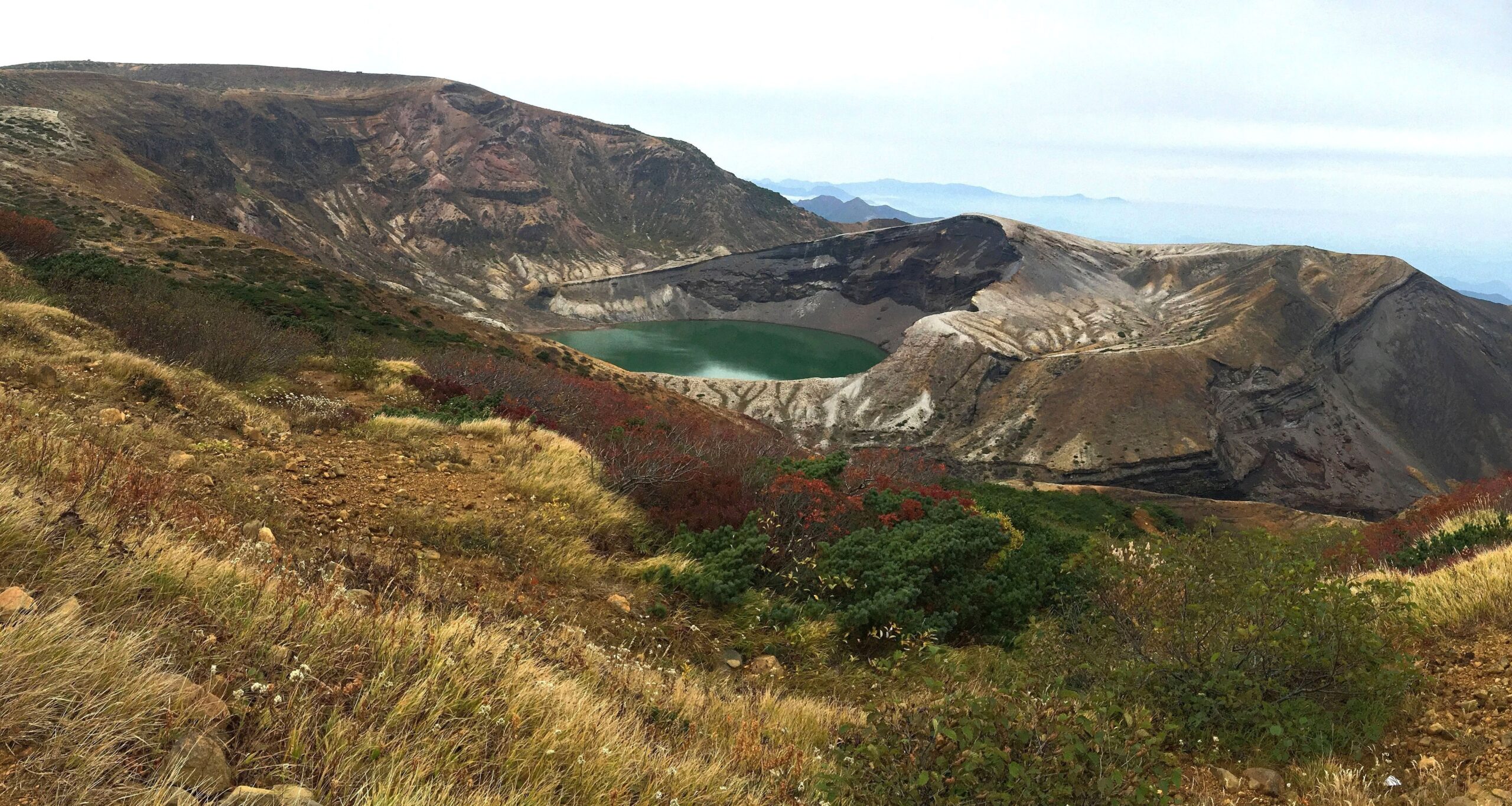
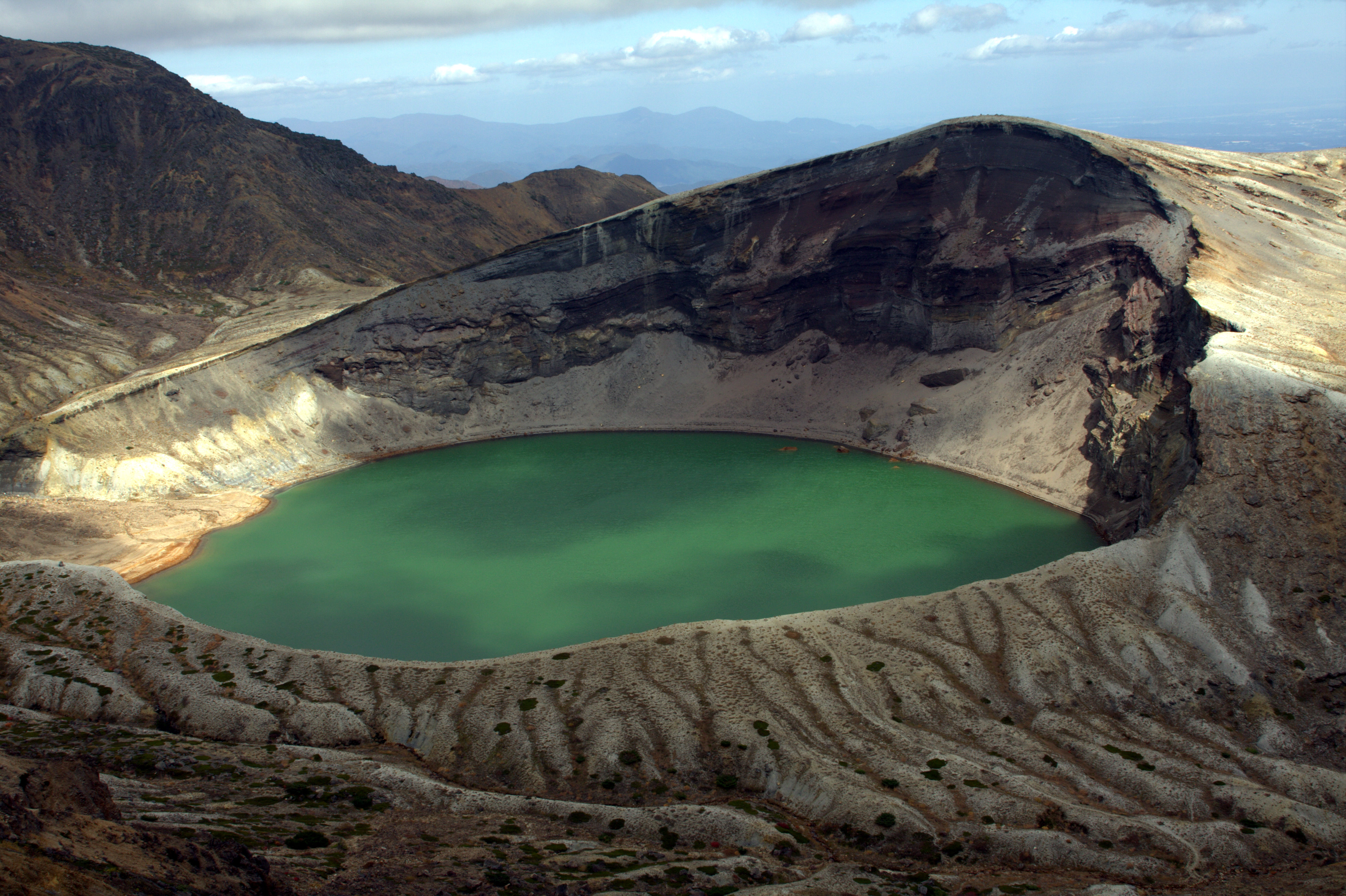
There’s a crater lake in the mountains of Yamagata that changes color. Not subtly — not the way a lake might shift from blue to gray as clouds pass overhead — but dramatically, alchemically, in shades that seem to defy ordinary chemistry: emerald green so vivid it glows, turquoise that rivals the Caribbean, and a deep malachite that seems lit from within. This is Zao Okama, and it is one of the most astonishing natural sights in all of Japan.
Why Zao Okama Should Be on Every Japan Itinerary
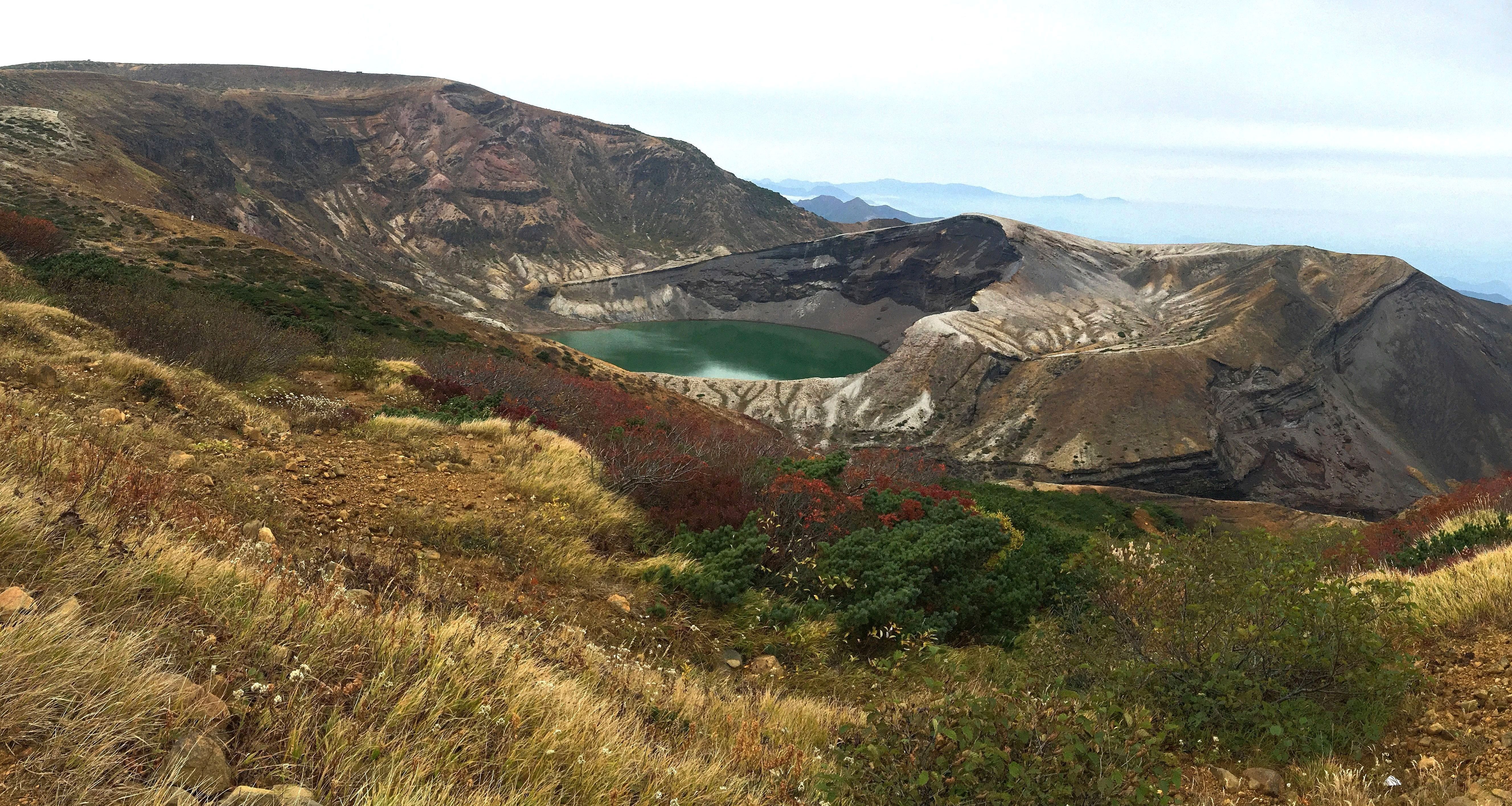
Most people who visit the Zao area in winter come for the famous snow monsters — the ice-encrusted trees that turn the mountain into a surrealist sculpture garden. But Zao has a completely different personality in summer and autumn, and its centerpiece is Okama: a volcanic crater lake at 1,620 meters (5,315 feet) elevation that rewards visitors with one of the most unusual natural spectacles in the country.
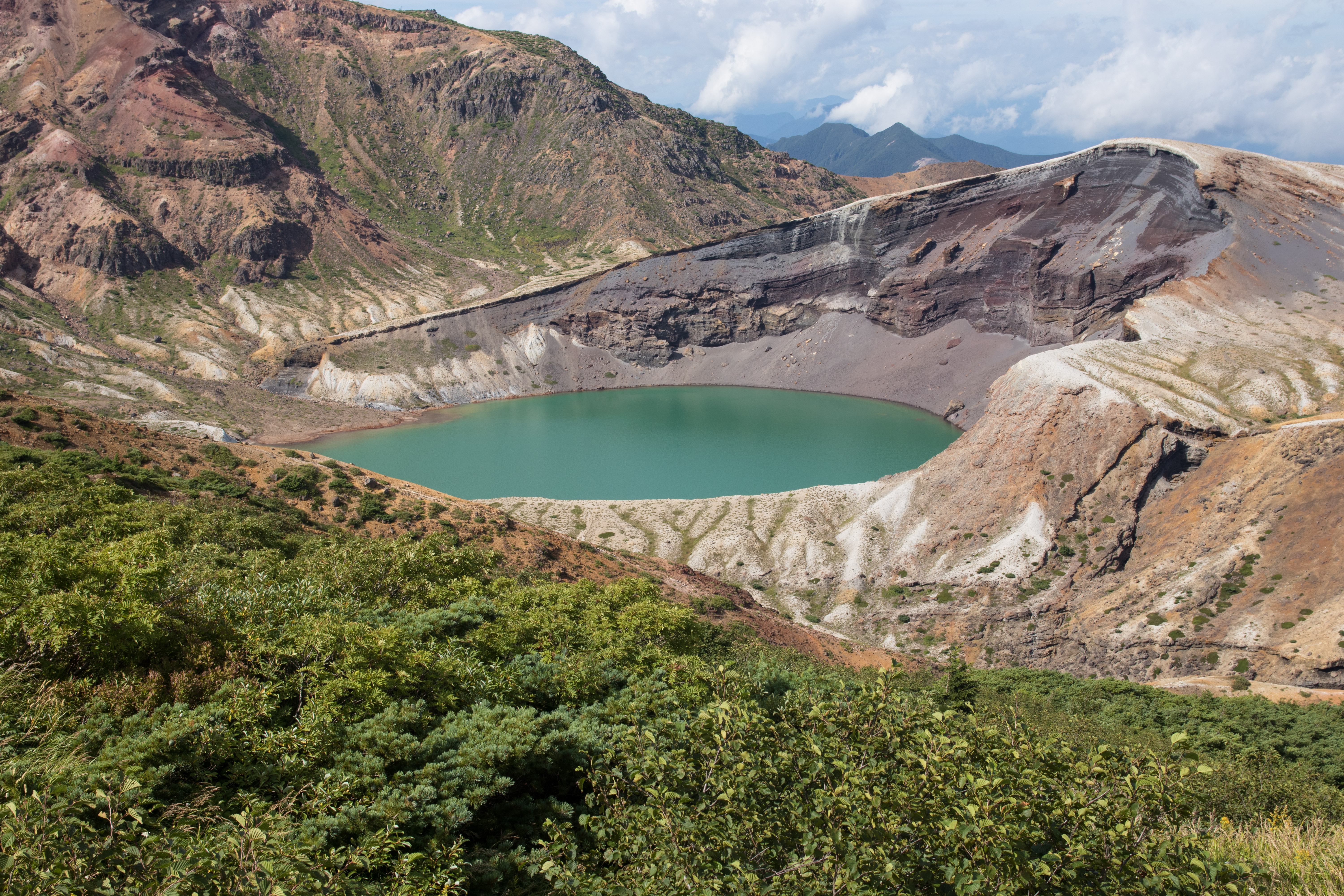
The lake sits at the junction of three volcanic peaks — Katte-dake, Okama-dake, and Chogo-dake — and owes its extraordinary color to sulfur and other volcanic minerals dissolved in its exceptionally acidic water (pH approximately 0.5, roughly as acidic as battery acid). Nothing lives in Okama. No fish, no algae, no bacteria. The lake’s vivid colors come entirely from chemistry: light interacting with suspended sulfuric minerals in water of unusual clarity.
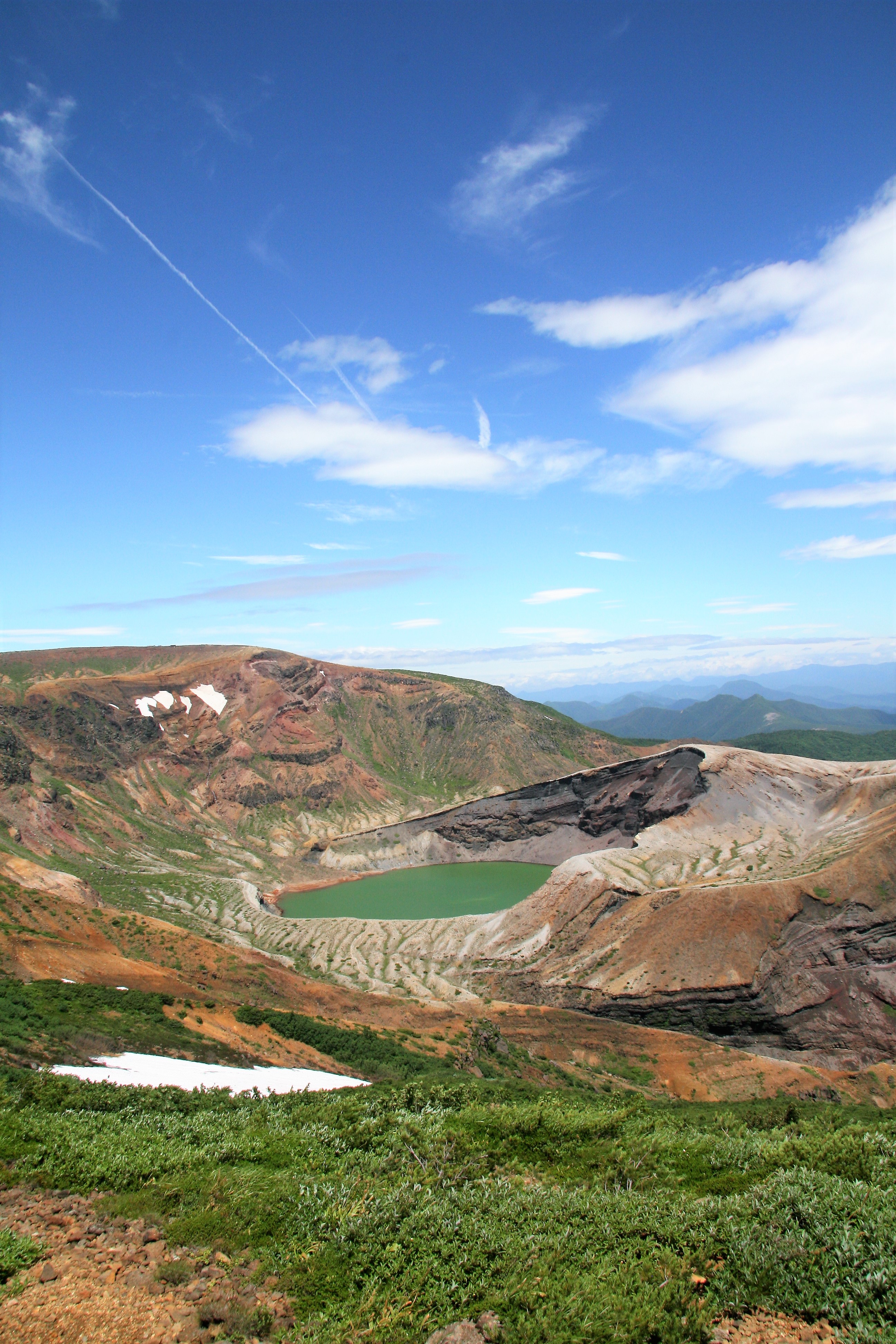
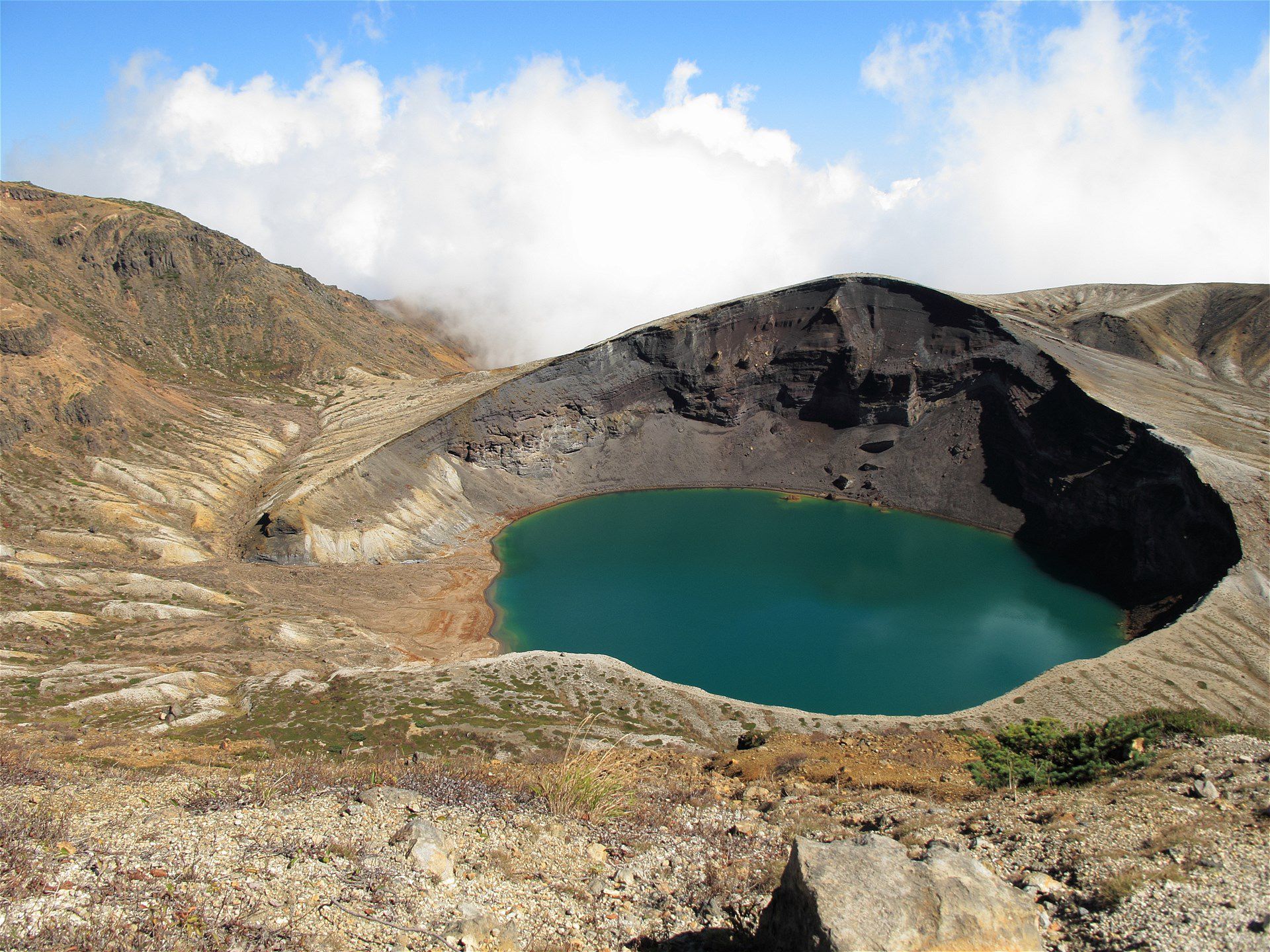
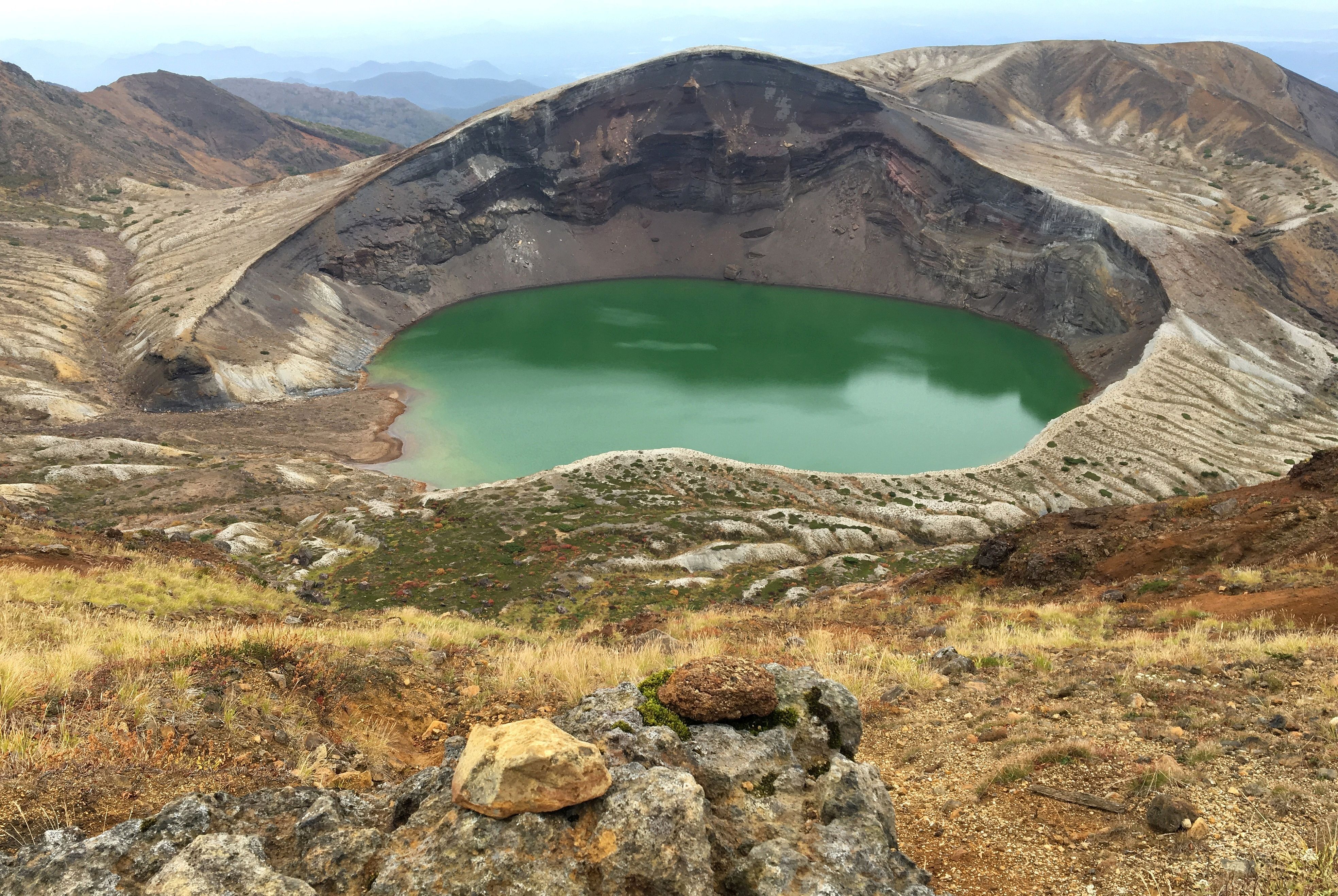
The color changes throughout the day and across seasons. On a clear summer morning, the water can appear almost fluorescent — a vivid, vibrating emerald that photographers consistently describe as “unreal” or “impossible.” On overcast days, it shifts to a muted jade. In autumn, as the surrounding slopes turn red and gold, the water often takes on a deeper, more saturated green against the warm foliage backdrop. In spring, when snow still lingers on the crater rim, the contrast between white and that brilliant turquoise is extraordinary.
And unlike many Japanese natural wonders, Okama is remarkably accessible. The Zao Echo Line — one of the most spectacular scenic toll roads in all of Japan — brings you directly to the crater rim via an easy walk from a parking area. No technical hiking required, no special permits, no guides. Just you, the road, and one of nature’s most extraordinary color shows.
Getting There from Tokyo and Sendai
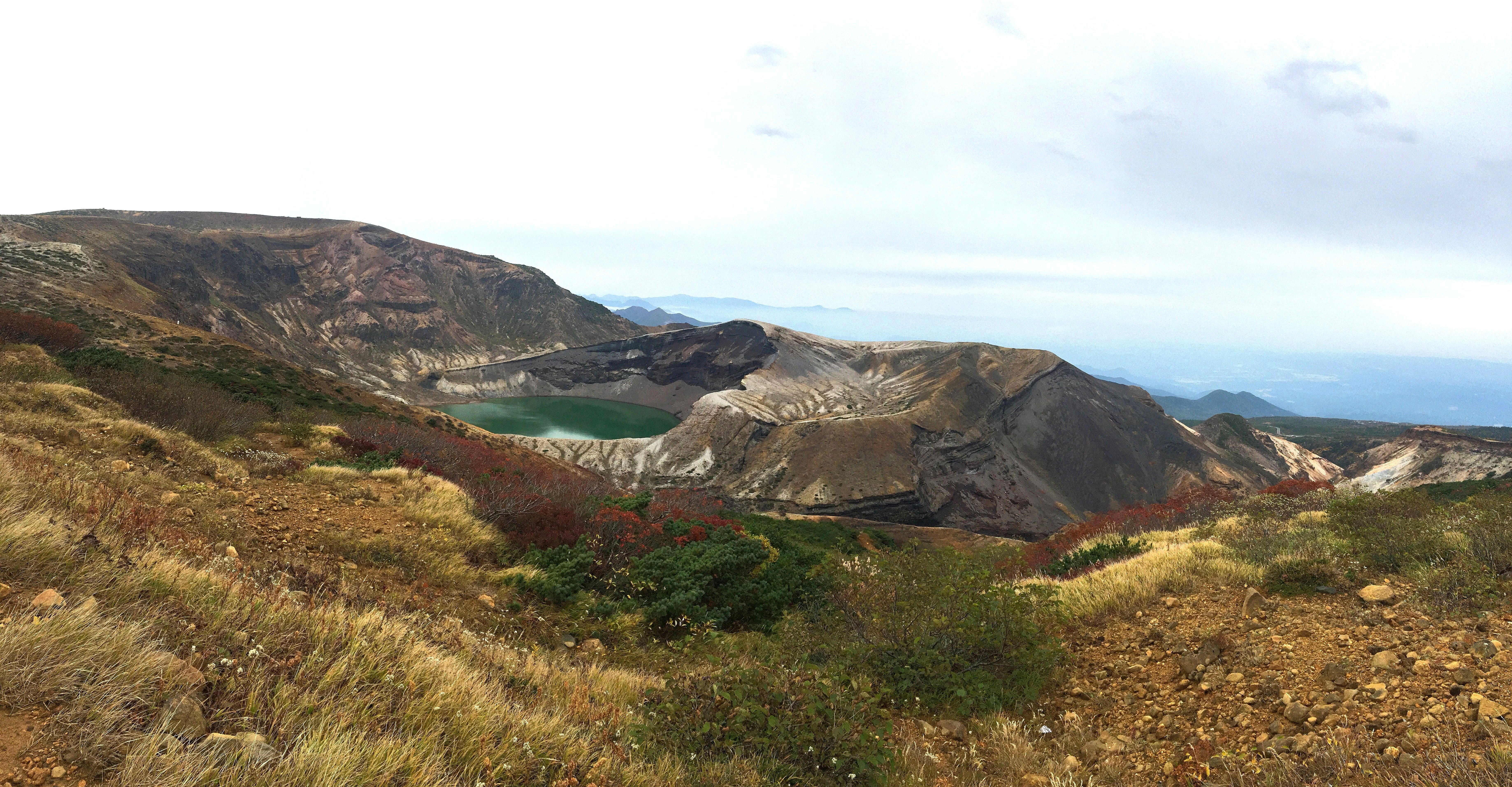
Zao Okama is accessible by car or seasonal bus from both the Miyagi and Yamagata sides of the mountain. A private vehicle is strongly recommended for the most flexible experience.
- From Tokyo by Shinkansen + car: Take the Tohoku Shinkansen from Tokyo Station to Fukushima Station (approximately 1h40m, ¥10,000–¥13,000 / $68–$88 with JR Pass option). Rent a car at Fukushima Station and drive to the Zao Echo Line entrance near Shiroishi-Zao, then up to the crater parking area. Total drive time from Fukushima: approximately 1 hour 30 minutes.
- From Sendai by car: The most popular approach. Drive southwest from Sendai on National Route 457 toward Shiroishi, then up into the mountains on the Zao Echo Line from the Miyagi side. Approximate driving time: 1 hour 30 minutes. The route passes through farming valleys before climbing dramatically into alpine terrain.
- From Yamagata City by car: Drive east on Route 13 and then up the Zao Echo Line from the Yamagata side. Approximate driving time: 60–75 minutes. This approach gives you access to Zao Onsen town along the way — highly recommended for an overnight itinerary.
- By seasonal bus (Miyagi side): During July and August, limited express buses run from Shiroishi-Zao Shinkansen Station to the Okama crater parking area. Check the Miyagi Kotsu or Zao Town website for current schedules. This is an option for those without a car, though services are limited and may require advance booking.
Note: The Zao Echo Line is a toll road. As of 2025, the toll is ¥570 ($4) per vehicle in each direction. The road typically opens in late April and closes in early November when the season’s first heavy snowfall makes conditions dangerous. Road opening and closing dates vary by year — check the Miyagi Prefecture website for current status before planning your visit.
The Zao Echo Line: Japan’s Most Dramatic Scenic Road
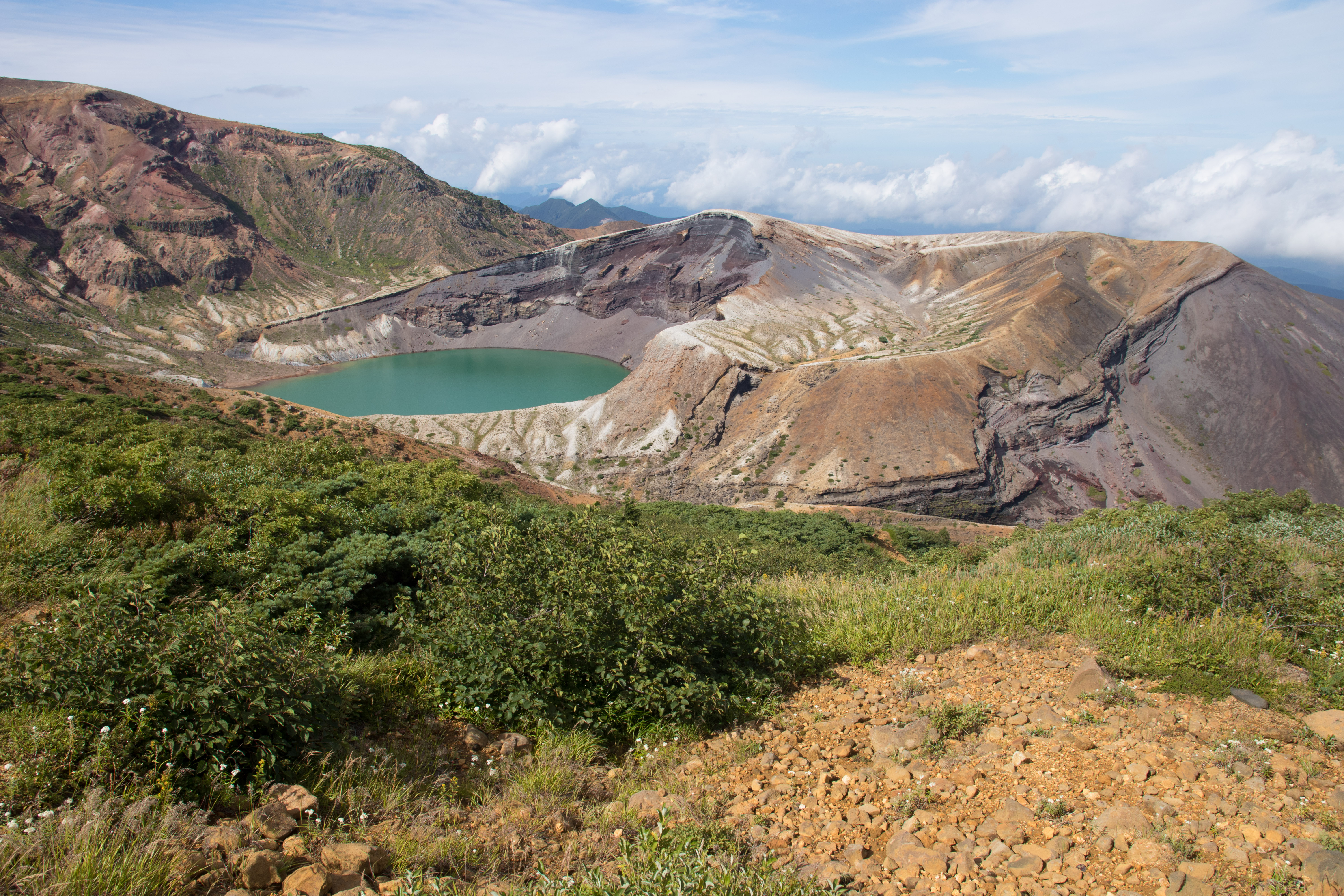
Even if Okama didn’t exist, the Zao Echo Line would be worth driving. This 26-kilometer (16-mile) toll road crosses the Zao mountain range, rising from the lowlands on both the Miyagi and Yamagata sides to a high alpine pass at 1,758 meters (5,768 feet). Along the way, it passes through landscapes that transition from mixed forest to dwarf birch to bare volcanic rock, with panoramic views opening at every curve.
The drive from the Miyagi-side entrance (near Shiroishi) to the Zao Okama parking area takes approximately 40–50 minutes, though most visitors stop several times along the way. The road climbs through what feels like five distinct ecosystems in rapid succession — deciduous forest in the lower reaches giving way to stands of Japanese beech, then mountain alder, then dwarf Siberian cedar (haimatsu), and finally bare volcanic scree near the crater.
In July and August, wildflowers line the roadside at higher elevations: white wood anemone, purple harebells, alpine asters, and the delicate pink cups of Japanese rock roses. If you’re lucky, you might spot Japanese serow (kamoshika), a goat-like mountain ungulate that’s considered a natural monument in Japan, picking its way across the upper slopes.
The road also passes several excellent viewpoints before reaching Okama. The Zao Mountain Summit area (蔵王山頂) has a parking area with views in all directions — on clear days extending to Mt. Gassan to the north and even Miyagi Bay glittering in the distance. Allow yourself time to stop here before heading to the crater.
The Crater Lake Up Close: Colors, Science, and Awe
The crater itself measures approximately 360 meters (1,180 feet) across and plunges to a depth of about 60 meters (197 feet). The rim rises sharply around it, composed of loose volcanic rock and ancient lava flows. The observation platform at the crater’s edge puts you directly above the water — you can look straight down into the bowl of the crater from a railing about 20–30 meters (65–100 feet) above the water surface.
The famous color changes are real and dramatic, though predicting exactly what shade you’ll encounter is part of the lake’s mystery. Several factors influence the color on any given day:
- Season: June and July typically show the most vivid emerald-green, when clear skies and abundant sunlight interact with the sulfur-mineral-rich water at peak intensity. September and October often bring a deeper, more saturated jade or malachite tone as the angle of sunlight changes.
- Weather: Clear, sunny days produce the most vivid colors. The lake essentially needs sunlight to show off its chemistry — overcast days produce a flatter, more muted gray-green. Afternoon light (12–3pm) often shows the color at maximum intensity.
- Volcanic activity: Okama is an active volcanic crater. During periods of slightly increased volcanic activity (which happens periodically without being dangerous to visitors), the sulfurous minerals in the water can shift, changing the color toward grayer or more opaque tones. This is normal and part of the lake’s dynamic character.
The Japan Meteorological Agency (JMA) monitors Zao for volcanic activity and maintains an alert level system. At normal (Level 1) status, visitors can reach the crater rim without restrictions. If the alert level rises, exclusion zones may be put in place. Always check the JMA website or the Zao Town tourism office for current alert levels before your visit.
Hiking Around the Summit Area
The observation area at Okama is accessible via a short, easy walk from the summit parking area — about 500 meters (1,640 feet) and relatively flat, suitable for most visitors. But if you want to go further, the Zao mountain trail system offers some of the best alpine hiking in Tohoku.
The Crater Rim Trail: A 30–40 minute circuit around the upper crater rim, offering views of Okama from multiple angles. The path is rocky and uneven in places — wear sturdy footwear. The full circuit reveals how dramatically the color appears different depending on the viewing angle and the position of the sun.
Katte-dake Summit (1,750m / 5,741ft): A 20–30 minute additional climb from the crater rim parking area to the highest accessible point in the Zao area. The views from here are panoramic in all directions: south toward Fukushima, west into Yamagata, north toward Miyagi Bay on clear days.
The Jizo-san Area: A short hike north of the summit area leads to the famous Jizo-san peak (1,736m), where hundreds of Jizo statues — small stone Buddhist figures — stand in rows. In winter, these become the snow monster-covered forms that you see in photographs. In summer, their weathered stone faces and small red bibs are quietly touching in a different way.
The Byakkodo Trail: A more ambitious 3–4 hour route that descends from the summit area to Zao Onsen town, passing through the dramatic volcanic landscape above the treeline before entering the ancient beech forest. This is one of the recommended hikes in the region, but requires arranging transport back up or a taxi from Zao Onsen.
Zao Onsen: Pairing the Crater with One of Japan’s Best Hot Springs
About 30 minutes’ drive below the Okama crater on the Yamagata side of the mountain lies Zao Onsen — a hot spring resort town with a character quite unlike anything else in Japan. While most Japanese onsen towns are known for their clear or slightly milky waters, Zao Onsen’s springs are dramatically different: white, thick, and intensely sulfurous, with a pH of around 1.2 — some of the most acidic hot spring water in the country.
The visual effect of bathing in Zao Onsen water is unmistakable and a little startling. The milky white water is completely opaque, hiding everything below the surface. Step in and your body disappears from the knees down. The sulfur smell is strong — not unpleasant once you adjust, but impossible to ignore. Your skin will emerge smooth and slightly tingly, and the traditional claim is that Zao’s sulfur springs are particularly effective for skin conditions including eczema and psoriasis.
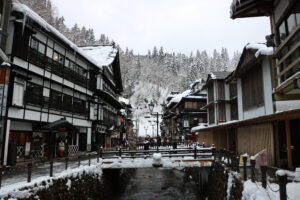
The town itself is charming in a slightly weathered, honest way. Unlike the manicured perfection of hot spring villages like Ginzan Onsen, Zao Onsen has the lived-in quality of a place that exists primarily for ski resort workers and serious onsen regulars rather than Instagram aesthetics. The main Kawaramachi street has been a ryokan and food street since at least the 17th century. The wooden buildings, covered arcades, and persistent smell of sulfur create an atmosphere that feels genuinely old in a way that many “traditional” Japanese towns don’t quite manage.
The Zao Onsen Dai-Rotenburo (大露天風呂) — the main outdoor public bath — is one of the most impressive bathing facilities in Tohoku. Built into a riverside gorge and surrounded by natural rock and cedar trees, the outdoor bath holds hundreds of bathers at peak times in several connected pools of different temperatures, all fed by Zao’s distinctive white sulfur water. Entry: ¥700 ($5) for adults; open from late May through late October (closed in winter).
Best Time to Visit Zao Okama
- Late May–June: The Echo Line opens for the season (usually late April, depending on snow conditions). In May, you often have snow remaining on the crater rim while the water has already achieved its vivid color — an extraordinary contrast. June is generally excellent: good color, wildflowers starting to bloom, smaller crowds.
- July–August: Peak summer brings the most vivid emerald-green water under clear blue skies. The summit area is pleasantly cool (around 15–20°C / 59–68°F) while the lowlands swelter. Weekend days see the largest crowds; weekday mornings are remarkably peaceful.
- September–October: Autumn foliage season transforms the Zao Echo Line into one of the most dramatic scenic drives in Japan. The combination of red and gold leaves with the vivid lake is extraordinary. The water takes on a deeper, more complex color — somewhere between jade and malachite — as the light angle changes. This is arguably the most photogenic time.
- Early November: The road typically closes in early November. The first snow dusts the crater rim, creating dramatic black-and-white contrasts with the still-colored water. If you can visit in the days before closure, you’ll see something very few people ever see.
- Winter (November–April): The crater is inaccessible. The mountain becomes Zao Ski Resort, and the snow monsters emerge on the upper slopes. Winter is spectacular but offers a completely different experience.
Where to Eat: Zao Area Food Guide
Food is one of Zao’s great pleasures — the area draws on two of Japan’s finest food prefectures: Yamagata (beef, cherries, soba, sake, and miso) and Miyagi (seafood, gyutan beef tongue, and rice).
Zao Onsen Town Restaurants
The ryokan and restaurants along Zao Onsen’s Kawaramachi street serve simple, hearty mountain food: soba noodles made from Yamagata buckwheat, miso-based soups, wild vegetable (sansai) dishes, and grilled local meats. The onsen town food is honest and satisfying rather than gastronomically ambitious — exactly right after a day on the mountain. Budget ¥900–¥1,400 ($6–$10) for lunch.
Yamagata Beef (山形牛)
Yamagata Prefecture produces outstanding wagyu beef — the Yamagata Gyu brand has A5 rankings that rival Yonezawa beef in quality, often at slightly more accessible prices. Several restaurants in Zao Onsen town and Yamagata City serve Yamagata beef in yakiniku (grilled at the table), sukiyaki, and shabu-shabu preparations. Expect ¥3,000–¥6,000 ($20–$41) for a quality beef set meal.
Imoni (芋煮)
Yamagata’s iconic autumn hot pot is essential eating in September and October. Imoni is a simple but deeply satisfying stew of taro root (satoimo), konjac, leeks, beef, and soy-based or miso broth that families and friends traditionally cook in giant outdoor pots along the riverbanks of Yamagata City every September. In Zao Onsen restaurants, you can order imoni as a smaller indoor version throughout the autumn season. The Yamagata version uses beef and soy broth; the Miyagi version uses pork and miso — both are excellent, and comparing them is one of the pleasures of traveling the Zao area.
Dashi (Yamagata Style)
Not to be confused with the soup stock of the same name, Yamagata dashi is a summer dish of finely chopped cucumber, eggplant, okra, shiso, and dried bonito mixed in soy sauce. It’s served cold over rice or tofu, and in summer it appears on virtually every table in Yamagata as a refreshing side dish. Simple, vivid, and utterly delicious — the kind of food that makes you wonder why the rest of the world doesn’t eat this way.
Yamagata Ramen
Yamagata Prefecture has one of the highest ramen-eating rates per capita in Japan (a claim with strong regional competition). The local style in the Zao area tends toward a mild, clear chicken-based broth with medium-thick straight noodles — elegant, clean-flavored, and deeply comforting. In Yamagata City (30 minutes from Zao Onsen), the ramen scene is excellent, with dozens of well-regarded shops clustered near the station.
Where to Stay Near Zao Okama
Budget (Under ¥8,000 / $55 per night)
Zao Onsen has several minshuku (family-run guesthouses) that offer simple rooms and home-cooked meals at budget prices. Minshuku Yuki, Minshuku Tanaka-ya, and several other family operations in the lower part of town offer clean, welcoming rooms for ¥5,000–¥7,000 ($34–$48) per person including breakfast. Shared onsen baths with Zao’s distinctive white sulfur water are always included.
Mid-Range (¥8,000–¥25,000 / $55–$170)
The mid-range ryokan in Zao Onsen offer outstanding value: traditional rooms with tatami flooring and futon beds, multi-course kaiseki or semi-kaiseki dinners featuring local Yamagata ingredients, and access to beautiful in-house onsen facilities using Zao’s distinctive sulfur water. Ryokan Sanzoku and Hotel Tokiwa are frequently recommended in this range. Prices including dinner and breakfast typically run ¥12,000–¥25,000 ($82–$170) per person.
Luxury (¥25,000+ / $170+)
For a premium Zao experience, Zao Onsen has several high-end ryokan with elegant room design, sophisticated kaiseki cuisine emphasizing seasonal Yamagata produce, and private onsen facilities. Zao Onsen Onyado Nono (お宿のの) and Yumoto Takamiya are among the most acclaimed, with rooms that combine traditional aesthetics with modern comfort. These properties book quickly during autumn foliage season — reserve well in advance.
Practical Tips for Visiting Zao Okama
- Check road conditions before you go. The Zao Echo Line closes annually in November (exact date varies) and reopens in late April or early May. Even within the open season, the road can close temporarily after heavy rain or rockfall. Check the Miyagi Pref. road information website before driving.
- Check the volcanic alert level. Zao is an active volcano monitored by the Japan Meteorological Agency. At normal (Level 1) status, the crater is fully accessible. At Level 2, an exclusion zone is established around the crater. Before visiting, check the JMA website (www.jma.go.jp) or ask at your hotel.
- Bring layers. The summit area sits at 1,600m+ and can be 10–15°C (18–27°F) cooler than the lowlands, even in summer. Even on a warm summer day, bring a jacket. Wind at the crater rim can be significant.
- The toll road requires cash or some IC cards. The Echo Line toll (¥570 each way) is collected at toll booths. Bring cash to be safe.
- Morning light is best for photography. The sun hits the crater from the east in the morning, creating maximum reflection and color saturation. Afternoon light comes from behind the viewpoint, which can flatten the colors. Aim to arrive at the crater between 9–11am.
- Weekdays are dramatically less crowded. Summer weekends at Okama can be very busy, with long lines for the viewpoint. Any weekday morning from June–October offers a much quieter experience.
- Combine with Zao Onsen. The hot spring town on the Yamagata side is only 30 minutes below the summit. Plan your visit to include at least a lunch and soak in Zao Onsen — the combination of volcanic landscape above and volcanic spring water below makes for an unforgettable day.
- Wear appropriate footwear. The path from the parking area to the crater rim is paved but has some uneven sections. Good walking shoes are fine; hiking boots give you flexibility if you want to go further on the crater rim trail.
- Gas up before the mountain. There are no gas stations on the Zao Echo Line. Fill up in Shiroishi (Miyagi side) or Kaminoyama (Yamagata side) before ascending.
- Photography note: The vivid color of Okama can fool automatic camera settings into underexposing. Try +0.5 to +1 exposure compensation if your shots look darker than the actual scene.
Sample 2-Day Zao Itinerary
Day 1: Drive the Echo Line and Crater Visit
8:00am: Depart Sendai by rental car heading southwest on Route 457 toward Shiroishi. Stop for breakfast at a convenience store or bakery along the way.
9:00am: Enter the Zao Echo Line from the Miyagi (Shiroishi) side. Begin the 26km scenic drive up into the mountains. Stop at the designated viewpoints — the higher you go, the more dramatic the views become.
9:45–10:30am: Arrive at the Zao Okama summit parking area. Walk the 500m path to the crater rim observation point. Spend at least 45 minutes at the crater — the view rewards patience. Walk the optional crater rim circuit for multiple perspectives.
10:30–11:30am: Continue driving west on the Echo Line toward Yamagata Prefecture. Stop at the Zao Mountain Summit observation area for panoramic views. The descent into Yamagata is spectacular.
12:00pm: Arrive Zao Onsen town. Check in to your ryokan. Have lunch at a local restaurant — try the soba or a simple imoni set.
1:30–4:00pm: Explore Zao Onsen town on foot. Walk the covered shopping arcades, visit the Zao Jinja shrine, and browse local shops selling Yamagata sake and wild vegetable pickles (sansai tsukemono).
4:00–6:00pm: Soak in the Zao Onsen Dai-Rotenburo outdoor public bath (open May–October, ¥700 / $5). The evening light in the gorge around the bath is beautiful.
7:00pm: Kaiseki dinner at your ryokan, featuring seasonal Yamagata ingredients. Zao beef, mountain vegetables, fresh tofu, and local sake.
Day 2: Yamagata City and Yamadera
9:00am: Check out of ryokan. Drive 30 minutes to Yamagata City for a morning of city exploration.
9:30–11:30am: Explore central Yamagata City: Kajo Park (site of Yamagata Castle ruins, beautiful in spring and autumn), the Bunka-kan cultural center, and the covered shopping arcades around the station.
12:00pm: Lunch in Yamagata City. Try Yamagata imoni at a restaurant near the station, or sample local ramen. The city’s covered Nanokamachi shopping street has several good options.
1:30pm: Drive 20 minutes east to Yamadera (Risshakuji Temple) — one of Tohoku’s most iconic sights, a hillside temple complex reached by climbing 1,015 stone steps through ancient cedar forest. Allow 2 hours.
3:30pm: Return to Yamagata Station. Take the Shinkansen (Yamagata Line) back toward Sendai or Tokyo, or continue by car.
Final Thoughts: A Lake Unlike Any Other
Zao Okama is one of those rare places that photographs can prepare you for intellectually but not emotionally. You can look at hundreds of images of that impossible green water in its volcanic bowl, read about the sulfur chemistry and the color-changing properties, see the panoramic shots of autumn leaves surrounding the crater. And then you stand at the rim and the reality of it — the vastness, the color, the strange silence of a lake where nothing lives — hits you in a way that photographs never quite convey.
Part of what makes Okama so affecting is its context: you’re standing on an active volcano, looking down into a crater that last erupted in 1940 and is still monitored around the clock by seismologists. The land is not inert here. The mountain is alive in a geological sense that most landscapes are not, and the lake is its most visible expression — a constantly shifting, chemically active, visually extraordinary demonstration that the world’s surface is still in the process of being made.
Plan a full day for Zao: the crater in the morning, the Echo Line drive, and the hot springs in the afternoon. If you can stay overnight in Zao Onsen, you’ll wake up the next day with the particular quality of rest that comes only from sleeping in a place where the ground itself is warm, the air smells of sulfur, and the mountain outside your window holds colors that ordinary chemistry shouldn’t allow.
From Zao, the rest of Tohoku spreads in every direction: Yamadera to the east, Yamagata City below, Miyagi’s coast to the northeast, and the great arc of the Ou Mountains to the north and south. Zao is a gateway and a destination both — a place that rewards depth of stay and serves as a natural hub for exploring the best of what northeastern Japan has to offer.
Related Articles You Might Enjoy
- Gassan Ski Resort, Yamagata: Skiing Into Summer on Japan’s Sacred Mountain
- Sakata & the Mogami River, Yamagata: Japan’s Most Underrated Merchant City & a Legendary River Cruise
- Yamadera (Risshakuji Temple): Complete Guide to Yamagata’s Mountain Temple
- Tohoku Winter Onsen & Ryokan Guide: Hot Springs, Snow & Japanese Inn Culture
- Tohoku Ski Resort Guide: Zao Snow Monsters, Appi Kogen & the Best Slopes in Northeast Japan


コメント