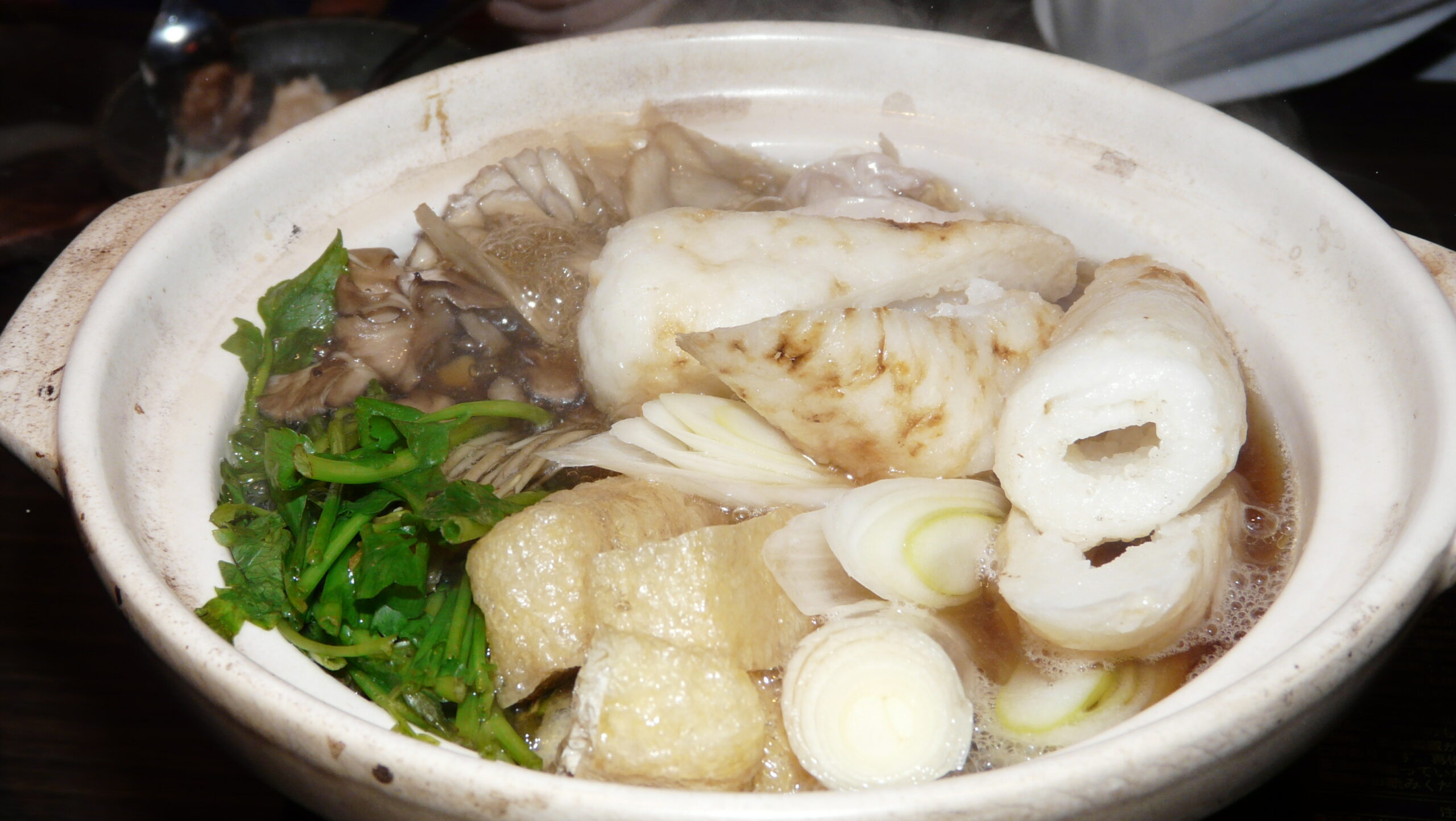
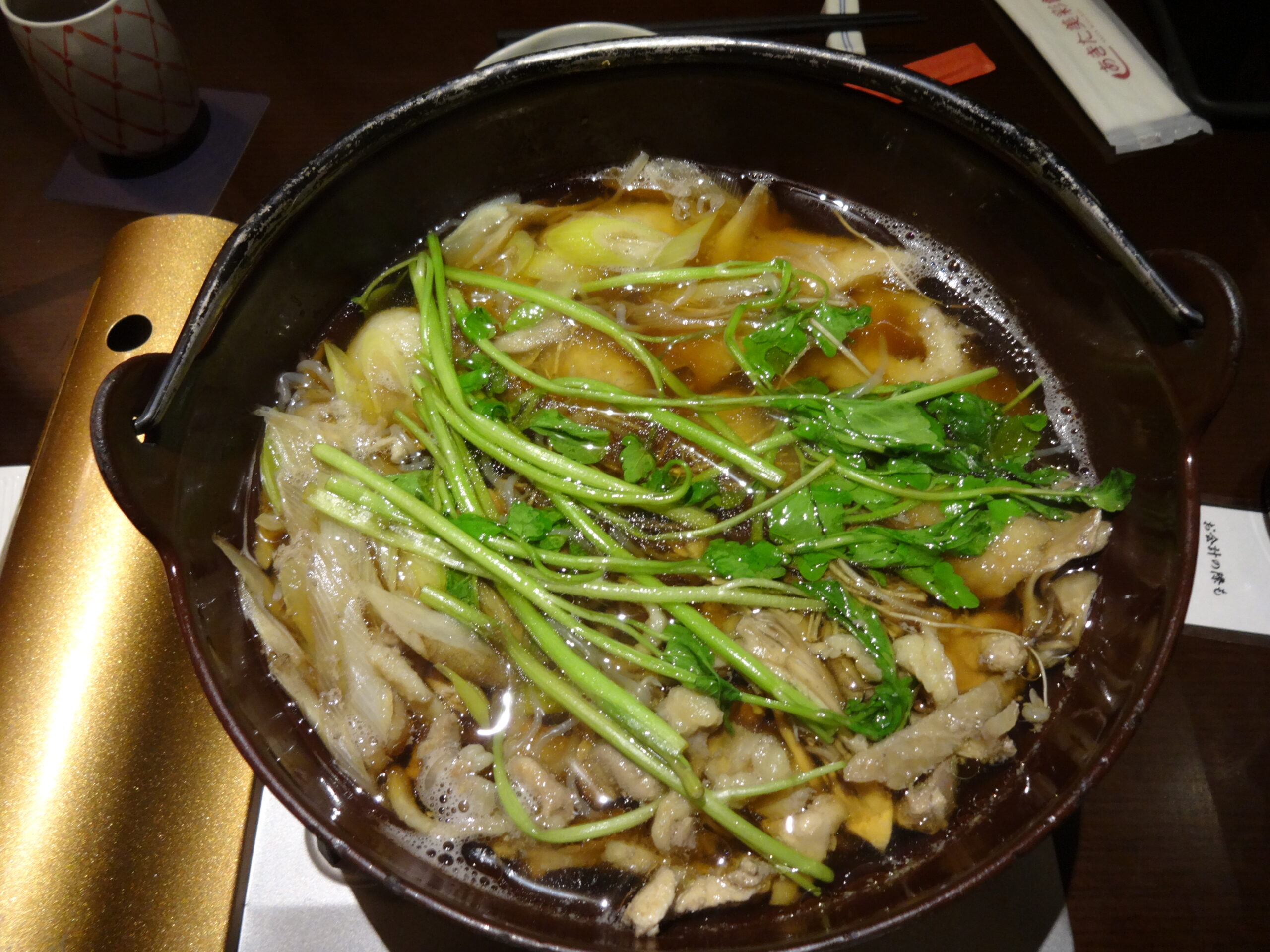
As the leaves turn gold on the mountains and the first frost arrives in Akita Prefecture, families across the region begin preparing one dish above all others: kiritanpo nabe (きりたんぽ鍋). It’s a hot pot unlike anything most Western visitors have ever encountered — rice cylinders toasted over open flame, the prized Hinai-jidori chicken simmered in an intensely aromatic soy and mirin broth, burdock root, maitake mushrooms, and winter vegetables cooking together in a communal pot at the center of the table. It is one of Japan’s great comfort foods, and eating it in Akita, where the tradition was born, is an experience every visitor to Tohoku should seek out.
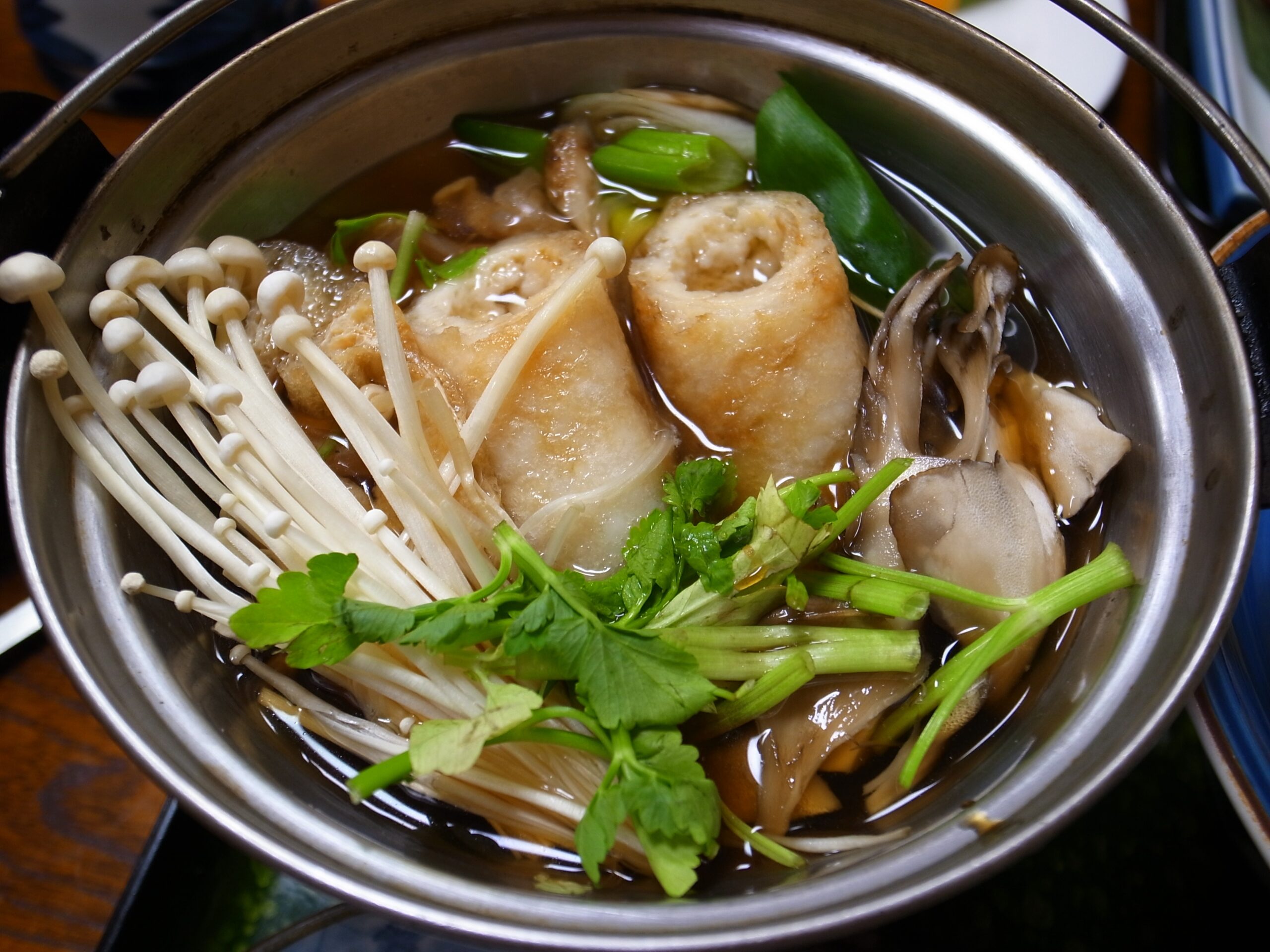
What Is Kiritanpo? Understanding Akita’s Iconic Rice Cake
The name kiritanpo breaks down simply: “kiri” means to cut, and “tanpo” refers to a padded lance or cylinder. These rice cylinders are the defining element of the dish, and understanding how they’re made helps explain why they’re so extraordinary to eat.
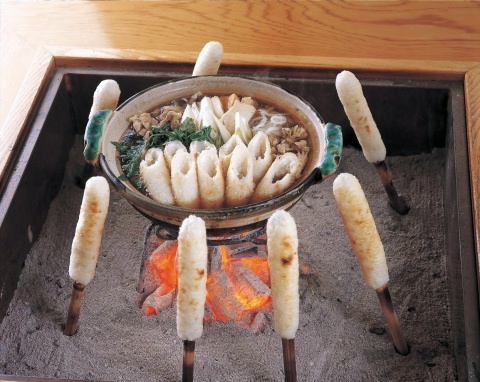
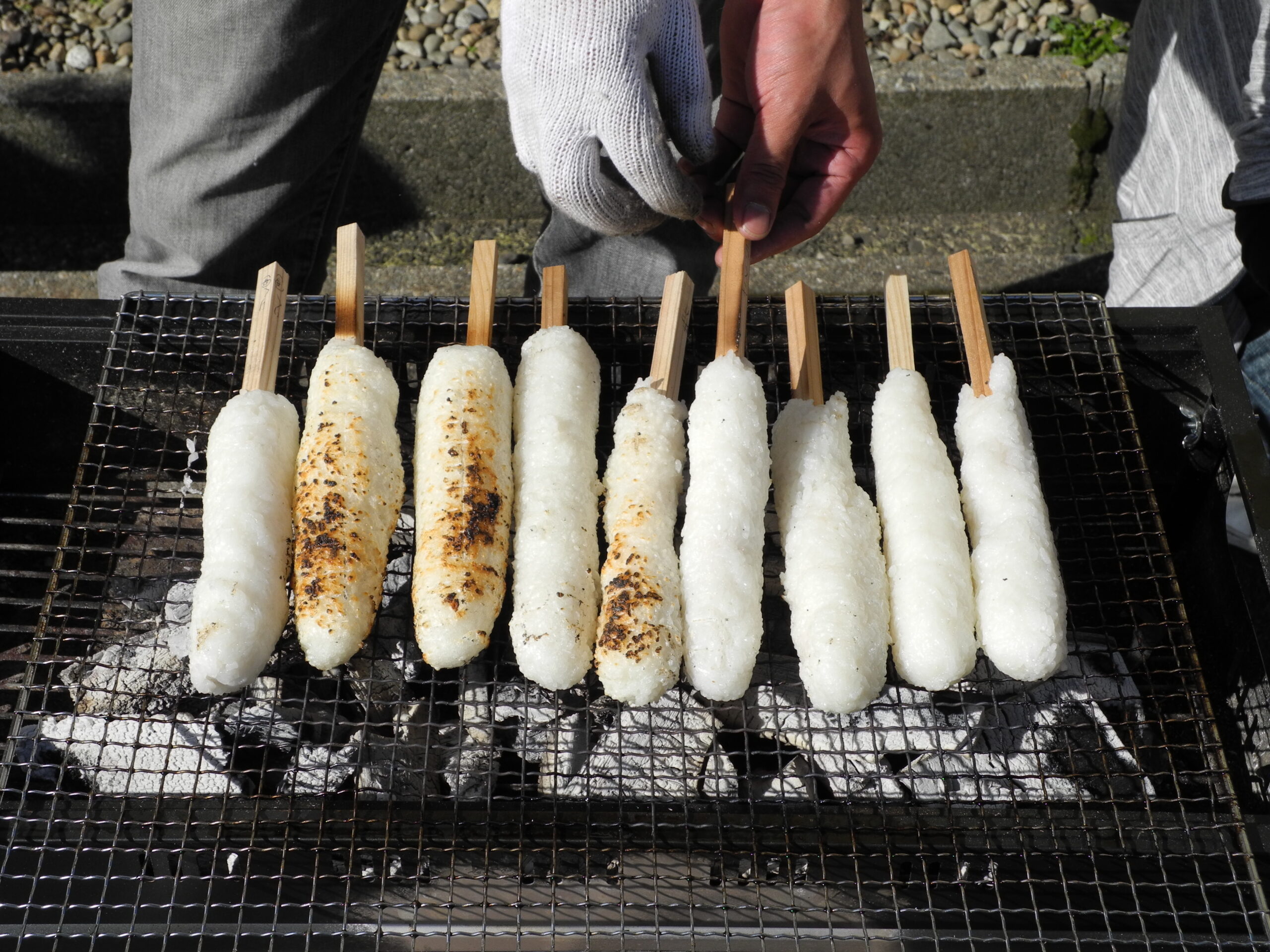
Fresh cooked short-grain Akita rice — ideally the celebrated Akita Komachi variety, considered one of Japan’s finest rice cultivars — is coarsely pounded until slightly sticky, but not fully mashed like mochi. The semi-pounded rice is then molded around cedar skewers in thick cylinders, typically about 3–4 inches (8–10cm) long and 1.5 inches (4cm) in diameter. These skewered cylinders are then held over an open charcoal or wood flame and rotated continuously until the exterior turns golden and develops faint char marks, while the interior remains soft and pillowy.
The result has a dual texture that makes kiritanpo unique: the slightly smoky, lightly crisp exterior gives way immediately to soft, sticky rice that absorbs the flavors of whatever it’s cooked in. When added to the nabe broth, the kiritanpo absorb the deep, savory liquid while retaining their shape and that contrast of textures. By the end of the meal, when the broth has concentrated and the last kiritanpo pieces have been simmering longest, they become almost transcendentally good — deeply flavored, a little silky at the edges, still soft within.
The Story Behind Kiritanpo: Origins in Akita’s Mountain Culture
The origin story of kiritanpo is deeply practical, rooted in Akita’s historical culture of mountain hunting and foraging. According to tradition, hunters and woodsmen in the mountains of northern Akita Province would mold leftover rice onto cedar branches for cooking over campfires — a portable, efficient way to use surplus cooked rice during long days in the forest. After roasting, the rice cylinders would be eaten plain or, in colder months, added to boiling broth to make a warming meal.
The technique spread to farming communities, where it evolved into the ceremonial hot pot dish we know today. The Ani River basin in northern Akita — the heartland of kiritanpo culture — is a land of dense forests, pure rivers, and harsh winters that made warming, communal meals essential to social life. By the Edo period (1600–1868), kiritanpo nabe had become so associated with Akita that it functioned as both everyday comfort food and festive celebration dish.
The dish’s connection to autumn and winter is more than seasonal convenience. In traditional Akita culture, kiritanpo nabe is specifically eaten from early October — after the rice harvest — through winter, using that year’s freshly harvested rice. Eating kiritanpo before the rice harvest is considered improper by traditionalists. This connection to the agricultural cycle, to place and season, is part of what makes kiritanpo nabe so meaningful to Akita people.
The Key Ingredients That Make Kiritanpo Nabe Special
A properly made kiritanpo nabe is a study in complementary flavors and textures, each ingredient chosen carefully to contribute to the whole.
Hinai-jidori Chicken (比内地鶏)
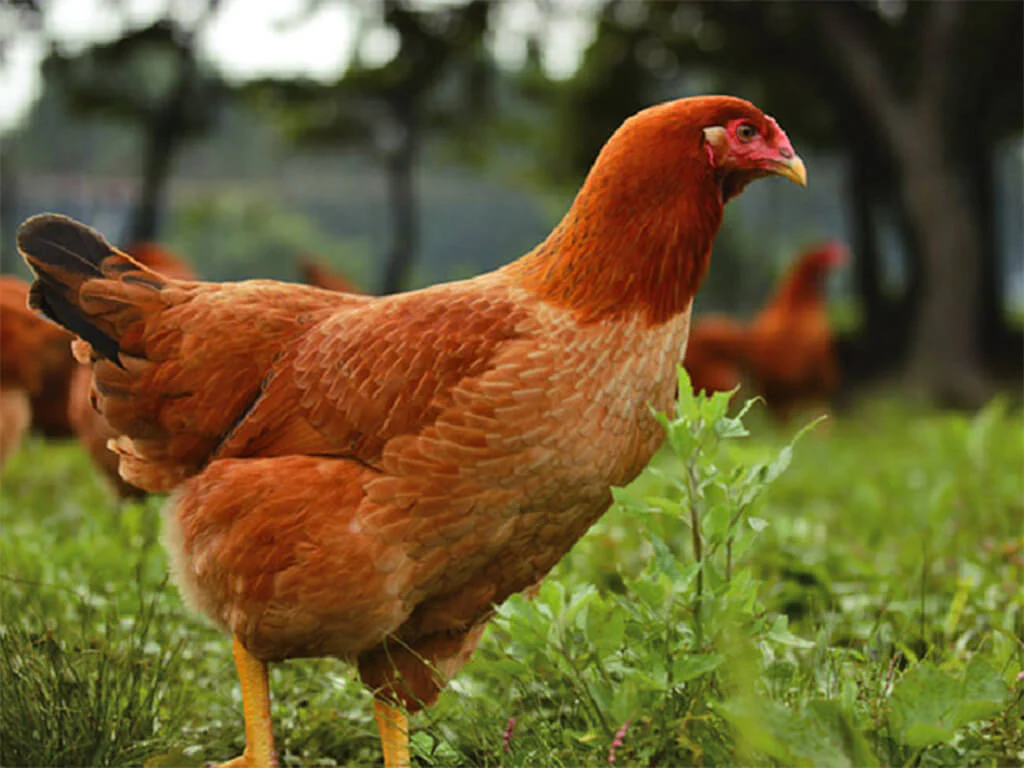
This is arguably the most important non-rice ingredient. Hinai-jidori is one of Japan’s three great free-range chicken breeds, raised in Akita Prefecture for a minimum of 180 days (compared to 40–50 days for standard commercial chicken). The extended raising period produces meat with significantly more muscle development: firmer texture, deeper flavor, and a rich fat that doesn’t taste greasy but instead adds an almost game-bird intensity. In kiritanpo nabe, the chicken — typically cut on the bone — simmers in the broth for 30–40 minutes, releasing collagen and fat that transforms the liquid into something deeply nourishing.
Finding genuine Hinai-jidori chicken can be challenging even within Japan. Look for restaurants that specifically advertise “比内地鶏使用” (using Hinai-jidori) on their menu — the price difference versus standard chicken kiritanpo will be significant (expect to pay ¥1,500–¥3,000 more per person) but the flavor difference is dramatic.
Gobo (Burdock Root)
Long strips of burdock root — earthy, slightly sweet, with a distinctive fibrous crunch — are essential to kiritanpo nabe. Gobo is a vegetable almost unknown in Western cooking but beloved in Japanese cuisine for its deep, complex flavor. In the nabe, it releases an earthy sweetness into the broth that perfectly balances the richness of the chicken and the intensity of the soy-based seasoning.
Maitake Mushrooms (舞茸)
Akita Prefecture is renowned throughout Japan for its maitake mushrooms (literally “dancing mushroom” — named for the joy harvesters allegedly felt upon finding them in the wild). These frilly, fan-shaped mushrooms have an extraordinary umami depth that makes them among the most flavorful mushrooms in Japanese cuisine. Fresh wild maitake in kiritanpo nabe is a luxury that even most Japanese people rarely experience — in season (late September to October), a good Akita restaurant may use locally foraged specimens that add an intensity simply unavailable year-round.
The Broth
The base is a chicken stock — ideally made from the same Hinai-jidori carcasses — seasoned with soy sauce, mirin, sake, and a touch of sugar. The balance is crucial: assertively savory but not salty, with enough sweetness to complement the burdock and mushrooms but not enough to dominate. As the ingredients cook, they transform the broth continuously, so by the end of a properly made kiritanpo nabe, the liquid in the pot is an entirely different thing than it started as — concentrated, complex, and extraordinarily satisfying.
Where to Eat Kiritanpo Nabe in Akita
Kiritanpo nabe is widely available throughout Akita Prefecture, but quality varies significantly. Here’s where to find the best.
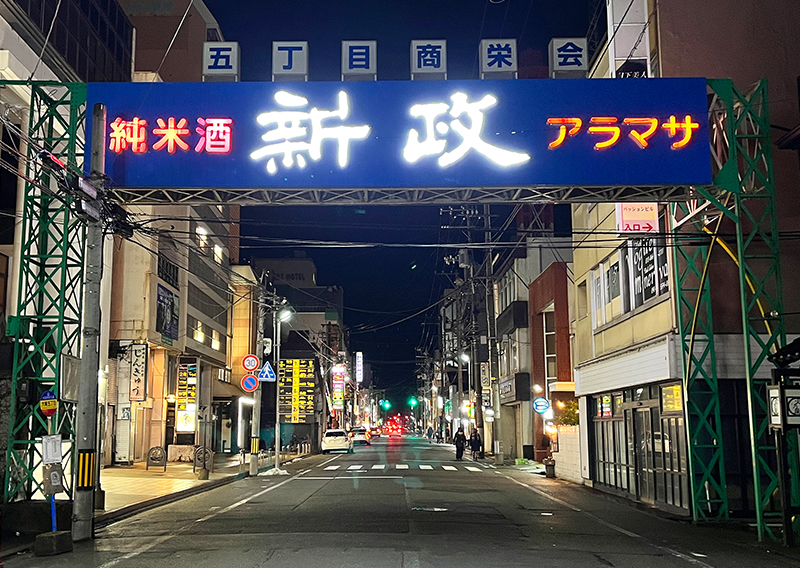
Kawabata Restaurant District, Akita City
The Kawabata area near Akita Station is the city’s traditional restaurant hub, and several establishments here specialize in kiritanpo nabe using certified Hinai-jidori chicken. Look for Akita Ryori Akimoto (秋田料理 秋元) and similar traditional Akita cuisine restaurants. A full kiritanpo nabe course here, including appetizers and sake pairings, runs approximately ¥4,000–¥8,000 ($28–$55) per person.
Odate City — The Heartland of Hinai-jidori
If you want kiritanpo nabe using the most authentic, locally sourced ingredients, Odate City in northern Akita — the traditional home of Hinai-jidori chicken — is the destination. Restaurants here serve kiritanpo nabe with chicken that was raised on local farms within kilometers of the restaurant. The experience is similar to visiting wine country: the connection between place, product, and plate is palpable. From Akita Station, Odate is about 90 minutes north on the JR Ou Main Line.
Kiritanpo Village (きりたんぽ村) near Odate
This agricultural tourism facility offers hands-on kiritanpo making experiences alongside meals. Visitors can learn to mold rice onto cedar skewers and toast them over an open fire before eating their handiwork in a full nabe course. The experience is wonderful for families and gives a genuine understanding of the food’s craftsmanship. Advance booking required; packages from approximately ¥3,000 ($20) per person including the meal.
Ryokans with Kiritanpo Nabe Dinner Courses
The most memorable kiritanpo nabe experience is often in a traditional ryokan, where the hot pot arrives as part of a multi-course dinner and is prepared table-side. Ryokans in Akita City and the Nyuto Onsen area frequently feature kiritanpo nabe as a dinner option, particularly from October through February. The combination of a hot spring soak followed by kiritanpo nabe by candlelight is difficult to surpass as a Tohoku winter experience.
The Kiritanpo Festival
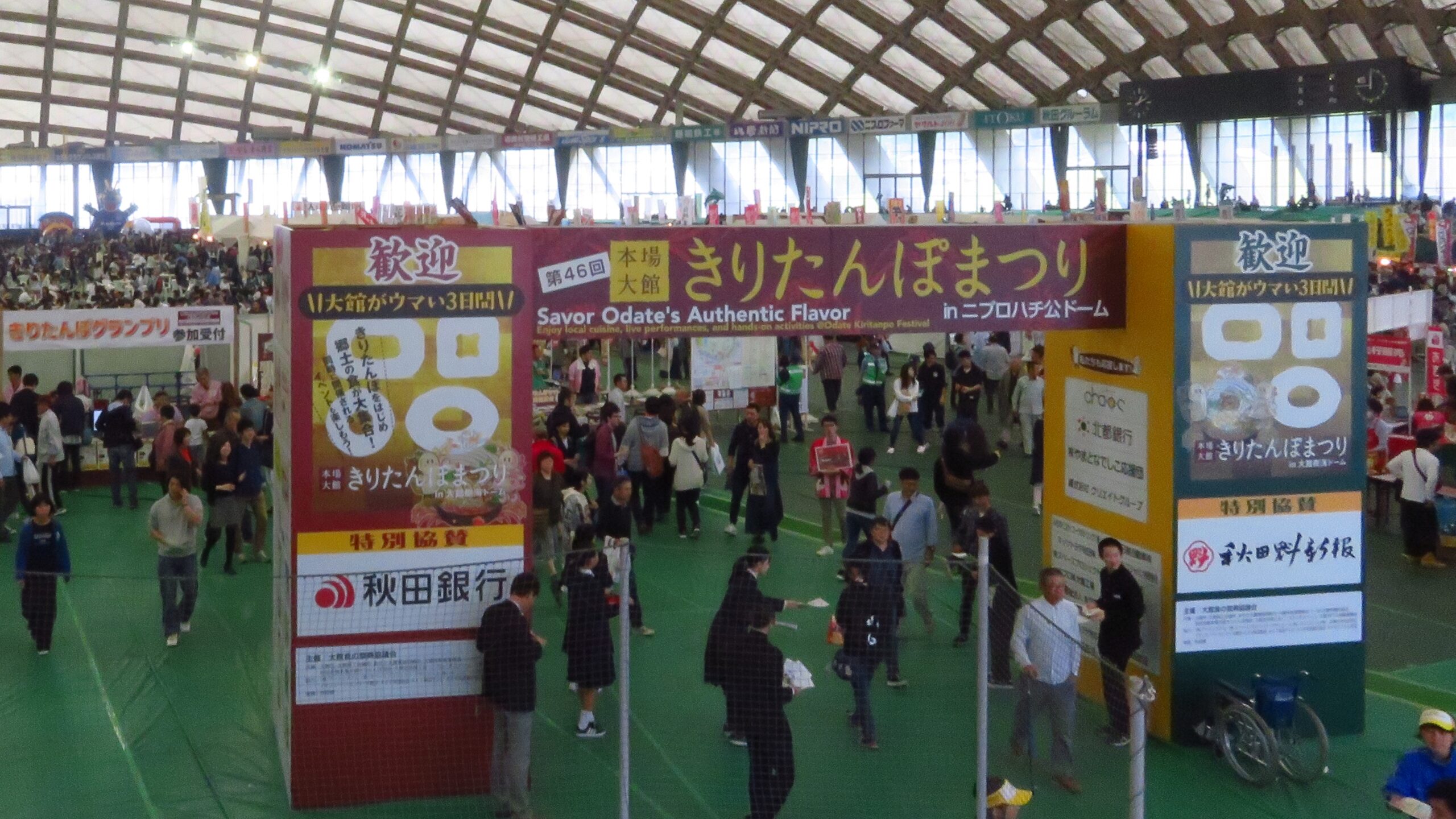
If you happen to be in Akita in mid-October, the Kiritanpo Festival (きりたんぽまつり) in Odate City is a wonderful event centered entirely around celebrating this beloved dish. Festival-goers watch kiritanpo-making demonstrations, participate in competitions to see who can produce the best rice cylinders, eat communal kiritanpo nabe at long outdoor tables, and shop from vendors selling everything from fresh kiritanpo kits to Hinai-jidori products. It’s a joyful, locally-focused festival that gives visitors a genuine window into Akita food culture. The festival typically takes place on the third weekend of October.
Making Kiritanpo Nabe at Home
One of the great joys of visiting Akita is bringing the experience home. Most major Japanese supermarkets sell pre-made kiritanpo (either fresh or shelf-stable), and specialty Akita food shops — including stalls in Akita Station’s souvenir area — sell full kiritanpo nabe kits including the rice cylinders, seasoned broth concentrate, and dried mushrooms.
To recreate kiritanpo nabe at home, you’ll need:
- Kiritanpo rice cylinders (available pre-made from Japanese supermarkets and online)
- Free-range chicken thighs, ideally on the bone
- Burdock root (available at Asian grocery stores as “gobo”)
- Maitake, shiitake, or enoki mushrooms
- Dashi stock, soy sauce, mirin, and sake for the broth
- Spring onions, Japanese parsley (mitsuba), and tofu to fill out the pot
The most important tip for home cooking: don’t rush the simmering. Kiritanpo nabe develops its best flavor after 30–40 minutes of gentle cooking, as the chicken collagen dissolves into the broth and the kiritanpo absorb the liquid. Patience is rewarded.
Getting to Akita
- From Tokyo by Shinkansen: JR Akita Shinkansen (Komachi) from Tokyo Station to Akita, approximately 3.5–4 hours. Cost approximately ¥17,000–¥19,000 ($117–$130) one way. JR Pass valid.
- From Sendai: Express bus Sendai–Akita takes approximately 3.5 hours, around ¥3,000–¥5,000 ($20–$34). Or take the train via Yamagata with some transfers.
- By air: Direct flights from Tokyo Haneda to Akita Airport (about 75 minutes) are available on JAL and ANA. Prices vary from ¥8,000–¥25,000 ($55–$170) depending on booking window. Airport bus to Akita Station takes 40 minutes.
Best Time to Eat Kiritanpo Nabe
- October (peak season): The absolute best time — freshly harvested Akita Komachi rice, maitake mushrooms at peak freshness, and Hinai-jidori chicken in optimal condition. The Kiritanpo Festival in Odate is mid-October. Highly recommended.
- November – February (cold season): Kiritanpo nabe is deeply satisfying in cold weather. The dish was designed for winter, and eating it while snow falls outside a traditional restaurant window is one of Tohoku’s great experiences.
- March – September: Kiritanpo nabe is available year-round at many restaurants, though purists consider it a strictly seasonal dish. Some ingredients (fresh wild maitake in particular) are only available in autumn.
Practical Tips for the Kiritanpo Nabe Experience
- Seek Hinai-jidori specifically: The flavor difference between kiritanpo nabe made with genuine Hinai-jidori chicken and those using standard chicken is enormous. Always ask and prioritize restaurants that specify this ingredient.
- Order at least 2 people: Kiritanpo nabe is a communal dish, and most restaurants require a minimum of two diners for the nabe order. It’s designed for sharing, and part of the pleasure is the ritual of cooking together.
- Come hungry: A proper kiritanpo nabe course is substantial — rice, chicken, vegetables, and broth. Don’t fill up on appetizers. Leave room to eat the last of the concentrated broth, which some diners consider the best part of the meal.
- Timing matters: Allow at least 90 minutes for a kiritanpo nabe dinner. The hot pot approach is not for rushing — it’s for lingering, conversation, and multiple rounds of adding ingredients.
- Sake pairing: Kiritanpo nabe pairs beautifully with Akita junmai sake. The prefecture’s clean, soft water produces sake with a particularly smooth character that complements the savory broth.
- Reservations recommended: Popular kiritanpo nabe restaurants in Akita City fill up on weekends, especially in October and November. Book ahead, especially for dinner.
- Try miso kiritanpo: Some restaurants offer a variation with a miso-seasoned broth rather than soy. This regional variation is worth trying for comparison — the miso version is earthier and slightly richer.
- Allergies and dietary needs: The standard kiritanpo nabe contains chicken, soy, and often sesame oil. Vegetarian versions exist but typically omit the Hinai-jidori (the most essential ingredient) — ask about alternative preparations in advance.
Sample 2-Day Akita Itinerary Featuring Kiritanpo Nabe
Day 1: Arrive in Akita City
Afternoon: Arrive at Akita Station by shinkansen. Check into your hotel or ryokan. Explore Senshu Park — the site of Akita Castle, with beautiful gardens and excellent views — and the Akita Museum of Art (home to Fujita Tsuguharu’s remarkable 20-meter mural painting).
Evening: Head to the Kawabata district for your kiritanpo nabe dinner. Ask your hotel to recommend or reserve at a restaurant serving certified Hinai-jidori chicken. Allow 2 hours for the meal. Afterwards, join the locals at a local sake bar for Akita’s finest rice wine.
Day 2: Odate & Kiritanpo Village
Morning: Take the JR Ou Main Line from Akita Station north to Odate (approximately 90 minutes). Odate City is the heartland of Hinai-jidori chicken culture. Visit the Odate area’s local chicken farms (some offer tours with advance booking) or the Kiritanpo Village experience.
Afternoon (in October): If visiting in mid-October, the Kiritanpo Festival in Odate is the highlight. Otherwise, explore Odate’s historic city center before taking the return train to Akita.
Evening: Return to Akita City. Spend your final evening at Akita Station’s excellent food hall, picking up vacuum-packed kiritanpo, Akita Komachi rice, and other Akita food souvenirs.
Final Thoughts: Kiritanpo Nabe and the Soul of Akita
Every region of Japan has its defining food — the dish that encapsulates place, season, history, and the particular flavors of a landscape. For Akita Prefecture, that dish is kiritanpo nabe. It tells the story of a mountainous, rice-growing, forest-hunting culture through every element: the carefully cultivated rice pounded onto cedar sticks, the celebrated local chicken simmered in a broth that smells like the forest floor in autumn, the burdock and maitake mushrooms that grow in Akita’s dense woodlands.
Eating kiritanpo nabe in Akita is not just a meal — it’s a form of time travel, a connection to the hundreds of generations of people who gathered around the same dish in the same mountain valleys. The recipe hasn’t changed because it doesn’t need to. The flavors are exactly right, the ingredients remain the same, and the experience of sharing a communal pot of warming, intensely flavored hot pot with people you care about is as satisfying now as it was in the Edo period.
If you’re visiting Tohoku in autumn or winter and you can make time for only one food experience, make it this one. Find a restaurant that uses genuine Hinai-jidori chicken, order the full course, eat slowly, drink Akita sake, and let the warmth of the pot do its work. You’ll understand in one meal why Akita people are so fiercely proud of their food culture, and why kiritanpo nabe has endured, unchanged and unchallenged, for centuries.
Related Articles You Might Enjoy
- Kakunodate Samurai District: Your Complete Akita Japan Travel Guide
- Lake Tazawa Akita: Complete Travel Guide to Japan’s Deepest & Most Magical Lake
- Omagari Fireworks Festival Akita Japan: The Ultimate Guide for Foreigners
- Akita Kanto Festival: Japan’s Most Breathtaking Lantern Festival — Complete Guide



コメント