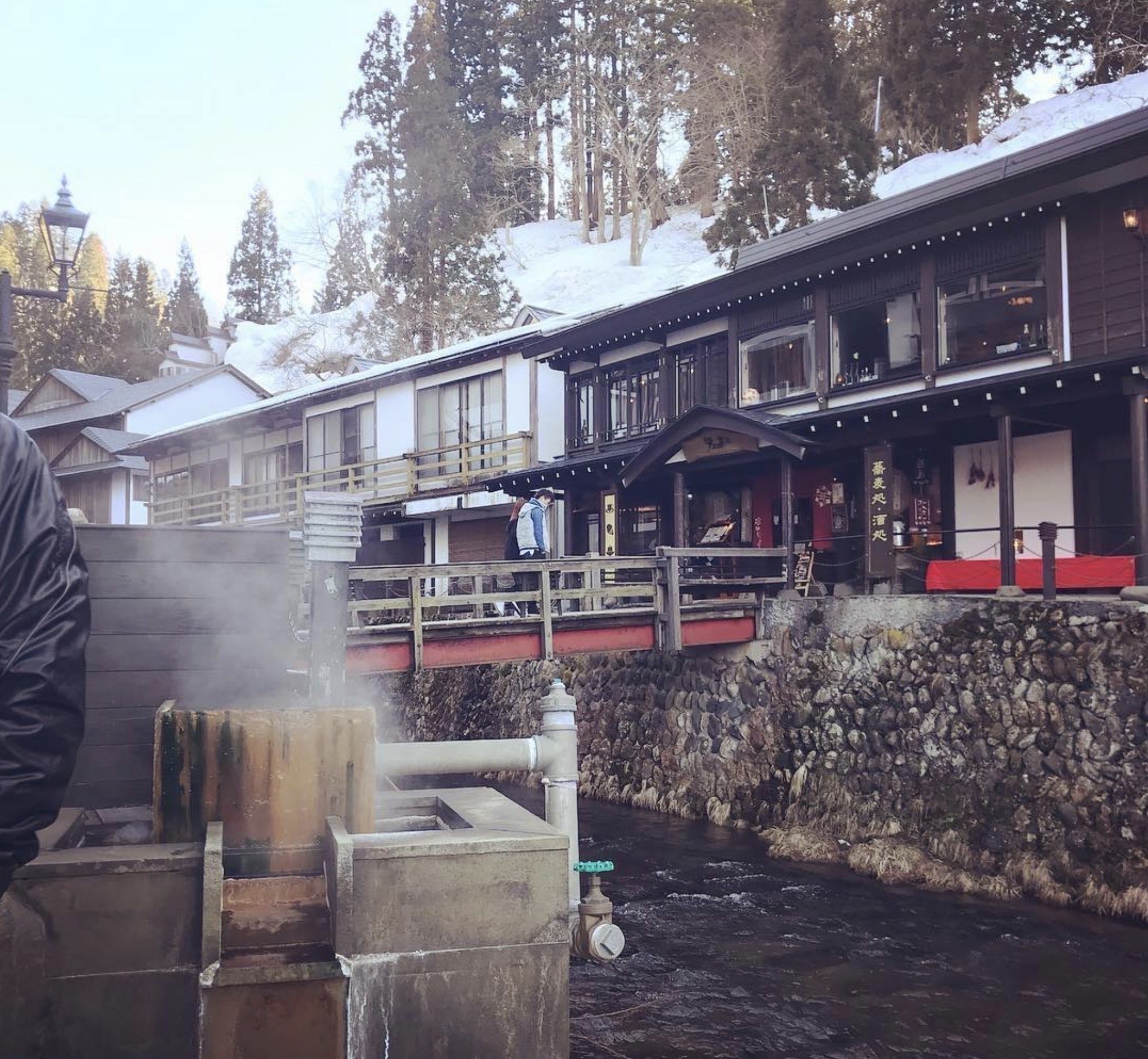
Imagine stepping off a bus into a scene that looks straight out of a Studio Ghibli film — a narrow valley filled with snow, wooden ryokan lining a rushing stream, and soft lantern light glowing through the winter darkness. This is Ginzan Onsen, and in winter, it becomes arguably the most beautiful place in all of Japan.


What Makes Ginzan Onsen So Special in Winter?
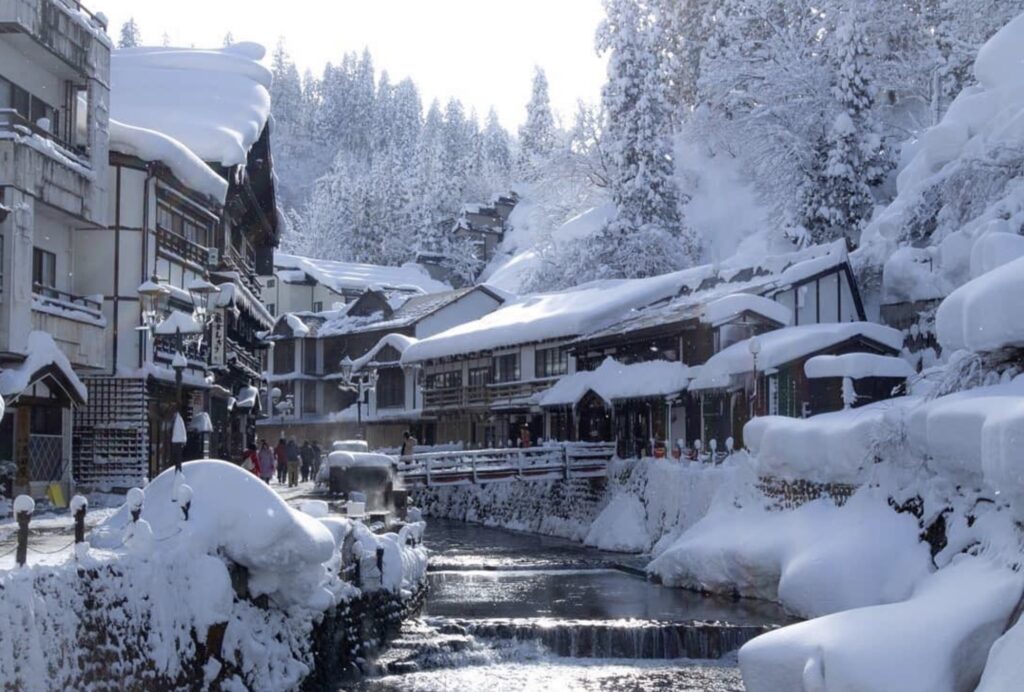
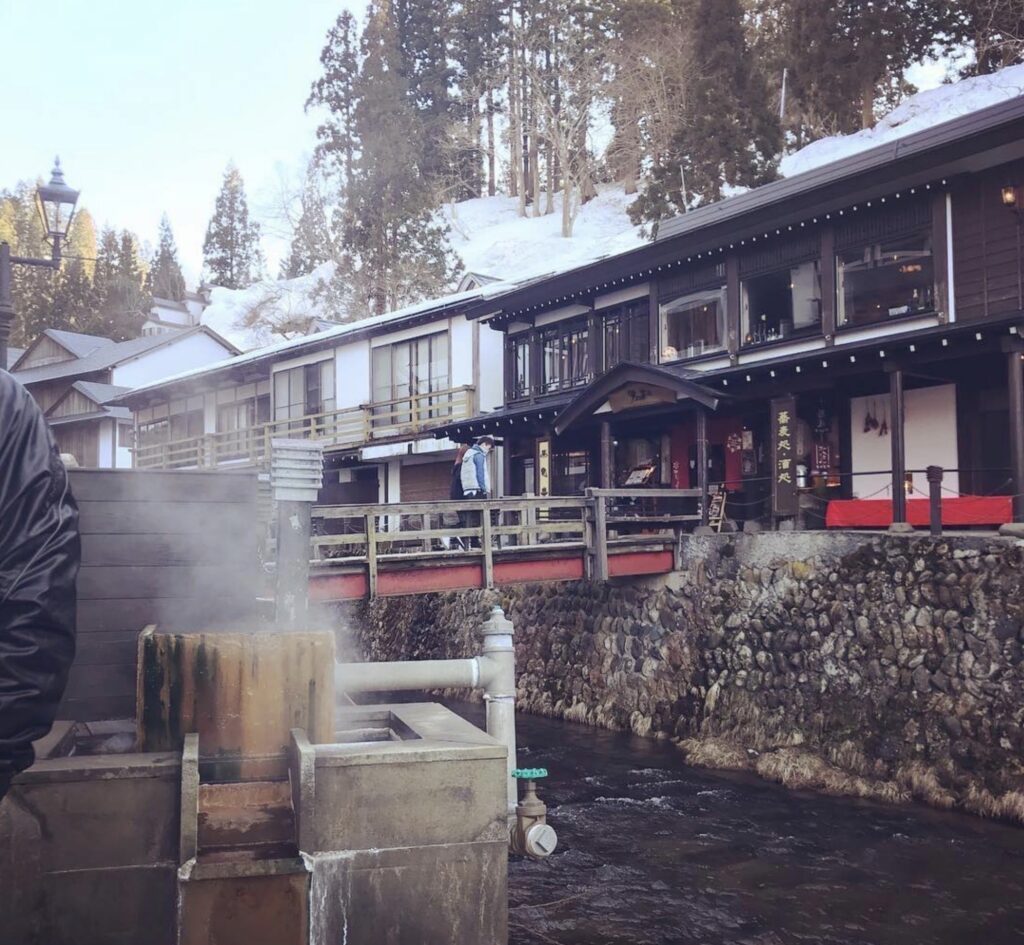
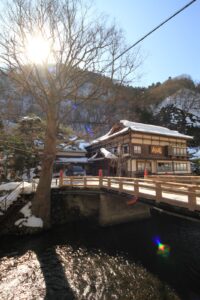
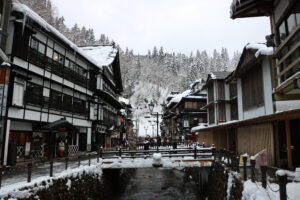
Located deep in the mountains of Yamagata Prefecture in Japan’s Tohoku region, Ginzan Onsen is a small but extraordinarily photogenic hot spring village. What sets it apart from Japan’s many onsen towns is its remarkably intact Taisho-era (1912–1926) architecture — six-story wooden ryokan that seem to defy gravity, all huddled along a narrow gorge where the Ginzan River rushes below.
In winter — typically December through March — heavy snowfall transforms the village into a fairy-tale landscape. The wooden buildings disappear beneath thick white caps of snow, while gas-powered street lamps cast a warm amber glow that makes the whole scene shimmer. It gets dark by 5:00 PM, and the hour between sunset and nightfall, when the sky shifts from deep blue to black and every lantern comes alive, is one of those rare travel moments you’ll never forget.
“Ginzan Onsen in winter is like walking into a different century — and perhaps a different world entirely.”
How to Get to Ginzan Onsen from Tokyo

Getting to Ginzan Onsen requires a bit of effort, but that’s part of what keeps it special. Here’s the step-by-step route most foreign visitors take:
Step 1: Tokyo → Oishida (Yamagata Shinkansen)
From Tokyo Station, take the JR Yamagata Shinkansen “Tsubasa” to Oishida Station. The journey takes approximately 3 hours 15 minutes and costs around ¥13,000–¥15,000 one way (covered by the JR Pass).
Step 2: Oishida → Ginzan Onsen (Bus)
From Oishida Station, a Yamagata Kotsu bus runs directly to Ginzan Onsen. The ride takes about 35–40 minutes and costs ¥780. Buses run approximately every 1–2 hours, so check the timetable carefully before you go — especially if you’re visiting as a day-tripper.
- First bus from Oishida: Around 8:00 AM
- Last bus back to Oishida: Around 6:20 PM
- Bus booking: Yamagata Kotsu (Japanese only — ask your hotel to assist)
Alternatively: Private Charter or Taxi
In winter, roads can be icy and bus schedules reduced. Many visitors opt for a private charter from Oishida Station, which typically costs ¥6,000–¥8,000 round trip for up to 4 people — and gives you total flexibility with timing. This is highly recommended if you want to catch the sunset illumination.
Important Winter Visitor Restrictions (Read This First)
Starting in winter 2024–2025, Ginzan Onsen introduced two important rules for visitors:
- 🚫 Nighttime access restriction for day-trippers: Non-overnight guests must leave before 4:00 PM (and cannot re-enter until 10:00 AM the next day). This means day-trippers can only glimpse the very beginning of the evening illumination before having to rush back to catch the last bus.
- 👥 Hourly visitor cap: Only 100 visitors are allowed per hour during peak periods. This does not apply to ryokan guests.
Bottom line: If you want the full Ginzan Onsen experience — the glowing lanterns, the steaming river, the quiet night — you need to stay overnight.
Where to Stay: Choosing Your Ryokan


Ginzan Onsen has approximately 10 ryokan, ranging from intimate 5-room guesthouses to grand 6-story establishments. Book at least 6–12 months in advance for winter stays — rooms along the main street sell out a full year ahead.
What’s Typically Included
Most ryokan offer half-board packages (breakfast + dinner) featuring Yamagata’s finest seasonal cuisine — think slow-braised mountain vegetables, fresh river fish, local wagyu beef, and sake from one of the region’s award-winning breweries. Rates typically range from ¥20,000–¥60,000 per person per night including meals.
- ✅ Private or shared outdoor hot spring baths (rotenburo)
- ✅ Yukata (casual kimono) provided for walking around the village
- ✅ Free private shuttle bus from/to Oishida Station
- ✅ English-language staff at most ryokan (call ahead to confirm)
Ryokan Recommendations by Budget
Luxury (¥40,000+/person): Fujiya Ryokan — the iconic 6-story building that appears in most Ginzan Onsen photos. Built in 1931, recently renovated, with stunning river-facing rooms.
Mid-range (¥20,000–¥35,000/person): Notoya Ryokan — excellent multi-course dinners and a welcoming atmosphere for solo travelers and couples.
Budget-friendly (¥15,000–¥20,000/person): Look for smaller guesthouses (minshuku) on the outskirts of the main street — equally charming, but simpler meals and facilities.
What to Do in Ginzan Onsen in Winter
1. Evening Illumination Walk
The undisputed highlight. Put on your yukata, slip into wooden geta sandals (your ryokan will provide both), and walk the main street after dark. The combination of gas lamps, snow-heavy eaves, and the sound of rushing water is simply breathtaking. This is where most iconic Ginzan Onsen photos are taken — from the stone bridge looking upstream at the row of illuminated ryokan.
[I’ll be honest — I haven’t made it to Ginzan Onsen yet. But I’ve spent more hours than I care to admit scrolling through photos, watching drone footage, and reading every trip report I can find. And every single time, I have the same reaction: “Why haven’t I booked this yet?”
There’s something about the combination — the wooden ryokan stacked six stories high, the lantern light on snow, the sound of water you can almost hear through the screen — that feels less like a travel destination and more like a memory from a dream you can’t quite place. It’s on my list for this winter. And if you’re reading this wondering whether it’s worth the planning and the cost: it is. I’m certain of it before I’ve even gone.]
2. Soak in the Onsen
Ginzan Onsen’s water is a sodium chloride spring — salty, slightly oily to the touch, and deeply warming. Soaking in an outdoor rotenburo (open-air bath) while snow falls silently around you is a quintessential Japanese winter experience. Most ryokan have both indoor and outdoor baths; the outdoor baths are typically open until late evening.
3. Visit Shirogane Falls
A 15-minute walk from the main street leads to Shirogane Waterfall, which partially freezes in deep winter to create a dramatic curtain of ice. In heavy snowfall, the forest path there is hauntingly beautiful.
4. Morning Village Stroll
Wake up early (6:30–7:00 AM) before the day-trippers arrive. The village in morning silence — steam rising from the river, fresh snow on the rooftops, the occasional innkeeper sweeping the path — feels entirely yours. This is when the best photos are taken.


A Traveler’s Guide: Practical Tips for Your Trip
Best Time to Visit
For the most dramatic snow scenery, aim for late January or February. December can be hit-or-miss for snowfall; March sees melting begin. The official winter illumination season typically runs from late November through early April.
What to Pack
- 🧥 Heavy winter coat, thermal layers — temperatures regularly drop to -5°C (23°F) or below
- 👢 Waterproof snow boots with grip (the stone paths get icy)
- 📷 Camera or smartphone — this place deserves your best shots
- 💴 Cash — many ryokan and small shops don’t accept cards
- 🌐 Pocket Wi-Fi vs. SIM Cards: Keep in mind that reception can be spotty in valley areas.
Language
English signage is limited. Most ryokan have at least one English-speaking staff member, but smaller shops and the bus service are Japanese-only. Download Google Translate with the Japanese offline pack before you go, and save the address in Japanese: 山形県尾花沢市銀山新畑446 (Yamagata-ken Obanazawa-shi Ginzanshinhata 446).
Costs Summary
| Item | Cost (approx.) |
|---|---|
| Shinkansen Tokyo → Oishida (one way) | ¥13,500 (~$90) |
| Bus Oishida → Ginzan Onsen (one way) | ¥780 (~$5) |
| Ryokan (per person, including 2 meals) | ¥20,000–¥60,000 |
| Day-trip entry (if no overnight) | Free (but restricted hours) |
Is Ginzan Onsen Worth the Trip?
In a word: absolutely. Ginzan Onsen in winter is one of those rare destinations that not only meets expectations — it exceeds them. In an age when “hidden gems” are rarely hidden, this Yamagata mountain village still delivers a sense of discovery and wonder that’s increasingly hard to find in Japan.
The journey takes planning, the ryokan aren’t cheap, and the weather can be brutal. But standing on that stone bridge at 6:30 PM as the lanterns flicker to life above the snow — you’ll know without a doubt it was worth every yen and every minute.
Useful Links
- Official Ginzan Onsen Website
- Japan-Guide: Ginzan Onsen
- JR East Pass Information
- Ginzan Onsen Night Tour with English Guide
More Tohoku Travel Guides
- Zao Fox Village: Meet 100+ Wild Foxes in Miyagi
- Oirase Gorge Aomori: 14km of Waterfalls & Autumn Foliage
- Hitome Senbonzakura: 1,200 Cherry Trees in Miyagi
Related Articles You Might Enjoy
- Tohoku Winter Onsen & Ryokan Guide: Hot Springs, Snow & Japanese Inn Culture
- Kaminoyama Onsen, Yamagata: Japan’s Most Complete Hidden Hot Spring Town — Complete Guide
- Ginzan Onsen: Japan’s Most Enchanting Hot Spring Village in Yamagata
- Kamo Aquarium Tsuruoka: The World’s Best Jellyfish Aquarium in Tohoku Japan

コメント