Deep in the mountains of Yamagata Prefecture, three sacred peaks have been drawing pilgrims for over 1,400 years. Dewa Sanzan (出羽三山) — Mount Haguro, Mount Gassan, and Mount Yudono — form one of Japan’s most important spiritual landscapes, a place where ancient Shinto beliefs blend with esoteric Buddhism in a tradition so unique it exists nowhere else on earth. If you’ve ever wondered what Japan’s spiritual heartland really feels like, beyond the picture-perfect temples of Kyoto, Dewa Sanzan is the answer.
Why Dewa Sanzan Should Be on Every Japan Itinerary
What makes Dewa Sanzan genuinely extraordinary — and different from most spiritual sites in Japan — is the continuity of its living tradition. The Yamabushi (山伏, mountain ascetics) who practice Shugendo (a form of Japanese mountain worship combining Shinto and Buddhist elements) have been performing their rituals on these three mountains since the 7th century. Today, you can still encounter white-robed Yamabushi blowing conch shells, performing sacred fires, and undergoing initiation rituals in the same forests where their predecessors have done so for over a millennium.
Each of the three mountains carries its own symbolism in the Shugendo tradition: Mount Haguro (414 m / 1,358 ft) represents the present world, Mount Gassan (1,984 m / 6,509 ft) the world of the dead, and Mount Yudono (1,504 m / 4,934 ft) the world of future rebirth. Pilgrims traditionally climbed all three mountains in a specific order as a symbolic journey through life, death, and new beginnings — a practice known as sanzan meguri (三山参り, Three Mountain Pilgrimage). Today, visitors can follow varying portions of this ancient route according to their time and fitness level.
For Western visitors, the appeal is multifaceted: spectacular mountain scenery, a famous 2,446-step cedar avenue that must rank among Japan’s most atmospheric walks, a national treasure pagoda set in ancient forest, and the opportunity to stay at a shukubo (temple lodging) and experience life as it has been lived on these mountains for centuries. It’s also one of Japan’s best-kept secrets — you’re unlikely to encounter large tour groups here, particularly on Gassan and Yudono.
Getting There
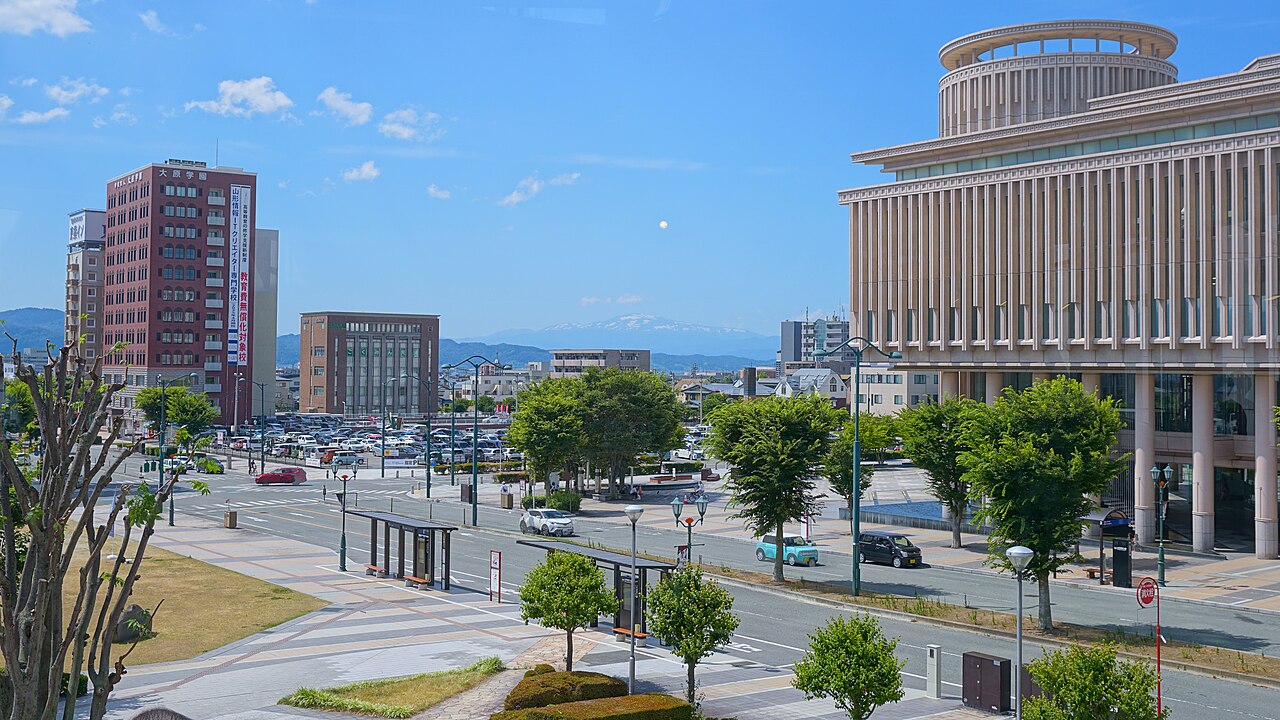
Dewa Sanzan is best reached from Tsuruoka City (鶴岡市), the main gateway town on the Sea of Japan coast of Yamagata Prefecture.
- From Tokyo by Shinkansen: Take the Joetsu Shinkansen to Niigata (about 1.5 hours, ¥9,000–¥11,000 / $60–$75), then the JR Inaho limited express to Tsuruoka (about 2 hours, ¥4,000–¥5,000 / $27–$34). Total journey time: approximately 3.5–4 hours. The full JR Pass covers both legs.
- From Sendai by train: Take the Yamagata Shinkansen to Yamagata, then the Yamagata/Ou Main Line to Shinjo and a connecting service to Tsuruoka. This takes about 3–4 hours and is less direct; the Shinkansen-to-Niigata route is generally easier.
- By car from Sendai: About 2.5 hours via the Tohoku and Yamagata expressways. A car gives you significant flexibility to explore all three mountains.
- From Tsuruoka to the mountains: Shonai Kotsu buses run from Tsuruoka Station to the base of Mount Haguro (Haguro Center) and to Gassan 8th Station from late May through October. Journey time is about 35–50 minutes. Bus schedules are limited outside peak season, so check carefully.
Mount Haguro: The Cedar Path and the Pagoda
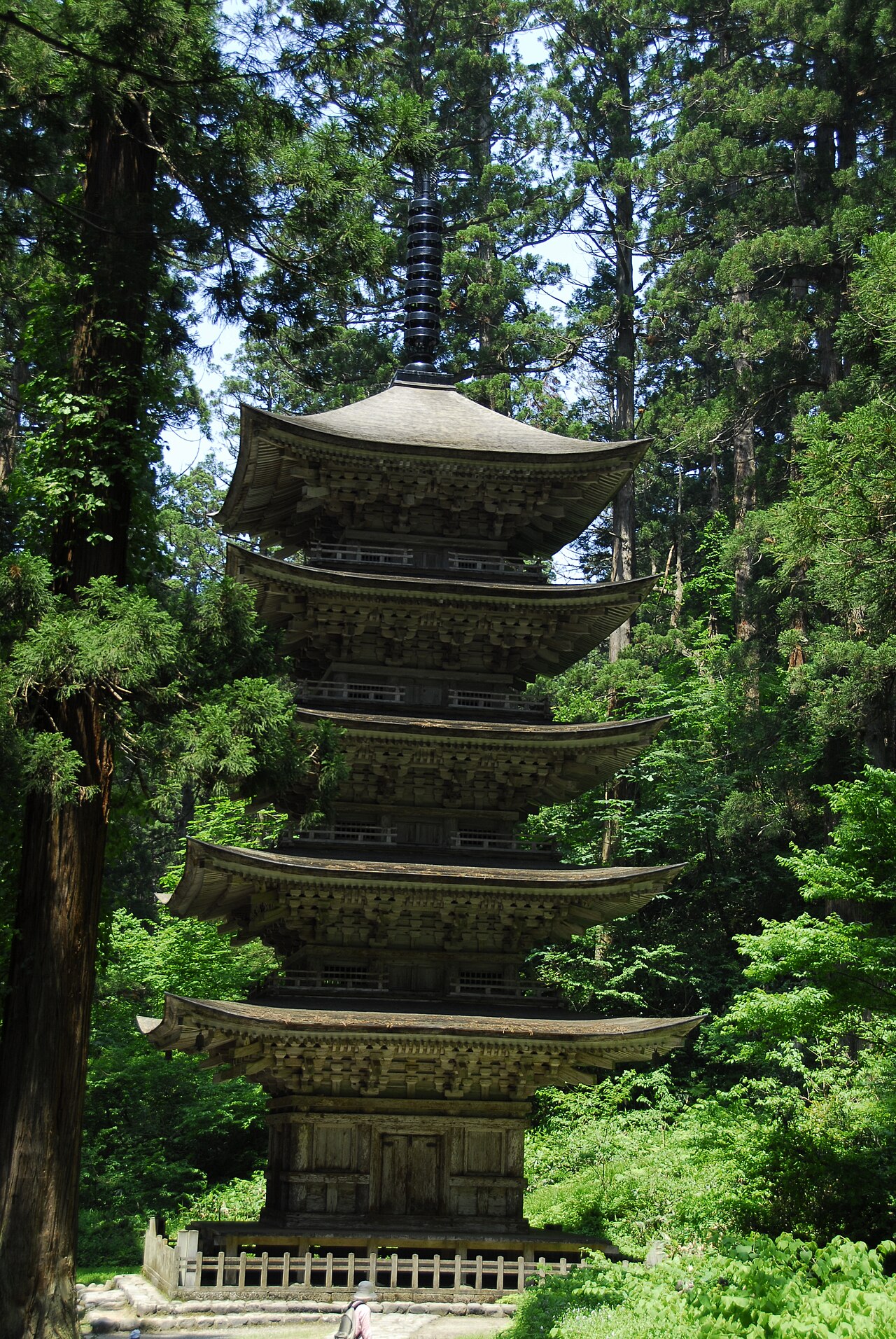
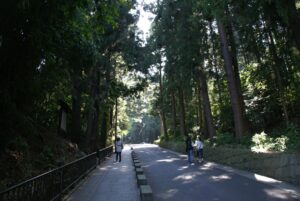
For most visitors, Mount Haguro is the essential first stop on Dewa Sanzan — and its most accessible peak, requiring no special equipment and manageable even for those not used to hiking. The mountain’s spiritual centerpiece is the famous stone-paved approach road lined with 2,446 stone steps and flanked by ancient cryptomeria cedar trees, many of which are over 300–600 years old. Walking this path on a misty morning, with shafts of light filtering through the enormous cedars, is one of the most spine-tingling experiences Japan has to offer.
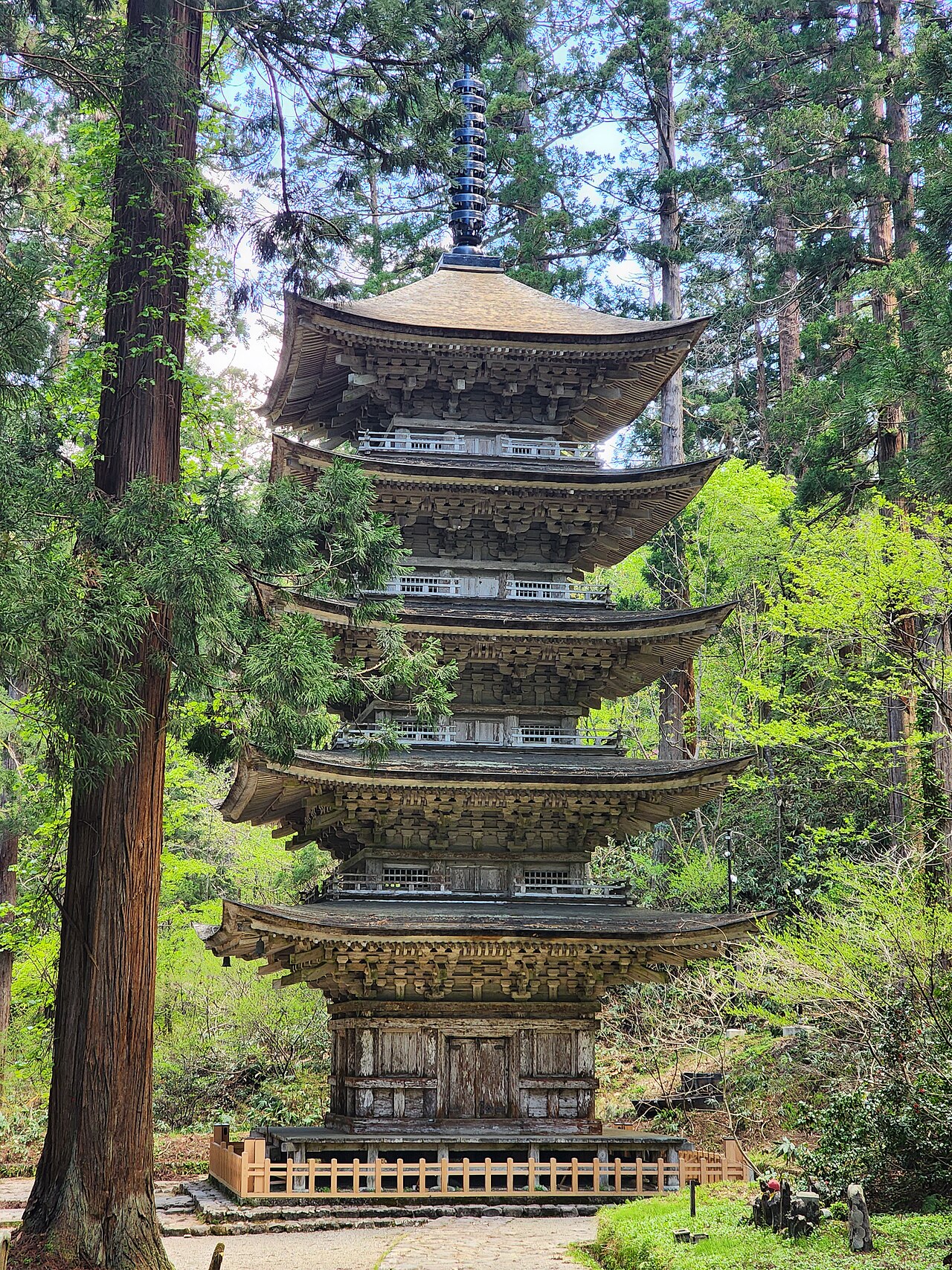
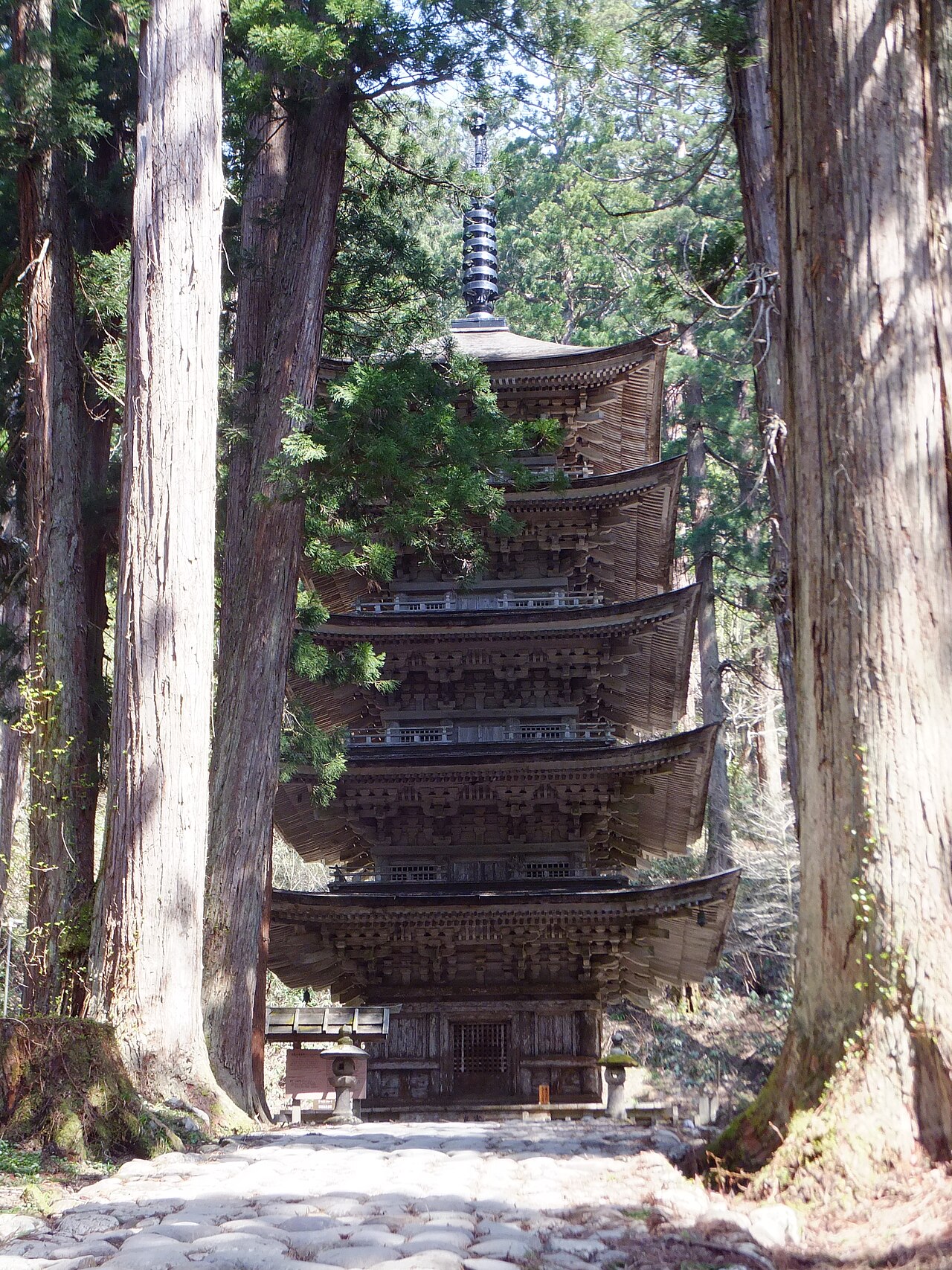
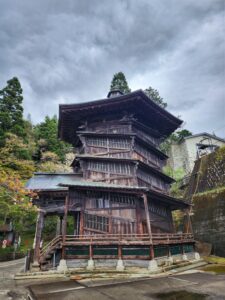
The ascent from the Zuishinmon (随神門) gate to the summit takes about 45–60 minutes at a comfortable pace. Partway up, you’ll come to the Goju-no-To (五重塔, Five-Storied Pagoda), a National Treasure dating from the late 14th century. Standing 29 meters (95 ft) tall and made entirely of wood without a single nail, the pagoda is one of Japan’s most photographed structures — and yet remarkably few foreign tourists have seen it. The setting, with the ancient cedar forest pressing in on all sides and often a light mist drifting through the trees, is extraordinarily atmospheric.
At the top of the climb, you’ll reach the Sanjin Gosaiden (三神合祭殿), a huge thatched-roof shrine complex that enshrines the deities of all three Dewa Sanzan mountains. The shrine’s enormous thatched roof (2.1 meters / 7 ft thick in places) is the largest in Japan and was last renewed in 2019. Inside, the air smells of cedar smoke and incense, Yamabushi drums echo through the corridors, and the atmosphere is one of deep, genuine spiritual power. Adjacent to the main shrine are several smaller chapels, a museum containing Yamabushi sacred objects and artifacts, and a pagoda housing the mummified remains of three ascetics — the Sokushinbutsu (即身仏), Buddhist monks who achieved self-mummification through years of extreme ascetic practice.
The Haguro summit also has several good restaurants and tea houses where you can try Dewa Sanzan tofu (a local specialty), buckwheat soba, and seasonal mountain vegetables. After the climb, this simple food tastes extraordinary.
Mount Gassan: Pilgrimage Above the Clouds
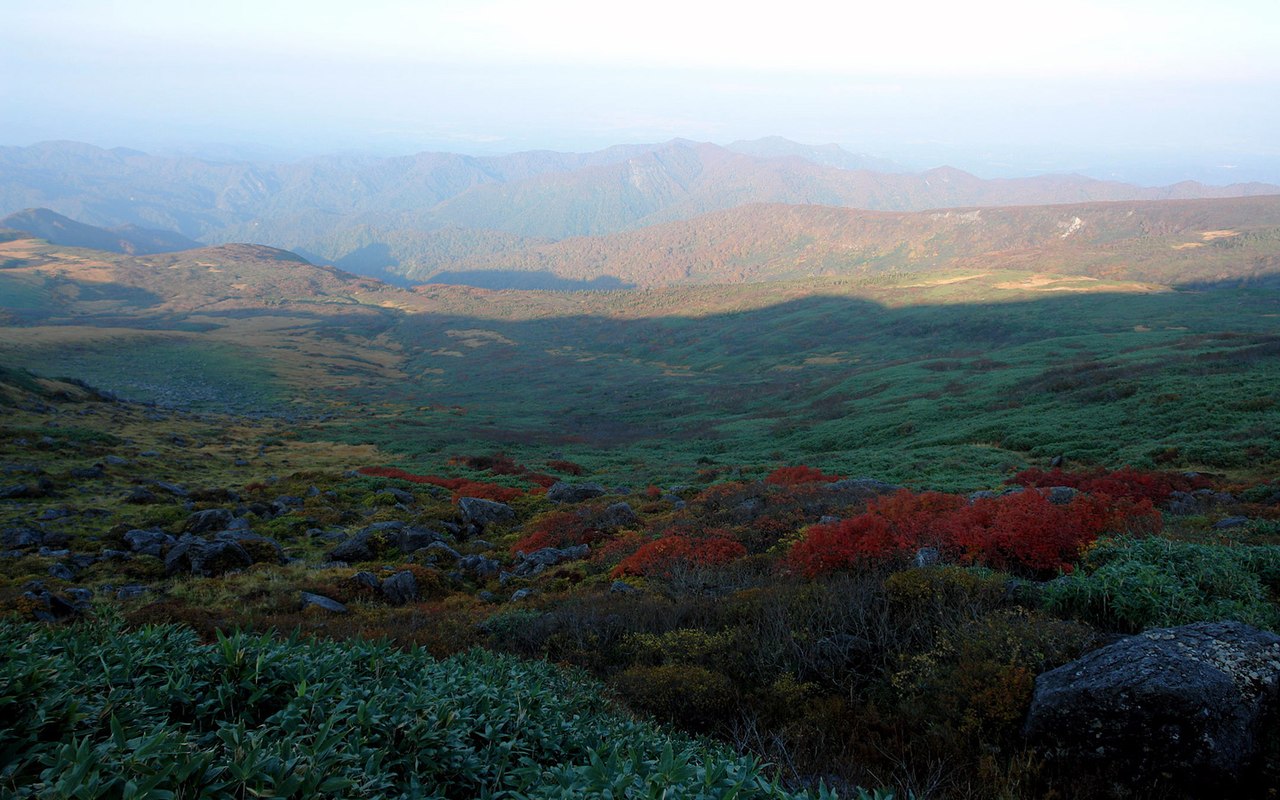
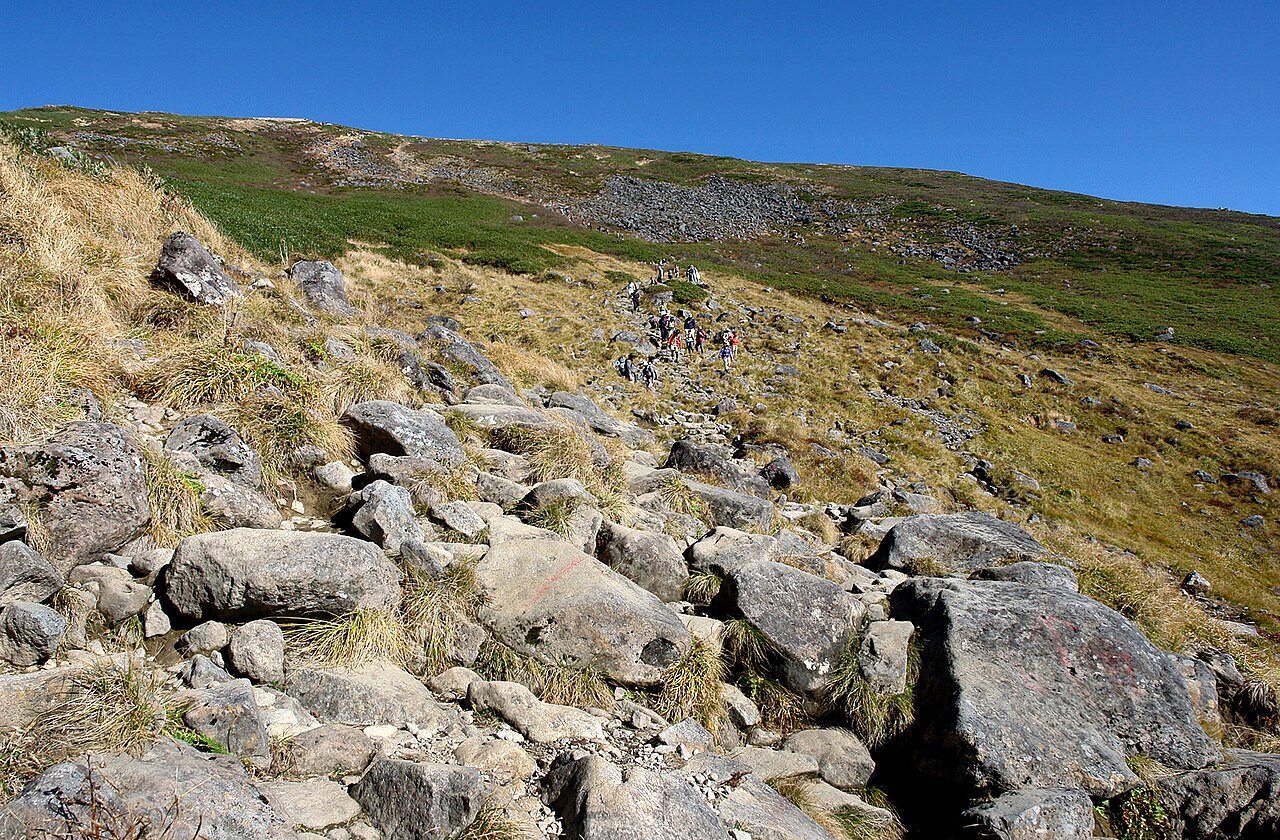
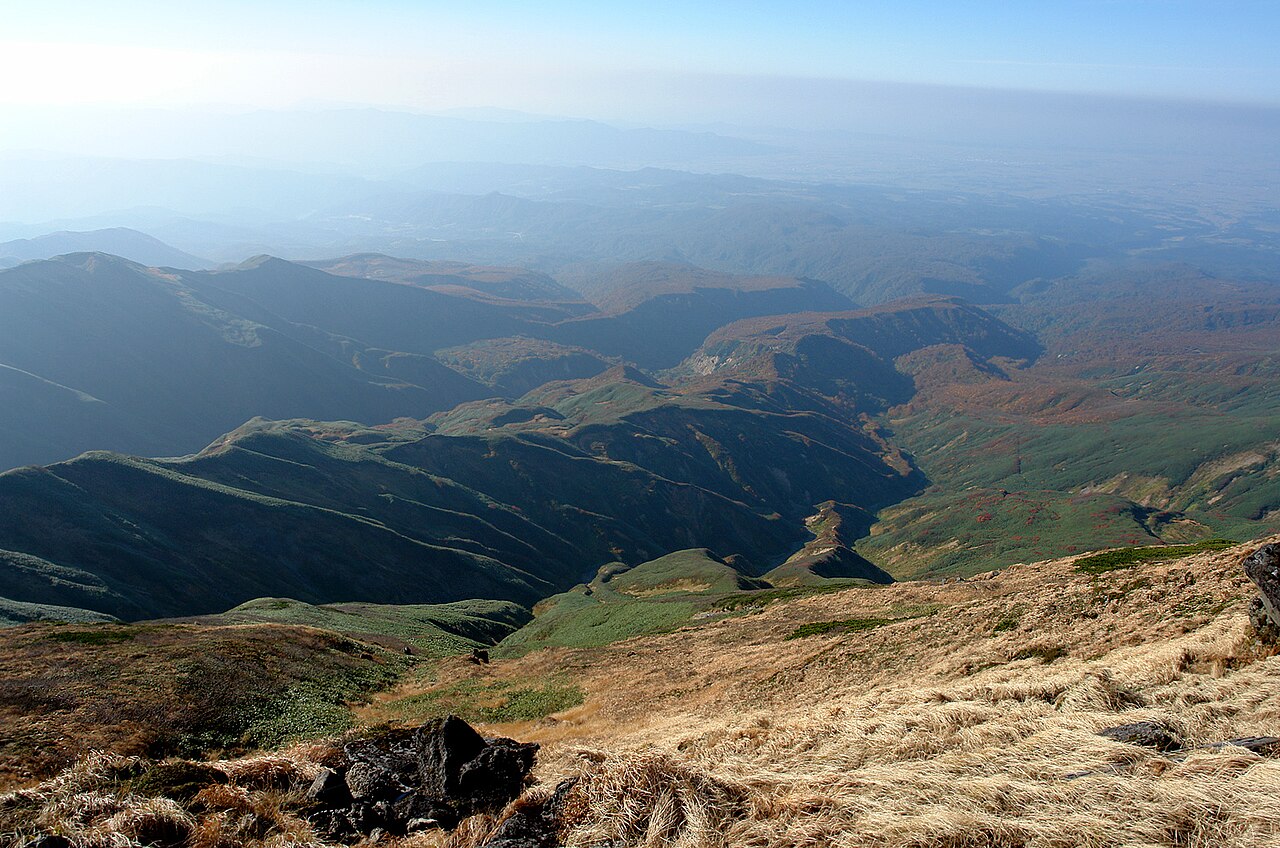
At 1,984 meters (6,509 ft), Mount Gassan (月山, Moon Mountain) is both the highest and most remote of the three sacred peaks. The summit is only accessible from late June through October — the mountain is buried under 10–15 meters (33–49 ft) of snow for the rest of the year. Even in summer, the upper slopes remain cold and often wrapped in cloud; bring warm layers regardless of what the weather looks like in the valley.
The most popular route to the summit starts from the Gassan 8th Station (月山8合目), reached by bus or car from the Gassan Ski Resort parking lot. From here, the trail climbs through alpine meadows carpeted with mountain wildflowers in July and August — asters, lilies, and rare alpine plants that bloom in profusion after the snowmelt. The walking time from the 8th Station to the summit is approximately 2–3 hours one way. The trail is generally well-marked but can be extremely cold and misty near the top even on summer days; temperatures at the summit can drop to 5–10°C (41–50°F) while the valley swelters at 28–30°C (82–86°F).
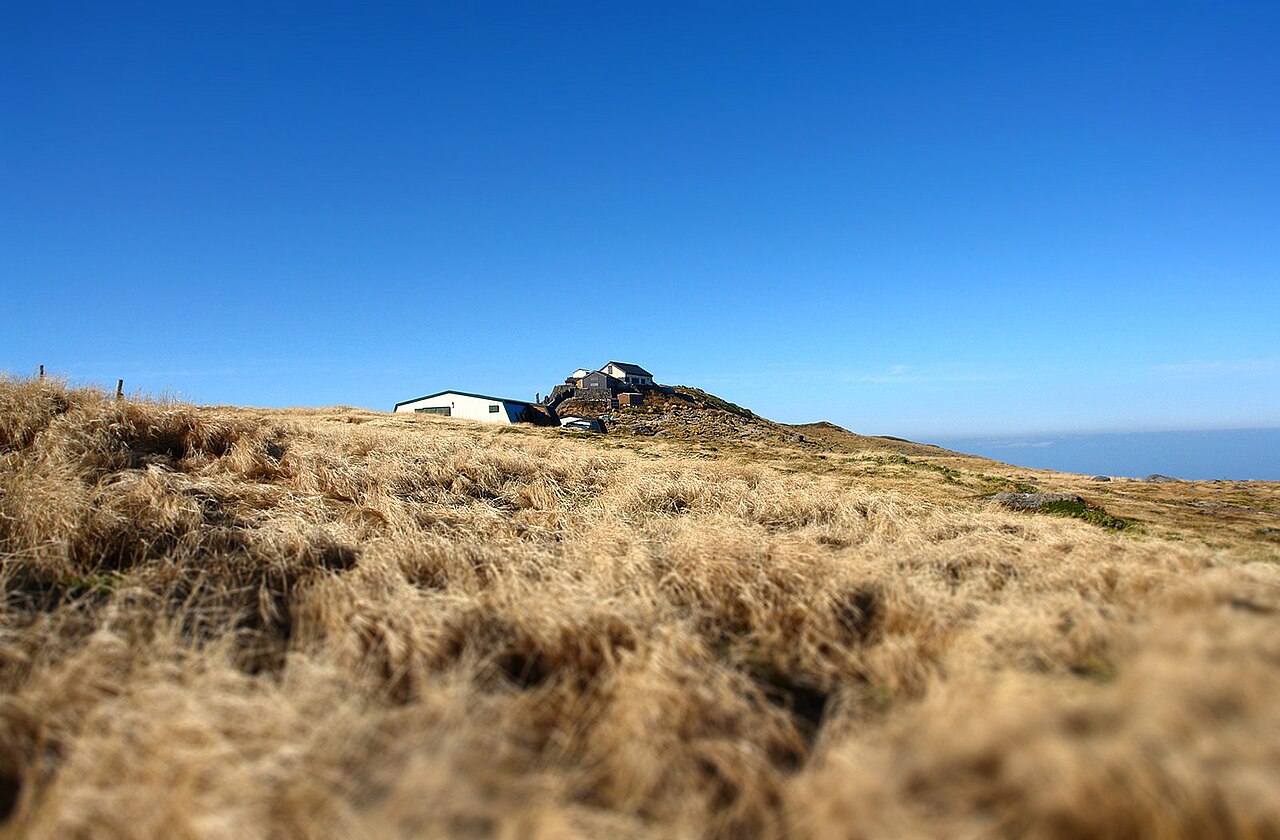
At the summit, the Gassan Shrine (月山神社) sits at the very top, its wooden torii gate sometimes disappearing into the clouds. Inside the shrine, priests perform purification ceremonies on all pilgrims before they enter — a requirement, not optional. The ceremony is brief and respectful, and there is a small fee (¥500 / $3.50). From the summit on clear days, views extend to the coast and, in exceptional visibility, across the Sea of Japan toward the Korean Peninsula.
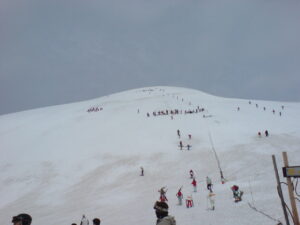
Gassan is also famous among skiers and snowboarders for its extraordinarily long ski season. The Gassan Ski Resort operates from early April well into July — sometimes August — making it one of the few places in Japan where you can ski in summer. The spring snow is deep, consistent, and spectacular.
Mount Yudono: The Secret Mountain
Mount Yudono (湯殿山) is considered the most sacred of the three mountains — and the most mysterious. Photography is strictly prohibited anywhere near the summit shrine, visitors must remove their shoes before approaching the sacred space, and the exact nature of what pilgrims encounter there is considered secret, passed only between those who have made the pilgrimage. The traditional saying is “Kataruna Yudono ni numaji fumu michi” (語るなかれ, 踏まじ踏む道) — “Say nothing of what you have seen at Yudono.”
What we can tell you is that Yudono’s sacred object is a large reddish rock through which hot spring water eternally flows — the intersection of water (life) and stone (permanence), which in Shinto terms represents a fundamental connection between the human and divine worlds. Walking barefoot over the warm sacred rock, blessed by the eternal hot spring, is an experience that is profoundly moving even for visitors who don’t share the religious tradition.
Access to Mount Yudono is from the Yudono-san Hotel area, reached by car or bus from Tsuruoka. The walk from the bus stop to the shrine takes about 20 minutes on a pleasant forest path. The shrine is open from May to November.
The Yamabushi Experience
One of the most compelling reasons to visit Dewa Sanzan is the opportunity to experience Yamabushi culture firsthand. Several programs are available for visitors who want to go beyond sightseeing.
Yamabushi experience tours are offered by various operators in Tsuruoka and on Mount Haguro. These typically last 2–4 hours and involve dressing in Yamabushi white robes, blowing the conch shell (horagai), walking meditation in the cedar forest, and participating in brief purification rituals. Most tours are conducted in Japanese, but interpreters can be arranged; some English-language tours are available through advance booking. Cost: ¥5,000–¥15,000 / $34–$100 depending on the program length.
Multi-day Yamabushi retreats are offered seasonally and allow participants to undergo portions of the traditional akinomine (autumn peak) ascetic training. These intensive programs involve early morning rituals, mountain hiking, cold water ablutions, and strict vegetarian temple food. They are physically and mentally challenging but profoundly rewarding. Several operators offer English-friendly versions of these retreats; search for “Dewa Sanzan Yamabushi experience” online for current providers.
Best Time to Visit
- Spring (late April–May): Mount Haguro is accessible year-round; Gassan and Yudono typically open in late April or early May. Deep snow remains on Gassan above the 8th Station, making for dramatic scenery. The cherry blossoms in Tsuruoka City coincide beautifully with the mountain opening.
- Summer (June–August): All three mountains are fully accessible. Alpine flowers bloom on Gassan in July–August. The Ominezake Festival (July 15) on Haguro is one of the year’s major Yamabushi events. Warm but not hot in the mountains.
- Autumn (September–October): Spectacular mountain foliage. The Akinomine (秋の峰) Yamabushi retreat takes place in September. Late October is particularly beautiful on Haguro. Gassan and Yudono close in early November.
- Winter (November–April): Only Mount Haguro is accessible; Gassan and Yudono are closed under deep snow. The Haguro Matsuri Haguro Shoreisai (松例祭) New Year’s fire festival (December 31–January 1) is one of Japan’s most spectacular and ancient winter rituals, involving competing groups of ascetics in a centuries-old tradition. Witnessing it is a rare privilege.
Where to Eat: Dewa Sanzan Food Guide
The food culture around Dewa Sanzan is deeply tied to the mountains and the sea — Yamagata’s Shonai region sits between fertile mountains and the rich waters of the Sea of Japan, creating exceptional local produce.
Shojin Ryori (精進料理) — Temple Vegetarian Cuisine
The most authentic way to eat at Dewa Sanzan is to stay at a shukubo (temple lodging) and eat the traditional Yamabushi vegetarian cuisine. Dishes feature mountain vegetables, tofu, sesame preparations, and seasonal fungi, served in lacquerware bowls with meticulous presentation. This food is simple, deeply nourishing, and a revelation if you’ve never experienced it. Expect to pay ¥2,000–¥3,000 / $14–$20 per meal as part of a shukubo stay.
Dewa Sanzan Tofu
The cold, pure mountain water used to make tofu around Dewa Sanzan produces some of Japan’s finest. Look for fresh tofu at the summit restaurants on Haguro — the gomadofu (sesame tofu, a richer, more custardy style) is particularly good.
Shonai Seafood in Tsuruoka
Tsuruoka City itself has excellent seafood from the Sea of Japan — the morning market (Asa-ichi) is wonderful for fresh fish, local vegetables, and the famous dadacha mame (in season in August), a variety of edamame unique to Tsuruoka with an intensely nutty flavor that regular edamame cannot match. Restaurant Sanzo (サンゾウ) in central Tsuruoka is popular for fresh seafood donburi. The city is also home to a remarkable concentration of French restaurants relative to its size — a legacy of missionary influence dating back to the Meiji era.
Imoni (芋煮)
In autumn, the river banks around Tsuruoka fill with the smell of imoni — a Yamagata speciality of taro potatoes, beef, konjac, and green onions slow-cooked in soy and sake over an open fire. Local groups gather for communal imoni cooking parties in September and October, and it’s one of the most convivial and quintessentially Yamagata experiences you can have.
Where to Stay
Budget (Under ¥8,000 / $55 per night)
Tsuruoka Business Hotels: The most affordable option is to stay in Tsuruoka City and take day trips to the mountains. Tsuruoka has numerous business hotels around the station, with rooms from around ¥5,500–¥7,500 / $37–$50 per night. The journey by bus from the station to Haguro Center takes about 35 minutes.
Mid-Range (¥8,000–¥20,000 / $55–$135)
Saikan (斎館) is a guesthouse directly on the Haguro summit operated by the shrine. Staying here puts you in the heart of the sacred complex, allowing you to attend the early morning rituals before tourist buses arrive. The building is old-fashioned but full of atmosphere; rooms include breakfast and dinner (traditional mountain food). Rates from around ¥15,000–¥18,000 / $100–$120 per person with meals. A genuinely unforgettable experience.
Luxury (¥20,000+ / $135+)
Tsuruoka City’s boutique ryokans offer high-end comfort with superb Shonai cuisine. Tamago no Yado Shoji near the coast is an acclaimed ryokan known for its exceptional egg-themed cuisine and classic onsen. For something extraordinary on a larger budget, Gyosoan (魚匠庵) near the Sea of Japan coast is a top-rated accommodation combining luxury Japanese design with the finest local seafood.
Practical Tips for Visiting Dewa Sanzan
- All three mountains in one day is possible but rushed. A two or three-day visit lets you experience Haguro properly in the morning quiet and gives you time to reach Gassan summit comfortably.
- Photography is prohibited inside Yudono Shrine. Respect this unconditionally — it’s considered deeply sacred and locals take it very seriously.
- Dress modestly when visiting the shrines. While there’s no strict dress code, bare shoulders and short shorts are inappropriate at active religious sites. Light layers are practical anyway given the mountain temperatures.
- The Haguro cedar avenue is slippery when wet. The ancient stone steps are covered in moss and can be treacherous after rain. Take your time and wear non-slip shoes.
- Bus schedules to Gassan are limited outside peak season (late June–October). Check the Shonai Kotsu website or ask at Tsuruoka Tourist Information before relying on public transit for Gassan or Yudono.
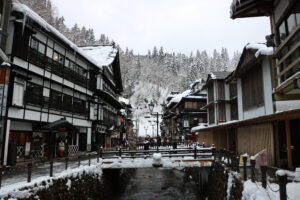
- Combine with Ginzan Onsen for a magnificent Yamagata loop: Tsuruoka → Dewa Sanzan → Yamagata City → Ginzan Onsen, doable in 3–4 days with a rental car.
- The shukubo (temple lodging) experience is strongly recommended for a night spent on the Haguro summit. Book well in advance through the Haguro Shrine office or a travel agent.
- Gassan summit is cold. Even in August, temperatures at 1,984 m can drop below 10°C / 50°F. Bring a fleece and waterproof jacket even if you’re visiting in summer.
- The Dewa Sanzan Museum at the Haguro summit is excellent for understanding the history and religious significance of the mountains before exploring — worth 30–45 minutes of your time.
- Water is freely available from springs along the Haguro cedar path and at all three mountain shrines — bring a bottle you can refill.
Sample 3-Day Dewa Sanzan Itinerary
Day 1: Arrival and Mount Haguro
Morning: Arrive in Tsuruoka by Shinkansen and limited express. Check in to your accommodation. Take the bus to Haguro Center, arriving by midday. Begin the cedar path climb from the Zuishinmon Gate, pausing at the five-storied pagoda for photos. Reach the summit shrine complex.
Afternoon: Explore the Sanjin Gosaiden shrine, visit the Dewa Sanzan Museum, have lunch at a summit restaurant (try the tofu and mountain vegetable dishes). Attend afternoon rituals if the timing is right. Descend via the cedar path in the late afternoon when the light through the trees is golden and most day visitors have left.
Evening: Dinner in Tsuruoka or, if staying on the summit at Saikan, early temple dinner and a peaceful evening in the sacred forest.
Day 2: Mount Gassan
Early morning: Take the bus from Tsuruoka to the Gassan Ski Resort area (Gassan Rokki) and then up to the 8th Station. This requires an early start — aim to be at the trailhead by 8am. The climb takes 2–3 hours each way.
Midday: Summit of Gassan — visit the shrine, be purified by the priests, eat your packed lunch at the summit (bring food from Tsuruoka). The views on a clear day are extraordinary.
Afternoon: Descend and take the bus back to Tsuruoka. Rest and dinner in town.
Day 3: Mount Yudono and Departure
Morning: Take a bus or rental car to the Yudono-san Hotel area. Walk the forest path to the Yudono shrine and experience the sacred barefoot ritual on the hot spring rock. Remember: do not photograph and do not speak of what you witness. Return to the trailhead.
Afternoon: Drive or bus back to Tsuruoka. Visit the morning market if open or browse the city center. Head to the station for your onward Shinkansen connection.
Related Articles You Might Enjoy
- Tsuruoka, Yamagata: Complete Guide to Japan’s UNESCO Gastronomic City, Samurai Heritage & Dewa Sanzan
- Tendo, Yamagata: Japan’s Shogi Capital — Human Chess, Master Craftsmen & Cherry Blossoms
- Yonezawa City Guide: Samurai History, Japan’s Best Wagyu Beef & the Uesugi Legacy
- Gassan Ski Resort, Yamagata: Skiing Into Summer on Japan’s Sacred Mountain
- Shinjo Festival, Yamagata: Japan’s UNESCO Float Festival Few Foreigners Ever See
Final Thoughts
Dewa Sanzan is Japan at its most profound — a place that has been sacred to the Japanese people since the 7th century and that continues, against all modern expectations, to be a living center of spiritual practice. The Yamabushi who climb these mountains today are not performing for tourists; they are continuing an unbroken tradition of mountain worship that stretches back through the centuries in an uninterrupted line. To walk the cedar path of Mount Haguro at dawn, to sit in silence on the misty summit of Gassan, to remove your shoes and step onto the warm sacred rock of Yudono — these are experiences that will stay with you for life. Dewa Sanzan is one of Japan’s greatest secrets, and it deserves to be on every serious traveler’s list.


コメント