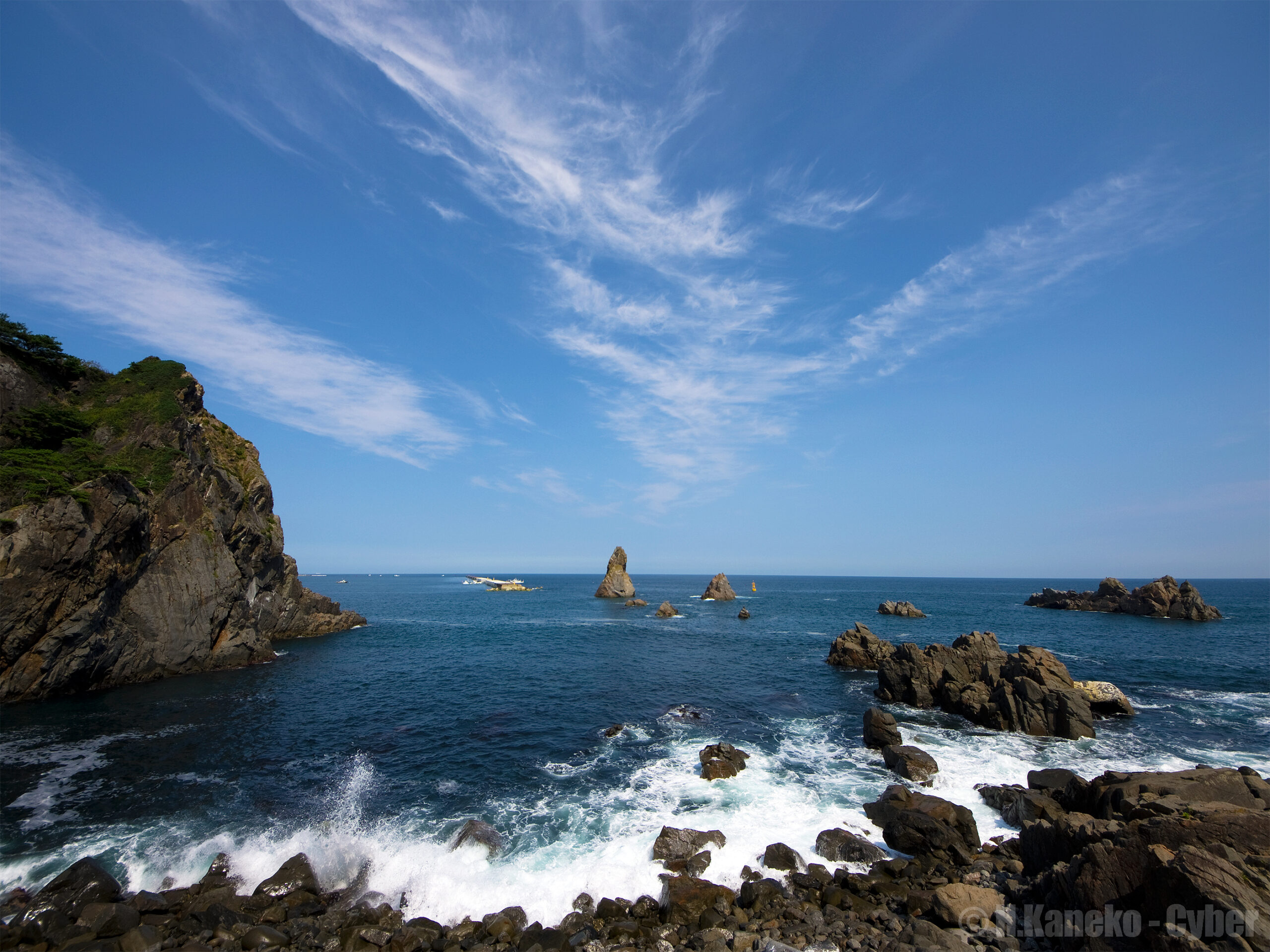
Picture this: you’re standing on the edge of a 200-meter cliff, the Pacific Ocean stretching endlessly before you, waves crashing against prehistoric rock formations far below, and not another tourist in sight. Welcome to the Sanriku Coast — Tohoku’s most dramatic, most delicious, and most emotionally resonant stretch of coastline, and one of the most underrated travel destinations in all of Japan.
Why the Sanriku Coast Should Be on Every Japan Itinerary
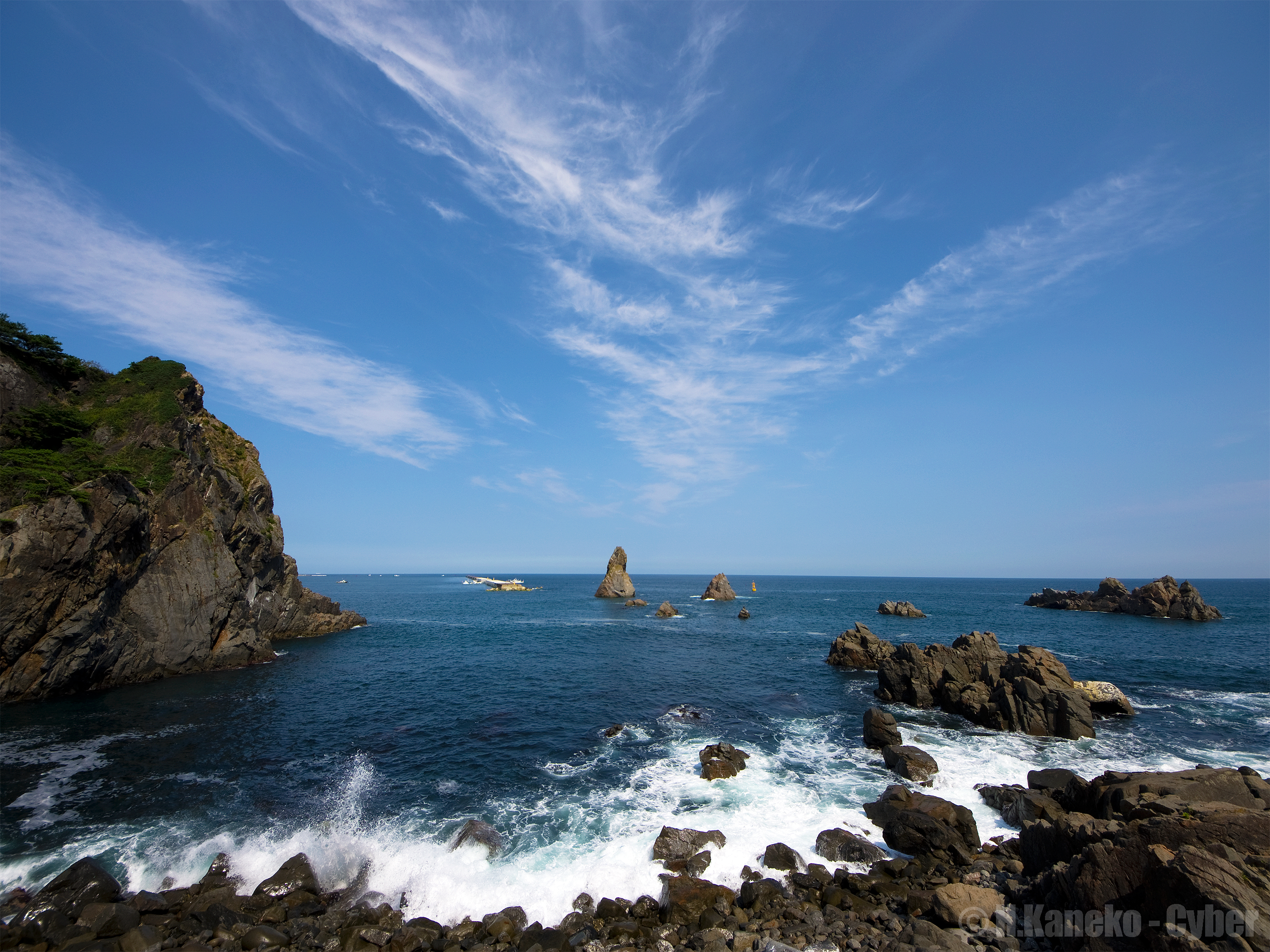
The Sanriku Coast (三陸海岸) runs for roughly 600 kilometers (375 miles) along the Pacific edge of Iwate and Miyagi prefectures in northeastern Japan. It is a rias coastline — carved by ancient glaciers and millennia of ocean erosion into a series of dramatic headlands, sea cliffs, hidden inlets, and sheltered bays. Think Norway’s fjords or Scotland’s north coast, but with Japanese fishing villages, steaming bowls of ramen, and some of the finest seafood on earth.
For international travelers who’ve seen Tokyo, Kyoto, and maybe Osaka, the Sanriku Coast represents a completely different side of Japan. Here you won’t find bullet-pointed tourist attractions or Instagram queues. You’ll find working fishing ports where boats unload sea urchin at dawn, wild coastal hiking trails where you might not see another soul for hours, and communities that have rebuilt themselves after unimaginable disaster with a quiet, awe-inspiring determination.
The 2011 Great East Japan Earthquake and tsunami devastated much of this coastline, killing tens of thousands of people and erasing entire towns. But the Sanriku Coast has risen again — and visiting today is not only a jaw-dropping natural experience but also an act of solidarity with communities that want the world to know they’re back, they’re thriving, and their seafood is better than ever. If that’s not reason enough to visit, we don’t know what is.
Getting to the Sanriku Coast from Tokyo
The Sanriku Coast is long — so where you enter depends on what you want to see first. Here are the main access points from Tokyo:
- Morioka (Northern Iwate gateway): Take the Tohoku Shinkansen from Tokyo Station to Morioka — about 2 hours 20 minutes, costing ¥14,170 (~$95) for an unreserved seat. From Morioka, local trains and buses serve the northern Iwate coast including Miyako (home to Jodogahama Beach).
- Shin-Hanamaki (Central Iwate): Shinkansen from Tokyo takes about 2 hours, then connect via the JR Kamaishi Line to the coast at Kamaishi and beyond.
- Ichinoseki (Southern Iwate / Kesennuma area): Shinkansen from Tokyo takes about 2 hours, then BRT (Bus Rapid Transit) connects to coastal towns including Kesennuma and Minamisanriku.
- Sendai (Miyagi gateway): Shinkansen from Tokyo takes about 1 hour 40 minutes, costing ¥11,410 (~$76). From Sendai, the BRT Kesennuma Line and JR Senseki Line cover the Miyagi portion of the coast.
- Rental car: The most rewarding option. Pick up at Morioka or Sendai and drive the entire coast in 3–5 days. The coastal roads are spectacular, especially Route 45 (National Route 45), which snakes between cliff-top viewpoints and fishing harbors from Aomori all the way to Sendai.
JR Pass note: The Shinkansen legs are fully JR Pass eligible. The Sanriku Railway (see below) is a private railway and requires a separate ticket, though some tourist passes cover it. BRT services from Kesennuma are JR-operated and covered by the JR Pass.
Jodogahama Beach: Tohoku’s Most Breathtaking Shoreline
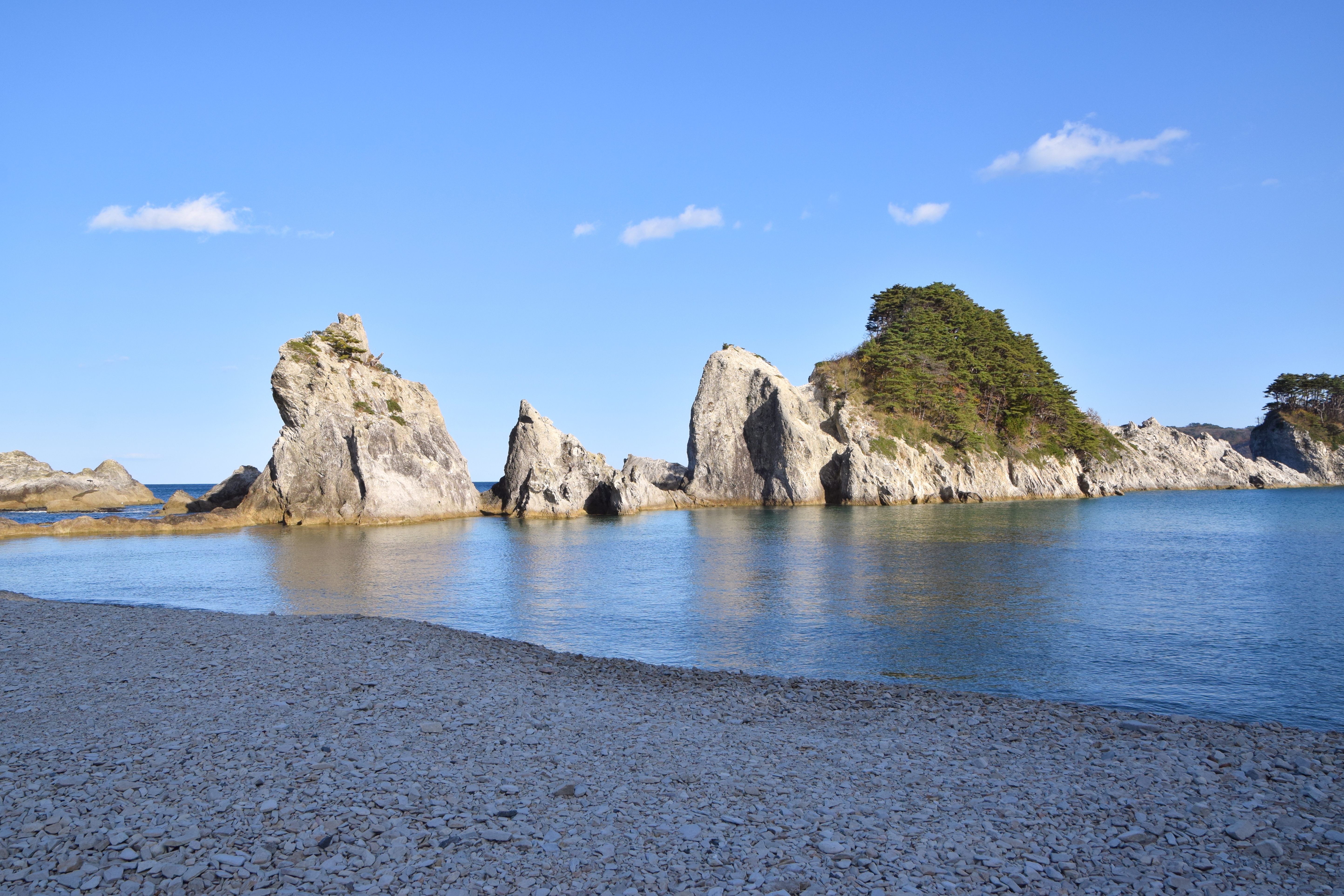
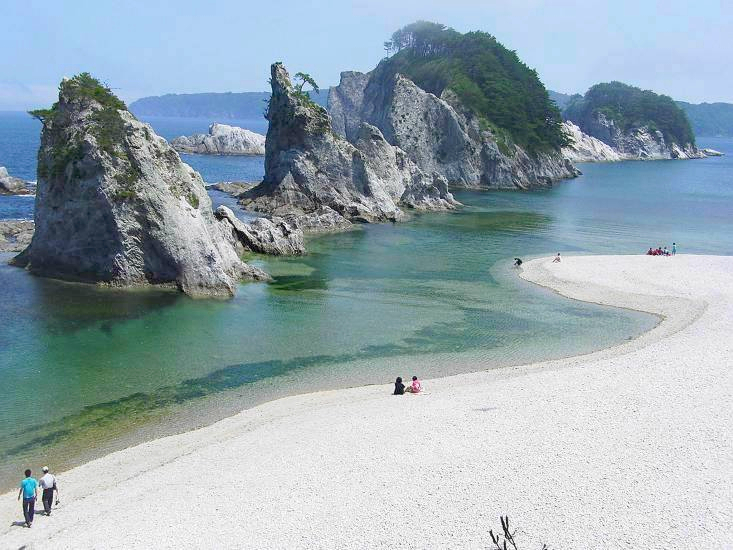
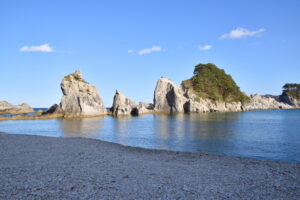
If the Sanriku Coast has a single “must-see” that perfectly encapsulates the region’s beauty, it’s Jodogahama (浄土ヶ浜, “Pure Land Beach”) near Miyako city, Iwate. The name — Pure Land, as in the Buddhist paradise — was given by an 18th-century monk who declared it couldn’t be any more beautiful unless it were actually in heaven. After you visit, you’ll understand why.
Jodogahama is formed by ancient volcanic rock formations — smooth, white, sea-sculpted pillars and boulders that rise from crystalline water in brilliant shades of turquoise and cobalt blue. The contrast between the white rock, the blue water, and the green pine trees clinging to the cliff edge is simply stunning. On a clear summer day, it looks less like Japan and more like something out of a dream.
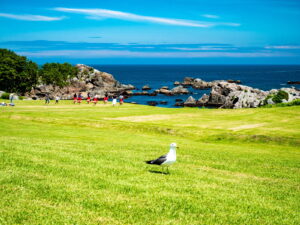
The beach itself is small — you can walk its full length in ten minutes — but the surrounding area is rich with trails, boat tours, and viewpoints. Take the 30-minute scenic boat cruise from Jodogahama harbor (around ¥1,200 / ~$8) through the sea caves and around the rock formations. You’ll see black-tailed gulls (ウミネコ) nesting on the rocks, and in summer, the birds will eat rice crackers directly from your hand if you extend them over the boat’s edge. This alone is worth the trip.
The Jodogahama Visitor Center (admission free) provides excellent information about the beach’s geology and local ecology. The coastal walking trail from the beach toward the nearby cape takes about 45 minutes and offers even more dramatic views. In early summer (June), the sea sparkles with bioluminescent plankton after dark — one of the more magical things you can witness anywhere in Japan.
Getting there: From Miyako Station, take the Miyako City Bus bound for Jodogahama (about 10 minutes, ¥200). The bus runs multiple times daily in summer. By car from Morioka, it’s about 1 hour 40 minutes east on Route 106.
Kitayamazaki Cliffs: Japan’s Most Spectacular Sea Cliffs
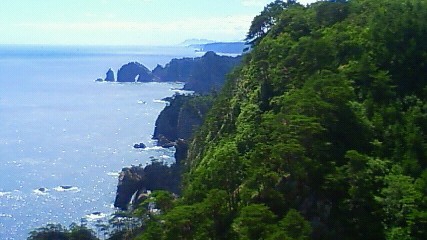
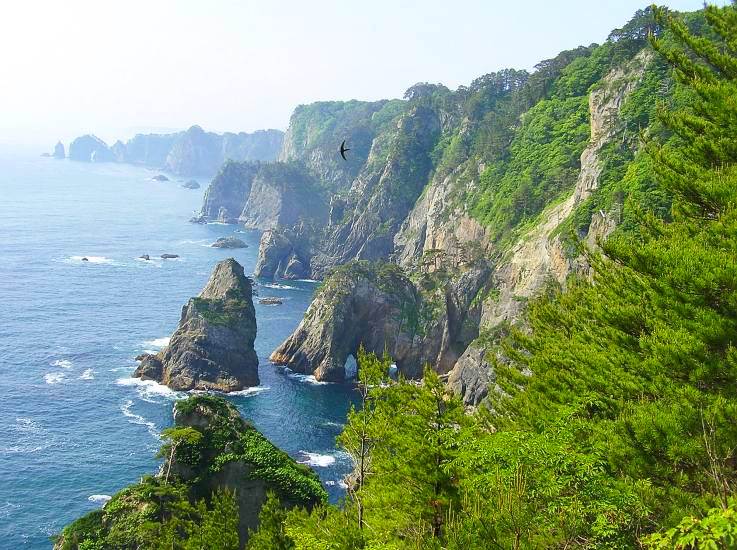
About 40 kilometers north of Miyako, the Kitayamazaki Cliffs (北山崎) make a strong claim for being the most dramatic coastal scenery in all of Japan. The cliffs rise nearly 200 meters (650 feet) straight from the ocean, stretching for 8 kilometers along the coast in an unbroken wall of dark basalt and green forest. There are no guardrails at some of the viewpoints. The wind howls. The waves boom far below. It’s absolutely exhilarating.
There are four main viewing platforms, connected by a trail that descends to sea level and back up. The full round trip takes about 3–4 hours, but you can get spectacular views from the first platform in just 15 minutes from the parking area. The contrast between the sheer vertical cliff face and the churning Pacific is reminiscent of the White Cliffs of Dover, except these cliffs are dark volcanic rock and the surrounding forest turns vivid red and orange in autumn.
The cliffs are at their most photogenic in summer (July–August) when the sea is calm and deeply blue, and in autumn (October–November) when the foliage blazes. In winter, they’re wild and stormy — a different kind of beautiful. Spring brings wildflowers along the cliff-top paths.
A lookout boat tour operates from the base of the cliffs (seasonal, approximately ¥1,500 / ~$10) and offers an incomparable view of the cliffs from the water — this is the perspective most photos you see are taken from. It’s well worth the extra time and cost.
Getting there: Kitayamazaki is 8 kilometers from the nearest train station (Tanohata on the Sanriku Railway). A shuttle bus (¥200) operates from the station during summer and autumn weekends. By car from Miyako, it’s about 45 minutes north on Route 45.
The Sanriku Railway: A Train Journey Through History
The Sanriku Railway (三陸鉄道) is much more than a convenient way to get around the coast — it’s a story of community resilience made manifest. The railway was severely damaged in the 2011 tsunami, with multiple stations and sections of track completely destroyed. Yet the communities along the line fought to have it fully restored, not because it was economically essential, but because it was the lifeblood of their coastal villages. Full service was restored in March 2019.
Riding the Sanriku Railway from north to south (or vice versa) — a full journey of around 4–5 hours covering the northern Iwate coast — is one of the most rewarding train trips in Japan. The line hugs the coast through tunnels, over bridges, and past fishing villages in a series of views that rival any railway journey in the world. The train slows near major viewpoints so you can photograph them. Staff are knowledgeable and friendly, and some trains feature special “kotatsu cars” in winter — you sit in a traditional heated table and drink locally produced apple juice while the winter coast scrolls by outside.
The Sanriku Railway also offers a “Kirakira Un-dan” sardine-grilling train (reservation required, seasonal), where local fishermen come aboard and grill fresh sardines over charcoal in the train car. Yes, you read that right. A grilling train. If that doesn’t go on your bucket list right now, we’ve failed as travel writers.
Key stations and what’s nearby:
- Kuji (northern terminus): Access to the amber museum and traditional seaweed farms
- Tanohata: Shuttle bus to Kitayamazaki Cliffs
- Tarō: A town relocated entirely to higher ground after the 2011 disaster; the massive tsunami protection seawall is sobering to see
- Miyako: Transfer point; Jodogahama Beach is nearby
- Kamaishi: Steel city, rugby heritage (2019 World Cup venue), Kamaishi Daikan’non statue
- Sakari: Junction for JR Ofunato Line, gateway to Kesennuma
A one-day pass for the Sanriku Railway is available (approximately ¥3,000 / ~$20) and is excellent value for multiple stops.
Kesennuma: The Fishermen’s City
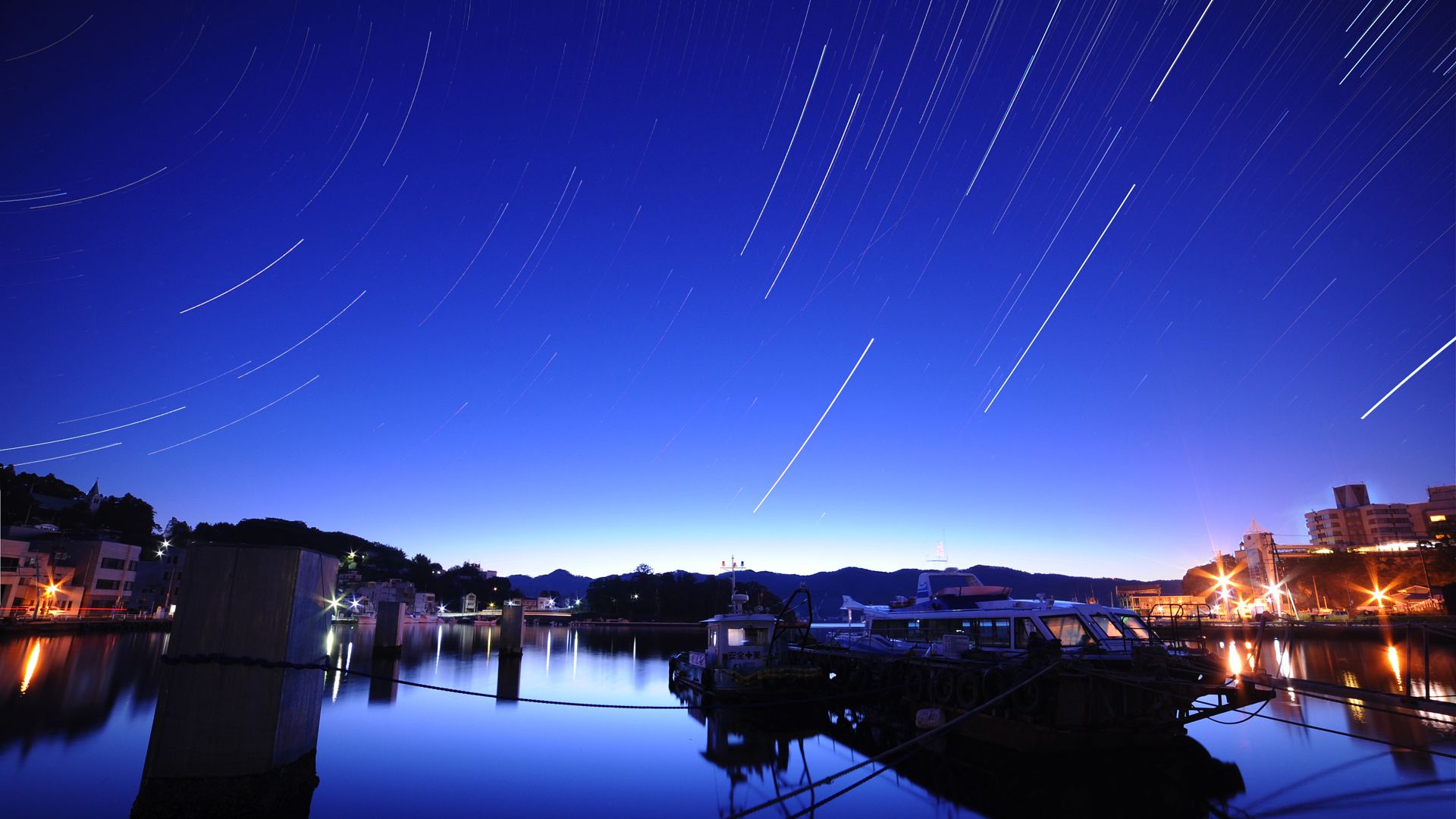
Kesennuma (気仙沼) is the undisputed capital of the Sanriku seafood world. This fishing port city in northern Miyagi prefecture is where the deep-sea fishing fleets come home, and it supplies some of the most extraordinary seafood in all of Japan: shark fin (of a sustainable variety, processed here), Pacific bluefin tuna, fresh swordfish, mekabu seaweed, and some of the finest oysters you’ll ever eat.
The morning fish market at Kesennuma Port is one of the most atmospheric experiences on the coast. Arrive early (4–6am) and watch the auction in action — massive tuna laid out in rows, buyers examining them with flashlights, the rapid-fire chant of the auctioneer. You won’t understand a word, but the energy is electric. A number of restaurants and seafood market stalls open in the port area by 7–8am, so you can follow your fish market tour immediately with the freshest possible breakfast.
The city’s signature dish is Mekabu Ramen — ramen with a broth enriched with mekabu, a variety of wakame seaweed with a natural viscous texture that makes the broth uniquely silky. You can find it at multiple restaurants around town for around ¥900–1,200 (~$6–8).
Kesennuma was also hit hard by the 2011 tsunami and has since rebuilt its waterfront with a new market complex and tourist facilities. The Kesennuma Uminoichi (海の市) market and restaurant complex on the harbor is a good first stop — you can buy directly from fishermen’s stalls, eat at the ground-floor restaurants, and visit the excellent shark museum on the upper floors (yes, there’s a shark museum — Kesennuma processes about half of Japan’s shark fins).
Getting there: From Sendai, the Kesennuma BRT (Bus Rapid Transit) line runs from Yanagihara Station (approximately 2 hours, ¥1,760 / ~$12). Alternatively, Shinkansen to Ichinoseki, then the JR Ofunato Line and BRT to Kesennuma (about 2.5 hours total).
The Miracle Pine: A Symbol of Resilience
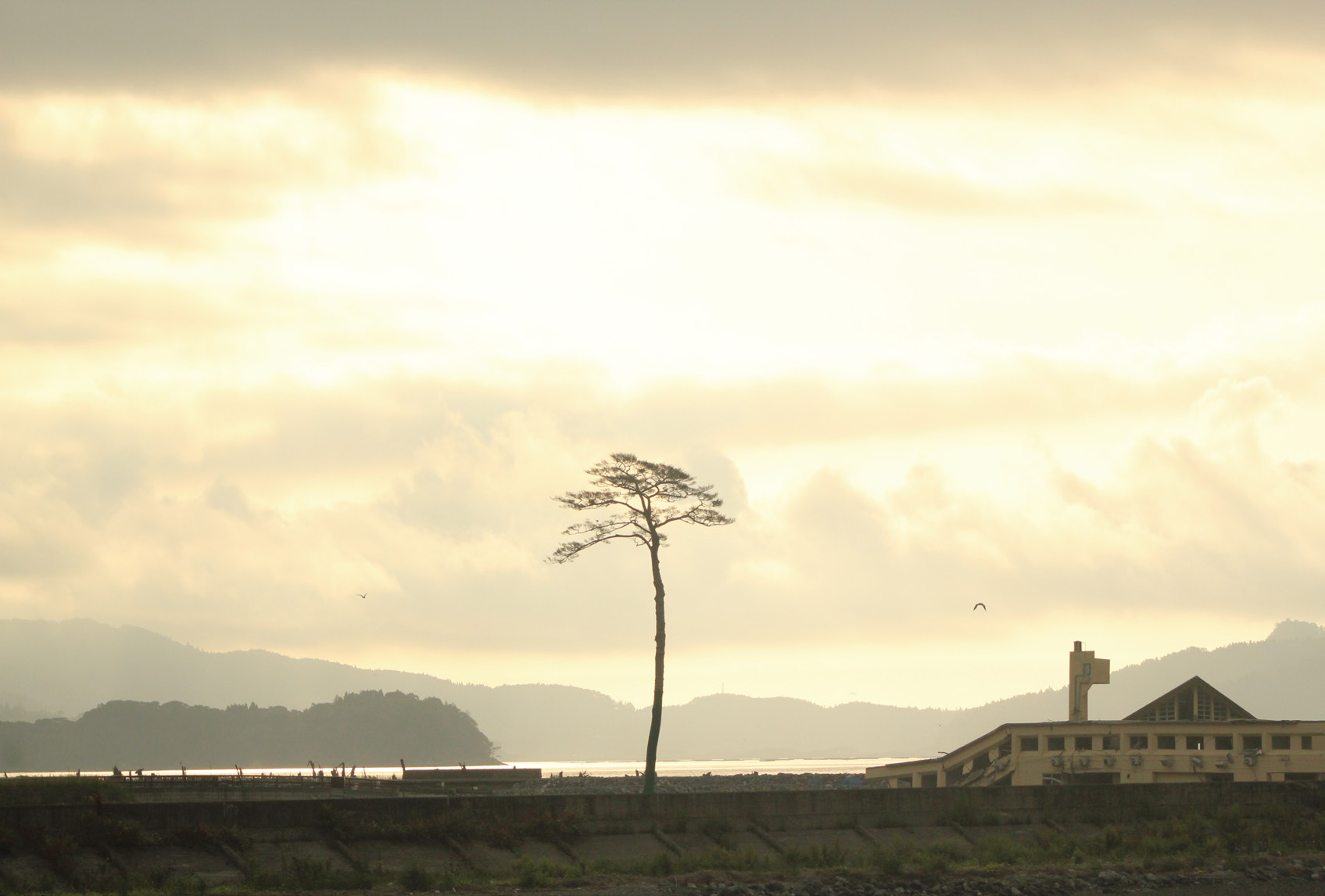
Twenty-three kilometers west of Kesennuma, in Rikuzentakata (陸前高田), stands one of the most poignant landmarks in all of Japan. The “Miracle Pine Tree” (奇跡の一本松) is the sole survivor of a 70,000-tree coastal pine grove that was obliterated by the 2011 tsunami. The wave was 12 meters (39 feet) high when it hit this stretch of coast.
Every single pine tree was destroyed — except this one, a 27-meter (88-foot) Japanese black pine that somehow remained standing. The tree became a national symbol of resilience and hope, appearing in newspapers, televisions programs, and artwork across Japan. When the tree later died from saltwater damage, there was a national outpouring of grief. The community made the decision to preserve it as a permanent monument — the core of the original tree was reinforced with carbon fiber and reinstalled in the same location, so that it still stands today, preserved forever.
Standing before the Miracle Pine is a quietly powerful experience. Around it, the rebuilt town of Rikuzentakata spreads out in a landscape that is both newly modern and deeply scarred. Visit the Rikuzentakata Earthquake Disaster Memorial Museum (admission ¥600 / ~$4) for a deeply moving account of the disaster and the town’s recovery. The museum is thoughtfully curated and accessible to non-Japanese speakers via English audio guides.
Sanriku Coast Seafood: What to Eat and Where
The Sanriku Coast is arguably the finest seafood region in Japan — which, given the competition, is an extraordinary claim. The cold, nutrient-rich Oyashio Current sweeps down from the Bering Sea along this coast, meeting the warmer Kuroshio Current just offshore. This collision creates one of the world’s most productive marine ecosystems, and everything that comes out of it is extraordinary.
Sea Urchin (Uni / ウニ)
Iwate’s sea urchin is considered among the finest in Japan, rivaling Hokkaido as the nation’s top uni-producing prefecture. The cold Pacific waters produce urchins with a clean, sweet, intensely oceanic flavor and a creamy, custard-like texture that’s entirely different from the bitter aftertaste some people associate with lower-quality uni. Eat it raw as sashimi, in a kaisendon (seafood rice bowl), or on top of freshly made local soba. Expect to pay ¥2,500–4,500 (~$17–30) for a quality uni dish.
Oysters (Kaki / 牡蠣)
The Sanriku oysters — especially from the inlets around Kesennuma, Miyako, and the Matsushima Bay area — are a revelation. They’re plump, briny, and full-flavored, with a sweetness that reflects the exceptional quality of the kelp forest where they feed. Oyster shacks (kaki huts) operate along the coast from November through March; you’ll often pay ¥1,500–3,000 (~$10–20) for all-you-can-eat oysters grilled over charcoal for 60 minutes. If you’ve never had an oyster direct from the sea, grilled immediately in front of you, here is your chance.
Abalone (Awabi / あわび)
Iwate is Japan’s leading producer of abalone, and the Pacific abalone farmed in the cold waters here is a premium product. You’ll find it served whole, simmered in soy and sake, at traditional ryokan breakfasts; sliced raw for sashimi; or simply grilled with butter at seafood stalls. It has a firm texture and a deep umami flavor quite unlike any other shellfish. Budget ¥2,000–5,000 (~$13–33) depending on size and preparation.
Salmon (Sake / 鮭)
The rivers draining into the Sanriku Coast are famous salmon spawning grounds, and the local salmon culture runs deep. The October salmon festival in various coastal towns celebrates the harvest season. Fresh salmon sashimi, cured salmon, and smoked salmon are all excellent here; you’ll find them at port-side markets and izakayas along the route.
Kelp (Konbu / 昆布)
The cold Oyashio Current also nurtures world-class kelp forests along the Sanriku coast. Local konbu is highly prized for dashi-making — the foundation stock of Japanese cuisine. You can buy packs of dried konbu at any port-side market; it makes an excellent (and lightweight) souvenir that will transform your home cooking.
Best Time to Visit the Sanriku Coast
- Spring (April–May): Cherry blossoms bloom in coastal towns in late April. The weather is crisp and the sea is still clear. Fewer tourists than summer. Some seafood stalls aren’t fully operational yet.
- Summer (June–August): Best for Jodogahama Beach and coastal hiking. Water is warmest (though still cool by southern Japanese standards — around 20°C/68°F). Boat tours and the sardine-grilling train are in full operation. Peak tourist season but still quiet compared to Kyoto or Tokyo.
- Autumn (September–November): Our top recommendation. The cliff-top foliage turns gold and crimson, oyster season begins, the salmon festivals run in October, and the weather is generally clear. This is also when the sea is at its most photogenic — deep cobalt blue with crisp autumn light.
- Winter (December–February): Cold and wild, with storms rolling in from the Pacific. Snow on the cliff tops. Oyster season is in full swing and winter specials (konbu hot pot, sake-steamed mussels) appear on menus. Not for everyone, but atmospheric in a way that summer simply isn’t.
Where to Eat: Sanriku Coast Food Guide
Fisherman’s Wharf Miyako (フィッシャーマンズワーフMIYAKO)
This waterfront market complex in central Miyako is the best single stop for first-time visitors to the coast. The ground floor hosts fishmongers and take-away counters where you can assemble your own seafood spread: sea urchin, salmon roe, abalone, crab, and more, piled atop a bowl of local rice. A full kaisendon bowl will cost around ¥2,000–3,500 (~$13–23). The market also sells excellent dried seafood, pickles, and konbu to take home. Open daily from 9am.
Saikan at Jodogahama (浄土ヶ浜レストハウス)
The restaurant attached to the Jodogahama Visitor Center is better than you’d expect from a location this tourist-adjacent. The uni kaisendon (¥2,800 / ~$19) and the kaki furai (fried oyster set, ¥1,500 / ~$10) are both excellent. Order a side of local wakame soup for the full experience. Tables overlooking the beach get booked out on weekends — arrive early or reserve ahead.
Sugawaratei Soba (菅原亭) — Morioka
If you’re basing yourself in Morioka for the northern coast, try wanko soba (all-you-can-eat small bowls of soba) at this institution in central Morioka. It’s not a seafood restaurant per se, but the soba is extraordinary quality and the experience — small servings delivered in rapid succession by a server who keeps refilling your bowl until you slam the lid shut — is pure Iwate culture. Expect to eat 40–100 bowls and pay around ¥3,000–4,000 (~$20–27) for the full experience.
Uminoichi (海の市) — Kesennuma
The market and restaurant complex at Kesennuma Port is the place to eat the region’s signature mekabu ramen, sample fresh shark fin soup (legally sourced, sustainably processed), and buy the most extraordinary selection of local seafood products you’ll find anywhere on the coast. Restaurant meals run ¥1,000–2,500 (~$7–17). The basement level has the best fresh seafood stalls.
Where to Stay
Budget (Under ¥8,000 / $55 per night)
Miyako Youth Hostel — Clean, friendly, and conveniently located near Miyako Station with easy access to Jodogahama Beach. Shared dormitories from ¥3,500 (~$23); private rooms available. The common room is a good place to meet other coastal travelers and exchange tips.
Various guesthouses in Kamaishi — Kamaishi has seen a boom in simple guesthouses aimed at cyclists and walkers doing the Michinoku Coastal Trail. Budget ¥4,000–7,000 (~$27–47) for a simple private room.
Mid-Range (¥8,000–¥20,000 / $55–$135)
Hotel α-1 Miyako — A modern business hotel right in central Miyako, with comfortable rooms, a good breakfast buffet featuring local seafood, and helpful staff who can arrange day trips. Rooms from around ¥9,000 (~$60) per person.
Kaneyoshi Ryokan — Kamaishi — A traditional inn where the multi-course kaiseki dinner features nothing but locally sourced Sanriku seafood: fresh sea urchin, abalone sashimi, sautéed oysters, grilled fish. The ryokan experience — yukata, tatami, multi-course dinner — combined with this quality of seafood is exceptional value at ¥12,000–18,000 (~$80–120) per person including dinner and breakfast.
Luxury (¥20,000+ / $135+)
Shisui-en — Miyako — This clifftop ryokan overlooking the Pacific is the most indulgent accommodation option on the northern Sanriku coast. Ocean-view rooms, open-air hot spring baths perched above the sea, and a kaiseki dinner showcasing the finest local seafood. From ¥35,000 (~$230) per person including meals — worth every yen for a special occasion.
The Michinoku Coastal Trail
For hikers and outdoor enthusiasts, the Sanriku Coast is home to one of Japan’s greatest long-distance walking routes: the Michinoku Coastal Trail (みちのく潮風トレイル). Running 1,000 kilometers (620 miles) from Cape Hachinohe in Aomori Prefecture to Soma City in Fukushima Prefecture, the trail traverses the entire length of the Sanriku Coast, dipping in and out of the hills behind the shore, descending to fishing villages, and crossing headlands that offer views that will stop you dead in your tracks.
The trail is well-marked and divided into 28 stages, each of which can be walked independently in a day. Popular day-hike sections include the Jodogahama–Tsugaruishi section (approximately 18 km / 11 miles), the Kitayamazaki cliffside section near Tanohata, and the Rikuzentakata section that passes through the tsunami memorial landscape.
Accommodation along the trail is a mix of ryokan, minshuku (family-run guesthouses), and simple camping spots. The Tohoku Forest Agency publishes an excellent trail guide available in English at tourist information centers in major towns along the route. If you’re a hiker, this trail deserves to be on your global bucket list alongside the Camino de Santiago, the Appalachian Trail, and New Zealand’s Tongariro Alpine Crossing.
Practical Tips for Visiting the Sanriku Coast
- Rent a car if at all possible. Public transport covers the major stops but is slow and infrequent. A rental car from Morioka or Sendai unlocks the entire coast including countless small fishing villages and cliff-top viewpoints not served by any bus. Budget ¥5,000–8,000 (~$33–53) per day for a compact car.
- Plan around tides. The tidal range on the Sanriku coast can be dramatic. Sea caves, tide pools, and certain beach areas are only accessible at low tide. Download a tide chart app before you go.
- Carry cash. Many small fishing village restaurants and market stalls are cash-only. ATMs are available at convenience stores (7-Eleven, Family Mart) in larger towns like Miyako and Kesennuma, but can be scarce in between.
- Book ryokan dinners in advance. If you’re staying at a traditional inn and want the full kaiseki seafood dinner (you absolutely should), book it when you make your accommodation reservation, not on arrival.
- The coast is NOT overrun with tourists. Unlike Kyoto or Hakone, you won’t be fighting crowds. This is both a blessing and a planning challenge — services can be limited, and some attractions are seasonal or require advance reservation.
- Allow at least 3 days, ideally 5–7. The Sanriku Coast is 600 km long. Rushing it is a mistake. Budget time to slow down, eat at leisure, and let the landscape sink in.
- Respect the tsunami memorials. These are sacred sites for local communities. Speak quietly, follow any posted guidelines, and leave offerings of flowers or incense if you feel moved to do so (though this is not required of foreign visitors).
- Download offline maps. Cell service can be patchy on some of the more remote cliff-top sections and rural coastal roads. Download Google Maps or Maps.me offline before entering areas where connectivity might be unreliable.
Sample 3-Day Sanriku Coast Itinerary
Day 1 — Morioka to Miyako (Northern Iwate)
Morning: Take the Sanriku Railway from Miyako (or drive from Morioka, about 1 hour 40 minutes). Start with a seafood breakfast at Fisherman’s Wharf Miyako — fresh uni on rice, miso soup with shellfish, iced coffee. Pick up supplies and a tide chart from the visitor information center.
Afternoon: Spend 2–3 hours at Jodogahama Beach. Take the boat tour (¥1,200 / ~$8) through the sea caves, then walk the cliff-top trail for panoramic views. In clear weather, the sea is astonishing. If it’s summer, stay to see the bioluminescence after dark.
Evening: Check in to your Miyako ryokan or hotel. Dinner at a local izakaya — try the uni sashimi and fresh grilled fish. Glass of Iwate sake to close the day.
Day 2 — Miyako to Kamaishi (Cliffs & Railway)
Morning: Drive or take the Sanriku Railway north to Tanohata and catch the shuttle bus to Kitayamazaki Cliffs. Allow 2–3 hours to walk all four viewing platforms and, if available, take the lookout boat tour from the base.
Midday: Picnic lunch at the clifftop picnic area, or eat at the small cafe near the first viewing platform. A bowl of hot noodle soup on a windy clifftop is a deeply satisfying experience.
Afternoon: Return south by Sanriku Railway — this stretch of the line is particularly scenic. Disembark at Kamaishi (a steel city with an interesting industrial history and the moving Kamaishi Daikan’non, a massive cliff-carved Buddhist statue).
Evening: Check in to a Kamaishi guesthouse or ryokan. Explore the rebuilt port area. Dinner of fresh oysters (in season) and local sake. The seafood restaurants near Kamaishi Station are unpretentious and excellent.
Day 3 — Kesennuma & Rikuzentakata (Southern Sanriku)
Early morning: Drive or take the Sanriku Railway south to Sakari, then the BRT to Kesennuma. Arrive in time for the morning fish market (4–6am auction, but the market stalls open from 7am). Have a market breakfast of fresh sashimi or oysters.
Midday: Explore Kesennuma Uminoichi market complex — buy dried seafood and konbu to take home. Have mekabu ramen for lunch (¥900–1,200 / ~$6–8).
Afternoon: Drive west to Rikuzentakata (about 35 minutes). Visit the Miracle Pine Tree and the Earthquake Disaster Memorial Museum. Allow 2 hours — this is a moving, unhurried experience.
Evening: Return to Kesennuma for one final seafood dinner (or drive to Ichinoseki for Shinkansen connections back to Tokyo). The full journey back to Tokyo from Ichinoseki takes about 2 hours on the Shinkansen.
Related Articles You Might Enjoy
- Tohoku’s Pacific Coast Road Trip: The Ultimate Sanriku Rias Coast Drive
- Appi Kogen, Iwate: Japan’s Premier Powder Ski Resort — Complete Guide for Foreign Visitors
- Kuji, Iwate: Japan’s Northernmost Ama Divers & Hidden Amber Museum
- Genbikei Gorge, Iwate: Japan’s Flying Dango Gorge & Ichinoseki’s Hidden Natural Wonder
- Mount Iwate: Complete Hiking Guide to Tohoku’s Sacred Volcano & the Nanbu Fuji
Final Thoughts
The Sanriku Coast is one of Japan’s great overlooked treasures — a stretch of coastline that has everything: world-class natural beauty, extraordinary seafood, deep cultural history, and a human story of resilience that will stay with you long after you’ve returned home. It doesn’t have a Shibuya Crossing or a Fushimi Inari. What it has is better: cliffs that make you feel small in the best possible way, a bowl of fresh sea urchin that changes your understanding of what that ingredient can taste like, and communities that welcome visitors with the warmth of people who know what it means to lose everything and choose to rebuild.
If you visit Tohoku — and you absolutely should — don’t skip the coast. Give it at least three days, ideally five. Drive the cliff roads slowly. Eat at the small places near the port. Ask the person behind the counter at the seafood market what’s best today, and trust their answer. You’ll come back changed.
Got questions about planning your Tohoku trip, or spotted something we missed? We’d love to hear from you — drop us a message here.


コメント