Picture a coastline where ancient black lava cliffs tumble into the Pacific, where natural lawn meadows roll right up to the cliff edge, and where a sacred island shrine is so densely packed with nesting seabirds that visitors literally walk through a living cloud of wings and cries — this is the Tanesashi Coast and Kabushima Island, one of Tohoku’s most dramatic and overlooked natural wonders, sitting just outside the city of Hachinohe in southern Aomori Prefecture.
Why Tanesashi Coast and Kabushima Should Be on Your Tohoku Itinerary
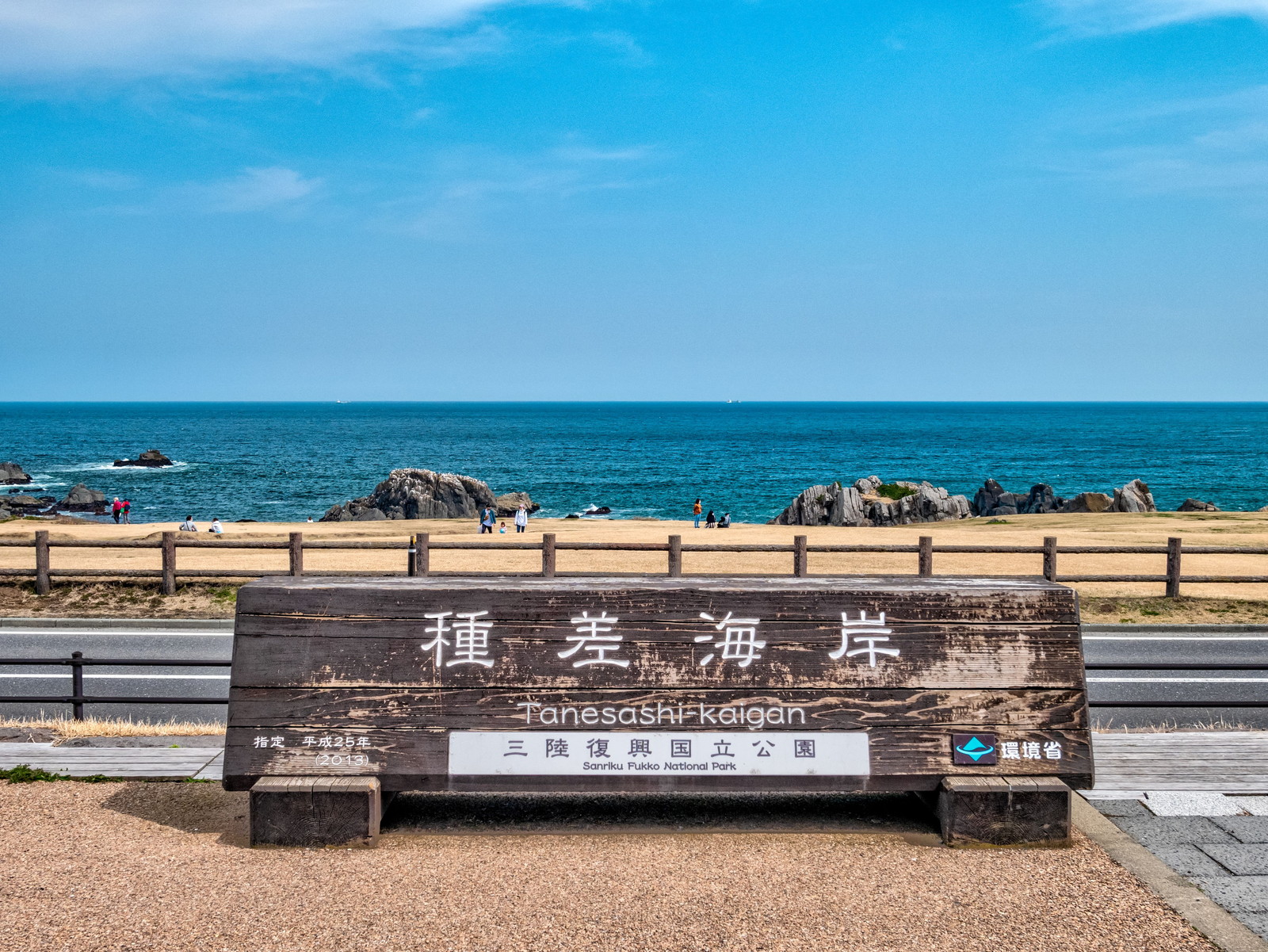
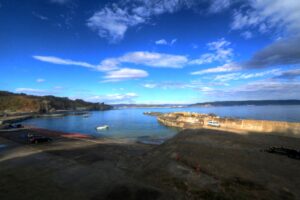
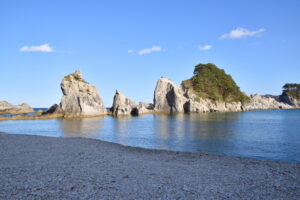
Most travelers to Aomori focus on the big names — Nebuta Festival, Hirosaki Castle, Aomori Apple picking, Oirase Gorge. The Tanesashi Coast rarely makes Western travel lists, which is precisely why it’s so rewarding to visit. Here, you’ll find an 11-kilometer stretch of unspoiled coastline protected within the Sanriku Fukkō National Park, combining dramatic volcanic rock formations, natural turf meadows, sandy coves, and tidal pool ecosystems in a way that feels genuinely wild and remote — despite being accessible in 30 minutes from a major Shinkansen station.
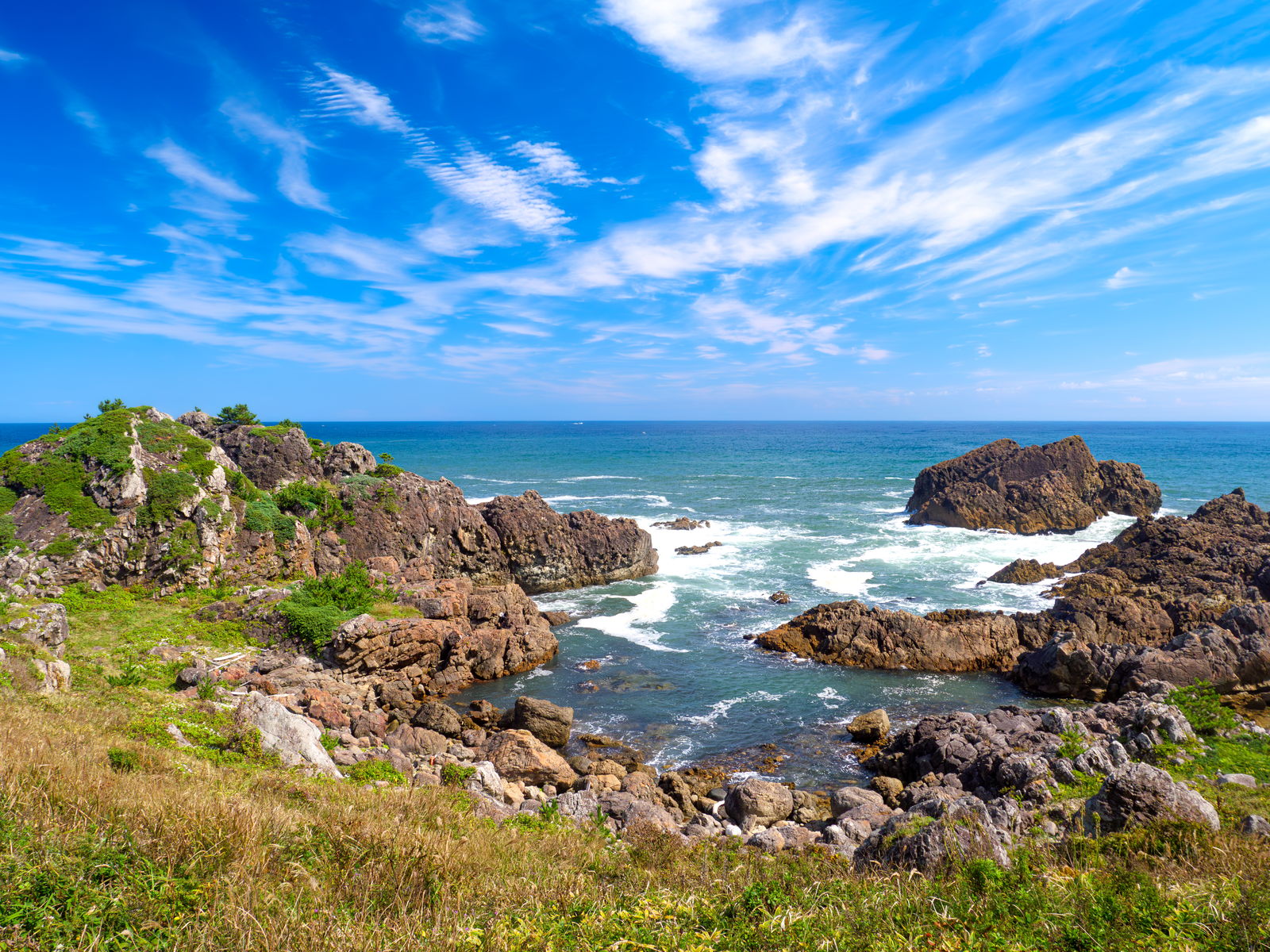
The coastal trail, which connects the Ashigezaki Cape observation deck at one end to Kabushima Island at the other, passes through six distinct landscapes in a single morning’s walk. You’ll cross natural lawn plateaus that cling to clifftops like something from Scotland’s Orkney Islands, descend to rocky tidal flats busy with crabs and anemones at low tide, traverse short forested sections where pine trees sculpted by Pacific winds lean permanently inland, and emerge suddenly onto wide sandy beaches with not another tourist in sight. Unlike heavily managed coastal parks, the Tanesashi Coast trail feels genuinely exploratory.
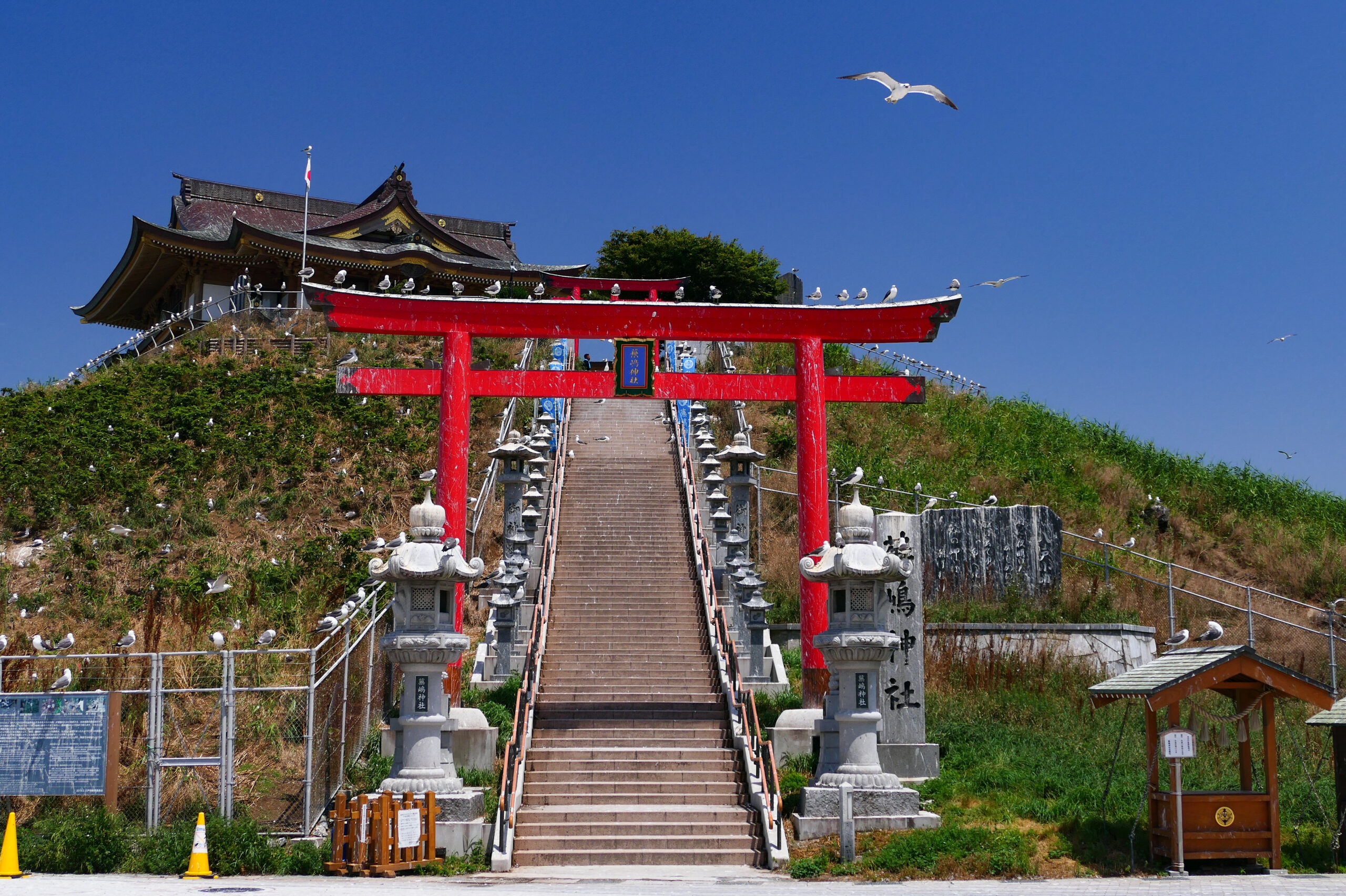
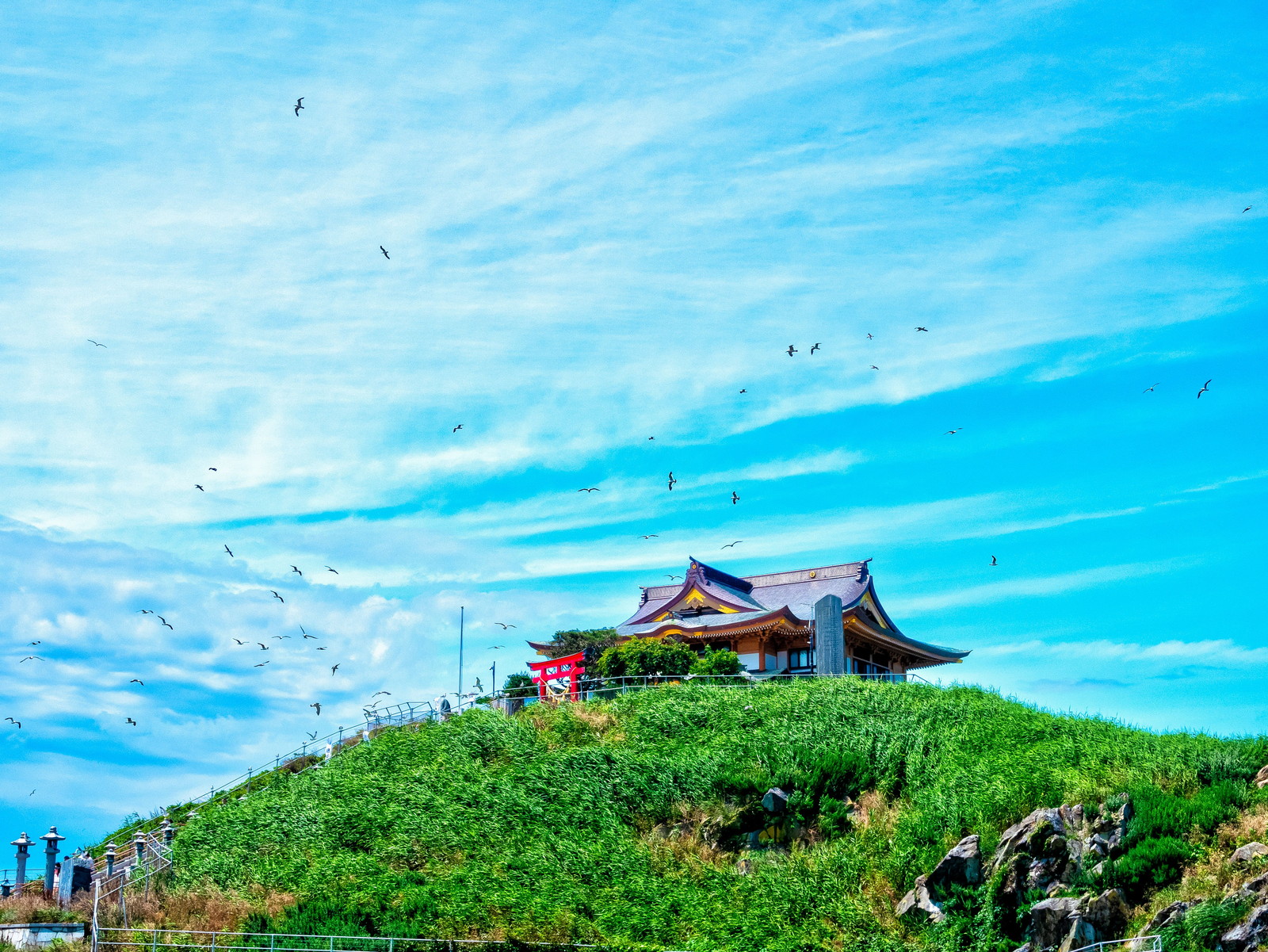
At the northern end of the trail, Kabushima changes everything. This small island — technically a peninsula now that a causeway connects it to the mainland — is one of Japan’s most extraordinary wildlife experiences: a designated National Natural Monument that serves as the nation’s largest breeding ground for black-tailed gulls (umineko). From late February through late August, between 30,000 and 40,000 gulls nest on every available surface of the island, filling the air with constant calls and movement. Walking through the shrine path to reach the hilltop torii gate means walking directly through the colony — birds nesting within arm’s reach, chicks wandering across the path, parent birds swooping overhead. The experience is chaotic, beautiful, and completely unforgettable.
The Tanesashi Coastal Trail: What to Expect
The full Tanesashi Coast trail runs approximately 11 kilometers (6.8 miles) from Ashigezaki Cape in the south to Kabushima Island in the north. The trail is well-maintained and largely flat, with some gentle undulation, making it suitable for most fitness levels. Allow 3–4 hours for the full one-way walk at a relaxed sightseeing pace, or split it over two separate half-day visits using the various access points along the route.
Ashigezaki Cape (葦毛崎展望台) — The southern starting point features a concrete observation platform perched on the clifftop with sweeping Pacific Ocean views. On clear days, you can see all the way south toward Iwate Prefecture. The cape’s exposed position makes it particularly dramatic in stormy weather, when waves crash against the black rocks far below and spray fills the air. A small café near the parking area serves basic drinks and light snacks — pick up supplies before heading out. Admission: free.
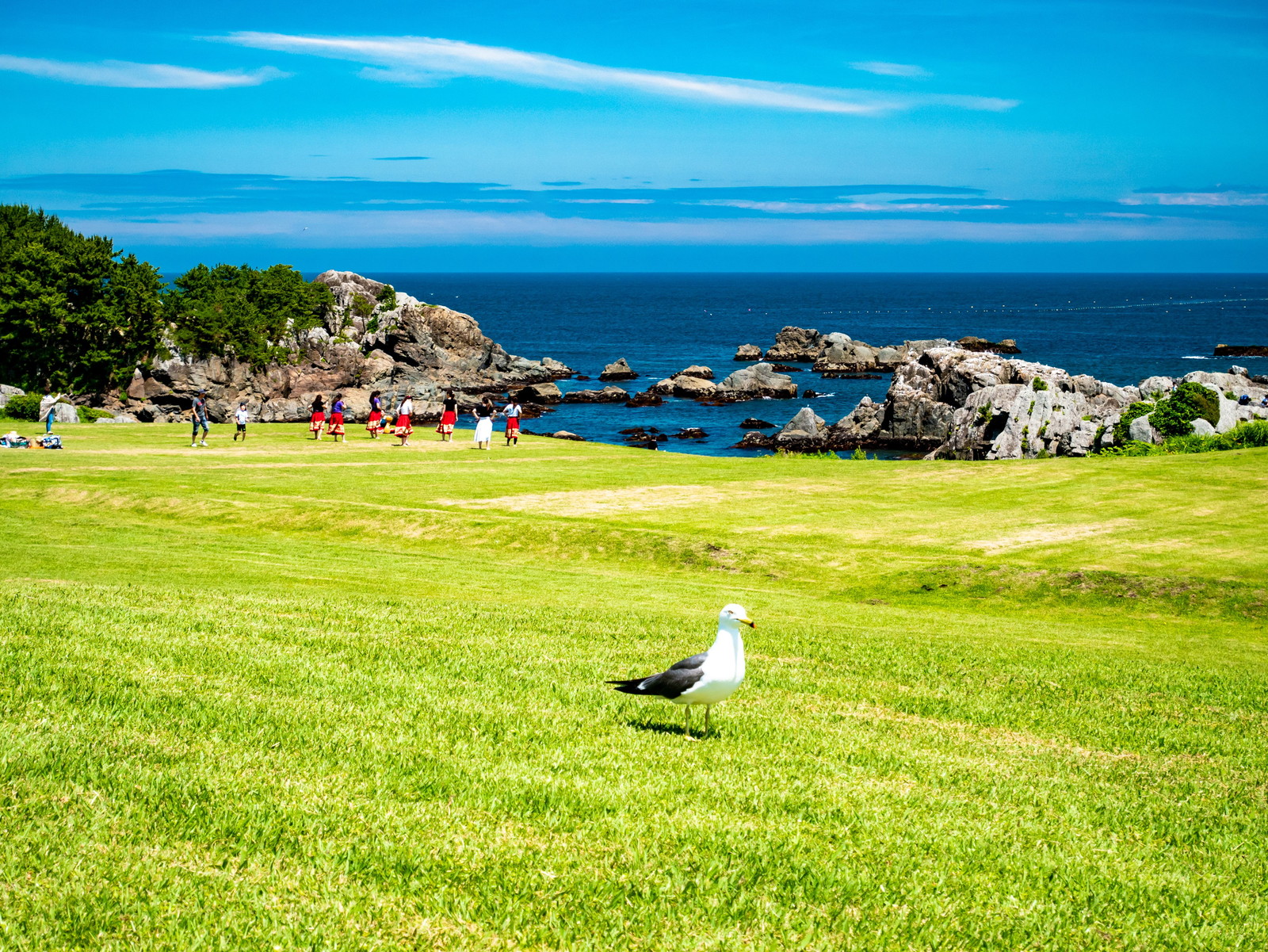
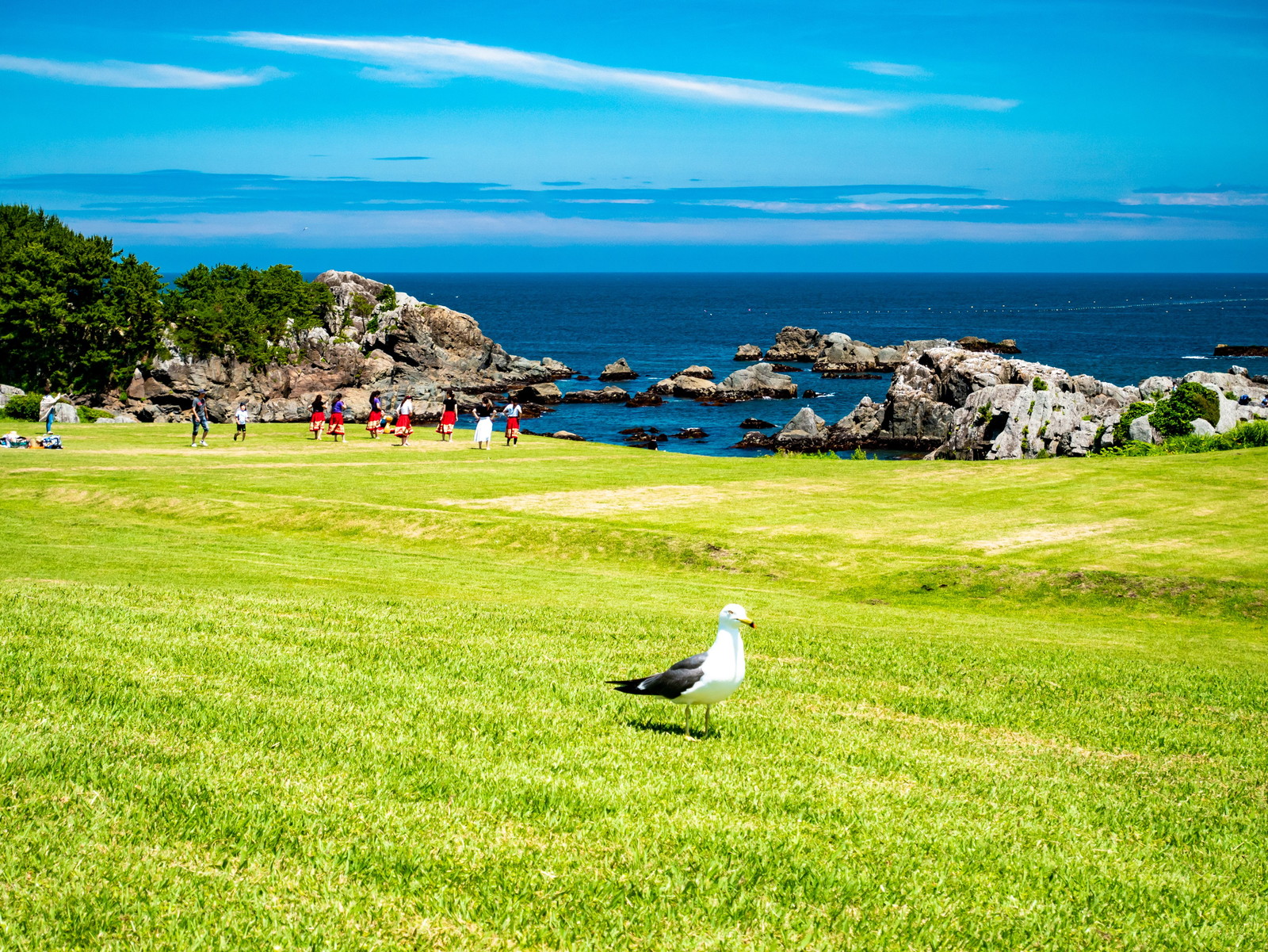
Tanesashi Kaigan Lawn Area (種差海岸天然芝生地) — The most photogenic section of the trail is undoubtedly the natural turf meadow that extends to the cliff edge near Tanesashi Kaigan Station. This isn’t landscaped parkland — it’s a naturally occurring coastal lawn, maintained by salt spray and Pacific winds into a short, dense carpet of grass that somehow survives directly on the clifftop. There’s nowhere else quite like it in Tohoku: you can sit on the grass literally 2 meters from the cliff edge, feet dangling over the Pacific, with only the sound of waves and seabirds below. In spring (May–June), wildflowers add color; in summer the lawn is brilliant green against the blue water.
Ōsu Beach (大須海水浴場) — Mid-trail, the coast opens onto a wide, gently curved sandy beach popular with local families in summer. The contrast with the volcanic-rock sections of the trail is striking. From June through September the beach is open for swimming (lifeguards present during peak summer); outside those months you’ll likely have it to yourself. The calm water and gradual slope make it excellent for paddling even with young children.
Shiraha Beach (白浜海水浴場) — A smaller, more secluded sandy beach further north, often less crowded than Ōsu and beloved by local surfers on days with Pacific swell. The surrounding pine forest provides natural windbreak and shade, making it a lovely picnic spot.
Kabushima Island (蕪島) — The trail’s spectacular culmination, detailed in its own section below. Even if you choose not to walk the full coastal trail, Kabushima alone justifies the journey to Hachinohe.
Kabushima Island: Japan’s Greatest Seabird Experience
Kabushima Island sits at the northern end of the Tanesashi Coast trail, connected to the mainland by a narrow causeway that doubles as the main approach path. What awaits at the end of that causeway is one of the most extraordinary wildlife encounters in all of Japan: an entire small island transformed, from late February through August, into a living, breathing colony of black-tailed gulls.
The black-tailed gull (umineko in Japanese, meaning “sea cat” — a reference to their cat-like calls) is a medium-sized gull distinctive for its dark wingtips and the red and black bands on its yellow bill. At Kabushima, these birds don’t merely visit — they nest on every horizontal surface of the entire island: the shrine buildings, the stone steps, the torii gates, the surrounding trees, and directly on the path you walk. Arriving during the peak nesting season (May–June) is to step into a world overtaken by birds: calls come from every direction, downy chicks peer curiously from beneath bushes, and parent birds perform elaborate alarm displays from perches inches away as you pass.
Here’s the extraordinary part: the trail to Kabushima Shrine at the hilltop runs directly through the nesting colony. You will walk within arm’s reach of nesting birds. During peak season (roughly May through July), the shrine management provides each visitor with a small helmet or hard hat — not as a joke, but as genuine protection, since parent gulls protecting nests will occasionally dive-bomb perceived threats. Wearing the helmet is part of the experience, and frankly adds to the slightly surreal adventure of the whole thing. Entrance to Kabushima Island: free.
Kabushima Shrine itself is dedicated to Benzaiten, one of the Seven Lucky Gods of Japan (associated with wealth, beauty, music, and good fortune). The shrine’s connection to a bird colony is not coincidental — in Japanese folklore, the umineko are considered Benzaiten’s sacred messengers, and their droppings (yes, their droppings) are traditionally considered a sign of good luck. If you find yourself on the receiving end of a gull’s attention on the path up, locals will assure you it’s fortune in disguise. Most visitors take this in the spirit intended.
Getting There from Tokyo and Within Tohoku
- Shinkansen from Tokyo to Hachinohe: Take the Tohoku Shinkansen (Hayabusa) from Tokyo Station to Hachinohe Station. Journey time is approximately 2 hours 40 minutes. Reserved seat fare is around ¥14,000–¥16,000 ($93–$107) one way. The JR Pass covers this route entirely. Hachinohe Station is a major Shinkansen stop, not a local station — services are frequent and fast.
- Local train to the coast: From Hachinohe Station, take the JR Hachinohe Line toward Kita-Sanriku (direction Kamaishi/Kuji). For Kabushima, get off at Kabushima Station (approximately 20 minutes, ¥330/$2.20). For the Ashigezaki Cape southern trailhead, get off at Tanesashi-Kaigan Station (25 minutes, ¥410/$2.75). Both stations are JR Pass-eligible. Trains run approximately hourly.
- From Aomori City: Take the Tohoku Shinkansen one stop south to Hachinohe (20 minutes), then the local train as above. Alternatively, the limited express “Shirakamishirakami” runs directly between Aomori and Hachinohe.
- Rental car from Hachinohe Station: Gives you the most flexibility to explore multiple coastal points and stop at Hachinohe’s morning market. Budget approximately ¥6,000–¥10,000 ($40–$67) per day for a compact car. Free parking is available at Ashigezaki Cape, Tanesashi Kaigan, and near Kabushima Island.
Practical trail logistics: If walking the full 11-kilometer one-way trail, the easiest approach is to take the train to one end and walk to the other, then take the return train home. Starting from Ashigezaki (south) and ending at Kabushima (north) means you finish at the most spectacular section — a satisfying conclusion. Alternatively, begin at Kabushima (arrive by train) to see the birds before the late-morning tourist peak, then walk south and return by train from Tanesashi-Kaigan Station.
Best Time to Visit
- Bird season (February–August): The absolute highlight of Kabushima is the black-tailed gull colony, which peaks from May through July. Late February marks the first arrivals; by April the island is dramatically alive. The colony begins dispersing in August, with most birds departed by early September. If seeing the full colony is your priority, target May or June.
- Spring (April–June): The best combination of coastal scenery and bird activity. Wildflowers bloom along the clifftop trail in May and June, temperatures are mild (55–70°F / 13–21°C), and days are long.
- Summer (July–August): Warm enough for beach swimming (Ōsu and Shiraha beaches are lovely). Hachinohe’s famous Sansha Taisai Festival runs in late July/early August — a UNESCO-listed procession of lavishly decorated floats, excellent to combine with a coastal walk.
- Autumn (September–November): The gulls have gone, but autumn colors transform the coastal forest sections of the trail. Clear October and November days bring spectacular sea views with minimal cloud cover. Daytime temperatures fall to 45–63°F (7–17°C).
- Winter (December–March): Cold and sometimes snowy, but Kabushima Shrine with snow-dusted torii gates has a serene beauty. The first gulls arrive from late February, overlapping with late winter. Dress warmly.
Hachinohe: The Base City Worth Exploring
Hachinohe is Aomori’s second-largest city and, in the view of many Tohoku food enthusiasts, its most underrated culinary destination. Japan’s largest morning market — the Tatehana Kishi Asaichi — sets up on the harbor every Sunday from March through December, stretching for over 300 meters along the wharf with hundreds of vendors selling fresh seafood, local vegetables, pickles, grilled skewers, and Hachinohe specialties. Arrive by 6:00 AM for the best selection; by 9:00 AM the most coveted items have sold out.
Hachinohe’s fishing port supplies much of Japan with ikura (salmon roe), scallops, mackerel, and the region’s beloved senbei-jiru (rice cracker soup) — a unique local dish where large flat rice crackers are simmered in a chicken and vegetable broth until they become chewy and soaked through. You’ll find senbei-jiru on virtually every restaurant menu in Hachinohe; it’s warming, unusual, and completely addictive.
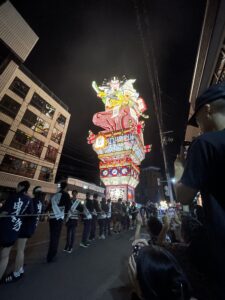
The city’s Sansha Taisai Festival (late July to early August) is one of Tohoku’s most visually spectacular events: enormous painted floats (dashi) depicting legendary scenes from Japanese history and mythology are pulled through the streets in a procession spanning three separate shrines over four days. The festival was inscribed on UNESCO’s Intangible Cultural Heritage list in 2016. If your Tohoku trip includes August, a Hachinohe Festival — coastal trail combination makes for one of the region’s best multi-day itineraries.
Where to Eat: Hachinohe Food Guide
Hachinohe’s food scene punches well above its size. The city’s fishing port legacy means seafood quality is exceptional, and several local specialties are worth going out of your way to try.
Senbei-jiru (せんべい汁)
Hachinohe’s signature dish is a clear or lightly seasoned chicken and vegetable soup to which Nanbu senbei (flat wheat rice crackers) are added during the final simmering stage. As the crackers cook, they absorb the broth and develop a soft, chewy texture quite unlike anything else in Japanese cuisine. The contrast between the tender vegetables and the slightly sticky crackers makes every mouthful different. Most izakaya and casual restaurants in Hachinohe serve senbei-jiru for ¥600–¥1,200 ($4–$8). The Hachinohe Morning Market has stalls serving it piping hot from giant pots for around ¥300–¥400 ($2–$3).
Hachinohe Morning Market (館鼻岸壁朝市)
Japan’s largest Sunday morning market, held weekly from March through December along the harbor, is both a breakfast destination and a cultural experience. Come hungry: vendors sell fresh grilled scallops, sashimi prepared to order, taiyaki, yakitori, local apple cider, regional pickles, and much more. Budget ¥1,000–¥2,000 ($7–$14) for a complete and very satisfying morning market breakfast. The market runs 3:00 AM to around 9:00 AM on Sundays.
Ichiban-gai and Bar Street (みろく横丁)
Hachinohe has a surprisingly vibrant bar and izakaya culture, centered on Miroku Yokocho — a covered alley of small, intimate standing bars and snack restaurants that feel lifted directly from a postwar black-and-white film. Each bar seats perhaps ten people, the proprietors know their regulars by name, and the atmosphere is warmly local in a way that big-city bar districts rarely achieve. Order the local Hachinohe mackerel sashimi, a glass of Aomori nihonshu (sake), and settle in for the evening. Individual bar tabs typically run ¥1,500–¥3,000 ($10–$20) per person with drinks.
Isaba Ramen / Hachinohe Ramen
Hachinohe has a distinctive local ramen style featuring clear chicken-and-seafood broth with flat, slightly wavy noodles and simple toppings of chashu, menma bamboo shoots, and nori. Several ramen shops near the station open from 11:00 AM; queues form quickly at the best ones around lunchtime. Expect to pay ¥750–¥1,000 ($5–$7) per bowl.
Where to Stay
Hachinohe City is the natural base for exploring the Tanesashi Coast, with good transport connections and a range of accommodation from budget hostels to mid-range business hotels.
Budget (Under ¥8,000 / $55 per night)
Guest House Shichibee — A small, well-regarded guesthouse near Hachinohe Station popular with cyclists and coastal hikers. Clean shared facilities, a helpful owner with good local knowledge, and breakfast available on request. Dormitory beds from approximately ¥3,000 ($20); private rooms from ¥6,000 ($40). Book direct or through major platforms.
Mid-Range (¥8,000–¥20,000 / $55–$135 per night)
Hotel Route-Inn Hachinohe — A reliable chain hotel 5 minutes from the station with clean, comfortable rooms, free breakfast, and an in-house onsen bath. Excellent value at approximately ¥7,000–¥10,000 ($47–$67) per night. Staff at the front desk can help arrange JR Hachinohe Line tickets and local tour bookings.
Comfort Hotel Hachinohe — Another solid chain option near the station with a free breakfast buffet, reasonable rates, and standard Western-style rooms. Approximately ¥8,000–¥12,000 ($53–$80) per night depending on season.
Luxury (¥20,000+ / $135+ per night)
Towada Art Center / Towada area ryokan: For a luxury experience near the greater Hachinohe/Aomori area, consider extending your trip 45 minutes west to Towada City, where Towada Art Center and several excellent ryokan offer a refined design-arts experience. Prices start around ¥20,000 ($135) per person with breakfast and dinner.
Practical Tips for Visiting Tanesashi Coast and Kabushima
- Check the gull season calendar. Kabushima’s most dramatic bird experience runs from late April through July. Outside this period, the island is still beautiful but significantly quieter. The Kabushima Shrine website (in Japanese, but easily translated via browser tools) publishes annual nesting start and end dates.
- Wear the helmet at Kabushima. Free hard hats are provided at the island entrance during nesting season. Wear it. Some birds do dive-bomb, and while the encounters are rarely harmful, a tap on the head from a protective parent gull is unpleasant. The helmet situation is genuinely funny and makes for great photos.
- Walk north-to-south if you want to end at the beach. The Kabushima-to-Ashigezaki direction puts the dramatic gull colony first and finishes with a quieter coastal walk — good if you want to wind down after the intensity of the bird island. Walking south-to-north builds toward the spectacle.
- Bring packed food for the trail. There are very few shops or restaurants along the 11-kilometer route itself. Pack water, snacks, and a proper lunch if you’re doing the full walk. A convenience store near Hachinohe Station is your best pre-walk provisioning stop.
- Time your morning market visit. The Tatehana Kishi Asaichi market runs Sunday only, roughly 3:00 AM–9:00 AM, March through December. If your Hachinohe overnight is a Sunday night, you can attend both the Sunday market and the Monday coastal walk for a highly satisfying two-day package.
- Bring waterproof shoes. Several sections of the coastal trail traverse rocky tidal flats that can be wet and slippery. Trail runners or light hiking boots are better than sneakers; flip-flops are definitely too casual for the rock sections.
- Combine with the Hachinohe Sansha Taisai Festival. If your dates align with late July or early August, this UNESCO-listed festival of historic floats combines beautifully with a coastal trail visit. Book accommodation months in advance for festival dates.
- Check tides for tidal pool exploration. The most interesting tidal flat areas near Tanesashi and along the trail are accessible only at low tide. Download a tide chart app before your visit and plan your most rocky sections around low water.
- Photography tips for Kabushima: For the best gull colony photos, arrive at opening time (around 7:00–8:00 AM) for soft morning light and thinner crowds. A zoom lens (70–200mm equivalent) allows portraits of individual birds without disturbing nests. A wide-angle shot of the whole island covered in birds requires a drone (which needs advance permission) or the hilltop viewpoint within the shrine grounds.
- Respect the shrine. Kabushima Shrine is an active place of worship, not just a tourist attraction. Visit respectfully: follow standard Japanese shrine etiquette (wash hands at the temizuya, bow before the main hall, be quiet in the inner sanctuary), and don’t attempt to handle or disturb nesting birds for photos.
Sample 1-Day Itinerary: Tanesashi Coast and Hachinohe
Full Day
7:00 AM: Arrive at Hachinohe Station on the early Shinkansen from Tokyo (depart Tokyo 6:32 AM, arrive Hachinohe 9:15 AM — or arrive the previous evening and begin the morning fresh). Pick up a rental car, or walk to the nearest convenience store for trail provisions.
9:30 AM: Take the JR Hachinohe Line to Kabushima Station (20 minutes). Walk 5 minutes to Kabushima Island and enter the shrine. During nesting season, collect your hard hat and walk through the extraordinary gull colony to the hilltop shrine. Spend 45–60 minutes exploring the island, photographing the birds, and taking in the wide Pacific views from the summit.
11:00 AM: Begin walking south along the Tanesashi Coast trail. The path is well-signed (though most signage is in Japanese; the route is clear). Walk through the natural lawn clifftop sections, descend to rocky tidal platforms, and stop at Ōsu Beach for a rest and a swim if the season is right.
1:00 PM: Reach the main Tanesashi Kaigan lawn area — have your packed lunch here sitting on the natural turf with Pacific Ocean views. This is one of the most relaxing picnic spots in all of Tohoku.
2:30 PM: Continue south to Ashigezaki Cape for the panoramic viewpoint. Spend 30 minutes at the observation deck. Return by JR Hachinohe Line from Tanesashi-Kaigan Station (25 minutes back to Hachinohe, ¥410/$2.75).
5:00 PM: Return to Hachinohe City. Rest briefly at your hotel, then head to Miroku Yokocho bar alley for dinner. Order senbei-jiru, Hachinohe mackerel sashimi, and local sake. Budget ¥2,000–¥3,500 ($13–$23) for a satisfying dinner with drinks.
8:00 PM: Catch an evening Shinkansen back to Tokyo (last departure around 20:00–21:00, arriving Tokyo by midnight), or stay overnight and attend the Sunday morning market if your visit falls on a Saturday night.
Related Articles You Might Enjoy
- Cape Shiriyazaki & Shimokita Peninsula, Aomori: Wild Horses, Dramatic Coastlines & Japan’s Northern Edge
- Hirosaki City Guide: Apple Capital, Neputa Festival & Aomori’s Most Historic Castle Town
- Resort Shirakami Scenic Train Guide: Japan’s Most Beautiful Railway Journey Through Aomori
- Shirakami-Sanchi Beech Forest, Aomori & Akita: Complete Guide to Japan’s Ancient UNESCO Wilderness
- Hachinohe, Aomori: Complete Guide to Japan’s Most Underrated Northern City
Final Thoughts
The Tanesashi Coast and Kabushima Island represent exactly what this blog is about: the Tohoku hidden gems that don’t appear in standard Japan guidebooks but deliver experiences that rival anything in Kyoto or Tokyo. Walking an empty clifftop trail where Pacific swells crash against black volcanic rock, then watching thousands of seabirds swirl around an ancient shrine in one of Japan’s most unusual wildlife encounters — this is the kind of day trip that doesn’t just fill an Instagram gallery but genuinely stays with you.
With Hachinohe just 2 hours 40 minutes from Tokyo on the Shinkansen, and the coastal trail easily walkable in a single day, there’s no reason this corner of southern Aomori should remain off foreign tourists’ maps. Go before it gets discovered.
Got questions about planning your Tohoku trip, or spotted something we missed? We’d love to hear from you — drop us a message here.



コメント