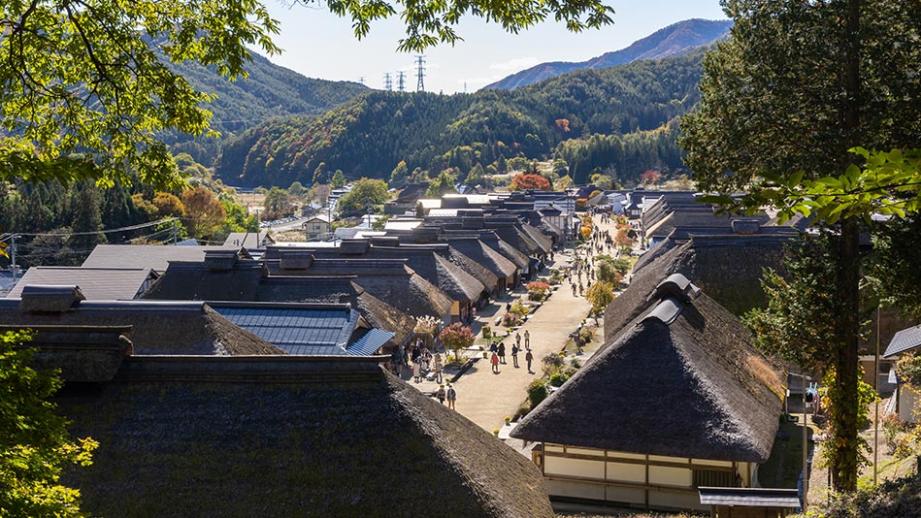
Imagine stepping through a time portal into Edo-period Japan — rows of immaculate thatched-roof buildings lining a stone-paved street, smoke curling from open hearths, the smell of handmade soba drifting through the crisp mountain air. Ouchi-juku (大内宿) in Fukushima’s Aizu region is exactly that: one of Japan’s most perfectly preserved post towns, a living snapshot of rural Japan as it existed 200 years ago. While Kyoto gets the headline coverage, savvy travelers in the know make the trip to this mountain village — and leave absolutely stunned.
Why Ouchi-juku Should Be on Every Japan Itinerary
Ouchi-juku sits in the Minami-Aizu region of Fukushima Prefecture, nestled in a mountain valley about 3 miles (5 km) off the main road. During the Edo period (1603-1868), this village was a vital post station on the Shimotsuke Kaido road — the mountain route connecting the powerful Aizu domain with Nikko and Edo (present-day Tokyo). Samurai, merchants, and pilgrims all passed through here, eating, resting, and sheltering in the very buildings that still stand today.
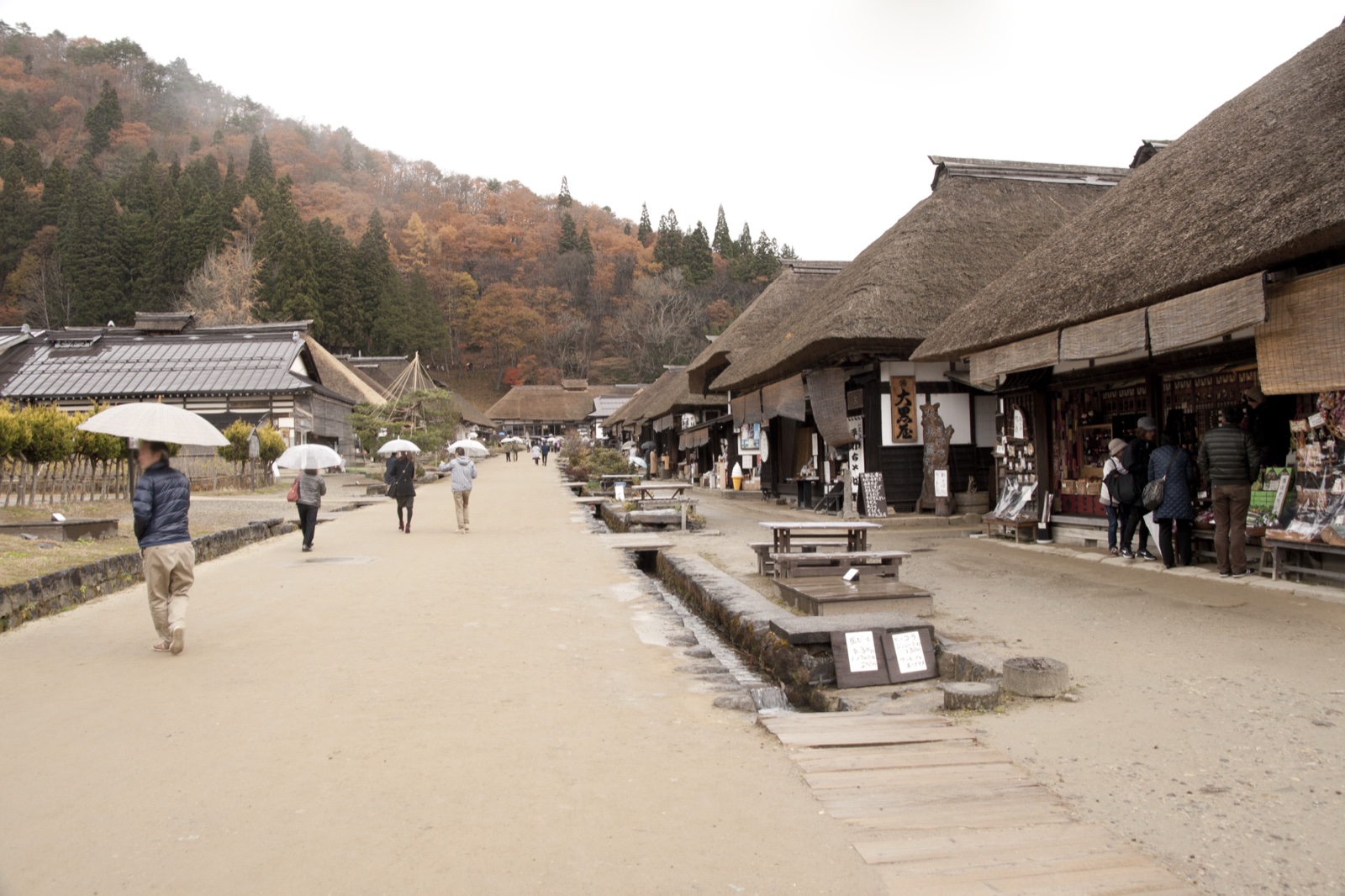
What makes Ouchi-juku so extraordinary is not just its age — it’s how completely unchanged it feels. Nearly 40 traditional kayabuki (thatched-roof) buildings line the main street, each still housing restaurants, shops, and accommodations. Unlike many “preserved” historic districts that are more museum than village, Ouchi-juku is genuinely alive: families still live here, soba is made fresh every morning, and the atmosphere buzzes with quiet energy.
Think of it like Colonial Williamsburg, but actually old — and with much better food. Or imagine Britain’s Cotswolds villages, but transported to a dramatic mountain valley in Tohoku, Japan. The best comparison, honestly, is that there is nothing quite like it anywhere else in the world. Ouchi-juku is not just a tourist attraction; it’s a surviving piece of Japanese cultural heritage that most foreign visitors simply have not discovered yet. That is exactly why you should go now, before it becomes as crowded as Kyoto’s Gion district.
Getting There from Tokyo
Ouchi-juku is a roughly 3.5 to 4 hour journey from Tokyo, making it perfect for an overnight trip or as part of a longer Tohoku itinerary.
- Shinkansen + Train + Bus (Recommended): Take the Tohoku Shinkansen to Koriyama Station (approximately 1 hour 20 minutes from Tokyo, around 8,000-9,000 yen / $55-$60 one way). From Koriyama, switch to the Ban-Etsu West Line to Aizu-Wakamatsu Station (approximately 1 hour 20 minutes, 950 yen / $6.50). From Aizu-Wakamatsu, take the Aizu Bus bound for Yunokami Onsen or Shimogo (approximately 40 minutes, 670 yen / $4.50). Get off at the Yuri bus stop, then it is a 20-minute walk to the village, or you can take a shuttle bus when available.
- Alternative via Train + Taxi: From Aizu-Wakamatsu, take the Aizu Railway to Yunokami Onsen Station (about 30 minutes), then a taxi (approximately 2,000 yen / $14 for 3 miles/5 km). The station itself is beautiful — a traditional thatched-roof building that is one of Japan’s most photographed train stations.
- By Rental Car: The most flexible option. From Koriyama, it is about 1 hour 40 minutes via the Banetsu Expressway and Route 121. Ample parking is available at the village entrance (500 yen / $3.50 per vehicle). Many visitors combine Ouchi-juku with a stay at a nearby onsen or a visit to Aizu-Wakamatsu’s Tsurugajo Castle.
- JR Pass: Covers the shinkansen to Koriyama and the local train to Aizu-Wakamatsu. The Aizu Railway and buses are not covered, but these costs are minimal.
Driving is highly recommended if you want to combine Ouchi-juku with other Aizu region highlights. The mountain scenery on Route 121 (Nishi-Aizu Road) is especially beautiful in autumn.
Exploring the Main Street (Honmachi)
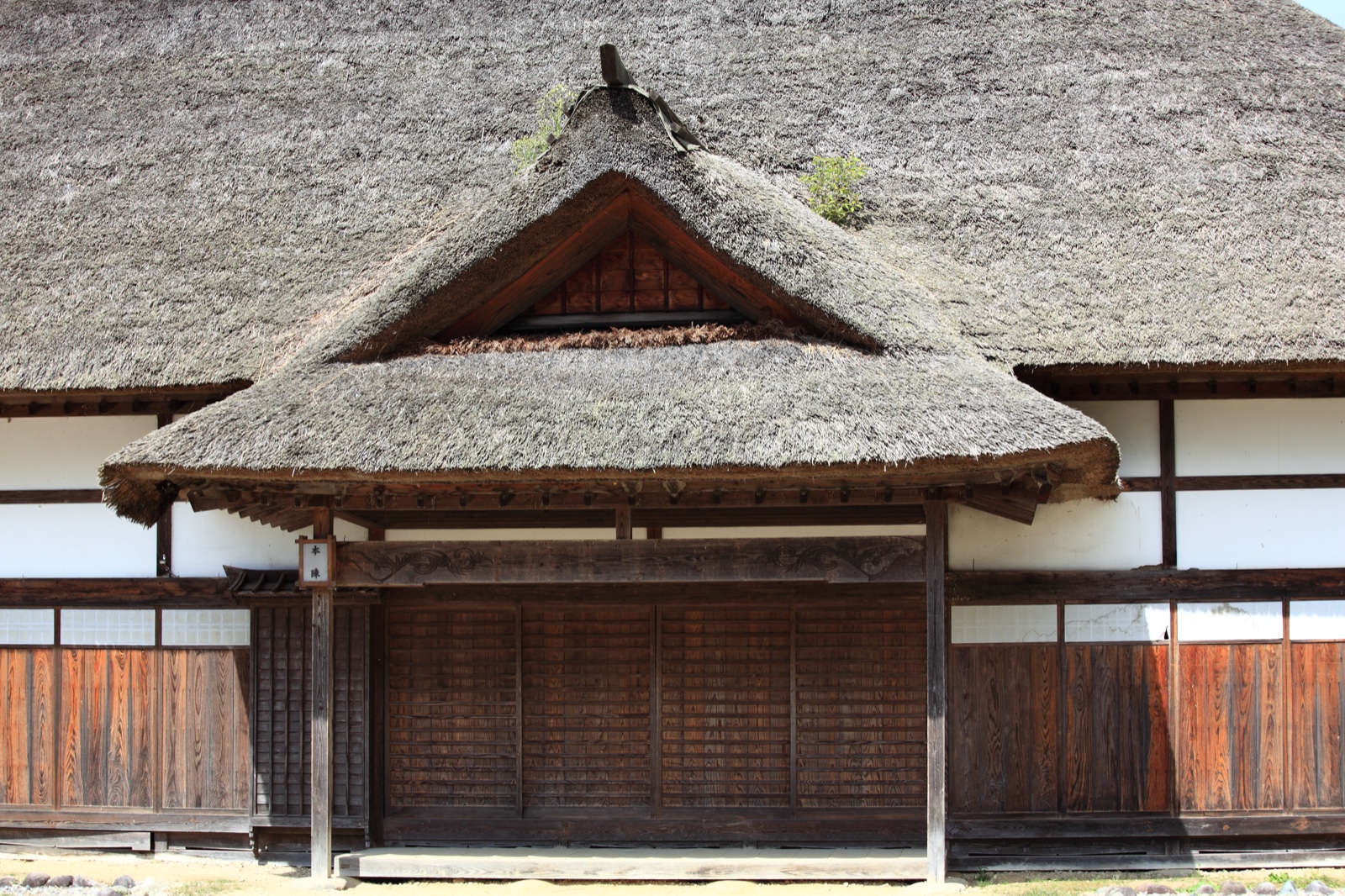
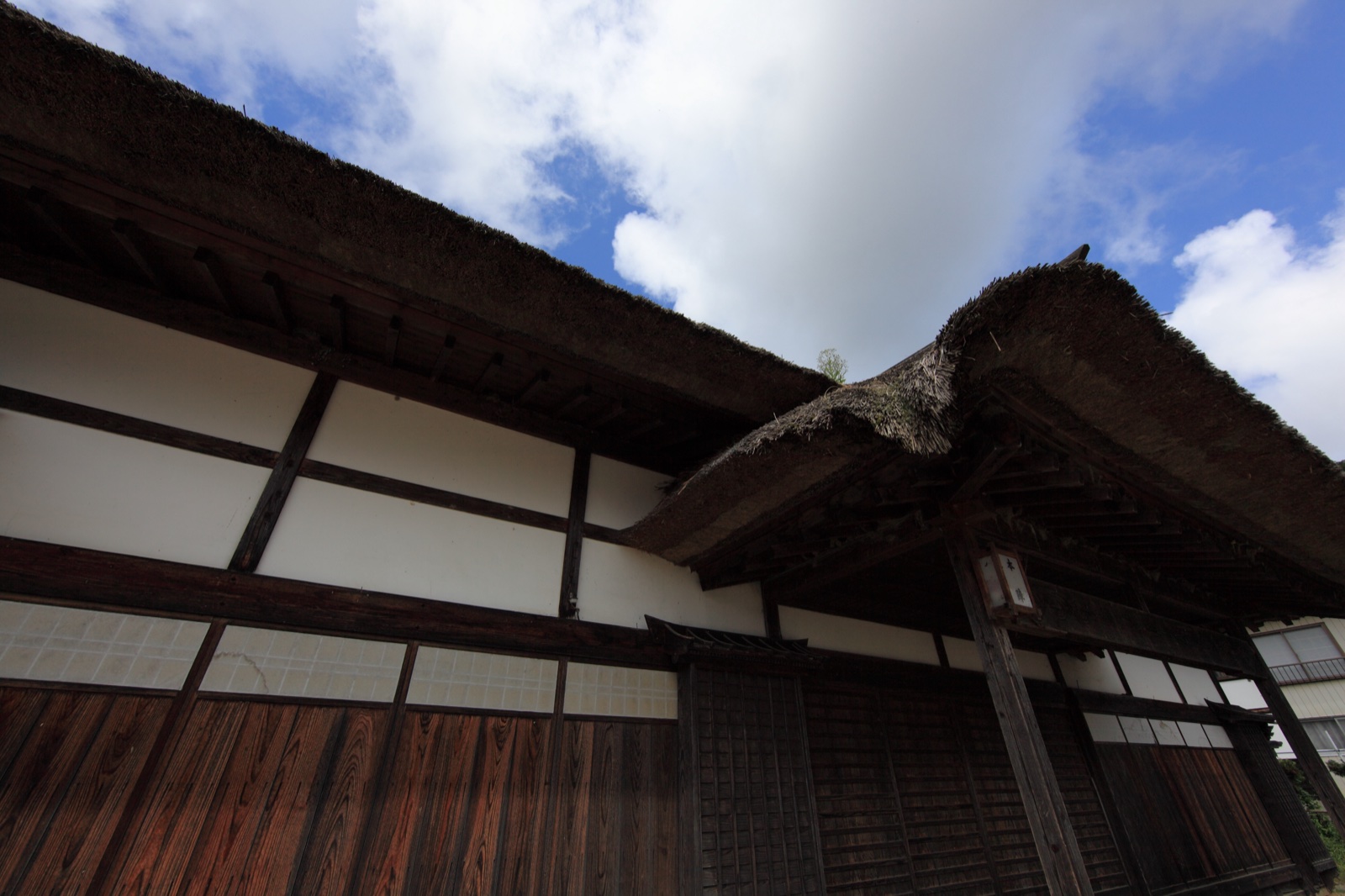
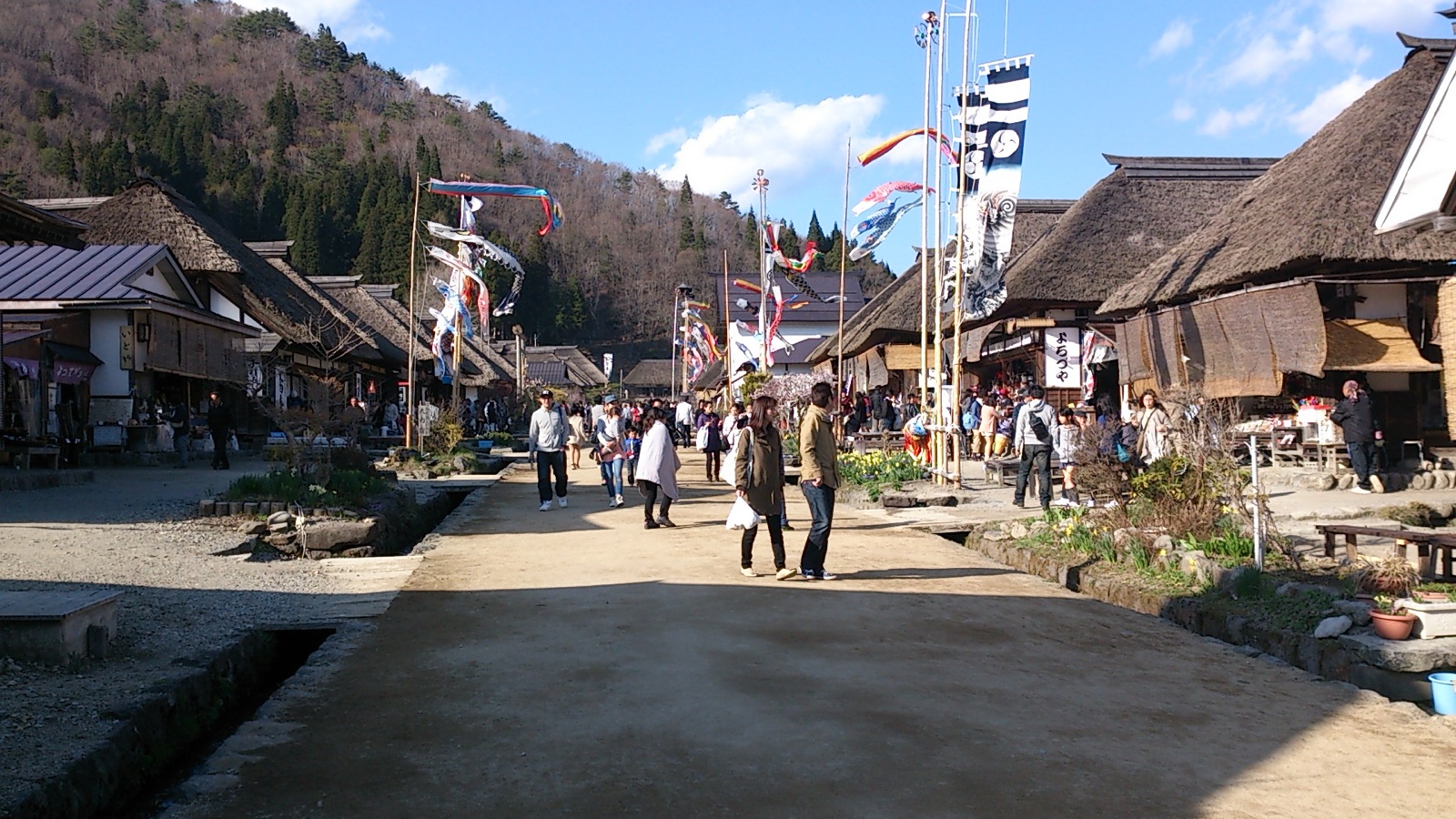
The heart of Ouchi-juku is its single main street, flanked on both sides by about 38 traditional thatched-roof buildings. Unlike modern tourist villages where the “historic” buildings are facades, every building here is genuinely old — most dating from the late Edo period (early 1800s). The thatch on each roof is replaced periodically by local craftsmen maintaining the traditional technique, and you can often see evidence of this careful upkeep in the tight, perfect thatch work.
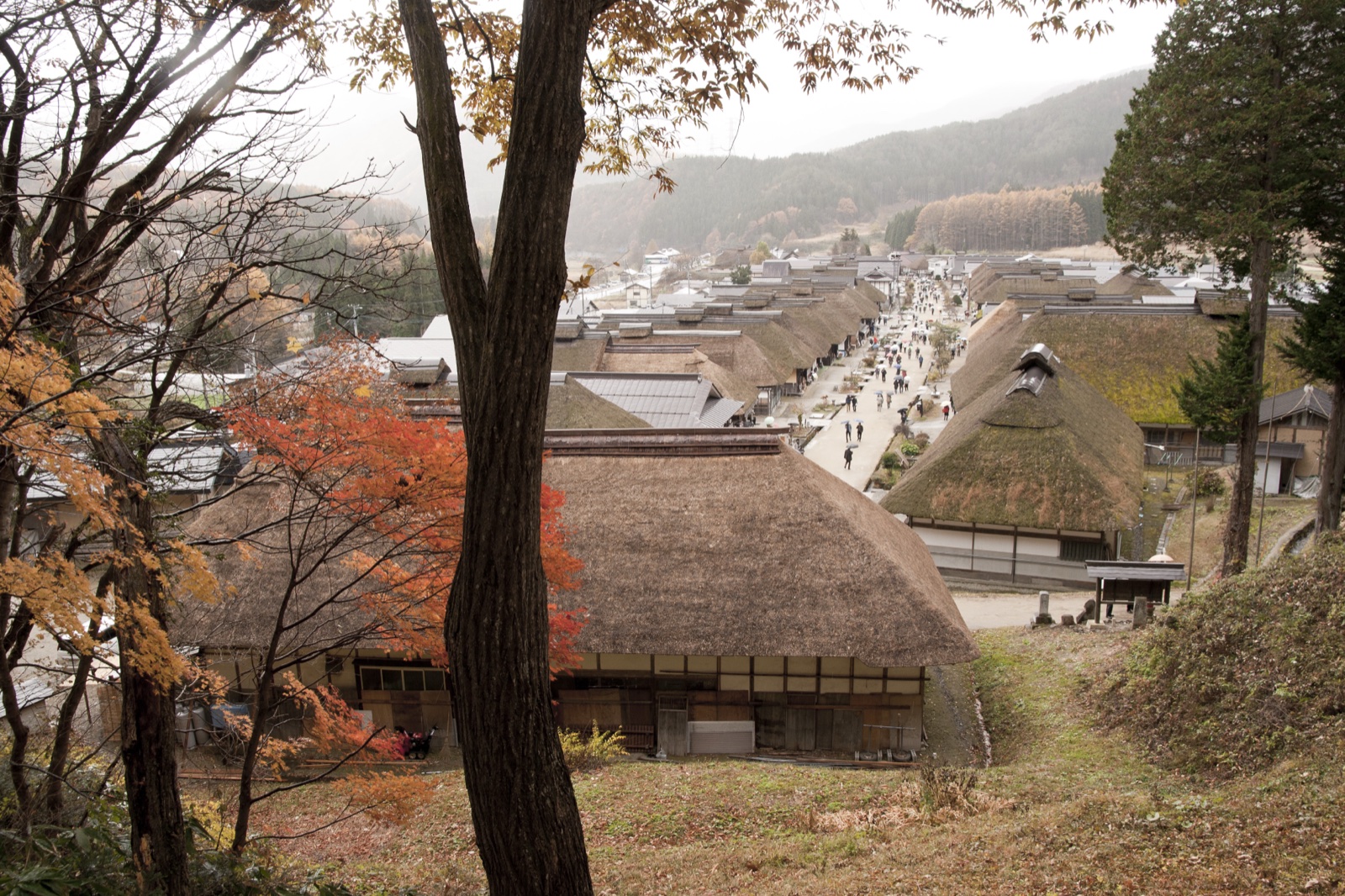
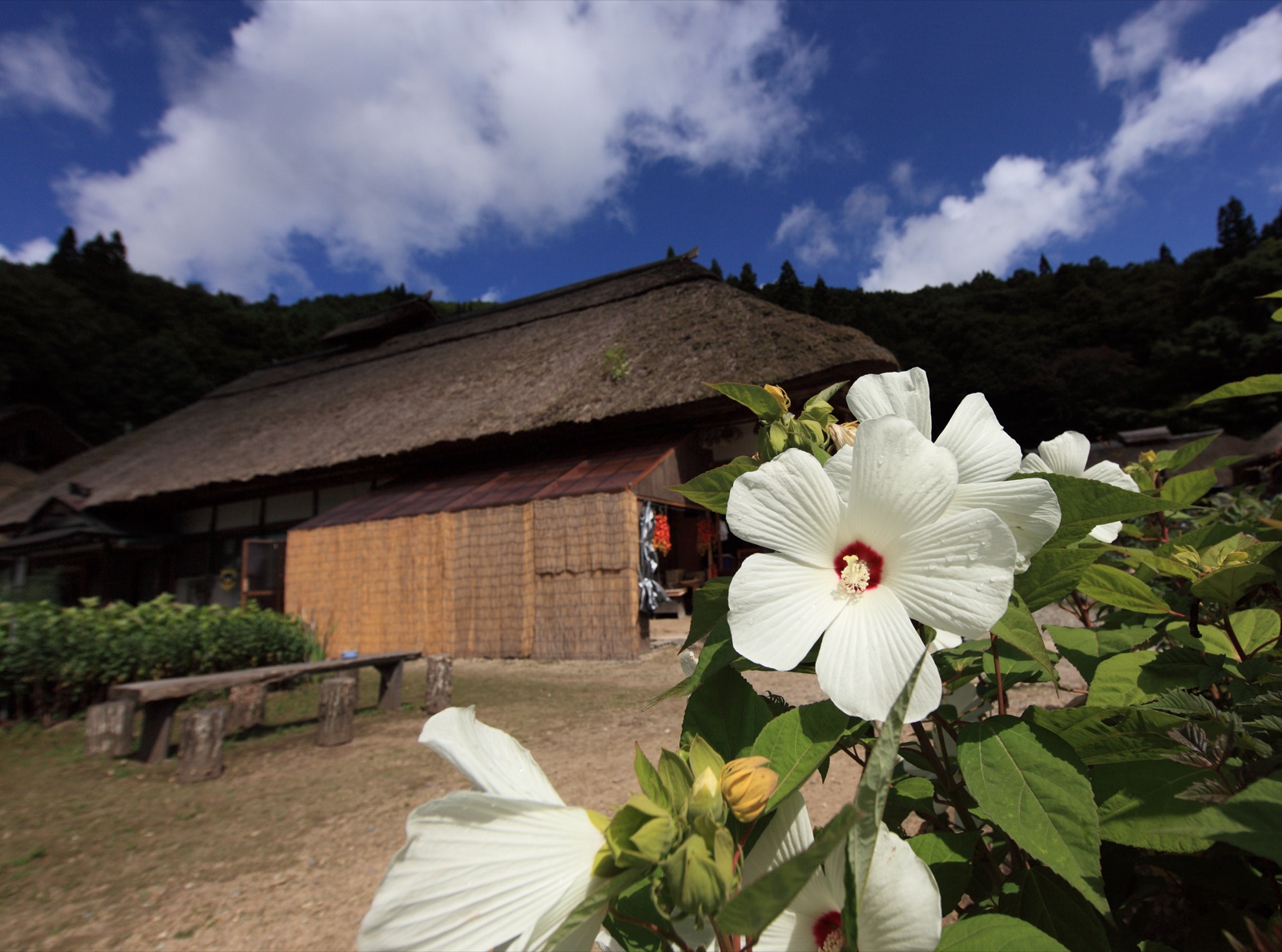
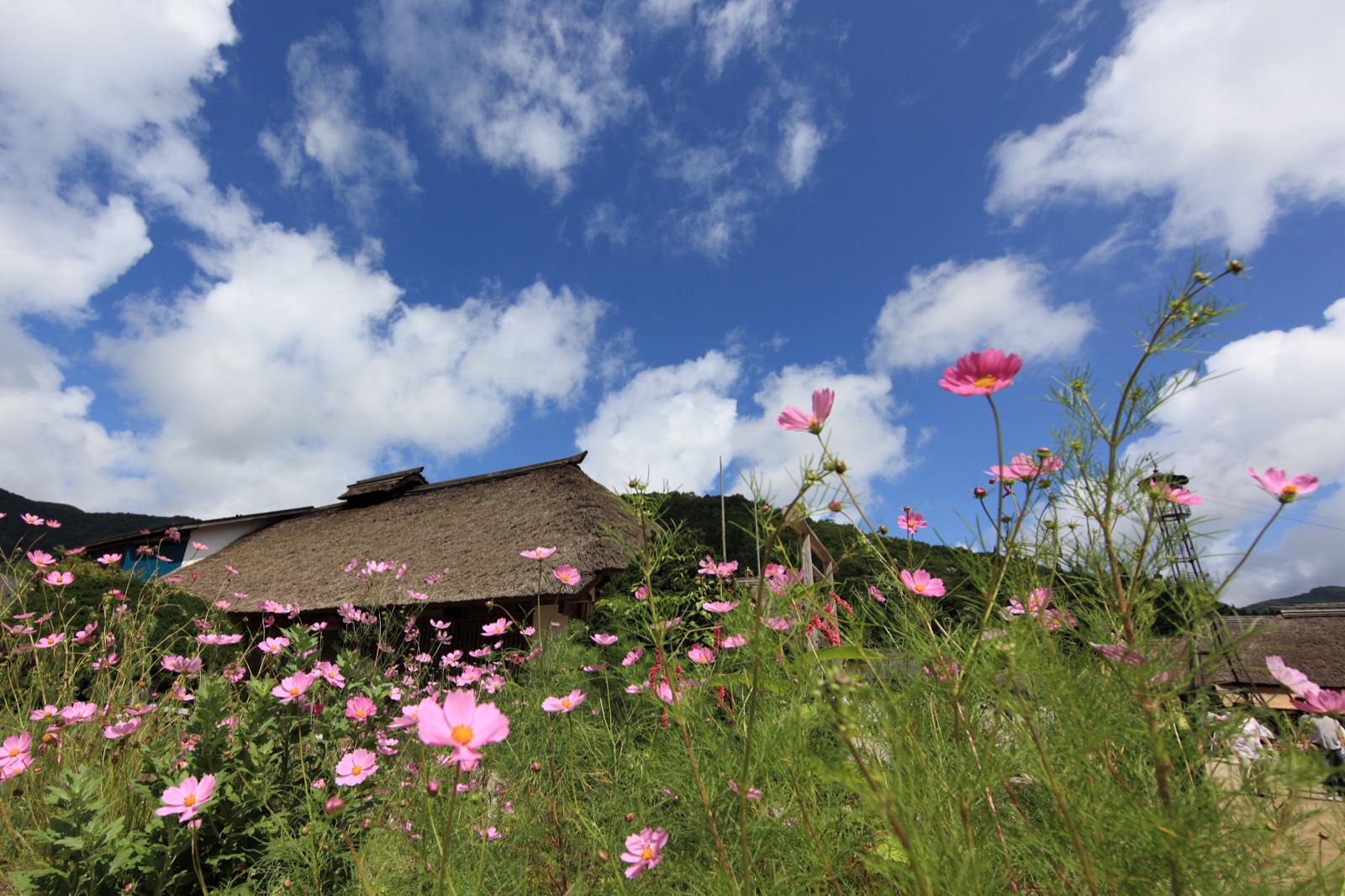
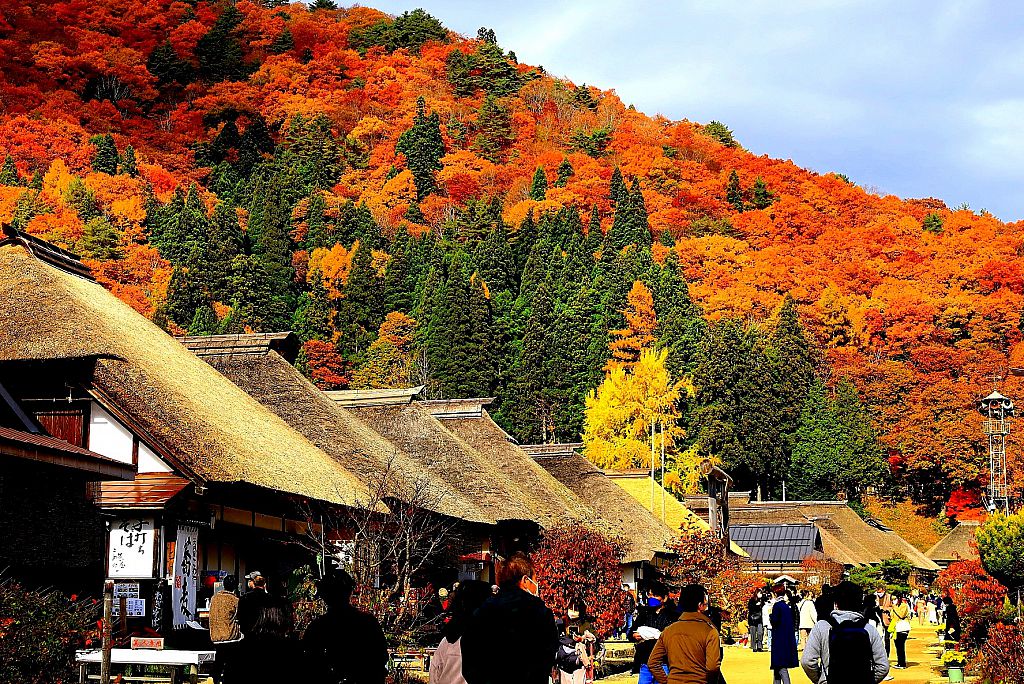
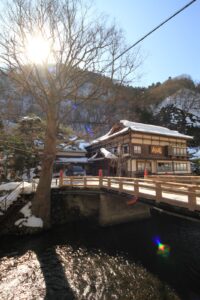
Walking the street, you’ll pass soba restaurants, souvenir shops selling Aizu lacquerware and local crafts, and a handful of minshuku (family guesthouses) where you can spend the night. The atmosphere changes dramatically by season: in summer, the deep green mountains frame the thatched roofs beautifully; in autumn, fiery maples and ginkgos set the street ablaze with color; in winter, a heavy blanket of snow transforms the whole village into something that looks like a painting — arguably the most spectacular time to visit.
Do not rush through. Give yourself at least 2 to 3 hours to wander, eat, shop, and soak in the atmosphere. Stop into shops that interest you — shopkeepers are generally friendly and happy to chat through gestures and smiles even if there is a language barrier. Many products for sale are genuinely local: lacquerware from the famous Aizu Nuri tradition, kokeshi dolls, and local miso and sake.
A few meters behind the main street, narrow lanes lead to residential areas and small shrines. These backstreets are less crowded and offer a more intimate glimpse of the village — a sleeping cat on a wooden step, an elderly woman tending her garden, the smell of wood smoke from a kitchen hearth. This is the hidden Ouchi-juku that most day-trippers miss entirely.
The Panoramic Viewpoint: Do Not Miss This
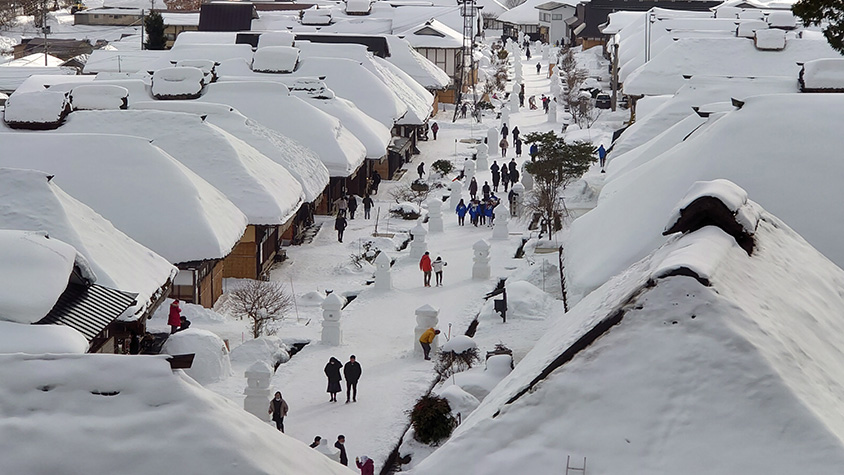
At the far end of the main street, a steep stone staircase leads up to Yakushi-do Shrine, a small hilltop temple that offers the single best view in Ouchi-juku. From here, you look down the entire length of the village — the parallel rows of thatched roofs, the stream running alongside, the forested mountains rising on all sides. This is the image you have seen in travel magazines and Instagram feeds, and it does not disappoint in person.
The climb takes about 5 minutes and involves roughly 100 stone steps. The path is uneven and can be slippery when wet, so wear appropriate shoes. At the top, the small shrine itself is worth a moment of quiet appreciation — it has been watching over this village for centuries. Bring a camera with a zoom lens if possible; the view is best in the early morning (fewer tourists, better light) or during the golden hour in late afternoon.
Pro tip: If you visit in winter when snow is on the ground, the viewpoint shot is even more dramatic. The heavy snow piled on the thatched roofs, the bare trees, the white-covered street — it looks like a woodblock print come to life. Visit on a weekday for a much more serene experience; weekends in peak season (November foliage, January-February snow) can see hundreds of visitors at this viewpoint simultaneously.
Takato Soba: Eating Noodles with a Leek
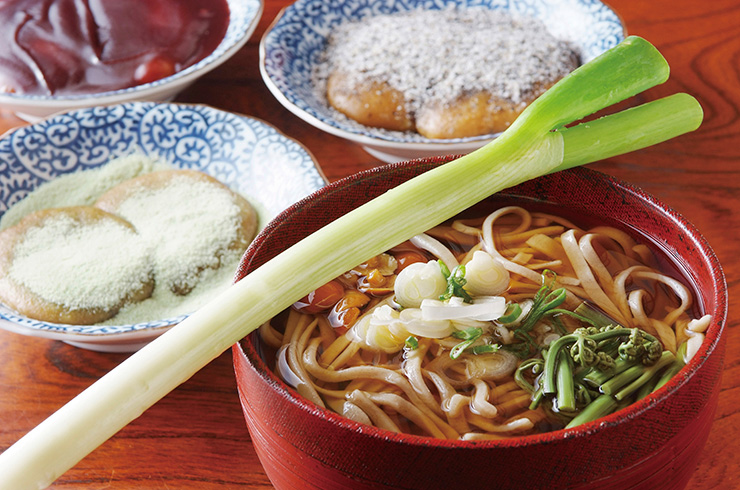
If you visit Ouchi-juku and do not eat Takato soba, you have made a significant error. This is Ouchi-juku’s signature dish and it is utterly unique: a bowl of handmade buckwheat soba noodles served with grated daikon radish and a whole green onion (leek) standing upright in the bowl — which you use as both a chopstick and a flavoring. You scrape bits of the leek into your noodles as you eat, adding a fresh pungent bite with every mouthful.
The name comes from Takato, a castle town in Nagano Prefecture that was the home domain of the Hoshina family, who became the lords of Aizu in the 1600s. The tradition of eating soba with a leek came with them from Nagano. In Ouchi-juku, it evolved into a beloved local tradition. Using a leek as a chopstick is harder than it sounds (particularly with slippery noodles), but that is part of the experience — and the soba itself is outstanding. The buckwheat is locally grown and stone-milled, with a robust earthy flavor that stands up beautifully to the sharp green onion.
Most restaurants on the main street serve Takato soba. Sanzaemon, a beautifully preserved old building near the center of the main street, is the most famous and consistently rated best by visitors and locals alike. Expect a wait on weekends. A bowl of Takato soba costs around 1,100 to 1,500 yen ($7.50 to $10). If you want to be adventurous, try the nishin soba as well — soba topped with sweet simmered herring, another Aizu specialty.
Best Time to Visit
- Winter (January-February): This is Ouchi-juku at its absolute most beautiful. Snow blankets the thatched roofs and the entire street takes on a magical, monochromatic quality. Temperatures drop well below freezing (around -10 degrees Celsius / 14 degrees Fahrenheit is common), so dress in serious winter layers. The Snow Festival held in mid-February features lanterns lining the street — one of the most romantic scenes in all of Japan. Weekends are crowded; visit on a weekday if possible.
- Autumn (October-November): The surrounding mountains turn red and gold, and the foliage against the thatched roofs is spectacular. October is peak season — beautiful but very crowded. Early November often offers better colors with slightly fewer visitors.
- Spring (April-May): Cherry blossoms in late April to early May are lovely, though Ouchi-juku is less famous for cherry blossoms than some other spots. The awakening greenery provides a beautiful fresh contrast to the dark wooden buildings.
- Summer (June-August): The deep green mountains and lush vegetation make for beautiful photography, and the cool mountain air (temperatures around 20-25 degrees Celsius / 68-77 degrees Fahrenheit) is a refreshing escape from Japan’s humid summer heat. This is arguably the least crowded season for a pleasant visit.
Where to Eat: Ouchi-juku and Aizu Food Guide
The Aizu region is one of Tohoku’s most distinctive culinary areas, shaped by its landlocked mountain geography and strong castle-town heritage. Beyond the iconic Takato soba, you’ll find a depth of traditional food culture that rewards the curious eater.
Sanzaemon (Ouchi-juku)
The most famous soba restaurant in the village, set in a beautifully preserved thatched building. Must-order: Takato soba (around 1,300 yen / $9), set meals with Aizu local specialties including simmered mountain vegetables and pickles. Hours: typically 10am to 4pm. Waits of 20 to 40 minutes on weekends are common but worth it.
Misoya (Ouchi-juku)
Specializes in dishes made with local Aizu miso, including warm miso soup, miso-pickled vegetables, and miso-marinated grilled foods. A great option if you want something beyond soba. Prices around 800 to 1,500 yen ($5.50 to $10) per item.
Takino Restaurant (Aizu-Wakamatsu)
For a fuller Aizu meal experience, Takino in Aizu-Wakamatsu city serves traditional Aizu set meals (aizu gozen) featuring local specialties: carp dishes (koi no umani), slow-simmered vegetables, Aizu beef, and local sake. This is a great dinner option if you are spending the night in the area. Set meals from around 2,500 yen ($17).
Kitakata Ramen (30 minutes north)
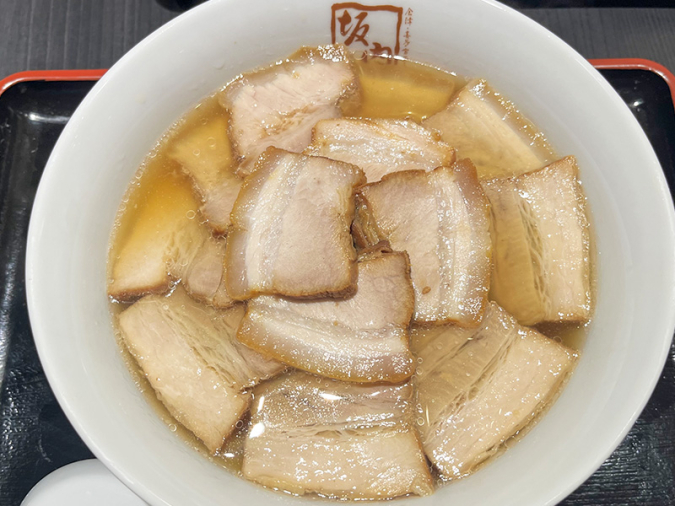
Kitakata City, just 30 minutes north of Aizu-Wakamatsu by car, is one of Japan’s three great ramen cities. Kitakata ramen features flat, wide wavy noodles in a light shoyu (soy sauce) broth with generous pork chashu. The local tradition of eating ramen for breakfast (asa-ra) is unique to Kitakata. Many ramen shops open as early as 7am. A bowl costs around 800 to 1,000 yen ($5.50 to $7). Combine a morning visit to Ouchi-juku with a Kitakata ramen lunch for a perfect Aizu day.
Where to Stay
Budget (Under 8,000 yen / $55 per night)
A handful of simple minshuku (family-run guesthouses) operate within Ouchi-juku itself, including some inside the historic thatched buildings. These typically offer Japanese-style rooms with futon on tatami, shared bathrooms, and a simple breakfast. The experience of waking up inside one of these historic buildings is genuinely memorable. Expect around 5,000 to 7,000 yen ($35 to $50) per person without meals. Advance booking is essential for weekends and peak seasons.
Mid-Range (8,000-20,000 yen / $55-$135 per night)
Yunokami Onsen, just 3 miles (5 km) from Ouchi-juku, has a cluster of traditional ryokan and onsen hotels with natural hot spring baths. This makes an excellent base — you can visit Ouchi-juku by day and soak in the onsen by evening. The railway station at Yunokami Onsen is itself a thatched-roof building and one of Japan’s most photogenic train stations. Prices typically range from 12,000 to 18,000 yen ($80 to $120) per person including two meals.
Luxury (20,000+ yen / $135+)
Higashiyama Onsen in Aizu-Wakamatsu, about 30 minutes’ drive from Ouchi-juku, offers several high-end traditional ryokan with elegant private onsen baths and elaborate multi-course kaiseki dinners. Mukaitaki is particularly well-regarded — a stunning old wooden ryokan that has hosted guests for over 150 years and is a national cultural heritage site. Prices from around 30,000 yen ($200) per person including meals.
Practical Tips for Visiting Ouchi-juku
- Arrive early: The village receives over 400,000 visitors per year, with the highest concentrations on weekends and holidays. Arriving before 9am gives you a peaceful experience before tour buses arrive around 10am.
- It is free to enter: There is no admission charge to walk the main street. Parking costs 500 yen ($3.50) per vehicle. Individual shops and restaurants charge separately.
- Cash is essential: While some larger restaurants and shops accept credit cards, many small vendors and minshuku operate cash-only. Bring yen in small denominations.
- No photography inside shops or homes: The exterior of buildings is absolutely fine for photography, but always ask before photographing inside any private establishment.
- Winter driving caution: The mountain roads approaching Ouchi-juku can be icy and snow-covered from December through March. Rental cars must have winter tires. Check road conditions before driving. Buses run year-round but may have reduced frequency in deep winter.
- Wear comfortable walking shoes: The village street and path to the viewpoint involve uneven cobblestones and stone steps. Heels are a very bad idea.
- Visit midweek if possible: A Tuesday-Thursday visit will be dramatically quieter than weekends. The experience is completely different when you are not competing with crowds for the best viewpoint.
- Nearby day trip combos: Combine Ouchi-juku with Tsurugajo Castle in Aizu-Wakamatsu (30 minutes by car), the Kitakata ramen area (40 minutes), or the Higashiyama Onsen district for a well-rounded 2-night Aizu itinerary.
- Seasonal events: The Snow Festival (mid-February) and the Summer Festival (late July) offer unique cultural experiences. Check the Shimogo Town tourism office for exact dates and schedules.
- Allergies and dietary needs: Most restaurants serve traditional Japanese food featuring wheat (soba also contains wheat), shellfish, and meat. Vegetarian and vegan options are limited — plan ahead or carry snacks.
A Sample Day Trip Itinerary from Tokyo
Single Day (Early Start Required)
6:00am: Catch the first Tohoku Shinkansen from Tokyo Station to Koriyama. Breakfast from a platform convenience store is perfectly acceptable and very Japanese.
7:30am: Arrive Koriyama Station. Transfer to the Ban-Etsu West Line for Aizu-Wakamatsu.
9:00am: Arrive Aizu-Wakamatsu Station. Board the Aizu Bus bound for the Ouchi-juku route.
9:50am: Arrive at the bus stop near Ouchi-juku. Walk 20 minutes along the pleasant tree-lined path to the village entrance.
10:15am-12:30pm: Explore Ouchi-juku main street, browse shops, climb to the Yakushi-do Shrine viewpoint, and marvel at what you see.
12:30pm: Takato soba lunch at Sanzaemon. Expect a short wait on weekends — it is absolutely worth it.
2:00pm: Catch bus back to Aizu-Wakamatsu.
2:45pm-4:30pm: Optional stop at Tsurugajo Castle in Aizu-Wakamatsu — one of Japan’s most beautiful castle complexes with a fascinating museum inside.
5:15pm: Train from Aizu-Wakamatsu back to Koriyama.
6:30pm: Shinkansen back to Tokyo, arriving around 8:00pm.
Two-Day Recommended Overnight Stay
Day 1 afternoon: Arrive in Yunokami Onsen by mid-afternoon (after most day-trippers have left Ouchi-juku). Check in to your ryokan or minshuku. Take an evening stroll to the famous thatched-roof Yunokami Onsen Station. Soak in the onsen and enjoy an elaborate Aizu-style kaiseki dinner at your accommodation.
Day 2 morning: Wake early (before 8am) and walk or take a short taxi to Ouchi-juku — you will have the village almost entirely to yourself for the first hour. Wander the lanes, climb to the viewpoint, and take the photos you came for in golden morning light. Takato soba breakfast or late morning brunch at Sanzaemon. Return to Yunokami Onsen by noon, check out, and head to Tsurugajo Castle or Kitakata for ramen before returning to Tokyo.
Ouchi-juku vs. Shirakawa-go: Which Thatched Village Should You Visit?
The comparison inevitably comes up: Shirakawa-go in Gifu and Toyama is Japan’s most famous thatched-roof village, a UNESCO World Heritage Site. So which should you choose?
The honest answer: if you are in Tohoku or doing a trip focused on northeast Japan, choose Ouchi-juku. Here’s why. Shirakawa-go is genuinely spectacular but receives millions of visitors per year and can feel overwhelming and touristy on busy days. The gassho-zukuri farmhouses there are technically a different style of thatch architecture (steepled roofs designed for heavy snow loads), whereas Ouchi-juku features the gentler kayabuki style typical of Tohoku. More importantly, Ouchi-juku has far fewer foreign tourists, a more authentic food scene centered on that extraordinary soba, and feels more like a living village than a preserved open-air museum. If your trip includes central Japan anyway, Shirakawa-go is worth every second. But if you are doing Tohoku, Ouchi-juku will not disappoint — and you will not be fighting for the perfect photograph.
Related Articles You Might Enjoy
- Aizuwakamatsu Travel Guide for Foreigners — Fukushima Japan’s Most Soulful Samurai Town
- Tsurugajo Castle (Aizuwakamatsu): Complete Guide to Fukushima’s Iconic Samurai Fortress
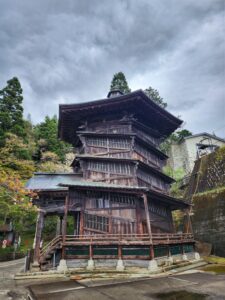
- Iimoriyama & Sazaedo, Aizuwakamatsu: Fukushima’s Samurai Tragedy Hill and Japan’s Only Double-Helix Pagoda
- Higashiyama Onsen, Aizuwakamatsu: Fukushima’s 1,300-Year-Old Samurai Hot Spring Town
- Mount Adatara & Dake Onsen, Fukushima: Japan’s Sacred Volcano & Secret Healing Hot Spring
Final Thoughts
Ouchi-juku is one of those rare travel experiences that delivers exactly what it promises — and then surprises you with how much more it offers. The thatched rooftops, the smoky soba restaurants, the mountain air, the ice-cold stream running alongside the main street, the sense of stepping backward in time — all of it comes together in a way that feels almost impossibly perfect. This is rural Japan at its most beautiful and most intact.
The fact that it remains relatively unknown to international tourists makes it all the more precious. You won’t find many English-language menus here, and that is partly what makes it feel so authentic. Bring a sense of adventure, some cash, an appetite for extraordinary soba, and the willingness to wander slowly. Ouchi-juku will become one of your most treasured memories of Japan. Trust us on this one — do not wait to visit. Places this special never stay hidden forever.

コメント