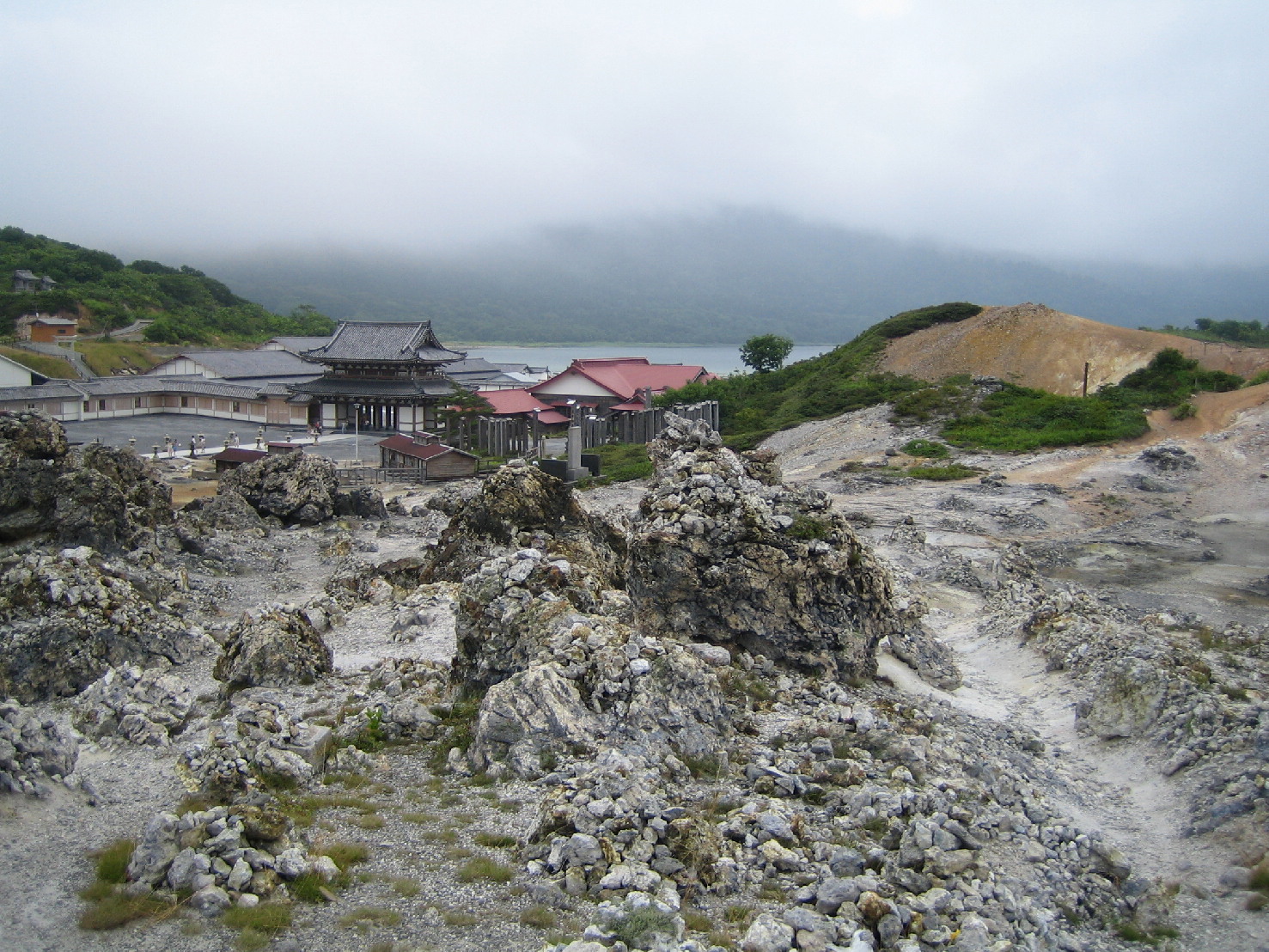
There is nowhere quite like Osorezan. Japan has thousands of temples, hundreds of sacred mountains, and countless shrines steeped in centuries of devotion — but Osorezan, the “Mountain of Dread,” stands completely apart from all of them. Here, at the remote tip of Aomori Prefecture’s Shimokita Peninsula, you will find a volcanic landscape of sulphurous vents, rust-colored rock formations, acidic turquoise lakes, and row upon row of small Jizo statues dressed in red bibs, each representing a child who has died and whose soul may pass through this place on the way to the afterlife. It is one of the most visually extraordinary and spiritually charged destinations in all of Japan — and almost no foreign tourists ever come here.
Why Osorezan Is Unlike Anywhere Else in Japan
Buddhist tradition holds that Japan has three gateways to the afterlife: Mount Koya in Wakayama, Mount Hiei in Kyoto, and Osorezan in Aomori. Of the three, Osorezan is by far the most visceral and otherworldly. The volcanic activity here creates a landscape that has genuinely been interpreted as a vision of hell (jigoku) for over a thousand years of Japanese Buddhism. The sulfurous steam rising from vents in the ground, the rivers stained blood-red by iron oxide, the eerie quiet of the alkaline Lake Usori, and the desolate grey rock fields surrounding Bodaiji Temple all conspire to create an atmosphere unlike anything else on Earth.
For Western visitors, particularly those who have been following the standard Japan tourist itinerary of Kyoto temples and Tokyo streets, Osorezan represents a genuinely transformative experience. This is not a cleaned-up heritage site with manicured gardens and gift shops at every turn. The power of this place comes from its raw, geological reality — the ground really is steaming, the lake really is too acidic for fish to survive, the air really does smell of sulfur. The spiritual interpretation that has grown up around these natural phenomena over fourteen centuries feels completely organic, completely earned. You don’t have to believe in an afterlife to understand why Buddhist monks looked at this landscape and saw something deeply sacred in it.
The comparison that often comes to mind for American visitors is Yellowstone National Park — but instead of geysers and boardwalks and ranger-led tours, imagine Yellowstone as it was before the National Park system existed, presided over by an ancient Buddhist temple and surrounded by memorials to the dead. That is roughly the feeling of Osorezan.
History and Religious Significance
According to tradition, Osorezan was first identified as a sacred site by the monk Ennin (also known as Jikaku Daishi) in 862 AD. Ennin, one of the most important figures in Japanese Buddhism, was traveling through the remote north of Japan when he came upon the volcanic landscape of the Shimokita Peninsula and recognized it immediately as a place of profound spiritual power. He founded Bodaiji Temple at the foot of the main volcanic crater, and the site has been a place of Buddhist pilgrimage ever since.
The mountain’s name translates roughly as “mountain of dread” or “mountain where fear dwells,” and the geography reinforces the name at every turn. Lake Usori, the caldera lake at the heart of the site, is among the most acidic lakes in Japan — the water has a pH of around 3.5, similar to vinegar, and very little can live in it. The rivers that flow through the site are stained vivid colors by mineral deposits: red, yellow, and blue-green, depending on the exact mineral content of the water. The Sanzu River, which flows from the mountain, is identified in Buddhist cosmology with the mythological river that the dead must cross to reach the afterlife — in Japanese Buddhism, the equivalent of the River Styx.
Over the centuries, Osorezan became particularly associated with itako — traditional female spirit mediums who were believed to be able to communicate with the souls of the dead. The itako tradition is unique to the Tohoku region of Japan, and Osorezan is its spiritual center. Blind women would undergo years of ascetic training to become itako, learning to enter trance states in which they could channel the voices of the deceased and deliver messages to the grieving living. Today, only a small number of itako practitioners remain, and they gather at Osorezan during the major summer and autumn festivals to perform their traditional practices for those who come seeking contact with departed loved ones.
Getting There from Tokyo
Osorezan is deliberately remote — reaching it requires commitment, which is part of what preserves its atmosphere. The most comfortable route from Tokyo involves two legs:
- By Shinkansen and Train: Take the Tohoku/Hokkaido Shinkansen from Tokyo to Hachinohe (approximately 2 hours 45 minutes, around ¥14,000 / $95 with reserved seat), then transfer to the JR Ominato Line to Shimokitazawa Station (approximately 1 hour 45 minutes, ¥1,170 / $8). From Shimokitazawa, take the Shimokita Kotsu bus to Osorezan (approximately 35–40 minutes, ¥780 / $5). Total journey from Tokyo: approximately 5–6 hours.
- Via Aomori City: From Tokyo, take the Shinkansen to Shin-Aomori (approximately 3 hours 10 minutes), then the JR Ominato Line from Aomori or Noheji to Shimokitazawa. Similar total journey time to the Hachinohe route, depending on connections.
- By Car: Driving from Tokyo takes approximately 7–8 hours via the Tohoku Expressway. A rental car gives you far more flexibility in the Shimokita Peninsula area and is highly recommended if you plan to spend more than one day here. The drive up the peninsula is beautiful, particularly in autumn.
Important note: The bus to Osorezan only runs during the open season (early May to late October, approximately). Osorezan itself is officially closed from November to April, though determined visitors sometimes walk the access road during closure. The Shimokita Kotsu bus schedule is limited — there are typically only a few departures per day, so check current timetables carefully before traveling. The JR Pass covers the Tohoku Shinkansen and JR lines but not the Shimokita Kotsu bus.
Arriving at Osorezan: The First Impressions
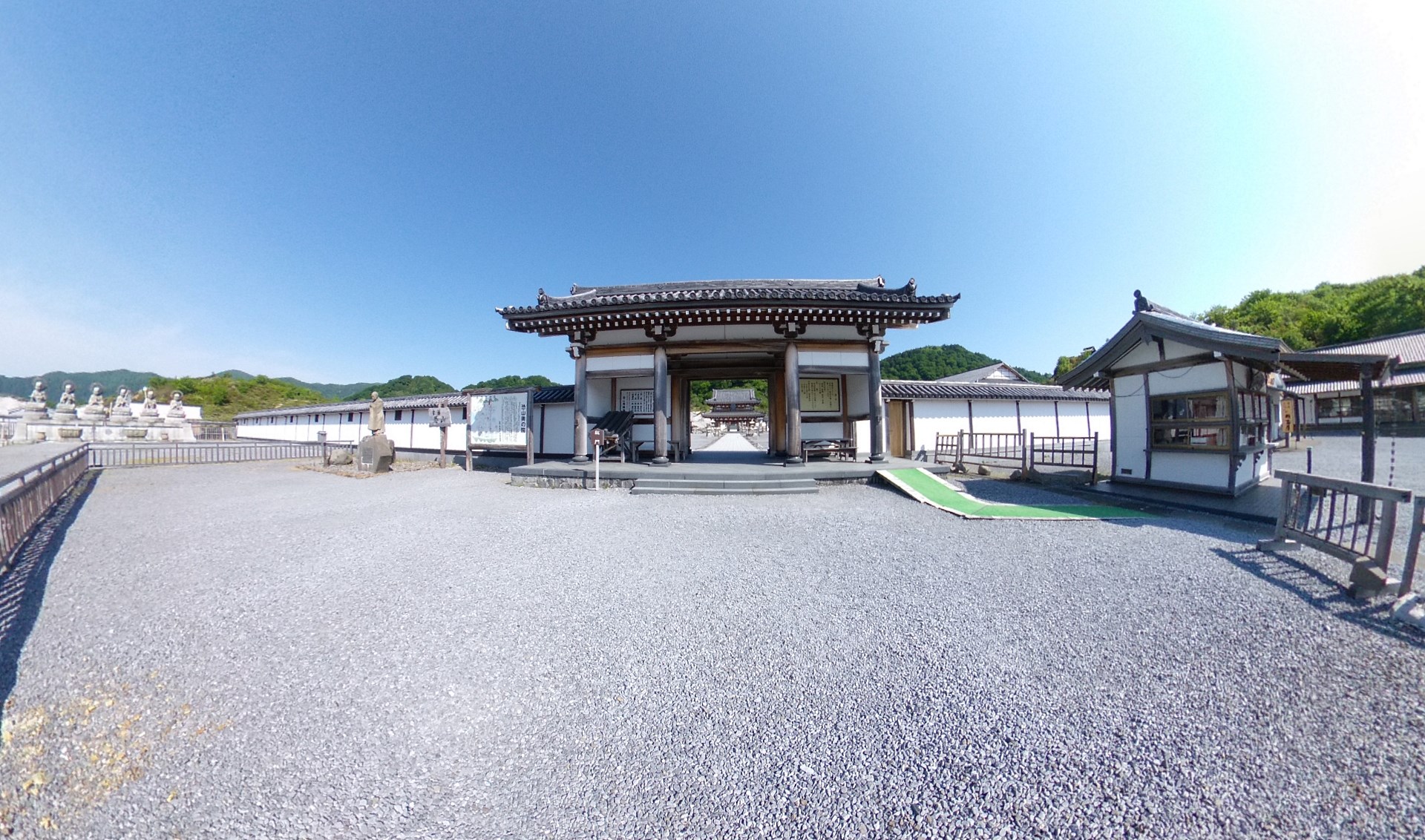
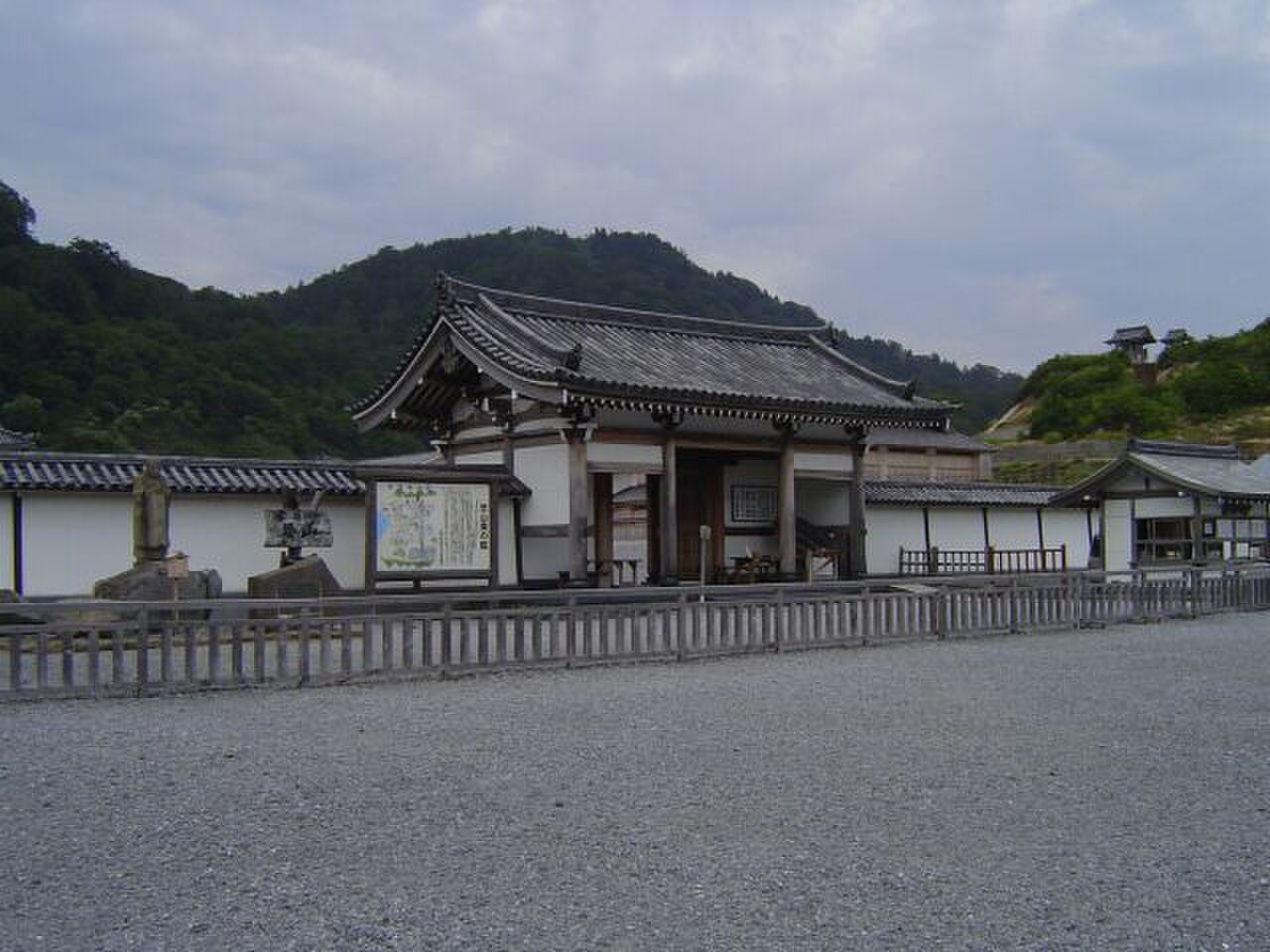
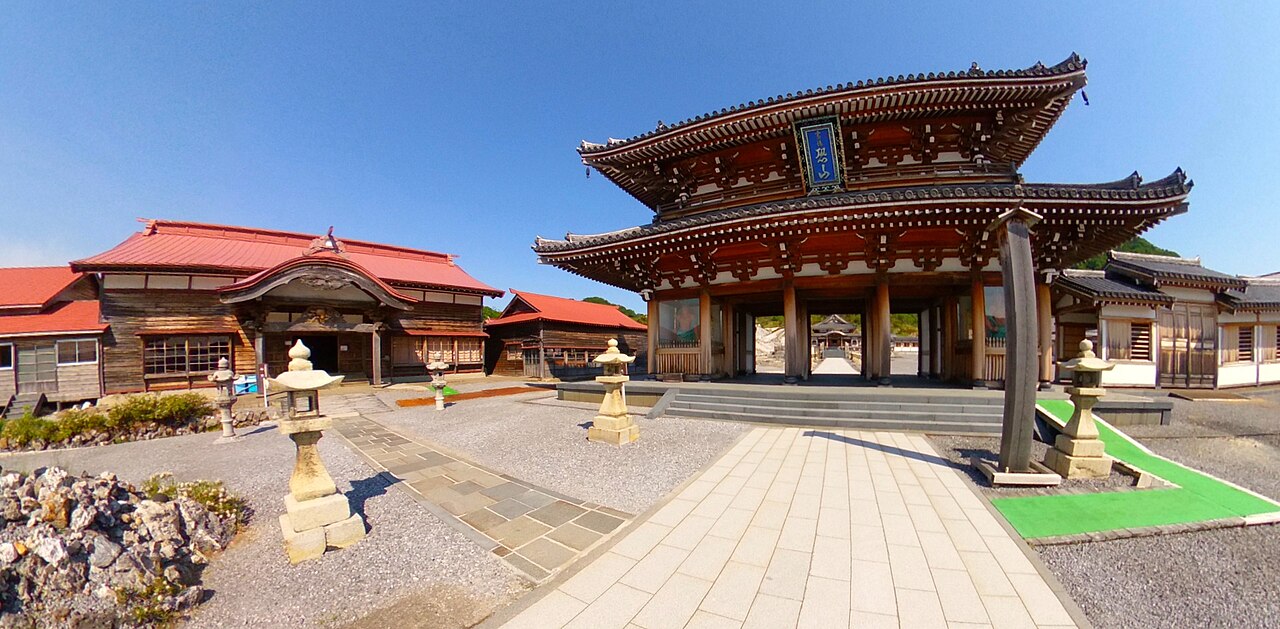
You will smell Osorezan before you see it. Approximately a kilometer before the main gate, the air begins to carry the faint but unmistakable scent of sulfur. By the time you pass through the wooden sanmon gate — an imposing red structure that marks the formal entrance to the sacred precincts — the smell is pronounced and the landscape has begun to shift from normal forest into something much stranger.
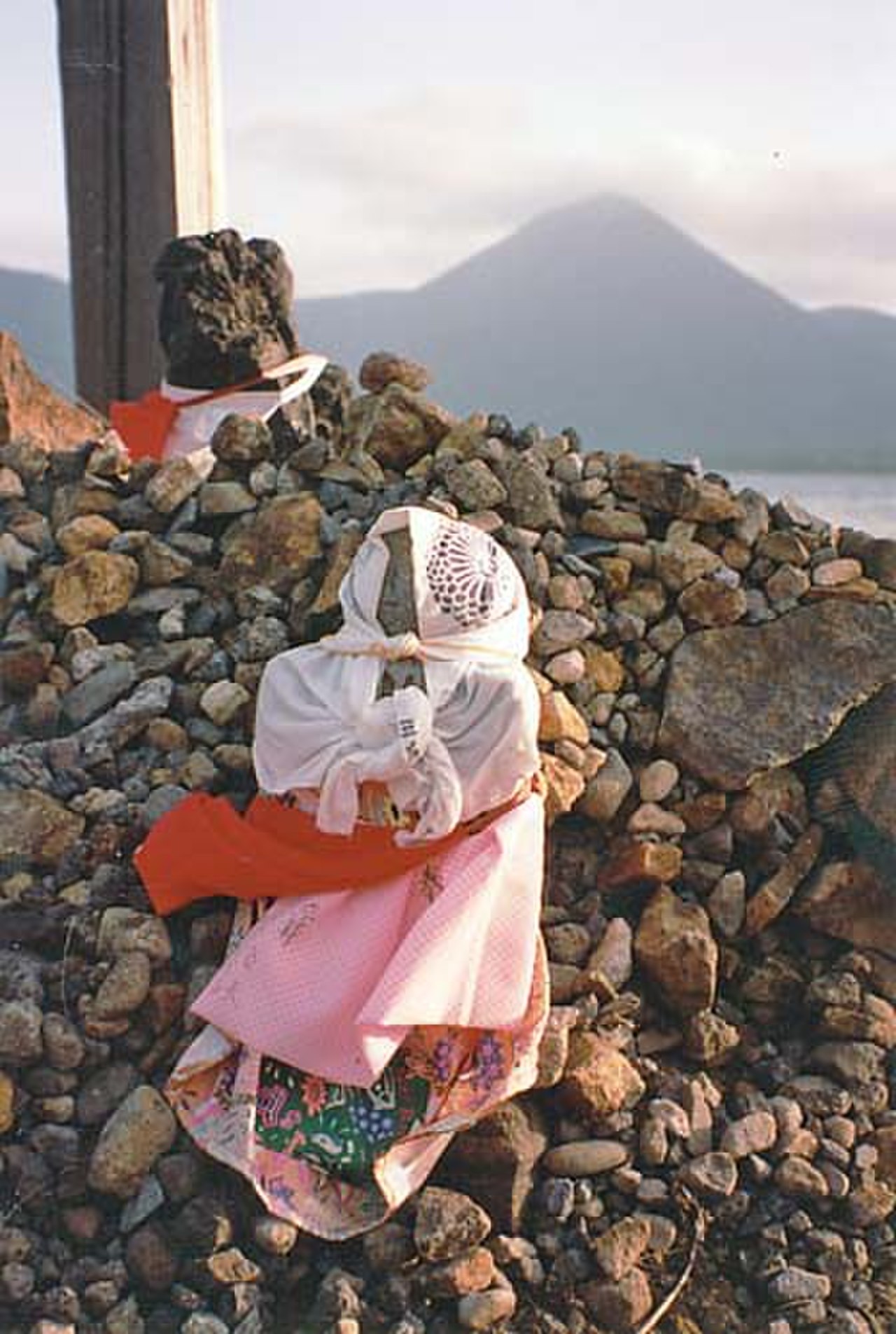
The path from the gate to Bodaiji Temple winds through a field of volcanic rock and sand. On either side, dozens — then hundreds — of small stone Jizo statues appear, dressed in red bibs and hats, surrounded by offerings: flowers, incense, toys, photographs. These are memorials to children who have died, and the quantity of them is simultaneously heartbreaking and beautiful. In Japanese Buddhist belief, children who die before their parents are said to be unable to cross the Sanzu River unaided, and the Jizo statues represent the bodhisattva who guides those children through. Many visitors leave pinwheels here — the spinning pinwheels represent the turning of prayers and the play that the children never had in life.
Bodaiji Temple
Bodaiji Temple (菩提寺) is the beating heart of Osorezan. Founded by Ennin in the 9th century, the current buildings date from more recent centuries but maintain the spare, austere aesthetic appropriate to a site dedicated to contemplation of death. The main hall (hondo) is a large, wooden structure decorated with offerings brought by pilgrims: flowers, photographs, rosary beads, and small items that belonged to deceased loved ones. The interior is fragrant with incense and absolutely silent except for the distant sound of wind across the volcanic landscape outside.
The temple’s grounds include a bell tower, various subsidiary shrines and halls, and a very famous set of hot spring baths (onsen) that are open to the public during visiting hours — more on those below. The atmosphere in and around the main hall is one of the most profound you will encounter in Japan. This is a working place of worship and mourning, not a museum piece, and the emotional weight of that reality is palpable. Many Japanese visitors come here not as sightseers but as pilgrims, seeking to connect with family members who have died. Treat the space with corresponding respect.
Photography within the main hall is typically not permitted, but the exterior of the temple and the surrounding landscape are freely photographable. The combination of traditional temple architecture against the volcanic landscape in the background creates some of the most surreal and striking images in all of Japan. Be mindful of individual people who may be in prayer or meditation and avoid photographing them without permission.
The Volcanic Landscape: Lake Usori and the Hellscapes
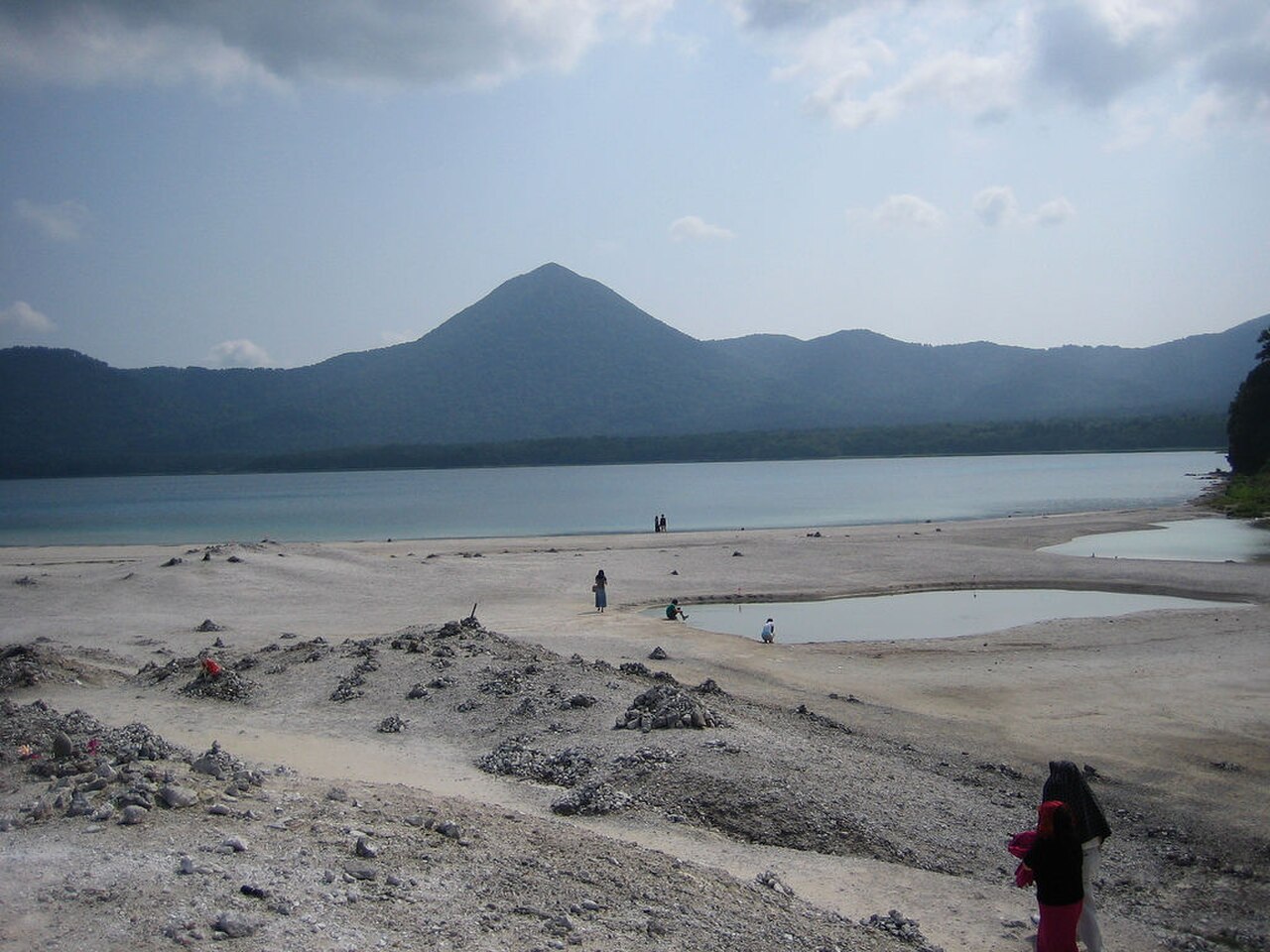
Beyond the temple, the volcanic landscape of Osorezan stretches for several kilometers around Lake Usori. The lake itself is a stunning sight — a large, perfectly circular caldera lake of extraordinary color, ranging from milky turquoise to deep jade depending on the light and weather conditions. The extreme acidity of the water gives it this color and is the reason that almost no aquatic life can survive here. On still days, the lake surface is a perfect mirror; on windy days, whitecaps form as if on a small sea.
Walking around the lake takes approximately 2–3 hours and rewards the effort with constantly changing views of the volcanic terrain. The path passes several named “hellscapes” (jigoku) — specific areas where volcanic activity is particularly intense, where the ground bubbles with hot mud pools, where steam jets from cracks in the rock, and where the mineral-stained earth creates extraordinary natural paintings in red, yellow, orange, and white. These areas are roped off for safety, but you can observe them closely and the visual and olfactory impact is remarkable.
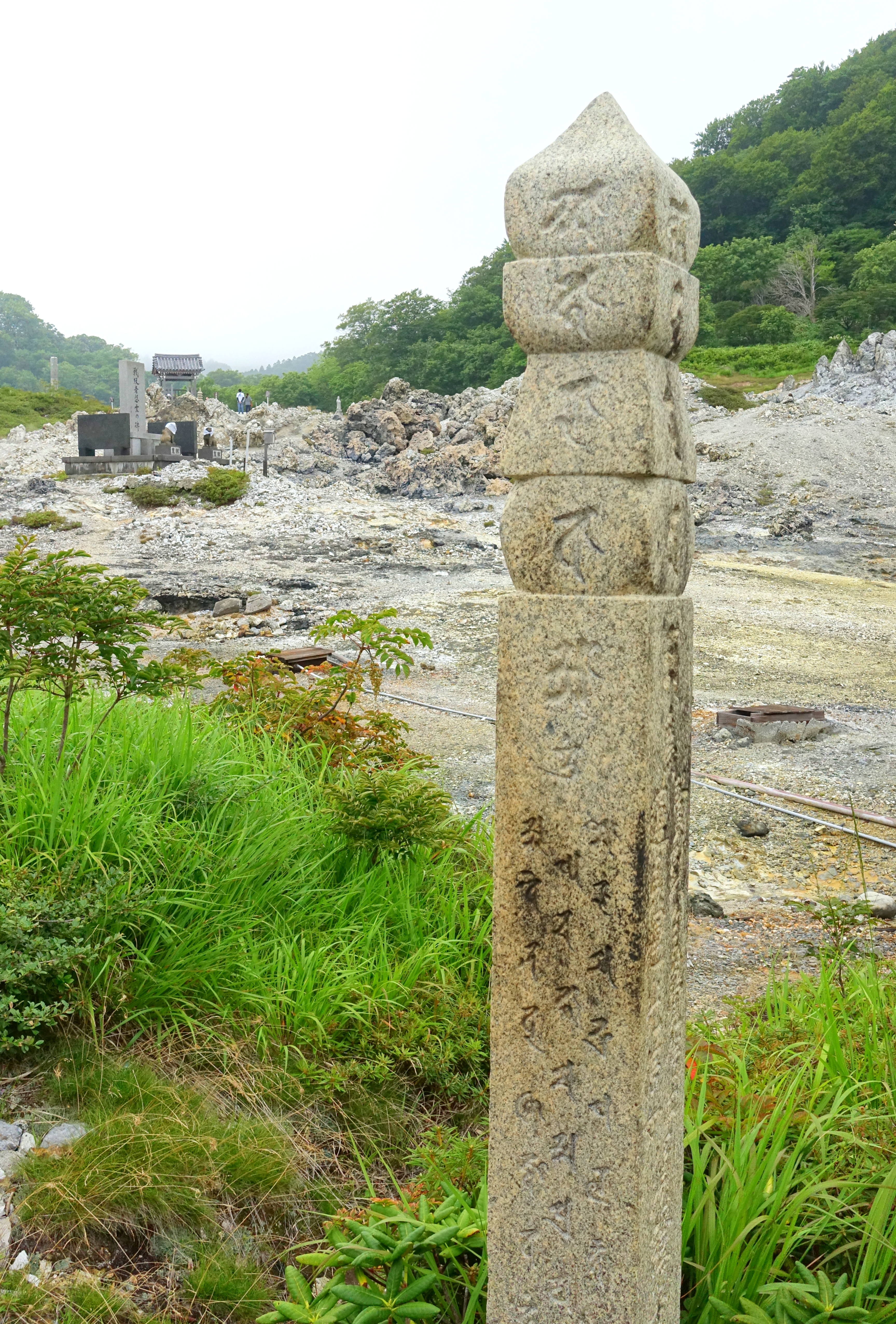
One of the most striking natural features is the series of small rivers that flow through the site. The Sanzu River, which empties into Lake Usori, runs through a channel of smooth white stones — white because the acidity of the water has bleached them over centuries. The white stone riverbed against the grey volcanic landscape creates a deeply haunting visual that explains immediately why this place has been interpreted as the entrance to the land of the dead for over a millennium.
Along the lakeshore path, you will encounter more Jizo statues at regular intervals, each maintaining their vigil over the water. Some of these are very old, their features worn smooth by decades of weather and the slightly corrosive air. Others are new, placed recently by grieving families. Together they create a procession of silent guardians that accompanies you the entire length of the lake walk.
The Itako Spirit Mediums and the Osorezan Grand Festivals
The most remarkable human element of Osorezan is the tradition of the itako — blind female shamans who serve as intermediaries between the living and the dead. The itako tradition predates Buddhism in the Tohoku region and represents a form of spiritual practice with deep roots in the animist beliefs of ancient Japan. Young women who were born blind or lost their sight in childhood would be apprenticed to practicing itako and undergo years of rigorous training that included memorizing vast numbers of sutras, mastering ceremonial instruments and incantations, and developing the capacity to enter the trance states necessary for spirit communication.
During the Osorezan Grand Festival (Osorezan Taisai), held annually from July 20–24, itako practitioners set up small stalls around the temple grounds and perform kuchiyose — spirit communication sessions — for visitors who wish to speak with deceased loved ones. The sessions involve the itako entering a trance, calling the spirit of the named deceased, and then speaking in a changed voice as if channeling that person. Whether you believe in the literal possibility of what is happening or not, the sincerity and skill of the practitioners — and the grief and gratitude of the people who come to them — makes these sessions profoundly moving to witness.
Today only a handful of itako practitioners remain active, and the number diminishes each decade as fewer young women enter the tradition. Attending the summer festival at Osorezan may be one of the last opportunities to witness this practice as a living tradition rather than a historical reconstruction. A smaller autumn festival (Osorezan Aki Taisai) is also held in late September, also featuring itako sessions.
The summer festival period is the most crowded time to visit Osorezan, with thousands of Japanese pilgrims and tourists arriving for the five days of the event. Accommodation in Mutsu City fills up quickly and should be booked months in advance. Outside the festival periods, Osorezan is remarkably quiet — you may find yourself almost alone in the volcanic landscape, which is an entirely different and more intimate experience.
The Onsen at Osorezan
One of the most unexpected pleasures of Osorezan is the public hot spring baths (onsen) located within the Bodaiji Temple grounds. These are among the most unusual bathing experiences in Japan — acidic spring water heated by volcanic activity and channeled into traditional wooden bath houses. The water is milky white, smells of sulfur, and is believed to have strong healing properties. The baths are separated by gender, and the facilities are simple but clean.
Bathing at Osorezan feels qualitatively different from bathing at a typical onsen resort. There is nothing luxurious or spa-like about it — the surroundings are austere, the atmosphere is reverent, and the knowledge that this water rises from the same geological forces that create the landscape of hell around you adds a dimension to the experience that is impossible to describe. You emerge feeling profoundly cleansed, though the sulfur smell tends to linger on your skin for the rest of the day.
The onsen are included in the general admission fee to Osorezan (¥500 / approximately $3.40 for adults). Bring your own towel. They are open during regular visiting hours.
Best Time to Visit Osorezan
- Summer Festival Period (July 20–24): The most culturally rich time to visit, with itako practitioners present and the full atmosphere of a major Buddhist festival. Also the warmest and most crowded period. Advance booking essential. Temperatures typically 20–25°C (68–77°F).
- Late Spring (May–June): The mountain reopens after winter closure (typically in early May). The landscape is at its most dramatic as snowmelt waters pour through the volcanic terrain. Relatively uncrowded. Weather can be cool and unpredictable (10–20°C / 50–68°F).
- Late Summer and Autumn (August–October): Excellent visibility, comfortable temperatures, and the autumn festival in late September. Autumn foliage on the approach road through the Shimokita forest is beautiful in October. The best balance of pleasant weather and manageable crowds.
- Autumn Festival (late September): A smaller version of the summer festival, with itako practitioners and fewer crowds. Highly recommended as an alternative to the busy July event.
- Winter (November–April): The site is officially closed. The access road may be blocked by snow and the temple buildings are shuttered. Not recommended unless you are an experienced winter hiker.
Where to Eat Near Osorezan
There are limited food options at Osorezan itself — a small restaurant within the temple complex serves simple meals during visiting hours, and vendors sell snacks and drinks near the entrance during festival periods. For a proper meal, you will need to head to Mutsu City, the nearest town, located about 25 km (16 miles) from Osorezan and accessible by the return bus.
Mutsu City Seafood
Mutsu City faces Mutsu Bay, which is one of the best scallop-producing waters in Japan. The scallops here are enormous, sweet, and absurdly fresh — the distance from ocean to table is measured in hours rather than days. Any seafood restaurant in the city center will serve excellent scallop dishes: grilled in the shell with butter and soy sauce, sashimi-style raw, or as part of a rice bowl (kaisendon). Budget around ¥1,500–¥2,500 / $10–$17 for a scallop set meal.
Tsugaru Ramen
The ramen of the Tsugaru / Shimokita area has its own regional character — typically a soy-based broth with thick noodles and generous toppings including corn, butter, and locally sourced fish cake. Several ramen restaurants in Mutsu City serve this style, and a bowl will set you back around ¥800–¥1,200 / $5–$8.
Osechi and Mountain Vegetables
The mountainous interior of the Shimokita Peninsula produces excellent wild mountain vegetables (sansai) in spring and early summer. Many restaurants in the area offer set meals featuring these local greens, often paired with local tofu, pickles, and rice. This is humble, healthy food done exceptionally well, and it reflects the culinary traditions of a region that has long supplemented ocean food with forest and mountain produce.
Where to Stay
Budget (Under ¥8,000 / $55 per night)
Mutsu City has several business hotels and guesthouses in the ¥5,000–¥8,000 / $34–$55 range per night for a single or double room. These are basic but clean, and most are within walking distance of Shimokitazawa Station (for the bus to Osorezan). The tourist information office at Shimokitazawa Station can assist with accommodation bookings.
Mid-Range (¥8,000–¥20,000 / $55–$135)
The Hotel Grand Noble Mutsu is a comfortable city hotel with clean Western-style rooms, a restaurant, and an onsen bath available for guest use. Priced around ¥10,000–¥15,000 / $68–$100 per night for a double room. Several traditional Japanese inns (minshuku) in Mutsu City offer tatami rooms with breakfast and dinner for approximately ¥12,000–¥18,000 / $82–$122 per person, including excellent local seafood.
Luxury (¥20,000+ / $135+)
There are no high-end luxury hotels in the immediate area. The closest comparable experience would be staying at an upscale ryokan in the broader Aomori region — Sukayu Onsen, located in the mountains between Mutsu and Aomori City, is a famous and atmospheric hot spring complex with a thousand-person communal bath (senninburo) that is entirely free of the usual resort-hotel veneer. Prices start at around ¥20,000–¥35,000 / $136–$238 per person per night with two meals.
Practical Tips for Visiting Osorezan
- Open season: Osorezan is accessible from approximately early May to late October. Exact opening dates vary by year — check the official Bodaiji Temple website before traveling.
- Admission: ¥500 / approximately $3.40 for adults, ¥200 / $1.40 for children. Includes access to the onsen.
- Bus schedule: The Shimokita Kotsu bus to Osorezan from Shimokitazawa Station runs a limited number of times daily (typically 3–5 departures in each direction). Download the current timetable before you travel — missing the last bus would leave you stranded.
- Bring cash: Osorezan and Mutsu City have very limited ATM access. Withdraw yen before arriving in the area.
- Dress respectfully: This is an active temple and pilgrimage site. Avoid revealing clothing. Remove shoes before entering temple buildings.
- Photography etiquette: The landscape and exterior of the temple are freely photographable. Avoid photographing people in prayer or performing rituals without permission. If you witness an itako session, observe with quiet respect — photography of the sessions themselves is generally not permitted.
- Sulfur sensitivity: People with respiratory conditions should be aware that the sulfur levels in the air around the volcanic vents can be significant. The smell is detectable throughout the site and is a constant companion during your visit.
- Footwear: The volcanic landscape involves walking on uneven rock and sand. Wear sturdy shoes or hiking boots. Sandals are not appropriate.
- Time needed: Allow at least 4–5 hours for the full experience: the temple, the lake walk, the volcanic hellscapes, and a soak in the onsen. A full day is better.
- Combine with Cape Oma: While on the Shimokita Peninsula, consider visiting Cape Oma at the very tip — the northernmost point of Honshu and one of the best places in Japan to see bluefin tuna fishing. Hokkaido is visible across the Tsugaru Strait on clear days.
Sample 2-Day Shimokita Peninsula Itinerary
Day 1: Arrival and Osorezan
Morning: Depart Tokyo on the Tohoku Shinkansen. Arrive at Hachinohe and transfer to the Ominato Line toward Shimokitazawa. Arrive at Shimokitazawa Station by early afternoon.
Early afternoon: Take the Shimokita Kotsu bus to Osorezan. Arrive at the temple entrance and pay the admission fee.
2:00–5:00 PM: Explore the temple complex — the main hall, the Jizo fields, and the volcanic hellscapes closest to the entrance. Take the lake walk clockwise along Lake Usori’s northern shore, experiencing the full spectrum of volcanic landscape.
Late afternoon: Finish with a soak in the temple onsen. Allow the sulfurous water to work its mysterious effects while you contemplate what you have seen.
Evening: Return by bus to Shimokitazawa and check into your hotel in Mutsu City. Dinner at a local seafood restaurant — Mutsu Bay scallops are mandatory. Budget ¥2,000–¥3,000 / $14–$20 per person.
Day 2: Cape Oma and Departure
Morning: If time and transport allow, take a bus or taxi to Cape Oma, the northernmost tip of Honshu. The famous bluefin tuna fishing here is a major industry and the fresh tuna available at local restaurants is exceptional. On a clear morning, Hokkaido is visible just 17.5 km (11 miles) across the water.
Midday: Return to Shimokitazawa Station and take the train toward Hachinohe or Aomori for your onward journey. If continuing your Tohoku adventure, consider heading west to Aomori City for Nebuta Festival preparations or south to Hirosaki for the castle and apple orchards.
Tip: If your timing coincides with the July or September festivals, replace Day 2 with a morning return to Osorezan to witness the itako sessions, which typically begin before noon. The atmosphere in the early morning, with the mist still lying over the lake, is unlike anything you will experience at any other time.
Osorezan and the Wider Tohoku Context
One of the most rewarding things about visiting Osorezan is the way it deepens your understanding of the broader culture of the Tohoku region. Northern Japan has historically been associated with the spirit world and with practices that feel wilder and less domesticated than the refined Buddhism of Kyoto or Nara. The itako tradition, the austere mountain landscapes, the emphasis on the afterlife and on communication with the dead — all of these are specifically Tohoku. They emerge from a regional culture that developed in relative isolation from the imperial capitals of the south, and that retained spiritual practices far older than the formal Buddhist institutions that eventually incorporated them.
If you have time in Aomori beyond Osorezan, the rest of the prefecture rewards exploration. The Nebuta Festival in early August is one of Japan’s greatest summer events. Hirosaki’s castle and cherry blossoms in spring are magnificent. The Shirakami-Sanchi UNESCO World Heritage beech forest on the border with Akita is one of the largest primeval forest areas in East Asia. Aomori is also Japan’s largest apple-producing prefecture, and the autumn harvest season fills the local markets with varieties unavailable elsewhere.
But none of those experiences are quite like Osorezan. None of them leave you with the specific feeling of having visited a place that genuinely occupies the boundary between the living world and whatever lies beyond it. Whether that boundary is literal or metaphorical, real or imagined, the geological and spiritual reality of Osorezan makes it feel very, very present.
Final Thoughts
Osorezan is not a comfortable destination. The journey is long, the landscape is inhospitable, the atmosphere is heavy with the weight of grief and devotion. There are no luxury hotels, no Michelin-starred restaurants, no perfectly curated Instagram moments. What there is, instead, is something rarer: a place where the spiritual and the geological have collaborated over more than a thousand years to create an experience that is genuinely and indelibly moving.
For travelers who have been to Japan before and are looking for something that goes deeper, something that peels back the polished surface of Japanese culture to reveal the stranger, more ancient layer underneath — Osorezan is it. Make the journey. Walk the white stone riverbed. Stand at the edge of the acid lake as the steam rises around you. Light a stick of incense for someone you have lost. And understand, even if just for a moment, why human beings have been making this pilgrimage through this volcanic wilderness for twelve centuries, and why they continue to do so today.
Related Articles You Might Enjoy
- Sannai-Maruyama Archaeological Site, Aomori: Japan’s Most Spectacular 5,500-Year-Old UNESCO Jomon Settlement
- Hachinohe Enburi Festival, Aomori: Japan’s Ancient Horse-Spirit Dance to Welcome Spring
- Tanesashi Coast & Kabushima Island, Aomori: Japan’s Most Dramatic Coastal Walk & Seabird Sanctuary
- Goshogawara Tachineputa Festival, Aomori: Japan’s Most Spectacular Tower Float Festival
- Hirosaki City Guide: Apple Capital, Neputa Festival & Aomori’s Most Historic Castle Town


コメント