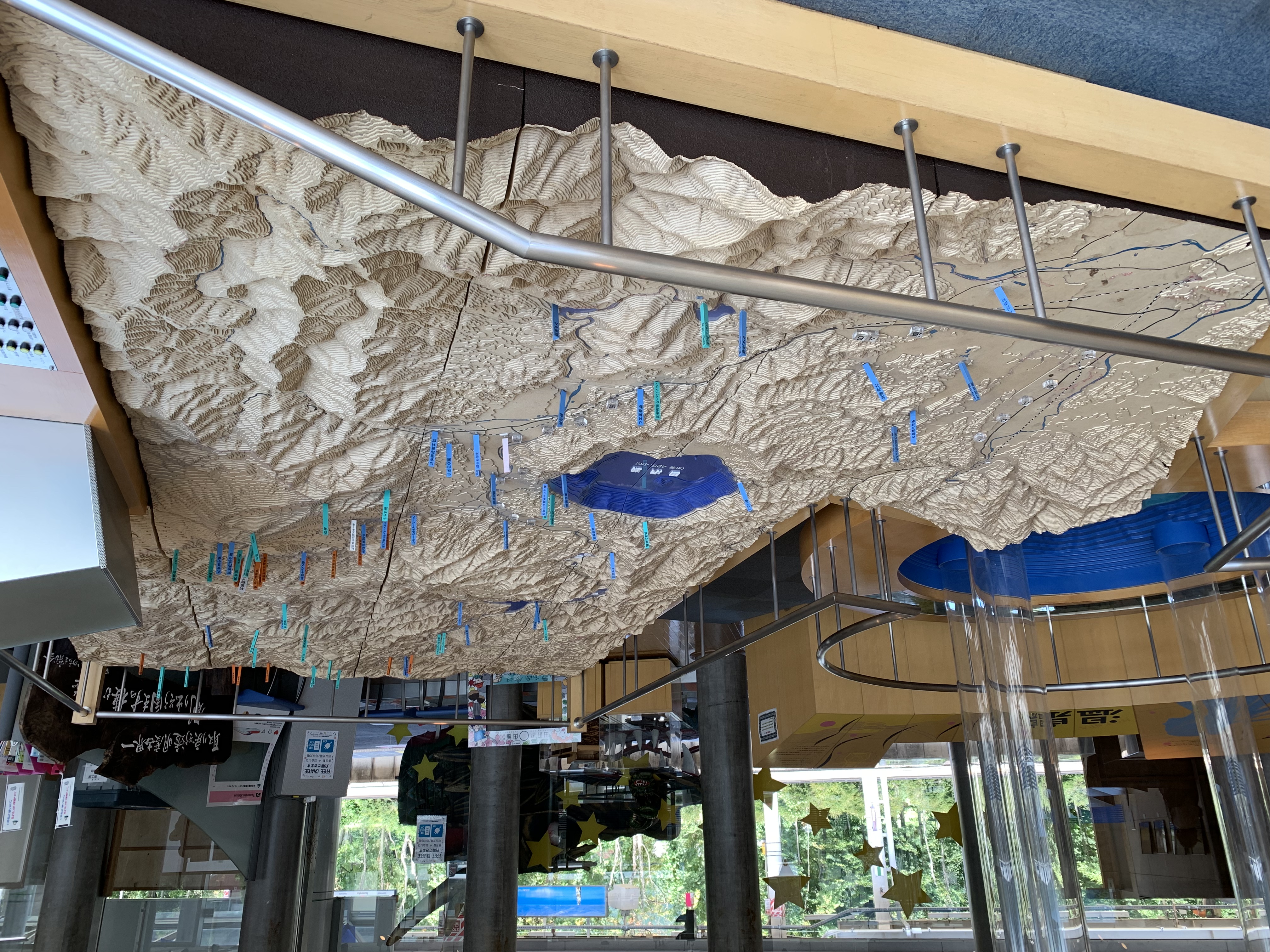
Imagine standing at the edge of a lake so impossibly blue that it looks like someone poured liquid sapphire into the mountains of northern Japan. Lake Tazawa — Tazawako in Japanese — is Japan’s deepest lake, plunging to an extraordinary 423 meters (1,388 feet) at its deepest point, and its vivid cobalt-blue color will leave you genuinely speechless. If you’ve been to Crater Lake in Oregon, think of something even more striking — and far less crowded. Nestled in the mountains of Akita Prefecture in Tohoku, this gem deserves a spot on every Japan itinerary, first-timer or seasoned explorer alike.
Why Lake Tazawa Should Be on Every Japan Itinerary
Lake Tazawa has a quality that’s genuinely rare among Japan’s tourist destinations: it rewards you with a sense of discovery. While overseas visitors flock to Kyoto and Tokyo, the crowds here are a fraction of what you’d find at Japan’s more famous sites. You’ll share the lakeside cycling path with Japanese families, elderly couples walking their dogs, and maybe a handful of other foreign tourists at most.
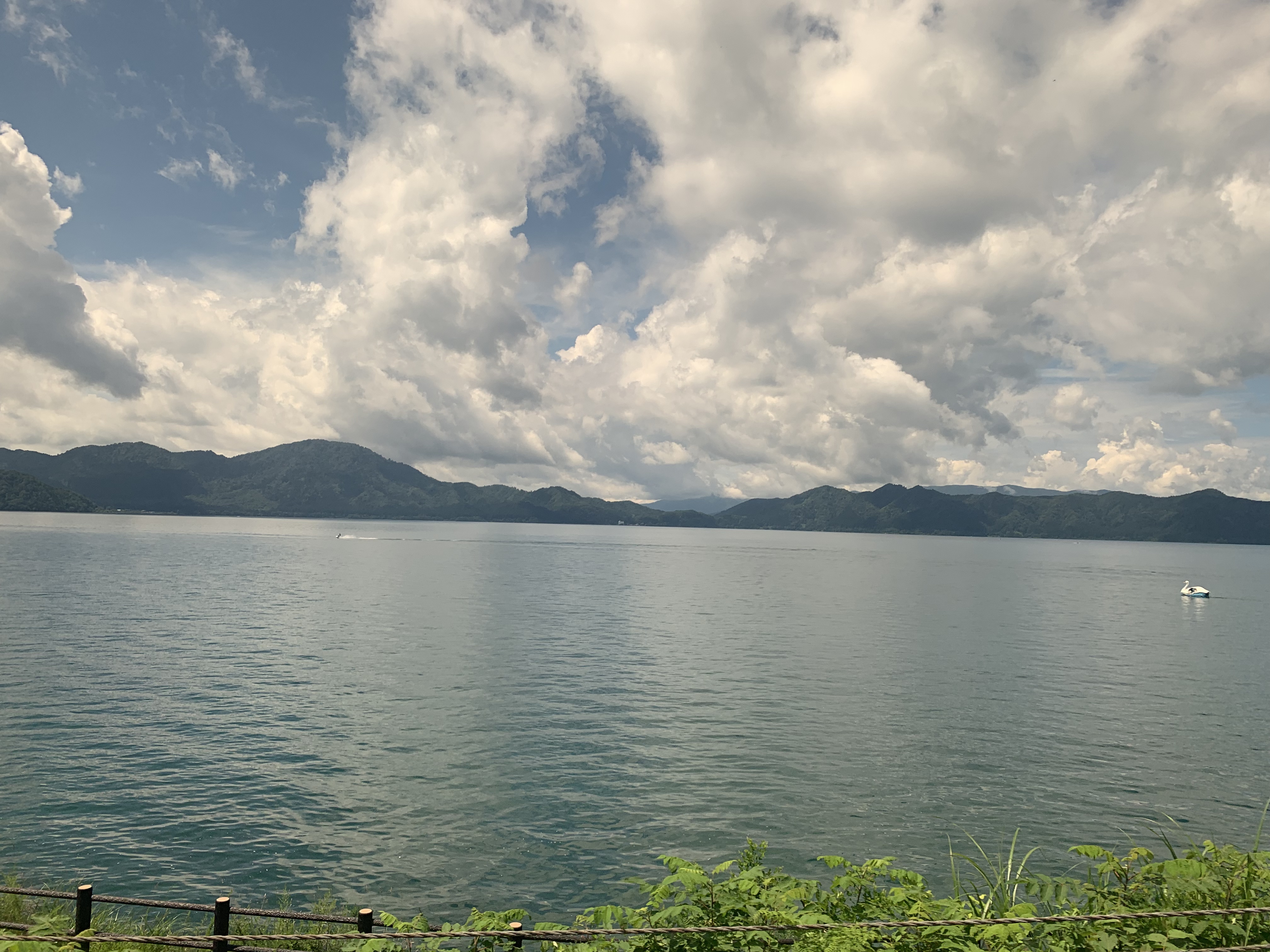
But the real reason to come is the lake itself. Lake Tazawa’s extraordinary depth — it is the deepest lake in Japan and the 17th deepest in the world — means the water stays ice-free even in Akita’s famously brutal winters. That depth also creates the lake’s signature color: an intense, vivid blue that shifts between cerulean and deep cobalt depending on the season, the light, and the angle from which you’re looking. Photographs don’t do it justice. You have to see it with your own eyes.
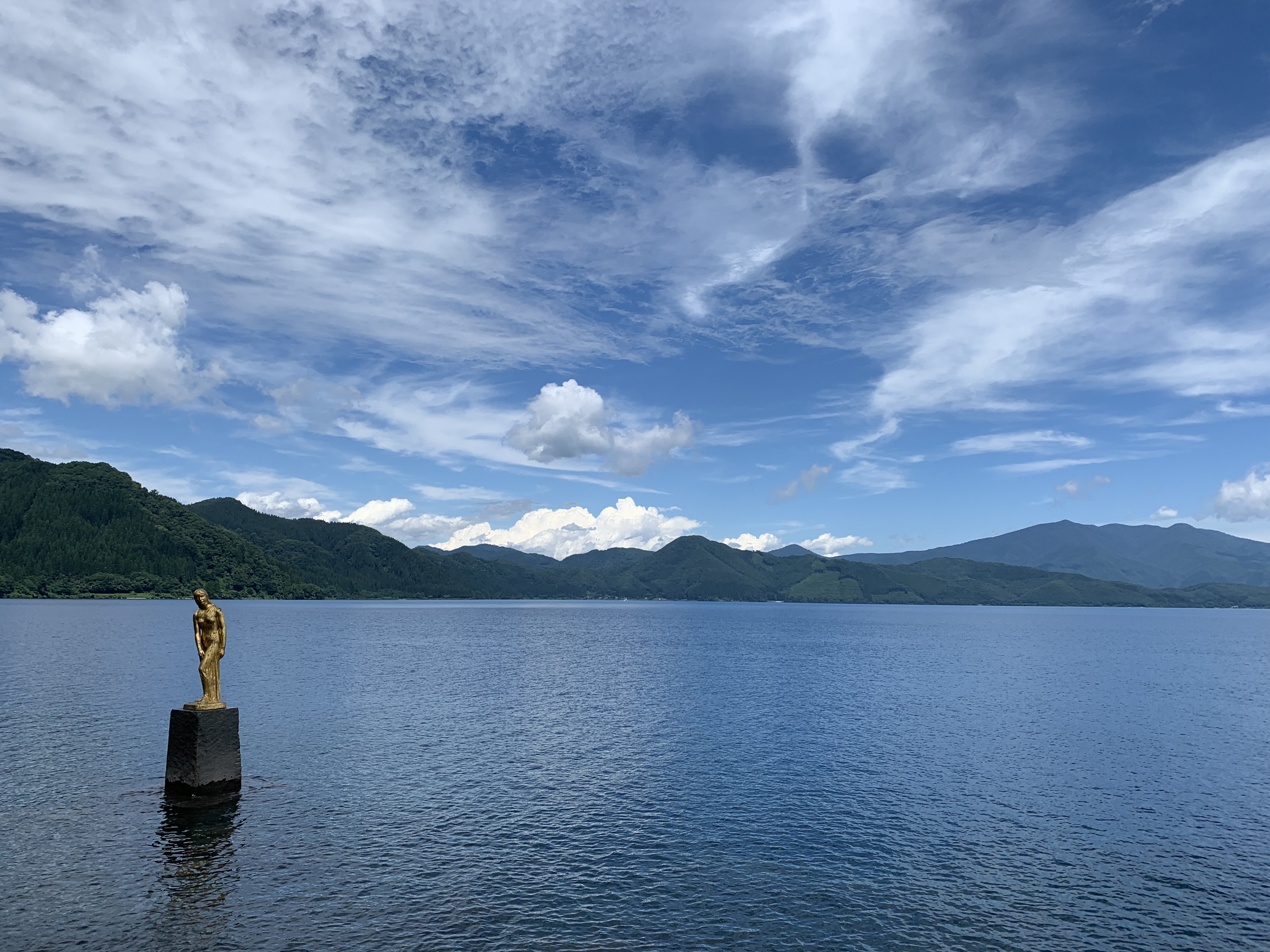
Then there’s the legend. At the heart of Lake Tazawa is Tatsuko, a princess of extraordinary beauty who, according to legend, prayed so fervently to a goddess for eternal beauty that she was transformed into a golden dragon and became the spirit of the lake. Her bronze statue — gilded and luminous — stands at the water’s edge, gazing outward, one of the most photographed spots in all of Tohoku. The story of Tatsuko adds a layer of mythic romance to what is already a breathtaking landscape.
Beyond the lake itself, Lake Tazawa is within easy reach of some of Tohoku’s other highlights: the famous samurai district of Kakunodate is just 30 minutes away by train, and the celebrated Nyuto Onsen hot spring village is a short drive into the mountains. You could easily spend two or three nights here and feel like you’ve barely scratched the surface.
Getting There from Tokyo
Lake Tazawa is genuinely accessible from Tokyo thanks to the Akita Shinkansen — the bullet train that connects the capital directly to Akita Prefecture. The journey is straightforward and comfortable:
- Shinkansen (fastest option): Take the Komachi Shinkansen from Tokyo Station directly to Tazawako Station. The journey takes approximately 2 hours 40 minutes, and the one-way fare is around ¥17,000–¥19,000 ($115–$130). The JR Pass (7-day or longer) covers this route, making it excellent value if you’re combining Lake Tazawa with other Tohoku or Akita destinations.
- Direct access: Tazawako Station is the closest station to the lake, located about 10–15 minutes by local bus from the shoreline. Buses run regularly from the station directly to the lakeside terminal (Tazawako Kohan), and the fare is around ¥270 ($1.80). Taxis are also available and charge approximately ¥2,000 ($13.50) for the same trip.
- Rental car: If you’re planning to visit Nyuto Onsen or explore the wider region, a rental car gives you much more flexibility. From Tazawako Station (which has car rental offices), the drive around the lake takes about 40 minutes on the scenic lakeside road. Budget around ¥6,000–¥8,000 ($40–$55) per day for a basic rental.
- From Sendai: Traveling from Sendai (a major hub for Tohoku exploration), take the Shinkansen north to Morioka, then transfer to the Akita Shinkansen for Tazawako Station. Total journey time is around 1.5 hours.
The Akita Shinkansen is covered by the JR Pass, and we’d strongly recommend using the pass if you’re including Lake Tazawa in a broader Tohoku or Japan itinerary. The Kakunodate connection (also on the Akita Shinkansen, just one stop away) makes the pass especially useful here.
The Legend of Princess Tatsuko
No visit to Lake Tazawa is complete without understanding the legend that gives the lake much of its soul. The story of Princess Tatsuko is one of Tohoku’s most beloved folk tales, and it explains, in poetic terms, why the lake is so deep and so intensely blue.
Long ago, a young woman of extraordinary beauty named Tatsuko lived near the lake. Desperate to preserve her looks forever, she made a pilgrimage to the Kansazan Shrine and prayed continuously for 100 days. The goddess heard her prayer — but the answer came in a form Tatsuko had not expected. She was granted eternal youth, but she was transformed into a dragon in the process. Driven by an unquenchable thirst, she drank from the lake until it grew deeper and deeper, and she eventually became the spirit of Lake Tazawa, dwelling in its depths forever.
Today, Tatsuko’s gilded bronze statue stands on the western shore of the lake, one hand reaching toward the sky, the other trailing toward the water. The statue was created by sculptor Sotaro Matsuda and unveiled in 1968, and it has become one of the most iconic images of Akita Prefecture. In winter, when snow covers the mountains around the lake, the golden statue against the deep blue water and white snow creates an unforgettable scene. In cherry blossom season, the pink blooms frame the statue in a way that seems almost too beautiful to be real.
The legend also has a deeper cultural resonance: it’s a story about the danger of vanity, but also about the power of devotion and transformation. Tatsuko’s sadness — she could not return to human form — is said to be what gives the lake its color, deep and saturated with longing. Whether you believe the legend or not, it adds a dimension of meaning to the landscape that makes you see the lake differently.
Things to Do at Lake Tazawa
Cruise the Lake
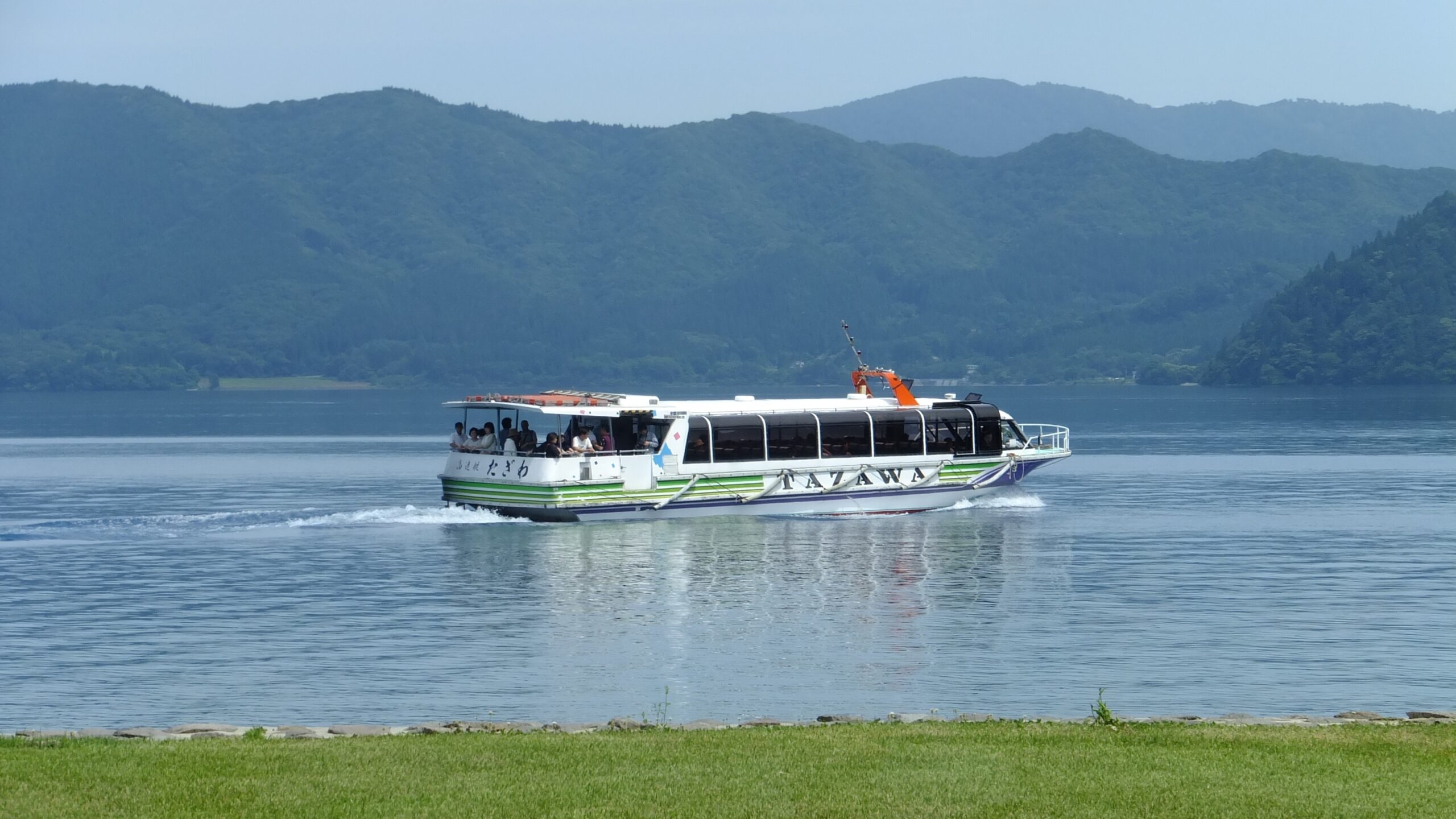
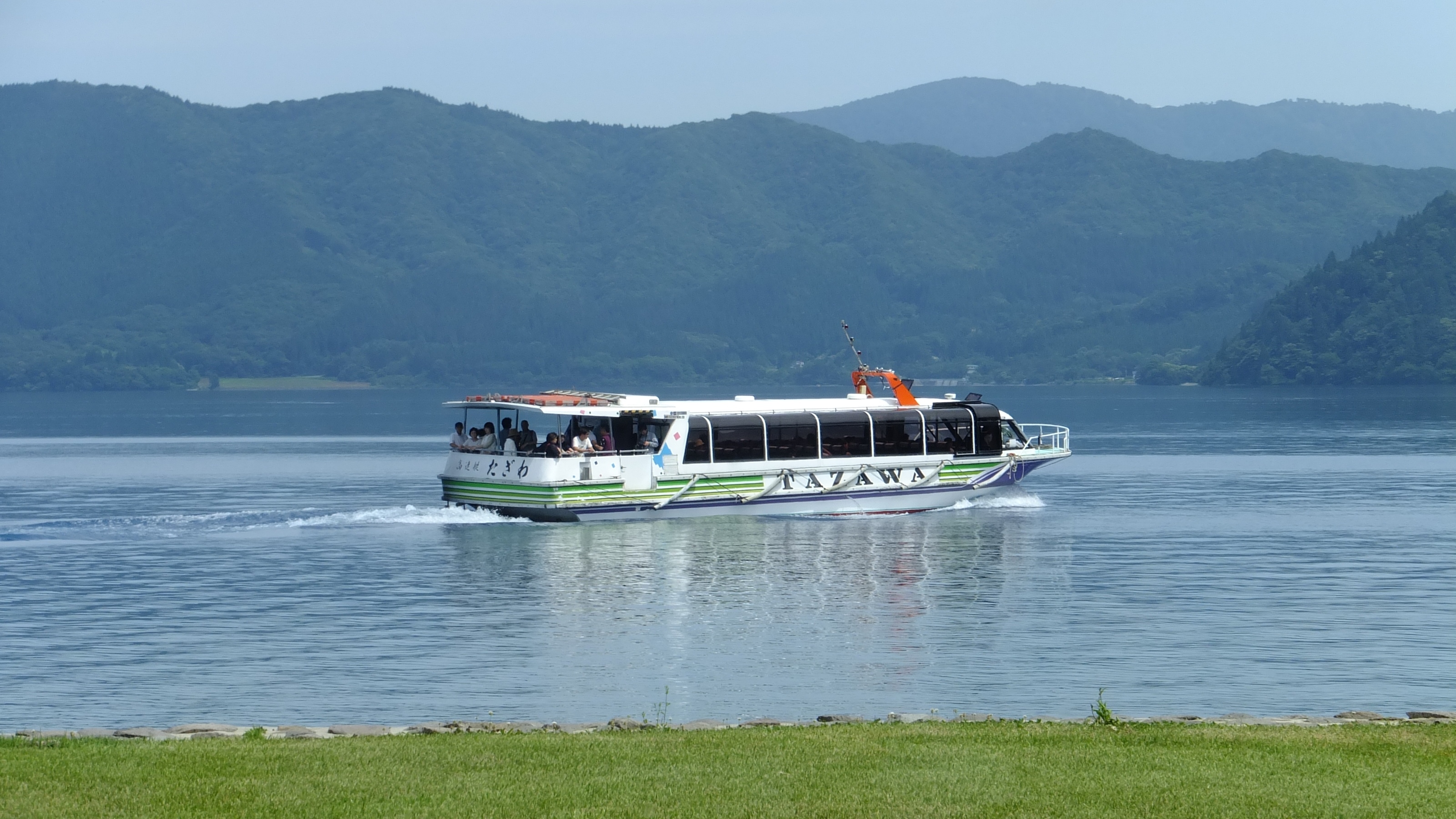
The most iconic way to experience Lake Tazawa is from the water itself, and the lake’s cruise boats offer an excellent way to do exactly that. Regular cruises depart from the Tazawako Kohan lakeside terminal and circumnavigate the lake, passing close to the Tatsuko statue and offering views of the surrounding mountains. The standard cruise takes about 40 minutes and costs around ¥1,460 ($10) per person. There are also shorter 20-minute options.
The best time for a cruise is on a clear day, when the deep blue of the lake is at its most vivid and the reflection of Mount Komagatake on the water is perfect. On cloudy days, the lake takes on a more mysterious, pewter-toned quality that has its own kind of drama. The boats run from late April through November, so if you’re visiting in winter, you’ll need to experience the lake from shore.
Cycle Around the Lake
One of the most enjoyable ways to explore Lake Tazawa is by bicycle, and a circuit of the entire lake (approximately 20 kilometers or 12.5 miles) makes for a wonderful 2-3 hour ride. The road that follows the shoreline passes through forested sections, open lakeside viewpoints, and small villages, and the gradient is gentle enough for most fitness levels.
Rental bicycles are available at the Tazawako Kohan terminal and at several other points around the lake. Prices range from about ¥500 ($3.50) per hour for a standard bicycle to ¥800-¥1,500 ($5.50-$10) per hour for electric-assisted bikes, which are particularly useful if you want to cover the full circuit without breaking a sweat. Electric bikes are highly recommended for anyone visiting in summer, when the lakeside can get warm and humid.
Highlights along the cycling route include the Tatsuko statue (of course), the Kansa Shrine on the eastern shore, the Sasakawa Rest Area (a good picnic spot with lake views), and the northern shore near the Tazawako Ski Resort base, where the mountains come closest to the water. Allow extra time to stop for photos — you’ll find yourself stopping far more often than you expect.
Swimming in Summer
Lake Tazawa has a designated swimming area on the southern shore that opens during the summer months (typically July and August). The water is clean and cool, refreshed by mountain streams, and the swimming area is well-maintained with changing facilities and lifeguards during peak hours. If you’re visiting in midsummer and the weather cooperates, a swim in Japan’s deepest lake is an experience worth the effort.
The water temperature even in summer stays on the cooler side — typically around 20-22 degrees Celsius (68-72 degrees Fahrenheit) at the surface — so it’s refreshing rather than warm. Japanese families often combine swimming with a lakeside barbecue, and you’ll see groups of all ages enjoying the water in a relaxed, unstuffy atmosphere very different from crowded beach resorts.
Kansa Shrine: A Lakeside Sacred Site
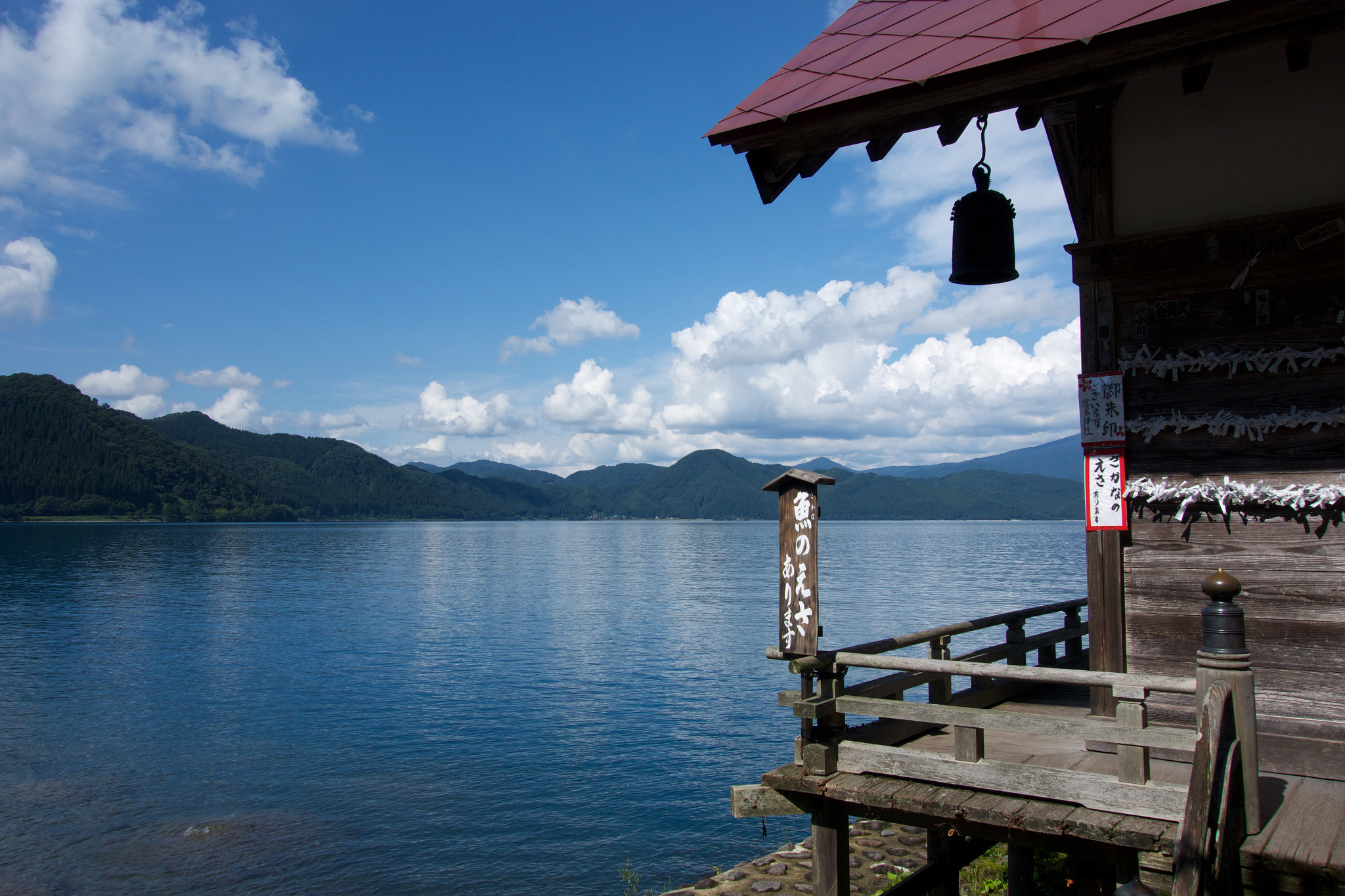
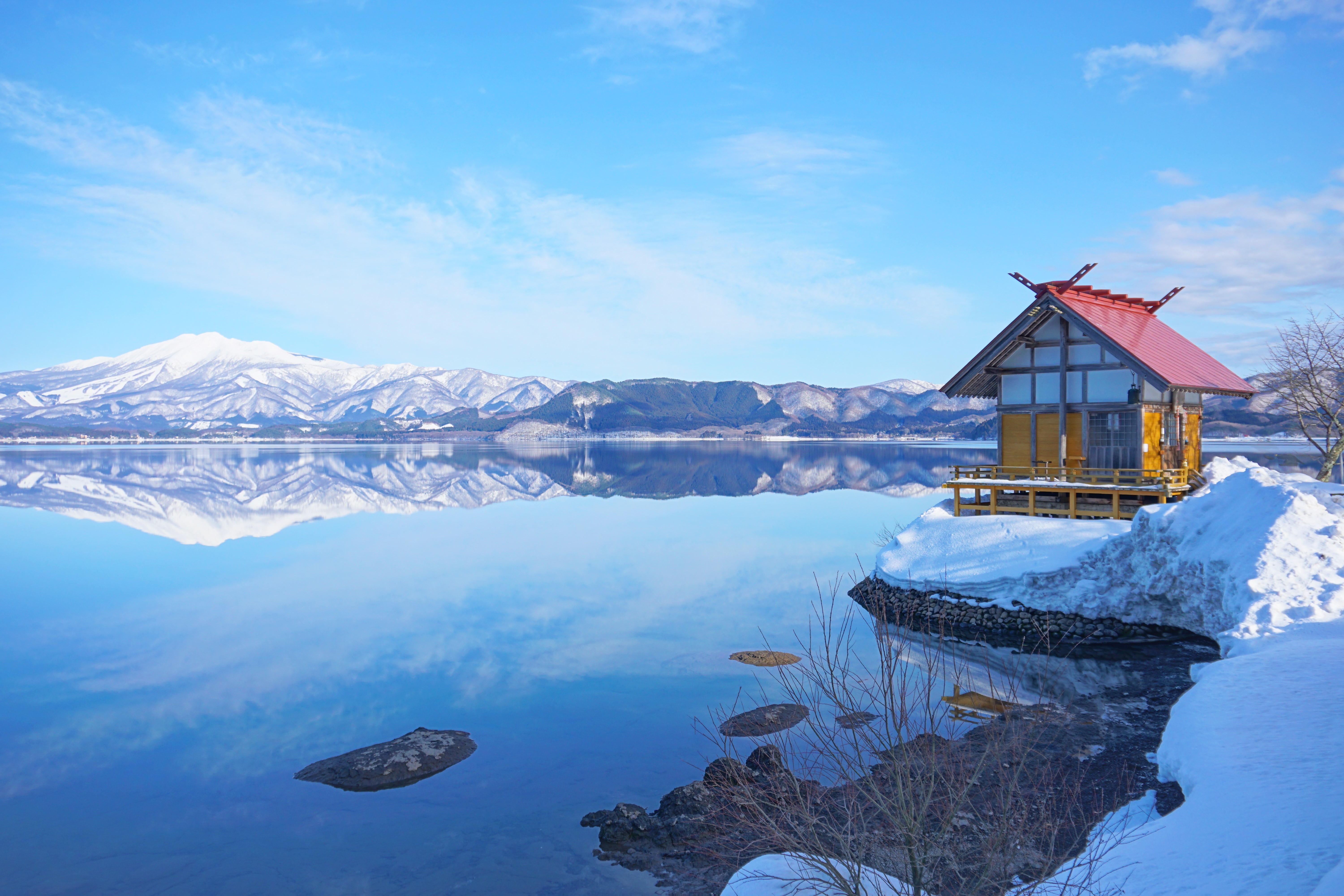
On the eastern shore of Lake Tazawa stands Kansa Shrine (Kansazan Shrine), the very place where, according to legend, Princess Tatsuko made her fateful prayer. The shrine is modest in size but rich in atmosphere — it sits right at the edge of the lake, partially over the water, and the combination of ancient cedar trees, wooden torii gate, and the blue lake behind it makes it one of the most photogenic spots in all of Akita.
Visiting the shrine is free, and it takes only 20-30 minutes to properly explore the grounds. The shrine is most dramatic in the early morning, when mist sometimes rises from the lake and the light filters through the cedar trees at a low angle. If you’re cycling around the lake, Kansa Shrine makes a natural stopping point on the eastern side — look for the small red torii gate just off the lakeside road.
Visitors who come to pray at Kansa Shrine often ask for blessings related to beauty, youth, and romantic relationships — appropriate given Tatsuko’s story. During the summer festival season, the shrine becomes the center of small local celebrations, and if you’re fortunate enough to be there during a festival day, you may see traditional music, dancing, and stalls selling local food and crafts.
Day Trip to Kakunodate Samurai Village
One of Lake Tazawa’s greatest advantages as a base is its proximity to Kakunodate, one of Japan’s best-preserved samurai districts. Just one stop on the Akita Shinkansen (about 15 minutes, or 30 minutes by local train), Kakunodate feels like stepping back into the Edo period.
The samurai district (Bukeyashiki) is lined with beautifully preserved samurai residences, many of which are still owned by descendant families and open to the public. The houses are typically large, wooden structures surrounded by weeping cherry trees — Kakunodate is famous throughout Japan for its stunning cherry blossom season in late April and early May, when hundreds of cherry trees bloom simultaneously along the main samurai street.
Beyond the samurai quarter, Kakunodate has a charming old merchant district full of traditional shops selling local crafts, including the celebrated Kakunodate cherry bark craft (kabazaiku), a unique lacquerware technique using wild cherry bark that produces beautiful tea caddies, boxes, and accessories. Allow at least half a day, and if you’re visiting in spring, budget a full day.
Nyuto Onsen: Japan’s Most Magical Hot Spring Escape
Just 17 kilometers (about 11 miles) from Lake Tazawa, up a winding mountain road through thick forest, lies one of Japan’s most beloved onsen destinations: Nyuto Onsen. This secluded hot spring village consists of seven traditional inns, each with its own natural hot spring source, and the area has a reputation for being one of the most atmospheric onsen experiences in all of Japan.
The most famous of the Nyuto Onsen inns is Tsurunoyu, a beautifully rustic inn that has been operating for over 350 years. Its outdoor bath — a large milky-white pool fed by sulfur-rich spring water, ringed by forest and (in winter) snow-covered pines — is one of those genuinely bucket-list experiences that lives up to the hype. Day-trippers can use the baths at Tsurunoyu for around ¥800 ($5.50) per person, though staying overnight gives you the full experience.
The other inns at Nyuto Onsen each have their own character and spring water chemistry. Magoroku Onsen is known for its rustic, forest-surrounded setting and its distinctive brownish iron-rich water. Ganiba Onsen has indoor and outdoor baths with a slightly different mineral composition. Each inn typically offers day bathing, so dedicated onsen enthusiasts sometimes visit two or three in a single day — what locals call onsen hopping. A shared pass covering multiple inns is available for around ¥1,800 ($12).
To reach Nyuto Onsen from Lake Tazawa, take a bus from Tazawako Station (the bus to Nyuto Onsen runs several times daily and costs about ¥750 one-way, or $5), or rent a car for more flexibility. The bus journey takes about 35 minutes through beautiful mountain forest. In winter, the road can be snowy and the bus service adjusts its schedule accordingly — check ahead.
Best Time to Visit Lake Tazawa
- Spring (late April to early June): Cherry blossoms in Kakunodate (just 15 minutes away by Shinkansen) peak in late April, making this an ideal time to combine both destinations. Lake Tazawa itself is green and fresh, the cruise boats resume operations, and the crowds are moderate. Temperatures range from 10 to 20 degrees Celsius (50 to 68 degrees Fahrenheit). This is one of the best times to visit overall.
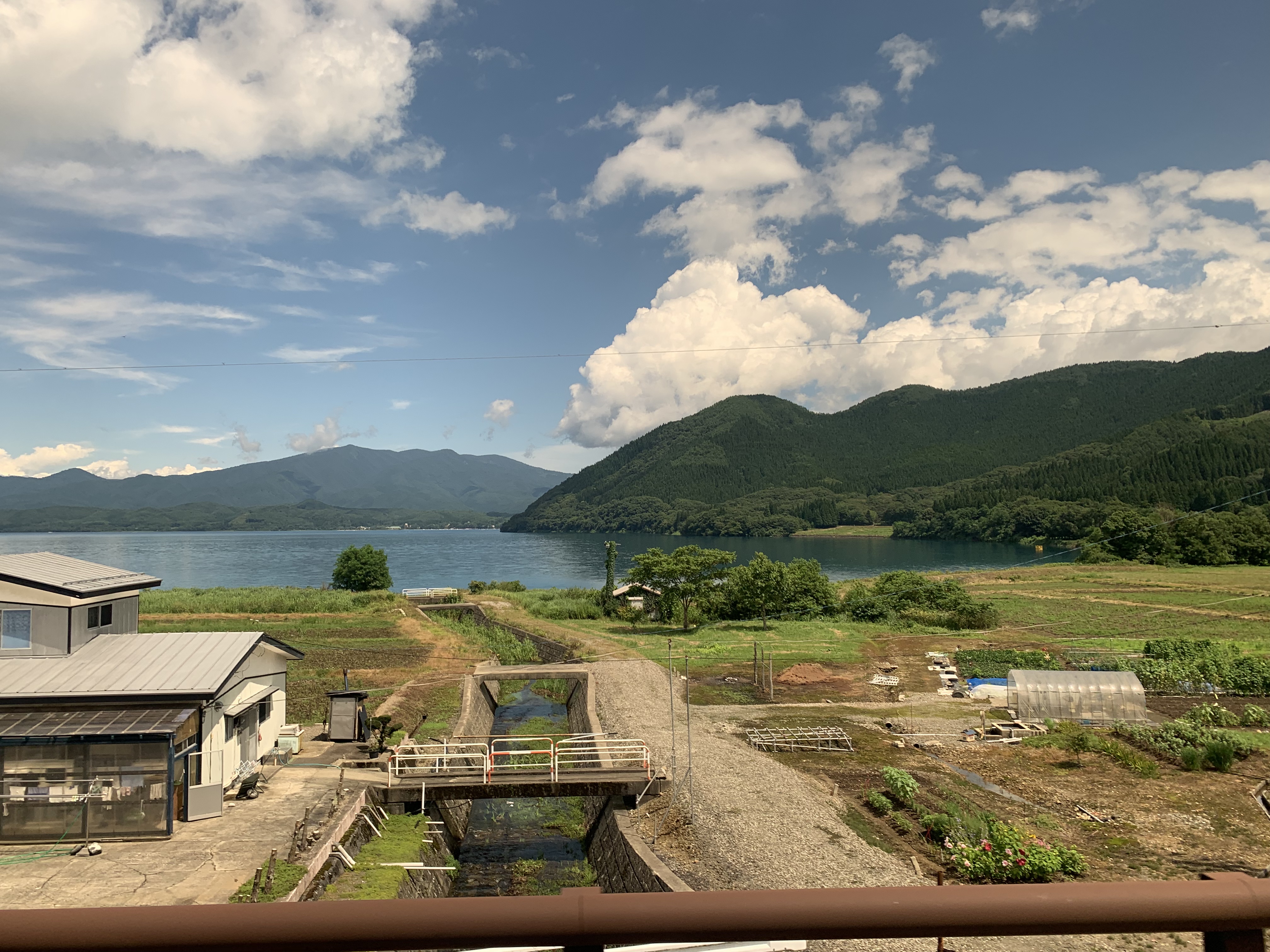
- Summer (July to August): The lake is at its busiest, with Japanese domestic tourists arriving for swimming, cycling, and camping. The vivid blue of the water is at its most intense, and the surrounding mountains are lush and green. Temperatures can reach 28-32 degrees Celsius (82-90 degrees Fahrenheit) on hot days. Book accommodation well in advance if visiting in August.
- Autumn (September to November): The foliage season transforms the mountains around Lake Tazawa into a tapestry of red, orange, and gold. Mid to late October is peak foliage season, and the combination of colorful forests reflected in the blue lake is extraordinary. Crowds are lighter than summer, temperatures are comfortable (10-20 degrees Celsius / 50-68 degrees Fahrenheit), and this is arguably the single most beautiful time to visit.
- Winter (December to March): Lake Tazawa is one of the few lakes in the region that does not freeze — its great depth prevents ice from forming. In winter, the snow-covered mountains reflected in the dark blue water, with the golden Tatsuko statue standing against white snow, creates an image unlike anything else in Japan. The Tazawako Ski Resort is open, and Nyuto Onsen’s outdoor baths steaming in the snow are a sublime experience. The quietest and most atmospheric time to visit for adventure travelers.
Where to Eat: Lake Tazawa Food Guide
Akita Prefecture has one of Japan’s most distinct regional cuisines, and the Lake Tazawa area gives you access to some of the prefecture’s best food. Here’s what to eat and where to find it:
Kiritanpo and Akita Hot Pot
Akita’s most famous dish is kiritanpo — cylinders of pounded rice grilled on cedar skewers and served in a savory miso-based hot pot (nabe) with chicken, vegetables, and burdock root. It’s one of those dishes that sounds simple and tastes extraordinary. Several restaurants in the Tazawako area serve kiritanpo nabe, with prices typically running ¥1,500-¥2,500 ($10-$17) per person. Matagi no Ie near the lakeside terminal is a reliable choice, serving traditional Akita mountain cuisine in a rustic wooden setting.
Inaniwa Udon
Akita is also home to Inaniwa udon, one of Japan’s most prized regional noodles. Unlike the thick, chewy udon of Kagawa Prefecture, Inaniwa udon is silky-thin and delicate — almost like a cross between udon and somen. It’s been made in Akita for over 300 years and is considered one of Japan’s three great noodle traditions. Look for restaurants near Tazawako Station that serve it both hot (with warm dashi broth) and cold (zaru style, dipped in a light soy-based sauce). Expect to pay ¥900-¥1,400 ($6-$10) per bowl.
Akita Sake and Local Izakaya
Akita isn’t as internationally famous for its beef as Yamagata (home of Yonezawa beef), but local Akita wagyu is excellent and significantly less crowded at the table. Several izakaya (Japanese gastropubs) in the Tazawako town area serve local food with Akita sake, the combination of which is one of those simple pleasures that Japan does better than anywhere. Look for signs for jizake (locally brewed sake) at any restaurant — Akita has over 40 sake breweries and some of the purest brewing water in Japan.
Fresh Mountain Sansai
In spring and early summer, the mountains around Lake Tazawa yield an abundance of sansai (wild mountain vegetables) — fiddlehead ferns, mountain butterbur (fuki), wild garlic, and more. Ryokan breakfasts in particular showcase sansai beautifully, with dishes pickled, sauteed, or served in dashi broth. If you stay at one of the Nyuto Onsen inns, sansai will likely feature prominently at your meals, especially in the April to June season.
Where to Stay
Budget (Under ¥8,000 / $55 per night)
Tazawako Youth Hostel offers basic but comfortable accommodation near the lake for solo travelers and budget-conscious visitors. Dormitory beds run around ¥3,500-¥4,500 ($24-$30) per night, and private rooms are also available. The staff are helpful for local tips and itinerary planning.
Mid-Range (¥8,000 to ¥20,000 / $55 to $135)
Hotel Tazawako sits right on the lakeside with views directly over the water, and rooms in this range give you a beautiful setting without the cost of a full ryokan experience. Breakfast is often included in Japanese hotel rates in this category. Tazawako Lake Resort and Spa is another popular choice with modern facilities, an indoor hot spring bath, and easy access to both the lake and Tazawako Station.
Luxury (¥20,000+ / $135+)
For a truly special experience, stay at one of the Nyuto Onsen ryokan — particularly Tsurunoyu or Magoroku Onsen. Prices typically run ¥25,000-¥40,000 ($170-$270) per person with two meals included (dinner and breakfast, both elaborate multi-course Japanese affairs). These inns have no TVs or Wi-Fi in rooms by design, encouraging guests to fully disconnect and immerse themselves in the onsen experience. Book well in advance — these inns fill up months ahead during peak seasons.
Practical Tips for Visiting Lake Tazawa
- Book accommodation early for peak seasons. Summer (August) and autumn foliage season (mid-October) are the busiest times. Nyuto Onsen inns in particular can fill up 3-6 months in advance during autumn.
- Get a one-day bus pass. If you’re exploring by public transport, the Tazawako area one-day bus pass (around ¥1,200 / $8) covers buses around the lake and to Nyuto Onsen, offering excellent value if you’re making multiple journeys.
- Try to arrive on a clear day. The lake’s color is most vivid in direct sunlight. On rainy days, the experience is more muted (though still beautiful in its own way). If you have flexibility, plan your lakeside activities for days with clear forecasts.
- Bring layers even in summer. The altitude and the cooling effect of the lake mean that mornings and evenings can be significantly cooler than you’d expect, even in midsummer. A light jacket is useful year-round.
- Rent a bicycle for the full circuit. This is the best way to experience the lake. The 20km circuit takes 2-3 hours at a leisurely pace, and you’ll have access to viewpoints and spots that bus tours don’t stop at.
- Visit Tatsuko Statue at golden hour. In the late afternoon, the golden statue catches the warm sunlight beautifully, and the lake in the background shifts to a deeper, richer blue. One of the most photogenic moments of the day.
- IC cards (Suica, Pasmo) work at major facilities. However, some smaller restaurants and bus services may be cash only, so bring yen for smaller purchases.
- Combine with Kakunodate. The two destinations are perfectly complementary — Kakunodate for historical culture, Lake Tazawa for nature and legend. Both can be done in a 2-3 day base from Tazawako.
- The Tazawako Ski Resort opens around December. If you’re visiting in winter for skiing, the resort has good intermediate terrain and excellent powder snow. Combined with an evening at Nyuto Onsen, it’s one of the best ski-and-onsen combos in Tohoku.
- Language note: English signage around the lake is reasonably good at major sites, but in smaller restaurants and shops, a translation app on your phone is helpful. Google Translate’s camera function works well for menus.
Sample 2-Day Itinerary
Day 1: The Lake and the Legend
Morning (9:00-12:00): Arrive at Tazawako Station and pick up a rental bicycle. Cycle clockwise around the lake, stopping at the Tatsuko Statue for photos (the light is excellent in the morning). Continue along the western shore to Kansa Shrine on the eastern side.
Afternoon (12:30-17:00): Return to the lakeside terminal for a 40-minute lake cruise. After the cruise, visit the small Tatsuko Legend Museum near the terminal to learn more about the folklore of the lake. In the late afternoon, cycle the final section of the lake circuit back to the start, stopping at viewpoints as you go. Return the bicycle and check in to your accommodation.
Evening: Dinner in Tazawako town — try kiritanpo nabe or inaniwa udon at a local restaurant. If you’re staying at a ryokan, the evening meal will be served in your room or a private dining area, typically beginning around 6:30-7:00 PM.
Day 2: Nyuto Onsen and Kakunodate
Morning (9:00-13:00): Take the morning bus from Tazawako Station to Nyuto Onsen. Arrive at Tsurunoyu Onsen for a morning dip in the famous outdoor milky-white bath. Spend 1.5-2 hours soaking and relaxing in the forest. Have lunch back at the bus stop area before returning to Tazawako Station.
Afternoon (14:00-17:00): Take the Akita Shinkansen one stop to Kakunodate. Walk the samurai district, visit an open traditional residence, and browse the kabazaiku craft shops. Buy some authentic Kakunodate crafts as souvenirs.
Evening: Return to Tazawako or take the Shinkansen onward to your next destination (Akita City, Morioka, or back to Tokyo).
Related Articles You Might Enjoy
- Akita Nairiku Jukan Railway: Japan’s Most Beautiful Secret Train Journey Through the Mountains
- Akita Dog & Odate: Meeting Japan’s Most Loyal Breed in Its Birthplace
- Hachimantai Plateau: Complete Guide to the Volcanic Highland Paradise on the Akita-Iwate Border
- Akita City Guide: Samurai Castles, World-Class Sake & Local Flavors in Tohoku’s Wildest Prefecture
- Kakunodate Samurai District: Your Complete Akita Japan Travel Guide
Final Thoughts
Lake Tazawa is one of those places that stays with you. It’s not trying to be impressive — it simply is. The combination of otherworldly blue water, the poignant legend of Princess Tatsuko, the mystical hot springs hidden in the mountains, and the quiet samurai town just down the rail line creates a destination that feels complete in itself. Whether you come for a single day or make it the centrepiece of a longer Tohoku journey, Lake Tazawa will reward you with memories that no amount of scrolling Instagram could have prepared you for.
Tohoku’s roads less traveled lead to extraordinary places. Lake Tazawa proves that with every visit.
Got questions about planning your Tohoku trip, or spotted something we missed? We’d love to hear from you — drop us a message here.


コメント