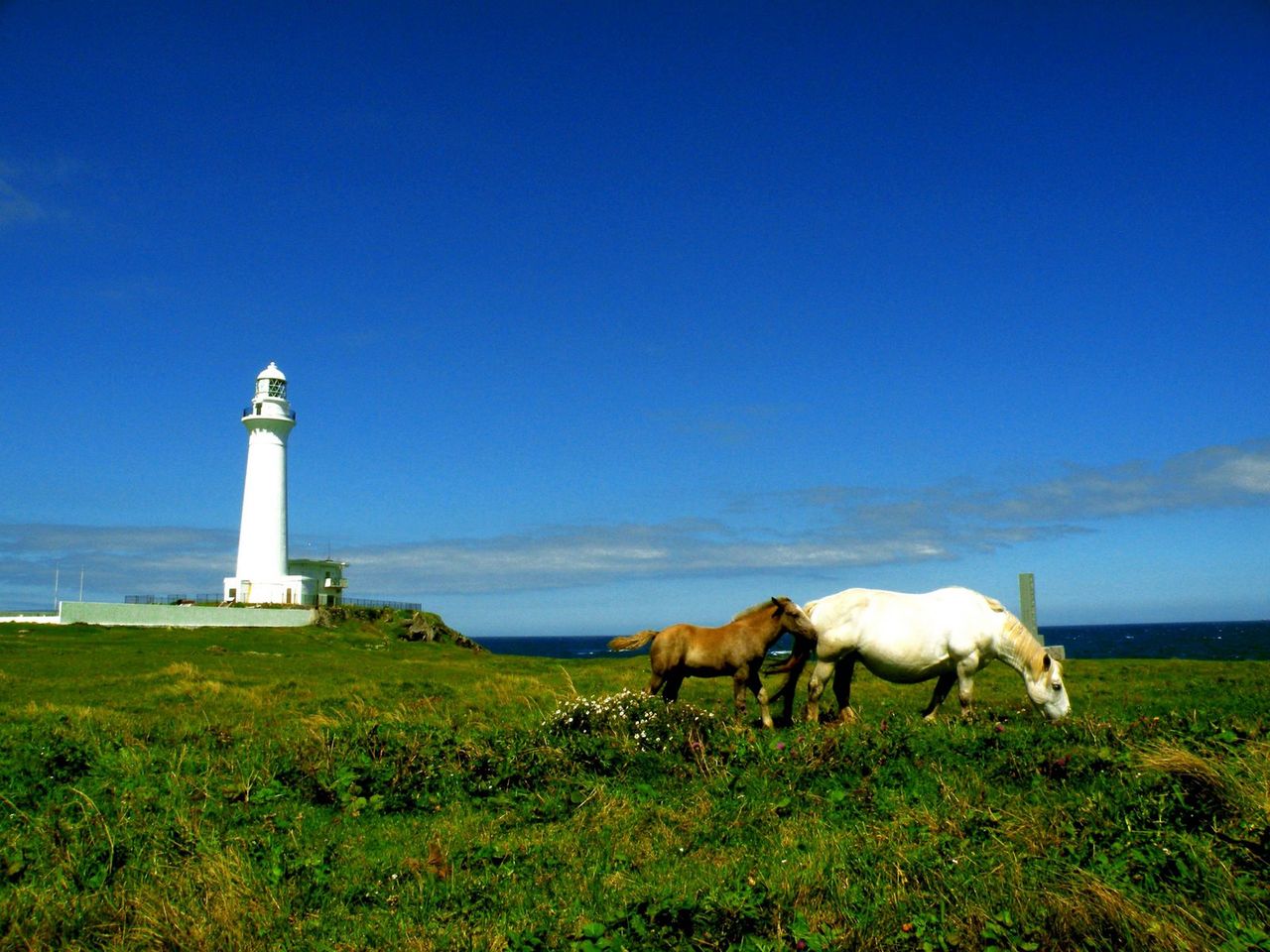
At the very tip of the Shimokita Peninsula — Japan’s axe-shaped geographic landmark jutting dramatically into the Pacific — Cape Shiriyazaki stands as one of Tohoku’s most extraordinary and least-visited destinations. Here, wild horses roam freely around an elegant lighthouse, crashing waves sculpt the rugged coastline, and you’ll feel the genuine sensation of standing at the edge of Japan. If you’re looking for a place that feels completely removed from the tourist circuit, where the landscape is raw, the air is salt-sharp, and the wildlife is utterly captivating, Cape Shiriyazaki and the Shimokita Peninsula belong on your Japan itinerary.
Why Cape Shiriyazaki Should Be on Every Japan Itinerary
Most visitors to Japan follow a well-worn path: Tokyo, Kyoto, Nara, maybe Hiroshima. Even the adventurous ones who venture to Tohoku typically stop at Matsushima, Aomori’s Nebuta Festival, or Hirosaki Castle. But the Shimokita Peninsula — and especially its far northeastern tip at Cape Shiriyazaki — remains gloriously off the radar for international travelers, even as it draws Japanese visitors who regard it as something genuinely special.
What makes Cape Shiriyazaki unique is the combination of elements that you simply won’t find together anywhere else in Japan. The Kandachime horses — a semi-wild breed that has roamed this windswept cape for centuries — wander freely around the historic lighthouse and along the clifftops, entirely unconcerned by human visitors. You can walk within meters of these stocky, hardy horses as they graze on the salt-grass, and the experience is both surreal and deeply moving. In winter, when snow blankets the cape and the horses stand stoically against the cold Pacific wind, the scene looks like something from a mythological painting.
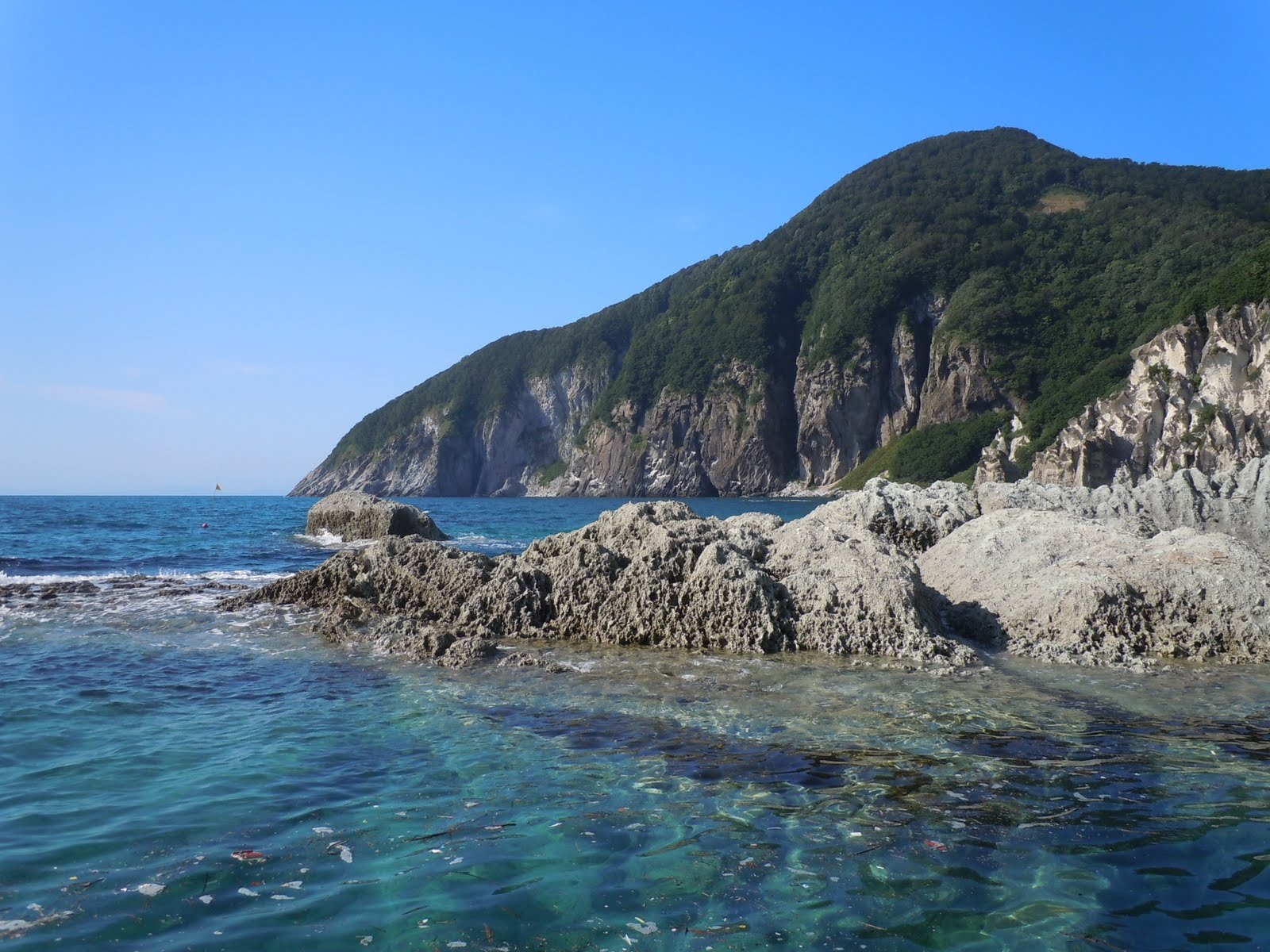
Beyond the horses and lighthouse, the Shimokita Peninsula offers an entire landscape of dramatic contrasts: the eerie sacred caldera lake of Osorezan (already covered in our dedicated guide), the otherworldly sea-stack coast at Hotokegaura, quiet fishing villages where you can eat some of the freshest seafood of your life, and forested mountains that few hikers ever explore. This is Japan at its most elemental — beautiful, slightly severe, and entirely authentic.
Getting to the Shimokita Peninsula from Tokyo
The Shimokita Peninsula is genuinely remote, which is part of its appeal — but reaching it requires some planning. Here are your main options:
- Shinkansen + Limited Express: Take the Tohoku Shinkansen from Tokyo to Hachinohe (about 3 hours, approximately ¥13,000 / $90 one way with JR Pass). From Hachinohe, board the Shimokita Express (Ōminato Line) to Shimokita Station (about 1.5 hours, ¥1,500 / $10). From Shimokita Station, you’ll need a rental car or taxi to reach the cape.
- Shinkansen to Shin-Aomori + Local Train: Alternatively, take the shinkansen to Shin-Aomori (3 hours from Tokyo), then the limited express Shimokita to Ōminato/Shimokita area (about 2.5 hours). This route gives you more options but takes longer.
- Night Bus: Highway buses run overnight from Tokyo to Mutsu City (the main city on the peninsula) for around ¥6,000–¥9,000 / $40–$60, arriving in the morning — a good budget option.
- Rental Car from Hachinohe or Shin-Aomori: Highly recommended once you’re in the region. The peninsula’s highlights are spread out, and a car gives you the freedom to stop at viewpoints along the dramatic coastal roads. Budget around ¥5,000–¥8,000 / $35–$55 per day for a compact car.
- Ferry from Aomori City: A scenic and fun option — take the Tsugaru Kaikyo Ferry from Aomori City to Ōma (about 1.5 hours, ¥1,600 / $11), landing on the northern tip of the peninsula. From Ōma it’s about 40 minutes by car to Cape Shiriyazaki.
JR Pass validity: The Tohoku Shinkansen is fully covered by the JR Pass. The Ōminato Line to Shimokita Station is also JR-operated and covered. However, buses and ferries on the peninsula itself are not included.
Important note: Public transportation within the peninsula is very limited. If you don’t rent a car, you’ll need to rely on taxis or infrequent local buses. We strongly recommend renting a car — it transforms this trip from difficult to magical.
The Kandachime Horses of Cape Shiriyazaki
The undisputed star attraction of Cape Shiriyazaki is the Kandachime (寒立馬) — a breed of semi-wild horse whose name translates roughly as “standing in the cold.” These stocky, muscular horses are a designated cultural asset of Aomori Prefecture, and the small herd of about 30–40 animals has roamed this cape for centuries, originally bred as workhorses for local farming and transportation.
What makes them extraordinary is how they live: entirely free-range on the cape, with no fences or enclosures separating them from visitors. They roam the clifftops, graze around the lighthouse base, and occasionally wander down to the shoreline. In the warmer months (roughly April through November), you can walk remarkably close to them — they’re accustomed to people and largely unbothered by cameras or admiring gazes. The recommended approach is slow, calm movement: don’t rush toward them, don’t make sudden movements, and never try to touch or feed them. Respect this rule and you’ll have one of the most magical wildlife encounters of your Japan trip.
Winter is arguably the most dramatic time to see the Kandachime. From December through February, the cape is often snow-covered, and the horses\ shaggy winter coats and calm, stoic presence against the white landscape create images that feel almost mythological. The horses are genuinely cold-adapted: they forage through snow and stand unfazed in temperatures that drive most visitors back to their heated cars. If you’re visiting in winter, dress in your warmest layers — the cape is exposed to strong Pacific winds and temperatures regularly drop below freezing (around 25°F / -4°C on cold days).
The best time to photograph the horses is early morning (7–9am) when the light is soft and the cape is often quiet before tour buses arrive from Mutsu City. The lighthouse provides a perfect compositional backdrop, and on clear mornings you can see across the water to the distant shores of Hokkaido.
Shiriyazaki Lighthouse: Japan’s Oldest Brick Lighthouse
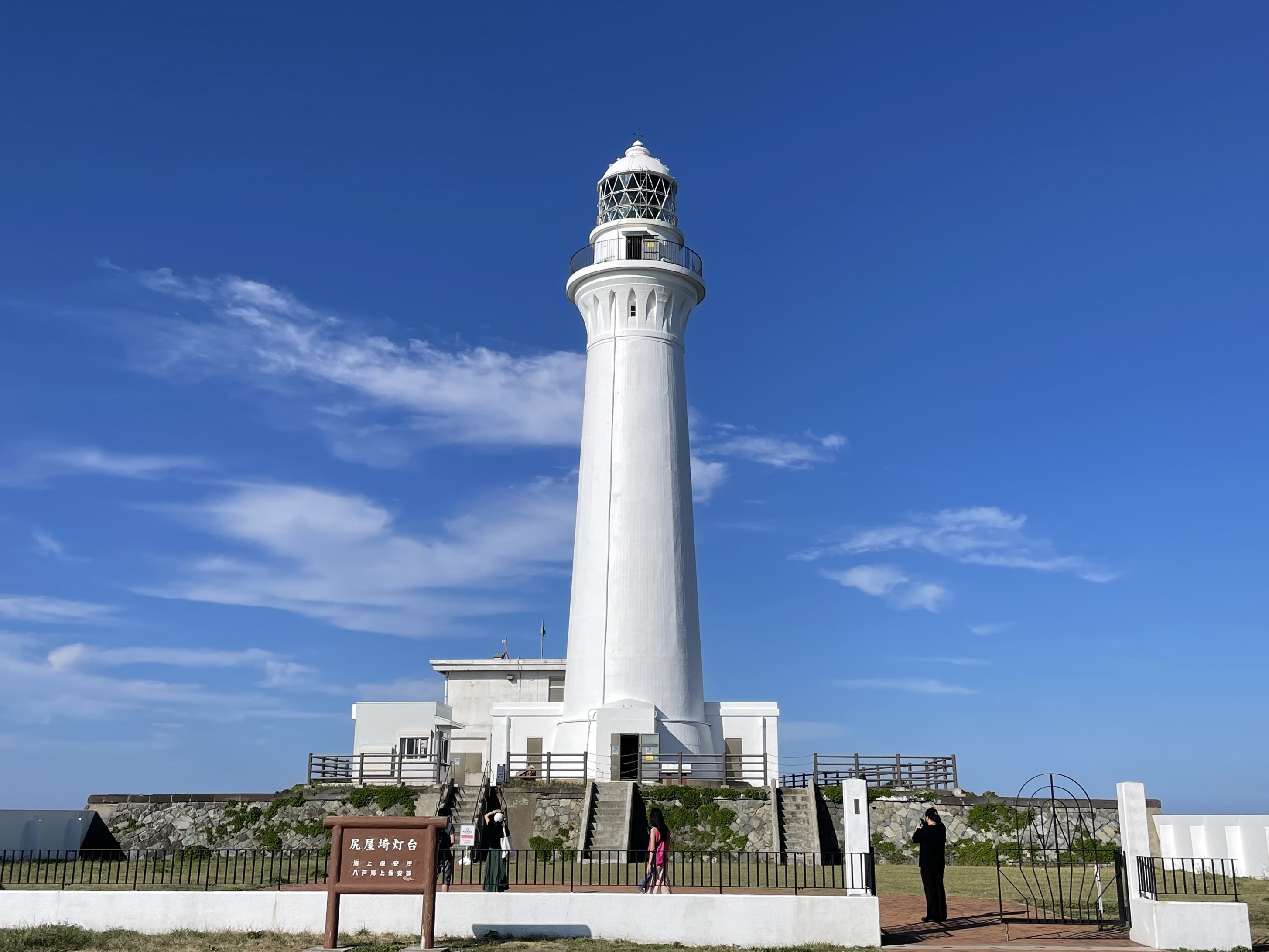
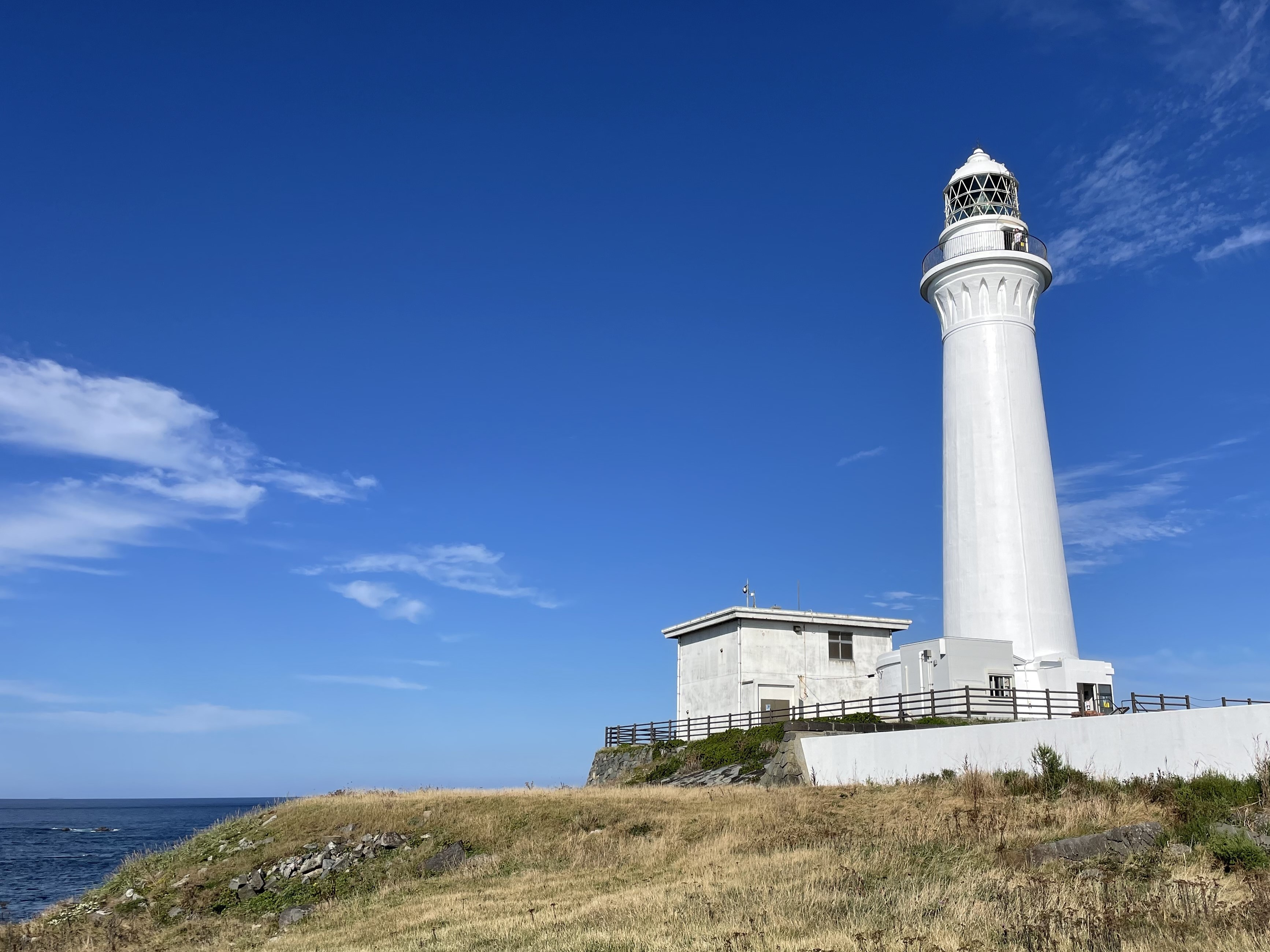
The elegant white lighthouse at Cape Shiriyazaki is no mere scenic prop — it’s a piece of Japanese history. Built in 1876 and officially designated as a heritage structure, it was one of the first Western-style lighthouses constructed in Japan during the Meiji era, when the new government was rapidly modernizing the country’s maritime infrastructure. The lighthouse design was supervised by British engineer Richard Henry Brunton, who constructed dozens of lighthouses around Japan’s coastline in the 1870s, earning the nickname “Father of Japanese Lighthouses.”
Standing 33 meters (108 feet) tall, the lighthouse has guided ships through the notoriously dangerous waters of the Tsugaru Strait for nearly 150 years. The strait between Honshu and Hokkaido sees some of the strongest currents and most treacherous weather in Japan, and the Shiriyazaki light has warned countless vessels away from the rocky cape. Today, the lighthouse is still operational — you can see it flashing every 15 seconds on clear nights.
The lighthouse itself is not open for interior visits, but the surrounding grounds are accessible and make for wonderful photography. The combination of the white tower, the grazing horses, and the rugged coastal backdrop creates images that are genuinely unlike anything else in Japan. Arrive at golden hour (about 30 minutes before sunset) for the most dramatic light on the tower and the horses — this is hands-down one of the best photography spots in Tohoku.
Hotokegaura: The Buddha Coast
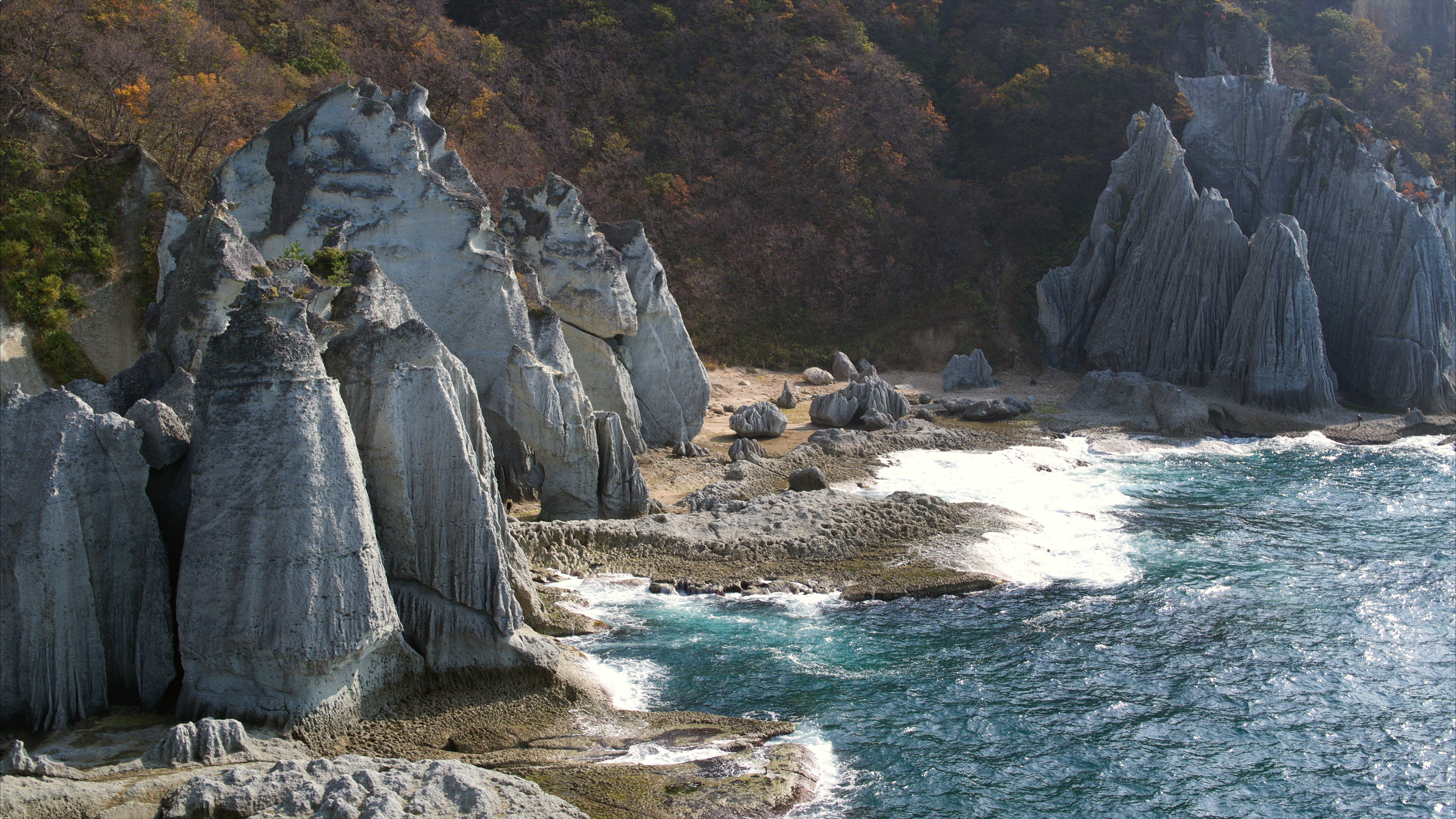
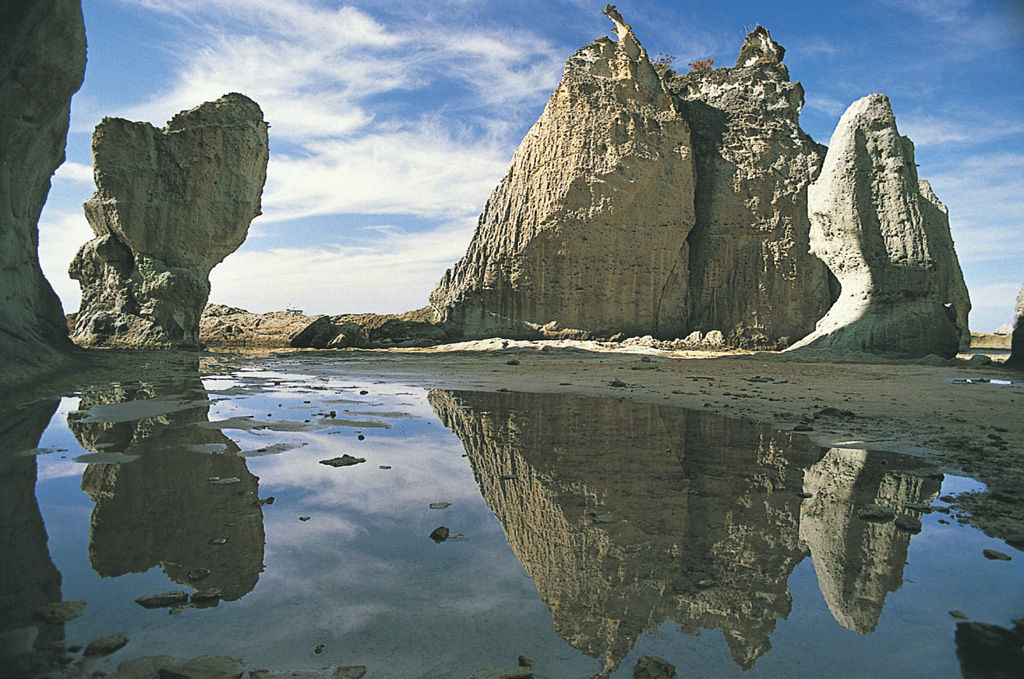
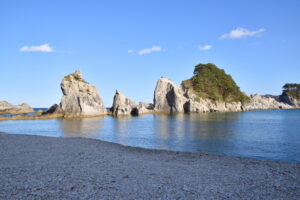
About 40 kilometers (25 miles) south of Cape Shiriyazaki along the western coast of the peninsula lies Hotokegaura — perhaps the most breathtaking scenery on the entire Shimokita Peninsula, and one of the most spectacular coastal landscapes in Japan. The name means “Buddha Coast” or “Beach of Buddhas,” and once you see it, the name makes perfect sense: the towering white sea stacks rising from the emerald water look uncannily like a congregation of robed figures standing in meditation.
These formations were created over millions of years by wave erosion carving through the peninsula’s volcanic rock, resulting in columns, arches, and pinnacles reaching up to 100 meters (330 feet) high. The scale is genuinely staggering — standing on the boat as you cruise past, you feel miniaturized. The color contrast between the white rock, the deep blue-green water, and the dark pine forests above creates a visual impact that photographs struggle to capture adequately.
The best way to see Hotokegaura is by boat. Sightseeing cruises depart from Wakinosawa Port (accessible by road from Mutsu City, or by ferry from Aomori) and take about 60 minutes to tour the coastline. The boats get close enough to the rock formations that you can appreciate their true scale. Cruise cost: approximately ¥1,500 / $10 per person. Departures are typically every 1–2 hours during the day, with seasonal variations. Check current schedules locally as operations can be weather-dependent.
Alternatively, a hiking trail follows the clifftop above Hotokegaura, giving views down onto the formations from above. This 2km (1.2 mile) trail offers a completely different perspective and is particularly rewarding in early morning or late afternoon when shadows bring out the texture of the rock columns. The trail is well-maintained but requires solid footwear — sections near the cliff edge can be slippery when wet.
Osorezan: The Mountain Between Life and Death
No guide to the Shimokita Peninsula would be complete without mentioning Osorezan (Mount Osore), one of the most spiritually significant — and visually arresting — places in Japan. Located at the peninsula’s caldera lake, Osorezan is regarded as one of Japan’s three most sacred mountains (alongside Koya-san in Wakayama and Hiei-zan near Kyoto) and as a gateway to the afterlife in Buddhist belief.
The landscape is genuinely otherworldly: sulfurous hot springs bubble and steam around Lake Usoriyama, volcanic rock formations in shades of yellow and gray cover the hillsides, the air smells of rotten eggs, and small jizo (stone Buddhist figures) in red bibs line the paths — placed by parents mourning deceased children. Walking through Osorezan is an experience that stays with you. Despite being deeply macabre in concept, the mountain has a strange, haunting peace about it.
The main temples and the lake are accessible year-round (except December–April when the road is closed due to snow), and there is a full hot spring facility on-site where you can bathe in the sulfurous waters. In late July, the famous Itako Matsuri festival is held here — blind female mediums called itako perform rituals to communicate with deceased relatives on behalf of grieving families. This is one of the most extraordinary and culturally unique events in all of Japan. (We have a dedicated detailed guide to Osorezan separately on this site.)
Osorezan is approximately 20km (12 miles) from Mutsu City and is easily combined with a Shimokita Peninsula day trip or as part of a two-day itinerary.
Ōma and the Tuna of the Northern Cape
At the very northern tip of the Shimokita Peninsula, the small fishing town of Ōma is famous throughout Japan for one thing: its maguro (bluefin tuna). Ōma tuna are considered some of the finest in Japan, prized for their high fat content, clean flavor, and the traditional hand-line fishing method that avoids bruising the flesh. When a large Ōma tuna is sold at the first Tsukiji/Toyosu auction of the New Year, the price regularly makes headlines — in some years, a single fish has sold for tens of millions of yen.
For visitors, Ōma offers a rare chance to eat genuine top-quality bluefin tuna in the town where it was caught, at a fraction of Tokyo prices. Local restaurants along the main street (look for the tuna illustrations on signboards) serve fresh tuna sashimi, tuna don (rice bowl), and tuna nabe (hot pot) in season (tuna season peaks October through January). A generous tuna don costs around ¥2,500–¥4,000 / $17–$27 — remarkable value for what you’re eating.
Ōma is also the departure point for the Tsugaru Kaikyo Ferry to Hakodate in Hokkaido (approximately 1 hour 40 minutes, ¥2,200 / $15 per person). If you’re combining a Shimokita visit with Hokkaido exploration, this is an excellent and scenic route that avoids backtracking to Shin-Aomori for the shinkansen.
Best Time to Visit the Shimokita Peninsula
- Spring (April–May): The cape emerges from its winter snow cover, and the Kandachime foals are born — typically in April and May. Seeing the mares with their small, wobbly foals against the lighthouse backdrop is exceptionally endearing. Mountain roads reopen as snow melts. Wildflowers bloom across the clifftops.
- Summer (June–August): The most accessible season. All roads open, boat tours run regularly at Hotokegaura, and the weather (15–25°C / 59–77°F) is pleasant for hiking. July brings the famous Itako Festival at Osorezan. Daylight is long, giving ample time for golden-hour photography at the lighthouse.
- Autumn (September–November): Perhaps the most beautiful season overall. The forests blaze with autumn foliage (usually peaking mid-October), the ocean turns deep blue-gray, and the Kandachime horses begin growing their thick winter coats. The tuna fishing peaks in autumn and you’ll eat spectacularly well. Fewer tourists than summer.
- Winter (December–February): The most dramatic and atmospheric season for the horses, who stand stoically in snow and ice. Many facilities close and roads can be difficult or impassable. If you visit in winter, come prepared with appropriate clothing and a good car with winter tires (mandatory). The reward is an experience of raw, elemental beauty that very few visitors ever witness.
Where to Eat: Shimokita Peninsula Food Guide
The Shimokita Peninsula may be remote, but eating here is genuinely excellent — fresh seafood sourced directly from the cold, nutrient-rich Pacific waters, plus local mountain vegetables and hearty warming dishes that make sense in this rugged climate.
Ōma Tuna (Ōma Town)
Multiple restaurants along Ōma’s main street serve fresh bluefin tuna from October through January. Look for Nagamine Shokudo (長嶺食堂) or Ohama-ya for reliable tuna don and sashimi sets. Budget ¥2,000–¥4,000 / $14–$27. Reservations not usually needed except in peak season.
Uni (Sea Urchin) and Abalone
The cold Pacific waters of the Shimokita Peninsula produce exceptional sea urchin (uni) and abalone (awabi). Mutsu City’s fish market area has several seafood restaurants where you can eat these locally-sourced delicacies. A uni don (sea urchin rice bowl) in Mutsu runs about ¥3,000–¥5,000 / $20–$34. June through August is peak uni season.
Jappa-jiru (Fish Offal Soup)
This local Aomori specialty soup made with fish offal (typically cod liver, intestines, and roe) in a miso base sounds more challenging than it tastes — it’s deeply savory, warming, and utterly addictive on cold days. Available at many traditional restaurants in Mutsu City for around ¥600–¥900 / $4–$6. A genuine local dish that most tourists never discover.
Beninishiki Apples
Aomori produces approximately 50% of Japan’s apples, and the Shimokita Peninsula has its own local varieties. Farm stands along rural roads sell fresh apples in season (August through November) — pick up a bag for the road for ¥300–¥500 / $2–$4.
Where to Stay
Budget (Under ¥8,000 / $55 per night)
Options are limited at the budget end on the peninsula. Mutsu Youth Hostel offers simple accommodation in Mutsu City for around ¥3,500–¥4,500 / $24–$30 per person per night. It’s clean, well-located for exploring the peninsula by rental car, and the staff are helpful with local recommendations. Book ahead as it’s a small property with limited beds.
Mid-Range (¥8,000–¥20,000 / $55–$135)
Hotel Grand Mutsu in Mutsu City is the most comfortable mid-range option, with Western and Japanese-style rooms, a restaurant serving local seafood, and a friendly front desk that can help arrange car rentals and local excursions. Rates from approximately ¥9,000–¥15,000 / $60–$100 per night. Alternatively, several minshuku (family-run guesthouses) in Ōma town offer authentic local hospitality and fresh tuna for dinner — ask at the Mutsu tourist information center for current recommendations.
Luxury (¥20,000+ / $135+)
The most atmospheric high-end experience on the peninsula is Shimokita Hanare or a traditional ryokan in the Wakinosawa area, where you can combine natural hot spring baths with views of the coastline and multi-course kaiseki dinners featuring the peninsula’s finest seafood. Rates from ¥25,000–¥45,000 / $170–$310 per person including dinner and breakfast. Book well in advance, especially for summer weekends.
Practical Tips for Visiting Cape Shiriyazaki and the Shimokita Peninsula
- Rent a car: This is the single most important piece of advice. Without a car, you can’t efficiently see Cape Shiriyazaki, Hotokegaura, Osorezan, and Ōma in a sensible sequence. Hachinohe or Shin-Aomori are the most convenient pickup points.
- Allow at least 2 nights: The peninsula is larger than it looks on a map. Cape Shiriyazaki alone justifies a full afternoon, Hotokegaura needs a half-day, and Osorezan deserves at least 2–3 hours. A two-night stay in Mutsu gives you enough time to do justice to the main highlights.
- Cape Shiriyazaki access hours: The road into the cape is gated and has seasonal operating hours — typically 7am to 6pm in summer (check the current year’s schedule at the Mutsu City tourist office or online). The entry is free, but the gate closes promptly. Don’t get locked in!
- Horse etiquette: Never approach the Kandachime from behind, never run toward them, never try to feed them human food, and keep children close. These are genuinely wild animals — respectful distance is both safer and results in better photographs.
- Weather can change rapidly: Even in summer, the cape is exposed to strong winds and sea fog can roll in quickly. Bring a windproof layer regardless of the forecast. In autumn and winter, proper waterproof and insulated clothing is essential.
- Limited convenience stores: There’s a 7-Eleven in Mutsu City but options thin out significantly further north. Stock up on food and drinks before heading to the cape or Ōma.
- Book the Hotokegaura boat tour in advance: In peak summer season (July–August), the sightseeing boat can fill up. Check availability and reservations through the Wakinosawa Marine House or local tourist offices.
- Itako Festival timing: If you want to witness the Itako spirit-communication ceremonies at Osorezan, they occur in late July (usually July 20–24) and mid-August (August 9–11). These dates attract significantly more visitors, so book accommodation early.
- Mobile reception: Coverage is patchy in rural areas of the peninsula. Download offline maps (Google Maps or Maps.me) before you leave Mutsu City.
- Tuna season: For the best Ōma tuna experience, visit between October and January. Outside this window, tuna is less abundant and restaurants may not have the freshest stock.
Sample 2-Day Shimokita Peninsula Itinerary
Day 1: The Northern Cape
8:00am — Pick up rental car from Hachinohe or Shin-Aomori. Drive north toward the peninsula (approximately 2–2.5 hours to Mutsu City). Stop at a convenience store to stock up.
11:00am — Check in at Mutsu City hotel. Drop bags and grab lunch at a local seafood restaurant (try the uni don if in season).
1:00pm — Drive to Cape Shiriyazaki (about 40 minutes from Mutsu). Enter the gate before closing time. Spend 2–3 hours with the Kandachime horses and exploring around the lighthouse. This is your golden-hour photography window — plan to be at the lighthouse as the light goes warm.
5:30pm — Drive back toward Mutsu City. Brief stop in Ōma for a tuna sashimi appetizer if hungry (October–January).
7:00pm — Dinner in Mutsu City. Ask your hotel for recommendations — many ryokan and hotel restaurants have excellent multi-course seafood menus.
Day 2: Hotokegaura and Osorezan
8:00am — Early breakfast and departure. Drive to Wakinosawa for the morning Hotokegaura boat tour (check departure times in advance).
9:30am — Hotokegaura boat tour (approximately 60 minutes). Walk the clifftop trail for alternative aerial views if time allows.
12:00pm — Lunch at a local restaurant in the Wakinosawa or Ōma area.
1:30pm — Drive to Osorezan (approximately 45 minutes from Wakinosawa). Spend 2–3 hours exploring the caldera lake, volcanic landscape, and temples.
4:30pm — Begin drive back toward Hachinohe or Shin-Aomori for shinkansen connection. If time allows, stop at a roadside hot spring for a restorative soak before the journey home.
Related Articles You Might Enjoy
- Tanesashi Coast & Kabushima Island, Aomori: Japan’s Most Dramatic Coastal Walk & Seabird Sanctuary
- Hachinohe, Aomori: Complete Guide to Japan’s Most Underrated Northern City
- Hirosaki City Guide: Apple Capital, Neputa Festival & Aomori’s Most Historic Castle Town
- Resort Shirakami Scenic Train Guide: Japan’s Most Beautiful Railway Journey Through Aomori
- Shirakami-Sanchi Beech Forest, Aomori & Akita: Complete Guide to Japan’s Ancient UNESCO Wilderness
Final Thoughts
Cape Shiriyazaki and the Shimokita Peninsula represent exactly what makes Tohoku so special for travelers willing to venture beyond the well-marked tourist trail. The combination of the wild Kandachime horses, the historic lighthouse, the mind-bending coastal scenery at Hotokegaura, and the spiritual gravity of Osorezan creates a travel experience that feels uniquely, authentically Japanese — and entirely unlike anywhere else you’ll visit in this country.
Yes, getting there requires more effort than jumping on a shinkansen to Kyoto. Yes, you really do need a rental car. But that effort is precisely what keeps the cape pristine, the horses undisturbed, and the whole experience feeling like a genuine discovery rather than a managed attraction. The travelers who make it to Cape Shiriyazaki almost universally describe it as one of the most memorable days of their Japan trip. We think you’ll feel the same.
Got questions about planning your Tohoku trip, or spotted something we missed? We’d love to hear from you — drop us a message here.

コメント