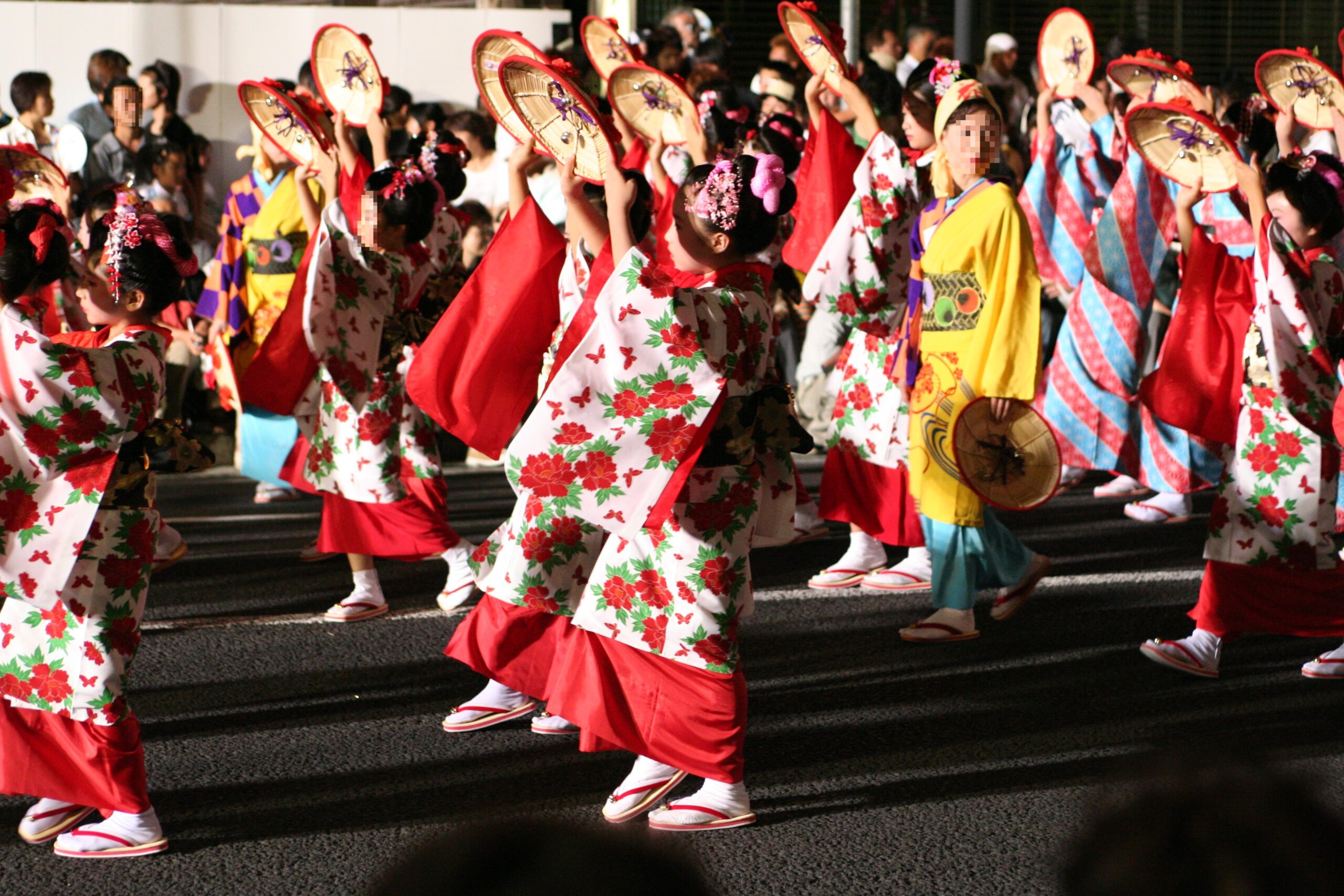
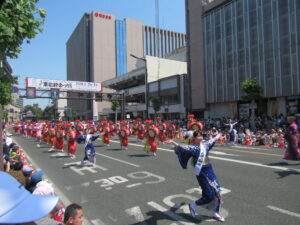
Picture 10,000 dancers flooding the streets of Yamagata City on a warm August evening, each one waving a flower-adorned straw hat overhead and chanting a hypnotic folk song in unison — the air thick with taiko drum beats, the street alive with color, and the entire city seemingly transformed into one vast, joyful dance floor. The Yamagata Hanagasa Festival (山形花笠まつり) is one of Tohoku’s Big Four summer festivals, alongside the Aomori Nebuta, Akita Kanto, and Sendai Tanabata — and yet it remains far less visited by international tourists than its famous siblings. That’s your advantage: at the Hanagasa Festival, you’re surrounded by Japanese people genuinely celebrating their own culture, without the tourist infrastructure (or crowds) that can sometimes flatten the experience at more famous events.
Why the Hanagasa Festival Should Be on Every Japan Itinerary
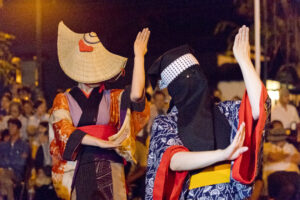
Japan has hundreds of summer festivals, and deciding which ones to prioritize is genuinely difficult. The Hanagasa Festival earns its place on any serious Tohoku itinerary for several reasons that set it apart. First, the sheer scale: over 10,000 participants on each of three consecutive evenings, with audiences lining a 1.2 km parade route through Yamagata’s city center. This is not a quaint village celebration — it’s a genuinely massive civic event that transforms the entire city. Second, the visual distinctiveness: the hanagasa (flower hat) dance, with its distinctive overhead swirling of large, safflower-decorated straw hats, looks like nothing else in Japanese festival culture. The movements are graceful and athletic, the costumes are vivid, and the overall effect — especially after dark, when the parade is lit by streetlights — is genuinely beautiful.
Third and most importantly, the Hanagasa Festival retains an authenticity that money and tourism marketing can’t manufacture. Local schools, companies, neighborhood associations, and civic groups each field their own dance troupe, spending months rehearsing their section of the parade. When a group of middle schoolers in full traditional costume dances past, cheered on by parents and grandparents lining the street, or when a company dance team in matching happi coats executes a perfectly synchronized flower-hat spin, you’re witnessing something real — community pride expressed through an ancient folk tradition. For American and Australian visitors used to thinking of Japan through the lens of Tokyo, Kyoto temples, and Instagram-friendly food, the Hanagasa Festival is a powerful reminder of how deep and lively Japanese regional culture really is.
Beyond the festival itself, Yamagata City is a rewarding destination in its own right: a castle town with excellent museums, surrounded by mountains that offer hot springs, skiing, and hiking, with some of Japan’s finest local food (Yamagata beef, Yonezawa ramen, imoni hot pot, the sweetest cherries in Japan). Visiting during festival week gives you the best of both worlds.
The History and Meaning of the Hanagasa Dance
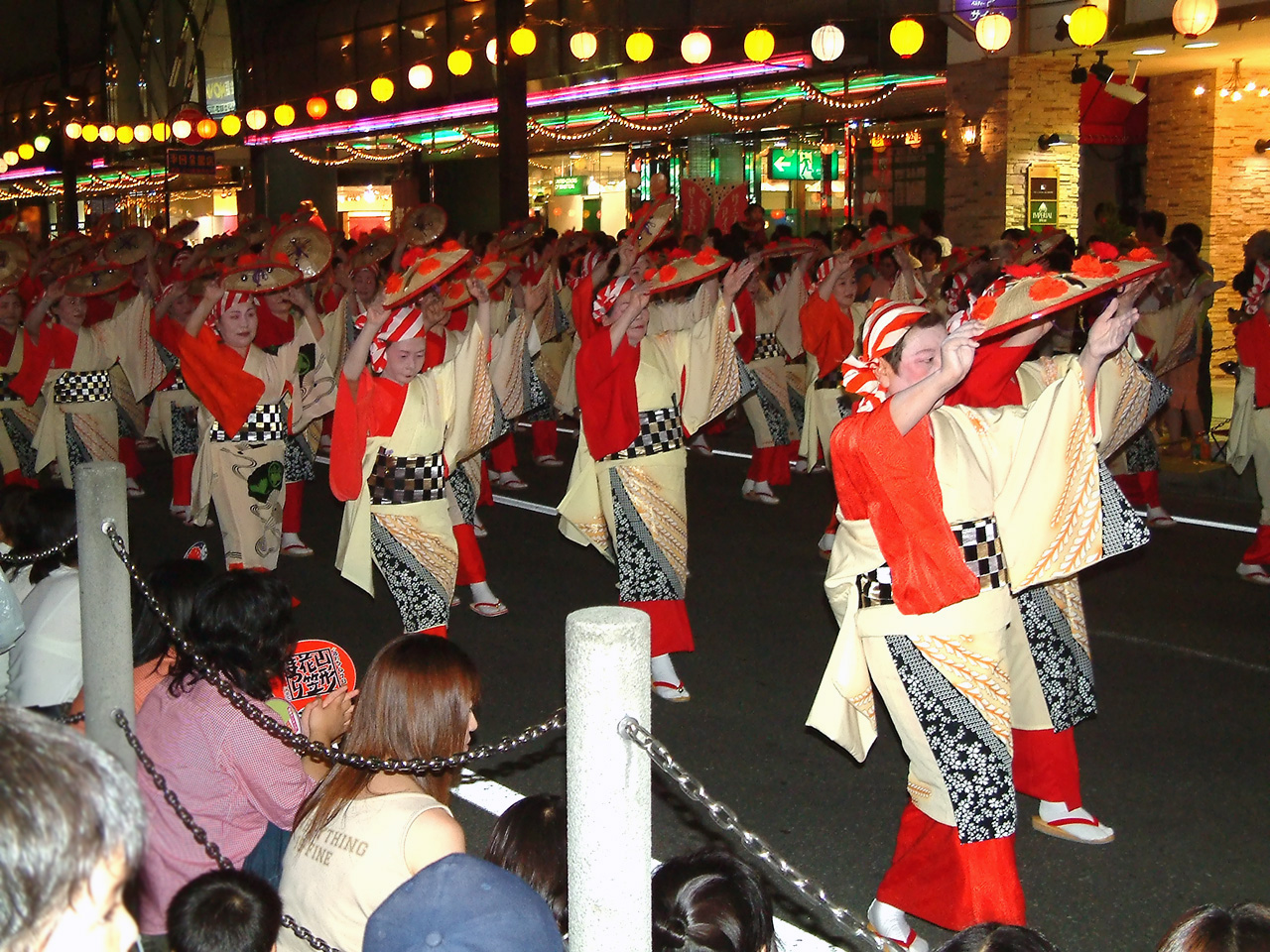
The Hanagasa dance originated in the Murayama district of Yamagata Prefecture, where it developed as a form of rice-planting song (taue-uta) and harvest celebration. The distinctive flower hats — large straw hats decorated with crimson and yellow artificial safflowers (benibana, the flower for which Yamagata was historically famous as Japan’s primary producing region) — evolved as both agricultural implements and ritual objects, used by farmers during the back-breaking labor of rice planting to provide shade and mark the rhythm of work songs.
The festival in its current organized form began in 1963, when Yamagata city launched the first formal Hanagasa Matsuri as a summer event to boost civic pride and attract visitors. The city chose three signature Hanagasa songs as the festival music — most famously the “Hanagasa Ondo” (花笠音頭), which opens with the jubilant cry “Yassho! Makasho!” — and standardized the dance movements enough to allow large groups to participate while still leaving room for individual troupe variations. Over the following decades, the festival grew steadily, and today it runs for three evenings from August 5th to 7th, attracting over 1 million spectators across the three nights.
The safflower (benibana) connection is significant for understanding Yamagata’s identity. For centuries, the Mogami River valley was Japan’s primary producer of safflower, used to make the precious red dye called beni that colored the lips and eyebrows of aristocratic women in the Heian period. Yamagata’s wealthy merchant families grew rich on the trade, and the flower became a regional symbol. Today you’ll see the crimson safflower motif everywhere in Yamagata — on ceramics, textiles, sake labels, and of course on every Hanagasa festival hat.
Getting There from Tokyo and Sendai
- From Tokyo by shinkansen: Take the JR Yamagata Shinkansen (Tsubasa service) from Tokyo Station directly to Yamagata Station. Journey time approximately 2 hours 40 minutes. Fares around ¥12,000–¥13,500 ($80–$90) one-way. The JR Pass covers this route.
- From Sendai by express bus: Regular highway buses run from Sendai Station’s east exit bus terminal to Yamagata Station in approximately 1 hour. Fares around ¥1,000–¥1,100 ($7) one-way. Very convenient for combining with a Sendai visit.
- From Sendai by train: The JR Senzan Line connects Sendai to Yamagata in approximately 1 hour 10 minutes, passing through a beautiful mountain valley. Fares around ¥1,170 ($8). Scenic but slower than the bus.
- From Tokyo by highway bus: Overnight buses depart from Tokyo’s Shinjuku expressway bus terminal, arriving in Yamagata after about 5.5 hours. Budget fares from ¥4,500 ($30) for advance bookings — ideal for arriving the morning of a festival day.
- By car: From Tokyo, approximately 4 hours via the Tohoku and Yamagata expressways. Parking in the city center during festival days is very difficult — use park-and-ride facilities on the city outskirts.
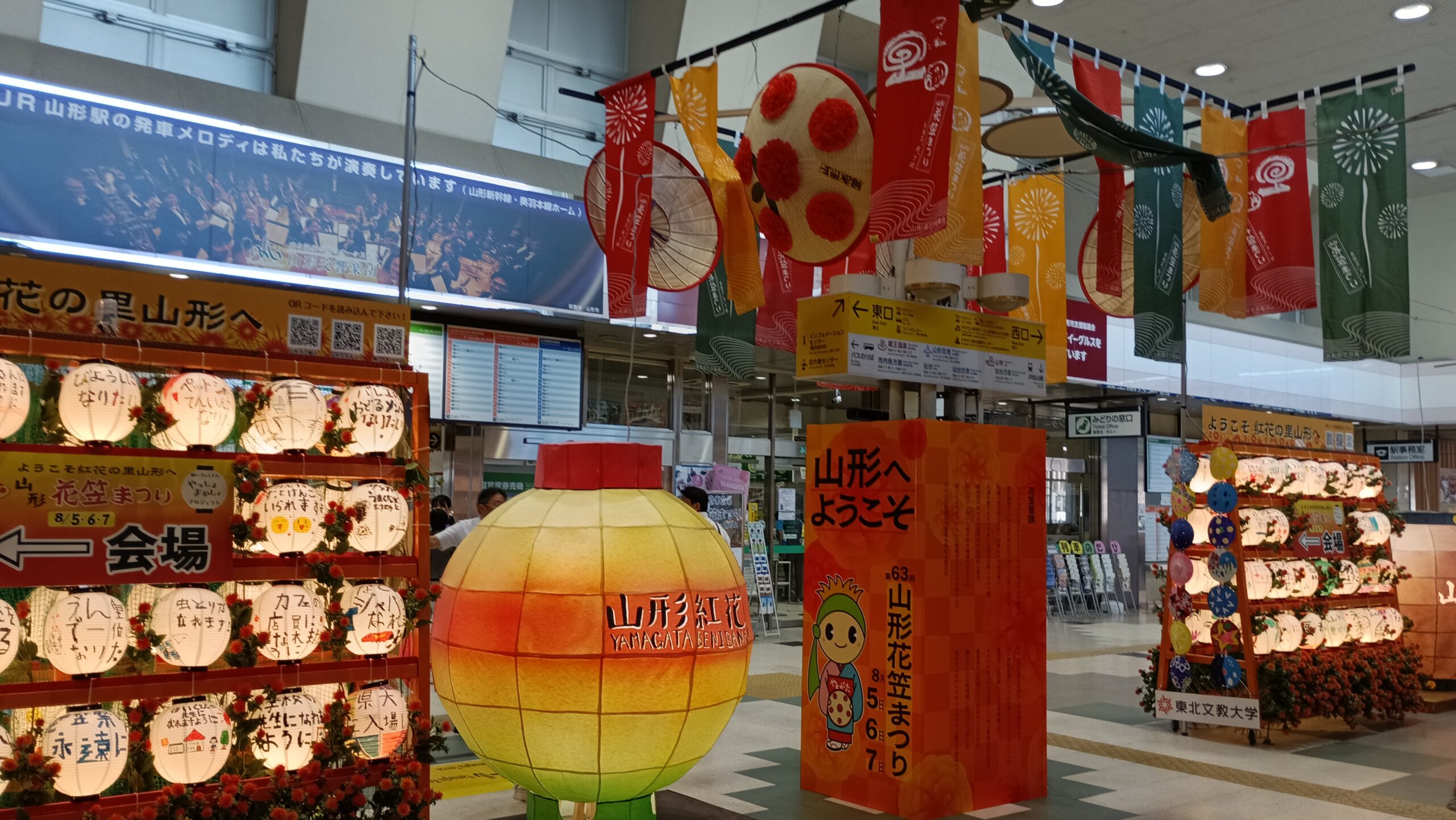
Important note for festival visitors: trains and buses from Sendai run extra services during festival evenings, but they fill up fast after the parade ends. Book return transportation in advance if possible, or plan to stay overnight in Yamagata.
The Festival in Detail: What to Expect
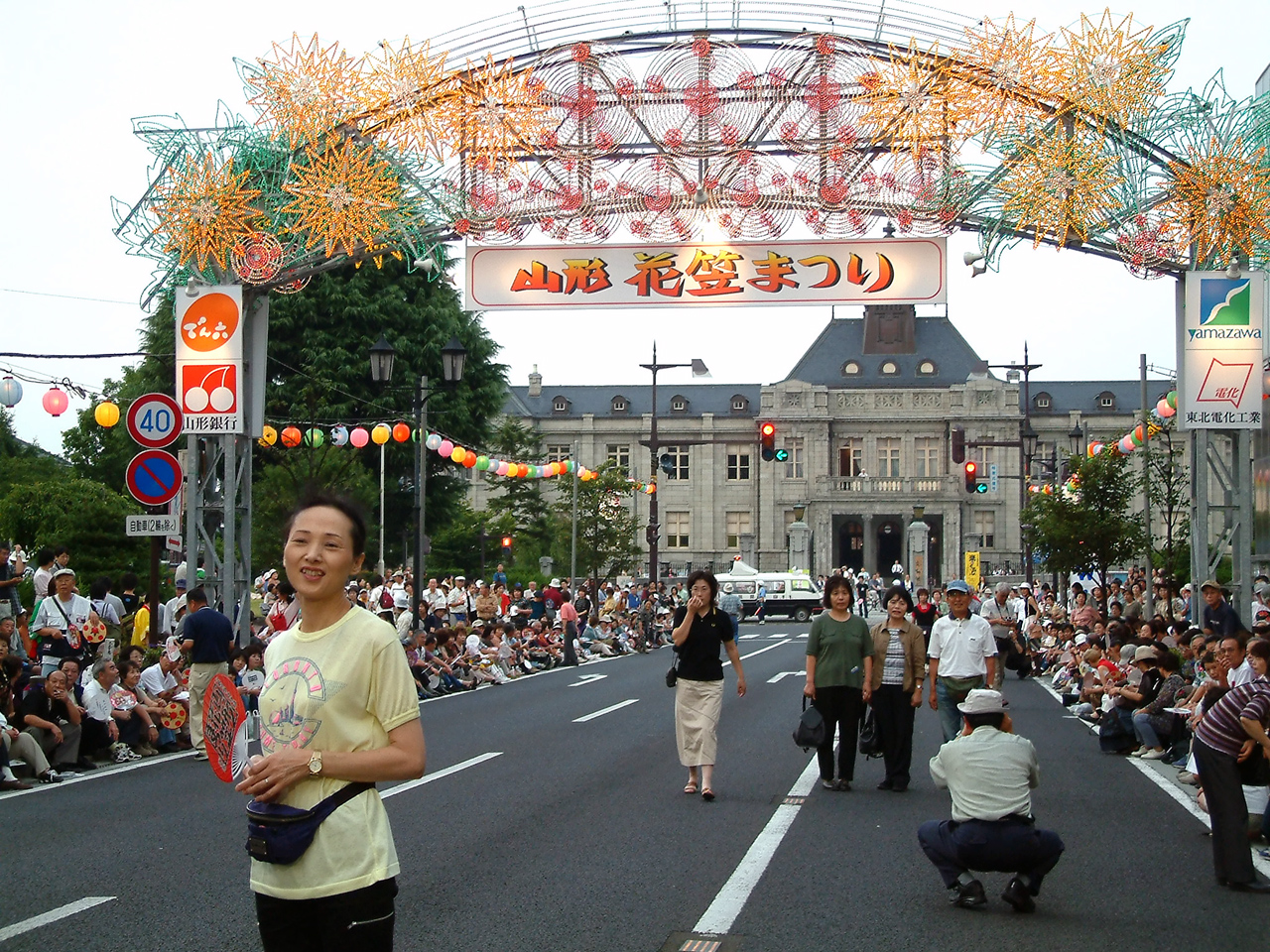
The Hanagasa Festival runs over three consecutive evenings from August 5th to 7th, with the parade starting around 6:00pm and finishing around 9:00pm each night. The parade route is a loop through Yamagata’s central streets, with the main viewing areas along Nandai-machi and Ekimae-odori (the wide boulevard leading to Yamagata Station). The route is lined with food stalls (yatai), grandstand seating areas (reserved in advance, ¥1,500–¥3,000 / $10–$20), and free standing areas where you can watch for nothing.
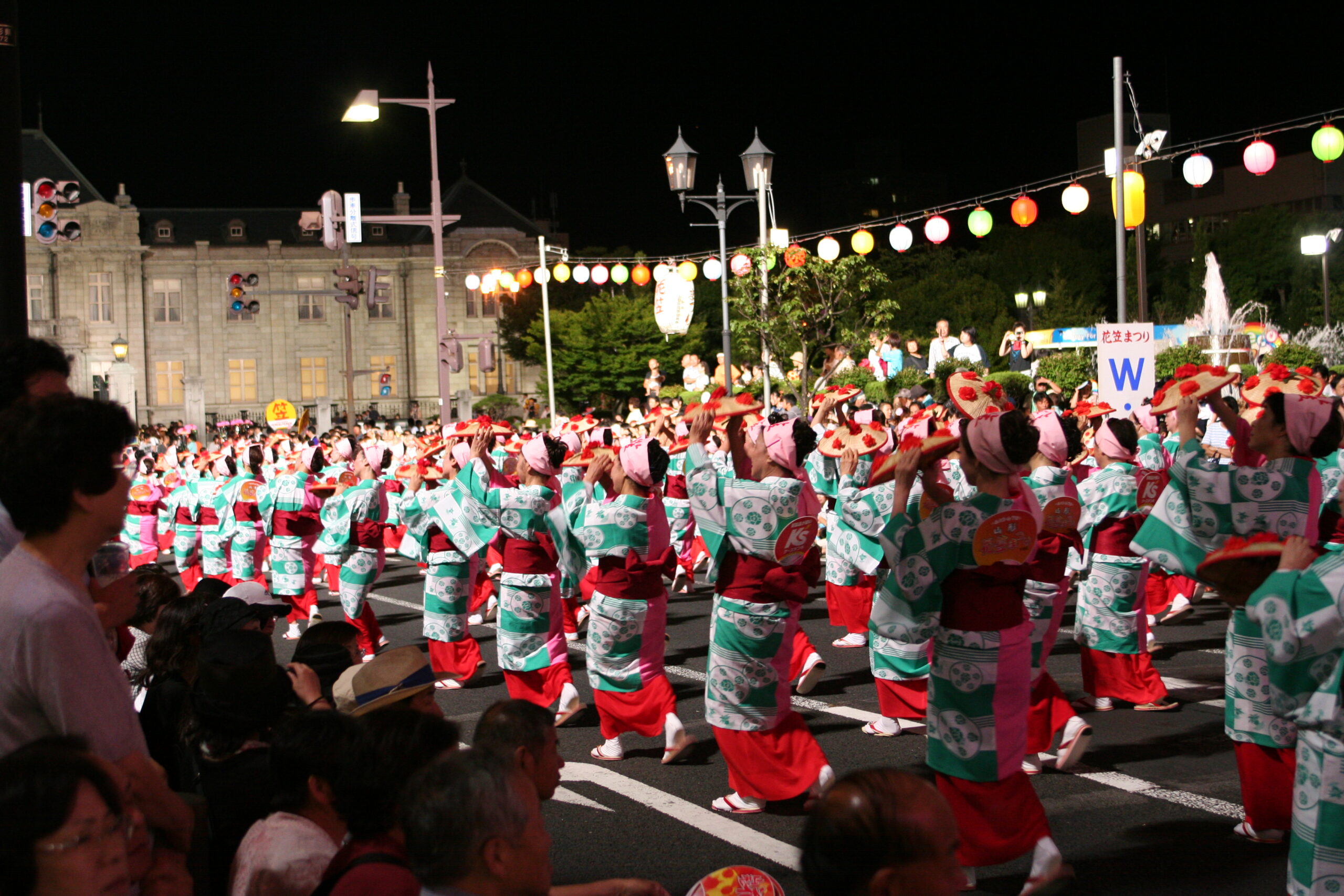
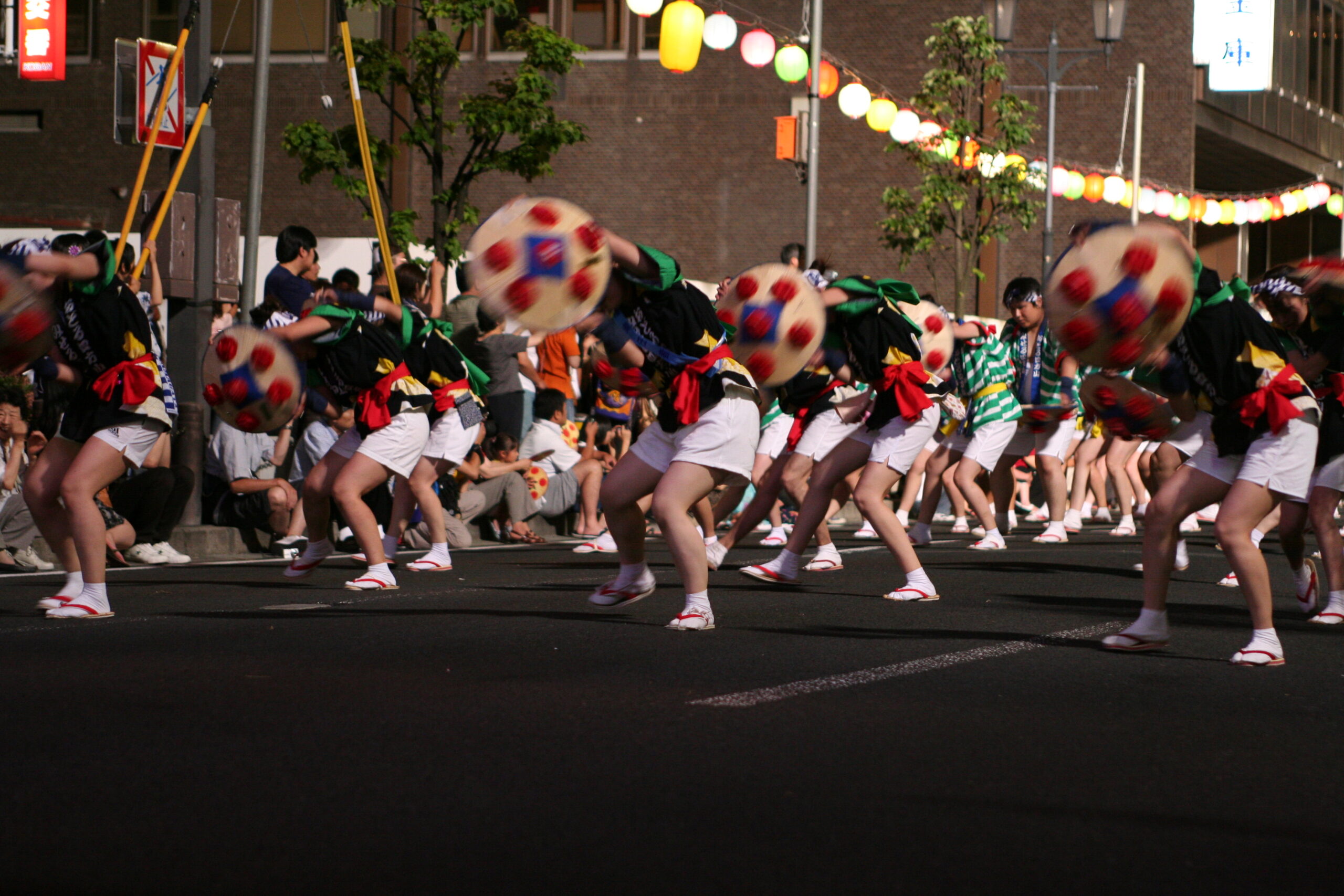
The parade is divided into groups, each representing a different school, company, or community organization. Each group dances to the same core Hanagasa songs (primarily the “Hanagasa Ondo” and its variations), but their costumes, formations, and dance variations differ. Some groups feature professionally trained dancers who’ve spent years perfecting the art; others are company teams who’ve been rehearsing since spring; still others are children’s groups who’ve clearly been coached by determined school teachers. The variety and energy make it impossible to get bored over three hours.
The signature movement of the Hanagasa dance is the yassho-makasho swing: dancers hold their large flower hats overhead and trace large circles through the air in sync with the song’s driving rhythm, while stepping in a semi-crouch along the parade route. The effect of hundreds of dancers doing this in unison, their flower hats arcing through the air like a field of flowers in wind, is genuinely mesmerizing. More athletic troupes add spins, kicks, and acrobatic variations. Traditional groups maintain the slower, more dignified pace of the original agricultural dance.
Participating in the Dance: Join the Hanagasa Yourself
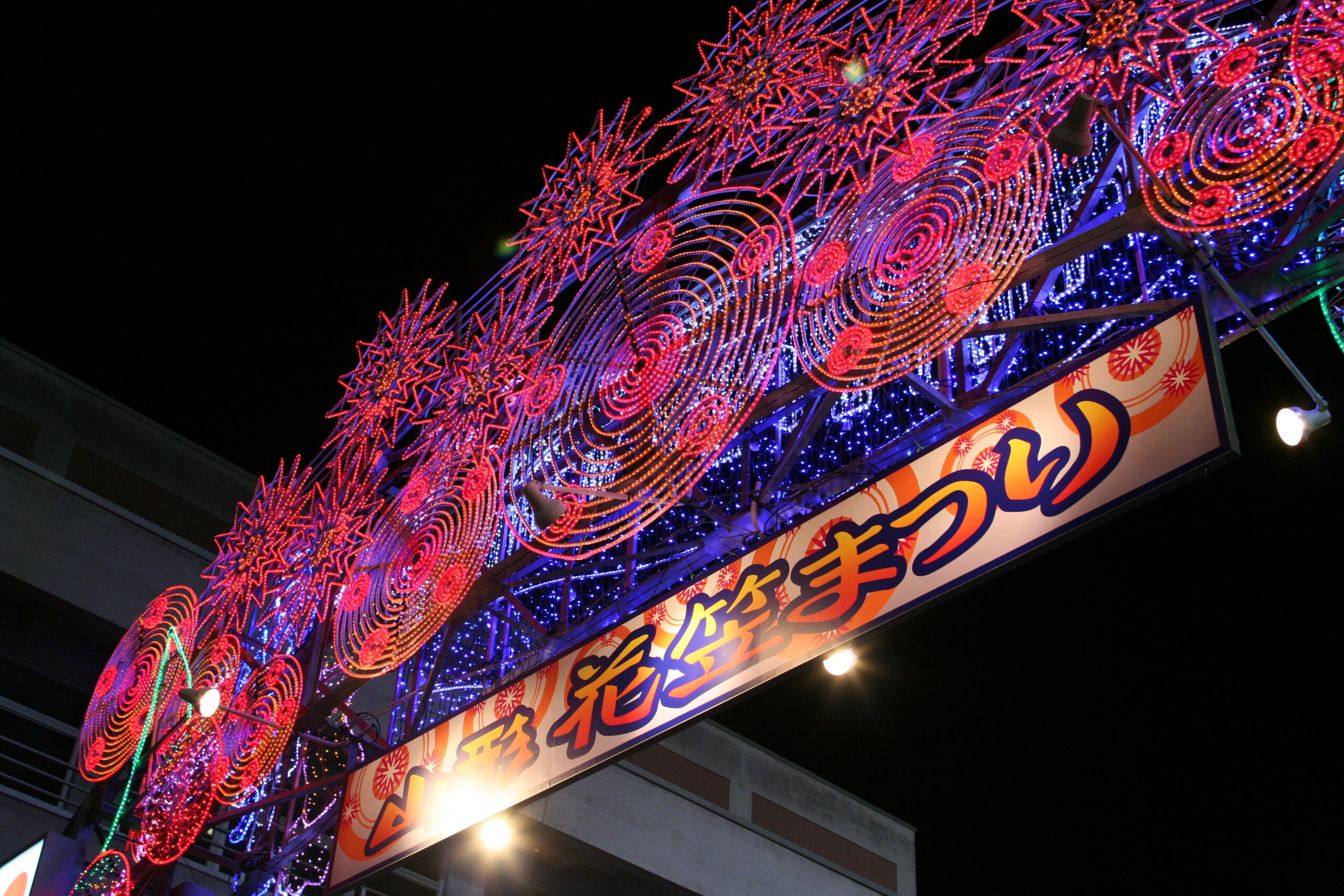
One of the great pleasures of the Hanagasa Festival for visitors — and something that distinguishes it from most other large Japanese festivals — is that you can actually join the parade. The city organizes a free participation program called Sanka Odori (参加踊り), where any visitor can learn the basic Hanagasa Ondo dance steps and join the final section of the parade. Flower hat rentals are available on-site for a nominal fee (typically ¥500/$3.50).
The participation program runs at a designated registration point near the parade route — look for the yellow signs or ask at the Yamagata City Tourism office near the station. Registration opens each festival evening around 4:30pm. Volunteer instructors teach the basic steps in 30–45 minutes, and participants then join the end of the parade procession, dancing the length of the route alongside hundreds of other visitors and local residents. It’s chaotic, joyful, and completely unlike anything you’ll experience at Kyoto’s Gion Festival or Tokyo’s Sumida fireworks — genuinely participatory rather than spectator-only.
Even if you choose not to participate, arriving early to watch the Sanka Odori registration area gives you a window into how the festival works: you’ll see volunteers coaching nervous foreign tourists and enthusiastic Japanese grannies with equal patience, and the atmosphere is festive and welcoming from the first moment.
Exploring Yamagata City Beyond the Festival
If you’re visiting for the festival, arrive at least a day early — Yamagata City rewards exploration. The city sits in the Yamagata Basin, ringed by mountains that include the sacred Zao volcano to the south and the pilgrimage mountains of Dewa Sanzan to the north. The city itself has a distinct character: a former castle town that prospered through the safflower and silk trades, with a well-preserved historic district and an unusually lively local arts and food culture.
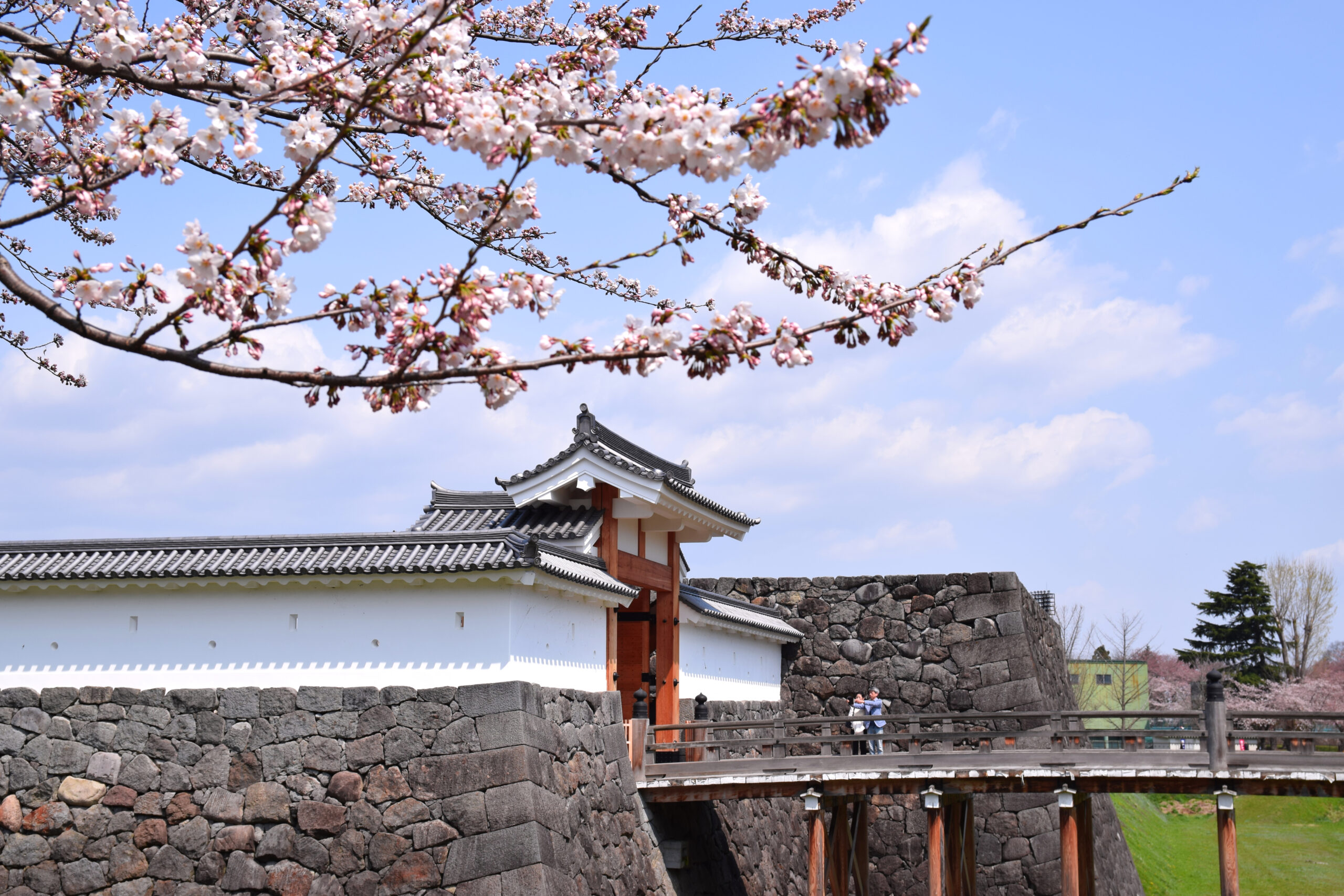
Kajo Park (霞城公園) — the site of Yamagata Castle — is a beautiful central park ringed by a moat and stone walls, with reconstructed castle towers open for climbing. The cherry blossom season (late April) is spectacular here, but in summer the park’s lawns are pleasant for picnics and evening strolls. During the Hanagasa Festival, the park often hosts pre-parade events and performances.
The Yamagata Museum of Art (山形美術館) has a surprisingly strong collection of European and Japanese modern art, and its café makes a pleasant escape from the summer heat. The Bunshokan (文翔館) — the former prefectural government building, an elegant early 20th-century Renaissance-revival building — is open for free exploration and serves as one of Yamagata’s most photogenic landmarks. The Kenbikan Crafts Center showcases Yamagata’s traditional crafts, including cast iron (Yamagata is famous for yamagata imono, iron casting), and is a good place to find quality souvenirs.
Best Time to Visit Yamagata City
- Spring (April–May): Cherry blossoms at Kajo Park (late April) are among Yamagata’s finest. The surrounding mountains are still snowy, making for dramatic contrasts. Average 8–18°C (46–64°F).
- Summer (June–August): Festival season peaks with the Hanagasa Matsuri (August 5–7). The city center is lively, outdoor events abound, and cherry picking in the surrounding countryside runs through July. Average 25–30°C (77–86°F) — bring a fan for the festival evenings.
- Autumn (September–November): Excellent for day trips to Yamadera temple and Zao’s colored-leaf season. The city itself is pleasant for walking. Average 8–22°C (46–72°F).
- Winter (December–February): Snow country — Zao Onsen ski resort is in full operation with its famous snow monsters (juhyo). The city is quiet but the surrounding mountains are magnificent. Average -3–5°C (27–41°F).
Where to Eat: Yamagata City Food Guide
Yamagata is one of Tohoku’s great food cities, with a local food culture that’s well-developed and deeply proud. Festival week is a wonderful time to eat your way through the city’s specialties, with dozens of food stalls augmenting the city’s regular restaurant scene.
Imoni (芋煮) — Yamagata’s Autumn Soul Food
While imoni (river-bank hot pot with taro root) is technically an autumn dish, you’ll find it served year-round at Yamagata restaurants. The classic Yamagata-style imoni features taro root, beef, konnyaku (konjac), and leeks in a soy-based broth — hearty, warming, and deeply satisfying. Look for restaurants near the Mamigasaki River that specialize in this dish. Budget around ¥800–¥1,500 ($5–$10) for a hearty bowl.
Yamagata Dashi (だし)
This uniquely Yamagata condiment — finely diced cucumbers, eggplant, okra, perilla, and ginger mixed with soy sauce — is served over rice or tofu and is one of the most refreshing things you can eat on a hot festival evening. Many izakaya (Japanese pubs) and casual restaurants serve it as a side dish; at festivals, look for yatai (stalls) serving it over rice. Utterly addictive and distinctly local.
Beef Tongue at Festival Yatai
Sendai is most famous for beef tongue (gyutan), but Yamagata’s festival stalls serve an excellent version, usually grilled over charcoal. During Hanagasa Matsuri, yatai lines on the side streets off the parade route are well worth exploring — you’ll find gyutan skewers, corn on the cob brushed with miso butter, yakisoba, takoyaki, and local variations unique to this region. Budget ¥500–¥1,000 ($3–$7) per stall item.
Yamagata Wine and Local Sake
Yamagata Prefecture is one of Japan’s best wine-producing regions, with a cool climate that suits varieties like Pinot Noir and Chardonnay. Several of the city’s wine bars and restaurants pour local bottles — try a glass of Takeda Winery or Denbee wines with local cheese and charcuterie. Yamagata sake is also outstanding; the city has several breweries, and many izakaya pour their local labels. Budget ¥600–¥900 ($4–$6) per glass.
Where to Stay During the Festival
Budget (Under ¥8,000 / $55 per night)
Several business hotels and guesthouses cluster around Yamagata Station within easy walking distance of the parade route. Toyoko Inn Yamagata offers reliable, clean rooms from around ¥6,000 ($40) — functional rather than atmospheric, but unbeatable for convenience during festival week. Book at least two months in advance for the August 5–7 festival dates.
Mid-Range (¥8,000–¥20,000 / $55–$135)
Hotel Metropolitan Yamagata is directly connected to Yamagata Station and offers comfortable rooms from around ¥10,000–¥15,000 ($68–$100) per night. Excellent location, solid breakfasts, and knowledgeable staff who can advise on festival viewing spots. The rooftop bar has views of the mountains. Dormy Inn Yamagata is another solid mid-range choice with an onsen bath on-site — a welcome luxury after hours of festival standing.
Luxury (¥20,000+ / $135+)
For a premium experience, consider staying at one of the Yamagata Onsen hotels — particularly those at the foot of Zao (about 30 minutes from the city by car). Tendo Onsen, a hot spring town 15 minutes north of the city by train, also has excellent ryokan from ¥25,000 ($170) per person including meals. Commute into the city for the festival evenings, then retreat to your onsen for the ultimate Tohoku combination.
Practical Tips for the Hanagasa Festival
- Book accommodation months ahead: Yamagata hotels fill up completely for the August 5–7 festival dates, sometimes by April. Check booking sites in spring, or consider staying in nearby Tendo Onsen or Kaminoyama Onsen and commuting in.
- Arrive by 5pm to claim a spot: The best free viewing spots along the parade route fill up by 5:30pm. Bring a small folding stool if you can, as you’ll be standing for 2–3 hours.
- Buy a reserved seat: Grandstand tickets (¥1,500–¥3,000 / $10–$20) go on sale months in advance through Yamagata City Tourism and ticket agencies. A reserved seat gives you a guaranteed view and a place to sit.
- The parade is 3 evenings — attend at least 2: Each evening’s parade is slightly different, as different troupes are highlighted, and the energy of the crowd builds differently. The final evening (August 7th) often has the most festive atmosphere.
- Heat preparation: August in Yamagata averages 28–31°C (82–88°F) with high humidity. Bring a hand fan, wear light breathable clothes, and stay hydrated. Convenience stores along the route stock cold drinks and cooling wrist bands.
- The “Yassho! Makasho!” chant: This is the call-and-response shout of the Hanagasa Ondo. By the end of your first evening, you’ll have it memorized — and once you do, you’ll find yourself shouting it along with the crowd without thinking about it.
- Photography tips: A telephoto lens or a phone with good low-light performance is ideal for capturing the parade. The best light for photos is the 6:30–7:30pm window before full dark, when the golden hour light catches the flower hats. After dark, the illuminated parade has a different but equally dramatic quality.
- Accessibility: The parade route has some designated accessible viewing areas. Contact Yamagata City Tourism in advance to confirm arrangements.
- Day trips from Yamagata: Use your Yamagata base to day-trip to Yamadera temple (the mountain of 1,000 steps, 20 minutes by train), Zao Onsen (45 minutes by bus, with spectacular crater lake), or the fruit farms of the surrounding valley for cherry or peach picking.
Sample 2-Day Yamagata Festival Itinerary
Day 1 — Arrive and Explore
Morning (arriving by 10am): Take the shinkansen from Tokyo or the morning bus from Sendai. Drop your bags at the hotel and head to Kajo Park (Yamagata Castle ruins) for a leisurely morning walk through the grounds. The reconstructed East Tower gives views over the city and surrounding mountains.
Afternoon (12pm–5pm): Lunch at a restaurant near the park — try a bowl of imoni or a gyutan set. Spend the afternoon exploring central Yamagata: the Bunshokan historic building (free entry), the Kenbikan crafts center, and the covered shopping arcades. If you’re interested in sake, the Nanyo region south of the city has excellent brewery tours (requires a car or taxi).
Evening (5pm–10pm): Head to the parade route by 5pm to claim your viewing spot. Grab dinner from the yatai food stalls before the parade starts at 6pm. Watch the full three-hour parade, chanting “Yassho! Makasho!” with the crowd as the flower hats spin overhead. After the parade, join the crowds streaming toward the station or stay for post-festival drinks at a nearby izakaya.
Day 2 — Day Trip and Second Parade Night
Morning (9am–12pm): Take the JR Senzan Line to Yamadera (20 minutes, ¥240 / $1.60). Climb the 1,015 stone steps to Risshakuji Temple — a truly magnificent mountain temple complex hewn into the cliff face, offering sweeping valley views from the top. Budget 2–3 hours for the round trip including the climb.
Afternoon (1pm–5pm): Return to Yamagata for lunch — this time try Yamagata dashi over rice at a specialty restaurant, or explore the city’s excellent wine bar scene for an afternoon glass of local Pinot Noir. Visit the Yamagata Museum of Art for an hour of cool, air-conditioned culture before preparing for the evening.
Evening (5pm–10pm): Return to the festival for evening two. This time, consider registering for the Sanka Odori participation dance — the instructors teach you the basic steps in 30 minutes and you’ll join the parade yourself, flower hat in hand, shouting “Yassho! Makasho!” alongside thousands of local residents. It’s terrifying, joyful, and completely unforgettable.
Final Thoughts
Of all Tohoku’s summer festivals, the Hanagasa Matsuri is perhaps the one that feels most alive to the spirit of the communities it comes from. When you watch a group of local elementary school students spin their flower hats with total concentration, their faces arranged in the expression of fierce focus that Japanese children bring to any performance, or when a troupe of retired farmers dances with a dignity and precision that speaks to decades of practice — you’re witnessing something that no amount of tourism marketing or destination branding can manufacture. You’re seeing a community express itself, joyfully and on its own terms, in a tradition handed down across generations.
Come for the spectacle, stay for the food, and leave with the “Yassho! Makasho!” chant echoing in your head for weeks. Yamagata’s festival will do that to you.
Related Articles You Might Enjoy
- Shinjo Festival, Yamagata: Japan’s UNESCO Float Festival Few Foreigners Ever See
- Ginzan Onsen: Japan’s Most Enchanting Hot Spring Village in Yamagata
- Gassan Ski Resort, Yamagata: Skiing Into Summer on Japan’s Sacred Mountain
- Tendo, Yamagata: Japan’s Shogi Capital — Human Chess, Master Craftsmen & Cherry Blossoms
- Kaminoyama Onsen, Yamagata: Japan’s Most Complete Hidden Hot Spring Town — Complete Guide


コメント