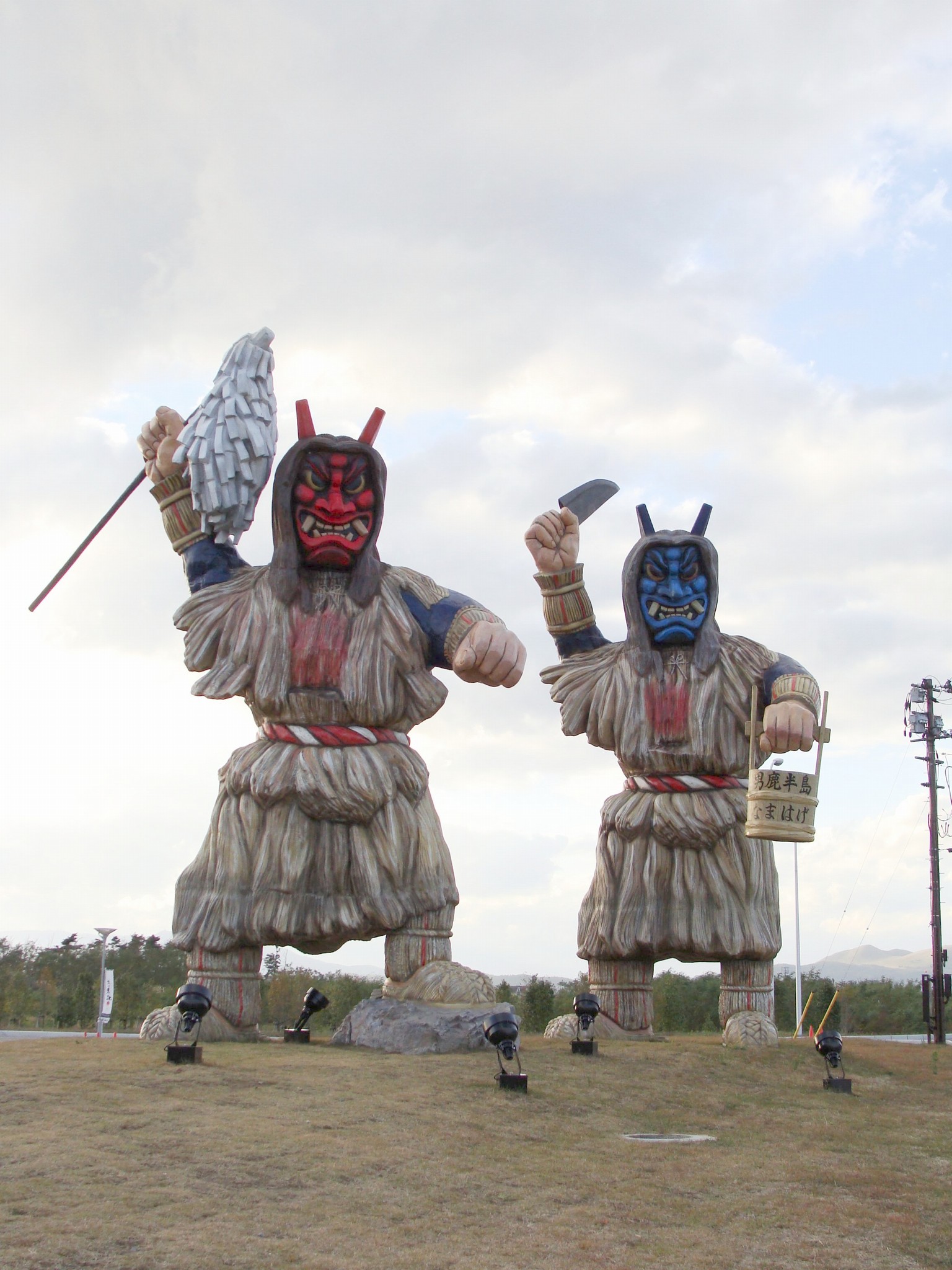
Imagine a fearsome demon crashing through your front door on New Year’s Eve, bellowing at children to behave and threatening to drag away the lazy. Now imagine that this demon — horned, wild-haired, clutching a wooden bucket and a ceremonial knife — has been doing exactly this in the villages of Akita’s Oga Peninsula for over a thousand years. Welcome to the world of Namahage, one of Japan’s most thrilling and genuinely spine-tingling folk traditions, and a compelling reason to venture to this windswept coastal peninsula jutting into the Sea of Japan.
Why Oga Peninsula & Namahage Should Be on Every Japan Itinerary
The Oga Peninsula is one of those rare places where you feel like you’ve genuinely discovered something. While millions of tourists crowd the temples of Kyoto and the neon corridors of Tokyo’s Shinjuku, the Oga Peninsula sits quietly on Akita’s western coast, offering dramatic sea cliffs, centuries-old festivals, and a folk tradition so unique that UNESCO recognized it in 2018 as an Intangible Cultural Heritage. If you’re the kind of traveler who wants to see Japan beyond the well-worn tourist trail, Oga should be near the top of your list.
The peninsula stretches about 20 miles (32 km) into the Sea of Japan from Akita Prefecture’s coastline, its rocky headlands battered by winter storms and its interior covered with ancient cedar forests. The landscape alone is extraordinary — dramatic basalt cliffs plunging into churning blue water, a striped lighthouse perched above black rocks, fishing villages where the catch of the day comes straight off boats in the harbor. Think California’s Big Sur meets ancient Japan, and you’ll have a rough idea of what awaits.
But what truly sets Oga apart is its living relationship with Namahage — the demonic figures who, according to local lore, descend from the mountains every New Year’s Eve to visit homes, scold lazy members of the community, and remind everyone to live virtuously in the year ahead. This isn’t a performance put on for tourists. It’s a deeply embedded community tradition, one that shapes the identity of Oga in a way few folk customs shape a place anywhere in the world.
Getting There from Tokyo
- Shinkansen + Local Train: Take the Akita Shinkansen (Komachi) from Tokyo Station to Akita Station — about 4 hours, costing ¥17,000–¥19,000 ($115–$130 USD). From Akita Station, the JR Oga Line runs to Oga Station in about 1 hour 10 minutes (¥740 / ~$5). The Shinkansen portion is JR Pass eligible.
- Rental Car from Akita: Highly recommended for exploring the peninsula. Rent at Akita Station (Toyota Rent a Car, Nippon Rent-A-Car, etc.) and drive to Oga in about 1 hour via Route 7 and Route 101. A car gives you the freedom to stop at sea cliffs, rural shrines, and roadside seafood stalls.
- Direct Bus: Seasonal express buses run from Akita Station to Oga (Nyudozaki area) during peak seasons. Check the Oga City tourism website for schedules, as they change seasonally.
- Fly to Akita: ANA and JAL operate flights from Tokyo Haneda to Akita Airport (about 1 hour). From the airport, rent a car or take a bus to Akita Station.
The JR Pass covers the Akita Shinkansen and the JR Oga Line, making this trip very economical for pass holders. If you’re doing a broader Tohoku journey, Oga combines beautifully with Akita City, Kakunodate Samurai District, and Nyuto Onsen Village.
Understanding Namahage: Japan’s Most Terrifying New Year’s Tradition
To understand why Namahage matters so much, you first need to understand what it actually is. The name “Namahage” is believed to derive from a local dialect term for “peeling off the blisters” caused by sitting too long by the fire — a reference to lazy people who idle away their days warming themselves instead of working. The Namahage demons are essentially the physical manifestation of community accountability: they come to your home not to harm you, but to shake you out of complacency.
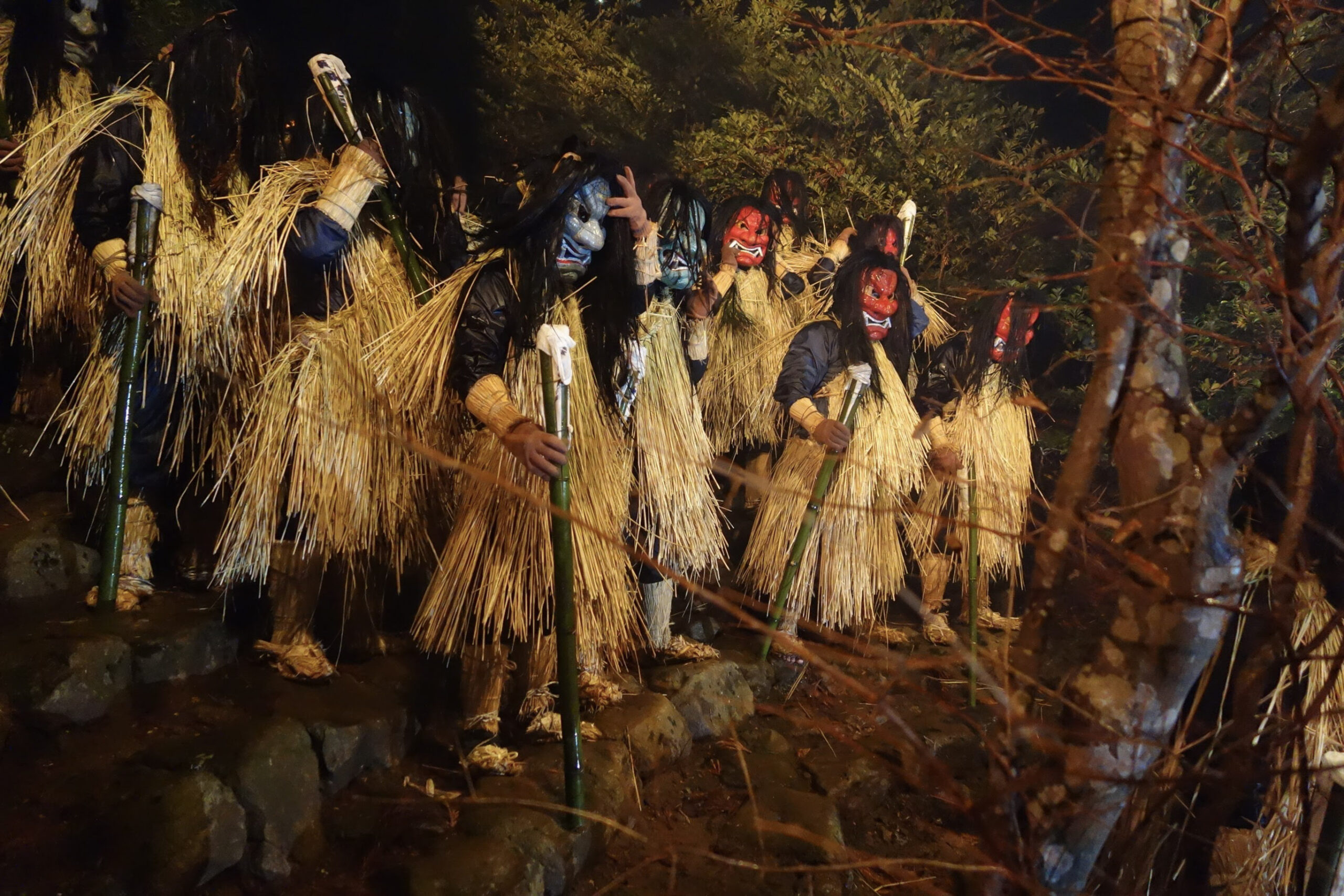
On the traditional date (January 15th by the old lunar calendar, though many villages now hold it on December 31st), young men from the village dress in elaborate straw costumes and fearsome ogre masks. They move through the community in pairs or small groups, arriving at homes with tremendous noise and dramatic entrances. Children are often terrified. Parents are expected to negotiate with the Namahage on behalf of their family, vouching for everyone’s good behavior and welcoming the demons’ visit as a blessing.
The ritual typically ends with the head of the household offering the Namahage sake and rice cakes, after which the demons depart into the darkness, perhaps already on their way to the next household. It’s part theater, part genuine spiritual practice, and entirely unlike anything you’ll find elsewhere in Japan. The tradition is practiced across the peninsula’s villages, each with slight regional variations in costume, script, and ritual detail — making Oga a living outdoor museum of folk religion.
For Western visitors, the Namahage tradition might initially seem like a Halloween equivalent, but the cultural context is quite different. Rather than a celebration of the spooky and supernatural, Namahage is fundamentally about renewal, community values, and the relationship between humans and the mountain gods. Understanding this depth makes witnessing the tradition — even in its museum format — far more meaningful.
The Namahage Museum & Oga Shinzan Folklore Museum
The best place to start your Oga experience is the Namahage Museum (なまはげ館), which opened in 1995 and houses an extraordinary collection of over 150 Namahage masks from across the peninsula’s villages. The range is staggering — some masks are bulbous and red-faced, others pale and ethereal; some have expressions of pure fury, others look almost sorrowful. You begin to understand how deeply personal and community-specific the tradition is, with each village having developed its own aesthetic over generations.
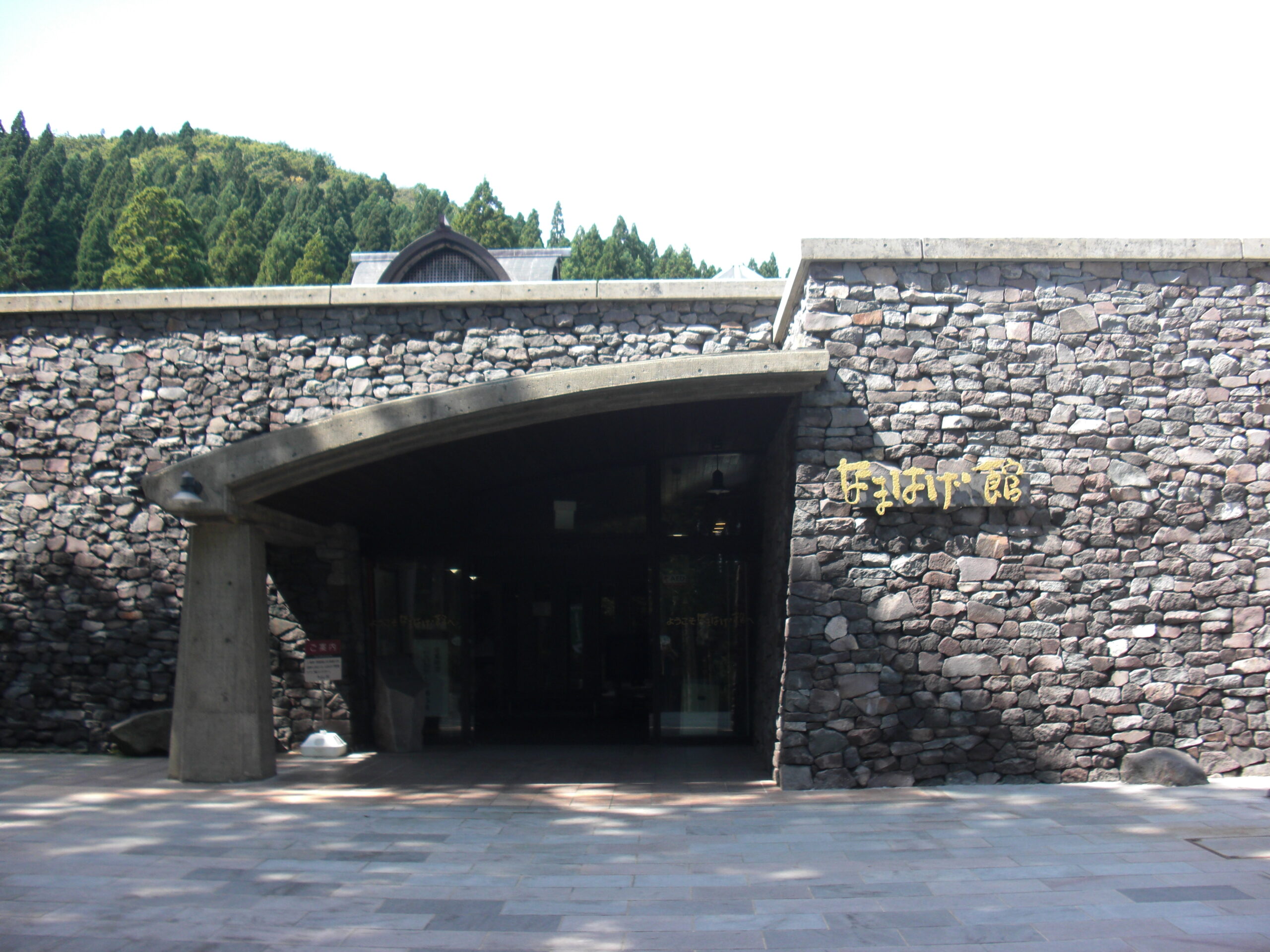
Adjacent to the museum is the Oga Shinzan Folklore Museum (男鹿真山伝承館), where you can watch a live reenactment of the Namahage house visit inside a traditional Akita farmhouse. The performance is genuinely impressive: the Namahage arrive with thunderous stomping and ferocious yelling, and even adult visitors often feel a surge of adrenaline. It’s one of the most authentic folk performance experiences available to tourists anywhere in Japan.
The museums are located in the center of the peninsula, deep in the cedar forests near Shinzan Shrine. Admission covers both facilities: adults ¥880 (~$6 USD), children ¥440 (~$3 USD). Allow at least 2 hours for a proper visit. The folk museum performances run several times daily; check the schedule when you arrive as English sessions are sometimes available.
Practical tip: The museum area can be quite cool even in summer due to the forest canopy, and it’s genuinely cold in winter. Dress in layers. If you visit in winter (especially late December to mid-January), you may encounter actual village Namahage rituals happening in nearby communities — ask at the museum about any public events happening during your visit.
Nyudozaki Cape: Oga’s Most Dramatic Scenery
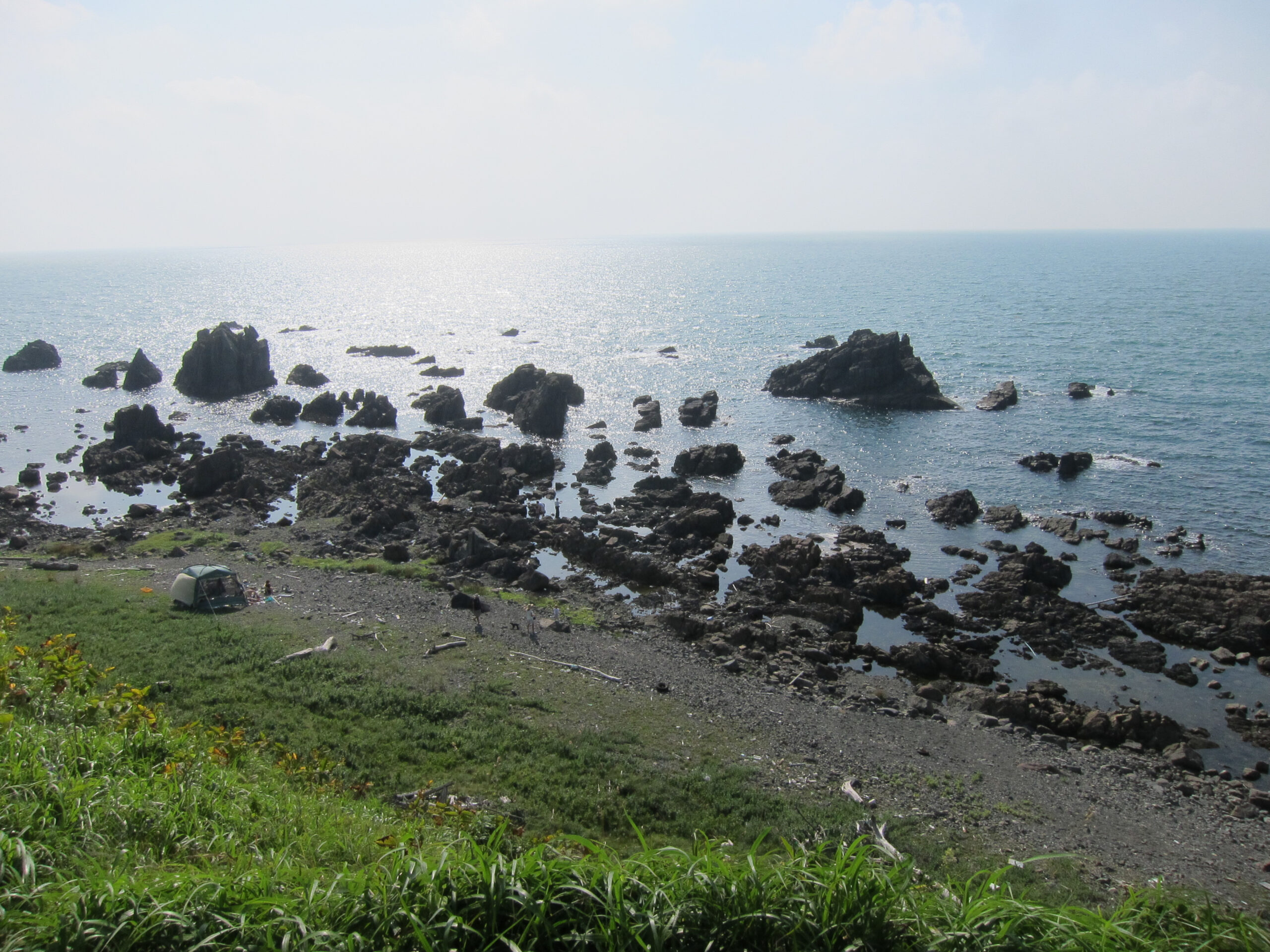
At the northern tip of the Oga Peninsula sits Nyudozaki Cape (入道崎), one of the most dramatically beautiful coastal spots in all of Tohoku. The cape sits exactly on the 40th parallel north, the same latitude as Madrid, Beijing, and Philadelphia — which gives it an international resonance that the Japanese tourism boards love to point out. But geography aside, what you’ll actually notice is the sheer elemental power of the place: vast flat basalt platforms stretching into churning Sea of Japan waters, endless sky meeting endless ocean, and a striking black-and-white striped lighthouse standing sentinel above it all.
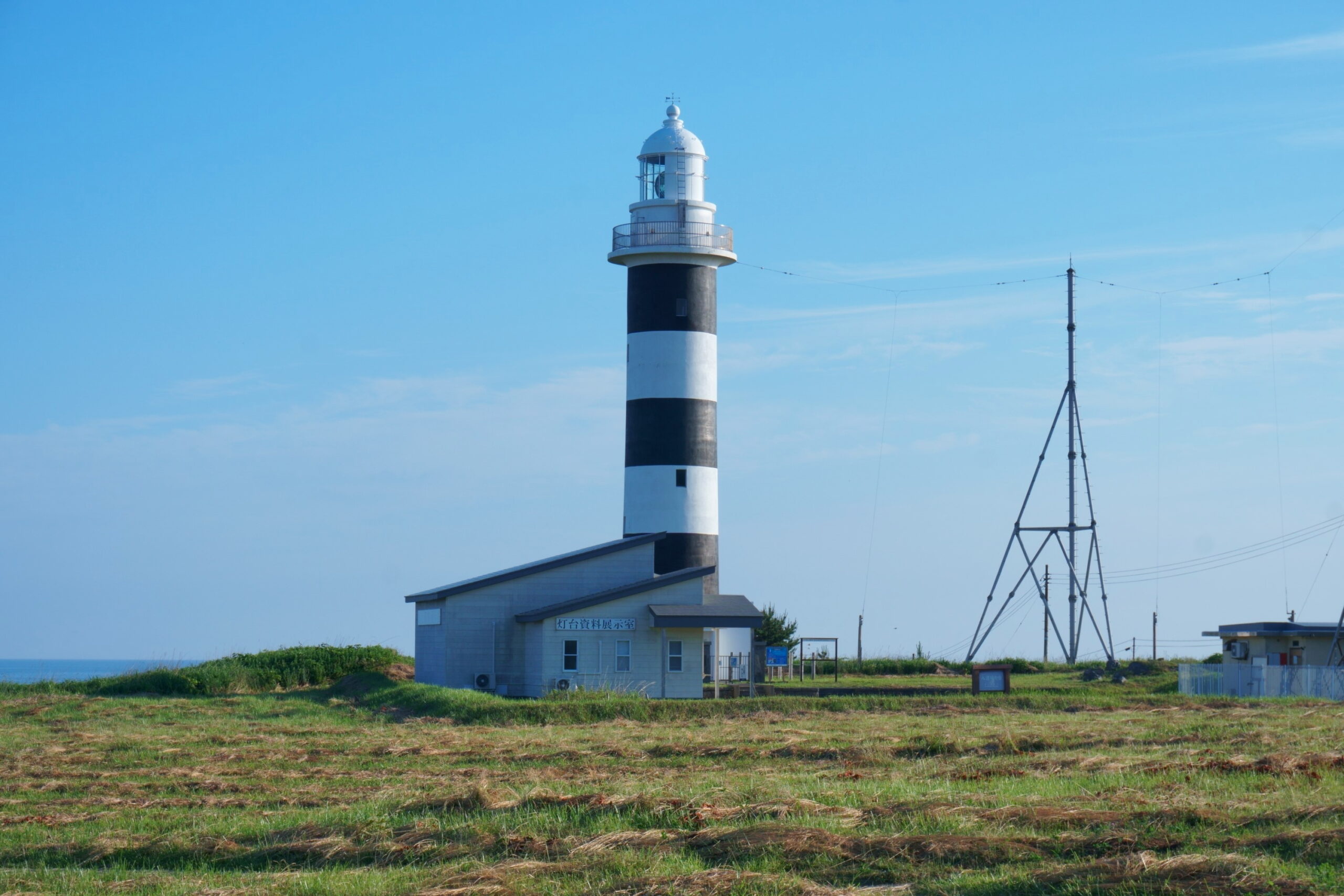
The Nyudozaki Lighthouse (入道崎灯台) was built in 1898 and is one of the few lighthouses in Japan that visitors can climb. The view from the top — 360 degrees of Sea of Japan stretching to the horizon on clear days, with the peninsula’s coastline curling away to the south and Akita’s mountains visible inland — is exceptional. Admission to climb the lighthouse is ¥300 ($2 USD). Combine it with a walk along the basalt platforms below, where you can watch waves crashing into rock pools and spot seabirds nesting in the cliffsides.
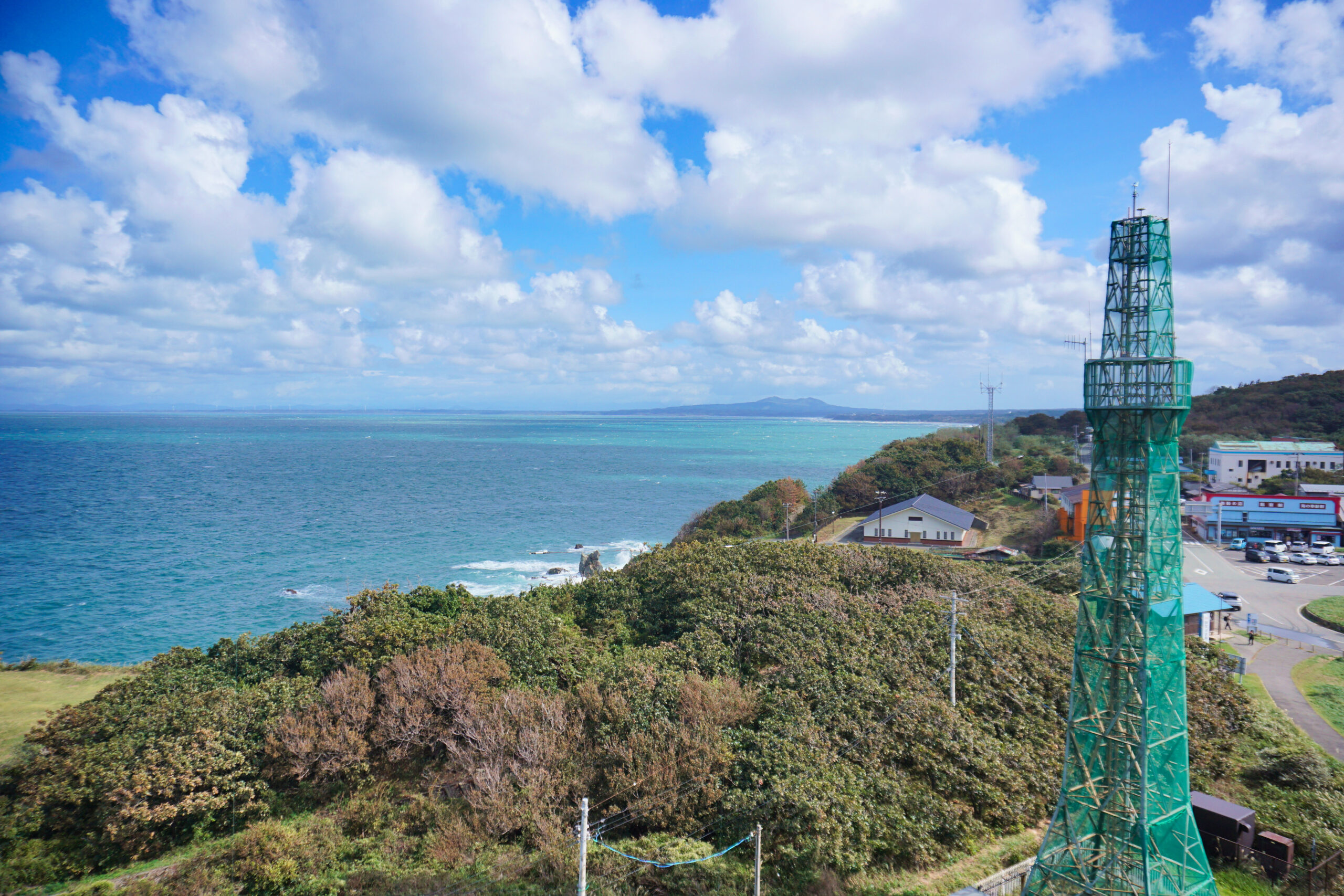
Near the cape, you’ll find a cluster of souvenir shops selling Oga’s famous hatahata (sandfish) — a small, silvery fish that spawns on the Oga coast in winter and is central to Akita’s culinary culture. Try hatahata no shioyaki (salted and grilled sandfish) or shottsuru, a savory fish sauce made from hatahata that’s used like a Japanese nam pla in regional dishes.
The area around Nyudozaki is also dotted with dramatic rock formations. The most famous is Godzilla Rock (ゴジラ岩), a basalt formation that at the right angle — especially at sunset — looks uncannily like the famous movie monster rising from the sea. It’s a great spot for photography, particularly in the golden hour before sunset when the rock turns deep amber.
Oga Aquarium GAO: Where Namahage Meets Marine Life
One of Oga’s more unexpected attractions is the Oga Aquarium GAO (男鹿水族館GAO), which cleverly blends marine education with local culture. The aquarium is known for its polar bears — two residents who have become local celebrities — as well as a large tank featuring the Sea of Japan’s ecosystem. But the real showstopper is the Namahage diver show, where an aquarium staff member dresses in full Namahage costume and dives into the tank to feed the fish, to the visible astonishment and delight of children watching.
GAO also has strong collections of sea creatures found in Oga’s waters, including some fascinating deep-sea specimens hauled up from the cold depths of the Sea of Japan. The building itself is positioned dramatically on a hillside with sea views, and the outdoor areas allow you to breathe in the salty air while watching the waves below. Admission: adults ¥1,200 (~$8 USD), children ¥600 (~$4 USD). Allow 1.5 to 2 hours.
The Namahage Sedo Festival: Witnessing the Real Thing
If you can time your visit to coincide with the Namahage Sedo Festival (なまはげ柴灯まつり), held annually in mid-February at Shinzan Shrine, you’ll witness one of Tohoku’s most spectacular winter events. The festival brings together Namahage from villages across the peninsula for a series of dramatic fire ceremonies and performances against the backdrop of a snow-covered forest.
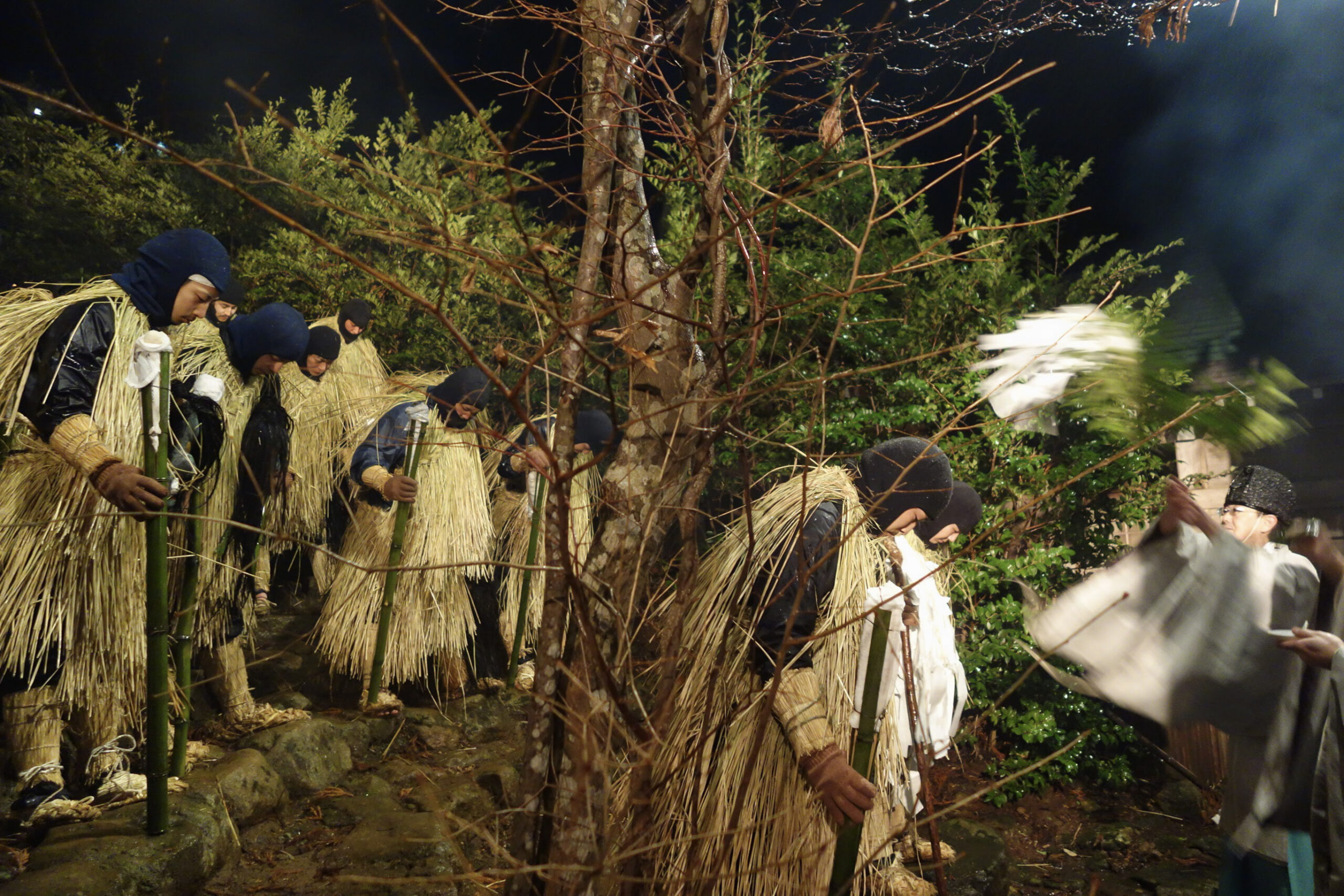
The centerpiece is the sedo ritual: a large bonfire blazes in the shrine precinct as shamans perform ancient chants, and then the Namahage descend dramatically from the dark forest, torches in hand, to participate in the ceremony. The combination of fire, snow, drumming, and the wild figures of the Namahage is visually and emotionally overwhelming — it’s one of those experiences that stays with you long after you return home.
The festival runs for three evenings in mid-February (specific dates vary year to year; check with Oga City Tourism). Book accommodation well in advance — the event draws visitors from across Japan and internationally, and nearby ryokan fill up quickly. Many visitors come from Akita City for the evening, but staying in Oga itself gives you more time to explore the peninsula at a relaxed pace.
Best Time to Visit Oga Peninsula
- Spring (March–May): The coast comes alive with wildflowers, and the sea is calmer after winter storms. Cherry blossoms bloom in early April around Oga Onsen area. Fewer crowds make this an ideal time for exploration.
- Summer (June–August): The peninsula’s beaches (particularly around Men-in area on the southern coast) become popular with domestic visitors. Sea temperatures allow swimming in July and August. Temperatures are pleasant — around 75–80°F (24–27°C) — and the long daylight hours are perfect for coastal drives.
- Autumn (September–November): The cedar forests inland glow with autumn color from late October through November. Hatahata sandfish season begins, and local restaurants serve the freshest fish of the year. Crowds thin after the summer peak, making this perhaps the most comfortable time to visit.
- Winter (December–February): The most dramatic and culturally rich time to visit. The Namahage New Year rituals take place on December 31st in various villages (some open to visitors who arrange in advance). The Namahage Sedo Festival happens in mid-February. The peninsula is cold — expect temperatures around 30°F (-1°C) — and snowfall is common, but the landscape is hauntingly beautiful and the cultural experiences are unparalleled.
Where to Eat: Oga Peninsula Food Guide
Oga’s cuisine is built around the bounty of the Sea of Japan — and it’s extraordinary. The cold waters off the peninsula are some of the most productive fishing grounds in Japan, yielding fish and shellfish that are prized nationwide. Eating in Oga is a genuine pleasure.
Hatahata (Sandfish)
The sandfish (hatahata, ハタハタ) is Akita’s most emblematic fish, and it’s at its best in Oga where the fish spawn in winter along the rocky coastline. You’ll find it grilled with salt (shioyaki), simmered in soy-based broth (kabayaki), or fermented into the pungent shottsuru fish sauce used in the region’s signature hot pot. Look for it at any seafood restaurant near Nyudozaki or Oga Station. A simple grilled hatahata set meal runs ¥1,200–¥1,800 (~$8–$12 USD).
Kidoura Shokudo (鬼怒浦食堂)
A beloved local lunch spot near the Nyudozaki area, this unpretentious restaurant serves fresh seafood sets at very reasonable prices. The kaisendon (seafood rice bowl) uses locally caught fish and shellfish and is priced around ¥1,500–¥2,000 (~$10–$14 USD). Don’t miss the daily specials board — whatever came off the boats that morning is likely your best bet. Arrive before noon to avoid waiting.
Oga Onsen Area Restaurants
The hot spring district near Toga Bay (Toga Onsen) has several restaurants catering to both onsen guests and day visitors. Many ryokan in the area offer lunch service featuring Oga’s seafood in kaiseki-style presentation. Look for restaurants advertising shottsuru nabe (fish sauce hot pot), a warming and deeply savory winter dish that costs around ¥2,000–¥3,000 (~$14–$20 USD) per person. This is comfort food at its finest — the kind of dish you’ll spend years trying to recreate back home.
Roadside Stalls at Nyudozaki
The cluster of souvenir shops at Nyudozaki Cape doubles as informal food stalls, especially on weekends and during tourist season. You can pick up freshly grilled oysters, squid, and fish cakes for ¥300–¥600 ($2–$4 USD) each — perfect fuel for coastal walking. The grilled oysters from the Sea of Japan are particularly excellent, plump and briny with a depth of flavor that farmed oysters rarely achieve.
Where to Stay
Budget (Under ¥8,000 / $55 per night)
Budget accommodation is limited on the Oga Peninsula itself, so budget travelers typically base themselves in Akita City and make day trips. The Akita Youth Hostel (¥3,500–¥4,500 per person) and several business hotels near Akita Station (¥5,000–¥8,000) offer good value bases for exploring the region. The JR Oga Line makes day trips from Akita City perfectly feasible.
Mid-Range (¥8,000–¥20,000 / $55–$135 per night)
Staying on the peninsula in a mid-range ryokan is the ideal way to experience Oga. Oga Onsen (男鹿温泉) is a small hot spring resort near Toga Bay with several ryokan offering Sea of Japan views, seafood kaiseki dinners, and natural hot spring baths. Ryokan in this category typically include dinner and breakfast, making the per-night cost very reasonable when meals are factored in. Expect warm hospitality, tatami rooms, and an intimate atmosphere that larger resort hotels can’t replicate.
Luxury (¥20,000+ / $135+ per night)
Oga Grand Hotel Aqua Resort (男鹿グランドホテル・アクアリゾート) sits with dramatic sea views near Toga Bay and offers modern comforts with traditional Akita hospitality. The outdoor onsen baths overlooking the Sea of Japan are particularly special, especially in winter when you can soak in steaming water while watching waves crash against the rocks below. Their seafood kaiseki dinners are among the best on the peninsula, showcasing both local catches and regional Akita specialties. Rooms from ¥25,000–¥45,000 per person including dinner and breakfast.
Practical Tips for Visiting Oga Peninsula
- Rent a car. While the JR Oga Line reaches Oga Station, the best parts of the peninsula — Nyudozaki Cape, Shinzan Shrine, coastal viewpoints — require a car or taxi. Bus service is infrequent. A car from Akita Station runs ¥5,000–¥8,000 ($35–$55 USD) per day.
- Plan around the Sedo Festival if possible. The mid-February Namahage Sedo Festival is extraordinary. Book accommodation 2–3 months in advance if you want to stay on the peninsula during the festival.
- Visit the Namahage Museum before the folk performance. Understanding the cultural context before watching the Namahage reenactment significantly deepens the experience.
- Drive the Oga Canopy Road (Oga Skyline). The mountain road crossing the peninsula’s interior offers stunning views of both the Sea of Japan and Akita Plains. Best in autumn for foliage, but beautiful year-round.
- Try shottsuru at least once. This aged fish sauce is an Akita specialty with no real equivalent elsewhere. Use it in nabe (hot pot) or as a seasoning — it adds a savory depth unlike anything you’ve tasted.
- Sunset at Godzilla Rock is unmissable. Time your Nyudozaki visit to arrive about 45 minutes before sunset. The light on the basalt rocks is spectacular.
- Layer up in winter. The Sea of Japan coastline gets cold winds and significant snowfall from December through March. Waterproof outerwear and insulated layers are essential.
- Check Shinzan Shrine on New Year’s Eve. Some villages near Shinzan conduct traditional Namahage visits on December 31st that are open to respectful outside observers. Contact the Oga City Tourism Association for information about viewable rituals during the actual season.
- Learn a few Japanese words. English is limited outside the main museum. Japanese tourist information staff are always helpful and appreciate the effort of even basic greetings.
- Combine with Nyuto Onsen. Oga Peninsula and Nyuto Onsen Village in the Towada-Hachimantai mountains make an excellent 3–4 day Akita combination — rugged coast followed by deep mountain hot springs.
Sample 2-Day Oga Peninsula Itinerary
Day 1: Namahage Culture & Mountain Interior
Morning (9:00 AM): Arrive at Oga Station or pick up your rental car in Akita City. Drive directly to Shinzan Shrine and Namahage Museum in the cedar forest interior. Start with the museum’s mask collection to build cultural context, then watch the folk performance at Oga Shinzan Folklore Museum — performances typically run at 10:00 AM, 11:30 AM, and 1:30 PM.
Afternoon (1:00 PM): Lunch at a restaurant near the museum area. Drive the Oga Skyline mountain road across the peninsula’s interior, stopping at viewpoints for panoramic views. Visit Goshado Shrine (五社堂) — 999 stone steps through ancient cedar forest to a cluster of small shrines, an atmospheric and rarely crowded hike.
Evening (5:00 PM): Check in to your ryokan at Oga Onsen area. Enjoy kaiseki dinner featuring Oga seafood and local Akita sake.
Day 2: Coastal Drama & Nyudozaki
Morning (8:00 AM): Ryokan breakfast, then drive north to Nyudozaki Cape. Arrive early to beat any tourist buses. Climb the lighthouse for 360-degree views, walk the basalt platforms along the water’s edge.
Late Morning (10:00 AM): Visit Oga Aquarium GAO — 1.5 hours is plenty. Watch the polar bears and keep an eye out for any Namahage diver shows on the schedule.
Afternoon (12:30 PM): Seafood lunch at Nyudozaki area. Then drive the western coastal road south, stopping at Kanpuzaki (寒風山) — an extinct volcano with panoramic views over the Ogata lowlands and the Oga Peninsula’s full extent. The 360-degree rotating observatory is excellent.
Late Afternoon (3:00 PM): Sunset at Godzilla Rock. Position yourself 30 minutes before golden hour for the best photography.
Evening: Dinner in Oga or drive back to Akita City for your onward journey.
Related Articles You Might Enjoy
- Kakunodate Samurai District: Your Complete Akita Japan Travel Guide
- Nishimonai Bon Odori, Akita: Japan’s Most Mysterious Summer Festival — Complete Guide
- Nishimonai Bon Odori, Akita: Japan’s Most Mysterious Summer Festival — Complete Guide
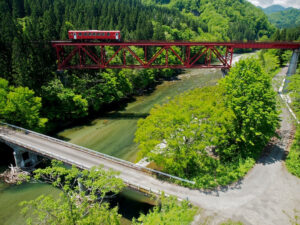
- Akita Nairiku Jukan Railway: Japan’s Most Beautiful Secret Train Journey Through the Mountains
- Akita Dog & Odate: Meeting Japan’s Most Loyal Breed in Its Birthplace
Final Thoughts
The Oga Peninsula occupies a special place in Japan’s cultural landscape — a place where an ancient folk tradition still pulses with genuine meaning, where the landscape is dramatic enough to match the legends, and where the seafood alone could justify the trip. In a country sometimes accused of packaging its traditions too neatly for tourists, Oga offers something rarer: authentic culture that happens to be accessible, and natural beauty that needs no embellishment.
Whether you come for the fearsome Namahage, the striped lighthouse at the edge of the world, or a bowl of shottsuru hot pot on a bitter winter evening, you’ll leave Oga with the particular satisfaction of having found something genuinely off the beaten path — something to tell people about when they ask where you went in Japan. Not Kyoto again. Not Osaka. Oga Peninsula, in Akita, where the demons come home for New Year’s.

コメント