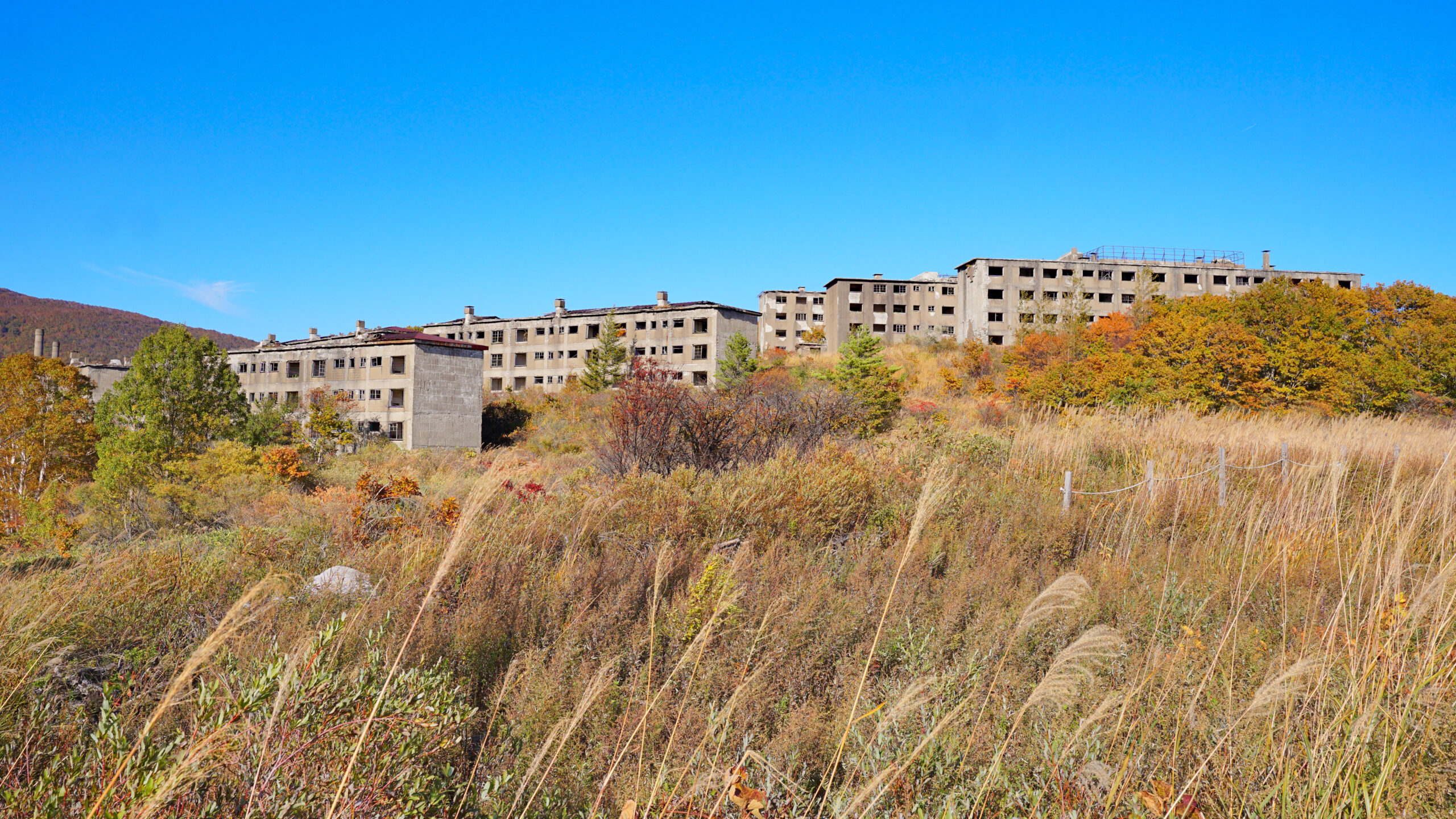
Tohoku harbors a Japan that most tourists never see: a landscape of weathered concrete apartment blocks slowly surrendering to moss, mountain resorts where the corridors last echoed with footsteps decades ago, and rural homesteads where calendars still hang open to the year everything stopped. Haikyo (廃墟) — the Japanese art of exploring and documenting abandoned places — has found perhaps its richest subject matter in this northeastern region, where population decline, industrial shutdowns, and the aftermath of the 2011 Great East Japan Earthquake have created an extraordinary record of the twentieth century in a state of beautiful, melancholy decay.
What Is Haikyo? Understanding Japan’s Abandoned Places Culture
Haikyo literally means “ruins” in Japanese, but the word carries connotations that go well beyond mere dereliction. Unlike Western urban exploration (often called “urbex”), which tends to emphasize transgressive access and industrial-scale decay, Japanese haikyo culture has a distinctly aesthetic and philosophical dimension. It draws on the Buddhist concept of mono no aware — the bittersweet awareness of impermanence — and the Shinto sensitivity to nature’s capacity to reclaim what humans create. A ruined building in the haikyo tradition is not merely abandoned; it is in the process of transformation, becoming something between the human and natural worlds.
The community of haikyo enthusiasts in Japan is substantial and surprisingly mainstream. Dozens of dedicated websites, photography books, and even mainstream magazine features document Japan’s abandoned landscape. Some of the most celebrated haikyo photographers, like Jordy Meow (whose documentation of dozens of Japanese ruins has drawn international attention) and Florian Baumann, have produced body-of-work compilations that are treated as serious fine-art photography. The aesthetic is distinctive: dramatic natural light entering through collapsed ceilings, the incongruity of human objects — a child’s shoe, a still-set table — in environments reclaimed by nature, the way concrete and steel return to something almost geological given enough time.
What makes Tohoku particularly significant for haikyo exploration is the diversity of its abandoned heritage. You’ll find former mining towns that housed thousands of workers before ores ran out, highland resort hotels abandoned when Japan’s bubble economy deflated in the 1990s, seaside structures with complicated histories connected to the 2011 tsunami, rural farmhouses abandoned as agricultural communities depopulated over decades, and spa-resort complexes that simply couldn’t compete in the modern tourism market. Each category carries different histories, different aesthetics, and different emotional textures.
The Ethics and Legality of Haikyo Exploration
This is important, and we want to be clear about it upfront: haikyo exploration exists in a legally complicated zone in Japan. The principle most widely cited within the community is “take nothing but photographs, leave nothing but footprints.” Many abandoned sites in Japan remain in private ownership — the legal owner may be a company in bankruptcy, a distant heir, or a municipality — and entering without permission is technically trespassing. In practice, enforcement against individual tourists is extremely rare at most sites, but it is possible, particularly at sites near active private property or where the owner has posted explicit no-trespassing signs.
Some sites have become semi-legitimate visitor attractions: the Matsuo Mine ruins in Iwate, for example, are accessible from public roads and viewpoints without technically entering restricted areas, and the site has become well-known enough that it functions as a heritage attraction despite having no formal admission or staff. Others require more careful judgment. As a visitor, the safest approach is to research each site thoroughly before going, stick to areas where access is clearly not restricted, avoid entering structurally compromised buildings, and — crucially — never take anything from a site, including seemingly insignificant objects. The removal of items from abandoned sites, even obviously worthless ones, can cross into theft of private property.
Safety is the other major concern. Abandoned buildings deteriorate in ways that aren’t always obvious: floors can give way without warning, roofs can collapse suddenly (particularly under snow load in Tohoku’s winters), and former industrial sites may contain asbestos, heavy metals, and other hazardous materials. Approach all haikyo exploration as an experienced outdoor activity requiring risk assessment, appropriate footwear (sturdy boots, not sneakers), awareness of exits, and — ideally — a companion who knows where you are. Never explore alone, and always tell someone your planned location and return time.
Matsuo Mine: Tohoku’s Most Iconic Haikyo
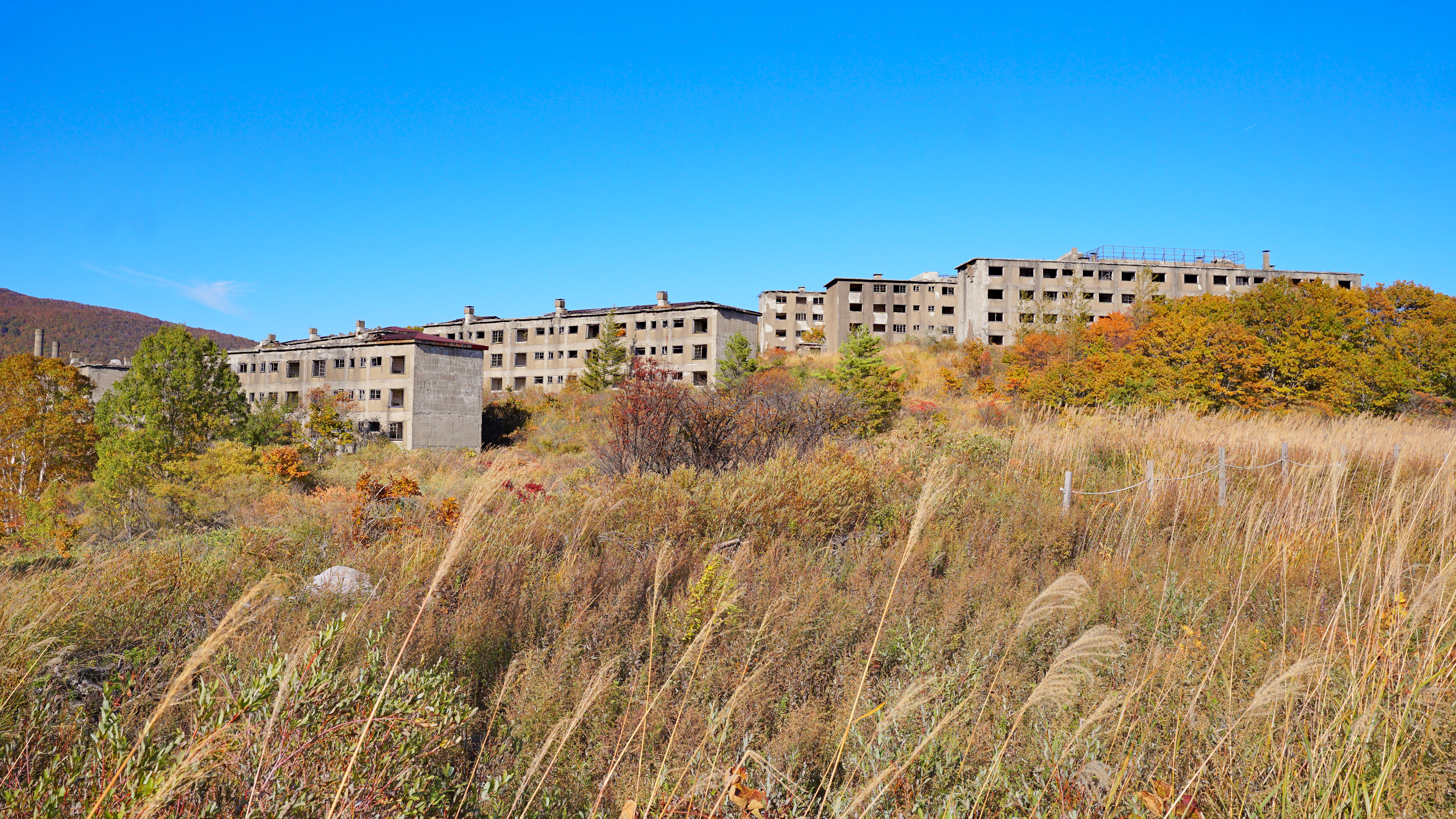
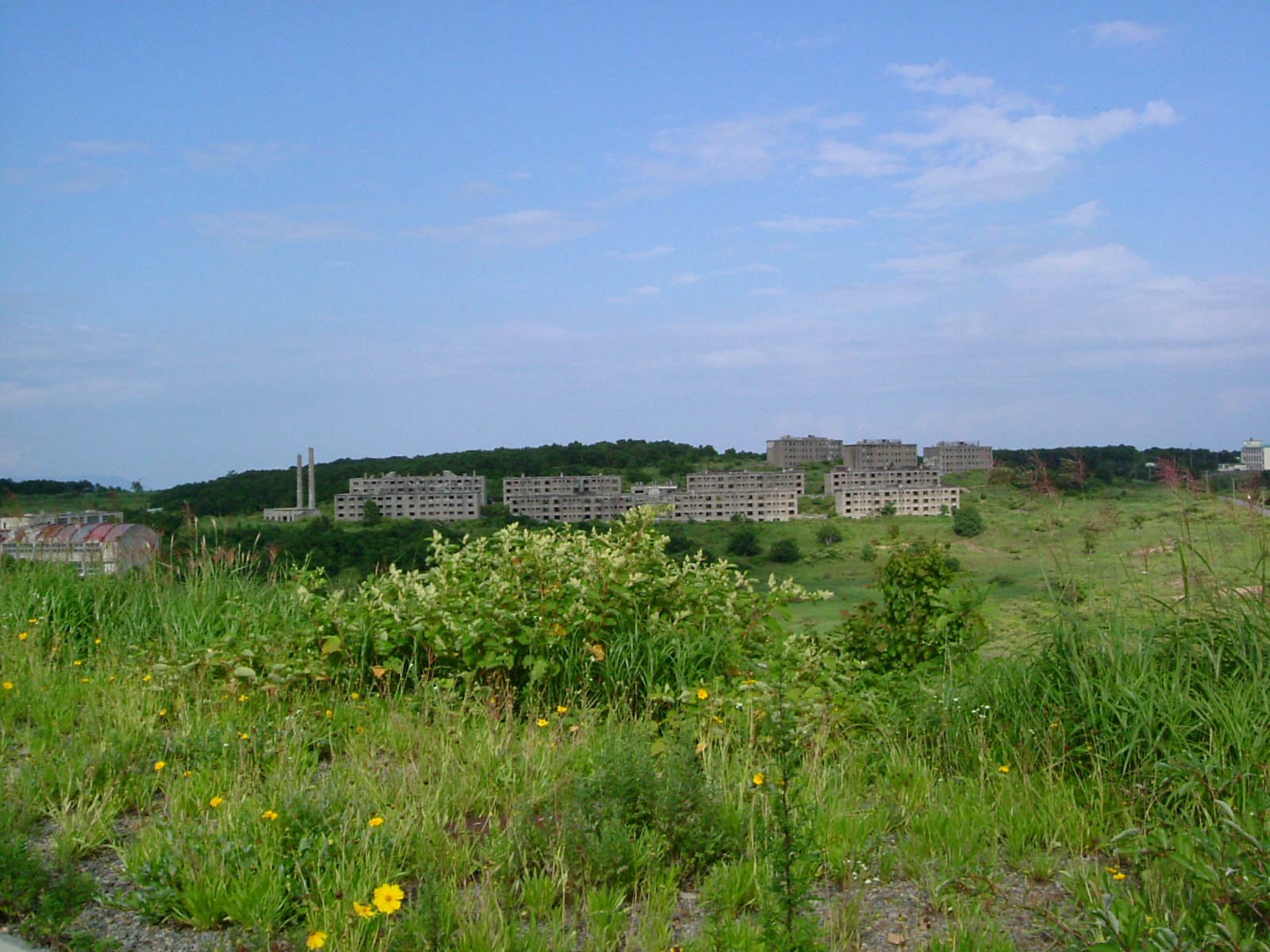
If there is a single site that defines haikyo in Tohoku — perhaps in all of Japan — it is the Matsuo Mine complex in the mountains of northwestern Iwate Prefecture. At its peak in the 1950s and 1960s, the Matsuo Mine was the world’s largest sulfur mine, employing over 4,000 workers and housing a total community of 15,000 people at nearly 1,000 meters (3,280 feet) above sea level. The company town that grew up around the mine had everything: schools, a hospital, a shopping district, movie theaters, recreation facilities, and the massive apartment blocks that now stand as the site’s defining visual element.
When sulfur demand collapsed in the late 1960s due to the development of desulfurization technology (which could extract sulfur as a byproduct of petroleum refining), the Matsuo Mine became uneconomical almost overnight. The mine closed in 1972, and by 1978 the last residents had departed. What remained were those extraordinary apartment towers — six and seven stories tall, built in the brutalist concrete style of the mid-century Japanese industrial aesthetic, now engulfed by mountain vegetation that seems determined to erase every evidence of the human occupation.
The ruins are accessible via a short walk from the public parking area at Matsuo Hachimantai, off National Route 282 in Iwate. You can view the apartment towers from outside the fence line — the most photogenic angle is from the northwest, where the buildings appear to emerge from forest cover with the Hachimantai highlands rising behind them. The surrounding area retains the acidic drainage from the old sulfur workings, which has left the nearby stream and river system with characteristically red-tinted water — eerie and striking against the green summer landscape. The entire site has a quality of landscape-scale installation art, as though someone had deliberately composed a meditation on industrial civilization’s relationship with nature.
Note: the interiors of the apartment buildings themselves are structurally compromised and legally off-limits. The most rewarding and legally unambiguous experience of the site is from the public road and viewpoints that are specifically designed to allow views of the ruins. Photography from these public access points produces images that rival anything taken from inside.
Highland Resort Ruins: The Bubble Era’s Abandoned Palaces
Japan’s economic bubble of the late 1980s produced a wave of resort construction in rural areas, particularly in scenic highland zones. When the bubble burst in the early 1990s, many of these projects — overextended, under-occupied, and located in areas with insufficient year-round demand — closed within years of opening. Tohoku was particularly affected, and several former resort hotels now stand in various states of managed abandonment or complete dereliction.
The most visually striking examples are found in the highland areas of Fukushima and Yamagata. The Bandai plateau and the Azuma highlands contain several former resort facilities from this era, ranging from buildings actively in the process of demolition to structures that have been abandoned in place. Unlike the Matsuo Mine, these former resorts are private property in active ownership (even if no one is doing anything about them), and approaching them requires more care. Their architectural heritage — the grandiose hotel lobbies, the ambitious recreational facilities, the sheer scale of ambition relative to the local market — creates an atmosphere quite different from the industrial ruins of the mining era. These are places that failed due to economic miscalculation rather than resource depletion, and that distinction gives them a different emotional quality: less elegiac, more cautionary.
Seaside Ruins: Tohoku’s Coast After 2011
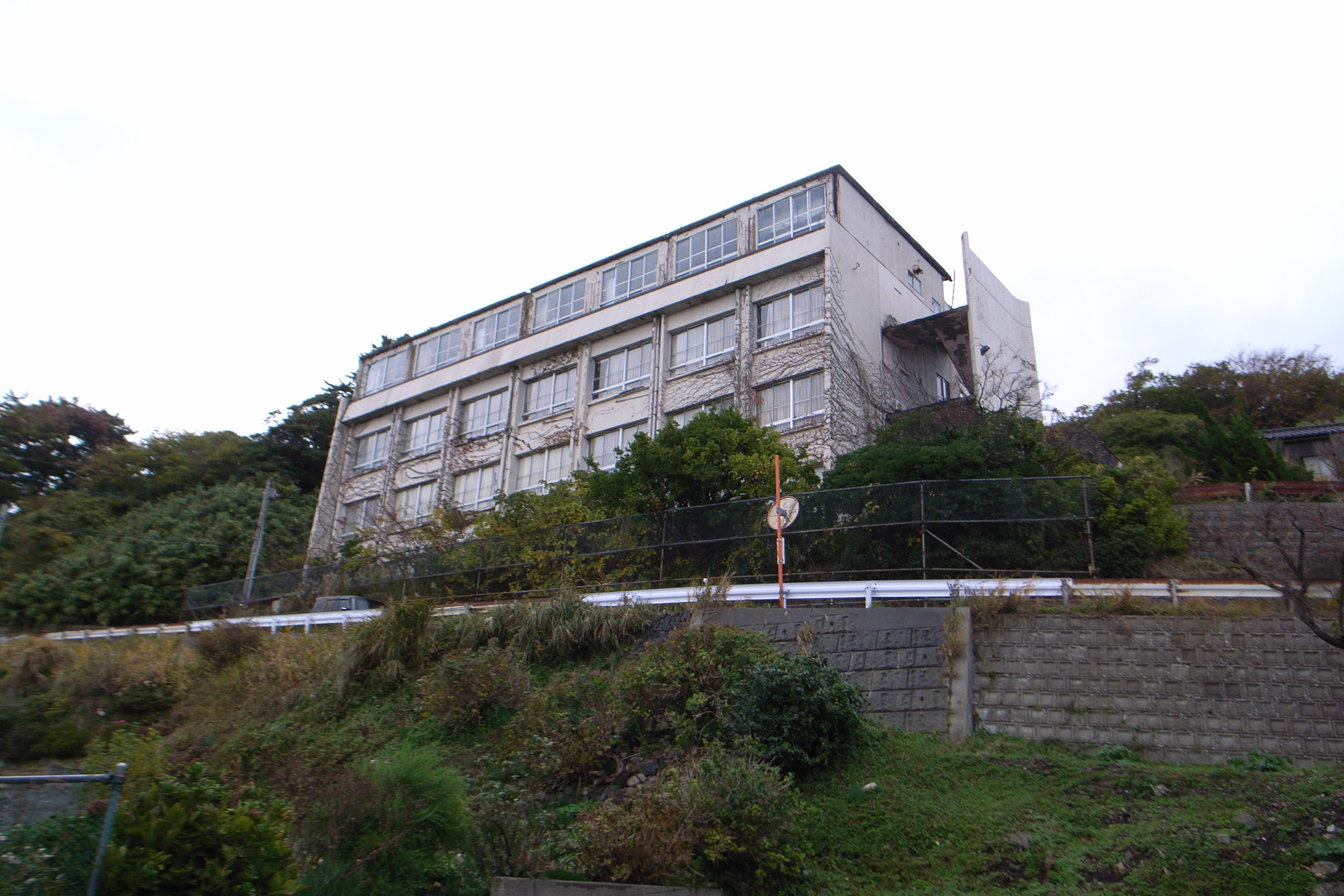
The Great East Japan Earthquake and tsunami of March 11, 2011 transformed Tohoku’s Pacific coastline in ways that are still visible and historically significant fifteen years later. While the majority of heavily damaged structures have been demolished and replaced by extensive seawall construction and residential rebuilding, several sites retain deliberate preservation as memorials and historical markers. These are not haikyo in the traditional sense — they are official memorial sites — but they carry enormous historical and emotional weight that any thoughtful visitor to the region should be aware of.
The Kyu Okawa Elementary School in Ishinomaki, Miyagi, is the most significant of these memorial sites. Of the school’s 108 students who were present on March 11, 74 were killed when the tsunami reached the building 51 minutes after the earthquake. The school building, which the tsunami reached and partially destroyed despite being 4 kilometers (2.5 miles) from the coast, has been preserved as a memorial with extensive interpretive materials. Visiting requires an attitude of the deepest respect — this is not exploration for photography or adventure, but an engagement with recent human tragedy of enormous scale. Remove your hat upon approach. Keep voices low. Do not photograph the memorials’ signage without reading it first.
Similarly, the Yuriage Junior High School in Natori City, preserved as a tsunami memorial, and the Okawa Bridge in Kesennuma — damaged by the tsunami and left deliberately unreconstructed as a memorial — provide sobering encounters with the event’s physical reality. The coastal areas of Rikuzentakata, where a single pine tree (the “Miracle Pine”) was preserved as a symbol after the tsunami destroyed a forest of 70,000 trees, has been rebuilt as a memorial park that functions as much as a site of grief as of historical documentation.
We mention these sites in the context of a haikyo article because they are likely to appear in any research on Tohoku’s abandoned structures, and because they deserve to be understood in their proper context. They are categorically different from abandoned hotels or industrial ruins — they are actively maintained memorials to recent tragedy. Approach them accordingly.
Rural Akiya: Japan’s Abandoned Farmhouses
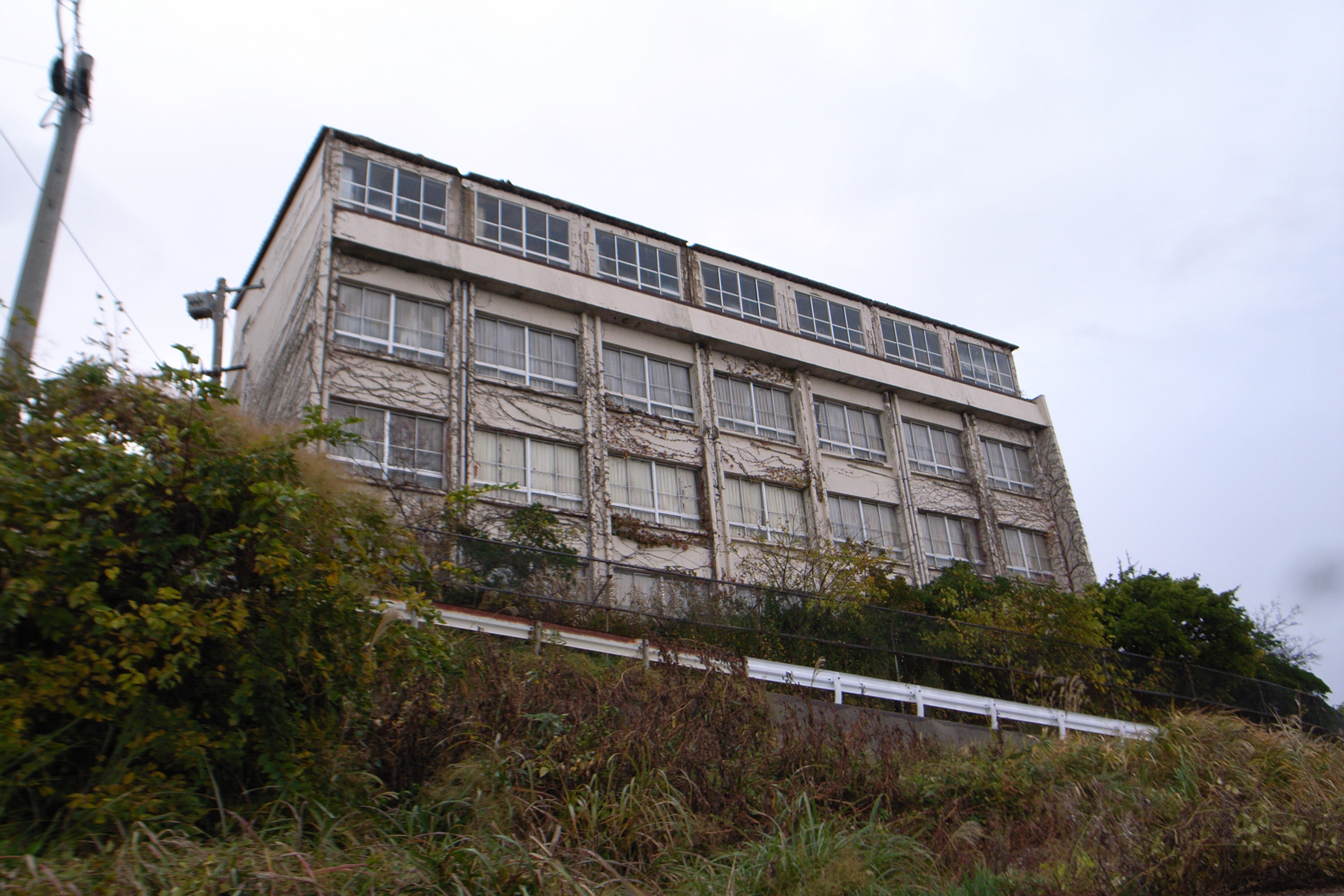
Japan’s most pervasive form of abandonment isn’t dramatic ruins or photogenic industrial decay — it’s the quiet disappearance of entire rural communities. The Japanese government estimates that approximately 9 million residential properties are currently vacant nationwide (a figure that rises annually), with concentrations in the rural interior of Tohoku that are staggering by Western standards. In some municipalities in Akita and Iwate, more than 20% of housing stock stands vacant, and entire hamlets have been depopulated within living memory as agricultural communities lost their young populations to urban migration.
These abandoned farmhouses — akiya (空き家), literally “empty houses” — are found throughout Tohoku’s rural landscape, often recognizable by their distinctive thatched or rusted metal roofs, overgrown gardens, and the way the surrounding rice paddies have reverted to reed beds when no one remained to maintain them. Unlike the photogenic industrial ruins, akiya feel intimate and personal in ways that can be quietly devastating. A family calendar on the wall. Preserved food jars lined up on a shelf. A set of tools hanging in a workshop where someone’s grandfather once did skilled labor. The accumulated evidence of lives that were fully realized and are now completely over.
The most accessible way to encounter this aspect of Tohoku is simply by driving the rural secondary roads of inland Akita, Iwate, and Yamagata. The landscape of the Madarao Highlands, the valleys of the Kitakami River’s tributaries, and the agricultural plains of inland Akita all contain concentrations of abandoned structures that, unlike dedicated haikyo sites, require no research or special access. They are simply present in the landscape, waiting to be noticed.
Note that akiya are private property, even when apparently abandoned for decades. Do not enter. Many are in active or potential legal ownership, and in rural Japan, where communities are small and strangers are noticed, trespassing into someone’s family property — even if that family has been gone for twenty years — is a significant social transgression as well as a legal one.
Hotel Ruins in Tohoku: The Onsen Town Decline
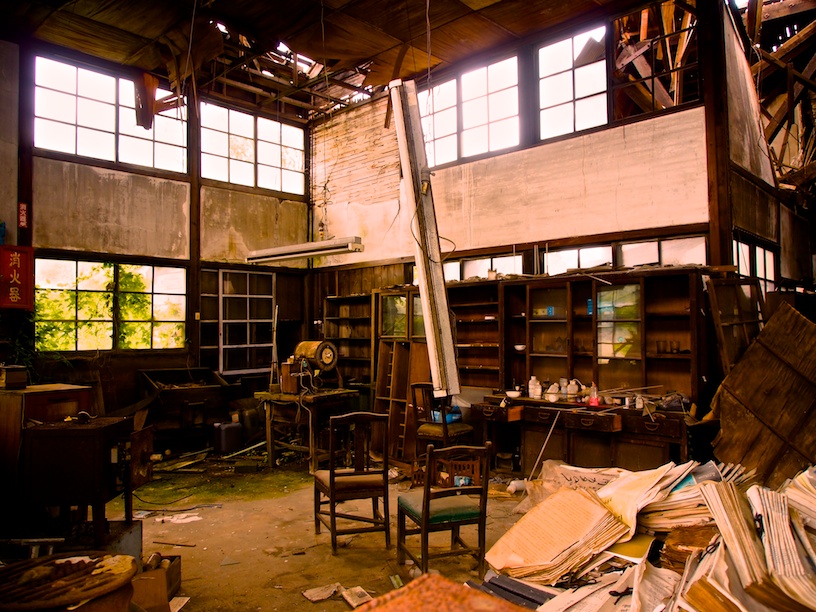
Japan’s onsen resort culture generated hundreds of large hotel-ryokan complexes in scenic spa towns across Tohoku during the high-growth decades of the 1960s through 1980s. Many of these facilities catered to corporate group tours and school trips — market segments that have largely disappeared. The result is a large inventory of former spa hotels in varying states of decline across the region, from recently closed buildings in good structural condition to completely derelict structures where nature has long since taken over.
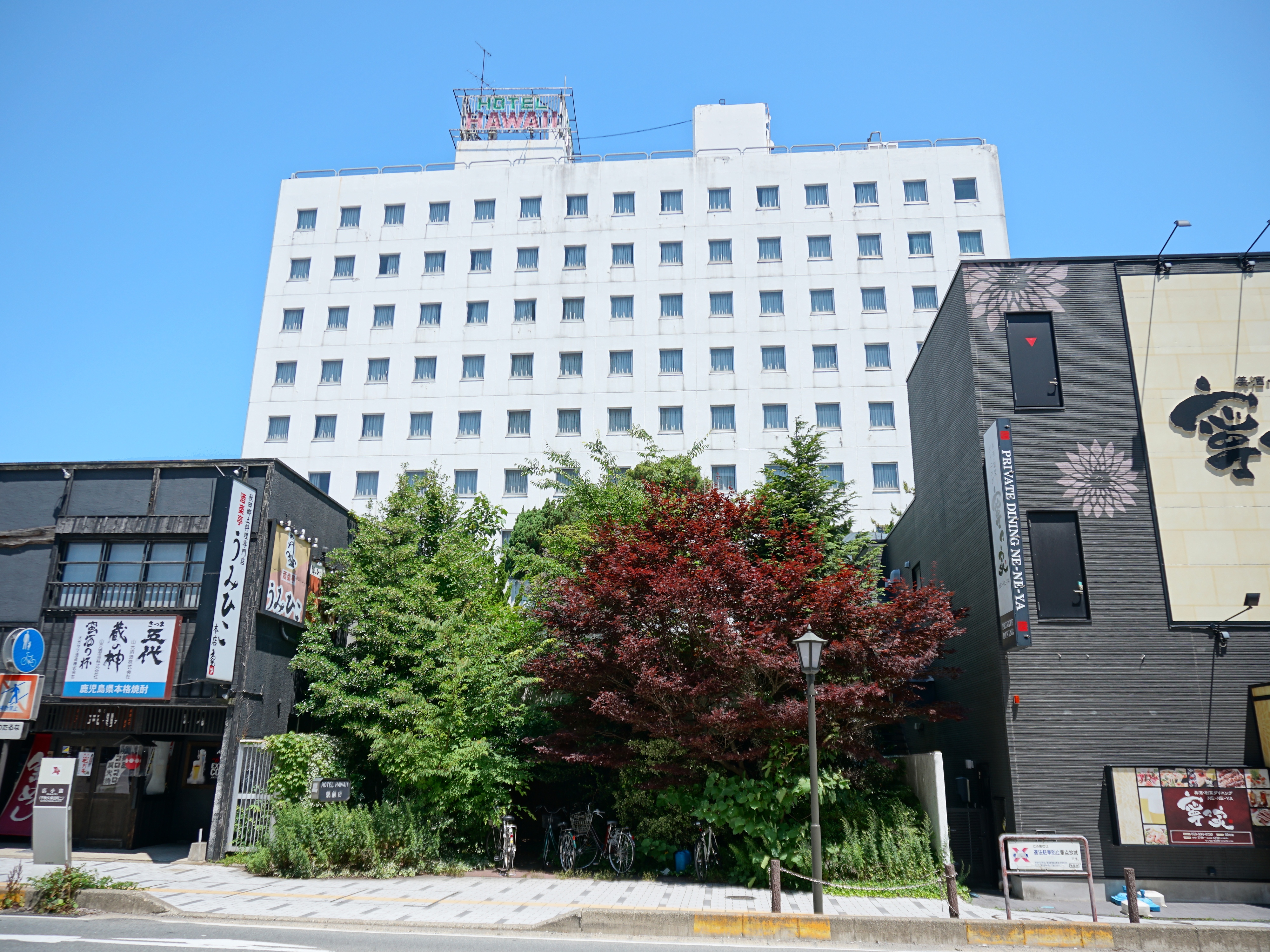
Akita Prefecture’s coastal and highland areas have some notable examples. The former Hotel Hawai — a modest onsen hotel that closed decades ago and whose building has remained in place in the Akita urban landscape — became an unlikely social media phenomenon, its overgrown facade and dark windows visible from passing streets. Other onsen towns in the region, including some of the secondary cluster around Naruko Gorge in Miyagi and the quieter thermal areas of Fukushima, have abandoned properties interspersed with operating facilities, creating the surreal visual effect of working ryokan alongside completely dark neighbors.
For visitors interested in onsen town decline as a cultural phenomenon rather than as pure haikyo exploration, the most illuminating approach is to simply stay in one of Tohoku’s quieter onsen towns — where occupancy rates are lower and the economic challenges more visible — and talk to the proprietors. The history of how a given resort area has changed over the past fifty years, which families sold and which held on, which buildings represent failed renovations and which represent long-planned retirements, is almost always more complex and human than the bare visual facts of the buildings suggest.
Practical Guide: Planning a Haikyo-Focused Visit to Tohoku
Essential Research Resources
Before visiting any specific site, thorough research is essential — both to understand what you’ll encounter and to assess current accessibility and conditions. The most useful English-language resources include:
- Abandoned Kansai (abandonedkansai.com) — Though focused on western Japan, this site’s methodology and photography standards are excellent models for haikyo research, and some posts cover Tohoku.
- Japan’s haikyo subreddits and photography forums — Current accessibility information from people who’ve visited recently is invaluable. Conditions change: some sites are demolished, others newly restricted, others actually cleaned up and reopened.
- Japanese photography websites and SNS — Instagram and Twitter/X hashtags like #廃墟 and #廃墟探索 yield thousands of recent images from Japanese haikyo explorers, often with location information and current condition notes.
The Best Season for Haikyo Photography
Each season offers different photographic conditions for Tohoku’s abandoned sites:
- Spring (April–May): New vegetation creating vivid green contrast with grey concrete. Cherry blossoms occasionally visible near abandoned structures are among the most striking images in the genre.
- Summer (June–August): Maximum vegetation, dramatic natural light. Mountain sites may be accessible that aren’t available in other seasons, but heat and insects are factors at lower elevations.
- Autumn (September–November): The best overall season — autumn foliage dramatically enhances exterior shots, lower humidity improves landscape photography, and the approaching winter adds melancholic atmosphere.
- Winter (December–March): Snow creates extraordinary compositions, particularly at highland sites like Matsuo Mine where heavy snowfall is common. However, access can be difficult or impossible, structural collapse risk increases under snow load, and temperature management becomes critical. Winter haikyo photography is an expert-level undertaking.
Photography Equipment Recommendations
While any camera will work for haikyo photography, certain equipment choices significantly improve results:
- Wide-angle lens: Essential for capturing interior spaces and the scale of large exterior structures. A 16–24mm equivalent focal length is ideal.
- Tripod: Many interiors receive very little light. A compact travel tripod allows long exposures in dim spaces without ISO noise.
- Red-light headlamp: Useful for navigating dark interiors without destroying your natural-light photography setup.
- Dust mask: Former industrial sites, construction-era buildings, and long-abandoned hotels may contain asbestos, silica dust, and other respiratory hazards. An N95 mask is basic safety equipment for interior exploration.
- Sturdy footwear: Hiking boots with ankle support and puncture-resistant soles. Debris, broken glass, and unstable floors are constant hazards.
Responsible Haikyo Tourism: Supporting Local Communities
One of the more interesting recent developments in the haikyo world is the growing overlap between abandoned-places photography and rural revitalization efforts. Several communities in depopulated Tohoku areas have begun recognizing their “derelict heritage” as a potential tourism asset — not through formal preservation of specific sites, but through guided tours, photography workshops, and community storytelling projects that use the abandoned landscape as a way of engaging visitors with local history.
The Akita Prefecture program “Jomon no Furusato” and various community initiatives in the Kitakami River valley area have organized photographer-led tours of abandoned agricultural areas, combining landscape photography with conversations with remaining elderly residents who can provide human context for the empty buildings around them. This kind of respectful, community-integrated engagement is arguably the most valuable form of haikyo tourism — it benefits local communities financially, provides photographers with richer context, and ensures that the stories behind the abandoned places are preserved alongside their images.
If you’re planning a Tohoku trip with a significant haikyo component, consider spending a night or two in one of the smaller onsen towns or rural guesthouses near your target sites. Your accommodation spending directly supports communities that are, in many cases, struggling with the exact economic pressures that produced the abandoned buildings you’ve come to photograph. It’s a small but meaningful way to honor the human reality behind the aesthetics.
Getting to Tohoku’s Key Haikyo Sites
- Matsuo Mine (Iwate): By car from Morioka, approximately 60 minutes north on National Route 282 toward Hachimantai. No public transport reaches the site directly; a rental car from Morioka is essential. Morioka is reached from Tokyo via Hayabusa Shinkansen in approximately 2 hours 10 minutes (around ¥14,000 / $95 one-way).
- Hachimantai Highland area: The same rental car from Morioka covers Matsuo Mine and the broader Hachimantai Highland area, which contains additional abandoned and semi-abandoned structures from various eras. A full day’s driving in this area is well worthwhile.
- Fukushima and Yamagata highland ruins: Accessible by rental car from Fukushima City (reached from Tokyo on the Tohoku Shinkansen in approximately 80 minutes, around ¥8,000 / $55) or Yamagata City (via the Yamagata Shinkansen in about 2.5 hours, approximately ¥14,000 / $95).
- Rural Akita countryside: The JR Akita main line and Ou main line provide access to rural Akita communities, though a rental car greatly expands access to backroads and agricultural areas. Akita City is reached from Tokyo via Komachi Shinkansen in approximately 3 hours 45 minutes (around ¥18,000 / $122).
Where to Stay Near Tohoku’s Haikyo Sites
Budget (Under ¥8,000 / $55 per night)
Business hotels near Morioka or Akita stations offer rates from around ¥5,000–7,000 ($34–48) for single rooms and provide convenient bases for rental car collection. The Dormy Inn Morioka and several APA Hotel properties offer good value with the added bonus of natural hot spring baths — a welcome recovery after a day of outdoor exploration.
Mid-Range (¥8,000–¥20,000 / $55–$135)
Onsen towns near key haikyo zones offer atmospheric mid-range accommodation. Nyuto Onsen area guesthouses and the Hachimantai Prince Hotel (when open seasonally) provide highland bases that put you close to the Matsuo Mine area and away from city light pollution — a bonus if you’re combining haikyo with the stargazing that the same highland areas support. Rates in this range include two meals at most traditional guesthouses.
Luxury (¥20,000+ / $135+)
Tsuru-no-Yu Onsen in Nyuto, Akita (the historic thatched-roof ryokan) provides the most atmospheric high-end experience near the Hachimantai haikyo zone, with outdoor hot spring pools, kaiseki dinner, and extraordinary surroundings. Rates from ¥20,000–28,000 ($136–190) per person including meals. Book well in advance — this is one of Japan’s most sought-after rural accommodation experiences.
Sample Itinerary: Two Days of Haikyo and Highland Culture
Day 1: Tokyo to Morioka to Hachimantai
Morning: Take the 7:20 AM Hayabusa Shinkansen from Tokyo to Morioka, arriving approximately 9:30 AM. Collect rental car and stock up on supplies: water, snacks, a good map (cell service can be limited in mountain areas), and any photography equipment not already in your bag.
Midday: Drive north toward Hachimantai on Route 282. Stop at the Matsuo Mine viewpoints — the most accessible and photogenic angles are from the public road northwest of the ruins. Allow at least 90 minutes at the site: the changing light, the mist that often surrounds the ruins in the morning, and the scale of the complex reward patient observation and multiple photography positions.
Afternoon: Continue to Hachimantai Plateau and explore the highland landscape. In summer, the hiking trails through alpine meadows and volcanic ponds are extraordinary; the visual contrast with the industrial ruins passed earlier in the day is thought-provoking in exactly the way good haikyo should be.
Evening: Drive down to Nyuto Onsen area (about 45 minutes from Hachimantai summit) and check in for the night. The outdoor sulfurous baths of Tsuru-no-Yu or neighboring Taenoyu are ideal for recovery after a day of outdoor exploration.
Day 2: Rural Exploration and Return
Morning: Slow start, breakfast at the inn, then explore the backroads of the Tazawa-ko and Senboku area in Akita. The secondary roads through the agricultural valleys contain numerous akiya — abandoned farmhouses and community structures — that reward patient driving and respectful observation from public roads. Allow yourself to be led by what you find rather than following a fixed itinerary.
Afternoon: Return rental car to Tazawa-ko Station by 3:00 PM and take the Komachi Shinkansen back toward Tokyo. Journey time: approximately 4 hours to Tokyo Station, arriving in time for dinner.
Related Articles You Might Enjoy
- Mount Adatara & Dake Onsen, Fukushima: Japan’s Sacred Volcano & Secret Healing Hot Spring
- Tsurugajo Castle (Aizuwakamatsu): Complete Guide to Fukushima’s Iconic Samurai Fortress
- Iimoriyama & Sazaedo, Aizuwakamatsu: Fukushima’s Samurai Tragedy Hill and Japan’s Only Double-Helix Pagoda
- Appi Kogen, Iwate: Japan’s Premier Powder Ski Resort — Complete Guide for Foreign Visitors
- Kuji, Iwate: Japan’s Northernmost Ama Divers & Hidden Amber Museum
Final Thoughts
Tohoku’s abandoned places are not simply photogenic backgrounds for dramatic photography — they are documents. They record decisions made by Japan’s government and corporations about which industries to pursue and which to abandon. They record the human consequences of population policies and economic forces that concentrated prosperity in a handful of major urban centers while draining vitality from rural communities that had sustained themselves for generations. They record the specific disaster of March 11, 2011, in ways that no reconstruction can fully erase. And they record something universal: the fact that everything human beings create is temporary, and that nature — given time — reclaims everything.
Approach Tohoku’s haikyo with the same respect you’d bring to any encounter with serious history. Research thoroughly, tread carefully, photograph generously, take nothing, and leave each site in the same condition you found it. If you do these things, what you’ll carry away will be more than images: it will be a genuine understanding of a place that most Tohoku visitors never encounter, and a perspective on Japan that the cherry blossoms and sushi conveyor belts, wonderful as they are, simply can’t provide.


コメント