Long before written history, Tohoku’s communities expressed their deepest hopes — for good harvests, protection from evil, gratitude to the mountain gods, and connection with the spirits of ancestors — through music, dance, and dramatic performance. These were not casual entertainments but sacred technologies: ways of communicating with the supernatural, maintaining cosmic order, and binding communities together through shared experience. Today, these ancient performing arts survive as living traditions in all six of Tohoku’s prefectures, performed at shrines, festivals, school gymnasiums, and community centers across the region. Here is your guide to experiencing Tohoku’s extraordinary world of traditional performing arts — what they mean, where to see them, and how to engage with them respectfully and fully.
Tohoku as Japan’s Living Performing Arts Museum
Japan has preserved traditional arts with remarkable dedication throughout its history, but Tohoku holds a special place even within this broader context. The region’s relative geographic isolation — mountains and distance from the major political centers of Kyoto and Edo — allowed local folk traditions to develop independently and persist with unusual continuity. Performing arts that were simplified, commercialized, or absorbed into mainstream culture elsewhere in Japan survived in Tohoku as vibrant community practices tied to agricultural cycles, religious calendars, and local identity.
UNESCO’s Intangible Cultural Heritage lists and Japan’s own Important Intangible Folk Cultural Properties designation include dozens of Tohoku traditions. The Nebuta and Neputa festivals of Aomori, the Kanto lantern festival of Akita, and the Sansa Odori drum festival of Iwate are all nationally designated; dozens more survive as prefectural or municipal treasures. What makes Tohoku’s performing arts particularly accessible to international visitors is their public nature — the major festivals are large-scale outdoor events on fixed calendar dates, open to all observers, and the performers take genuine pride in sharing their traditions with foreign visitors who show appreciation.
For those willing to go slightly beyond the most famous festivals, village-scale performances at local shrines and community events offer an even more intimate encounter with these traditions — a chance to see the arts as they were always meant to be experienced: not as entertainment for tourists but as living religious and community practice.
Kagura: Sacred Shinto Dance-Drama
Kagura (literally “entertainment for the gods”) is the oldest continuous performing arts tradition in Japan, tracing its mythological origins to Ame-no-Uzume-no-Mikoto’s dance that lured the Sun Goddess Amaterasu from her cave and restored light to the world. As a performing form, kagura encompasses an enormous variety of ritual dances, theatrical performances, and music styles that vary significantly by region — Tohoku’s kagura traditions are among the most diverse and dramatic in the country.
The core structure of kagura involves performers — traditionally only men, though this varies by region and modern practice differs — wearing elaborate masks representing gods, demons, and mythological figures. Set to music played on hand drums, fue flutes, and the distinctive chanting of shrine attendants, the dances enact stories from Japanese mythology and folk tales with stylized movements that have been refined over centuries. The quality of kagura masks and costumes varies from region to region, but the finest examples are objects of genuine artistic beauty — lacquered, gilded, and expressive in ways that reward close examination.
Tohoku’s most celebrated kagura traditions include:
- Hanamaki Kagura (Iwate Prefecture): One of Japan’s most vigorous and acrobatic kagura styles, characterized by dramatic leaping and spinning movements quite different from the more stately southerly kagura forms. Performances tell stories of demon-quelling heroics from Japanese mythology with athletic intensity.
- Hayachine Kagura (Iwate Prefecture): Registered as a UNESCO Intangible Cultural Heritage, this tradition performed at Hayachine Shrine is considered one of the finest examples of sacred kagura in Japan. The performances are held during the annual mountain festival at Hayachine Shrine in late August — a combination of mountain pilgrimage and sacred performance in a dramatically beautiful mountain setting.
- Shishi Kagura (Iwate/Miyagi/Akita): A style incorporating lion masks (shishi) rather than the human-form masks of other kagura styles — related to but distinct from the Shishi-odori described below. Shishi Kagura performers travel from village to village during New Year’s season, bringing divine blessing to households through their dances.
When and where to see kagura: Kagura performances are most concentrated during summer and autumn shrine festivals throughout Tohoku. The Hayachine Shrine performances (Hanamaki City, Iwate) in late August are among the most accessible and impressive. Local shrine festivals in September and October in rural Iwate and Miyagi also feature regular kagura, particularly the traveling New Year’s kagura groups active from January through March. Contact Iwate Prefectural Tourism for current performance schedules.
Shishi-Odori: The Ancient Deer Dance of Tono
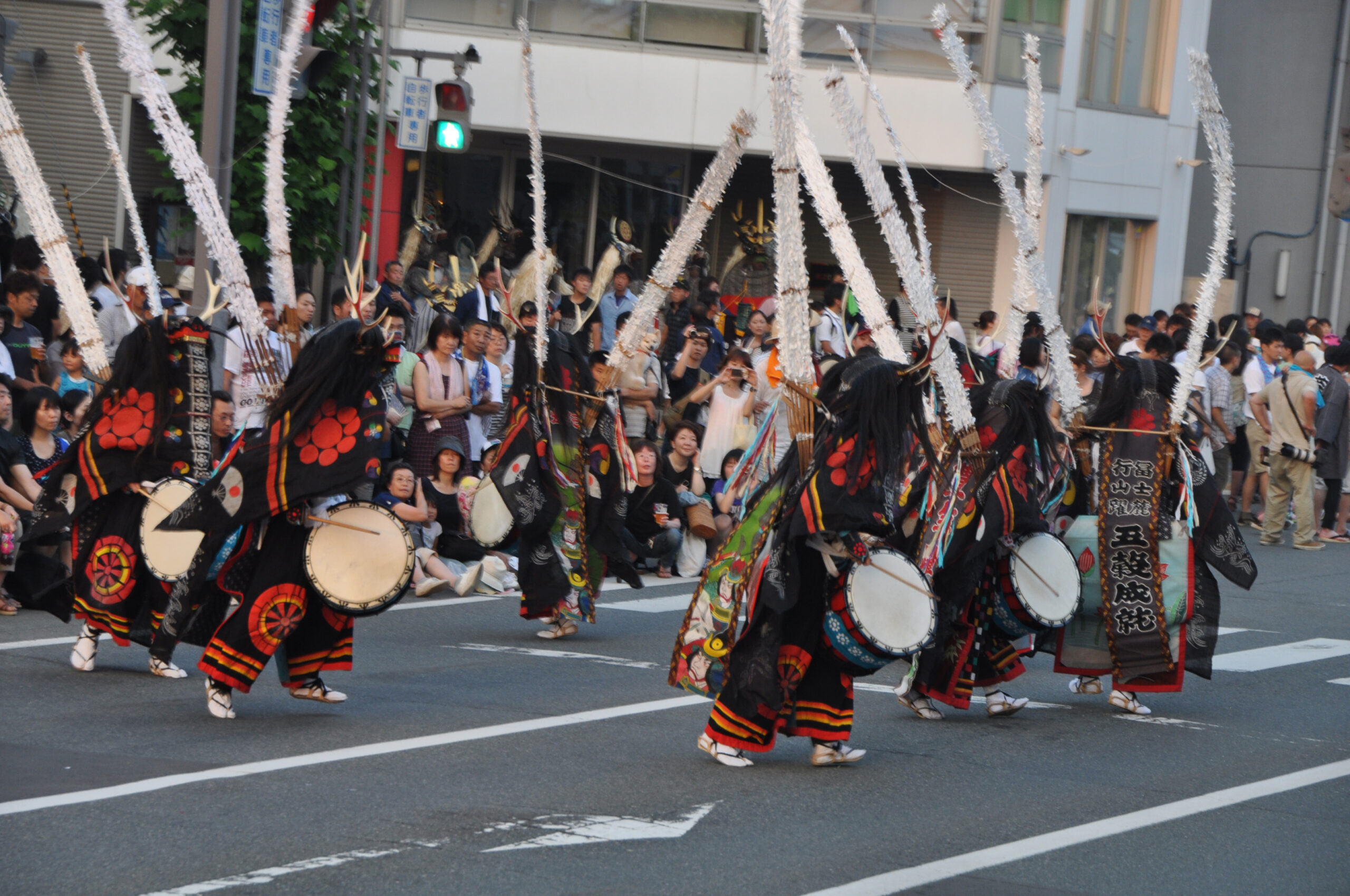
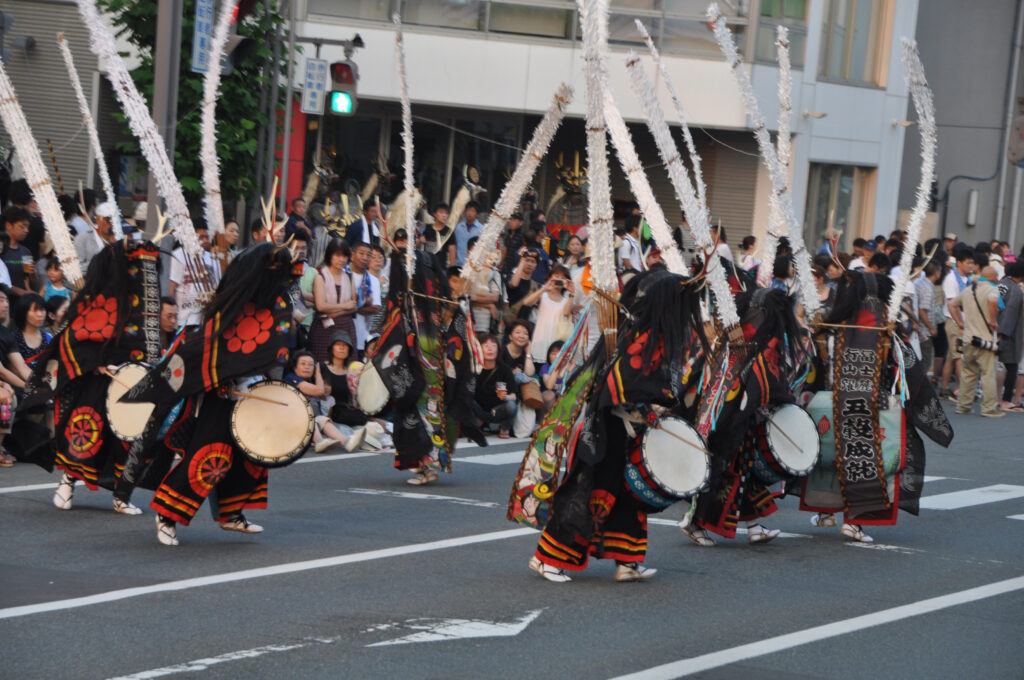
Of all Tohoku’s traditional performing arts, the Shishi-odori (deer dance) of Iwate Prefecture may be the most visually dramatic and historically fascinating. Performers wear massive deer head ornaments made of papier-mâché — antlered deer head headdresses with long flowing tails of shredded paper (washi) or fabric — and dance in formations of 6–12 performers to the sound of hand drums and flutes. The movements deliberately evoke the grace and wildness of deer: leaping, stamping, swaying, turning — but stylized into patterns passed down through hundreds of years of practice.
The Shishi-odori is believed to have originated as a ritual to pray for good harvests and to appease the spirits of deer killed in hunting, sometime in the 14th–16th century. The combination of deer symbolism (deer were sacred intermediaries between the human and spirit worlds in ancient Japanese belief), theatrical spectacle, and the pounding rhythm of taiko drums produces performances of remarkable emotional power. Watching 12 performers in deer headdresses move in synchronized patterns across a village square while hundreds of drums echo from the surrounding mountains — a common setting for rural festivals — is one of those experiences that imprint permanently on memory.
The Tono area of Iwate Prefecture is the heartland of Shishi-odori, with dozens of local groups maintaining the tradition. The Tono Furusato Village festival in early September is the most concentrated opportunity to see multiple groups perform. The Tono Furusato Village park also maintains a permanent demonstration facility where visitors can see costumes and occasionally watch rehearsal performances outside festival season.
Hanagasa Odori: Yamagata’s Flower Hat Dance
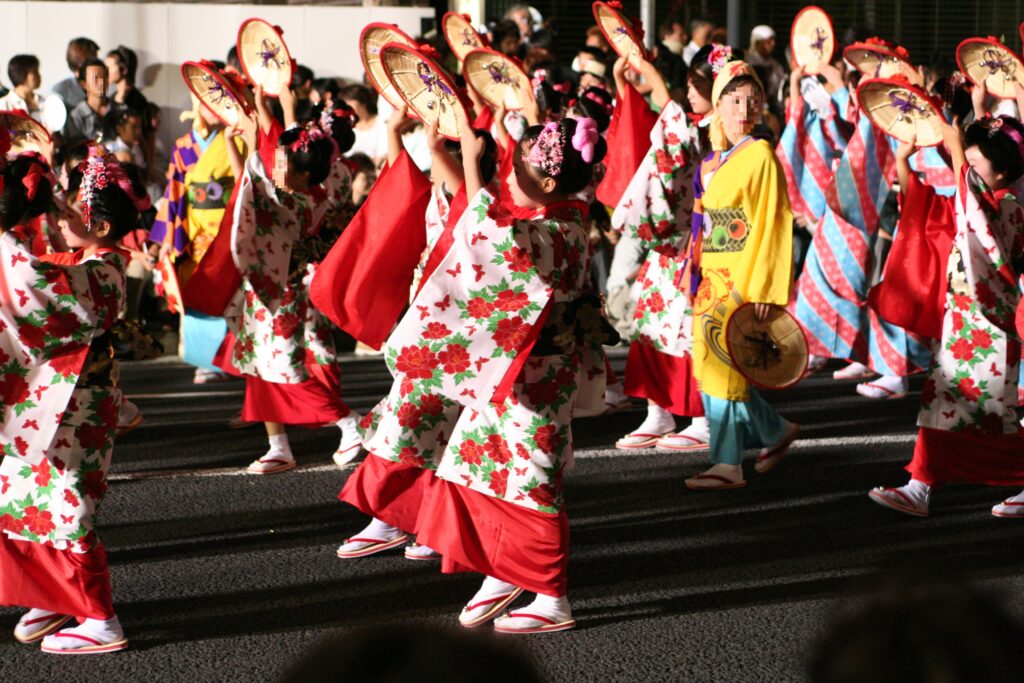
The Hanagasa Odori (flower hat dance) is the signature performing tradition of Yamagata Prefecture — a dance that combines elegant, swaying movements with the visual spectacle of hundreds or thousands of dancers wearing hanagasa: straw hats (kasa) decorated with safflower blossoms (beni-bana), Yamagata’s regional flower. The dance has deep roots in agricultural festivals celebrating the harvest and the hard work of rice cultivation, and the movements themselves evoke working motions — planting, harvesting, carrying — stylized into flowing choreography.
The Yamagata Hanagasa Matsuri festival (August 5–7 each year) brings an estimated 10,000 dancers into Yamagata’s central streets for three evenings of continuous performance. Dancers from across the prefecture compete for the honor of leading the procession, and the variety of interpretations — from traditional conservative forms to modern athletic arrangements — reflects the breadth of the tradition. The hanagasa themselves vary from simple natural straw to elaborate confections decorated with dozens of artificial safflower blossoms, and watching the ocean of flower hats moving in unison under the August evening sky produces a visual rhythm that borders on hypnotic.
Uniquely among Tohoku’s major festival traditions, the Hanagasa Odori actively invites visitor participation. On each evening of the festival, “fan participation” (Kankō Odori) sections invite observers who have learned the basic steps to join the procession and dance alongside local performers. This reflects Yamagata’s particularly welcoming approach to cultural tourism and provides an opportunity to experience the dance from within rather than as a spectator. Free dance instruction sessions are typically held in the afternoon before each evening’s procession.
Getting there: Yamagata City is accessible by Shinkansen from Tokyo in about 2.5 hours (¥12,500 / ~$85). Book accommodation for August 5–7 many months in advance — the city fills completely during Hanagasa Matsuri. The prefectural government and tourism association maintain English-language resources about the festival at Yamagata Kanko Navi.
Akita Kanto: Balancing 46 Lanterns on Your Forehead
The Akita Kanto festival (August 3–6 annually) is one of Tohoku’s “Big Three” summer festivals and one of the most physically extraordinary performance traditions in Japan. Kanto are bamboo poles 12 meters (39 feet) tall hung with 46 paper lanterns — the whole assembly weighing about 50 kg (110 pounds) — that performers balance on their forehead, palm, shoulder, or lower back while the assembled crowd chants the haunting kanto call: “Dokosa Dokosa… Dokosa Dokosa…” The sight of rows of enormous glowing poles swaying in the hands and heads of dancers as thousands of lanterns illuminate the night sky is unlike anything else in Japanese festival culture.
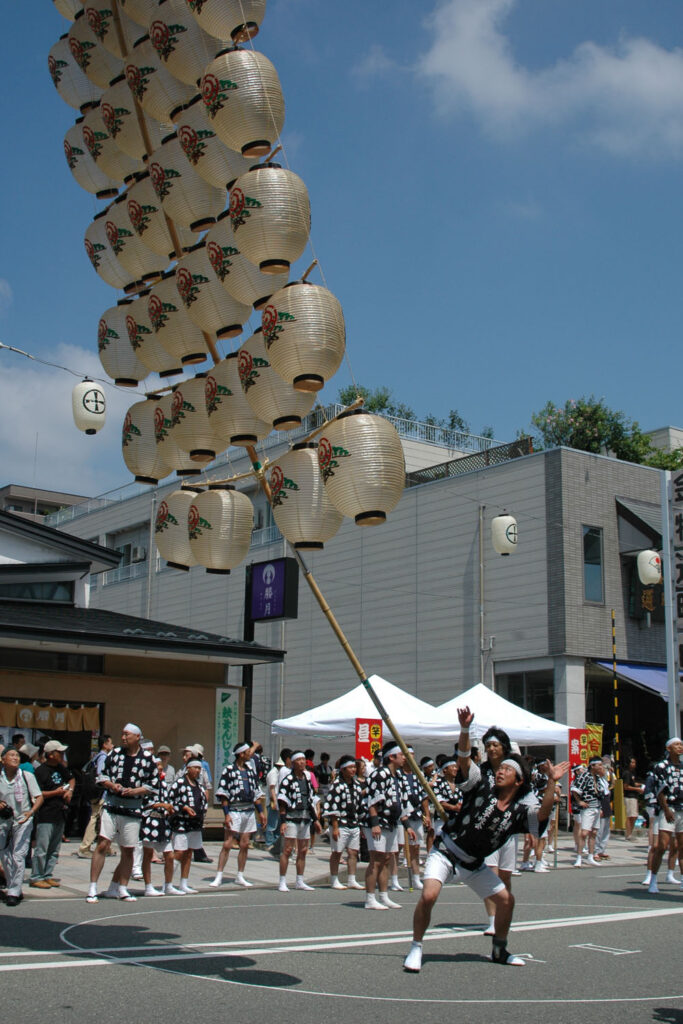
The Kanto tradition originated in Bon season (mid-August) as a way of praying for good harvest and driving away bad spirits, with the lanterns symbolizing ears of rice bowing under their weight. The technique of balancing is not improvised — kanto performers train from childhood, beginning with small single-lantern poles and working up to full-size kanto over years of practice. The smallest poles (4 lanterns) are within reach of a school-age child; the full professional kanto requires extraordinary core strength, balance training, and mental concentration.
The main festival performance takes place along Chuo-dori Avenue in Akita City on four evenings beginning August 3. Each evening, approximately 130–150 kanto groups perform simultaneously along the avenue — a total of around 10,000 performers and 270 kanto, creating a forest of swaying light that stretches for hundreds of meters. The daytime performances at Senshu Park on August 5–6 are less dramatic than the evening displays but allow closer viewing and provide opportunities for visitors to try balancing techniques themselves.
Getting there: Akita City is about 4 hours from Tokyo by Akita Shinkansen (¥17,000–¥19,000 / ~$115–130). Accommodation books out many months in advance for the festival dates. Arriving on August 2 (the day before the main festival) is recommended for setup viewing and less crowded restaurant access.
Namahage: The Terrifying Winter Gods of Oga Peninsula
On the evening of December 31 each year — New Year’s Eve, by the old Japanese calendar — the hillsides of Akita’s Oga Peninsula echo with the crashing sound of wooden doors being flung open and the roar of creatures demanding entry. The Namahage (names deriving from the practice of peeling off bad habits and sloth, like removing blisters from skin) are visitor-deities who arrive at every household in groups of two or three, wearing enormous, terrifying demon masks of red and blue lacquered wood, shaggy straw rain capes, and carrying wooden buckets and kitchen knives. They roar demands — “Are there any crybabies here?” “Are there any lazy children?” “Are there any disobedient wives?” — and the household’s father must calm them, serve them sake, and present a register of the family’s good behavior before the Namahage depart satisfied.
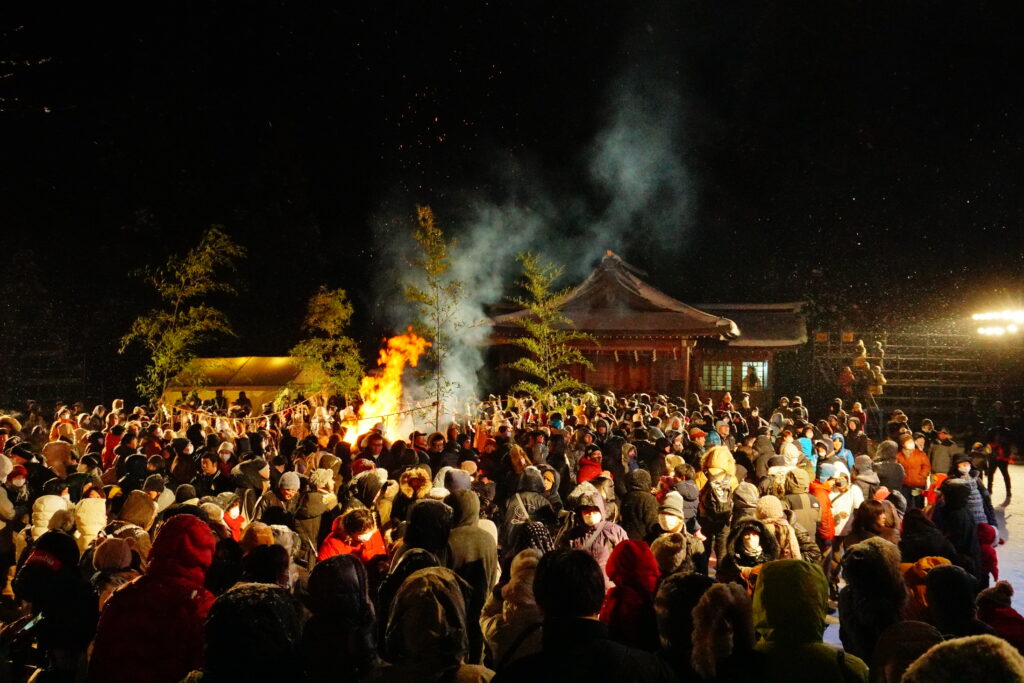
The Namahage tradition is one of Japan’s most powerful and psychologically sophisticated folk practices — a community-wide reinforce of behavioral norms through the mechanism of theatrical fear. Children in the household are expected to cry, hide behind their parents, and be frightened, then comforted; the experience supposedly instills good behavior for the coming year. The masks and costumes are some of the most impressive folk art objects in Japan — the craftsmanship of the lacquered demon faces varies enormously by individual family tradition, with the oldest masks being genuine works of art.
In 2018, UNESCO inscribed the Namahage tradition (along with several other Japanese New Year mask deity traditions) on the Intangible Cultural Heritage list, recognizing its significance as one of humanity’s living ritual traditions. For visitors who cannot be on the Oga Peninsula on New Year’s Eve, the Namahage Sedo Festival at Shinzan Shrine (second weekend of February annually) recreates the ritual in a public ceremony that can be observed by visitors. This is one of the most atmospheric and memorable events on the entire Tohoku calendar — arriving as Namahage descend the mountain with torches in the winter night, to the sound of taiko and prayer.
The Namahage Museum in Oga City (open year-round) has an outstanding collection of demon masks from different village traditions across the peninsula and provides English-language context that significantly deepens the experience of seeing the Namahage in person. Budget at least 90 minutes here before attending any Namahage performance.
Bon Odori: Dancing for Ancestor Spirits
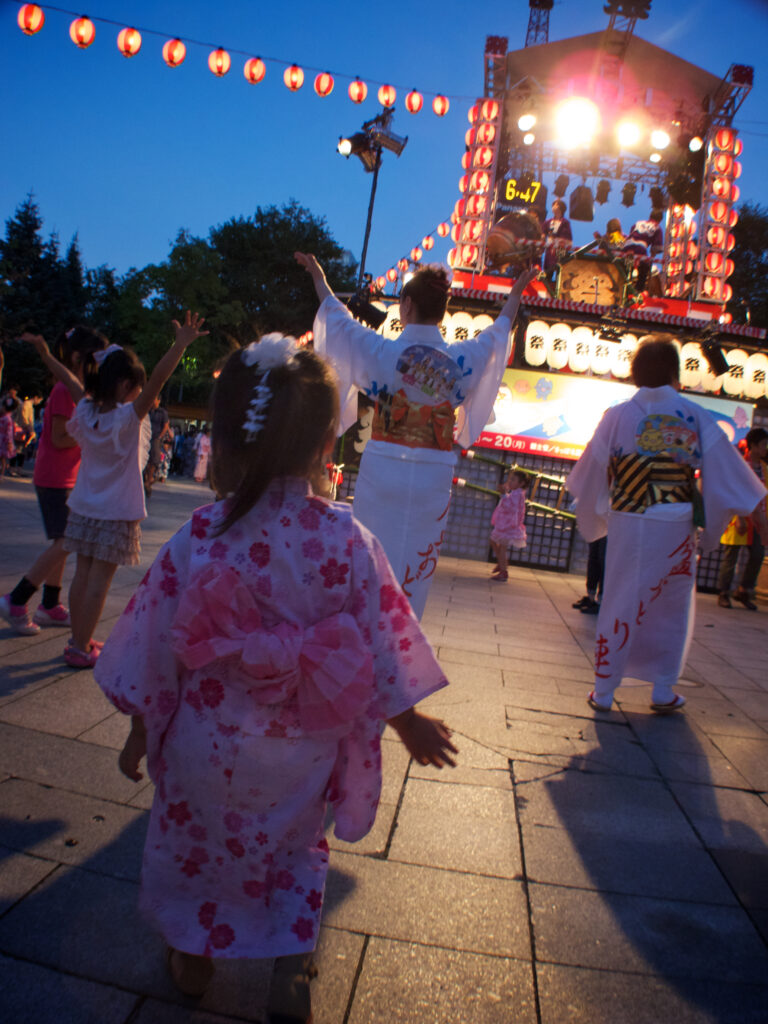
Bon Odori (Bon dance) is not unique to Tohoku — it is practiced throughout Japan during the Obon season (mid-August) when ancestor spirits are believed to return to the world of the living. But Tohoku’s bon dancing traditions carry particular depth and local character, reflecting the region’s strong connection to agricultural and community identity. The basic principle is simple: communities dance together in circles around a central yagura (stage) where musicians play, as an offering to returning ancestor spirits and a celebration of summer’s peak.
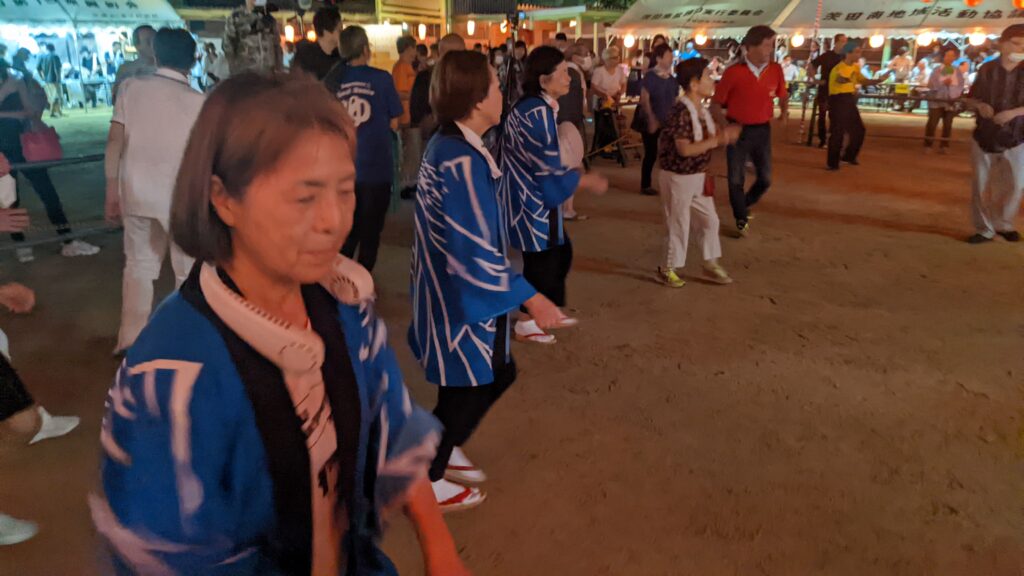
In Tohoku, each area has developed its own distinctive bon dancing style, music, and repertoire. Akita’s “Nishimonai Bon Odori” (Ugo Town, Akita Prefecture) is considered among Japan’s three greatest bon dances — distinctive for the unusual costume of “hikosa head covering” (ancient clothing) worn by women dancers, combined with sophisticated choreography that blends graceful arm movements with earth-rooted stepping. The Nishimonai dance has a quality of restrained elegance quite different from the more festive styles of other regions, and the sight of hundreds of dancers in traditional costume moving in the August night carries a quality of genuine spiritual weight. It runs for three days from August 16–18 each year.
Miyagi’s Kiriyama Koma Festival (Kurihara City) includes bon dance elements combined with other traditional arts in a rural festival context that provides an accessible way to experience authentic community bon dancing. Throughout Tohoku, neighborhood bon dancing events in temple grounds and community parks take place throughout August — these small-scale, genuinely participatory events (visitors are always welcome to join the circle) often provide the most meaningful encounters with the tradition.
Participating: The etiquette for joining a Bon Odori circle is simple: stand at the outside edge and observe the basic step pattern for a few minutes, then join in at the outer ring. Mistakes are expected and welcomed — the point is participation, not perfection. Wearing a yukata (cotton summer kimono) significantly increases the sense of connection with the event and is greatly appreciated by local participants. Rentals are available in most Tohoku cities for ¥2,000–¥4,000 ($14–27) including dressing assistance.
Enburi: Aomori’s Spring Rice Planting Ritual
The Enburi festival of Hachinohe in southern Aomori Prefecture (held around February 17 each year) is one of Japan’s most unusual traditional performing arts — a winter prayer for good rice harvest that combines elaborate equestrian-style headdresses with stylized mime of agricultural work. Performers wearing enormous, elaborately decorated horse-head headdresses (which can weigh 5–7 kg / 11–15 pounds) dance in precise patterns that enact the stages of rice cultivation — plowing, planting, growing, harvesting — in a performance tradition over 800 years old.
The Enburi’s setting is dramatic: performed in Hachinohe in the depths of Tohoku winter (February averages 0°C / 32°F in Aomori), the elaborately costumed dancers fill temple grounds and city plazas as snow may still lie on the ground. The combination of the massive, colorful headdresses, the precision of the agricultural mime movements, and the midwinter cold creates an atmosphere of determined communal hope — literally dancing spring into existence through ritual performance. This paradox of celebrating the approaching growing season in the harshest week of winter is central to the tradition’s emotional power.
Over 30 groups participate in the main Enburi festival over three days in mid-February, performing at various locations across Hachinohe City. The most photographically dramatic performances are the early-morning outdoor ceremonies at Jōganjii and Shiroyama Park. Hachinohe is 3 hours from Tokyo by Shinkansen to Shin-Hachinohe Station (~¥19,000 / $130).
Tsugaru Shamisen: Aomori’s Virtuosic Folk Music
While most of the traditions on this list are visual performance arts, Tsugaru shamisen deserves inclusion as the sonic backbone of Tohoku culture — a musical tradition that has profoundly influenced both Japanese traditional music and international folk-fusion, while remaining rooted in the specific landscape and character of Aomori Prefecture’s Tsugaru region (the western peninsula). The Tsugaru shamisen style is characteristically aggressive, improvisational, and emotionally naked in a way that sharply distinguishes it from the more restrained mainstream shamisen traditions.
The Tsugaru shamisen originated with itinerant blind musicians (called goze in the women’s tradition, Bosama in the men’s) who traveled the Tsugaru region playing for food and lodging. Without the patronage of court or temple that shaped other Japanese musical traditions, these musicians developed a style that relied on pure emotional impact — the drive, the volume, the rhythmic attack — to generate paying audiences in cold, skeptical village audiences. The result is music that still sounds radical: rhythms that accelerate into frenzy, techniques that produce cascading hammer-on runs and percussive body slaps on the instrument’s skin, dynamics that shift from intimate whisper to full-throated roar within a single phrase.
Hirosaki City in Aomori is the epicenter of Tsugaru shamisen culture and hosts the Tsugaru Shamisen World Competition each August — drawing players from across Japan and internationally, including competitors from the US, Canada, and Europe who have taken up the instrument. Seeing this competition, which places both traditional forms and innovative improvisation alongside each other, is one of the most musically stimulating experiences on the Tohoku calendar.
Live Tsugaru shamisen performances are offered regularly at venues in Hirosaki, Aomori City, and at major tourist facilities in the Tsugaru area. Budget approximately ¥2,000–¥3,000 ($14–20) for seated concert performances; some restaurants in the Aomori/Hirosaki area feature live shamisen during dinner service. The music requires no cultural context to impact the listener — it is immediately gripping on its own terms.
Sansa Odori: Morioka’s Drum and Dance Festival
Morioka, Iwate’s prefectural capital, hosts one of Japan’s largest drum festivals each August 1–4: the Sansa Odori, in which approximately 30,000 dancers and 10,000 flute and drum players parade through the city center over four evenings. The Sansa tradition traces its origins to a legend in which villagers defeated a demon (oni) by celebrating so joyously that the demon was driven away — the persistence of joyful community through adversity being a recurring theme in Tohoku’s cultural heritage, particularly poignant in the context of the 2011 disaster’s aftermath.
What distinguishes Sansa Odori from other Japanese festival dances is the percussion intensity — the ratio of taiko drummers to dancers is unusually high, and the rhythmic drive of the procession has a physical force that spectators can feel in their chest as much as hear. The drum technique (called Sansa-daiko) is distinctive to this festival and is taught in Morioka schools as a core part of cultural education. Both children and adults participate, creating an intergenerational display of community celebration.
After the formal procession, a mass participation section (“kanko odori”) opens the streets to any visitor who wants to join. Dance instruction pamphlets in English are distributed, and foreign tourists are warmly welcomed into the procession. Morioka is 2.5 hours from Tokyo by Shinkansen (¥13,000–¥14,500 / ~$90–100) and makes an excellent base for exploring central Iwate Prefecture.
How to Experience Tohoku’s Performing Arts
Major Festival Calendar
- January–March: Namahage Sedo Festival (Oga, Akita — 2nd weekend February); Enburi (Hachinohe, Aomori — ~Feb 17); New Year’s Shishi Kagura tours (Iwate, Miyagi — Jan/Feb)
- April–June: Cherry blossom festival dances (various locations); spring kagura performances at major shrines
- August: Nebuta/Neputa (Aomori/Hirosaki, Aug 1–7); Kanto Festival (Akita, Aug 3–6); Sansa Odori (Morioka, Aug 1–4); Hanagasa Matsuri (Yamagata, Aug 5–7); Sendai Tanabata (Sendai, Aug 6–8); Nishimonai Bon Odori (Ugo Town Akita, Aug 16–18)
- September–October: Shishi-odori festivals (Tono and surrounding villages, Iwate); autumn shrine kagura festivals (throughout region)
Year-Round Performing Arts Access
Outside major festival seasons, Tohoku’s performing arts can still be experienced through dedicated facilities and scheduled performances:
- Namahage Museum (Oga, Akita): Year-round exhibitions and periodic demonstrations
- Tono Furusato Village (Tono, Iwate): Museum and periodic live demonstrations of Shishi-odori and other Tono traditions
- Hayachine Kagura (Hanamaki, Iwate): August festival at Hayachine Shrine; regular performances at the shrine through summer
- Tsugaru Shamisen venues (Hirosaki and Aomori City): Regular concert and restaurant performances year-round
- Sendai Performing Arts Center (Sendai, Miyagi): Regular programming of traditional arts performances, including regional acts
Engaging Respectfully with Living Traditions
Tohoku’s performing arts are not museum pieces or tourist products — they are living religious and community practices that happen to be observable by outside visitors. This distinction matters for how you engage. Some guidelines:
- At shrine performances: Observe the behavior of other audience members and follow their cues. During the most sacred portions of kagura, silence and stillness are appropriate. Photography is often welcome but should be done without flash and without stepping into performance space.
- At festival dances: Enthusiastic appreciation — clapping, cheering, showing obvious enjoyment — is welcomed and expected. Dancers and performers are proud of their traditions and glad to share them with appreciative audiences.
- For participation opportunities: When festivals actively invite visitor participation (as Hanagasa and Sansa Odori do), join with genuine effort. Making a sincere attempt at the dance steps, even imperfectly, is far more appreciated than standing aside to observe from a distance.
- Gift exchange: At small, community-scale performances (village festivals, shrine celebrations), a small gift of locally purchased sweets or sake presented respectfully to the festival organizers is a deeply appreciated gesture that is almost invariably reciprocated with extraordinary hospitality.
Final Thoughts: Tohoku as the Soul of Japanese Culture
Tokyo is the face of Japan that the world knows best — modern, technological, international. Kyoto presents Japan’s classical refinement. But Tohoku is something else: the Japan that existed before urbanization, before globalization, before the relentless forward momentum of modernization made the past feel like another country. Here, the same prayers for harvest and protection from evil that echoed through the mountains a thousand years ago still echo through them now — articulated in the crash of taiko drums, the graceful sway of lantern poles, the terrifying roar of demon-visitors at the New Year door. These are not performances about the past. They are the living tissue of Tohoku’s present, conducted by people who genuinely believe in what they’re doing and who share it generously with visitors who approach with respect and curiosity. Come to watch, but be prepared to be moved.
Related Articles You Might Enjoy
- Nanbu Tekki: The Complete Guide to Morioka’s Traditional Iron Casting Experience
- Oga Peninsula & Namahage: Akita’s Most Thrilling Folk Tradition and Dramatic Coastline
- Tsurugajo Castle (Aizuwakamatsu): Complete Guide to Fukushima’s Iconic Samurai Fortress
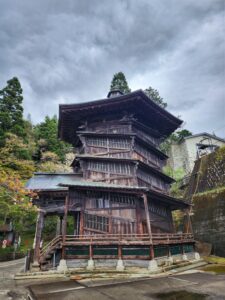
- Iimoriyama & Sazaedo, Aizuwakamatsu: Fukushima’s Samurai Tragedy Hill and Japan’s Only Double-Helix Pagoda
- Zuihoden Mausoleum, Sendai: Complete Guide to the Ornate Resting Place of Japan’s Dragon-Eyed Lord


コメント