Imagine hundreds of dancers moving through lantern-lit streets, their faces hidden beneath black hoods or woven bamboo hats, long silk sleeves trailing through the warm August night — this is the Nishimonai Bon Odori, one of Japan’s most hauntingly beautiful festivals and a UNESCO-recognized masterpiece of intangible cultural heritage. If you’re planning a summer trip to Tohoku and want to witness something that will stay with you for the rest of your life, clear your calendar for August 16–18.
Why Nishimonai Bon Odori Should Be on Every Japan Itinerary
Japan has countless summer festivals, but only three are honored as the nation’s “Three Great Bon Dances” (nihon sandai bon odori): the famous Awa Odori in Tokushima, the all-night Gujo Odori in Gifu, and the Nishimonai Bon Odori in Ugo Town, Akita. Of the three, Nishimonai is by far the least known internationally — and that’s exactly what makes it so extraordinary to experience.
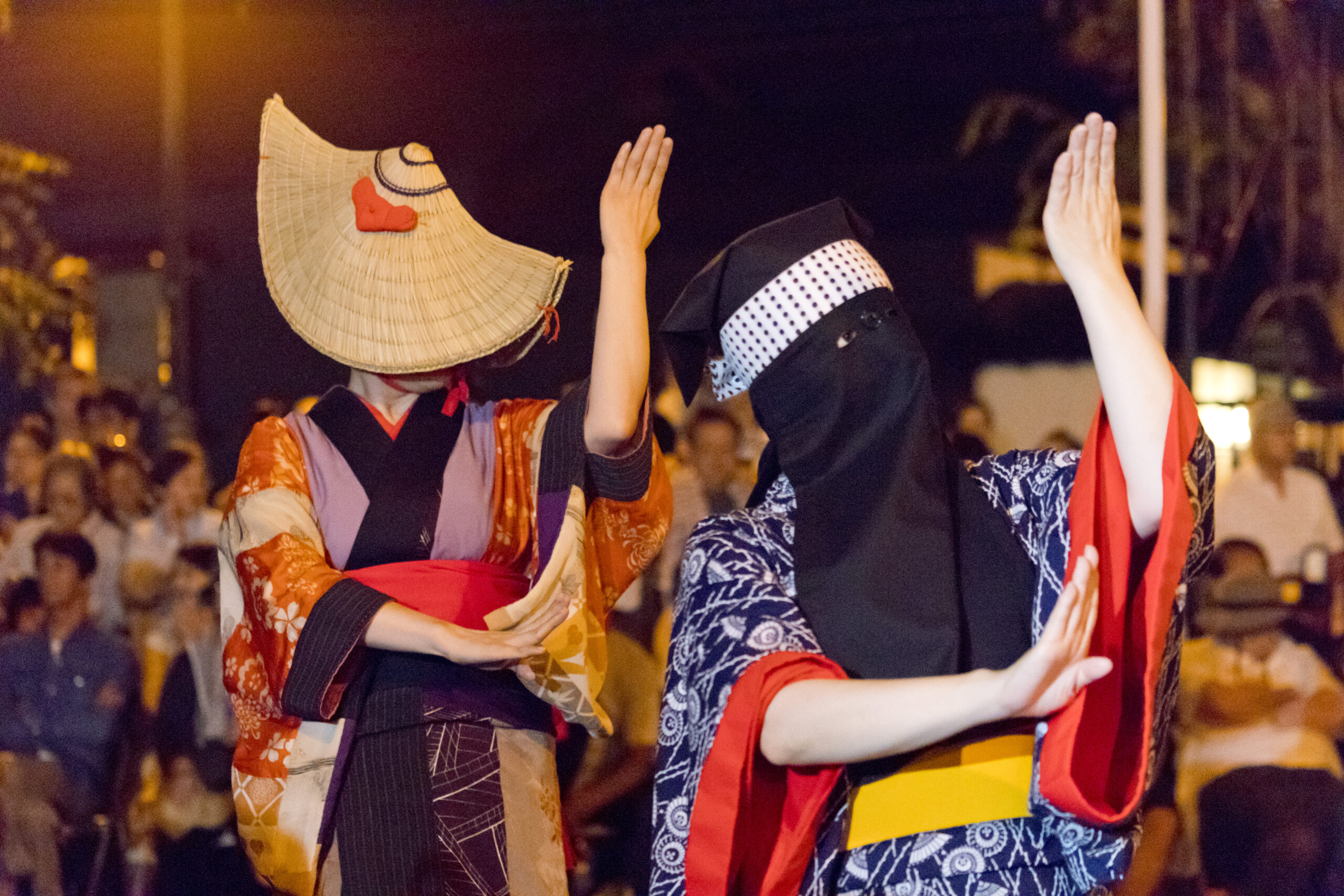
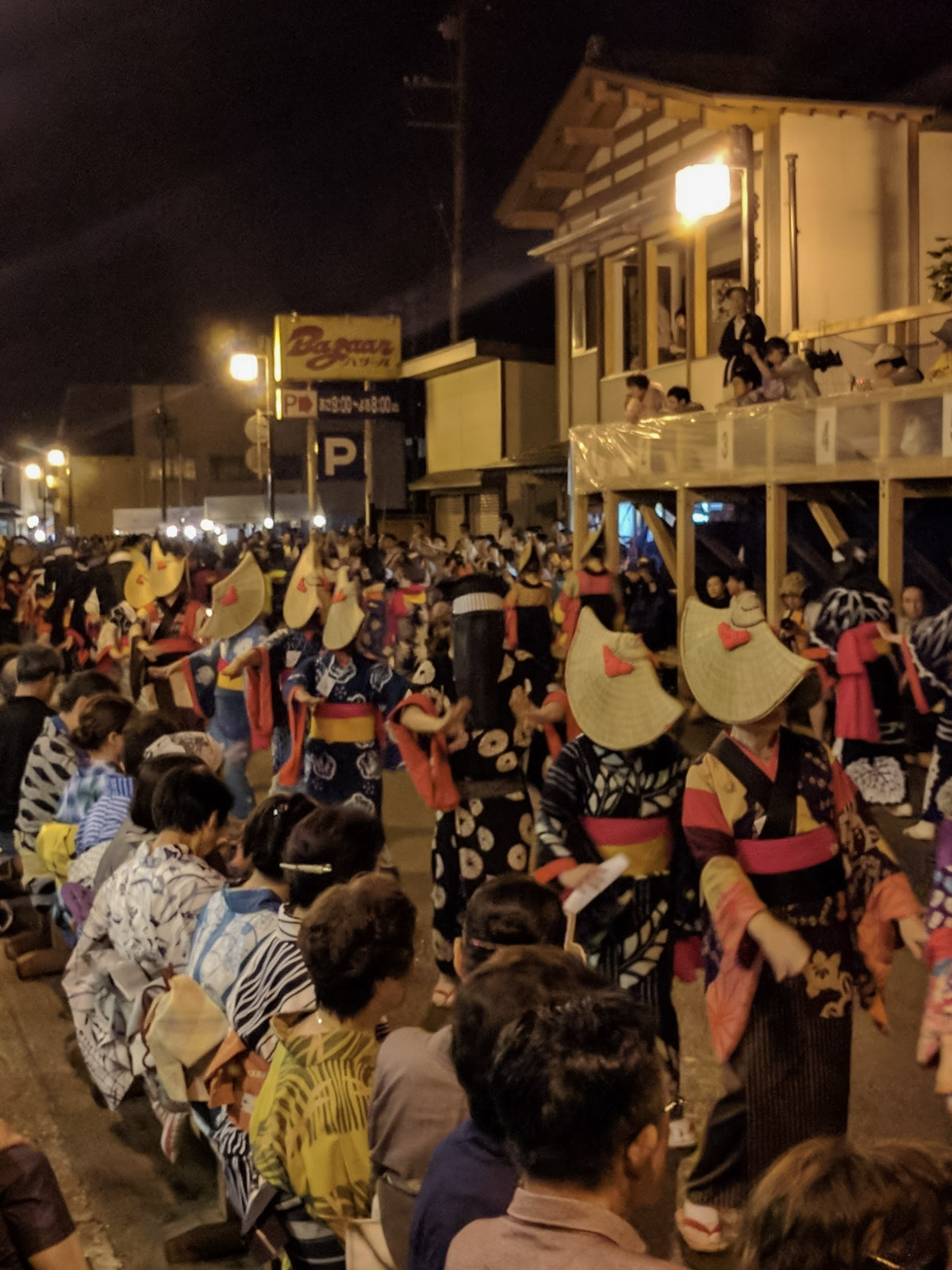
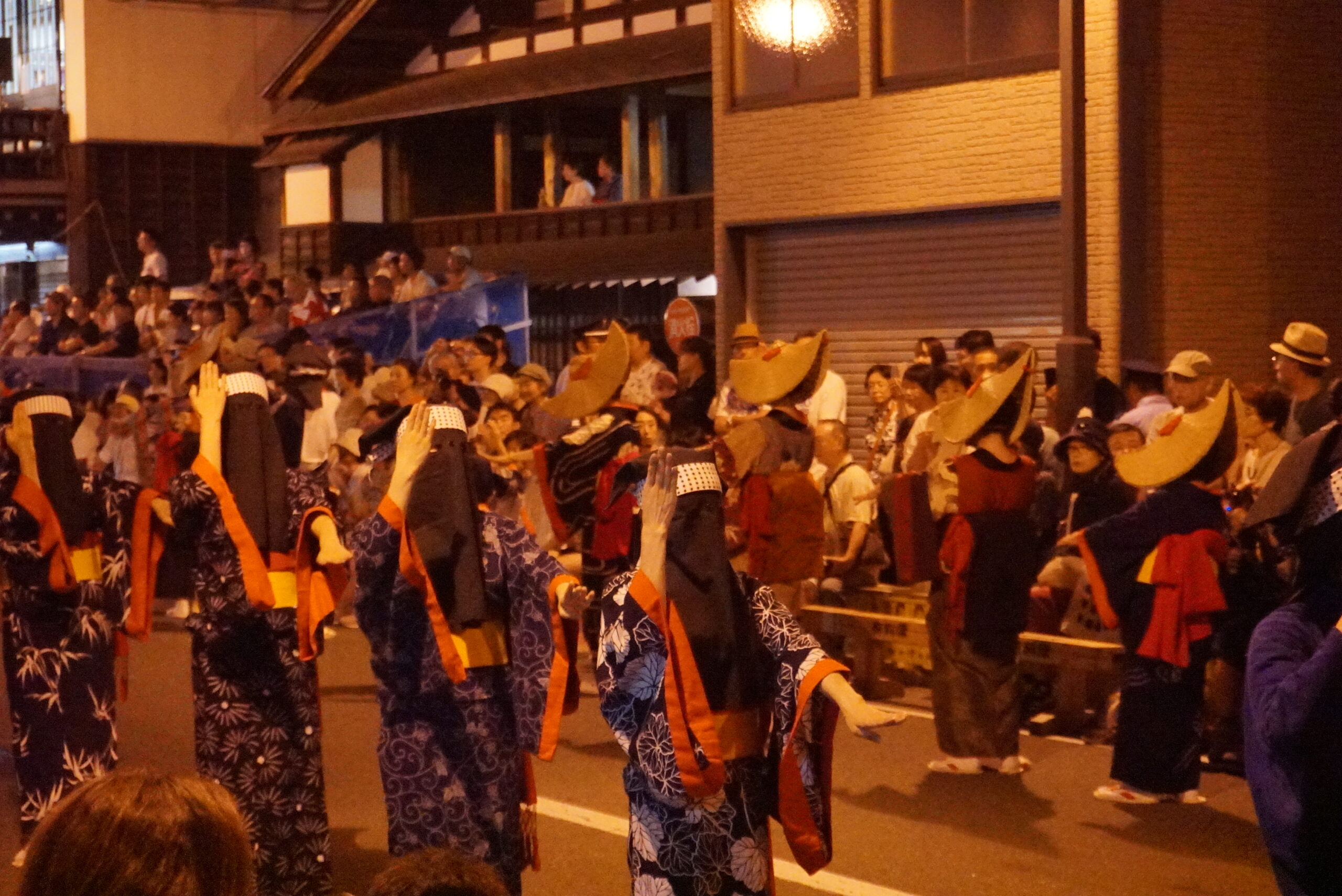
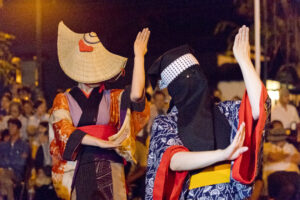
For three consecutive nights each August, the main street of tiny Nishimonai village transforms into an open-air dance floor. Up to 5,000 performers — from elderly grandmothers to kindergartners — take turns dancing in a slow, hypnotic procession. What sets this festival apart from every other dance in Japan is the costumes. Half the dancers wear an amigasa, a broad woven-bamboo hat that casts deep shadows over the face. The other half wear the hikosa-zukin, a jet-black cloth hood that covers the face completely, leaving only the gracefully moving body visible. Both costumes are meant to represent spirits of the dead — ancestors and souls of those who died without family, returning briefly to join the living.
The effect is mesmerizing and, frankly, unlike anything else in Japan. There’s a melancholy beauty to watching anonymous figures in gorgeous silk kimono glide past paper lanterns, their identities erased, embodying centuries of rural Japanese belief about the connection between the living and the dead. Western visitors often say it reminds them of a dream — or a ghost story told well. The dancing itself is deceptively simple: slow, refined hand movements called “shimai” that require years of practice to perfect, performed to the beat of taiko drums, shamisen, and haunting singing that echoes down the street long after midnight.
Nishimonai Bon Odori was designated a national Important Intangible Folk Cultural Property by Japan’s government in 1978, and it’s one of the rare festivals where cultural preservation hasn’t sanitized the experience into a tourist show. This is a living tradition, practiced by the community for itself — and visitors are welcomed as witnesses to something sacred and real.
The History Behind the Dance
The origins of Nishimonai Bon Odori are as layered as the costumes themselves. Local legend holds that the dance was created in 1322 by Lord Nishimonai Morisada to comfort the souls of warriors who died in battle — the black hoods, in this reading, represent the anonymous dead who left no name or family behind. Other historical accounts trace the festival’s roots to the harvest thanksgiving dances common across rural Japan during the Edo period (1603–1868), when communities would dance to celebrate the rice harvest and honor their ancestors during the Obon season.
What’s certain is that by the late Edo period, Nishimonai Bon Odori had developed its distinctive style and costume. The hikosa-zukin hood — the most photographed element of the festival — likely evolved from the humble cloth coverings that poor farmers would use when they couldn’t afford the ornate face paint worn by wealthier dancers. Over generations, what began as a makeshift solution became the festival’s most iconic feature, elevated into a symbol of the democracy of death: rich or poor, beautiful or plain, in the dance everyone becomes equal.
The kimono worn by dancers are another extraordinary element. Many families in Ugo Town still possess kimono passed down through generations, and the richly patterned silk robes — featuring seasonal designs of chrysanthemums, waves, and geometric patterns in deep indigo, crimson, and gold — are considered treasured heirlooms. Before the festival each year, families carefully air out and repair these garments, some of which are over a century old. If you look carefully at the dancers, you’ll notice that no two kimono are quite alike.
Today, the festival is managed by the Nishimonai Bon Odori Preservation Society, which runs a year-round practice hall (the Nishimonai Bon Odori Kaikan, or Culture Hall) where both local residents and visitors can learn the dance. The society’s work has kept the tradition vibrantly alive even as rural Akita has faced population decline — a remarkable achievement that speaks to how deeply this dance is woven into local identity.
What to Expect at the Festival
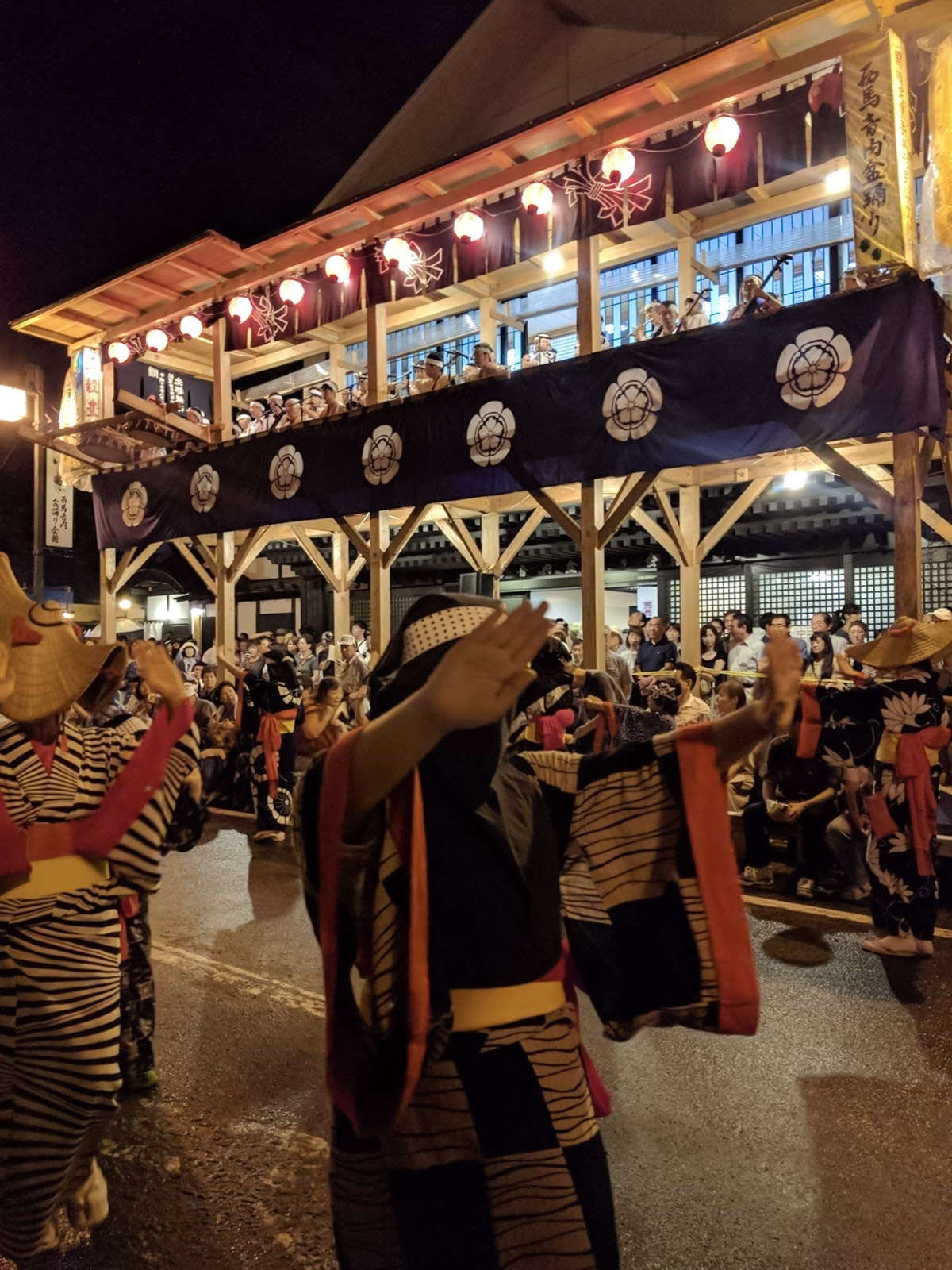
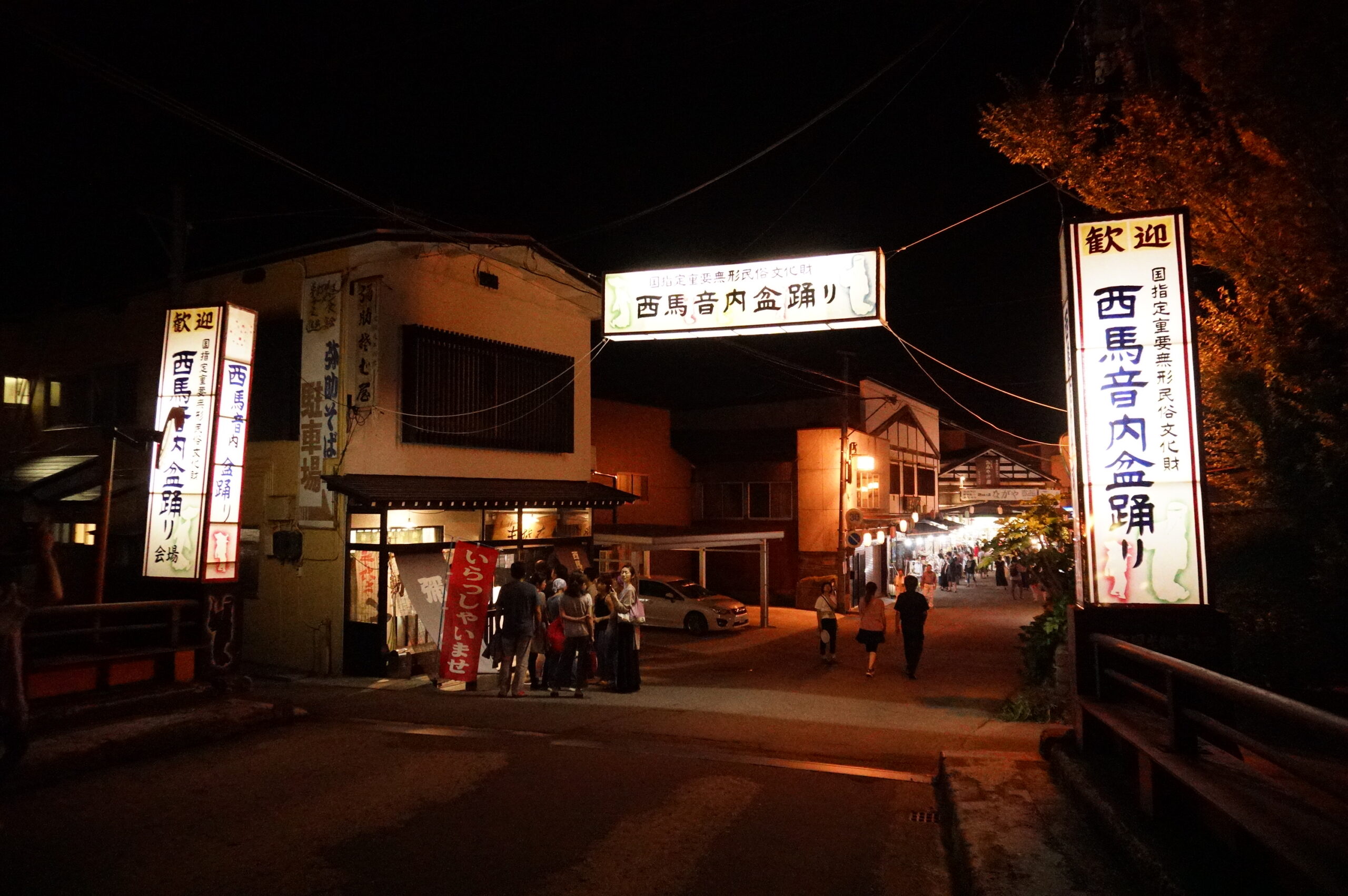
The festival runs August 16, 17, and 18 every year, rain or shine. Dancing begins at around 7:00 PM and continues until midnight — yes, five full hours each night. The setting is a single main street that becomes completely closed to traffic, with paper lanterns strung overhead and raised viewing platforms on both sides for spectators. The effect after dark, with the lanterns glowing and the costumed figures moving through pools of warm light, is almost indescribably atmospheric.
The music accompaniment is performed live throughout the night: a small ensemble of shamisen players, drummers, and vocalists positioned at intervals along the street. The signature song of the festival, the “Nishimonai Bushi,” has a plaintive, minor-key quality that perfectly matches the mysterious visual spectacle. If you find yourself humming it for days afterward, you’re not alone — it has a way of burrowing into memory.
Unlike many Japanese festivals where spectators are kept at a distance, Nishimonai Bon Odori actively encourages participation. There are designated sections of the dance route where visitors are invited to join in, and staff will happily demonstrate the basic movements. You don’t need a costume to join — many casual participants wear yukata (summer kimono) which can be rented near the festival grounds for around ¥1,500–¥2,000 (approximately $10–$14). Don’t be shy: the movements are simple to approximate, and locals are genuinely delighted when visitors make the effort.
Arrive before 7:00 PM to secure a good viewing spot along the street. The best positions are near the raised platforms in the middle section of the route, where the combination of lantern light and crowd density creates the most evocative atmosphere. If you can attend multiple nights, each evening has a slightly different feel: the first night tends to be the most formal, while by the third night the dancing takes on an emotional intensity as the Obon season draws to a close and the spirits must return to the other world.
Getting There from Tokyo
Ugo Town is not the easiest place to reach, but that’s part of its charm — you’re genuinely getting off the beaten path.
- Shinkansen to Akita City: Take the Akita Shinkansen (Komachi) from Tokyo Station directly to Akita Station. Journey time is approximately 3 hours 50 minutes. One-way reserved seat fare is around ¥18,000–¥20,000 (approximately $120–$135). The JR Pass covers this route. From Akita Station, transfer to the JR Uetsu Main Line heading south toward Sakata — get off at Ugo-Honjo Station (about 45 minutes, ¥580/$4). From Ugo-Honjo, a local bus or taxi takes about 20 minutes to reach Nishimonai village.
- Rental car from Akita City: Strongly recommended if you want flexibility. The drive from Akita City to Ugo Town takes about 1 hour via Route 13. Car rental at Akita Station runs from approximately ¥7,000–¥12,000 ($47–$80) per day.
- Festival shuttle buses: During the festival period (August 16–18), special shuttle buses typically operate from Ugo-Honjo Station to the festival site. Check the Ugo Town tourism website or ask at your accommodation for current schedules.
If you’re coming from Sendai rather than Tokyo, the most comfortable route is the Shinkansen to Yamagata or Shinjo, followed by a local train or rental car north into Akita. The journey takes around 3 hours total and offers beautiful views of the Ou Mountains.
Note: The JR Pass covers the Akita Shinkansen and most local JR lines in the region, making it an excellent value if you’re combining Nishimonai with other Tohoku destinations.
The Nishimonai Bon Odori Kaikan: Learn the Dance Year-Round
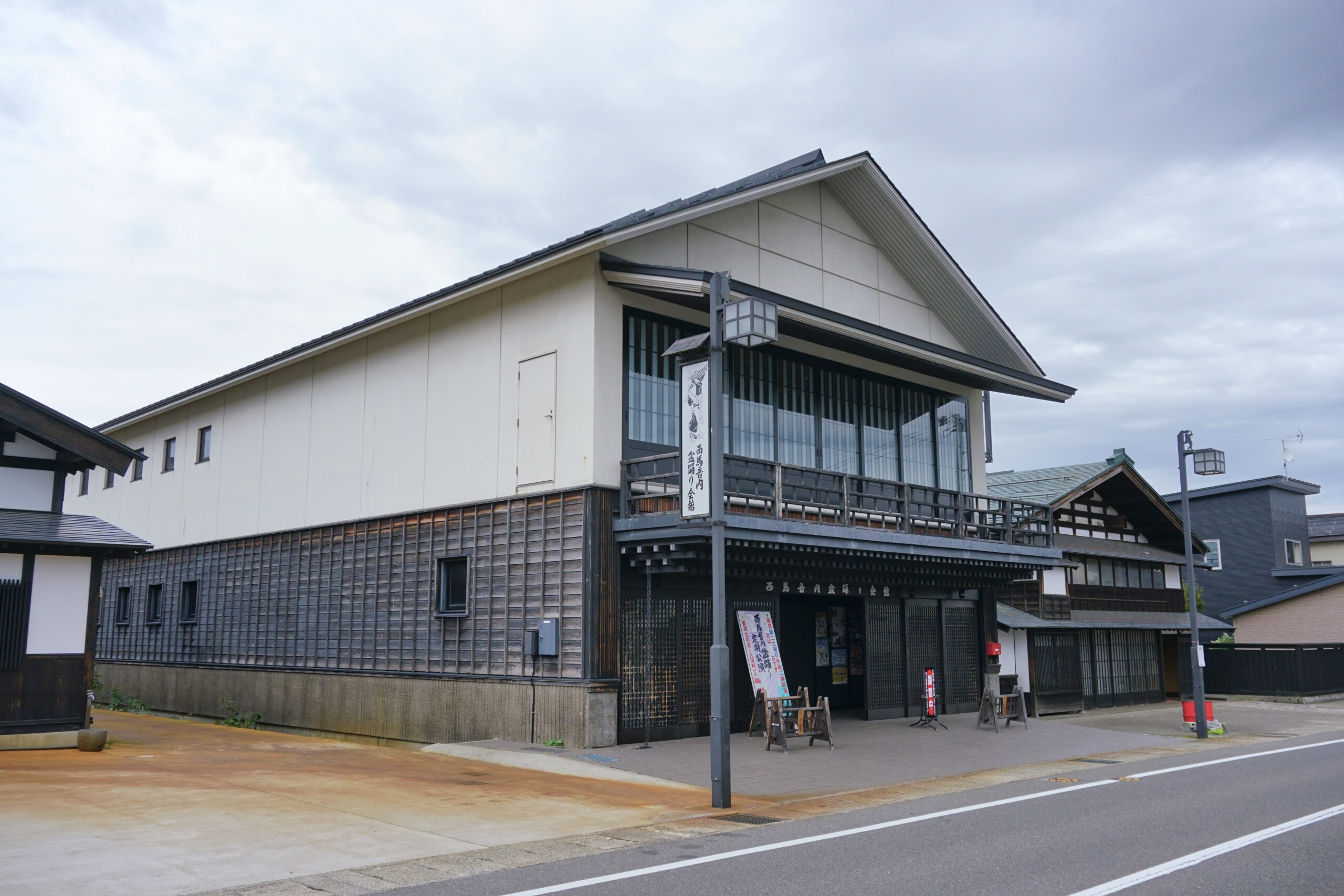
Even if you can’t make it to the August festival, the Nishimonai Bon Odori Kaikan (Culture Hall) is worth visiting year-round. Located in the center of Ugo Town, this purpose-built facility serves as both a museum and an active practice space for the local dance preservation society.
The Kaikan houses an excellent exhibition about the history and cultural significance of the festival, including displays of authentic antique kimono, musical instruments, and historical photographs and documents. Admission is ¥300 (approximately $2) for adults. Most of the display text is in Japanese, but the visual impact of seeing century-old silk kimono up close — and understanding the craftsmanship involved — transcends language.
On weekend mornings and by appointment, the Kaikan offers hands-on dance lessons where you can try learning the basic Nishimonai movements under the guidance of preservation society members. The grace required is harder than it looks, but instructors are patient with beginners. If you’re visiting with children, this is an especially memorable activity — the instructors are wonderfully encouraging with young participants.
The Kaikan also serves as a gathering place for local dancers practicing throughout the year. If you arrive on a practice evening, you may be invited to watch (and possibly join) informal rehearsals — a far more intimate glimpse of the living tradition than any museum display could offer.
Combining Nishimonai with Other Akita Highlights
Ugo Town is in southern Akita Prefecture, which puts it within reach of several excellent destinations for a multi-day itinerary.
Kakunodate Samurai District (1 hour north) — One of Japan’s best-preserved samurai towns, with original 17th-century samurai residences, weeping cherry trees, and excellent craft shops. Easily combined with Nishimonai as a day trip from the same Akita City base.
Lake Tazawa (2 hours north) — Japan’s deepest lake, with stunning cobalt-blue water and the famous golden statue of Princess Tatsuko on the shoreline. The Tazawako area also has excellent hot spring resorts, including the legendary Nyuto Onsen cluster — one of Tohoku’s greatest onsen experiences.
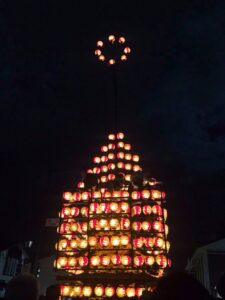
Akita City (1 hour north) — Akita’s prefectural capital is home to the famous Kanto Festival (August 3–6), where performers balance 12-meter bamboo poles topped with up to 46 paper lanterns on their foreheads, chins, and shoulders. If you’re visiting in early August, consider seeing both Kanto (August 3–6) and Nishimonai (August 16–18) in the same trip — two completely different festival experiences, both unmissable.
Tsurunoyu Onsen (2.5 hours north) — The most famous outdoor bath in all of Akita, a 400-year-old thatched-roof inn deep in the mountains with milky white sulfurous water and a magical rotenburo (outdoor bath). Book months in advance for overnight stays.
Best Time to Visit
- Festival Season — August 16–18: The only time to see the Bon Odori itself. Accommodation in and around Ugo Town books up months in advance; if staying locally, reserve by May at the latest. If you can’t secure local lodging, Akita City (1 hour away) has ample hotels and is entirely feasible as a base.
- Spring (April–May): Cherry blossoms around Ugo Town are lovely, with far fewer tourists than at famous spots. The rice paddies begin to flood and reflect the sky beautifully. The Kaikan is open for dance lessons.
- Autumn (September–November): Fall foliage in southern Akita is spectacular, particularly along river valleys. The harvest atmosphere connects nicely with the agricultural roots of the Bon Odori tradition.
- Winter (December–March): Heavy snowfall makes Ugo Town magical to see but access can be challenging without a car. The area receives some of Japan’s deepest snow outside of Hokkaido.
Where to Eat: Local Food in Ugo Town and Southern Akita
Southern Akita’s food culture is deeply connected to the rice paddies, mountain forests, and cold rivers that define the landscape. Come hungry.
Kiritanpo (きりたんぽ)
Akita’s most iconic dish is kiritanpo — crushed rice molded around cedar sticks, grilled over charcoal until lightly crisp, and either eaten with sweet miso paste or simmered in a rich chicken hot pot with root vegetables, burdock, and mitsuba herbs. Kiritanpo nabe (the hot pot version) is autumn/winter fare, typically served at home and in restaurants from October through March, but the grilled miso version is available year-round. Around the Nishimonai festival, look for food stalls serving both versions for around ¥400–¥600 ($3–$4) per skewer. For a full kiritanpo nabe experience, local restaurants in Ugo Town charge approximately ¥1,500–¥2,500 ($10–$17) per person.
Inaniwa Udon (稲庭うどん)
One of Japan’s three great udon noodles is made right here in Akita Prefecture, just a short drive from Ugo Town. Inaniwa udon is made by hand-stretching the dough into extremely thin, silky noodles with a texture that’s fundamentally different from the thick udon of Kagawa or Osaka — it’s almost pasta-like in its delicacy. The traditional serving is cold, with a light soy-based dipping sauce, though a warm version is equally delicious. At specialty restaurants in the area, expect to pay around ¥1,200–¥1,800 ($8–$12) for a set meal. The Inaniwa Sato restaurant in nearby Yuzawa City is considered a benchmark experience.
Hinai Jidori Chicken (比内地鶏)
Akita’s celebrated free-range chicken is one of Japan’s three great native breeds, known for its firm texture and deep, complex flavor compared to standard supermarket chicken. You’ll find Hinai Jidori on menus throughout the region in yakitori (grilled skewers), oyakodon (chicken and egg rice bowl), and nabe preparations. A yakitori set at a local izakaya will run ¥800–¥1,500 ($5–$10); a full Hinai Jidori course at a specialist restaurant costs ¥3,000–¥6,000 ($20–$40).
Hatahata (ハタハタ — Sailfin Sandfish)
Akita’s official prefectural fish is the hatahata, a small saltwater fish with delicate white flesh that appears in markets and on menus throughout autumn and winter. The traditional Akita preparation is shotsuru — a fish sauce made from fermented hatahata that’s used to season nabe hot pots and stir-fries. Hatahata is also served salted and grilled, as sushi, and as shoyuzuke (soy sauce pickles). Try it at any izakaya in the region for an experience that’s genuinely unique to Akita.
Festival Food Stalls
During the Nishimonai Bon Odori festival itself, numerous yatai (food stalls) line the streets near the dance route. Expect all the classics of Japanese festival food: yakitori, takoyaki, kakigori (shaved ice), taiyaki, and yakisoba — plus Akita-specific items like kiritanpo and local sake from regional breweries. Budget ¥1,000–¥2,000 ($7–$14) for a relaxed festival dinner.
Where to Stay
Accommodation options in tiny Ugo Town are limited — the village has only a handful of small inns and guesthouses. Book as early as possible for festival dates (ideally 4–6 months in advance). Staying in Akita City and driving or taking the train to the festival each night is a practical alternative that gives you much better accommodation choice.
Budget (Under ¥8,000 / $55 per night)
Minshuku (guesthouses) in Ugo Town — Several family-run minshuku near the festival site offer basic tatami rooms with breakfast and dinner included (B&B style). Staying in a minshuku during festival season provides invaluable local insight — owners often have strong connections to the dance preservation society and can share stories that no guidebook captures. Book directly by phone (have a Japanese speaker assist you if needed); most don’t have English-language websites.
Mid-Range (¥8,000–¥20,000 / $55–$135 per night)
Yurihonjo City hotels: The nearby city of Yurihonjo (formerly Honjo), about 30 minutes from Nishimonai by car, has a better selection of business hotels and ryokan in the mid-range bracket. Hotel Route-Inn and APA Hotel both have properties in Yurihonjo with reliable English-friendly booking through major platforms.
Akita City hotels: Akita City (1 hour from Nishimonai) has the widest selection of mid-range accommodation. Hotel Metropolitan Akita and Hotel Resol Akita both offer comfortable rooms with easy Shinkansen access, typically ¥8,000–¥15,000 ($55–$100) per night during festival season.
Luxury (¥20,000+ / $135+ per night)
Ryokan near Nyuto Onsen: For a truly memorable Akita experience, combine Nishimonai with an overnight stay at one of the Nyuto Onsen ryokan, about 2 hours north of Ugo Town. Tsurunoyu Onsen (¥25,000–¥40,000 per person with dinner and breakfast) is Japan’s most celebrated outdoor-bath inn, with a setting that feels completely remote from the modern world. Booking months in advance is essential.
Practical Tips for Attending Nishimonai Bon Odori
- Book accommodation extremely early. Accommodation within walking distance of the festival fills up 3–6 months in advance. If you can’t secure a local stay, Akita City is your best fallback with its excellent Shinkansen connections.
- Wear light layers. August evenings in Akita can be warm (77–86°F / 25–30°C) but occasionally gusty. A light cardigan is useful once the sun goes down and you’re standing still watching the dance.
- Bring cash. While major cities in Japan increasingly accept IC cards and credit cards, Ugo Town is deeply rural. Bring yen for food stalls, bus fares, and small guesthouses — the nearest convenience store ATM may be a significant drive away.
- Arrive by 6:30 PM. The best viewing spots fill up fast. Use the time before the dancing starts to explore the food stalls and take in the pre-festival atmosphere.
- Respect the dancers. Don’t reach out to touch costumes or hoods, don’t try to lift an amigasa hat to see a dancer’s face, and be mindful with flash photography — the dance is a sacred ritual, not a performance staged for tourists.
- Rent a yukata. Rental shops near the festival site typically offer yukata (casual summer kimono) for ¥1,500–¥2,000 ($10–$14) with a simple sash. Wearing one, even imperfectly tied, is both a respectful nod to the tradition and a lovely way to feel part of the evening.
- Try to attend multiple nights. Each of the three festival nights has a different character. If your schedule allows only one, the middle night (August 17) tends to draw the largest crowd and the greatest number of experienced dancers.
- Visit the Kaikan during the day. The Nishimonai Bon Odori Kaikan (Culture Hall) opens during the festival period with extended hours and special exhibitions. Seeing the costumes and understanding the history before the evening performance makes the dance far more meaningful.
- Pair with other Akita festivals. If flexibility allows, the Akita Kanto Festival runs August 3–6, and Omagari Fireworks Festival takes place in late August — combining multiple Akita festivals in one trip is supremely rewarding.
- Learn a few basic phrases. Even basic Japanese greetings and thank-yous go a long way in rural Akita, where English is less commonly spoken than in major tourist cities.
Sample 2-Day Itinerary: Nishimonai & Southern Akita
Day 1
Morning (9:00 AM): Depart Tokyo on the Akita Shinkansen (Komachi). Arrive Akita City around 1:00 PM. Pick up a rental car at Akita Station or take the JR Uetsu Line south toward Ugo-Honjo.
Afternoon (2:00 PM): Drive south through Akita’s rice-farming heartland — the landscape of flooded paddies reflecting summer skies is genuinely beautiful. Stop at the Inaniwa Sato restaurant in Yuzawa for a late lunch of Inaniwa udon (allow 1.5 hours with browsing the attached shop).
Late afternoon (4:30 PM): Check into your accommodation in Ugo Town or nearby. Rest, freshen up, and if time allows, visit the Nishimonai Bon Odori Kaikan before it closes for a preview of the festival history and costumes.
Evening (6:30 PM): Head to the festival street and claim your spot. Browse the food stalls and settle in. The dancing begins at 7:00 PM and continues until midnight — stay as long as you can; the later hours, when the crowd thins a little, can be the most atmospheric. Expect to spend ¥1,500–¥3,000 ($10–$20) on festival food and yukata rental.
Day 2
Morning (8:00 AM): Breakfast at your accommodation (if staying at a minshuku, this will likely be a beautiful traditional Japanese meal). Drive or take the train north toward Kakunodate.
Morning (10:00 AM): Explore Kakunodate’s famous Bukeyashiki (samurai residence district), where original Edo-period family homes are open to the public. Visit the Aoyagi Samurai Manor Museum for an immersive look at samurai household life (admission ¥500/$3.50). Browse the shops on Uchimachi Street for Kabazaiku (cherry bark crafts), Akita’s unique woodworking tradition.
Afternoon (1:00 PM): Lunch at a local restaurant in Kakunodate — try Hinai Jidori oyakodon or a warm bowl of vegetable and chicken soup.
Afternoon (2:30 PM): Drive or take the train to Lake Tazawa for an afternoon stroll along the brilliant cobalt-blue shoreline. Visit the golden Tatsuko statue at the water’s edge and, if time allows, take a boat ride across the lake (¥1,200/$8, seasonal).
Evening (6:00 PM): Return to Akita City for dinner at a local izakaya — try hatahata, Hinai Jidori yakitori, and sake from one of Akita’s excellent local breweries. Overnight in Akita City before the Shinkansen back to Tokyo the following morning.
Related Articles You Might Enjoy
- Nishimonai Bon Odori, Akita: Japan’s Most Mysterious Summer Festival — Complete Guide
- Akita Nairiku Jukan Railway: Japan’s Most Beautiful Secret Train Journey Through the Mountains
- Akita Dog & Odate: Meeting Japan’s Most Loyal Breed in Its Birthplace
- Hachimantai Plateau: Complete Guide to the Volcanic Highland Paradise on the Akita-Iwate Border
- Lake Tazawa Akita: Complete Travel Guide to Japan’s Deepest & Most Magical Lake
Final Thoughts
There are festivals in Japan that you attend because they’re famous, and festivals you attend because they’re real — the Nishimonai Bon Odori is firmly and spectacularly in the second category. In a country where tourism can sometimes feel like a carefully curated performance, this dance feels like an unguarded conversation between the living and the dead, between modern Japan and its deepest rural roots. The black-hooded figures gliding through lantern light aren’t performing for you; they’re fulfilling an obligation that stretches back seven hundred years.
Plan your Tohoku summer itinerary around August 16–18, make the journey to Ugo Town, stand on that street after dark — and you’ll understand why this small festival in a small Akita village is considered one of Japan’s greatest cultural treasures. Book your accommodation early, come with an open heart, and let yourself be moved.
Got questions about planning your Tohoku trip, or spotted something we missed? We’d love to hear from you — drop us a message here.



コメント