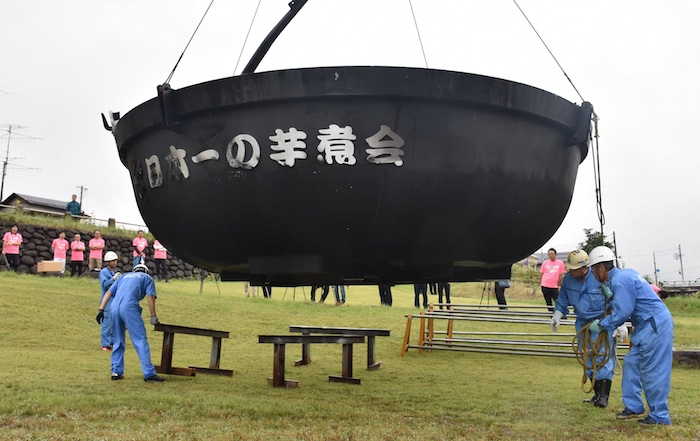
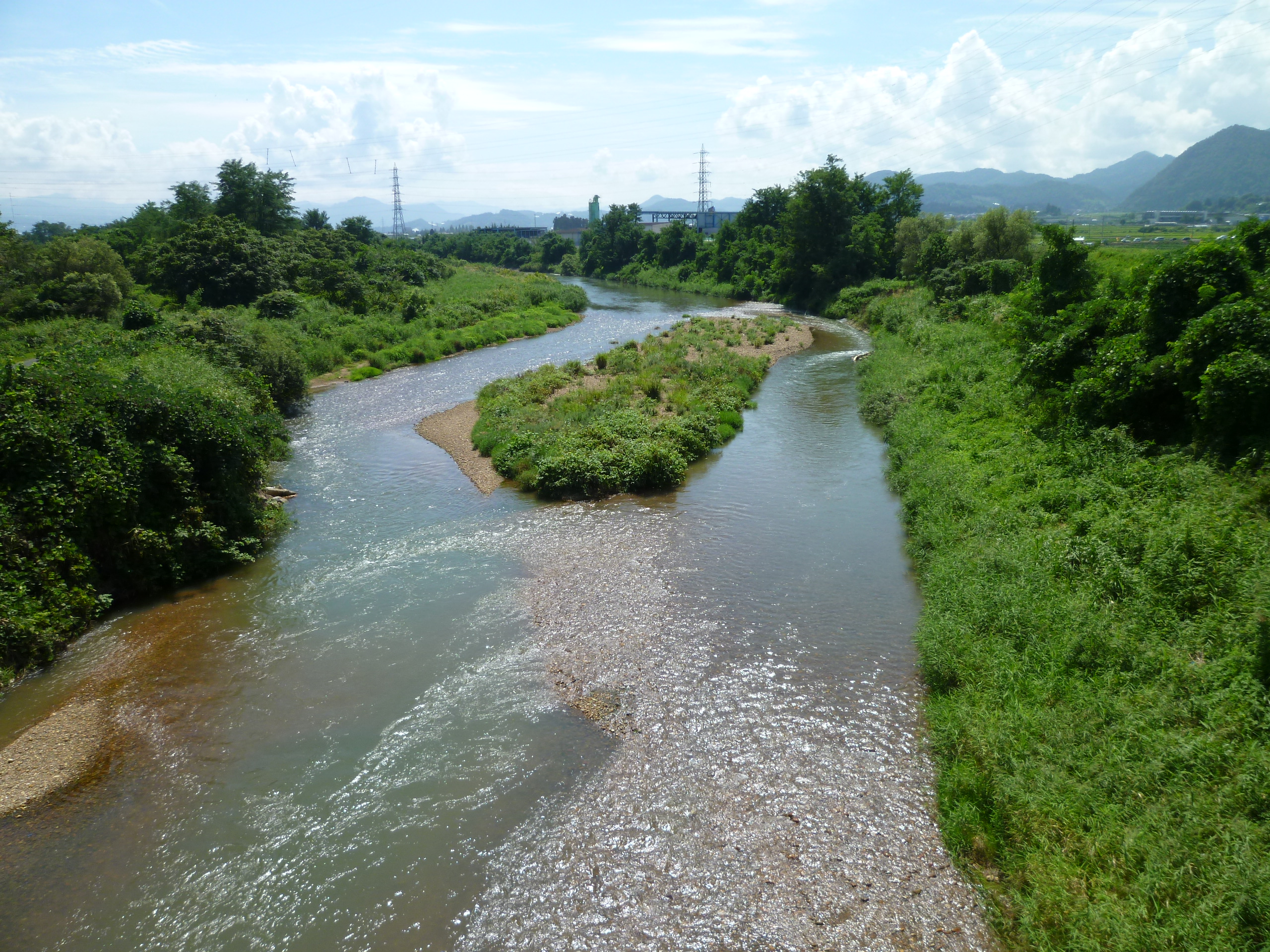
Picture this: the first Sunday of September, the banks of the Mamigasaki River in Yamagata City, and a crowd of 30,000 people gathered around a single pot so large it requires a construction crane to stir. In that pot: six tons of satoimo taro root, beef, konnyaku, burdock root, and a soy-based broth that has been simmering since dawn. Welcome to the Yamagata Imoni Festival (芋煮会) — the most extraordinary outdoor food event in Japan and the annual ritual that marks the arrival of autumn in northeastern Japan’s most passionate food prefecture. If you’ve never heard of it, you’re exactly the kind of traveler the Imoni Festival was made for.
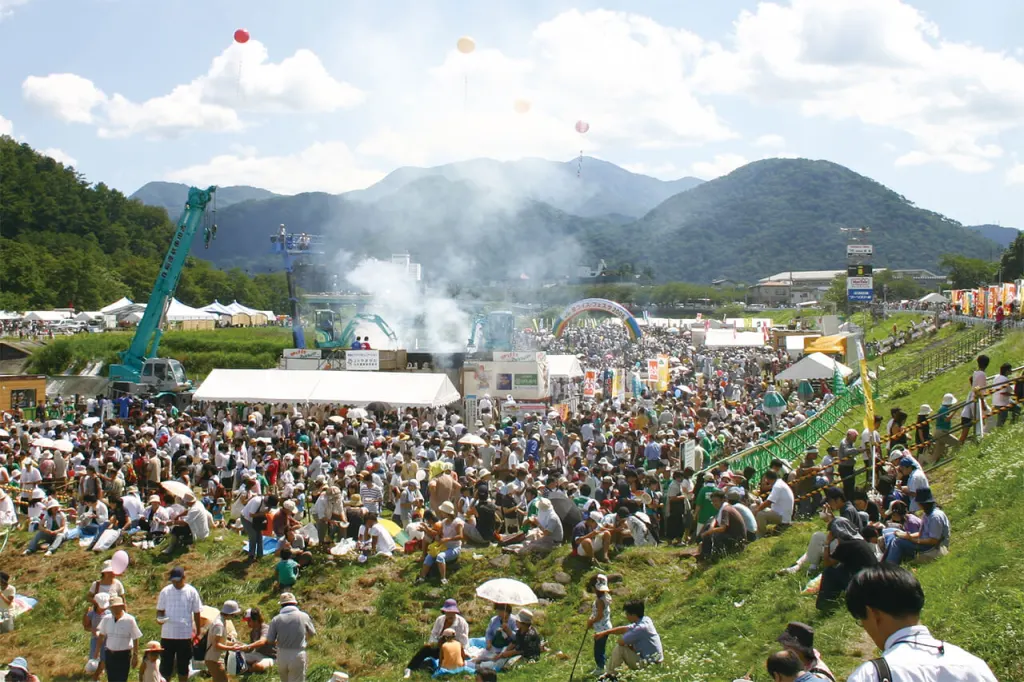
Why the Imoni Festival Should Be on Every Japan Itinerary
Japan has thousands of matsuri (festivals) — fireworks over rivers, floats paraded through streets, lanterns released into harbors. Most are visually spectacular. The Imoni Festival is something rarer: a food festival where the cooking itself is the event, where communal eating under an open sky is the tradition, and where the atmosphere is less performance and more genuine communal celebration. It feels, in the best possible way, like being invited to the world’s largest neighborhood cookout.
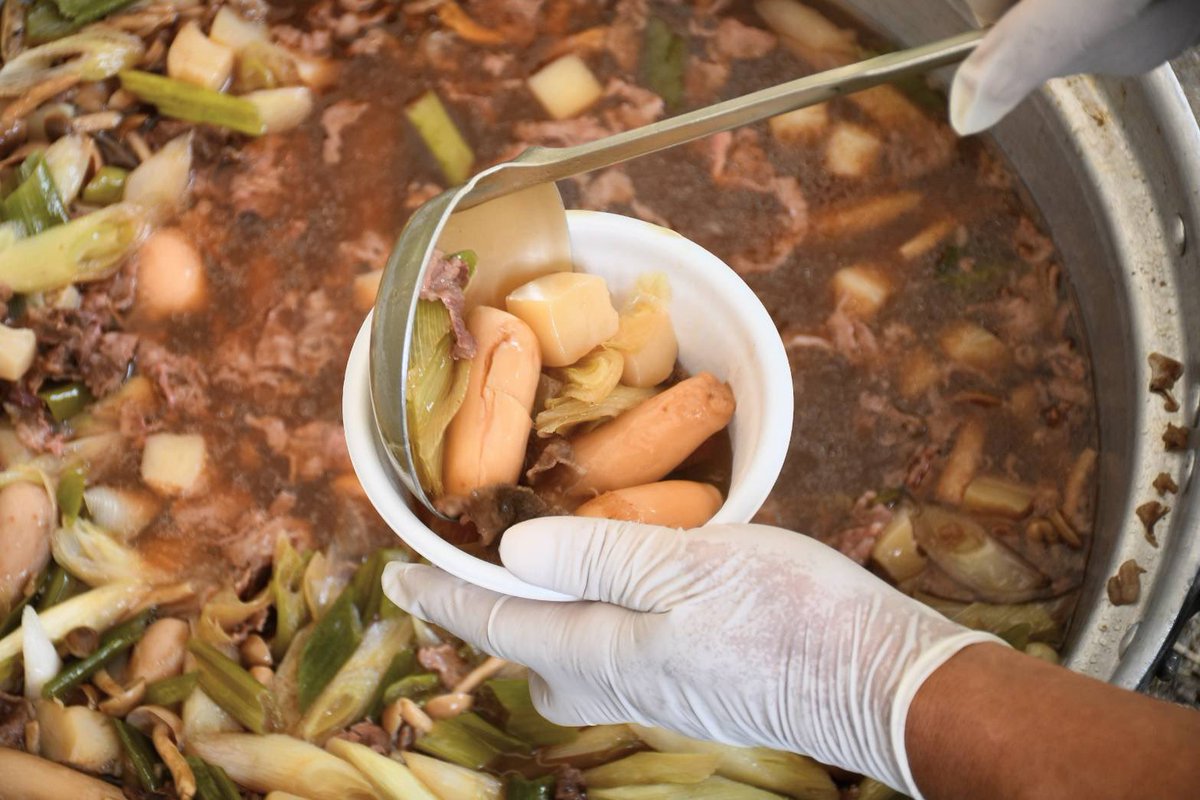
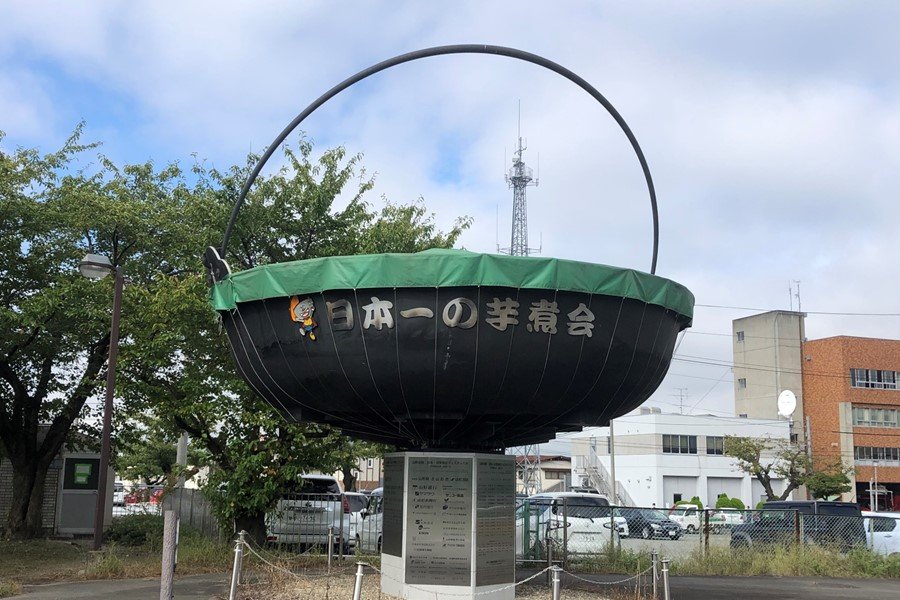
The centerpiece is the dai-nabe — the giant pot. Each year, a specially constructed crane-mounted pot capable of holding approximately six metric tons of ingredients is set up on the Mamigasaki riverbank. Professional chefs supervised by the Yamagata Imoni Festival Executive Committee cook imoni — the classic Yamagata-style taro and beef hot pot — in this pot from early morning. By mid-morning, it’s ready. For ¥500 ($3.50), visitors receive a bowl of fresh imoni ladled directly from the world’s largest outdoor cooking pot. It is, improbably, delicious: deeply savory, warming, and perfectly seasoned, with the satoimo taro soft and giving in a way that home cooking rarely achieves at this scale.
But the official giant pot is only a fraction of what happens on the Mamigasaki banks in September. For weeks before and after the festival’s official date, Japanese families, office colleagues, university clubs, and groups of friends bring their own portable gas burners, their own pots, their own ingredients, and their own sake to the riverbank — and cook imoni together. This is imoni-kai (芋煮会), the private version of the tradition, and it is by some measure the more interesting of the two experiences. If you visit the Mamigasaki banks on any warm September or October weekend, you’ll find dozens of groups scattered along the grass, their pots bubbling, their laughter carrying across the water. You are almost certainly welcome to join if you smile and ask.
Getting There from Tokyo
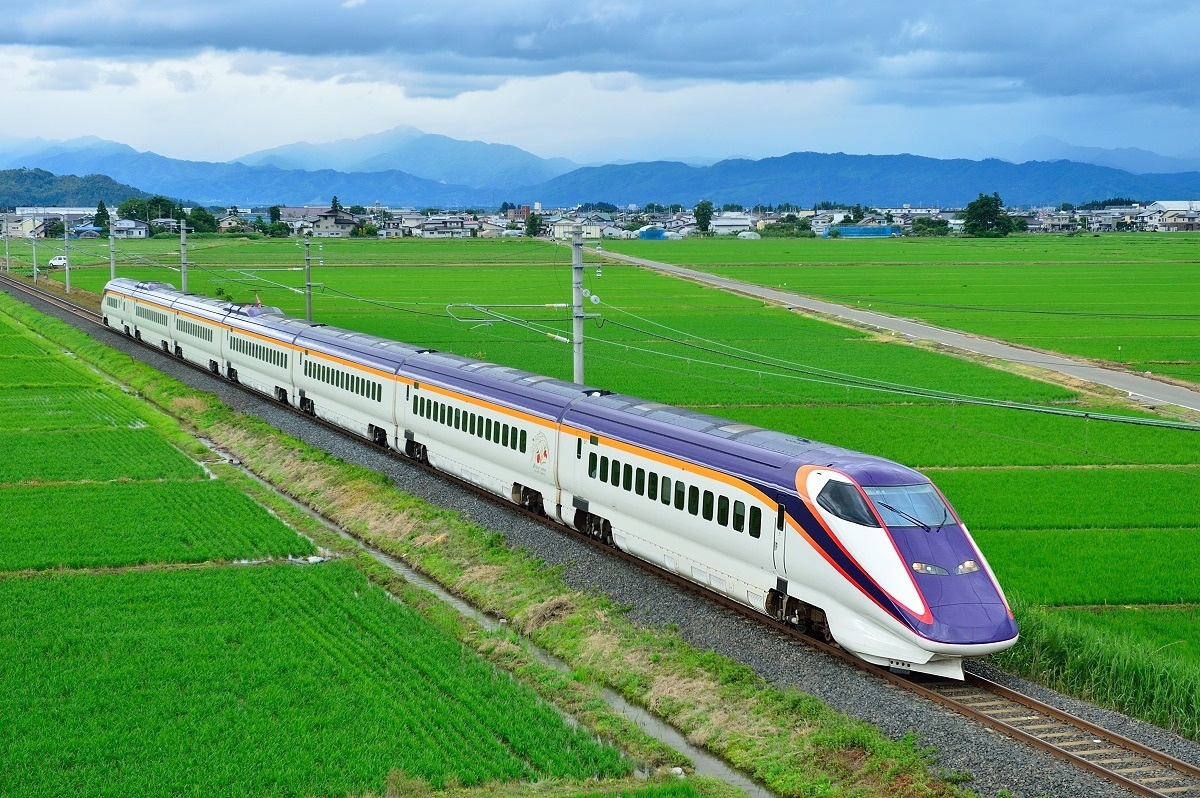
- Shinkansen: Take the Yamagata Shinkansen (Tsubasa) from Tokyo Station directly to Yamagata Station — approximately 2 hours 40 minutes, around ¥12,000–¥13,500 ($82–$92). The Yamagata Shinkansen is a mini-shinkansen that runs on narrow-gauge tracks, meaning the train is slightly smaller than a standard bullet train but no less comfortable. JR Pass is valid.
- Via Sendai: Take the Tohoku Shinkansen to Sendai (1.5 hours from Tokyo), then transfer to the Senzan Line local train to Yamagata — an additional 1 hour 20 minutes through scenic mountain gorge country. This route is slower but passes through the spectacular Yamadera area. The Senzan Line is covered by JR Pass.
- Highway bus: Overnight buses from Tokyo to Yamagata run from around ¥5,000–¥8,000 ($34–$55) one-way — a budget option that leaves you arriving in Yamagata early morning.
- Walking from Yamagata Station to the festival: The Mamigasaki River is approximately 1.5 km (1 mile) from Yamagata Station, a 20-minute walk through central Yamagata. City buses also run to the riverbank area during the festival period. Taxis from the station cost around ¥1,000–¥1,200 ($7–$8).
What Is Imoni? Japan’s Most Beloved Autumn Hot Pot
Before we go further, it’s worth properly understanding imoni — because this dish is worth understanding on its own terms before you encounter the festival around it.
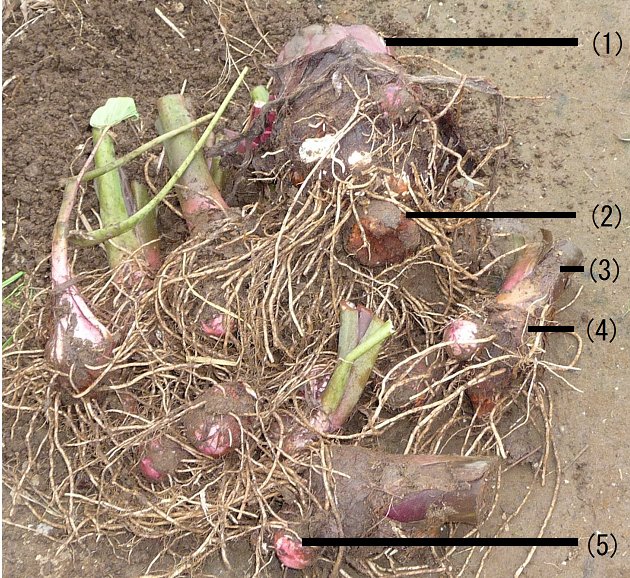
Imoni (芋煮) means, literally, “cooked taro” — and satoimo (里芋, field taro) is the defining ingredient. Satoimo is different from other taro varieties you might know: it’s small, round, slightly slippery when cooked, with a soft, almost creamy texture and a subtle, earthy sweetness. When simmered in a soy-based broth with beef, konnyaku (the rubbery, neutral-flavored konjac jelly that plays a textural role in many Japanese dishes), burdock root, shiitake mushrooms, and green onions, it absorbs the broth and becomes something greater than the sum of its ingredients: warming without being heavy, deeply savory without being salty, and above all comforting in a way that perfectly matches the cooling air of a Japanese autumn afternoon.
The dish has been cooked in Yamagata since at least the Edo period (1603–1868), and it has a particular significance in this prefecture that goes beyond ordinary regional food identity. Yamagata’s position as one of Japan’s great agricultural regions — particularly for satoimo, rice, fruit, and root vegetables — means that imoni represents something real about the landscape and season. The first imoni-kai of autumn, like the first cherry blossom picnic of spring, marks a turning point in the Japanese seasonal calendar that the people of Yamagata take seriously.
Yamagata Style vs. Miyagi Style: The Great Imoni Debate
One of the most entertaining cultural phenomena around imoni is the fierce — and genuinely good-natured — regional debate between Yamagata and neighboring Miyagi Prefecture about whose imoni is correct. The two styles are genuinely different, and the disagreement between them is a beloved annual conversation that visitors can enjoy participating in.
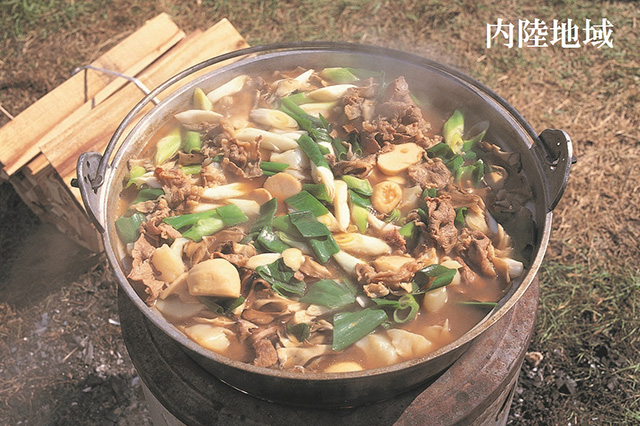
Yamagata style: Satoimo taro + thinly sliced beef + konnyaku + burdock root + green onions, in a soy sauce and sake-based broth. The result is relatively light in color — the broth is clear amber with a clean, savory finish. This is the original, the classic, the one that appears at the official festival.
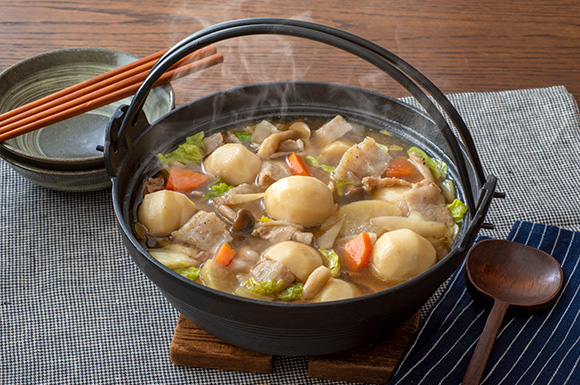
Miyagi style: Satoimo taro + pork + konnyaku + various vegetables, in a miso-based broth. Richer, darker, more robust — the miso adds a fermented depth that the soy version doesn’t have. Miyagi residents consider this the superior version; Yamagata residents disagree with great vigor.
The debate extends to specifics: Yamagata people say beef is the only acceptable protein, that pork is wrong, and that miso destroys the delicate flavor of the taro. Miyagi people say that the richness of miso broth is what makes the dish warming enough for the cold Tohoku autumn, and that beef is too delicate for such hearty peasant food. Both sides are correct, in the way that all passionate regional food debates are correct — the real answer is that both versions are delicious and you should eat as much of both as possible during your time in Tohoku.
The Official Yamagata Imoni Festival
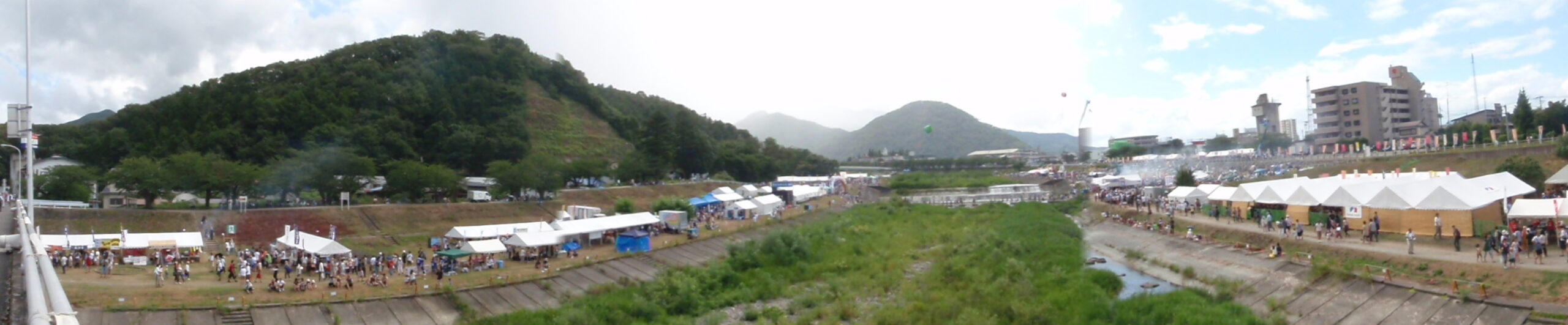
The official Yamagata Imoni Festival (全日本芋煮会フェスティバル) is held on the first Sunday of September each year at the Mamigasaki River, approximately 1.5 km west of Yamagata Station. It is one of the most famous food events in Japan and one of the strangest and most wonderful in the world.
The Giant Pot
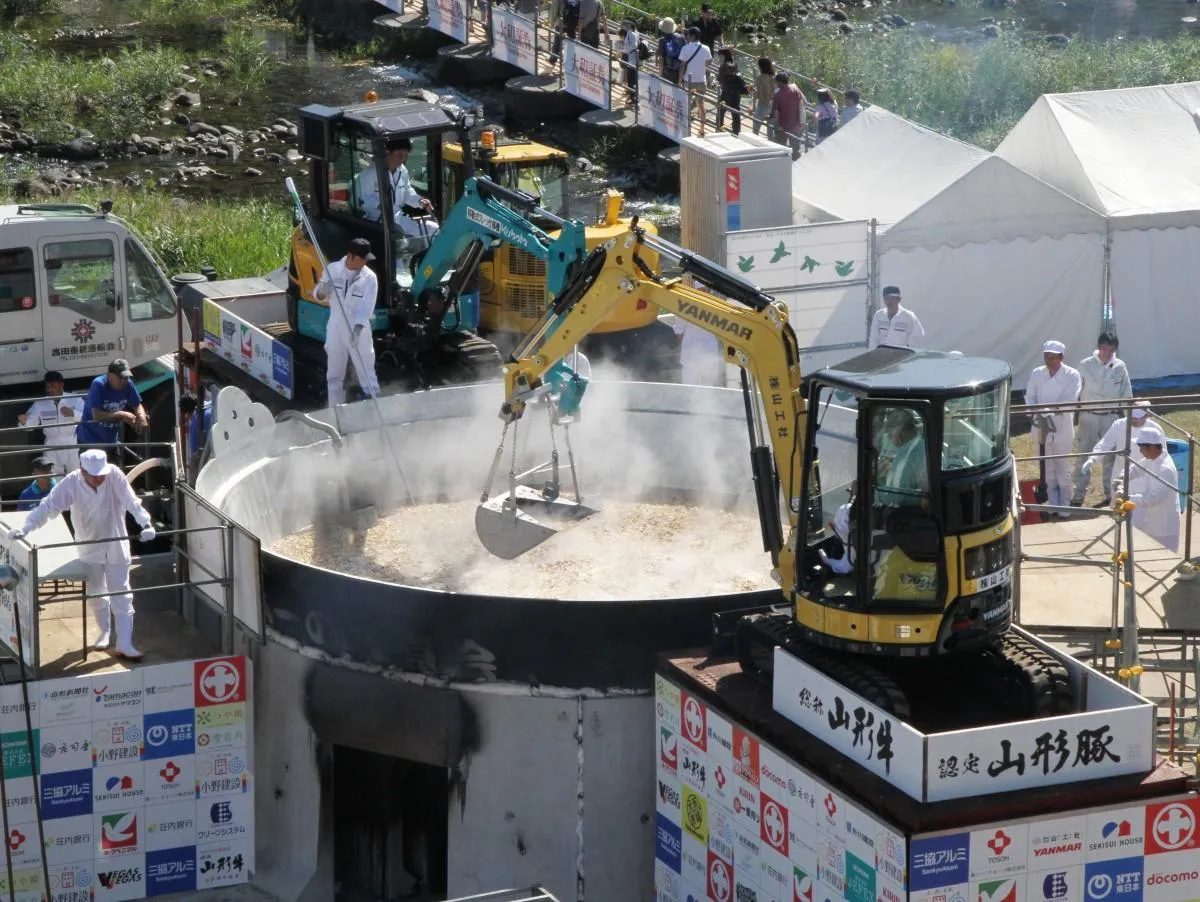
The festival’s centerpiece is the dai-nabe — a pot measuring approximately 6 meters (20 feet) in diameter, constructed specially for the festival and operated by a boom crane that doubles as both a stirring device and a serving mechanism. Into this pot go: approximately 3 tons of satoimo taro, 1.2 tons of beef, 3,500 konnyaku blocks, 700 kg of burdock root, 700 green onions, 200 liters of sake, 150 liters of soy sauce, 70 kg of sugar, and vast quantities of mushrooms and other vegetables. The cooking begins before dawn and takes several hours to reach completion.
By late morning, 30,000 bowls of imoni are ready. For ¥500 ($3.50), any visitor can join the queue and receive a bowl of this imoni, ladled from the world’s largest outdoor cooking vessel into a small bowl and eaten standing on the riverbank in the autumn sunshine. The quantity is small — a modest appetizer portion rather than a full bowl — but the symbolism of eating from this pot is the point. It’s communion food, shared experience food, food that matters because of the context around it rather than the portion size.
Festival Atmosphere
Beyond the giant pot, the festival grounds along the Mamigasaki riverbank fill with dozens of additional food stalls, entertainment stages, sake and beer vendors, local craft sellers, and the general celebratory atmosphere of one of Japan’s great autumn gatherings. Local musicians and performers appear throughout the day on temporary stages. Yamagata sake — the prefecture is one of Japan’s top sake-producing regions — flows freely. Children chase each other between the vendor stalls while their parents drink beer and eat pickled vegetables and argue cheerfully about the correct way to make imoni.
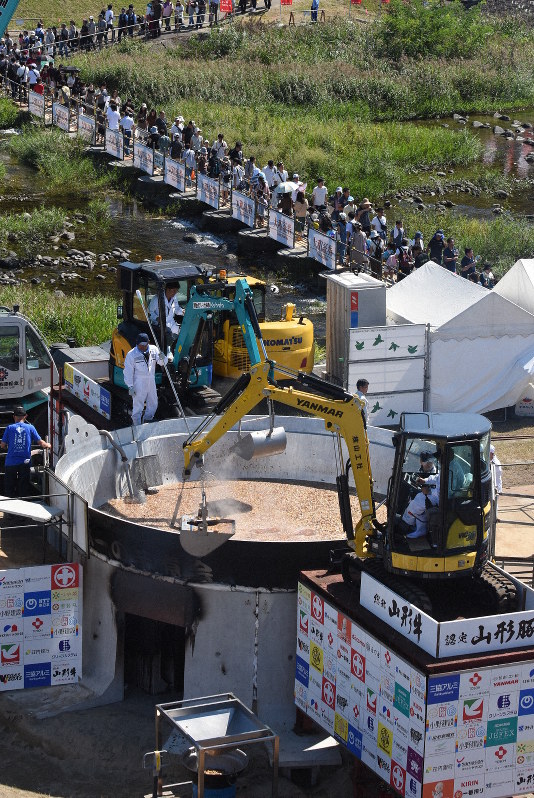
One of the festival’s most popular attractions is the opportunity to watch the dai-nabe cooking process up close. The crane-mounted stirring mechanism is genuinely extraordinary to observe — an industrial piece of equipment repurposed for culinary theatre. The cooking team who manage the pot are experienced professionals who understand the variables of cooking 6 tons of food outdoors, and watching them work is surprisingly fascinating.
Imoni-Kai: The Private Version (Even Better)
If the official festival represents imoni at its most spectacular, imoni-kai (芋煮会 — literally “taro cooking party”) is imoni at its most authentic and most human. Throughout September and into October, the banks of the Mamigasaki River — and virtually every other accessible riverbank in Yamagata Prefecture — fill on weekends with groups of friends, families, colleagues, and strangers, all gathered around portable gas burners and bubbling pots.
The imoni-kai is not a tourist attraction. There are no tickets, no English-language signs, and no designated times. It’s simply what people in Yamagata do in autumn — the same way Australians have backyard barbecues in summer or Americans gather for Thanksgiving. Groups plan their imoni-kai weeks in advance, dividing up ingredient procurement and pot management duties with great seriousness, then spending an afternoon sitting on folding chairs by the river, drinking beer, stirring the pot, and eating bowl after bowl of the finished dish until it’s gone.
As a foreign visitor, encountering an imoni-kai on the Mamigasaki banks is one of the most memorable possible Japan experiences. The Japanese families and groups you encounter will almost certainly invite you to eat with them if you smile and show interest. Bringing a small contribution — a can of beer, a bag of convenience store snacks — and expressing genuine interest in the cooking will be met with enormous warmth. Japanese people who participate in imoni-kai are, without exception, proud of the tradition and delighted to share it with foreigners who’ve made the effort to find it.
Best Time to Visit and Festival Dates
- Official Festival Day: First Sunday of September each year — typically the first or second Sunday of the month. The 2025 festival was held on September 7th. Check the official Yamagata City tourism website for the current year’s date.
Announcement of the 38th Japan’s Best Imoni Festival
- Imoni Season Generally: September through November — the full season for private imoni-kai gatherings on the Mamigasaki banks and throughout the prefecture. Weekend afternoons in October are particularly beautiful, with autumn foliage beginning to appear in the surrounding mountains.
- Weather: September in Yamagata averages 24°C (75°F) during the day, dropping to around 15°C (59°F) at night. The weather is generally clear and sunny — ideal outdoor cooking conditions. October sees temperatures dropping to 17°C (63°F) daytime highs with crisp, clear autumn air.
Yamagata Food Beyond Imoni: A Full Guide
Yamagata Prefecture is arguably the most food-focused prefecture in Tohoku, and possibly one of the most food-focused in Japan. If you’re visiting for the Imoni Festival, extend your trip to eat more. Here’s what you should seek out:
Yamagata Beef (Yonezawa Beef)
Yonezawa beef (米沢牛) is one of Japan’s three great wagyu brands — alongside Kobe beef and Matsuzaka beef — and it comes from the mountains of southern Yamagata Prefecture. The cattle are raised in the cold mountain air on a diet that produces deeply marbled, intensely flavored beef with a richness and fat quality that rivals any wagyu in Japan. In Yamagata City, several restaurants serve Yonezawa beef as yakiniku (grilled at the table), sukiyaki (hot pot), or steak. Budget ¥3,000–¥8,000 ($20–$55) per person for a proper Yonezawa beef experience.
Dashi (Sweet Soy Pickles)
Yamagata’s dashi (山形のだし — not to be confused with the soup stock dashi) is one of Japan’s most beloved summer condiments: finely chopped summer vegetables — eggplant, cucumber, myoga ginger, okra — mixed with nori seaweed and seasoned with soy sauce and dashi stock, served cold over rice. It’s one of the most refreshing and simple things you can eat in Japan, available at virtually every restaurant and convenience store in Yamagata throughout summer and early autumn. Try it at least once.
Imoni Restaurant Versions
Throughout autumn, Yamagata restaurants offer sit-down imoni as a formal dish — a full pot served for 2–4 people at the table, often as part of a course meal. This is imoni at its most refined: the taro perfectly textured, the broth layered with multiple ingredients, the presentation careful. Several restaurants in the central Yamagata dining district specialize in this style, with prices around ¥1,500–¥2,500 ($10–$17) per person for the imoni course.
Cherry Ramen and Yamagata Ramen
Yamagata City has an extraordinarily dense ramen shop culture — reportedly the highest concentration of ramen shops per capita of any city in Japan. The local style features a clear, golden chicken broth with a subtle sweetness, served in large portions with plenty of toppings. The cold ramen (冷たいラーメン) variant, eaten cold in summer, is a Yamagata invention now gaining national recognition. A bowl of ramen in Yamagata costs ¥700–¥1,000 ($5–$7) and is reliably excellent wherever you go.
Yamagata Sake
Yamagata Prefecture produces sake of extraordinary quality, particularly from breweries in the Dewa and Tendo regions. The Yamagata style tends toward clean, fruity, ginjo-level profiles — sake that pairs beautifully with imoni and the lighter autumn food of the region. During the Imoni Festival, local breweries set up sake stalls along the riverbank offering samples and bottles for sale. Visiting a Yamagata sake brewery for a tour and tasting (several offer English-language experiences) is one of the great activities for sake enthusiasts visiting Tohoku.
Combining Imoni Season with Yamagata’s Autumn Highlights
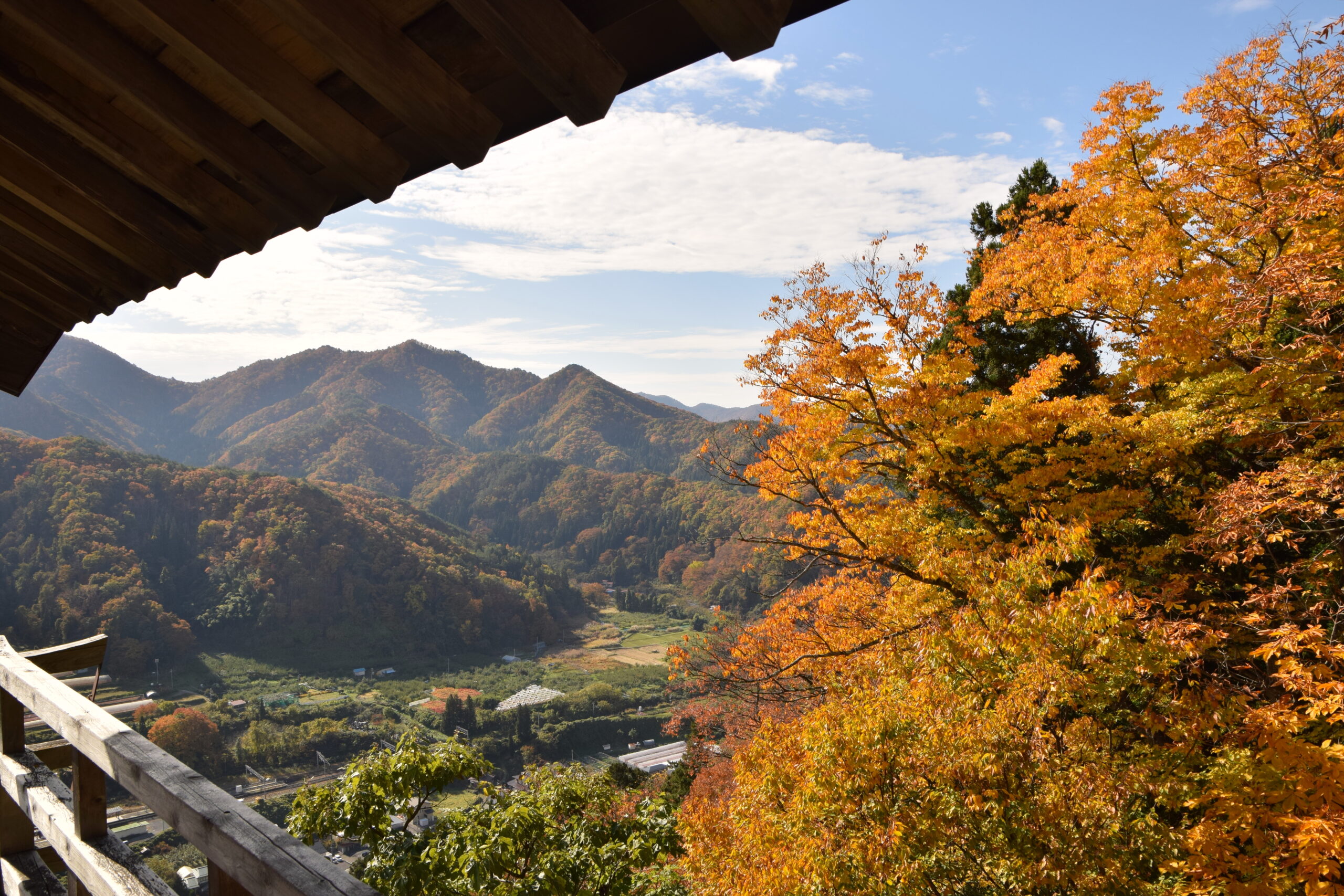
An Imoni Festival visit pairs perfectly with other Yamagata autumn experiences. The prefecture’s mountains are among Tohoku’s most spectacular for autumn foliage — planning a 2–3 day trip around the festival date allows you to combine Japan’s greatest outdoor cooking tradition with some genuinely spectacular mountain scenery.
Yamadera (Risshakuji Temple)
One of Japan’s most famous temple sites, Yamadera (山寺) is built into a sheer cliff face 30 minutes from Yamagata City by local train. The 1,000-step climb to the upper halls passes through ancient cedar forest, past moss-covered stone carvings and wooden temple buildings, emerging at a series of viewing platforms with panoramic views of the surrounding mountain valley. In late October and early November, the autumn foliage surrounding Yamadera is genuinely spectacular — one of the finest foliage views in all of Japan. Admission ¥300 ($2), add 1–1.5 hours to your Yamagata itinerary.
Zao Onsen
One hour from Yamagata City by bus, Zao Onsen is one of Tohoku’s finest hot spring resorts — a mountain village built around powerful sulfuric hot springs that have been used since the Nara period (710–794 CE). In autumn, the mountain forests surrounding the resort turn brilliant colors, and a visit to the outdoor rotenburo bathing areas means soaking in milky-white sulfuric water with foliage visible on the slopes above. Combined with a Yamagata imoni dinner before or after, this is an immensely satisfying autumn day.
Yamagata Wine Country
Yamagata is increasingly recognized as one of Japan’s finest wine-producing prefectures, with the Tendō and Higashine areas producing quality Chardonnay, Riesling, and Pinot Noir from the mountain terroir. Several wineries offer tours and tastings during harvest season (September–October), and the combination of wine touring and imoni eating creates a uniquely Yamagata autumn itinerary that few international visitors have attempted.
Where to Stay in Yamagata
Budget (Under ¥8,000 / $55 per night)
Yamagata City has a good range of business hotels within easy walking distance of the station, including APA Hotel and several local business chains. Rates for a clean single room run ¥5,000–¥7,500 ($34–$51). For the Imoni Festival weekend specifically, book 4–6 weeks in advance as rooms fill up with domestic tourists.
Mid-Range (¥8,000–¥20,000 / $55–$135)
The Monte Hermoso Yamagata and several comparable mid-range hotels in the central city offer comfortable rooms with good access to restaurants and the station. For a more traditional experience, ryokan in the Zao Onsen area (about 45 minutes by bus) combine hot spring access with seasonal cuisine and the full tatami-and-futon experience at ¥13,000–¥18,000 ($88–$123) per person with dinner and breakfast.
Luxury (¥20,000+ / $135+)
Zao Onsen has several excellent high-end ryokan offering private onsen rooms, kaiseki dinners featuring Yonezawa beef and seasonal mountain vegetables, and the kind of attentive service that makes Japan’s best ryokan genuinely world-class. These properties typically offer autumn foliage viewing packages that align perfectly with imoni season. Budget ¥30,000–¥50,000 ($204–$340) per person per night for premium Zao Onsen properties.
Practical Tips for the Imoni Festival
- Arrive by 10:00 AM: The official dai-nabe (giant pot) runs until the 30,000 bowls are exhausted — typically by early to mid-afternoon. Arrive before noon to be sure of getting a bowl from the main pot.
- Cash only at festival stalls: All food and drink vendors at the festival operate cash-only. Bring ¥5,000–¥8,000 ($34–$55) in small bills for the day.
- The festival is free to enter: No admission fee for the festival grounds. The ¥500 ($3.50) charge is only for the imoni bowl from the official pot.
- Bring a folding chair or picnic blanket: The festival grounds are primarily standing/sitting on the grass. A compact folding stool makes the experience significantly more comfortable.
- Try both festival imoni AND restaurant imoni: The giant pot version is symbolic and fun; the restaurant version (available at any Yamagata restaurant during the season) is more refined and satisfying as a meal. Do both.
- Weather contingency: The festival is held rain or shine, but heavy rain significantly affects the atmosphere. Check the forecast the morning of and dress accordingly. September in Yamagata can produce short sharp showers; a light rain jacket is useful.
- Transportation on festival day: City buses run extra services to the Mamigasaki riverbank on festival day. City-center traffic around the festival area can be congested — walking from the station (20 minutes) is often faster than taking a taxi.
- Sake pace: Yamagata sake is of genuinely high quality and it’s very easy to drink quickly. Pace yourself — the festival runs all day and there’s a lot of food to eat.
- Engaging with local groups: If you encounter a private imoni-kai on the riverbank, approach with warmth and curiosity. Most groups welcome conversation, especially from foreign visitors who clearly know what imoni is and why they’re there. Bring a gift — alcohol is always appreciated — if you anticipate spending time with a group.
Sample 2-Day Itinerary: Imoni Festival and Yamagata Autumn
Day 1: Festival Day
7:00 AM — Depart Tokyo by Yamagata Shinkansen. Arrive Yamagata Station at approximately 9:40 AM.
10:00 AM — Walk to the Mamigasaki River festival grounds (20 minutes). Join the queue for the official dai-nabe imoni bowl (¥500). Eat standing on the riverbank in the autumn sunshine.
11:00 AM — Explore the festival grounds: sake stalls, food vendors, craft sellers, cooking demonstrations. Watch the crane-operated stirring mechanism — this is genuinely worth spending 15 minutes observing.
12:30 PM — Lunch at one of the festival’s larger food stalls: yakitori, local vegetables, or a second bowl of imoni from one of the smaller pots serving throughout the day.
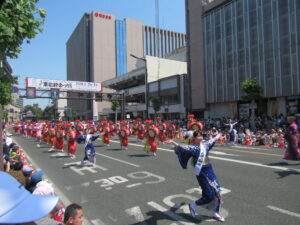
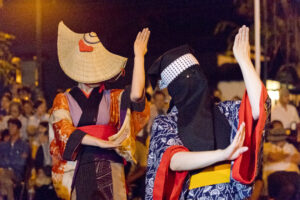
2:00 PM — Catch a traditional performance on the main stage (check the schedule posted at the festival entrance). If Yamagata Hanagasa Ondo dance is performed — a famous Yamagata folk dance with flower-decorated straw hats — don’t miss it.
3:30 PM — Walk back toward the station via Yamagata’s shopping arcades (Kajo Park area). Browse the local sake shops and sweet shops selling Yamagata fruit confections.
6:00 PM — Dinner at a Yamagata restaurant for sit-down imoni course with Yonezawa beef. This is the moment to eat imoni properly, at a table, as a multi-course meal. Budget ¥3,000–¥5,000 ($20–$34) per person.
8:00 PM — Check in to your hotel or ryokan. Rest well.
Day 2: Yamadera and Zao
8:00 AM — Breakfast at the hotel. Check out and store luggage at Yamagata Station coin lockers.
8:45 AM — Local train from Yamagata Station to Yamadera Station (30 minutes, ¥240 / $1.65). Spend 2–2.5 hours climbing the 1,000 steps, exploring the temple complex, and photographing the mountain valley views — spectacular in October foliage season.
12:00 PM — Return by local train to Yamagata. Quick ramen lunch near the station (Yamagata ramen, ¥850–¥1,000).
2:00 PM — Optional: Bus to Zao Onsen for a 2-hour hot spring soak in the milky-white sulfuric baths (outdoor rotenburo admission ¥550 / $3.75). Return by bus in time for the shinkansen.
5:30 PM — Board the Yamagata Shinkansen back to Tokyo (arrive approximately 8:10 PM).
Related Articles You Might Enjoy
- Yamagata Hanagasa Festival: Complete Guide to Tohoku’s Dancing Parasol Celebration
- Shinjo Festival, Yamagata: Japan’s UNESCO Float Festival Few Foreigners Ever See
- Ginzan Onsen Winter Travel Guide for Foreigners: Your Complete Guide to Japan’s Most Enchanting Hot Spring Village
- Kamo Aquarium Tsuruoka: The World’s Best Jellyfish Aquarium in Tohoku Japan
Final Thoughts
The Yamagata Imoni Festival is one of those events that feels, when you encounter it, like something you should have known about for years. It’s not small — 30,000 people, a crane-mounted pot, and a tradition that reaches back centuries — but it has somehow escaped the international tourist radar entirely. This means that when you go, you are genuinely a guest in a local celebration, not a visitor to a tourist attraction designed around foreign expectations.
Go for the giant pot, the festival atmosphere, and the sheer spectacle of Japan’s most enthusiastic outdoor cooking event. Stay for the private imoni-kai gatherings along the river, the Yamagata sake, the ramen for lunch and Yonezawa beef for dinner, and the autumn mountains glowing gold above a city that takes its food more seriously than almost anywhere else in Japan.
The first Sunday of September, the Mamigasaki riverbank, a bowl of taro and beef in the autumn sunshine: this is Yamagata’s gift to anyone who finds their way to northeastern Japan in the right season. Don’t miss it.


コメント